Soak your air plant, then shake the water out of the centre of the rosette. Air plants get sold as the plant you cannot kill, and people kill them two ways: misting instead of soaking, and letting water sit in the middle afterwards. Neither one is usually on the label.
Soak, do not mist
A mist does not deliver enough water. Tillandsias take water through the scales on their leaves, not through roots, and a light spray wets the surface and evaporates before much of it goes in.
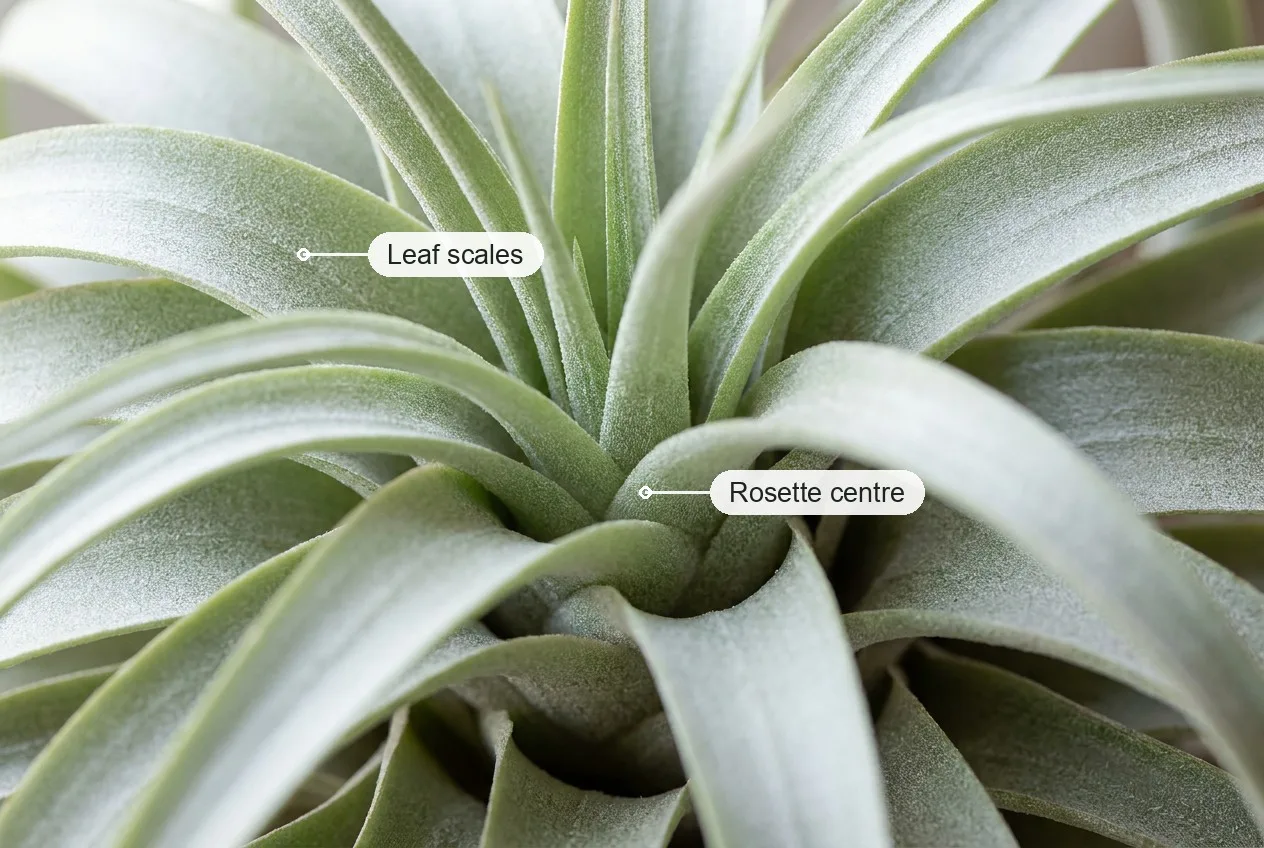
Put the plant in room-temperature water, upside down or on its side, and leave it for twenty to thirty minutes. Then shake it out and set it somewhere it can dry within a few hours. If the rosette is tight, dry it upside down.
Rot is the failure we are asked about most. It starts in the middle, the base goes soft and brown, and by the time the outer leaves look wrong the plant has usually gone.
How often to soak it
Roughly weekly. Treat that as a starting point, because your room decides how fast the plant dries.
A bright, warm room with air moving through it wants more water. A cool, still, humid one wants less.
Water it when the leaves curl inward more than usual or feel light and papery. Leaves that feel soft at the base have had too much.
Silvery species want less water than green ones. The heavily scaled ones such as xerographica are built for drought and resent frequent soaking, and the greener, smoother ones dry faster and drink more often.
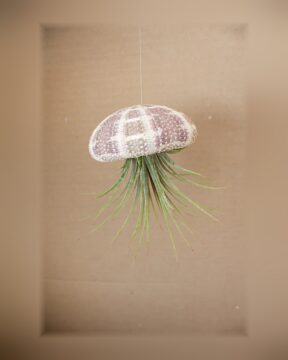
$19. The small hanging urchin: tip the water out after a soak.
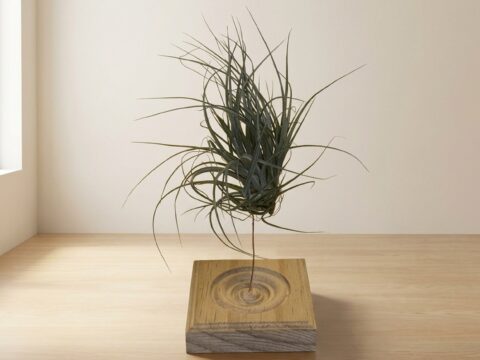
$23. Stricata Midnight on a wood block, for a shelf or a wall.

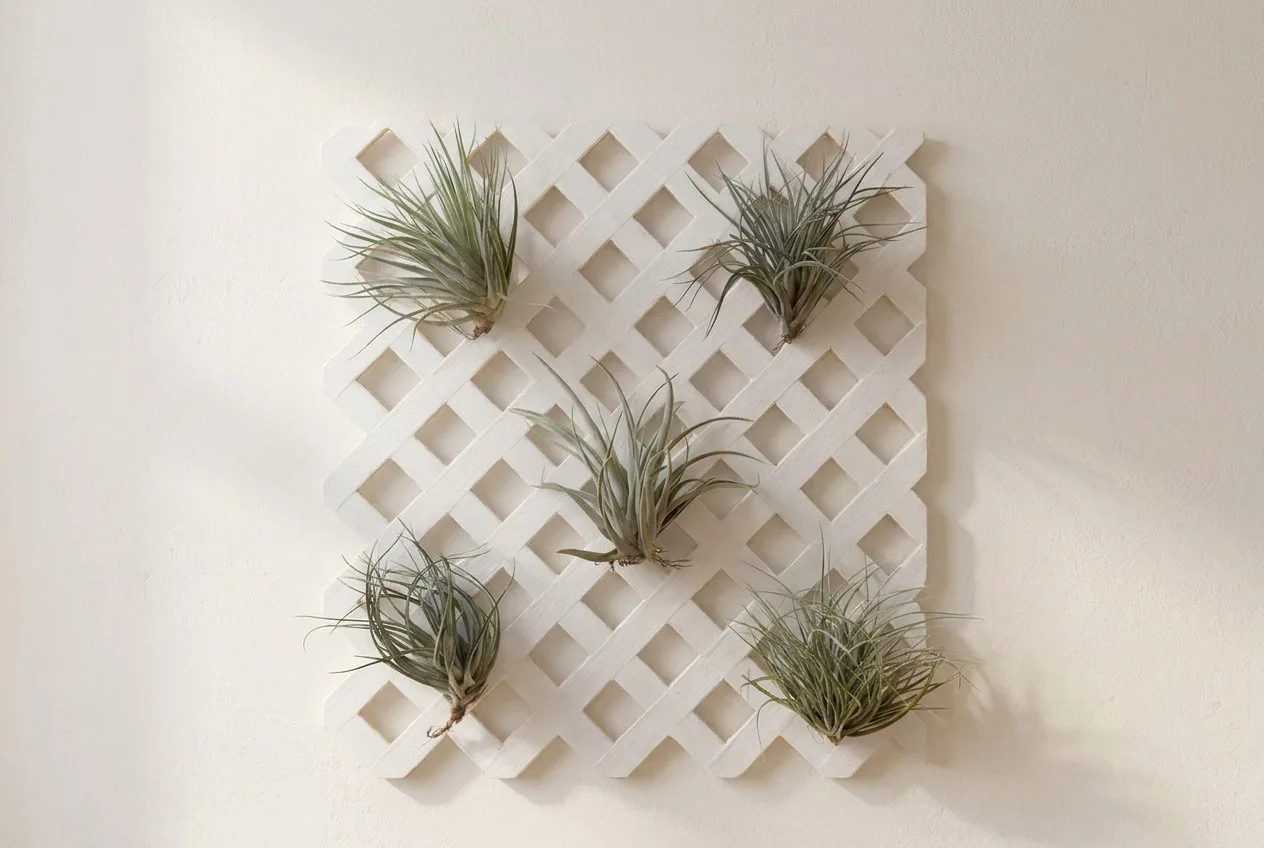
$47. The lattice display, 18 x 16 in, planted with live air plants.
Light: near a window, out of the beam
Put the plant near a window and out of the direct beam. Close enough that you could read comfortably by daylight, far enough that the sun does not fall on the plant.
Direct sun through glass will scorch them, and a plant still wet from a soak is the worst time for it. Dry one somewhere out of the beam.
A room with no daylight at all will not sustain an air plant. We sell preserved pieces for exactly those rooms.
Air plants need moving air. A plant in a sealed glass globe with no opening is in the wrong container, however good it looks.
What the mount changes
The mount changes the care. Ours are set on driftwood, coral, wooden blocks, hanging urchins and a lattice frame.
Hanging pieces ask the least of you. Shake the rosette out, hang it back up, and the water runs off instead of collecting.
Block and plaque mounts hold the plant against a surface, so check that the base is not sitting in a damp patch after watering. Lift the plant off to soak it where the mount allows.
Shells, urchins and cups trap water most readily, so tip them out after soaking. They also look the best of the lot, to our eye.
None of these need soil, so they work as wall pieces where a planted arrangement would not. For the same look with no watering at all, preserved moss panels are the alternative, and they are a different product with a different lifespan.
What a healthy one looks like
Firm leaves, colour consistent from base to tip, and a base that is tight rather than soft. Some species blush pink or red before flowering. That is a good sign.
Leaf tips going brown and crisp usually mean too little water or air too dry. A soft, dark base means too much, and that one is rarely recoverable.
They flower once, then produce offsets at the base. Leave the offsets attached until they are about a third of the size of the parent, then separate them if you want more plants.
The display range is on the air plant category, and the framed and preserved pieces are on the wall art category.
Questions we get asked
How often should I water an air plant?
Soak it for twenty to thirty minutes about weekly, then shake it out and let it dry within a few hours. Weekly is a starting point, and how fast your room dries the plant decides the rest.
Why did my air plant rot?
Almost certainly water trapped in the centre of the rosette after watering. Shake it out and dry it upside down. Rot from the middle is rarely recoverable.
Is misting enough?
No. A mist wets the surface and evaporates before the plant has taken much up. Soaking is what actually waters them.
What light do they need?
Near a window, out of the direct beam. Direct sun through glass scorches them, especially just after a soak. A room with no daylight will not sustain one indefinitely.
Can they live in a closed glass globe?
Not well. They need air movement, so a sealed container with no opening is the wrong home however good it looks.