





















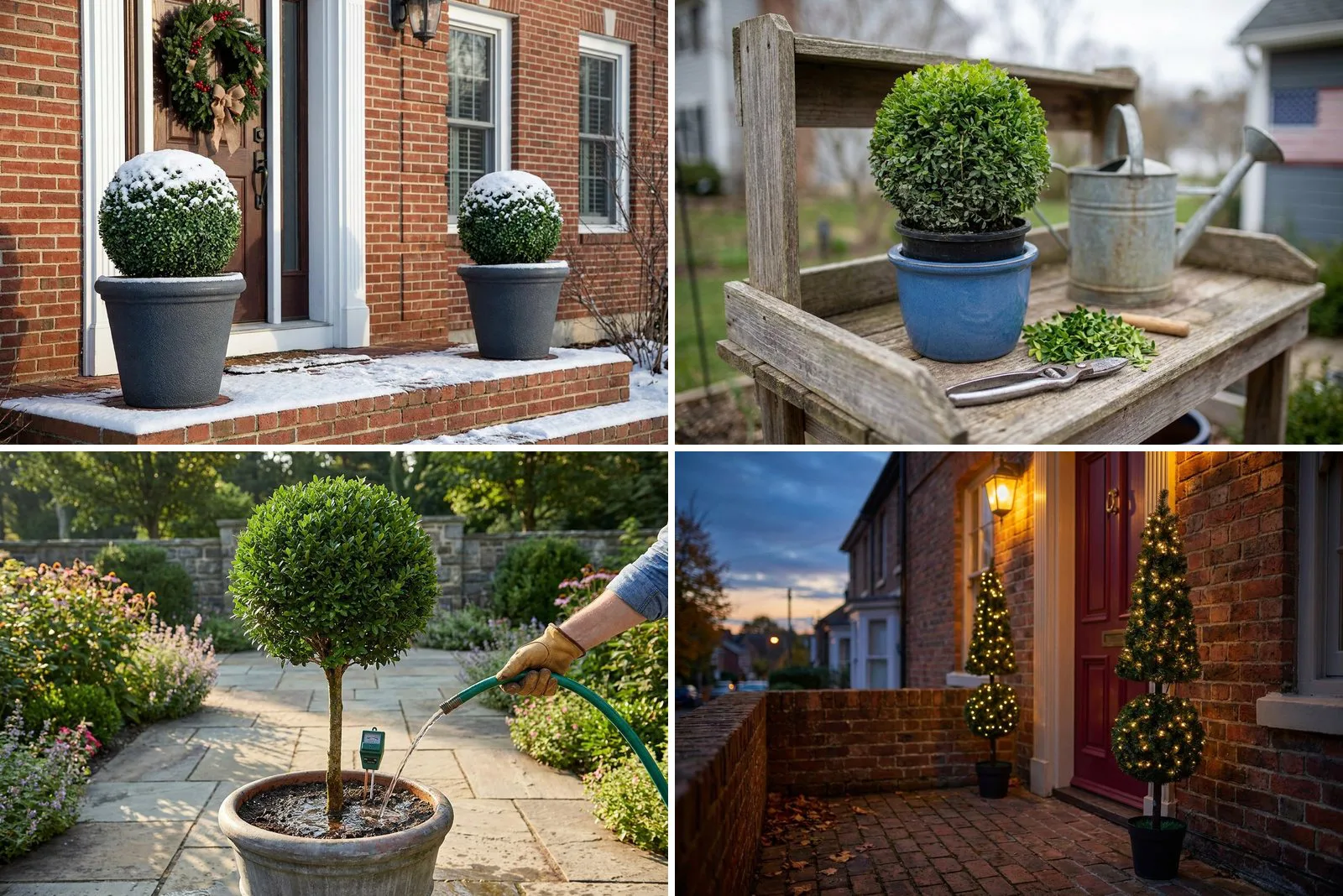
A live topiary needs four dated jobs a year: a feed in early March, the main cut in early June, a light tidy finished by early September, and a second feed in October. Around them, water deeply in dry spells and until the ground freezes. Mossed pieces need regular watering in warm weather, and artificial and preserved pieces need almost nothing.
Here is the whole year for all four materials, so you can see what is due now and what you can ignore. The problems people bring us are nearly always timing: a cut made in the wrong month, a feed given too late, a plant that went into winter dry.
Work from your own frost dates rather than from the calendar. The headings below are seasons, and your climate decides when each one starts. The cutting advice is written for boxwood, and it matches the boxwood care guide by zone.
The topiary year at a glance
| When | Live boxwood |
|---|---|
| Late winter | No cutting. Water if the ground is dry and not frozen. |
| Early March | First feed. Top up the mulch ring to one inch. |
| Early June | Main cut, once spring growth has firmed. |
| Summer | Deep water in dry spells. Pots every day or two. |
| Late summer | Light tidy, finished by early September. |
| October | Second feed. Water deeply until the ground freezes. |
| Early winter | Shelter or wrap exposed pots. |
Late winter

Live: do nothing to the plant. This is when people get impatient and cut, and a cut now pushes soft growth that the next cold wind burns. Water the evergreens if the ground is not frozen and the weather has been dry. Winter desiccation does more damage than cold.
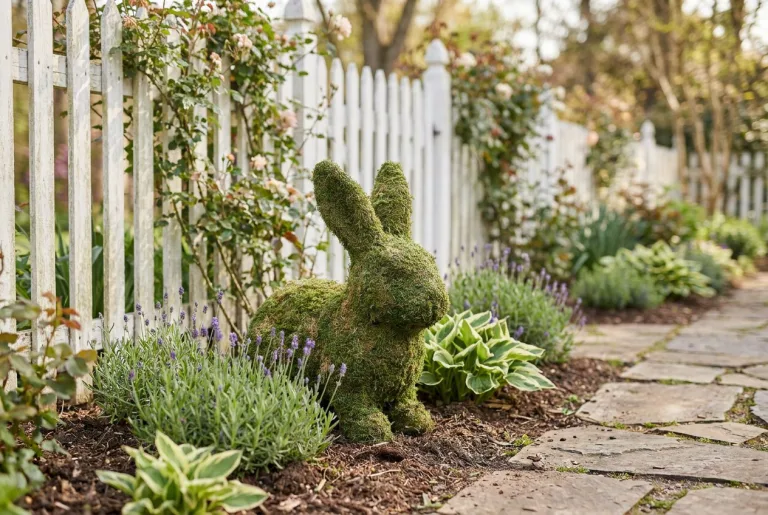
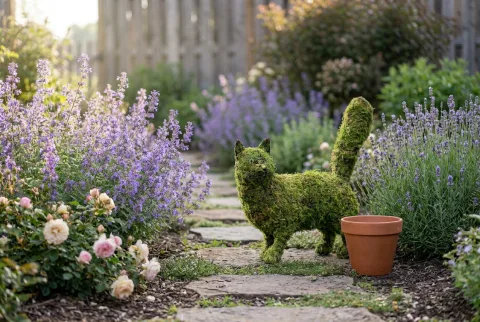
Mossed: check that nothing is standing in water. A piece left in a saucer of rain all winter is the one that fails.
Artificial and preserved: nothing is due.
Early spring
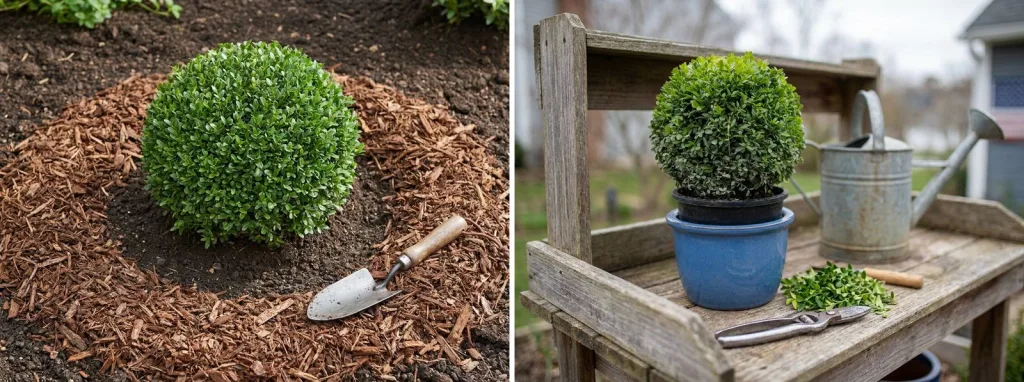
Live: give the first feed of the year in early March, as growth begins. Use a balanced granular feed such as 10-10-10 rather than a high-nitrogen one, because soft fast growth holds its shape badly and burns in wind. Check the mulch ring and top it up to about one inch, kept clear of the stems.
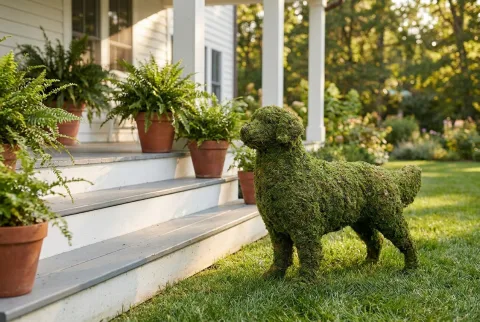
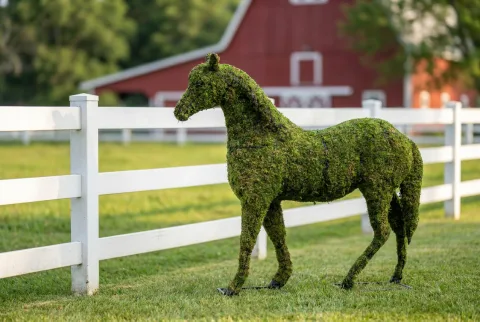
Mossed: start watching the moss again as temperatures rise, because the time between waterings shortens fast. This is also the time to plant into a mossed piece, so the roots establish before summer.
Artificial outdoors: rinse the winter grime off. It is the only maintenance there is, and it changes how a piece looks more than anything else you can do to it.
Late spring and early June
Live: make the main cut in early June, once the first flush of growth has firmed, never while it is still soft. Sharp blades, a cool morning. On a spiral, cut the gaps before you dress the ridge. On a pom pom, rub the soft shoots off the bare stems with a thumb.
Mossed: start checking most days once the weather is warm. Soak it rather than misting it.
Summer
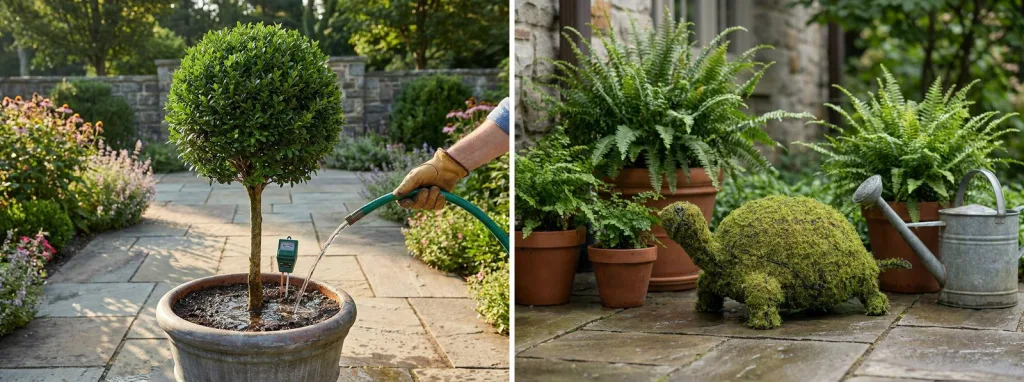
Live: water, particularly anything in a container or in its first two summers. Check the root ball with a finger. The surface lies. Watch for pests, because dense foliage hides them until the damage shows. Do not cut in the heat of the day.
Mossed: check a piece in sun every day or two. Sphagnum dries fast in heat.
Artificial: what you bought and where you put it decide how much UV damage the summer does. Nothing can be done about it while it is happening.
Preserved: move it out of the sunbeam that has crossed the room since winter. Sun angles change, so a piece that was safe in January can sit in direct light in July.
Late summer
Live: the second, lighter cut of the year, finished by early September. Leave the plant alone afterward, so the growth it makes has time to harden before the cold. If your first frost comes early, bring the cut forward.
Mossed: the second window for working fresh sphagnum into the old, if you are not planting into the piece.
Fall
Live: give the second feed in October, or earlier if winter arrives early where you are. Then water deeply through late fall, right up until the ground freezes.
That watering is the most valuable thing on this page, and it is the one people skip. An evergreen that goes into winter dry cannot replace what it loses through its leaves. The damage shows months later.
Lighted pieces: check the strings and the connections now, rather than on the evening you want them lit.
Early winter
Live: move exposed containers out of the worst wind if you can. A cold wind pulls moisture out of evergreen foliage faster than still cold air does, so an exposed plant suffers more than a sheltered one at the same temperature.
Group the containers together or wrap the pot in burlap. You are protecting the root ball, not the foliage. A root ball in a pot gets about one zone colder than the same plant in the ground.
Lighted: run them. Keep plugs and joins off the ground.
Everything else: nothing, except knocking heavy snow off wide flat-topped artificial pieces.
The whole year for artificial and preserved
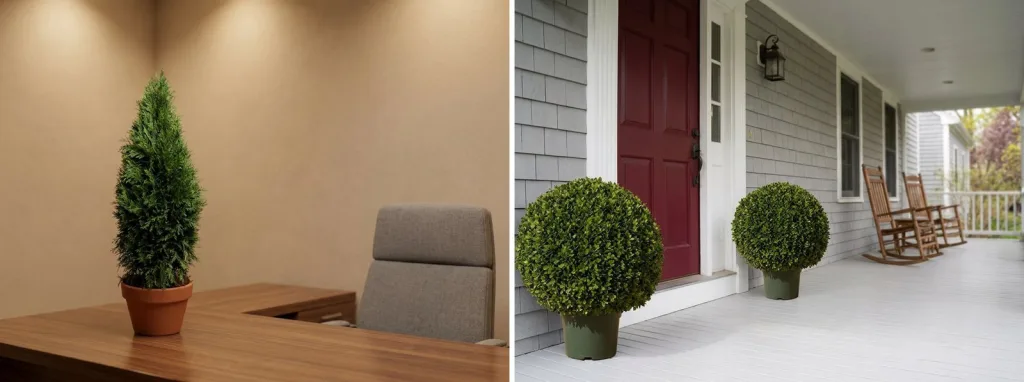
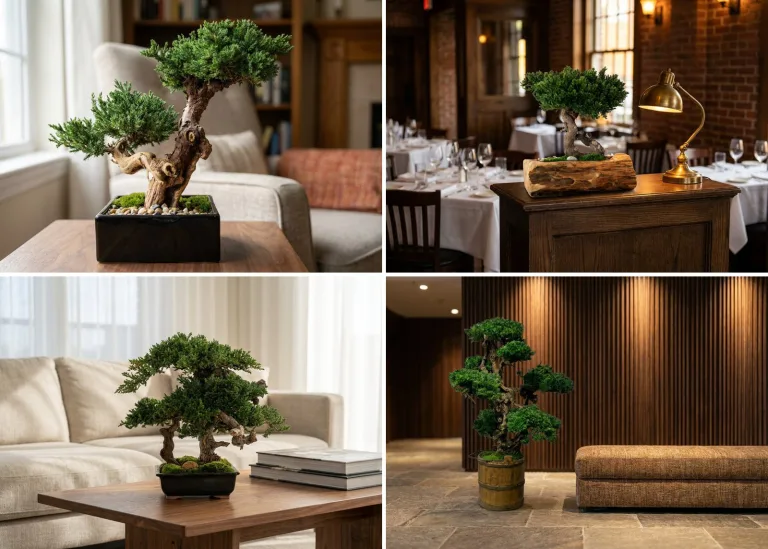
Preserved: dust it occasionally and keep it out of sun and damp. None of it changes by month. Sun means a south-facing window or a sunroom, and damp means a bathroom or an unheated porch, so a dim hallway suits it well.
Artificial outdoors: rinse it in spring, knock heavy snow off wide flat-topped pieces, and keep containers draining so trapped water cannot freeze and split them. None of that prevents fading. What you bought and where you put it decide that.
Artificial and preserved ask for almost nothing all year, and that is the honest case for both. It is why they end up in commercial buildings and at doorways nobody tends.
The running cost of a live piece is set out in what a live boxwood costs to keep. If you are ordering for a hotel or an office, read specifying for a commercial interior first.
Care by piece type is on the care page. Cultivars and zones are in the zone guide, and the disease guide covers identifying a problem.
Quick answers
When should I cut topiary?
Twice a year on boxwood: the main cut in early June, once the spring growth has firmed, and a light tidy in late summer, finished by early September. Never cut in winter, and never in the heat of the day in high summer.
When should I feed topiary?
In early March and again in October, with a balanced granular fertilizer such as 10-10-10, watered in. Do not feed in late summer, because soft new growth will not harden before frost.
What is the most important job in the year?
Watering evergreens deeply through late fall, right up until the ground freezes. A plant that goes into winter dry cannot replace what it loses through its leaves, and the bronzing appears months later.
How often do mossed pieces need water in summer?
In warm weather a piece in sun can want attention every day or two, because sphagnum dries fast in heat. Soak it rather than misting it.
Does artificial or preserved topiary need seasonal care?
Very little. Rinse artificial pieces in spring and keep their containers draining. Dust preserved pieces and check the sun as the seasons change: a piece that was safe in January can sit in direct light in July.