










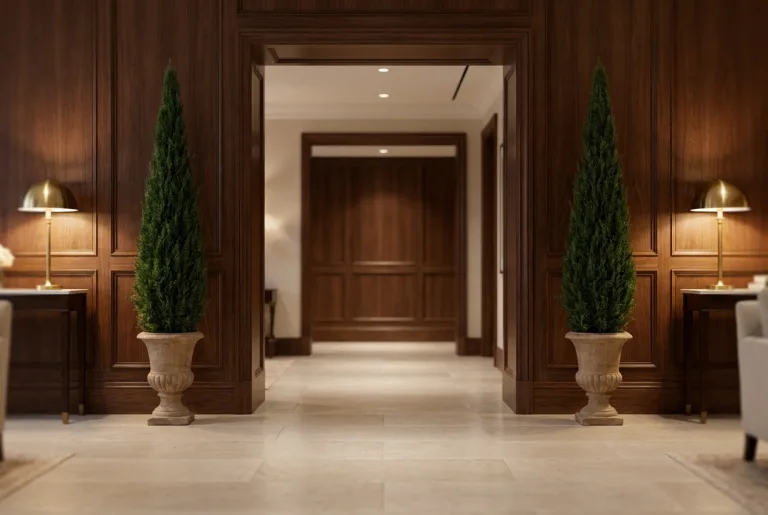






Preserved Spiral & Cone Topiary
Preserved cone and spiral topiary brings the tall, tailored shapes of a formal garden indoors. The foliage is real juniper, arborvitae or boxwood, preserved so it needs no water or light. A pair works well on either side of a fireplace, a reception desk or an inside door. Keep them away from direct sun and humid rooms, and they hold their color for years.
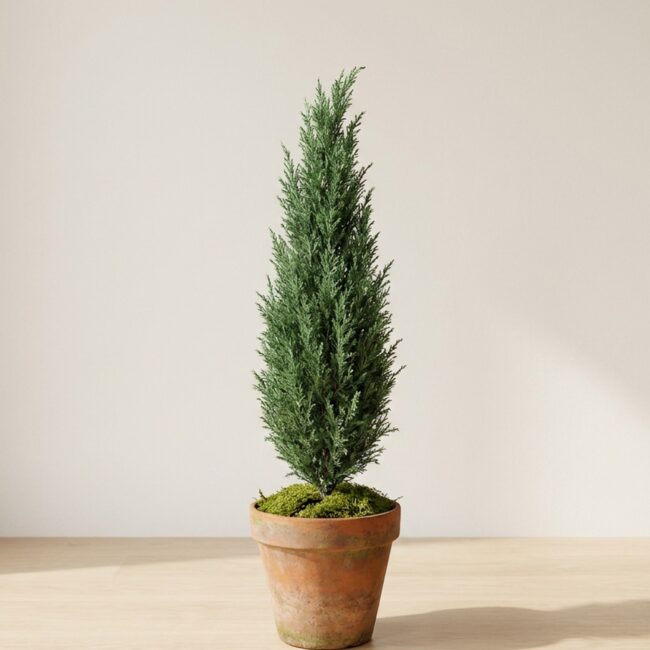

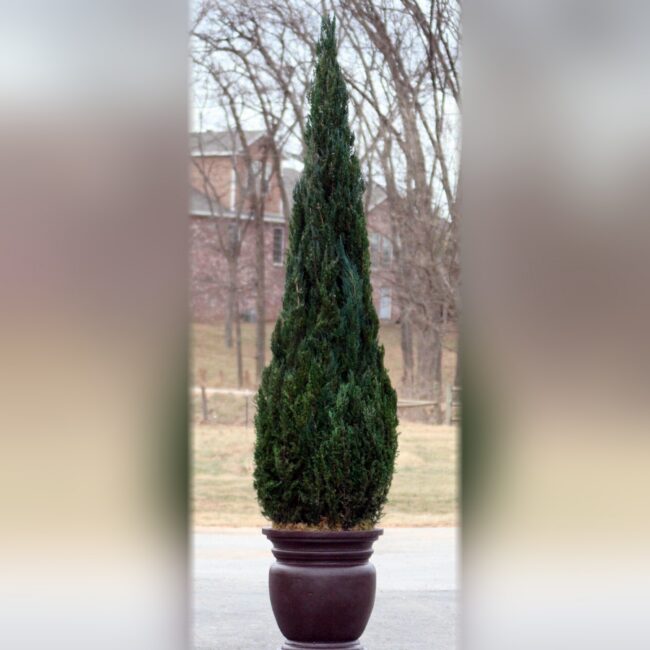
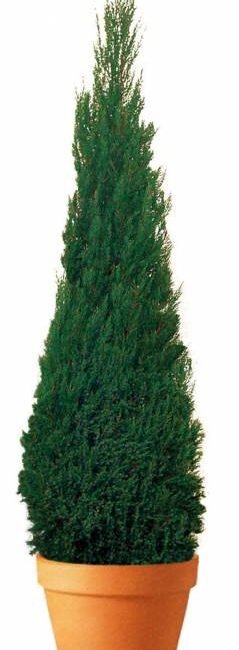
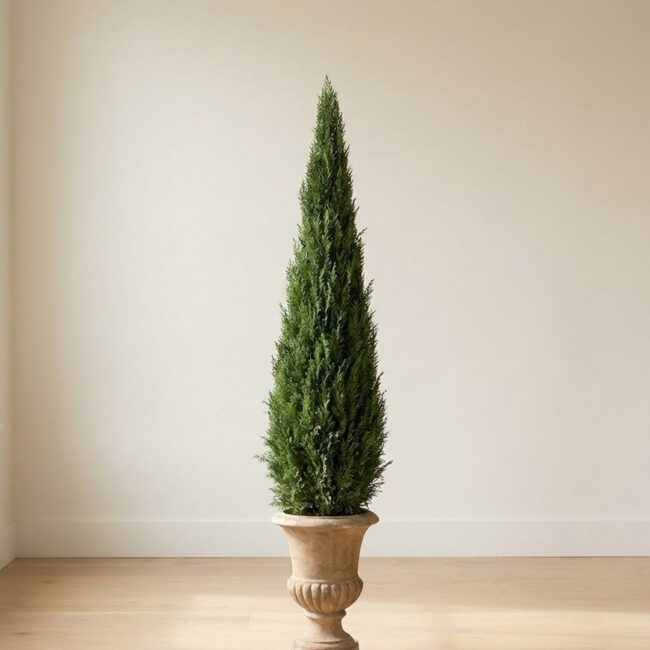
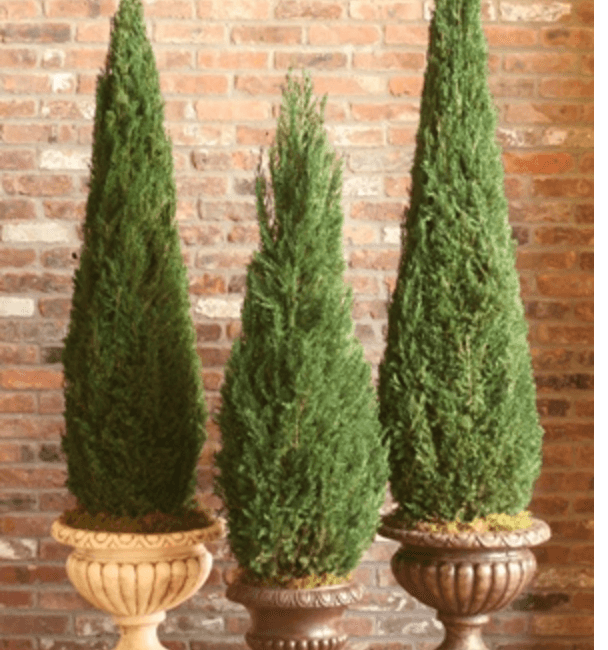
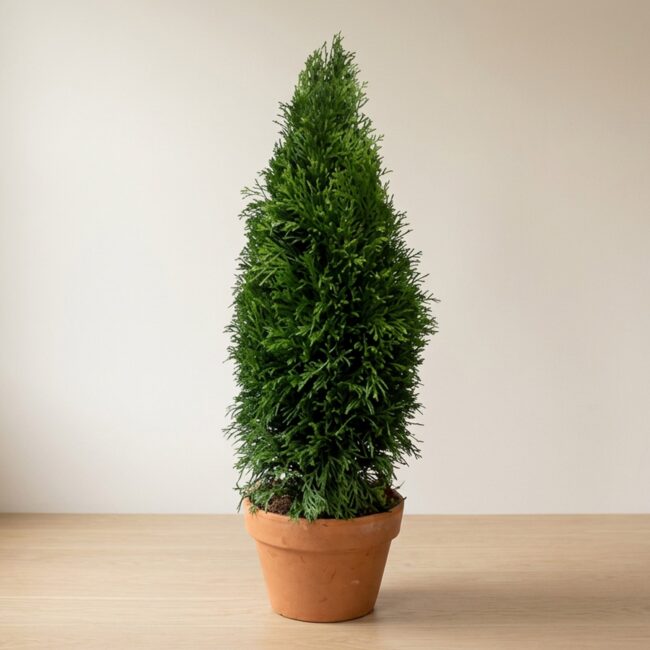
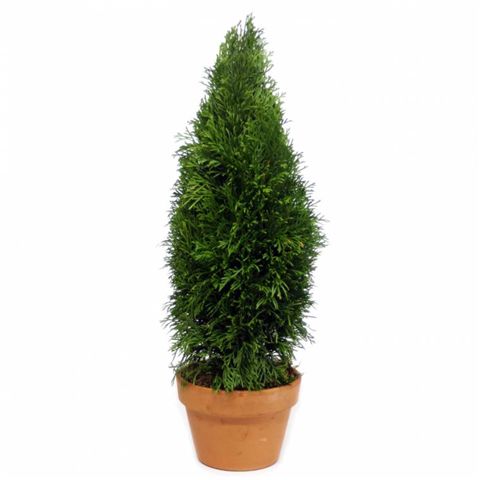
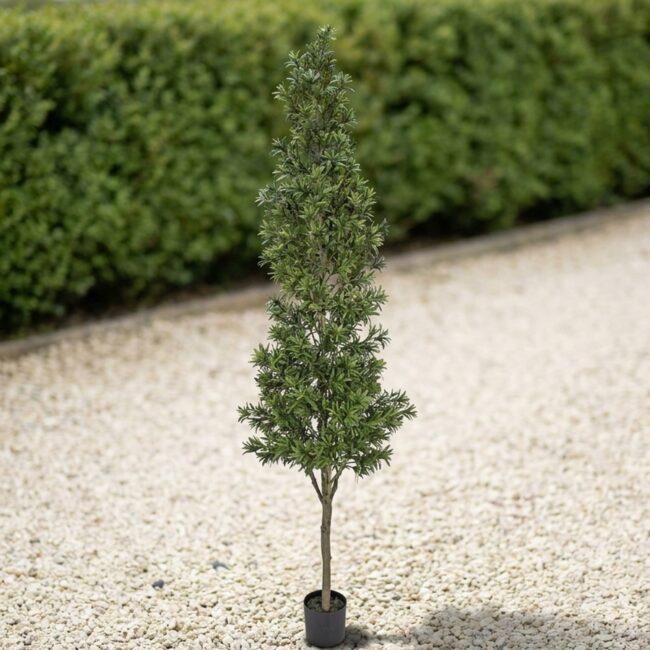
Emerald Arborvitae Cone Topiary, 84 in
$1,398.00delivery quoted separately
In stock, ships by freight
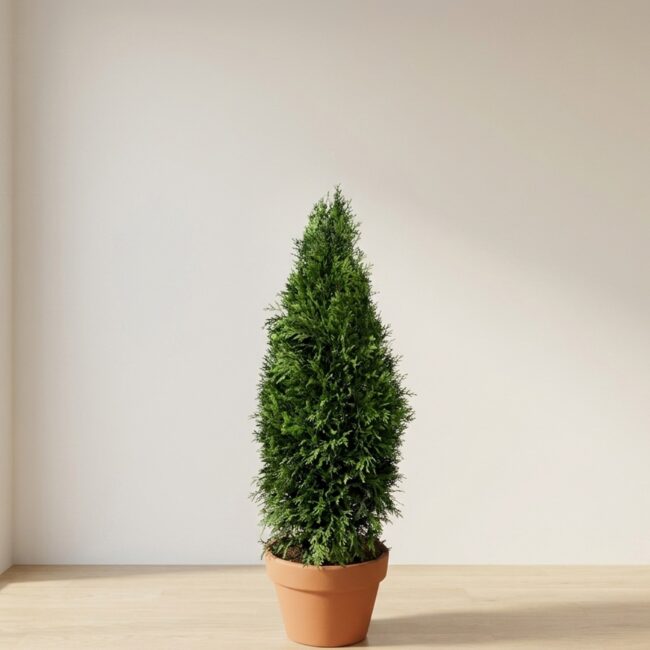
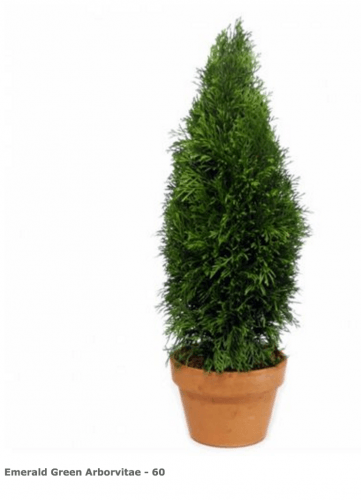
Emerald Arborvitae Cone Topiary, Preserved, 60 in
$998.00delivery quoted separately
In stock, ships by freight
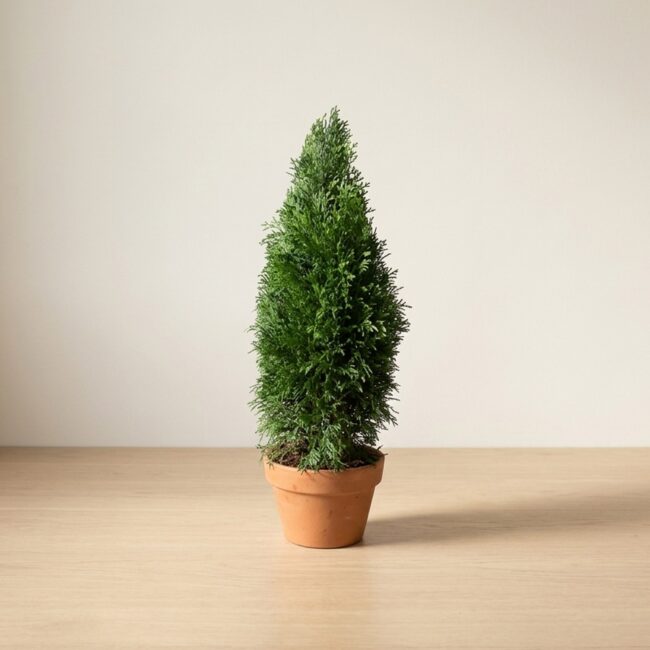

Emerald Arborvitae Cone Topiary, Preserved, 50 in
$798.00delivery quoted separately
In stock, ships by freight
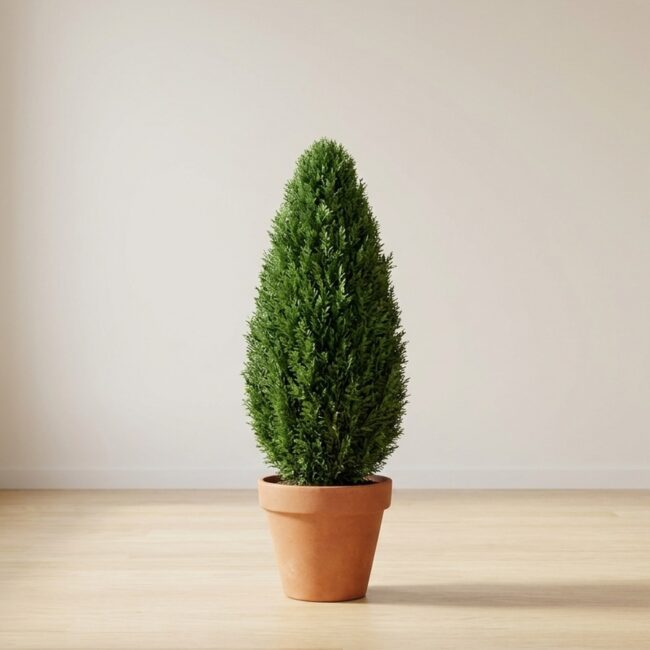
Emerald Arborvitae Cone Topiary, 72 in
$1,098.00delivery quoted separately
In stock, ships by freight
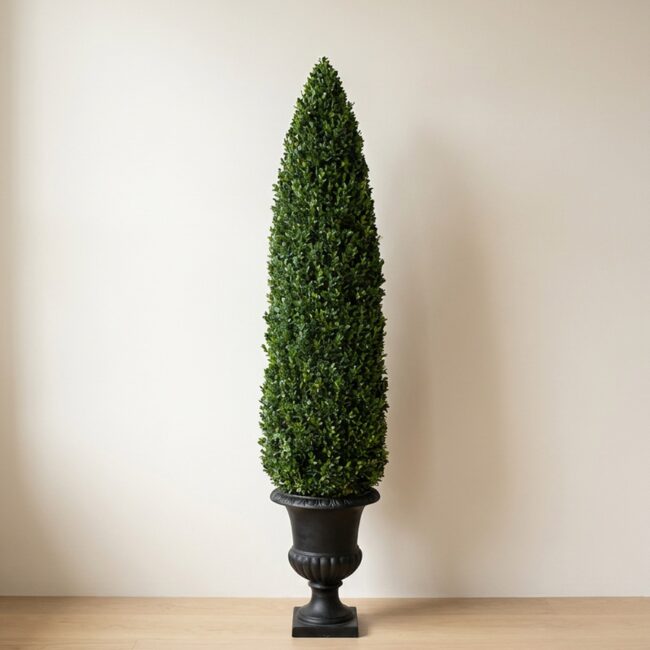
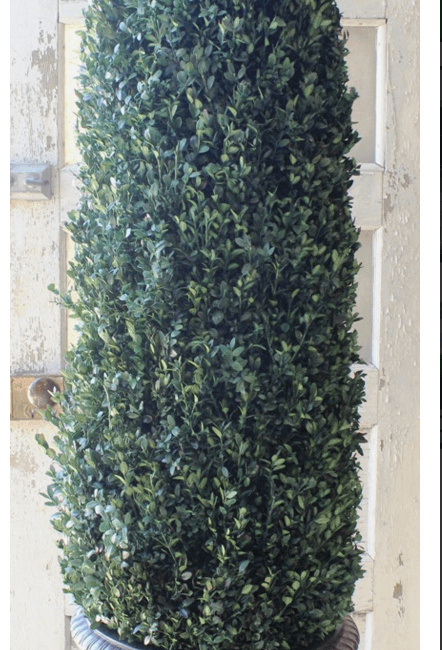
Boxwood Cone Topiary, Preserved, 72 in
$1,098.00delivery quoted separately
In stock, ships by freight
Need a size or shape you don’t see?
Tell us the space and the height. We will suggest pieces and quote them with delivery to your ZIP.
Why choose preserved cone and spiral topiary
Cones and spirals are the tall, upright shapes of topiary, and preserved foliage lets them stand in rooms with no daylight at all. They are real juniper, arborvitae or boxwood that will never need trimming. The questions people ask about them are practical ones: how tall to go, and which foliage can take a covered patio. The rows below answer both.
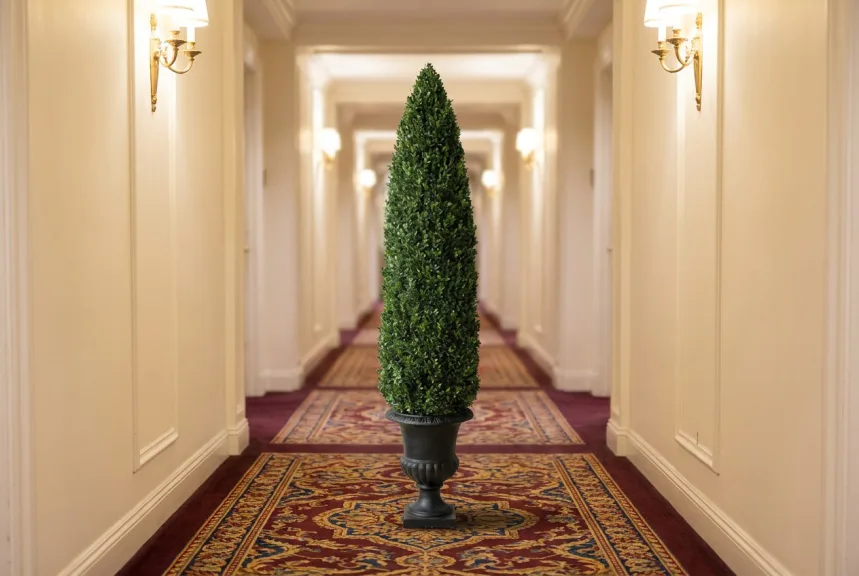
Tall topiary for high ceilings
Measure the ceiling first. The juniper cones run from 40 inches to 10 ft, and a tall cone looks best with a good stretch of wall above its tip.
A slim cone takes up little floor space, so it fits a hotel corridor, a narrow entry or the gap beside an elevator. The tall ones travel by freight and are quoted with delivery. Allow 1 to 3 weeks before a piece ships, because each one is finished to order.
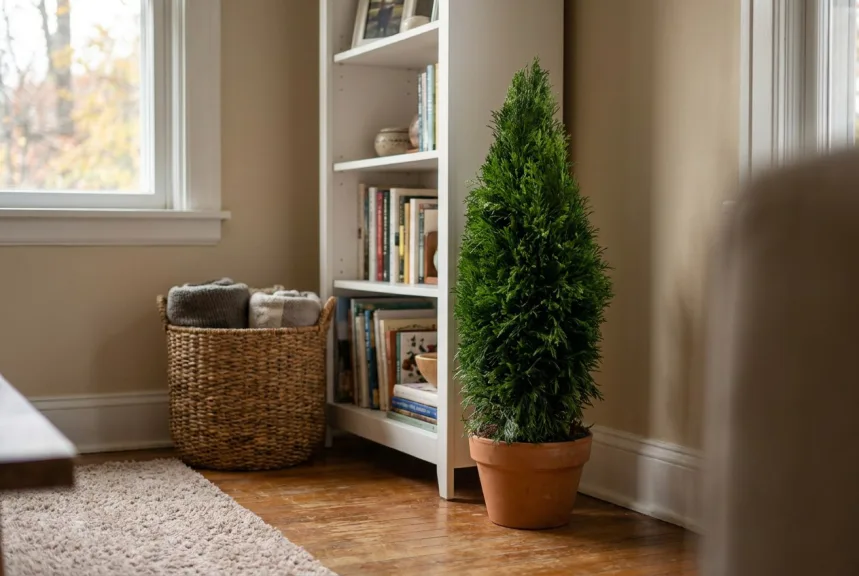
Real Emerald Green arborvitae, preserved
People searching for an artificial Emerald Green arborvitae usually want the look without the upkeep. These cones are real arborvitae, preserved in a glycerin solution, so the foliage keeps the soft, layered texture of the living shrub and needs no water.
Each tree varies a little in shape and density, as it did when it was growing. Keep the arborvitae cones indoors. They are not suited to a porch or a patio, covered or not.
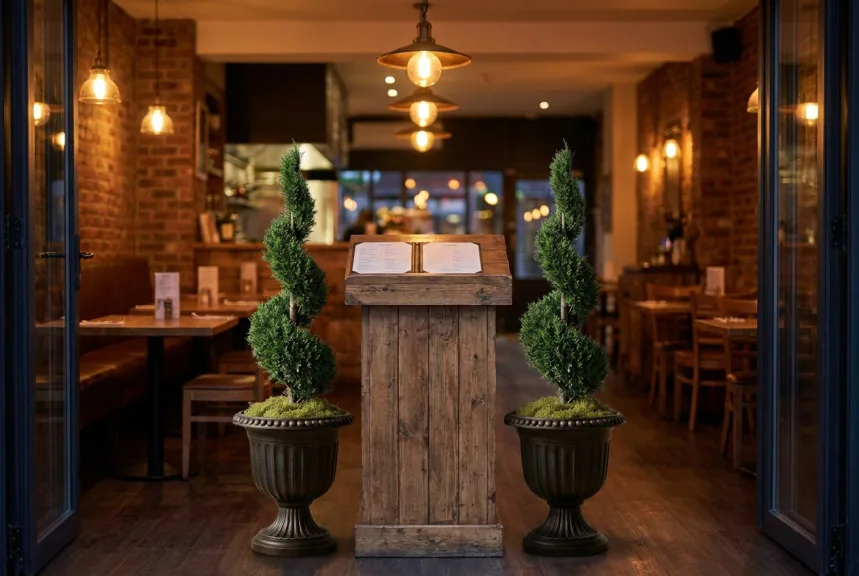
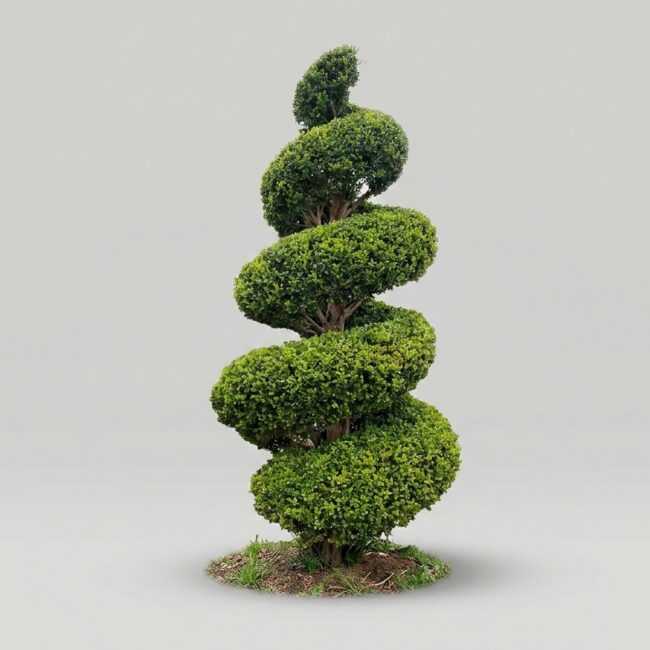
A spiral topiary pair at an entrance
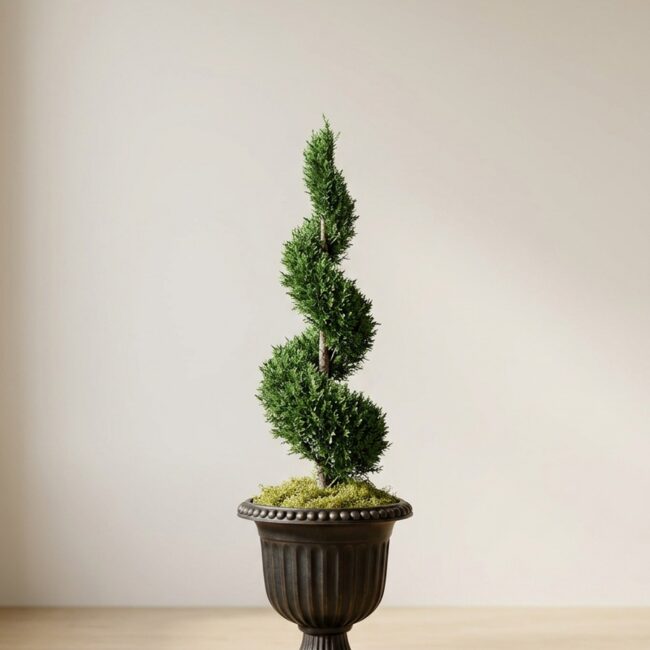
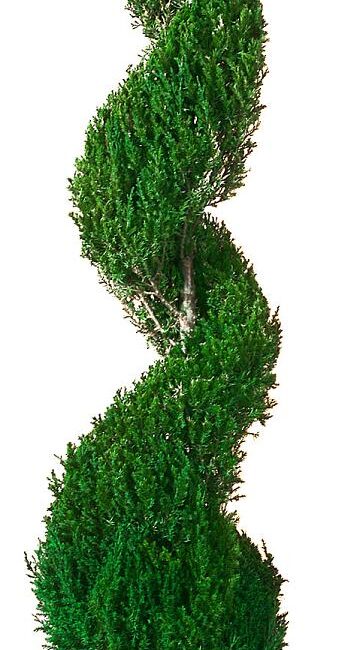
A spiral adds movement where a cone would look stiff. Two spirals at the inside entrance of a restaurant or a shop give guests something to look at while they wait.
You can also mix the pair, with a cone on one side and the spiral on the other. The cone grounds the pair and the spiral lightens it. The juniper spiral is quoted. Send us a photo of the entrance. Our team replies within hours, usually the same day.
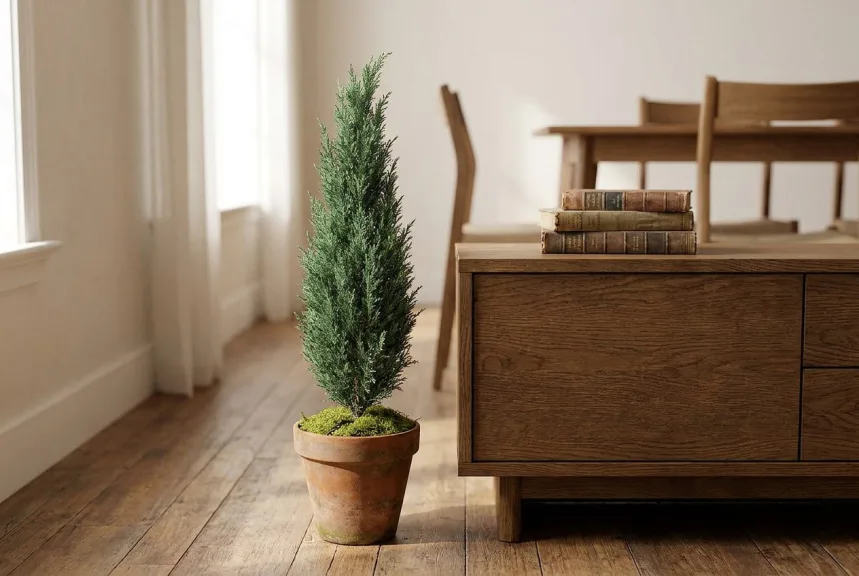
Juniper, arborvitae or boxwood
Juniper is the most forgiving. Preserved junipers last seven years or more, and the juniper cones may stand under a covered patio, out of rain and direct sun. Even then, nothing preserved is guaranteed outdoors.
Arborvitae and boxwood cones stay indoors. The natural juniper cone is left untrimmed, so it looks like a young tree rather than a clipped shape.
All of them need the same care. Dust them dry, never water them and keep them away from heat vents and humid rooms.
Questions about Preserved Spiral & Cone Topiary
Why choose preserved instead of artificial?
Because people stand close enough to see that it is real. In reception areas and dining rooms, where guests are right next to the piece, real preserved foliage passes that test. Outdoors, artificial is the better choice.
Can a preserved cone go outside?
Only the juniper cones, and only under a covered patio, out of rain and direct sun. Even then nothing preserved is guaranteed outdoors. The arborvitae and boxwood cones are for indoors only.
How long does a preserved cone last?
Years, indoors. Preserved junipers last seven years or more. Direct sun fades the foliage, and a bright window counts as sun. Very dry air near a heat vent makes it brittle.
How do I care for a preserved spiral or cone?
Dust it with a feather duster, or a hair dryer on the cool setting. Never water it. In a humid room the foliage can drip glycerin, so keep it at roughly 40 to 60 percent humidity.
How long does delivery take?
Allow 1 to 3 weeks for it to ship, because each piece is finished to order. Tall pieces go by freight and are quoted with delivery. We ship across the US and Canada, and you have 15 days after delivery to return a piece.