








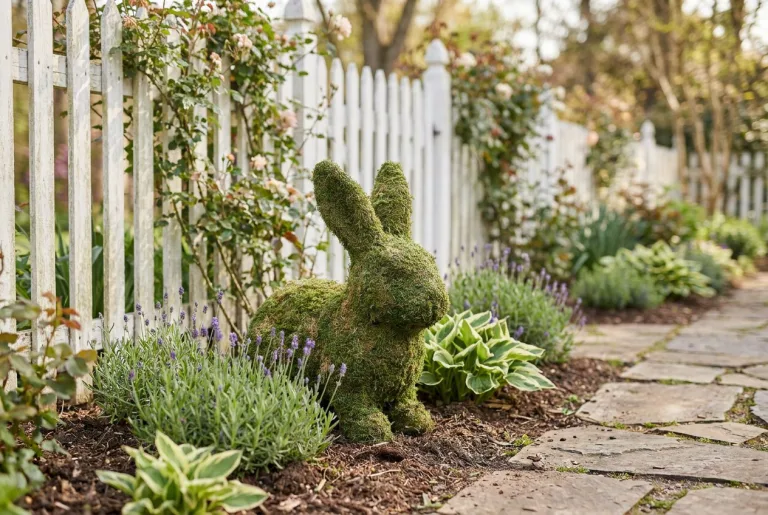

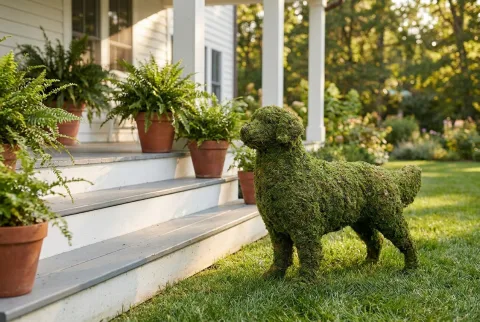









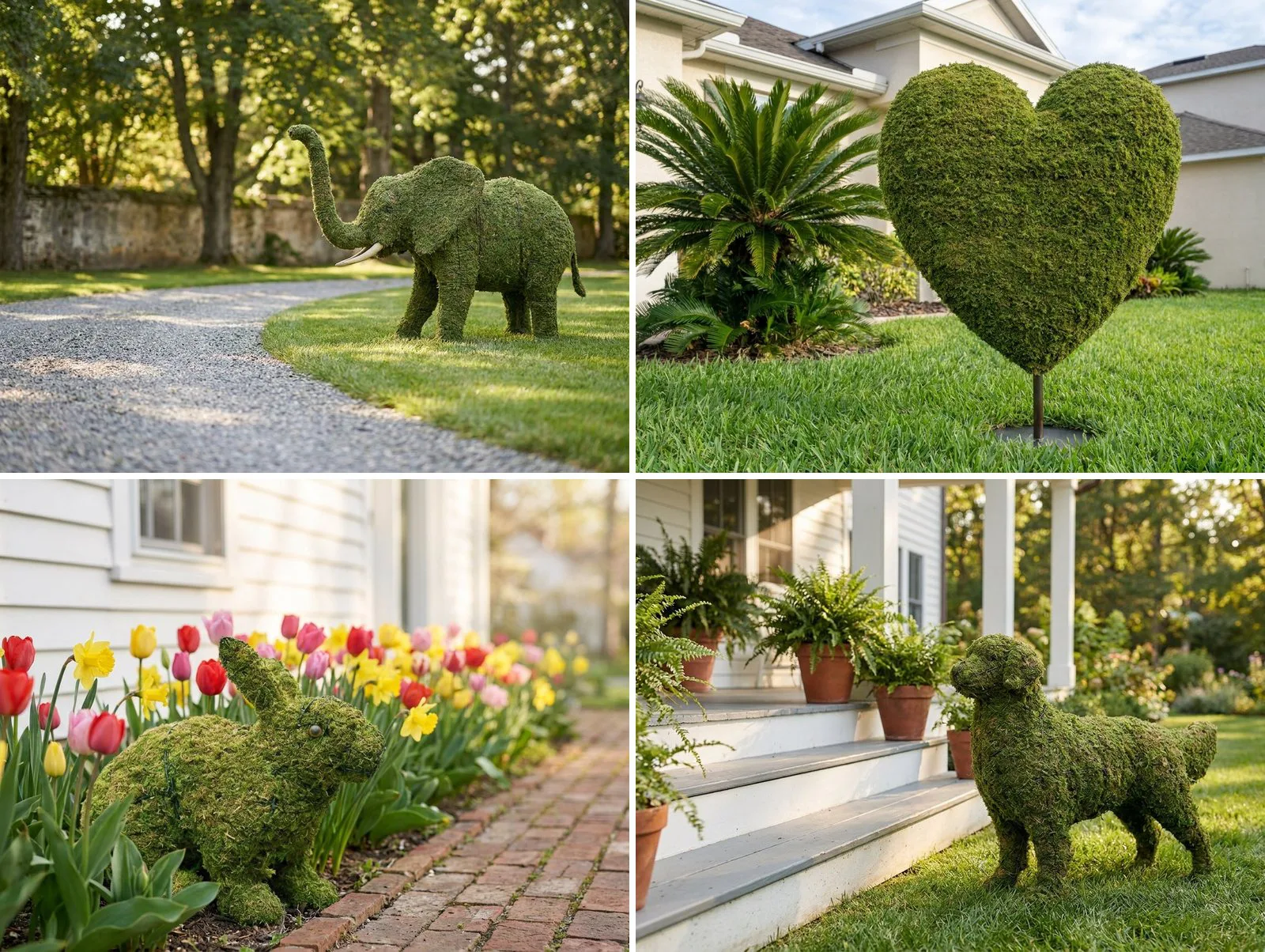
A mossed topiary turns brown when the sphagnum moss dries out, and in sun it can dry out in a day. Keep it green by soaking it whenever the moss feels dry an inch in, misting it on hot afternoons, and working fresh moss into thin spots once or twice a year. Moss that has only gone dry can usually be brought back. Moss that crumbles in your hand has to be replaced.
Topiary moss is a growing medium
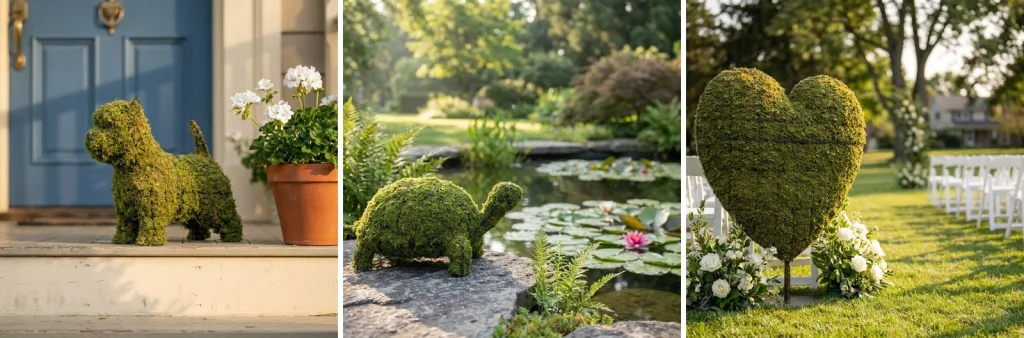
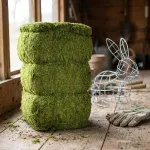
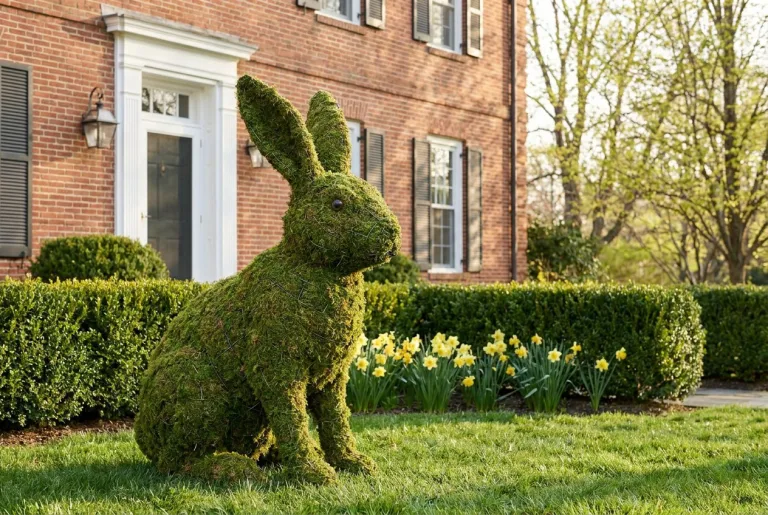
The sphagnum moss on a topiary frame is closer to soil than to a plant. It holds water and feed, and it gives roots somewhere to grow. It does not stay green on its own. Packed onto a frame and left in the sun, it dries, fades to tan, and in the end breaks down to dust.
So a mossed piece behaves like a planter. It looks its best when it is kept damp, and it lasts longest when something is planted into it. The steel frame underneath lasts for years longer than the moss, so a tired piece can almost always be refreshed.
Why is my moss topiary turning brown?
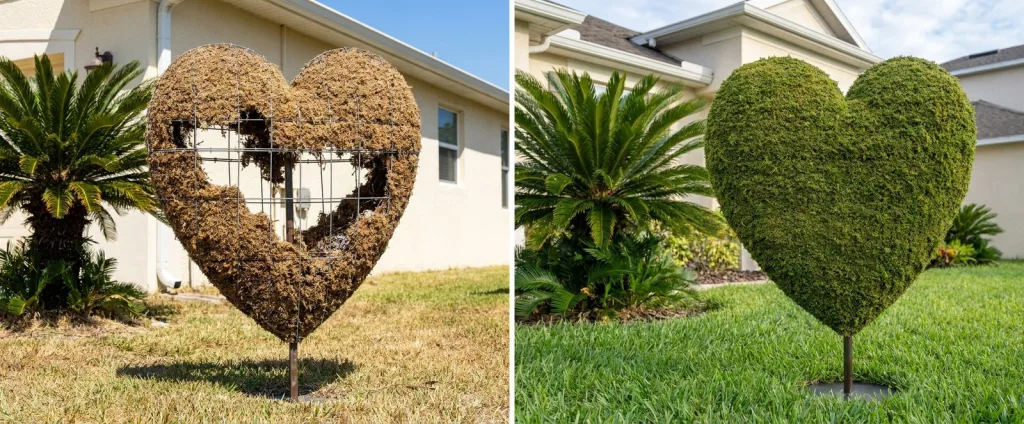
Almost always, it has dried out. A mossed piece in full sun, wind or a heated room loses water much faster than a potted plant, and each time it dries completely the moss fades a little more. Other causes are rarer:
- Hard afternoon sun. The sunny side browns first. Move the piece into part shade or mist it more often.
- Age. After a year or two outdoors, sphagnum breaks down even with good care. That is the time to refresh it.
- Standing wet. A piece that sits in a puddle or never dries at all can go dark and slimy at the base. Raise it off wet ground.
How to water a mossed topiary
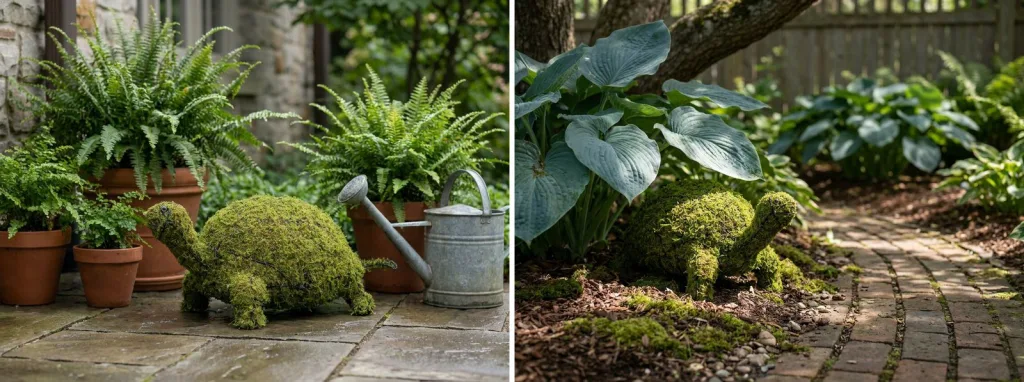
Water the moss when it feels dry about an inch below the surface. Press a finger in to check. In a shaded spot outdoors that may be once or twice a week; in full summer sun it can be every day.
Soak it slowly, with a watering can or a hose on a gentle shower setting, until water runs out of the bottom. Small pieces can go into a tub or a bucket of water for 10 to 15 minutes, then drain on a rack. Dry sphagnum repels water at first, so water in two or three passes a few minutes apart and let each one sink in.
Indoors, a mossed piece needs a soak about once a week and a tray underneath to protect the floor. Keep it away from heating vents, which dry it out fast.
Misting in hot weather
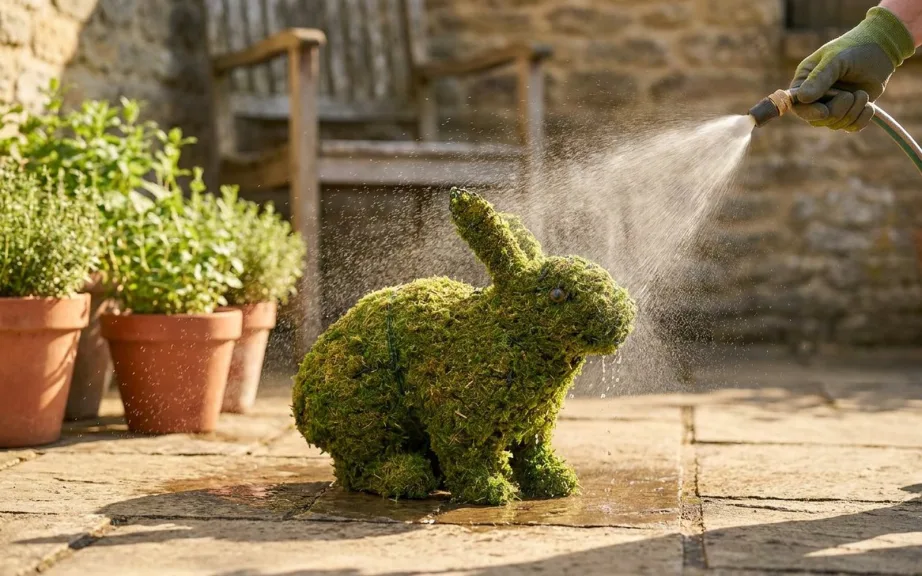
Misting does not replace a soak, but it helps in heat. On hot days, mist the whole surface in the morning and again in the late afternoon, with a hose mist nozzle or a pump sprayer. Mist more often in wind and in full sun.
In the South, a spot with morning sun and afternoon shade saves a lot of misting. More on siting for heat is in topiary in heat and humidity.
How to revive a brown moss topiary
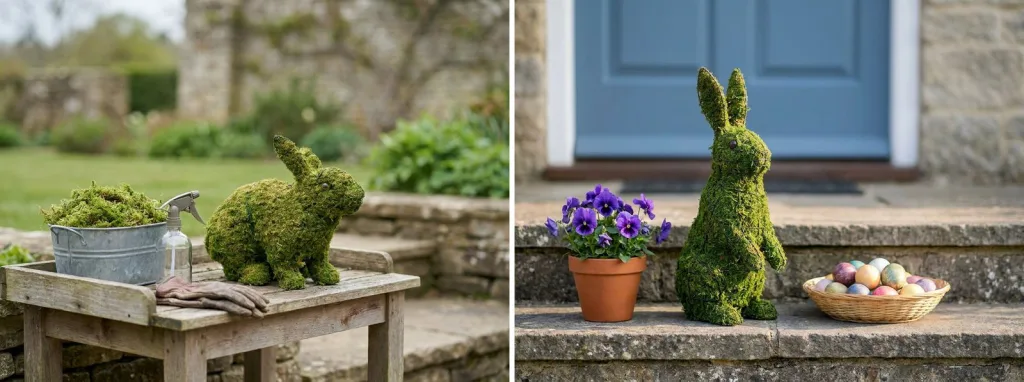
First, test the moss. Squeeze a handful. If it compresses and springs back, it can be saved. If it crumbles or falls away from the frame, it has broken down and needs replacing.
To bring back moss that has only dried out:
- Soak it well. Water it slowly several times over an hour, or dunk a small piece in a tub, until the moss is damp all the way through.
- Pull away the dead bits. Remove loose, dusty moss from the surface and the thin spots.
- Pack in fresh moss. Soak new sphagnum, squeeze out the extra water, then press it firmly into the gaps and over the thin areas. Tie it in with fishing line or thin wire where it wants to slip.
- Keep it damp and shaded for a week. The fresh moss settles in and the color evens out.
Refreshing like this once or twice a year keeps an outdoor piece looking full. How to add moss to a topiary frame covers packing technique, how much moss a frame takes and how tight to pack it. Sphagnum by the bale is in bulk preserved moss.
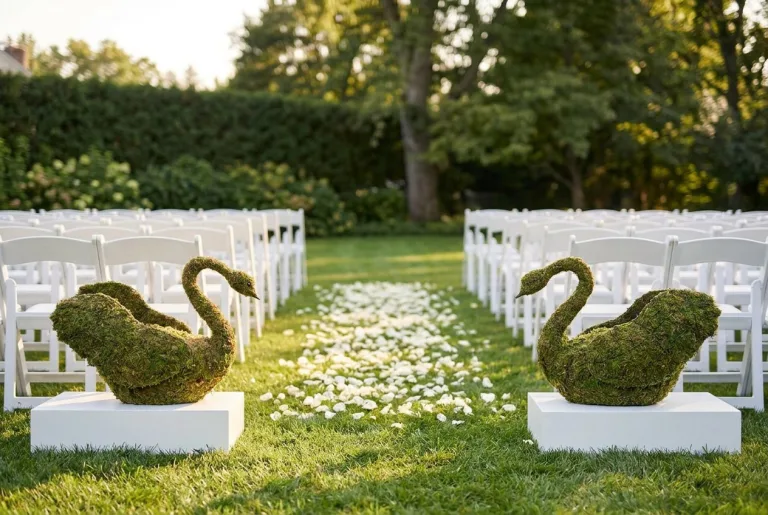
If the moss has gone to dust, strip it off and re-moss the frame. That is a day’s work, and the frame is almost always fine. A worn outdoor swan restoration shows how much of a tired piece can be saved.
Plant into the moss within six months
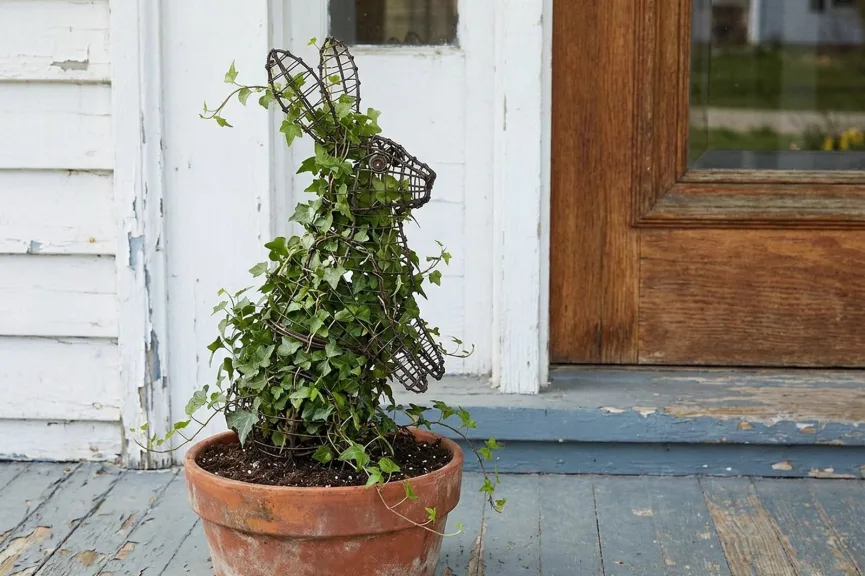
A mossed piece lasts longest with something living in it. Plant into fresh moss within about six months, while it will still hold roots. After that, the moss starts to break down and the plants struggle to anchor.
Ivy and creeping fig suit shade and part shade. In hot, dry, sunny spots, succulents are the easier choice, because they want exactly those conditions. See adding live plants to a topiary frame and planting succulents into sphagnum moss.
When a mossed piece is the wrong choice
A mossed topiary needs someone to water it. For a spot where nobody will, such as a business entrance, a second home or a full south-facing yard, choose UV-rated outdoor artificial topiary instead. It holds its color in the sun with no watering.
Quick answers
How often should I water a moss topiary?
Whenever the moss feels dry an inch below the surface. Outdoors in shade that is once or twice a week; in full summer sun it can be daily. Indoors, about once a week.
What moss is used for topiary?
Long-fiber sphagnum moss. It holds several times its weight in water, packs tightly around a wire frame and lets plant roots grow through it. Sheet moss is sometimes laid over the top for a smoother finish.
Can brown sphagnum moss turn green again?
Dried moss often greens up partly after a good soak, especially if it was only dry for a short time. Moss that has faded to pale tan and crumbles will not. Replace that part with fresh moss.
Should I put a mossed topiary in sun or shade?
Bright shade or morning sun is best. Full afternoon sun dries and bleaches moss fast, so a piece there needs daily watering and misting in summer.
Can I keep a moss topiary indoors?
Yes, with a weekly soak and a drip tray. It will not grow indoors, so expect to refresh it once a year. For a piece that needs no water at all, look at preserved moss topiary.
Find a finished piece in our mossed animal topiary, or read the care instructions for live, mossed and preserved pieces.