



















Topiary Tree FAQ
A live topiary needs water, food and light as well as trimming. Here are straight answers to the questions people ask most, from watering and winter care to potting, pruning and ordering a custom frame.
Which topiary suits your climate?
Ask a local arborist which species suit your growing zone. Some trees do best in cold climates, while others want heat and plenty of sun.
How do you maintain a topiary tree?
Water, feed and prune lightly. Those three keep a topiary healthy.
- Water when the soil is dry. Check it with your finger. Potted topiaries usually need more water than planted ones.
- Feed with a foliar or slow-release fertilizer. It encourages growth and a healthy root system.
- Prune a little, at the right time. A topiary needs few cuts to keep its shape, and the main trim is in summer.
- Outdoor boxwood care depends on where you live. We have a full guide to caring for outdoor boxwoods across the USA.
How often should you water a topiary tree?
Potted topiaries dry out faster than planted ones, so be ready to water a potted one almost daily. When the soil starts to pull away from the sides of the pot, it is time.
For a planted topiary, push a finger a few inches into the soil. If it is dry, water. Topiaries in the ground usually need water two to three times a week, depending on rainfall.
Too much water harms a topiary as surely as too little. If you would rather not water at all, consider a preserved topiary tree.
How do you take care of a topiary tree in the winter?
Most topiary trees are dormant in winter, but check that yours is. Skip fertilizing and pruning until spring. You may still need to water now and then, depending on your climate and the plant.
In freezing weather, cover it. Use a plant cover or an old bed sheet that covers the whole plant. Avoid plastic, because it can freeze to the leaves and damage them. Then pile mulch around the root base and the lower trunk.
You may lose some foliage to the cold. The plant will stay alive, and in a few seasons it is back to where it was.
Do topiaries die in winter, and do they come back every year?
With proper care, most come back every year. Evergreen topiaries keep their leaves through winter, and many deciduous ones, which drop their leaves in the fall, are cold-hardy too.
Some plants cannot take long spells of cold. Keep those in pots so they can come indoors in freezing weather. Choose a plant that suits your region. Your topiary should arrive with care instructions; if it does not, ask whether it is winter-hardy.
When and how should you trim a topiary?
Do the main trim in summer, early to late. That is when the plant spends the least energy healing a cut. The rest of the year, make only small cuts to new growth and leave any heavy trimming.
Shaping is easier than it looks, because the form is already there and you are only holding it. Use sharp pruners and trim slowly, taking only the new growth. Cut too deep and you lose the shape.
Trim in the morning if you can. You get good light without the afternoon heat.
How do you prune topiary balls?
A ball is the hardest shape to keep. Even with heavy summer pruning it can end up lopsided, so prune excess growth through the year before it gets away from you. That also makes the original shape easier to follow.
Use sharp clippers and cut flat against the leaves. You take off the overgrowth without going too deep. A local nursery can tell you the right season for your plant.
Does a topiary need full sun?
Yes, or close to it. Most topiaries need around 6 hours of full or partial sun a day. If the leaves turn yellow and watering is not the cause, yours probably needs more light.
A few will live in shade. Yews and boxwoods are the usual examples, and even they want a couple of hours of light. Hemlock is another, but we would not recommend it: every part of the plant is highly toxic, and it is illegal to grow in some communities.
What is the best plant for a topiary?
Pick an evergreen, or a species that flowers or carries winter berries. These are good choices:
- Dwarf Alberta Spruce
- Boxwood
- Japanese Holly
- Privet
- Yew
- Cherry Laurel
Why is my topiary turning brown?
Too little water is the usual cause. Too little sun can brown the leaves as well, even on an evergreen. A potted topiary may also be root-bound, which means it has outgrown its pot.
Disease is the other possibility, and fungicides are sold for it. Check with a local expert before you apply anything, because plant diseases differ from region to region.
How do you plant a topiary tree in a pot?
Choose a pot wider than the root ball and deep enough to hold it. You also need garden soil. Look for one made for trees, which usually has the nutrients mixed in.
- Put a layer of soil in the bottom of the pot before the plant goes in. The roots need it to grow into.
- Center the plant carefully. Leave no gap between the roots and the soil layer, because water can collect in the space and kill the topiary.
- Fill soil around the sides and over the top of the root ball.
- Water the tree in. Do not worry about overwatering the first time: the plant needs the extra as it settles into its new pot.
How do you decorate topiary balls?
Grow them in hanging baskets at staggered heights, or set them in decorative pots. You can hang small ornaments from the branches too, as long as they are light enough not to break a limb.
We do not recommend lights. They look pretty, but their heat can burn the leaves. At Christmas, ribbons and fake snow do the job, and you may not miss the lights.
How tall does a Eugenia topiary get?
Left alone, a Eugenia topiary will reach 20 feet. It grows fast, so plan for that before you plant one. With regular trimming it stays around 5 to 10 feet, which is still tall enough to be the first thing people see in a garden.
Custom topiary artforms
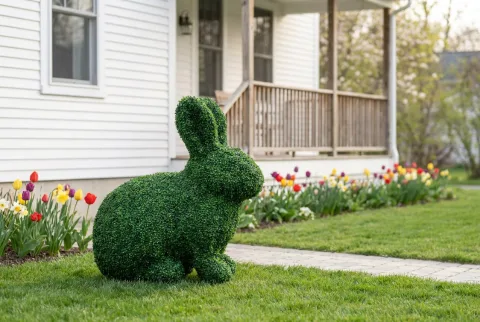
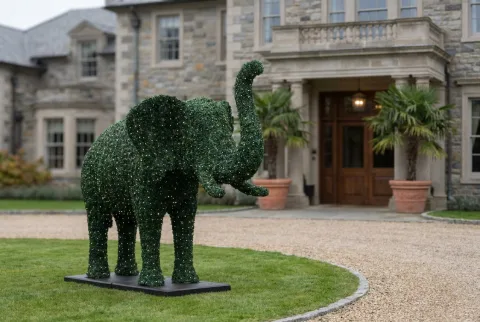
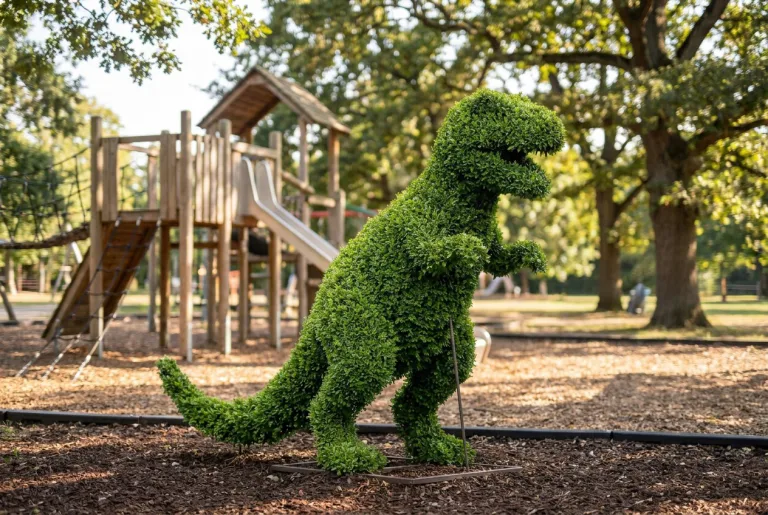
How do I order a custom topiary art form? Start with where it will stand. Outdoors, choose between planting foliage on the frame and a lower-maintenance faux finish. Indoors, the frame can be dressed with flowers or preserved foliage instead. Browse custom made topiary to see the range, then send us the shape and rough size you want.
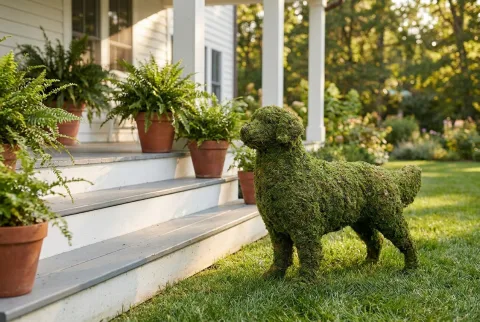
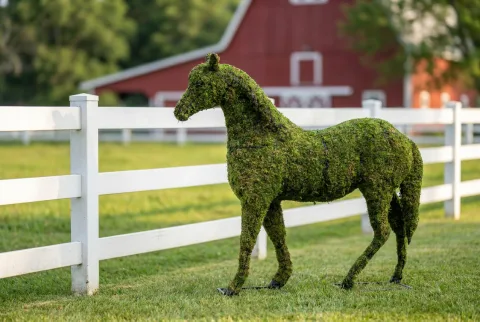
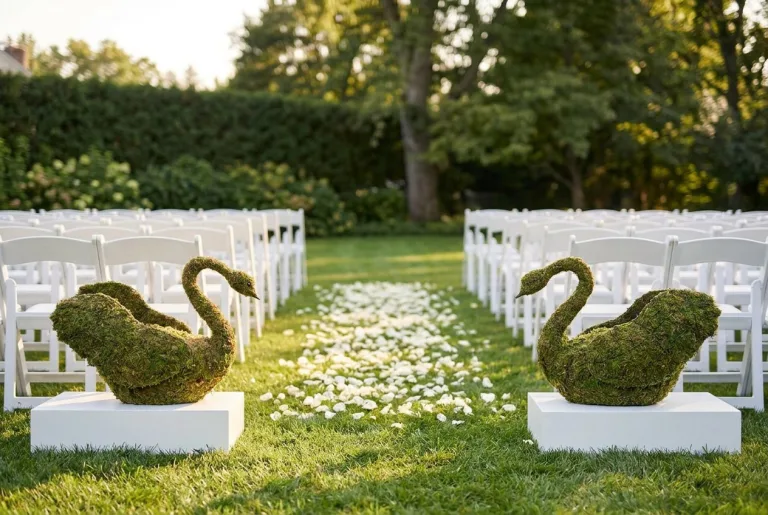
Can I add plants to a topiary frame? Yes. On a mossed frame, treat the moss as soil: plant into it and water while the plant establishes. Our guide to adding live plants to a topiary frame explains how, and the best plants for topiary helps you choose species.
Ivy cannot be shipped to every state. Oregon, for example, does not allow it.
Can a tired topiary be revived? Usually. Moss sheds and fades over the years, and re-mossing brings a piece back for a fraction of the cost of a new one. Call us before you retire it.
Ordering, shipping and returns
How do I pay? Online through Stripe at checkout, or by card over the phone on 866-306-1020 (9am to 5pm Eastern).
What does shipping cost? We calculate shipping and handling after you place the order, so the figure you approve is the exact one.
Can I return an item? Stock items, yes. Call within 10 days of delivery for a Return Authorization, then return the item within 15 days of purchase for an exchange or refund. Custom topiary trees, art forms and custom orders are non-refundable. Full details are on our customer service page.