





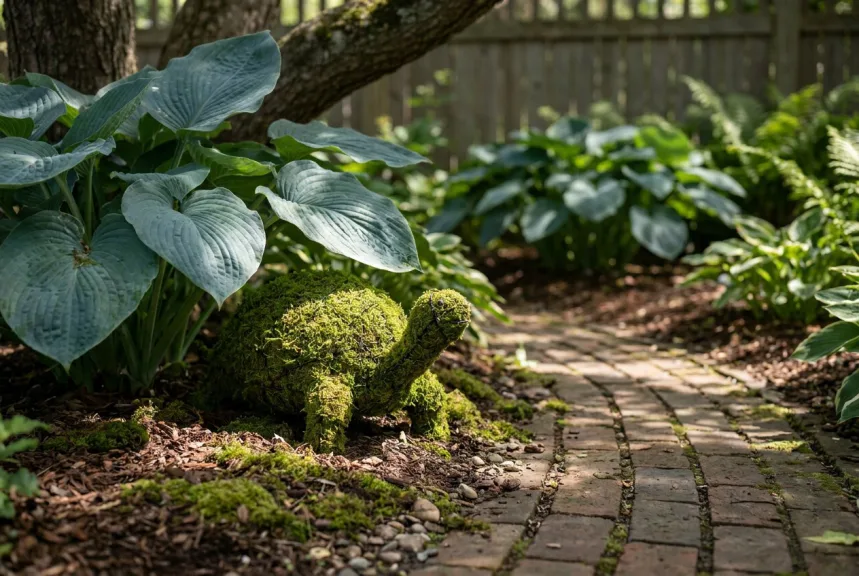
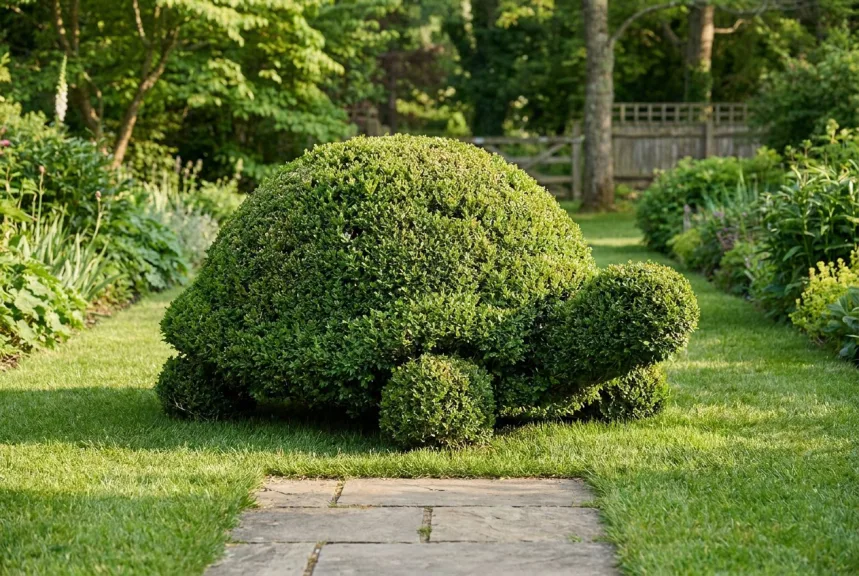
Live boxwood tortoise for a lawn
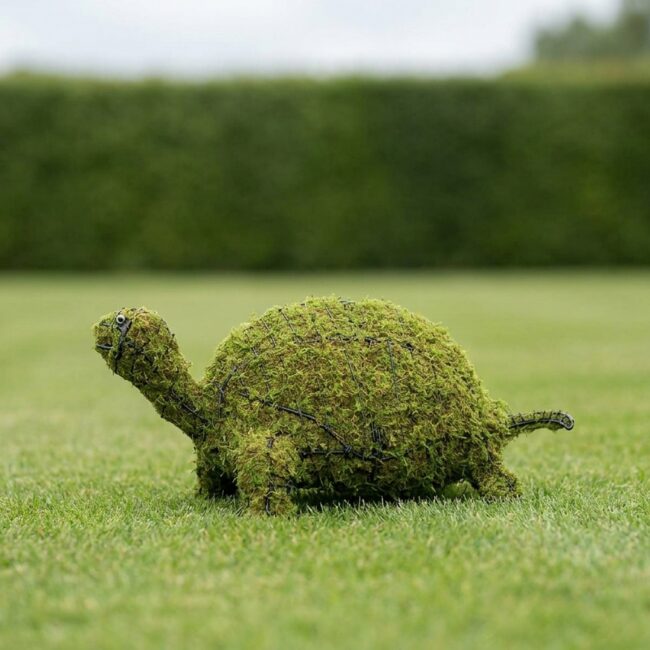
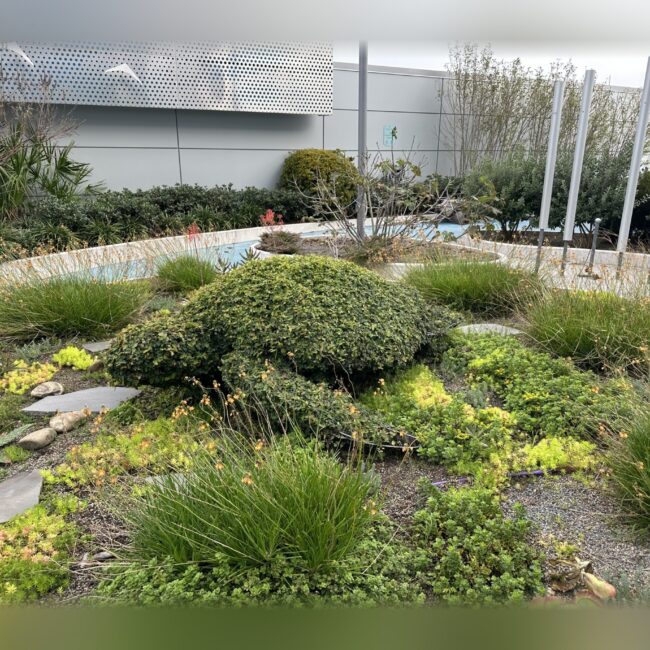
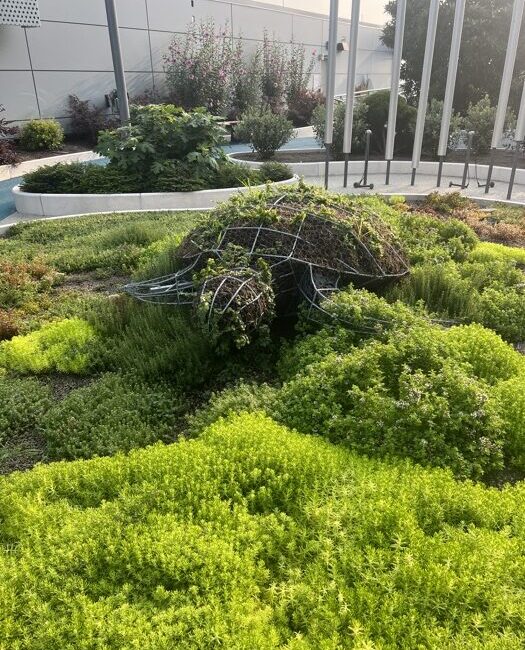
A tortoise in live boxwood, trained over a steel frame. The domed shell suits boxwood, which likes a round shape. Trim once or twice a year, after the last spring frost. Send us your ZIP code and the size you want.
Plants and trees
Animals and sculptures
Planters, wall art and more
Before you buy, and after
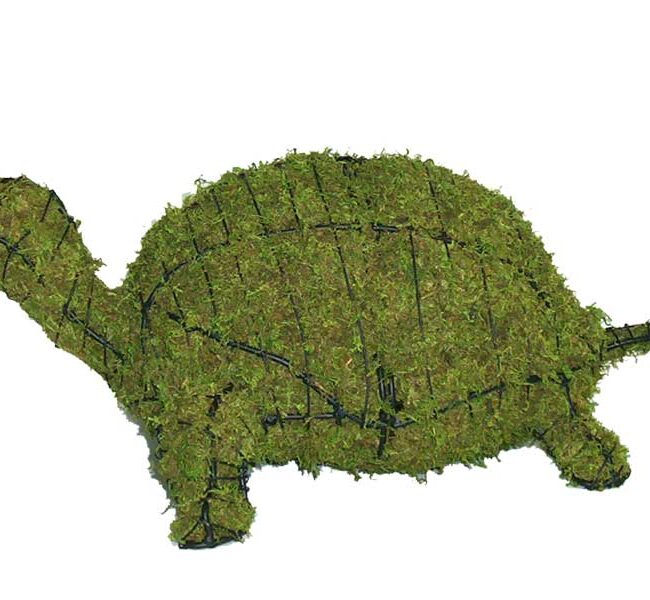
A turtle topiary is a low, broad piece on welded galvanized wire. The shell does the work; the head and feet finish it. Ours are five to twelve inches and start around $57, for a step, a border edge, a pond surround or a planter. Buy one mossed, or as a bare frame to plant with creeping fig.
We hold 3 turtle pieces at the moment, $57 to $76. 1 is large enough to be quoted with its delivery rather than priced here.
Tap a finish to see only those pieces above.
Small pieces ship by UPS Ground. Large pieces travel by freight, and the delivery is quoted with the piece, so you see the full cost before anything is charged.
Pieces marked ready to ship leave within a few working days. Pieces built to order take 4 to 10 weeks, plus the delivery. Have a date? Send it with your request and we confirm it before you order.
A price on a card is what the piece costs. Custom and large pieces are quoted with delivery, usually within hours. Every custom piece is made for one client, so the schedule, deposit and any changes are agreed with you when you approve the quote.
A turtle costs less than an animal of the same height because it is quicker to bend, weld and pack. It is low, broad and symmetrical, with no leg or neck sticking out far enough to need bracing. Nothing is cut short to hit the price.
You can move a turtle with one hand, and most people do. It sits on a step, a border edge, a pond surround or a planter, and goes somewhere else when the planting changes.
To plant a bare frame yourself, the frames are in wire frame topiary and the method is in adding live plants to a frame.
A mossed turtle needs misting through dry spells and new moss every year or so. A bare frame needs nothing until you plant it. Turf and artificial pieces need an occasional rinse, and no watering, trimming or seasonal work.
The frame is galvanized steel, so it lasts for decades outdoors.
Care by material is on our care pages. For a tired piece, this eight-year-old swan shows what a restoration looks like.
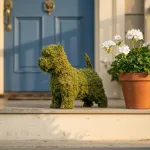
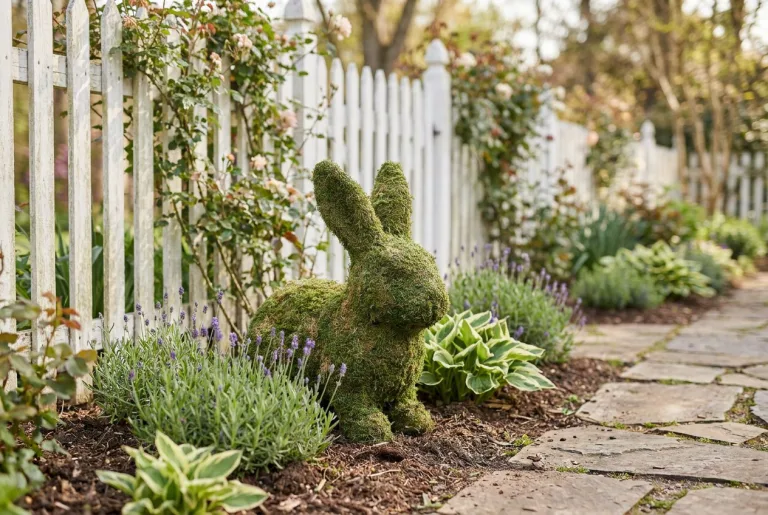
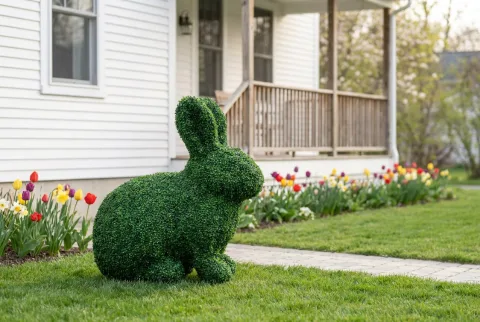
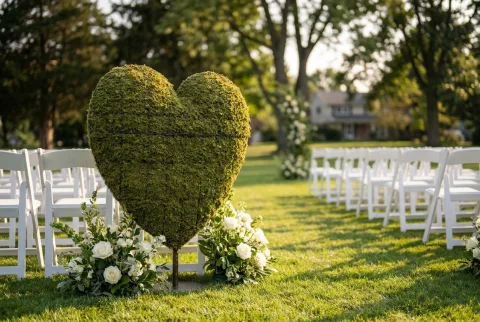
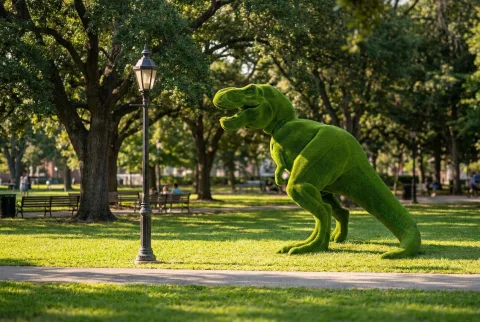
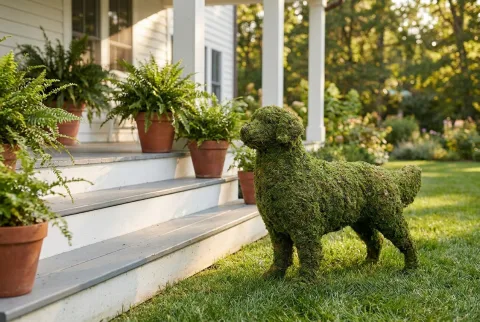
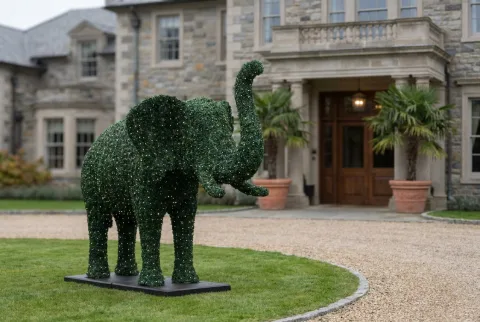
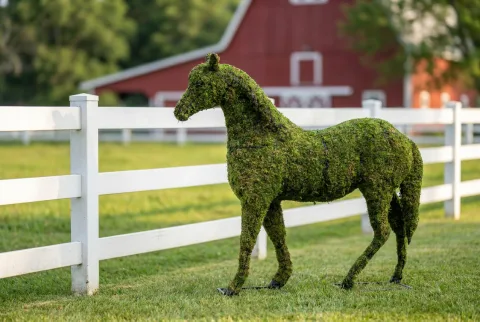
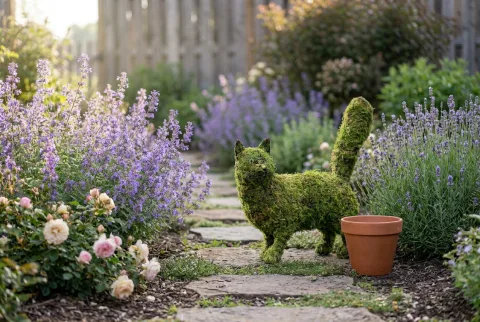
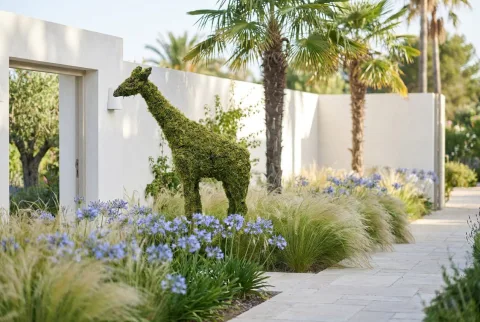
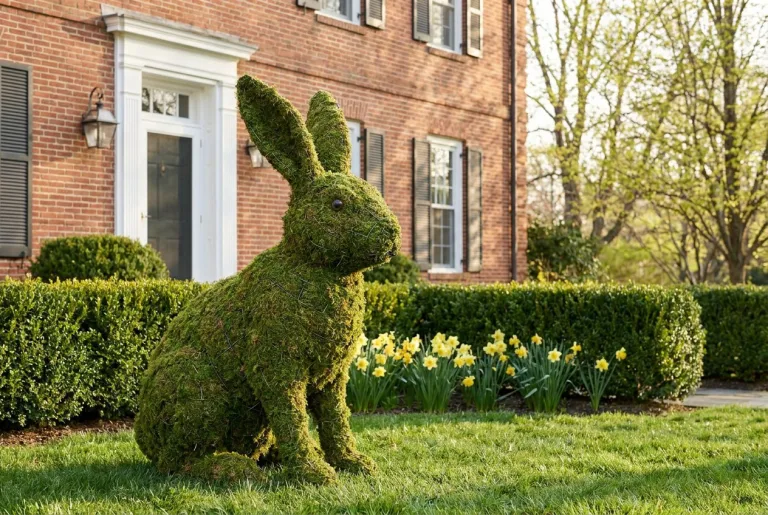
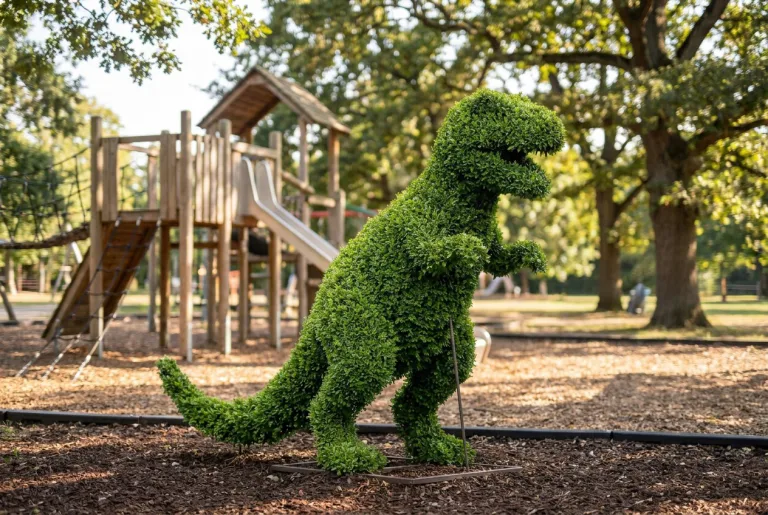
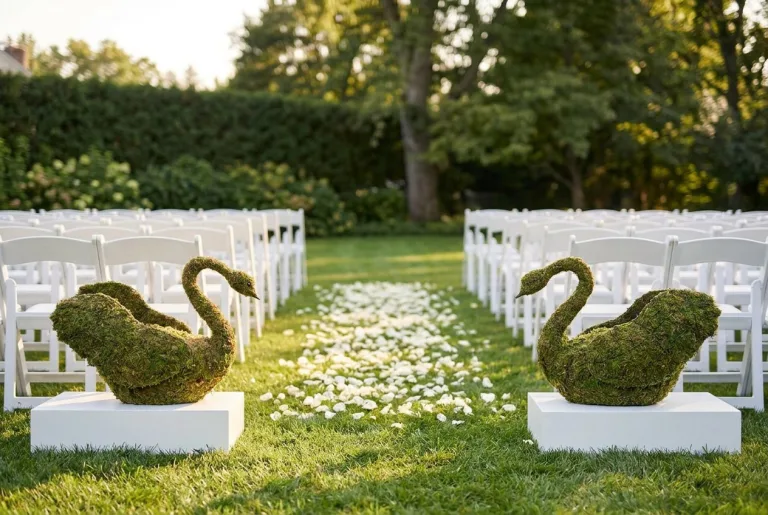
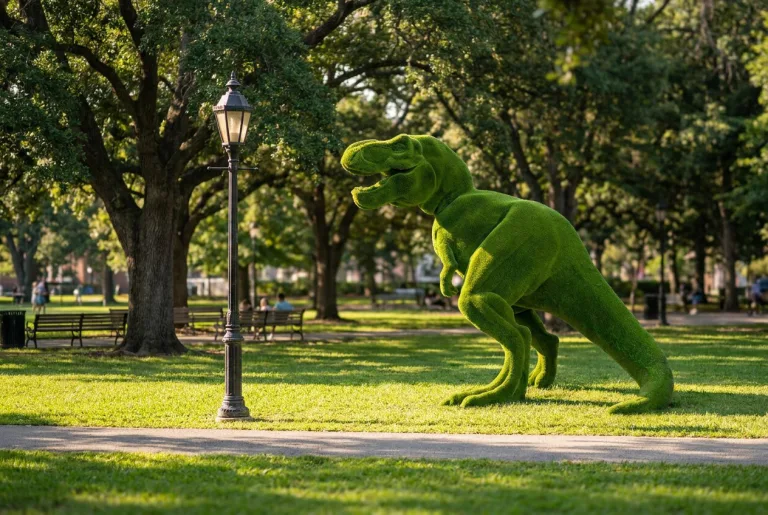
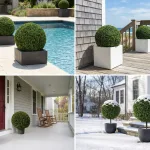
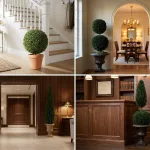
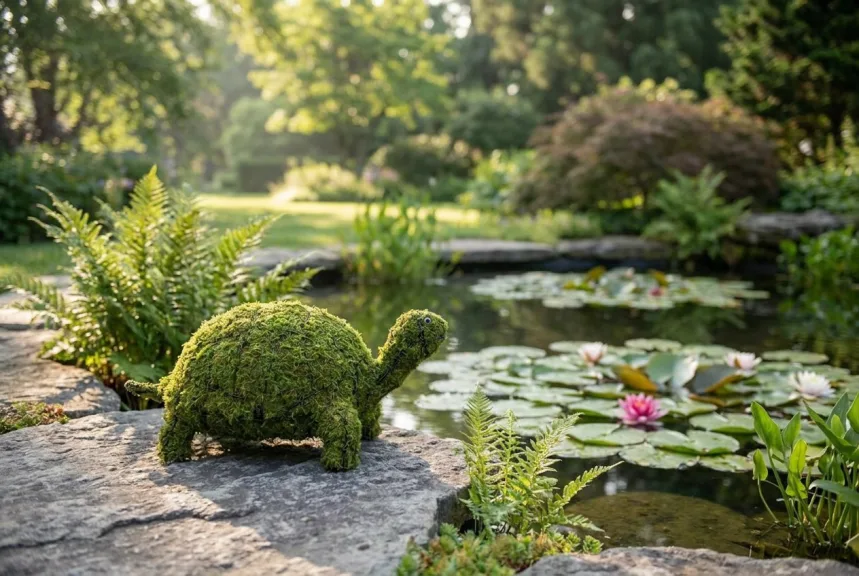
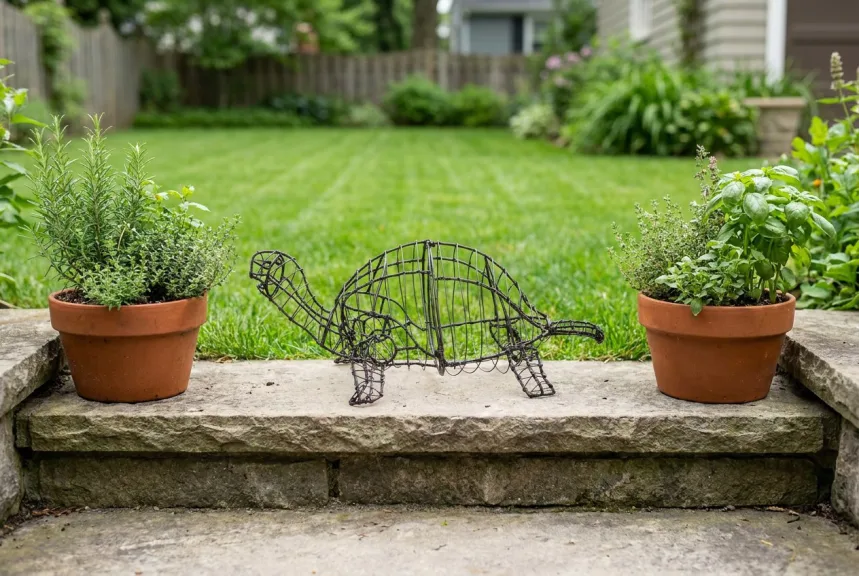
Staged photos of pieces from this page, set in the kinds of places they go. Tap one to see the piece and its size.
These turtles are concept renderings of pieces built to order, mossed, bare or in live boxwood. Send us a photo of the spot and the size you want, and we will reply the same day.
A tortoise in live boxwood, trained over a steel frame. The domed shell suits boxwood, which likes a round shape. Trim once or twice a year, after the last spring frost. Send us your ZIP code and the size you want.
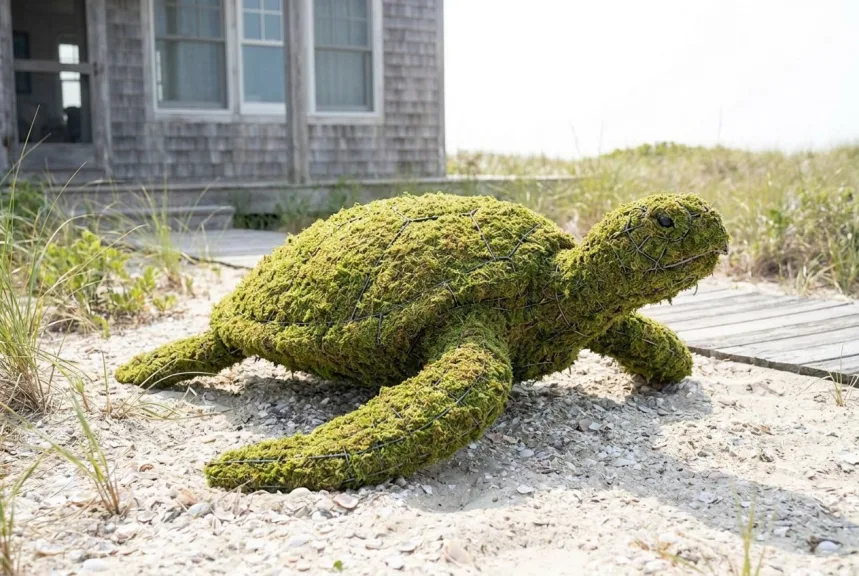
A sea turtle with long front flippers, mossed, for a beach house, a pool garden or an aquarium entrance. Custom frames are built to your drawing or photo. Send us a photo of the spot and the length you want.
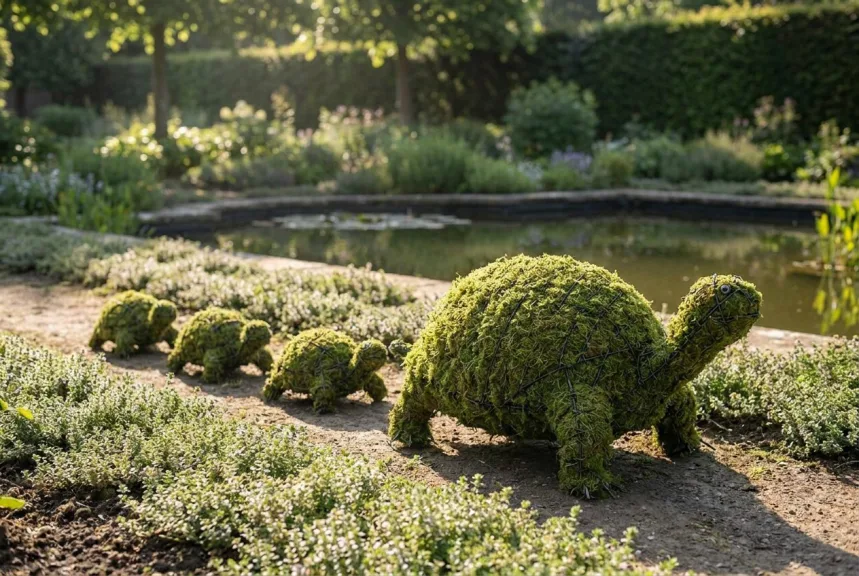
A mother turtle followed by a line of babies, walking along the edge of a border or down to a pond. A family suits a school garden or makes a good gift. Tell us how many babies and send a photo of the path.
Mossed animals and wire frames start as welded steel, galvanized before any moss goes on. See all six stages, start to finish →
Frames start around $57. Current prices are on the listings above, and a bare frame always costs less than a mossed one, because packing the moss is the slow part.
A mossed turtle is green from the day it arrives. A frame is for planting with creeping fig or ivy, or for stuffing yourself.
A wire frame can. A mossed turtle is better under cover, or somewhere out of full afternoon sun and driving rain.
No. At this size one person can move a turtle easily, which is why people often buy them in pairs or groups.
Yes. We make large turtles to commission: send the size and the setting.
Bunny topiary · Dinosaur topiary · Dog topiary · Horse topiary · Elephant topiary · Deer topiary · Swan topiary · Giraffe topiary · Frog topiary
Send a photograph or a sketch with the height you need and where it will stand. Our team comes back with a design, a price with delivery and a date, usually within hours.
Was this page useful?
Popular searches
Shop by range

Leave your email and we will send you a link back to this cart, so you can finish when you are ready. Questions? Call (866) 306-1020.
We kept what you typed last time.
Thank you. We have your request.
Our team replies within hours, usually the same day.
Something went wrong at our end, so nothing reached us. Please call and we will take the details over the phone.
Call (866) 306-1020Prefer to talk? Call (866) 306-1020