








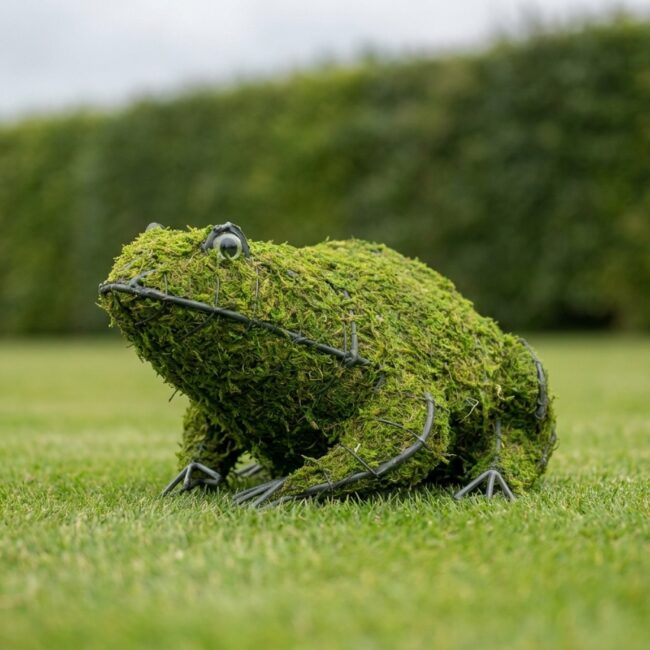
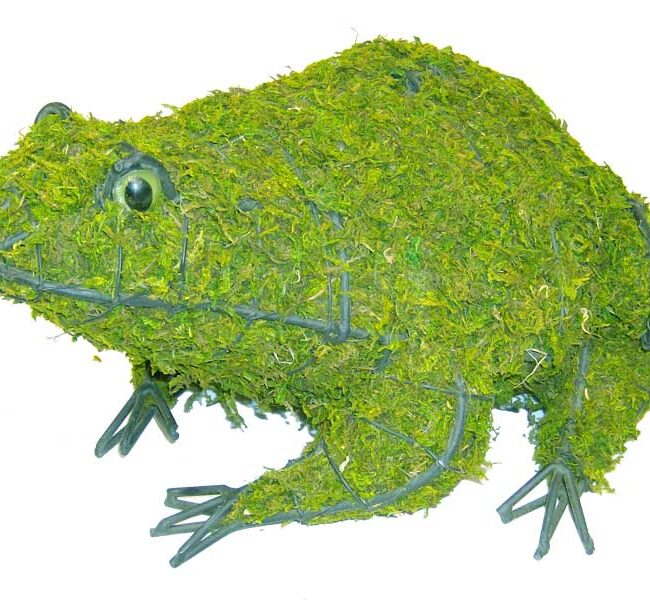
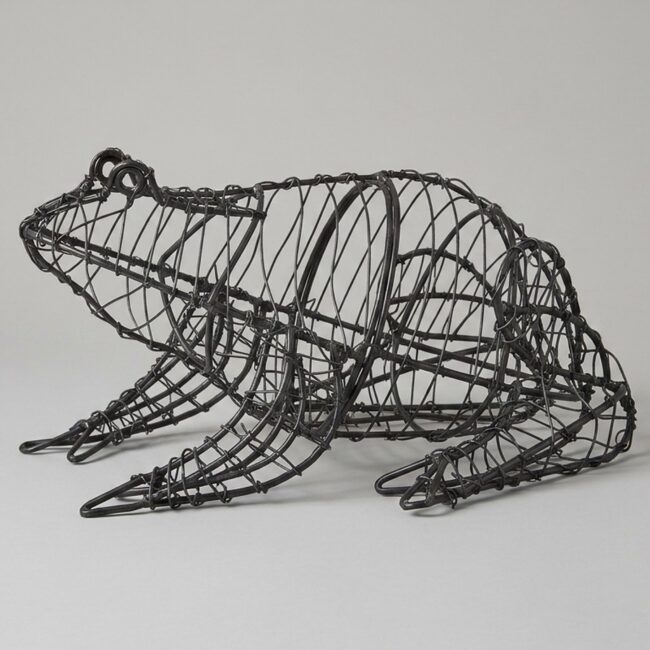
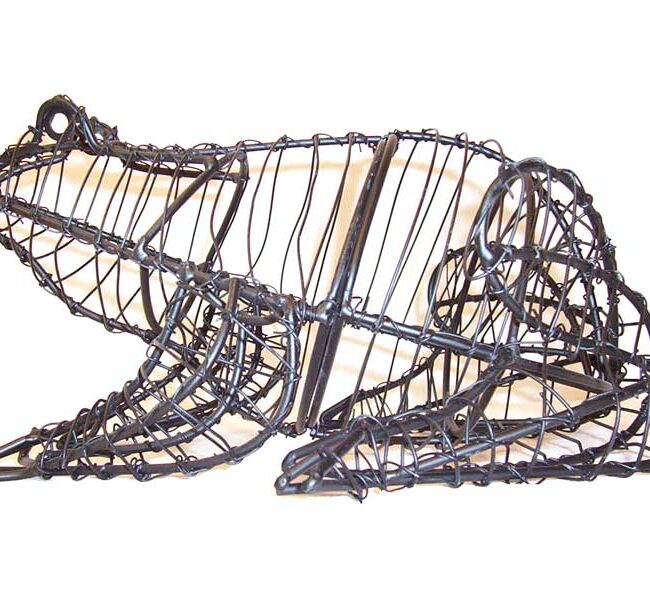
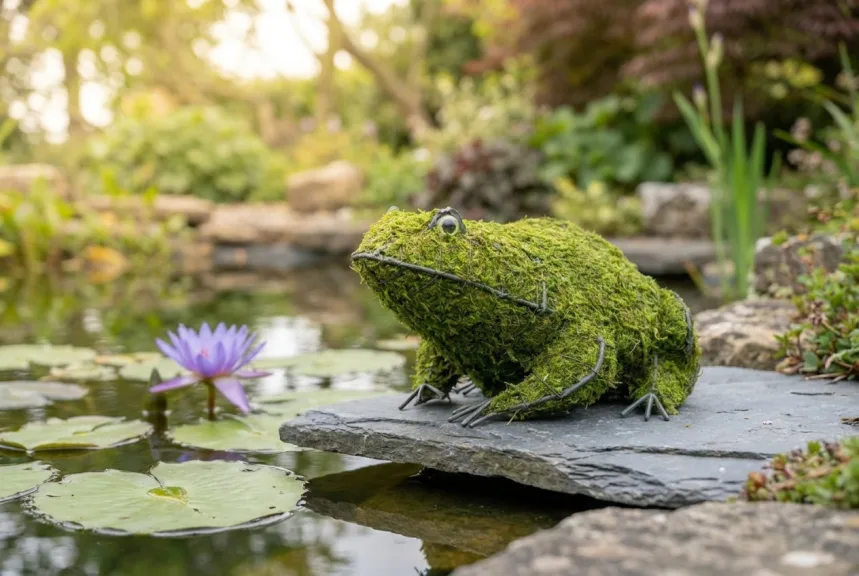
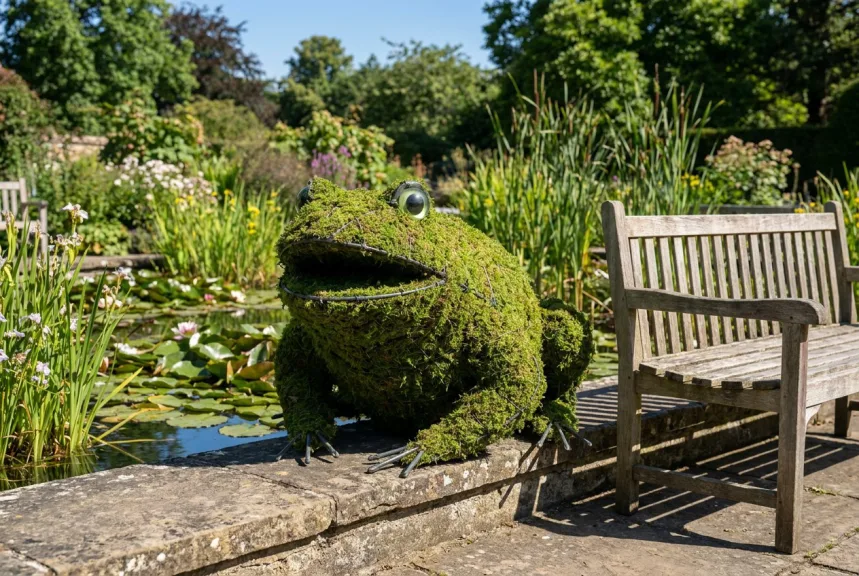
Large mossed frog for a water garden
A frog big enough to sit on, or nearly, for a public water garden, a park pond or a children's play area. Larger frogs get a heavier frame and a footing. Send us a photo of the pond and the height you want.
Plants and trees
Animals and sculptures
Planters, wall art and more
Before you buy, and after
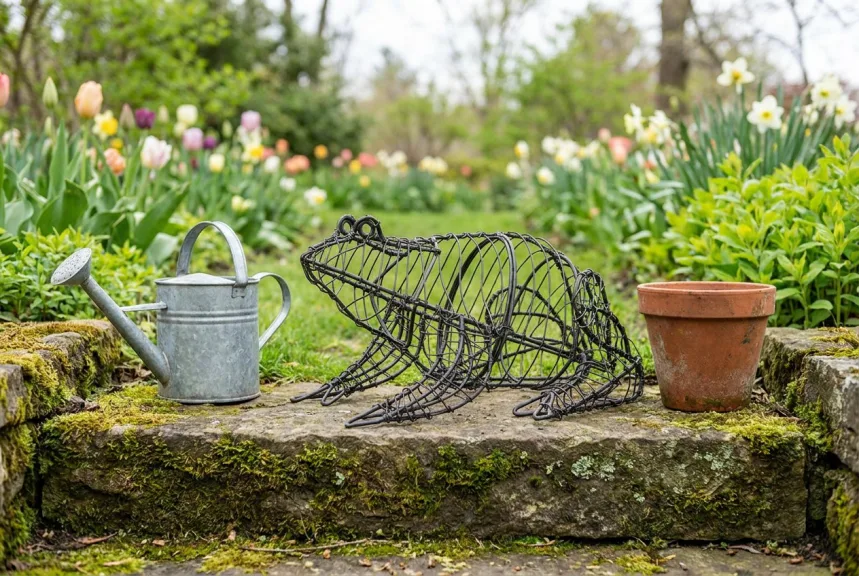
A frog topiary is a small sitting piece for a pond edge, a step, a border or a planter. Ours start around six inches high, on welded galvanized frames, in hand-packed sphagnum moss or as bare wire to stuff or plant. One person can move a frog easily, so people usually buy them in pairs or small groups.
We hold 2 frog pieces at the moment, $72 to $84.
Tap a finish to see only those pieces above.
Small pieces ship by UPS Ground. Large pieces travel by freight, and the delivery is quoted with the piece, so you see the full cost before anything is charged.
Pieces marked ready to ship leave within a few working days. Pieces built to order take 4 to 10 weeks, plus the delivery. Have a date? Send it with your request and we confirm it before you order.
A price on a card is what the piece costs. Custom and large pieces are quoted with delivery, usually within hours. Every custom piece is made for one client, so the schedule, deposit and any changes are agreed with you when you approve the quote.
A topiary under about a foot tall needs no internal tubing, sectioning or footing. The frame is bent, welded, galvanized and packed in one go, and the finished piece is light enough to lift with one hand.
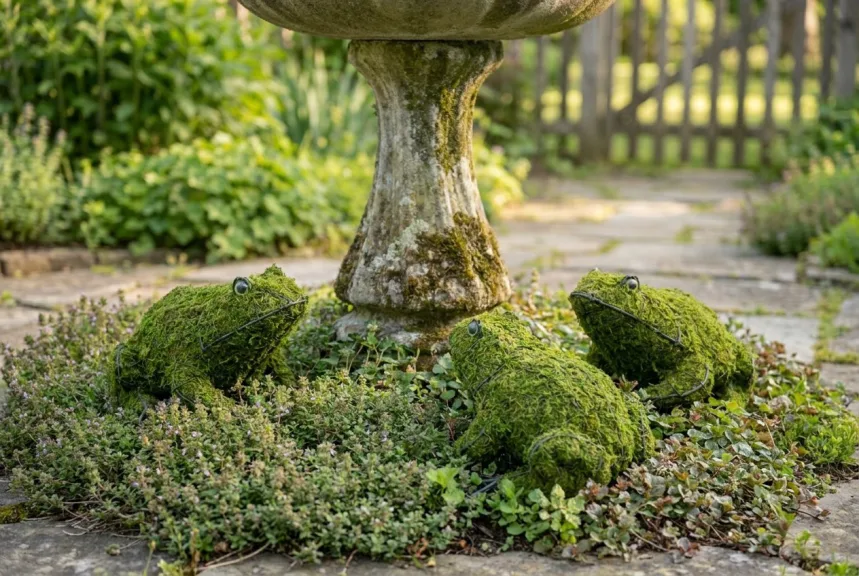
A single frog on a step reads as an ornament. A few at different sizes along a pond edge look planned. And since nothing this size needs a footing, you can move them whenever the planting around them changes.
The other small pieces are in mossed animal topiary, and the bare frames are in wire frame topiary.
Mist a mossed frog through dry spells and refresh the moss every year or so. A bare frame needs nothing until you plant it. Turf and artificial pieces need an occasional rinse, with no watering, trimming or seasonal work.
The frame is galvanized steel, which lasts for decades outdoors. Keep the base out of standing water all the same.
Care by material is on our care pages. For a tired piece, this eight-year-old swan shows what a restoration looks like.
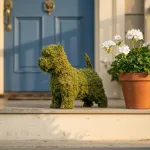
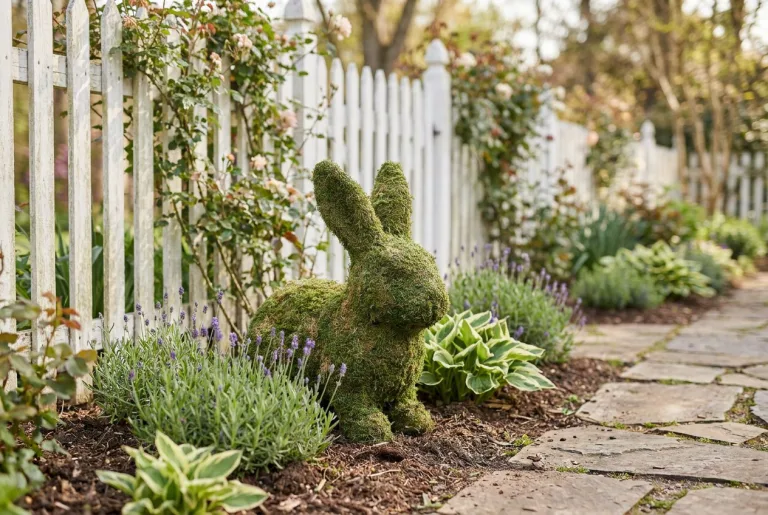
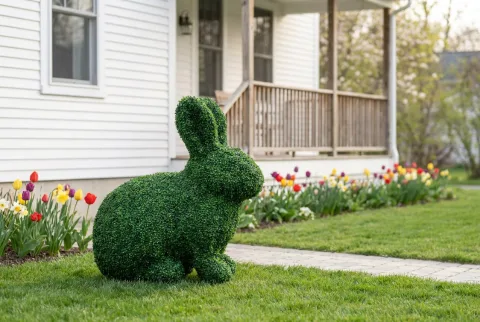
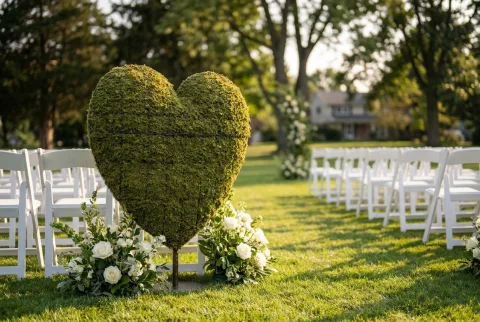
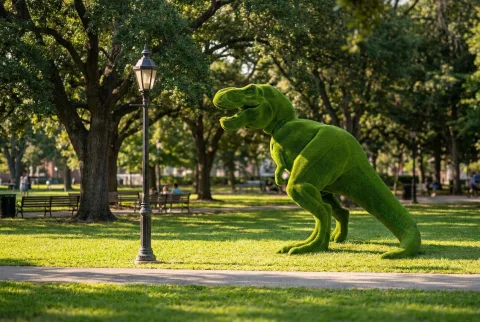
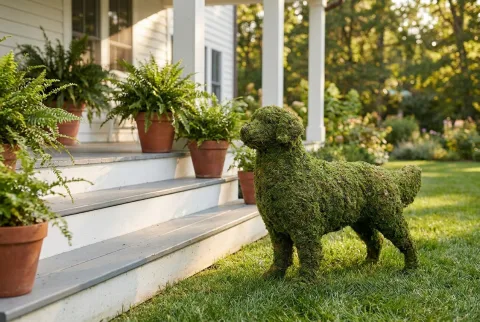
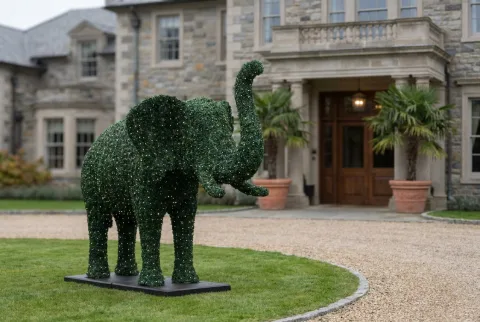
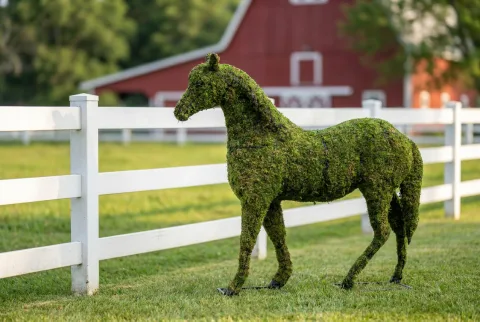
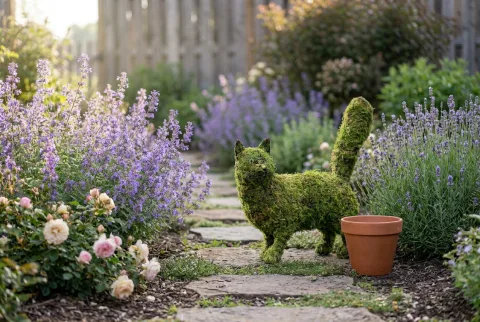
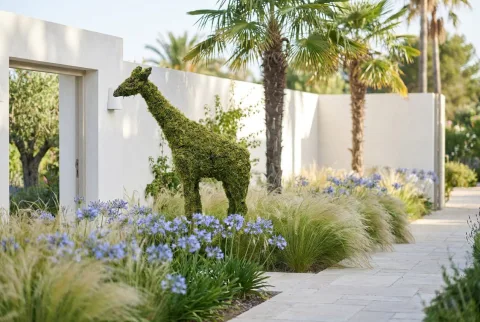
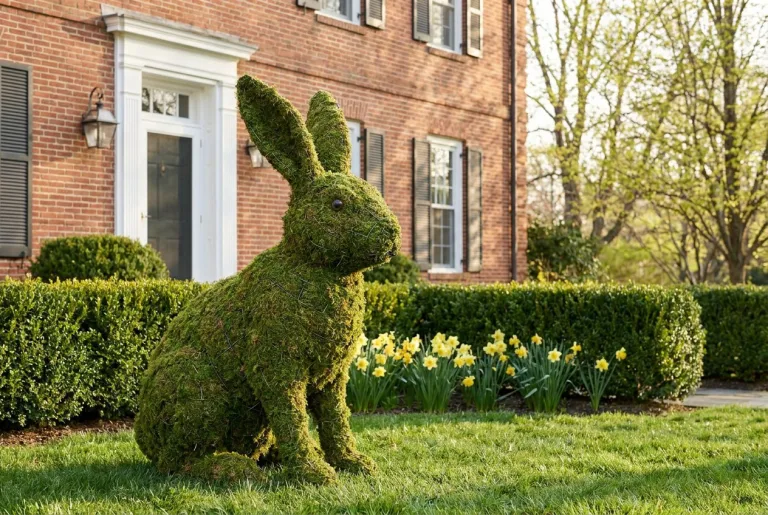
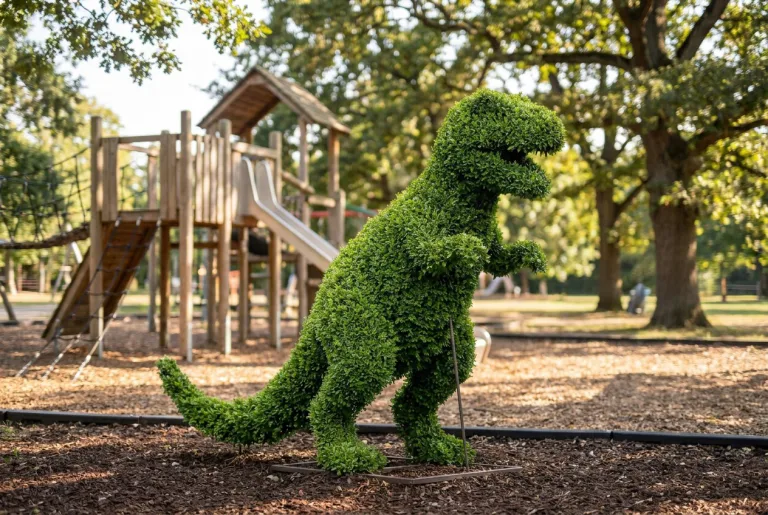
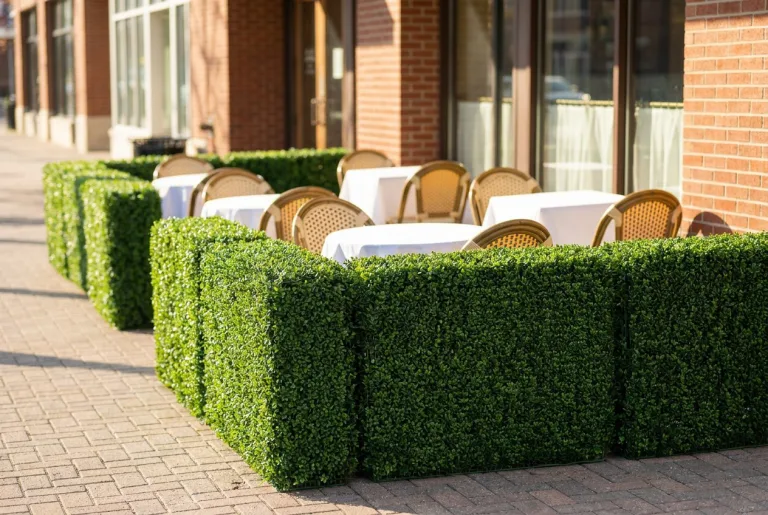
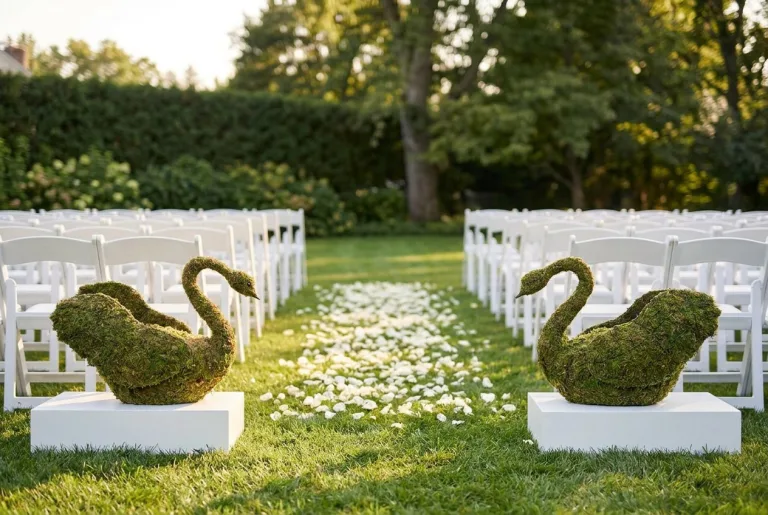
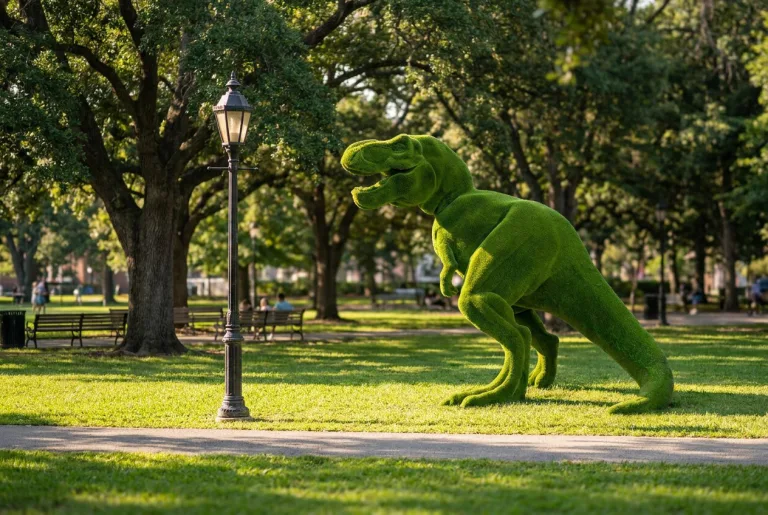
Staged photos of pieces from this page, set in the kinds of places they go. Tap one to see the piece and its size.
These frogs are concept renderings of pieces built to order in sphagnum moss over welded, galvanized steel. Send us the size you want and a photo of the spot.
A frog big enough to sit on, or nearly, for a public water garden, a park pond or a children's play area. Larger frogs get a heavier frame and a footing. Send us a photo of the pond and the height you want.
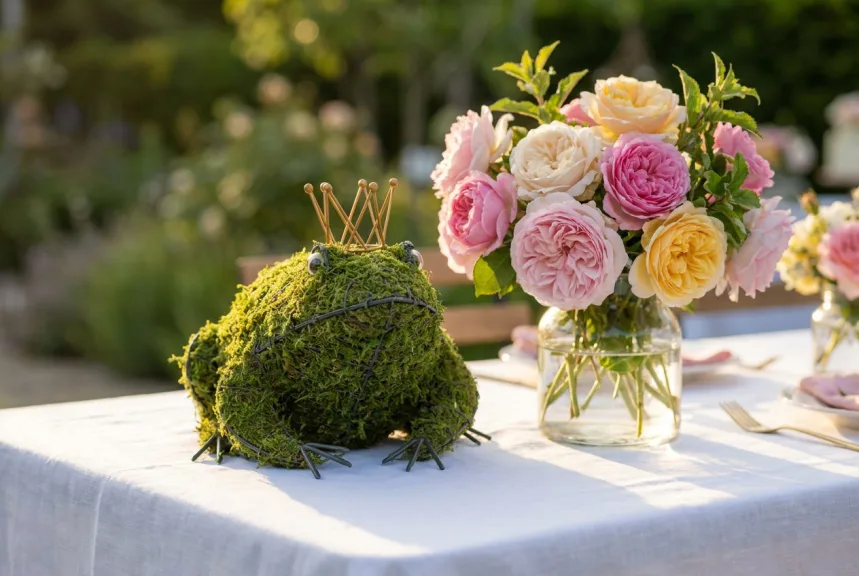
A mossed frog wearing a small crown, made in gold powder coat, for a garden party, a wedding table or a gift. Powder coat colors are an optional upgrade. Tell us the size you want and the date.
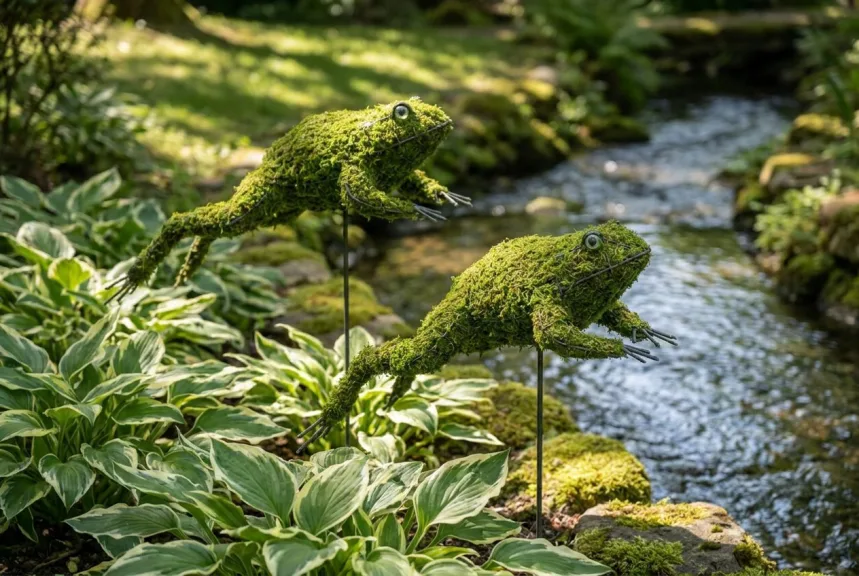
Two frogs in mid leap on thin steel stakes, as if jumping across a border or a stream. They are light, so one person can place and move them. Send us a photo of the spot and the size you want.
Mossed animals and wire frames start as welded steel, galvanized before any moss goes on. See all six stages, start to finish →
From around six inches, a good size for a step, a planter edge or a shelf. Every listing gives the exact dimensions.
Yes, and that is where most of them go. Keep the base above the waterline so the steel is not standing in water.
A mossed frog is green from the day it arrives. A bare frame is for planting with creeping fig or a small-leaved climber.
Mossed frogs do, and they need misting rather than watering. A bare frame planted with live material needs light.
Yes. Send the size you want and where it will stand, and we will quote it as a commission.
Bunny topiary · Dinosaur topiary · Dog topiary · Horse topiary · Elephant topiary · Deer topiary · Swan topiary · Giraffe topiary · Bear topiary
Send a photograph or a sketch with the height you need and where it will stand. Our team comes back with a design, a price with delivery and a date, usually within hours.
Was this page useful?
Popular searches
Shop by range

Leave your email and we will send you a link back to this cart, so you can finish when you are ready. Questions? Call (866) 306-1020.
We kept what you typed last time.
Thank you. We have your request.
Our team replies within hours, usually the same day.
Something went wrong at our end, so nothing reached us. Please call and we will take the details over the phone.
Call (866) 306-1020Prefer to talk? Call (866) 306-1020