





Cone Topiary
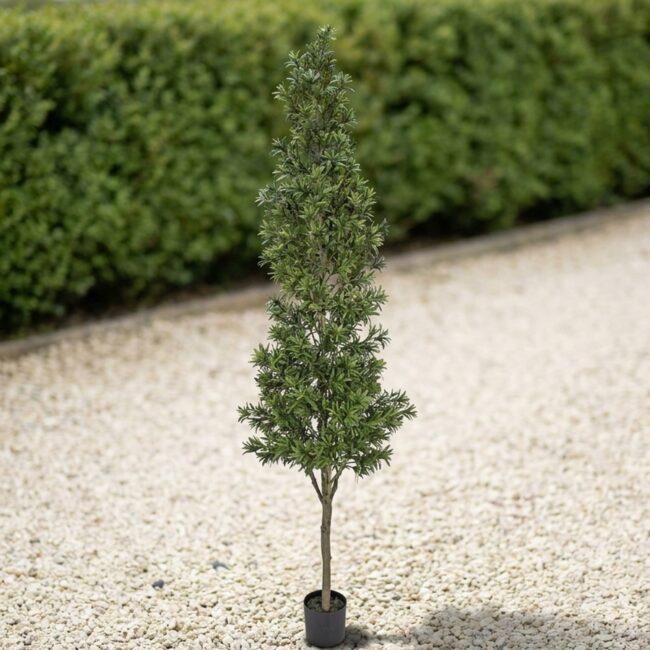
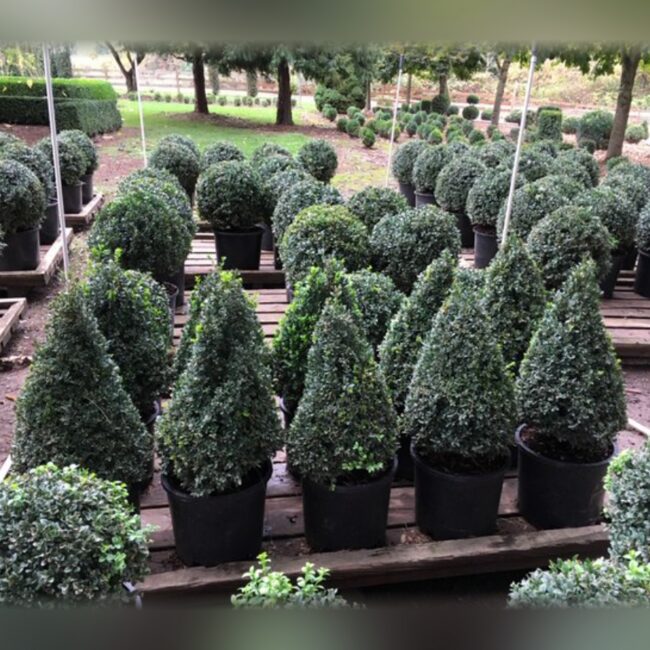
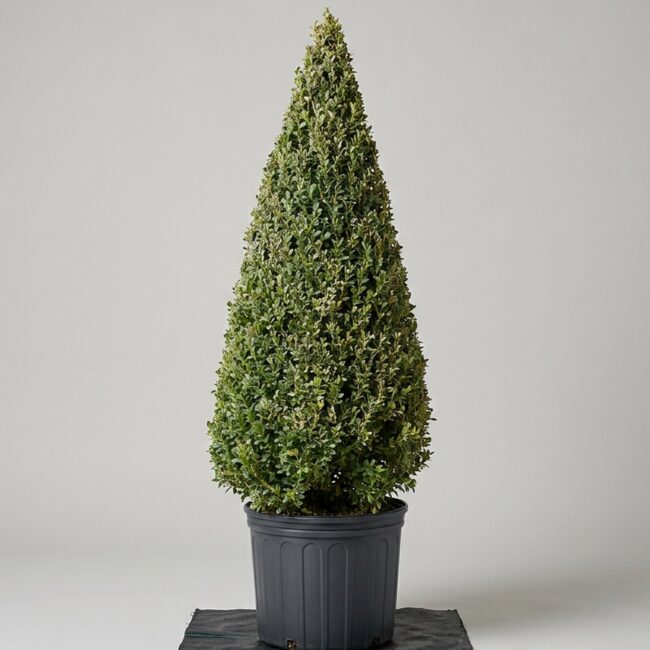
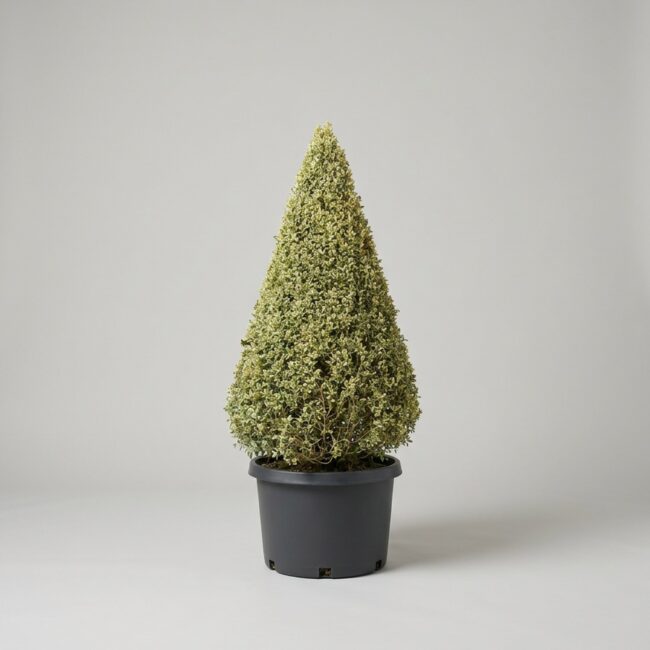
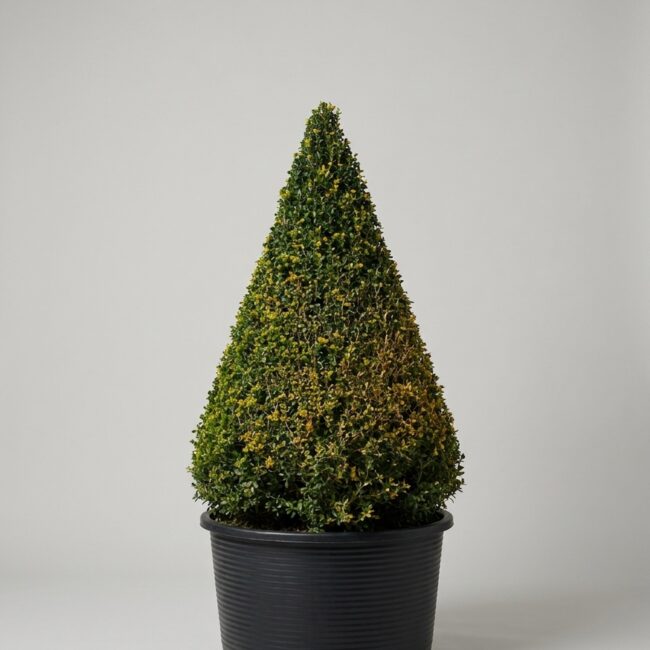
Boxwood cones give a garden height without width. A cone shaped boxwood fits a narrow bed, frames a gate or stands in a pair of pots by the door. It holds its taper with a light trim once or twice a year. If the pots will stay outside in winter, tell us your zone and we will match the plant to it.
Need a size or shape you don’t see?
Tell us the space and the height. We will suggest pieces and quote them with delivery to your ZIP.
Why choose cone-shaped boxwood
A boxwood cone is the easiest topiary shape to keep: one clean taper, trimmed by following the line that is already there. A matched pair looks finished almost anywhere, from a city stoop to a country porch. The rows below cover where boxwood cones work, how small a cone can be and still look right, and when the variegated cone is the better choice.
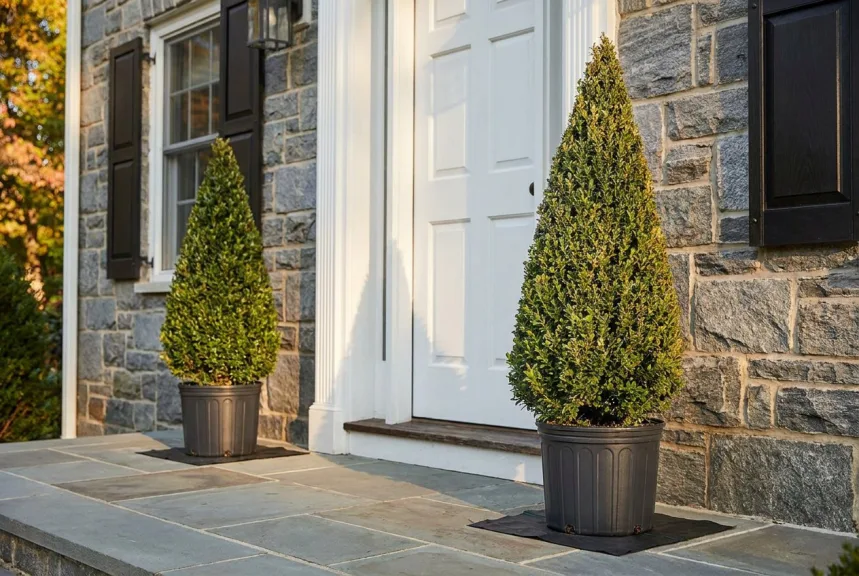
Boxwood cones beside a front door
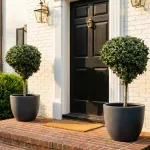
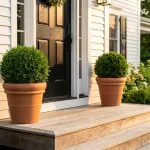
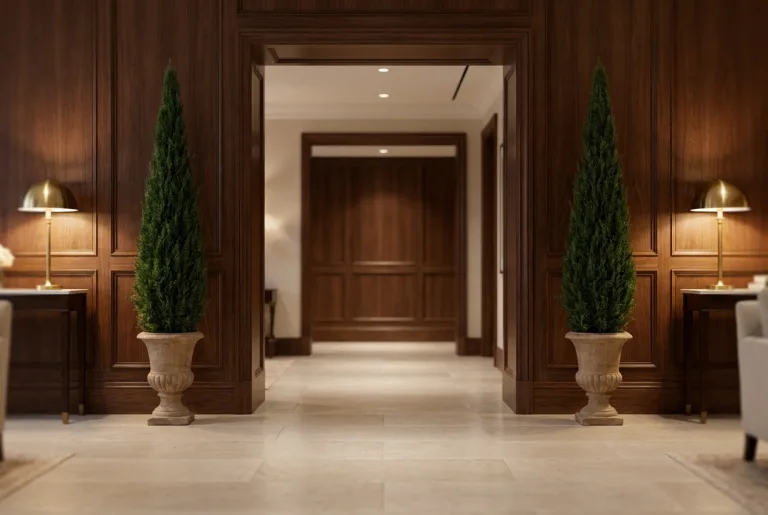
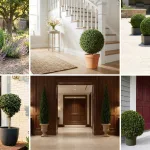
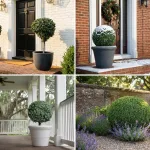
A pair of tall boxwood cones frames a door without crowding it. The narrow tops leave room for a porch light or a window beside the frame.
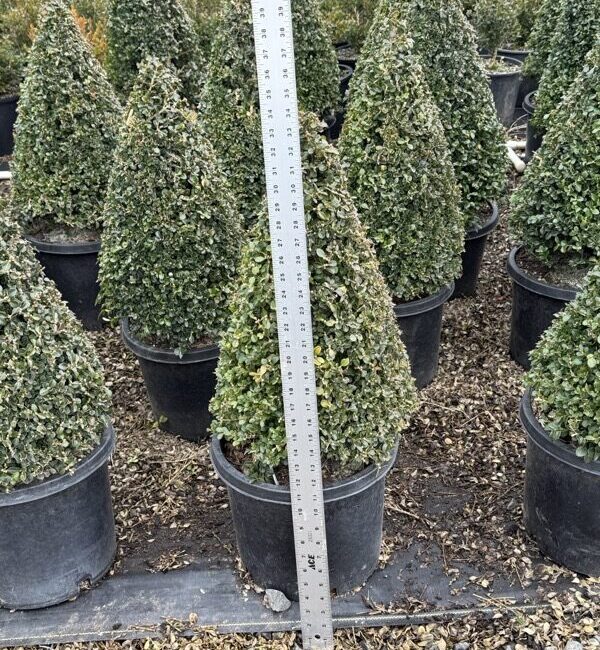
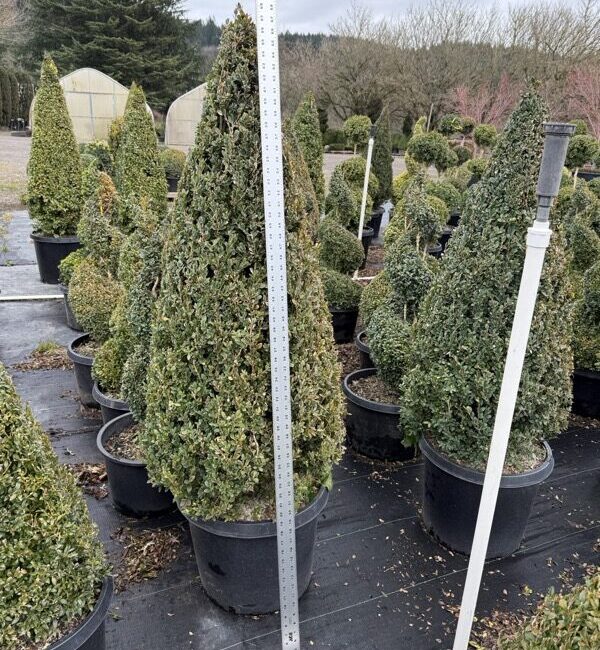
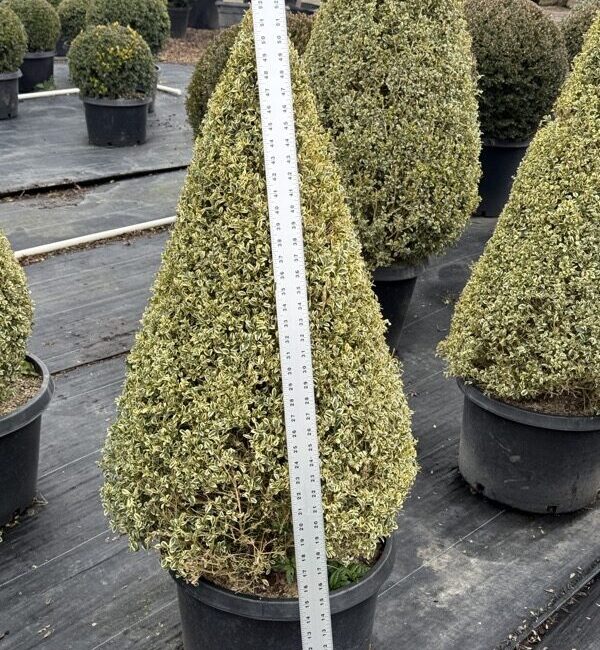
Measure the door first. Size the pair to the door, not the porch. The tall cones here run from 45 to 71 inches and travel by freight, upright and braced, with delivery in the quote. Topiary for a front door shows how to size a pair.
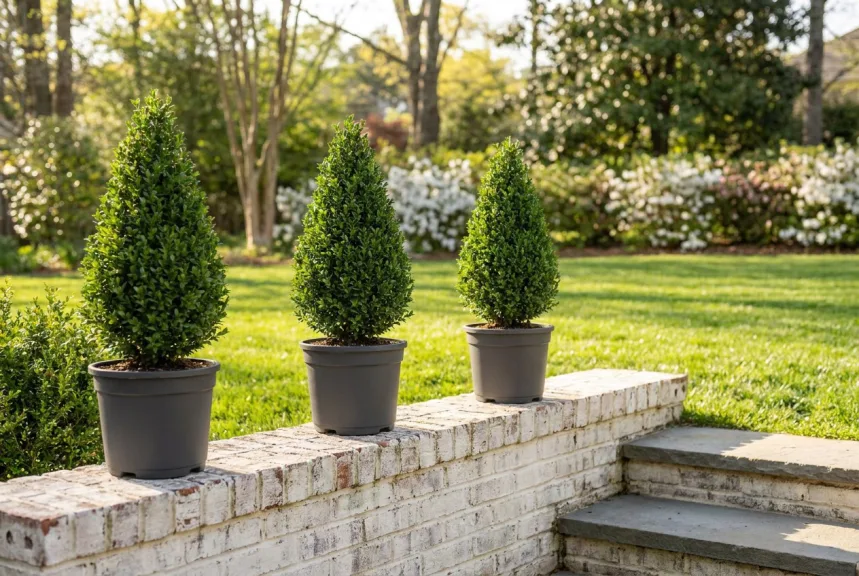
Small boxwood cones for steps and walls
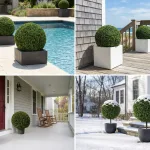
Not every spot needs a tall piece. The small cones here run from 15 to 34 inches, the right scale for porch steps, the top of a low wall or an outdoor table. Set in a row, they give a garden a formal line.
Small pots dry out faster than big ones, so check the soil in hot weather. Water well before the ground freezes, because moist soil freezes more slowly than dry. The 15 to 34 inch cone ships UPS Ground in a custom box.
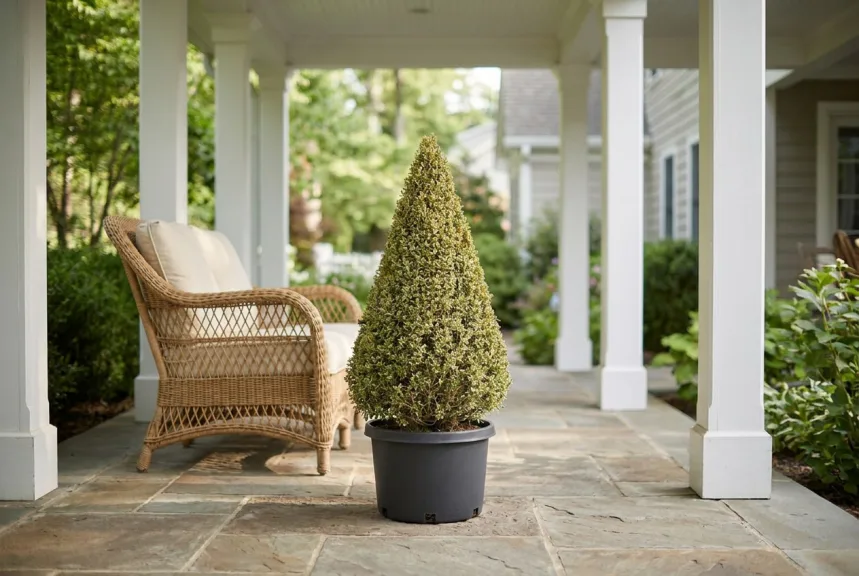
Variegated cones for a shaded porch
The variegated cone has cream-edged leaves and does best in part shade. It should get no afternoon sun at all, and it is safest in zones 6 to 8. That makes it a good fit for a porch that faces north or east.
In a pot, the container matters too. Concrete, wood, plastic and metal stand up to frost. Terracotta and ceramic can crack as they freeze and thaw. Boxwood in a planter covers the rest.
Questions about Cone Topiary
What size cone topiary suits a front porch?
Match it to the door. The cones here run from 15 inches to 71 inches, so small ones suit a step and the tall ones a full-height door. Most porches take a pair. Topiary for a front door covers choosing a pair.
How do I keep a boxwood cone in shape?
Trim lightly, following the taper, once or twice a year after the last spring frost. Avoid cutting in late summer or early fall, when new shoots may not harden before winter. Every year or two, thin the foliage so light reaches the inside.
Should a boxwood cone go in a pot or in the ground?
Either works. In the ground within its zone, it is permanent. In a pot, it needs good drainage and a plant rated one zone colder than yours if it winters outside. Do not plant it too deep or pile soil over the roots; both slow boxwood down.
Can a boxwood cone take full sun?
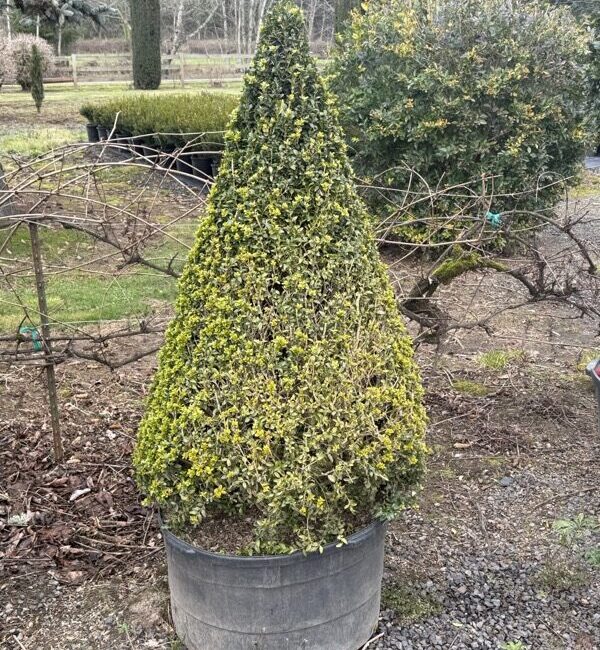
It can, but it does better with afternoon shade. Cones facing south or southwest get more winter burn, which turns the leaves orange or yellow-brown. The variegated cone should get no afternoon sun at all.
How is a tall cone delivered?
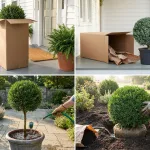
By freight, upright and braced, with delivery included in the quote. Someone needs to be there to sign. Note any damage on the receipt before signing. The 15 to 34 inch cone ships UPS Ground in a custom box instead.
Do you sell artificial cone topiary?
Yes, on a separate page. Artificial cones need no trimming or watering, which suits a deep-shade porch or a spot nobody tends. See artificial cone topiary for the sizes and outdoor grades.