
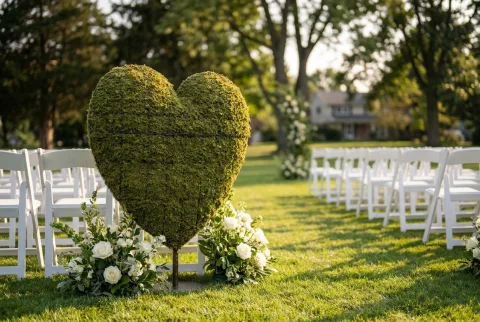

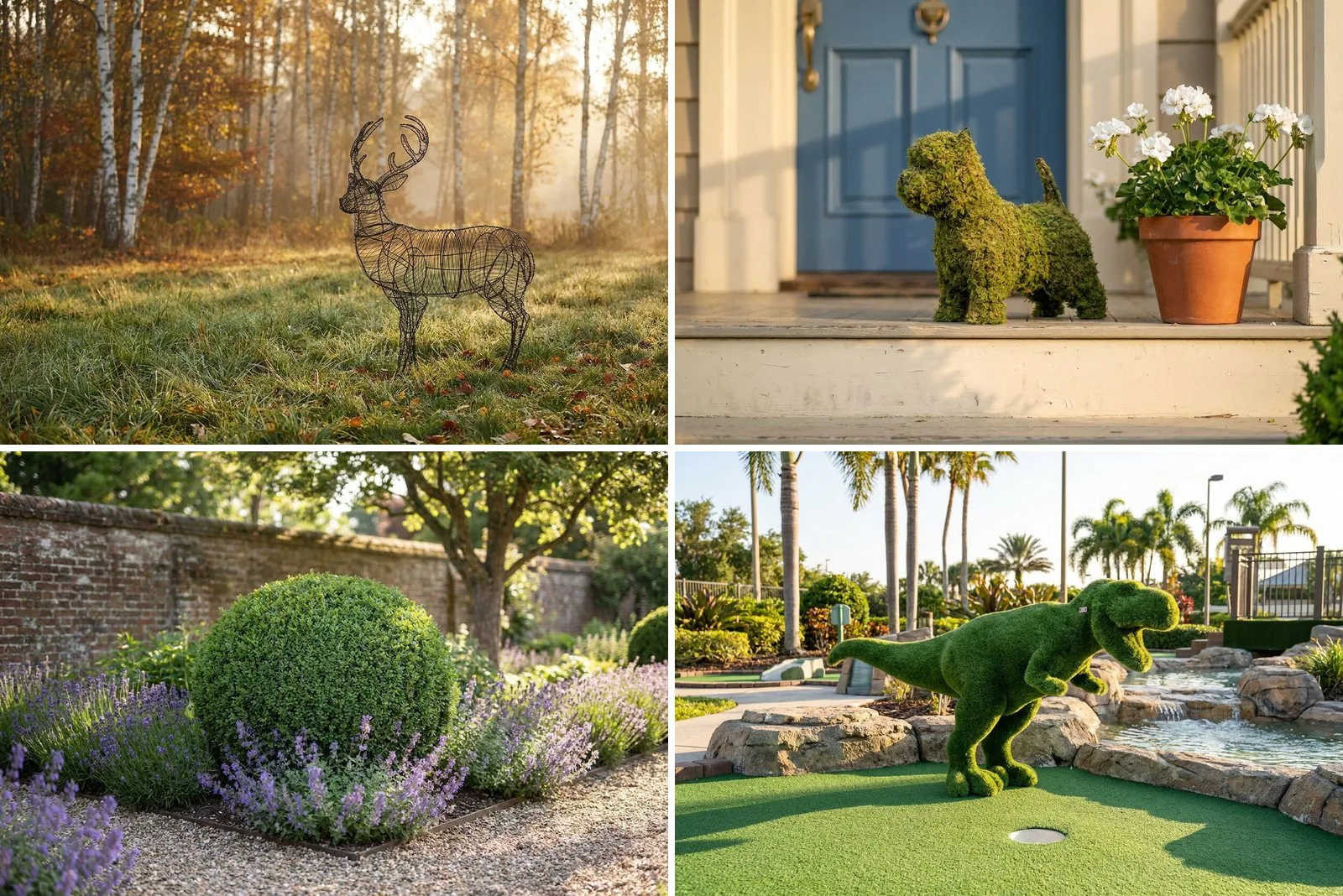
Topiary costs from about $57 for a small bare wire frame to $37,200 for a large turf sculpture. A small artificial ball starts at $98, a small live boxwood globe at $155 and a preserved ball at $450. Anything large or built to order is quoted instead, because freight varies too much to print one number.
The whole range, in one view
| Type | Price range |
|---|---|
| Wire frame animals | About $57 to $1,649 |
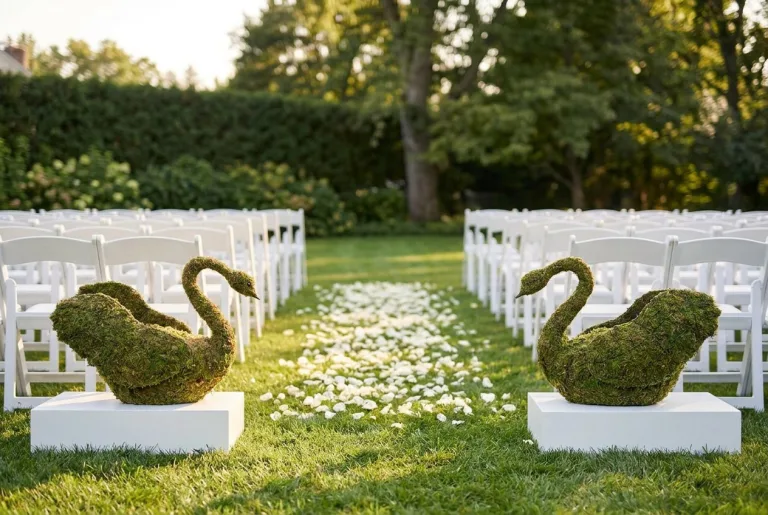
| Mossed animals | About $72 to $4,041 |
| Artificial boxwood balls | From $98 for 10 inches |
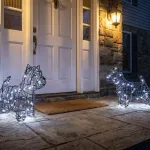
| Lighted wire animals | $128 to $414 |
| Live boxwood | $155 to $5,500 |
| Preserved topiary | $450 to $3,750 |
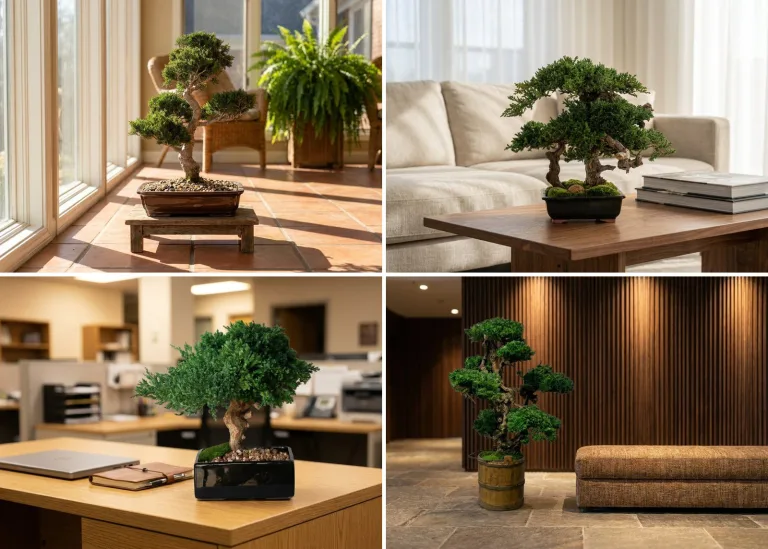
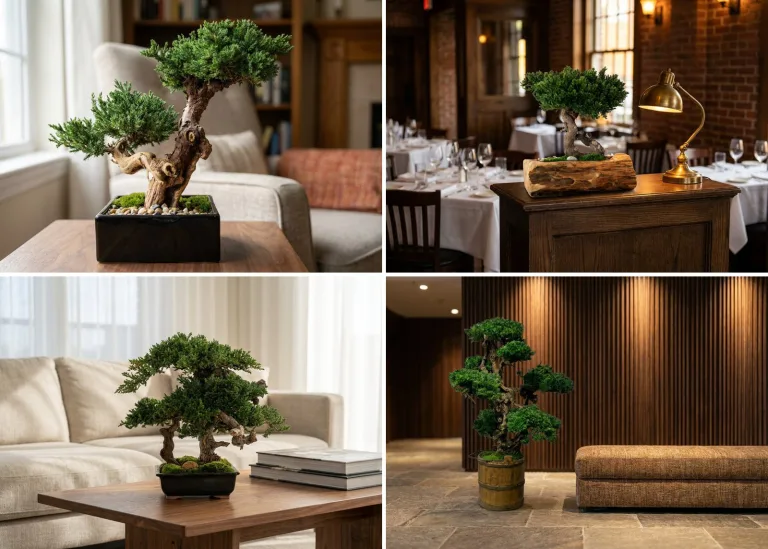
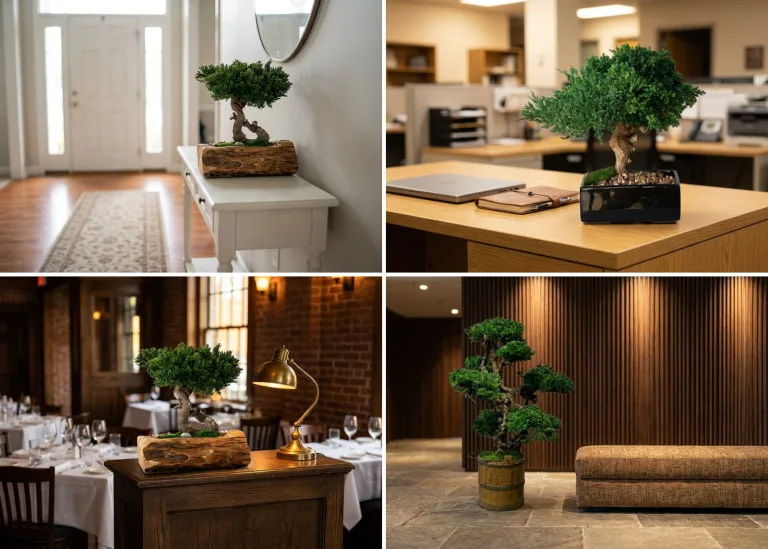
| Preserved bonsai | $122 to $1,709 |
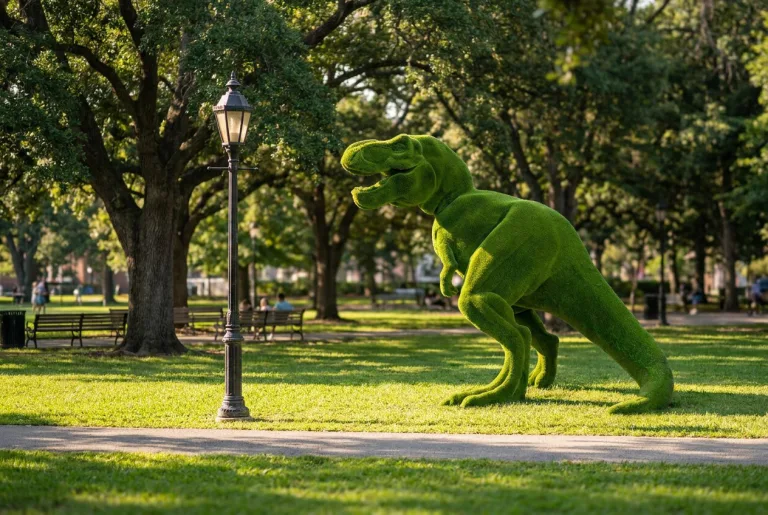
| Turf sculptures | $2,350 to $37,200 |
| Custom pieces | Quoted |
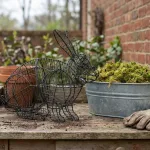
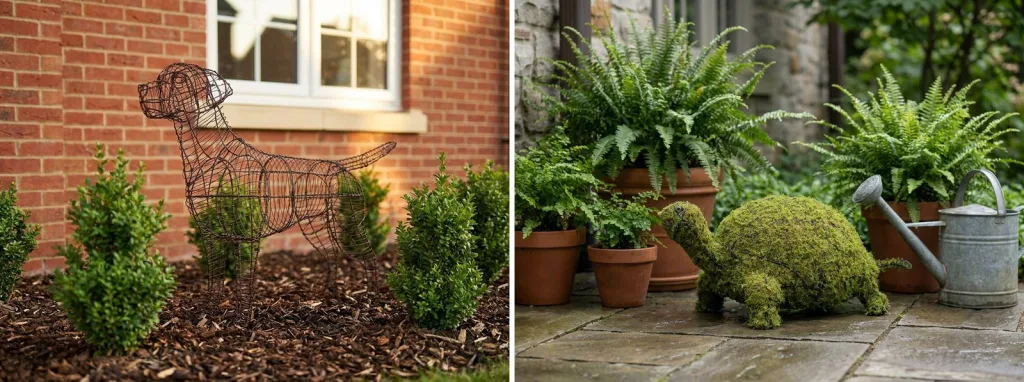
Bare wire frames start at about $57 for a small turtle and reach $1,649 for a 60 inch moose. Size and the amount of steel set the price.
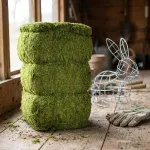
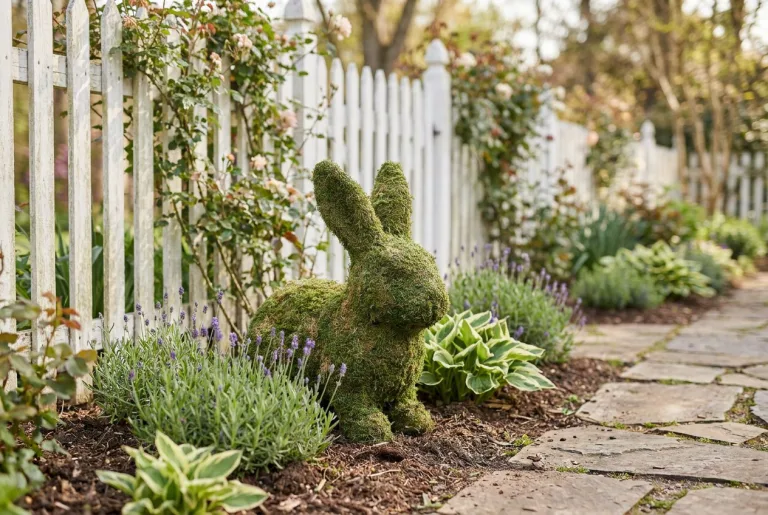
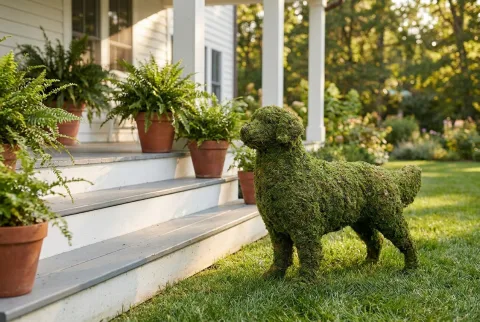
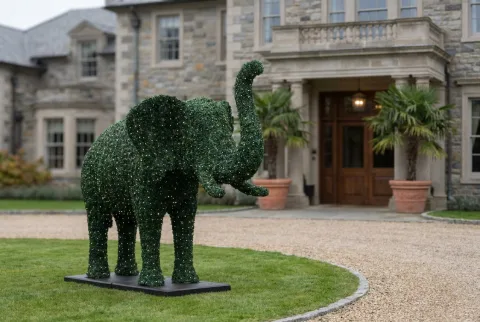
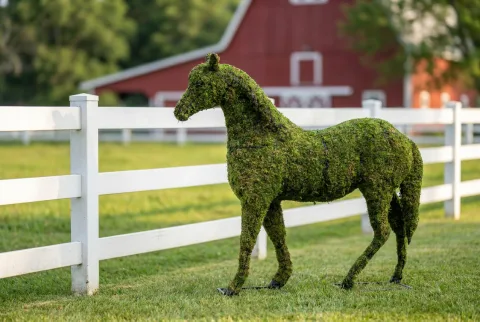
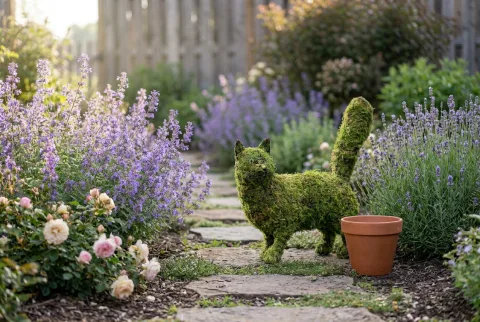
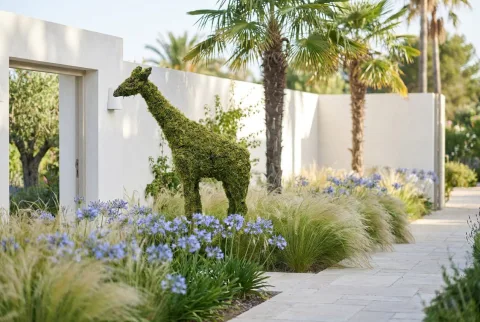
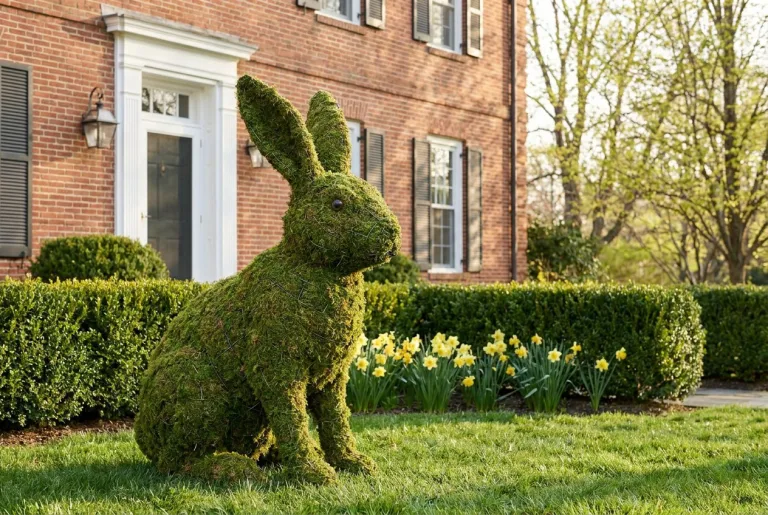
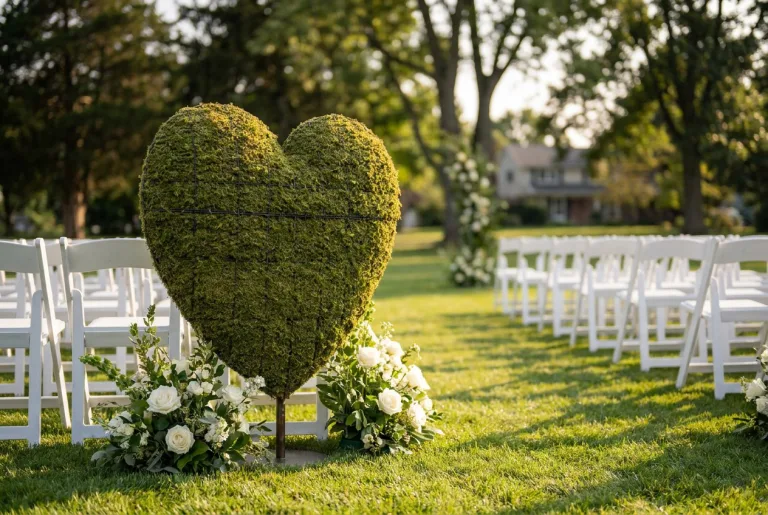
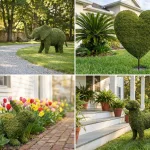
Mossed animals start at about $72 for a small frog and reach about $4,041 for a 5 foot elephant.
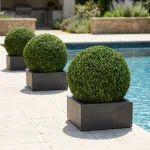
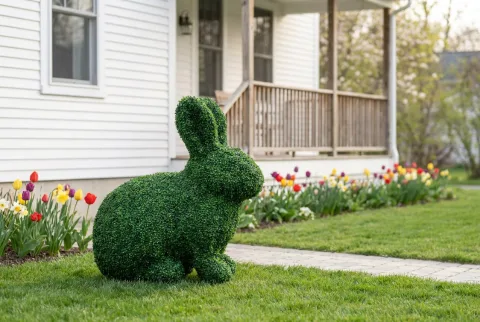
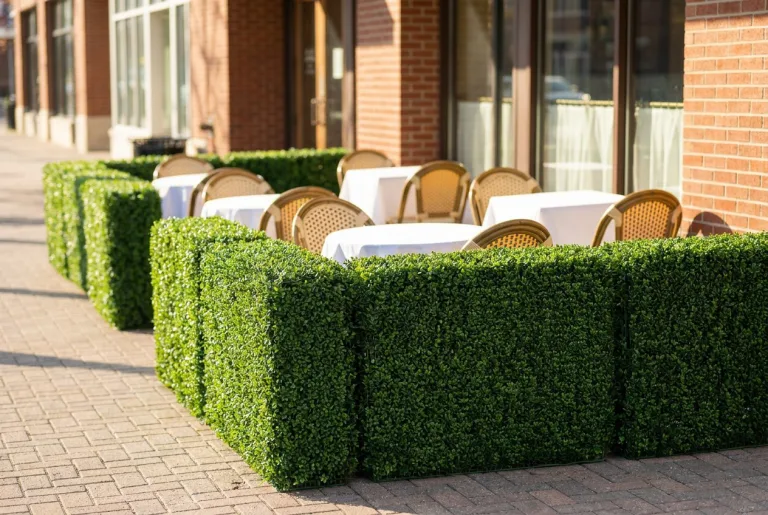
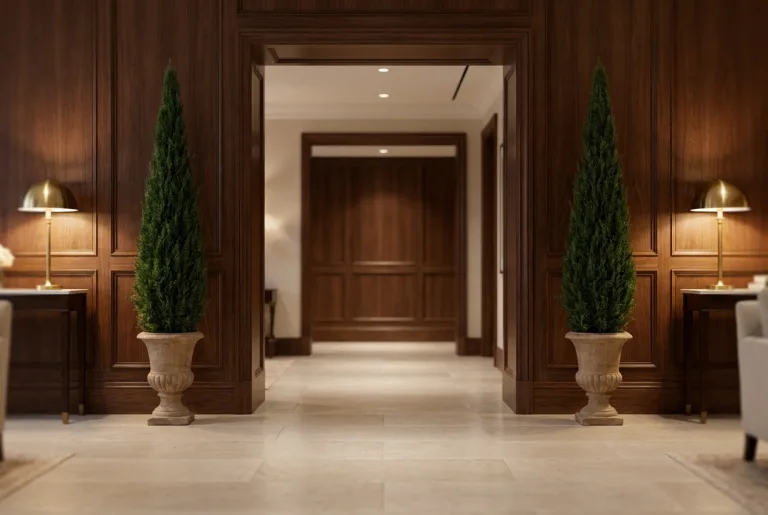
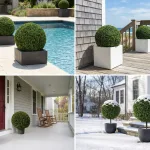
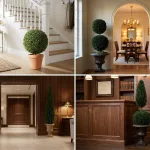
Artificial balls start at $98 for a 10 inch boxwood ball. Foliage density and UV grade move the price more than diameter does.
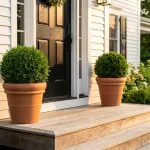
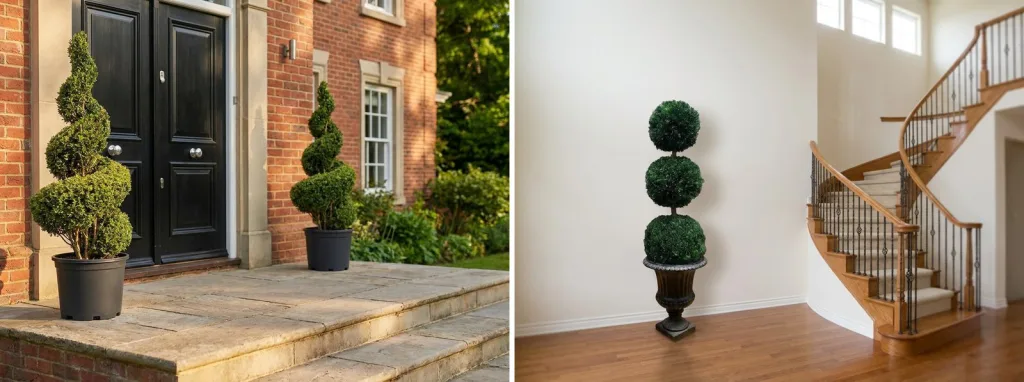
Live boxwood starts at $155 for a 12 to 15 inch globe. A 30 to 36 inch spiral is $895 and a 9 foot spiral is $5,500.
Preserved topiary starts at $450 for a 30 inch ball. A 50 inch double ball is $799.
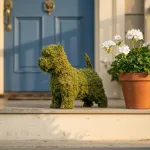
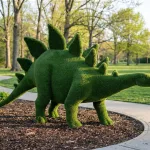
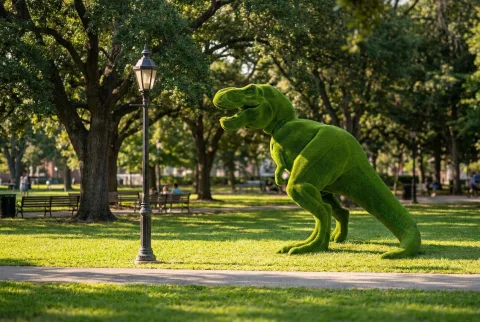
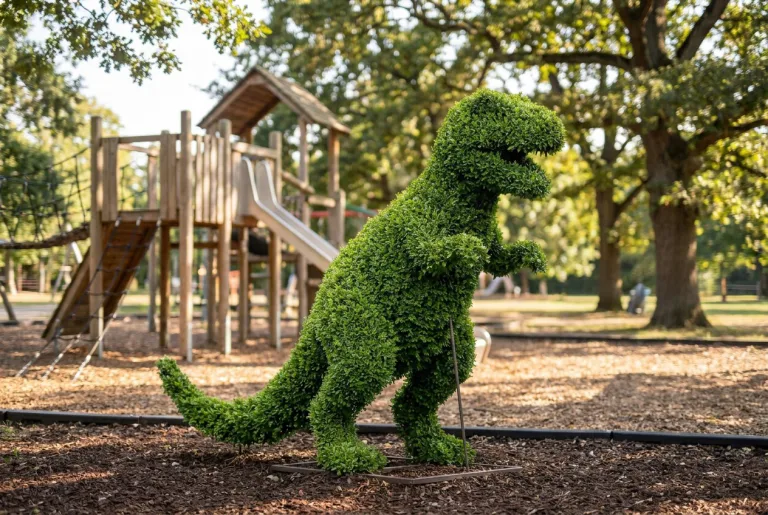
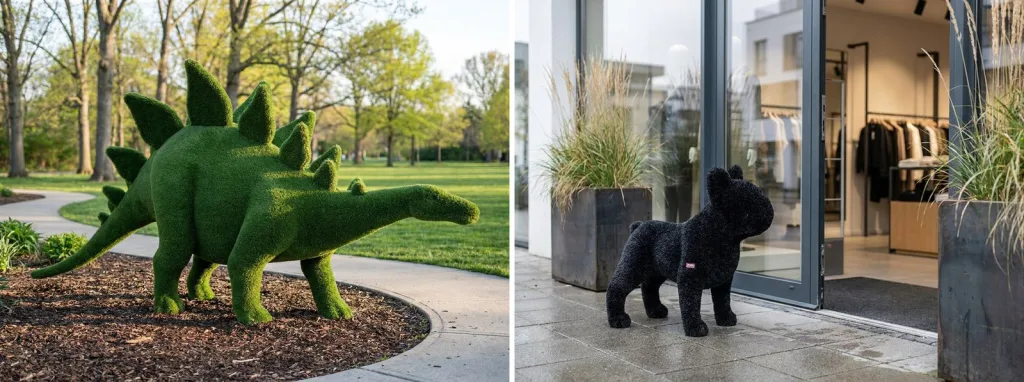
Turf sculptures run from $2,350 to $37,200, from a 4 foot dog to dinosaurs over 18 feet.
What drives each price
On frames: the amount of steel. A long-necked bird costs more than a compact animal of the same height.
On live plants: years. A spiral costs more than a ball of the same height because the shape is cut into the plant over several seasons. Nothing about that can be hurried.
On artificial: foliage density first, then the UV grade. Two balls of the same diameter at very different prices almost always differ in how much foliage is on them.
On preserved: the plant and the preserving process. Preserved foliage is real, so a larger piece uses a lot of it.
On sculpture: surface area and detail more than height. Plates, horns, wings and tails all add work. Price does not track height closely in the turf range, so compare pieces one by one.
Where the real jumps are
Parcel to freight. Somewhere around 4 feet, or with a heavy root ball, a piece stops traveling by parcel. Freight costs more, so larger pieces are quoted with delivery included.
Stock to built to order. A pose or a size that is not in the range is quoted as a custom piece. See how a topiary commission works.
Garden to public. A piece where the public can touch it needs anchoring and fixings that stop it being moved. Both cost money before any covering goes on.
Where the price surprises people
Live boxwood costs more than artificial at small sizes. A 12 to 15 inch live globe starts at $155, where a 10 inch artificial ball starts at $98. The live one also needs about an hour a year of care. The full sums are in what a live boxwood costs to keep.
Refurbishment often beats replacement. A steel frame outlasts its covering, so a tired mossed or foliage piece can often be re-covered. Send a photo and our team will tell you whether it is worth saving.
Buying several at once costs less. The freight is combined, and a set is quoted rather than added up piece by piece.
Prices for each category are in the shop.
Quick answers
Why is so much topiary quoted instead of priced?
Because freight on a large piece depends on where it goes. Small pieces show a price. Large and custom pieces are quoted with delivery included.
What is the cheapest topiary?
A small bare wire frame, from about $57. You can plant it, pack it with moss or display it as it is.
Is live topiary cheaper than artificial?
Not at small sizes. A 12 to 15 inch live globe starts at $155 and a 10 inch artificial ball at $98. The live one also needs trimming and water.
Why does a spiral cost more than a ball?
Because the spiral is cut into a living plant over several seasons. A 30 to 36 inch live spiral is $895.