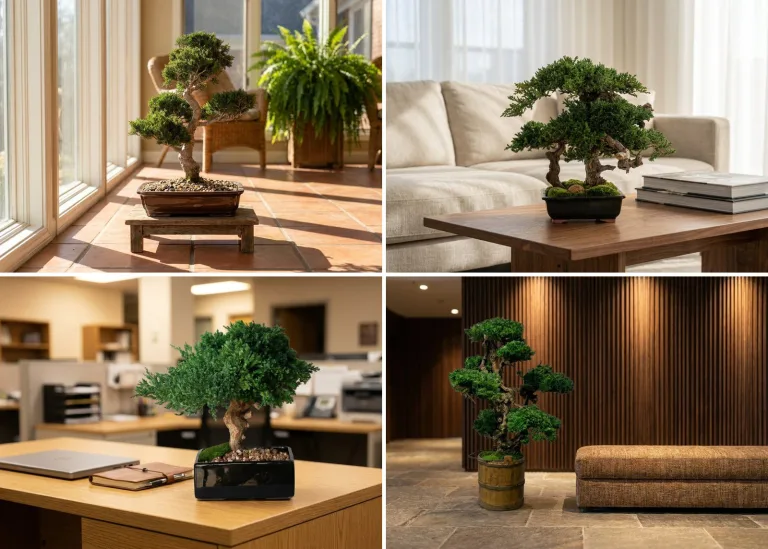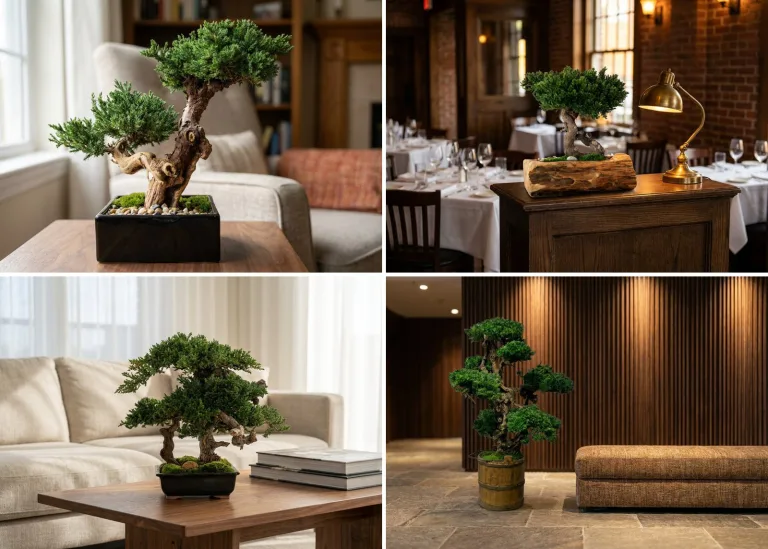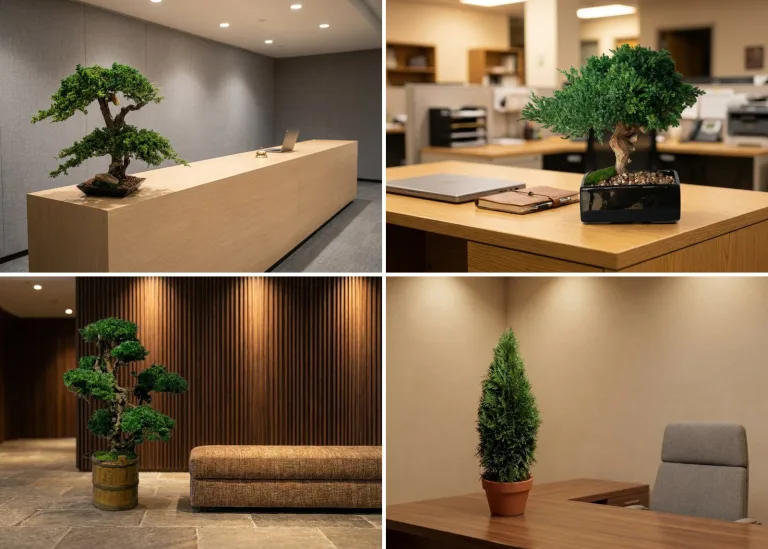
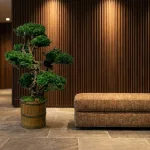

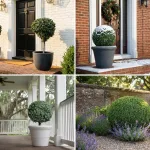

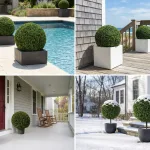
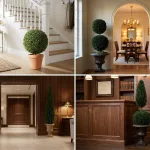
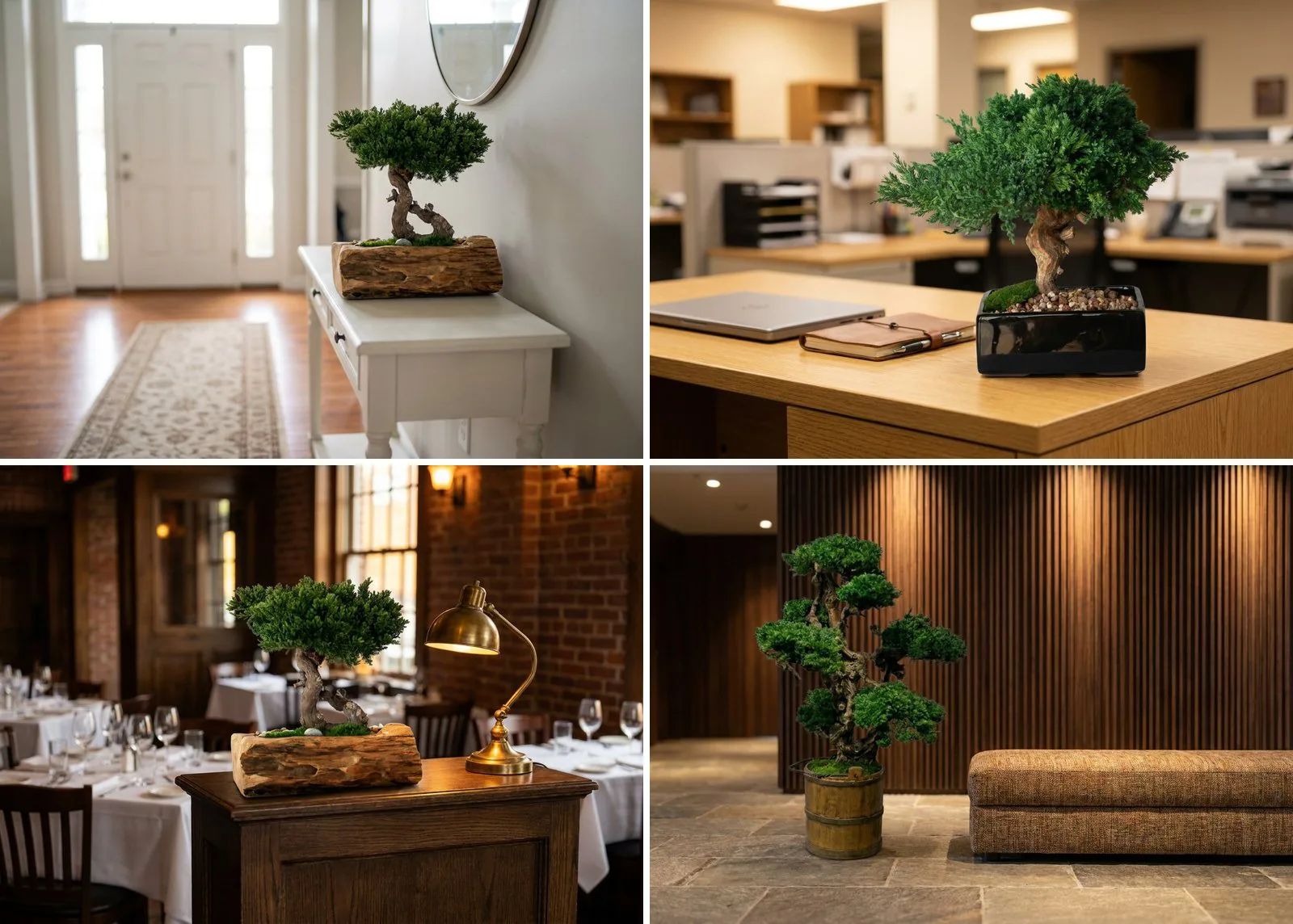
For a desk, choose a bonsai 10 to 14 inches tall. For a counter or a console, 14 to 22 inches. For a lobby or a landing, 3 to 6 feet on the floor.
Before you buy, check the spread as well as the height, because a bonsai is often as wide as it is tall. A 20 inch bonsai can be 18 inches deep and fill a console on its own.
Bonsai sizes by spot
| Spot | Height | Check |
|---|---|---|
| Desk | 10 to 14 in | About 9 to 14 in of clear depth |
| Counter, console, shelf | 14 to 22 in | Surface depth against the spread |
| Reception, landing | 3 to 4 ft | Floor or a low plinth |
| Lobby floor | 6 ft | 38 to 45 in across, freight delivery |
The two measurements that matter
Height sets how much presence the piece has. It is the number everyone reads, and it is easy to check with a tape measure against the wall.
Spread is the one that goes wrong. A bonsai is built on horizontal branch lines, so a piece is often as wide as it is tall, and sometimes wider.
The 20 inch juniper we carry in a teak bowl is 18 inches deep. The six-foot piece is 38 to 45 inches across. Stand that six-footer on a console 36 inches from front to back and it hangs over at both ends.
So measure the surface, not the wall. Depth first, then width, then the height of whatever sits behind it.
What we carry, by size
Our preserved bonsai run from ten inches to six feet and from $122 to $1,709. The bonsai category lists them all with prices, smallest first.
Price does not rise in a straight line with height. A triple mound at 16 inches has more trunk work than a single at 20. Most of the range sits between 16 and 22 inches, because that is where most surfaces are.
A desk
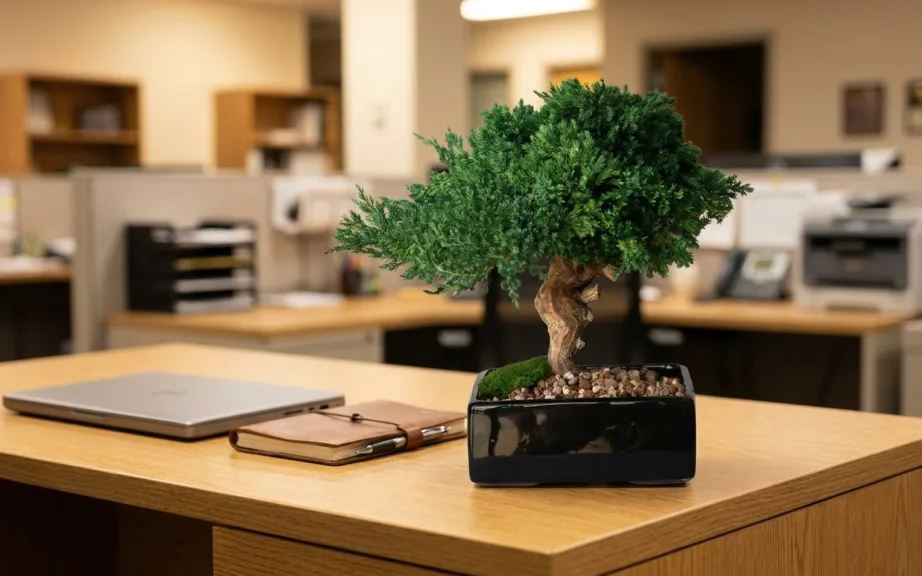
Ten to fourteen inches. Anything taller competes with a monitor, and anything wider than about ten inches competes with the keyboard.
The smallest piece is the 10 to 12 inch traditional, about nine inches across in a five-inch pot, at $122. It still reads as a whole tree at that scale, where most desk plants look like a cutting.
The single mound at 12 to 14 inches ($150) is the same idea with more presence. Put it on a corner of the desk rather than the middle.
A preserved piece can sit straight on a veneer desk. There is no drip tray and no watering, so it leaves none of the marks a live plant leaves.
A counter, a console, a shelf
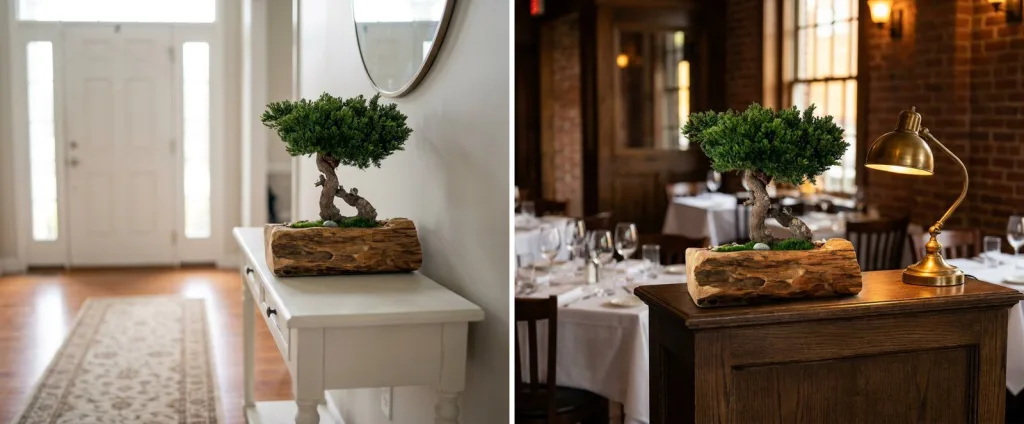
Fourteen to twenty-two inches. This is where the spread question matters most.
A bookcase shelf usually gives you eleven or twelve inches of depth, which rules out most of this band. A kitchen island or a reception counter gives you 24 inches or more and takes the double and triple mounds easily.
Hall consoles are the awkward ones. They run 32 to 36 inches wide but only 12 to 14 deep, so a piece at this scale should be the only thing on it.
The double double is 20 to 22 inches tall and 16 to 18 across, at $474. It is the largest piece in the range that still reads as a tabletop object. Above it, everything looks like furniture.
Reception, a landing, a room people walk through
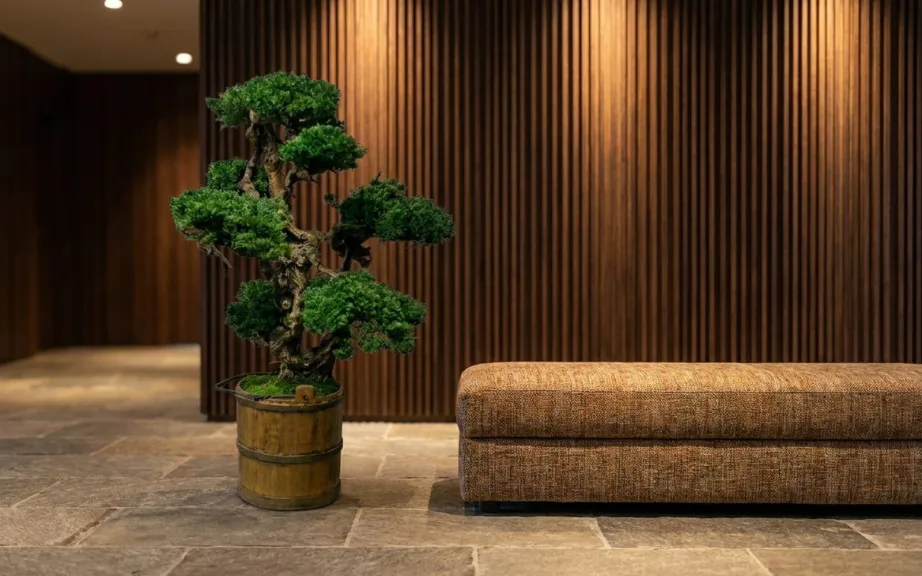
Three to four feet, on the floor or on a low plinth. A piece at this scale fills a corner and gives the eye somewhere to stop.
Both the 36 inch vintage at $664 and the 48 inch Senshi at $1,234 work here. Ceiling height usually decides. Under a standard eight-foot ceiling the 36 inch sits more comfortably, and the 48 inch needs height above it to look deliberate.
Put it where people pass rather than where they sit. A preserved bonsai rewards close looking, and a landing lets people get close without making it the center of a meeting.
Floor scale
The Kage is six feet tall and 38 to 45 inches across, in a zinc bronze container. At this size the piece stops being an ornament and becomes furniture.
It travels by freight rather than by parcel, and our team quotes the piece and its delivery together, so the number you see is the number you pay. Read what freight delivery involves before you order, because curbside delivery means curbside.
Measure the route in as well as the room. Door widths, the turn at the top of a stair and the inside of an elevator matter more than floor area at this size.
The planter rule does not fit bonsai
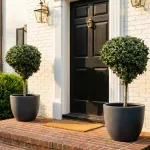
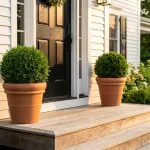
The usual rule says a plant should stand about one and a half times the height of its pot. It works for topiary in planters, because a topiary is tall and its pot is deep.
A bonsai pot is shallow on purpose. Measured the same way, a bonsai often comes out at two to three times its pot height, and it is often wider than it is tall. So judge it against the surface it stands on, not the ratio.
One rule does hold. Leave a hand’s width of clear surface on every side. With space around it, a bonsai reads as a specimen. With a lamp and a pile of mail next to it, the same piece reads as clutter.
Buying for a set of rooms
Vary the height and keep the species. If you are buying for a building rather than a house, four juniper pieces from ten inches to three feet look like a collection. Four at the same height look like a bulk order. Our team will price several pieces together.
Quick answers
Does the height include the pot?
Yes. The height in the title is the piece as it stands, tree and container together, so measure a shelf against that number.
What size bonsai fits on a desk?
Ten to fourteen inches tall and no more than about ten inches wide, so it does not crowd the monitor or the keyboard.
Is it safe around pets and children?
Most pieces are dressed with small stones and preserved moss, and a child or a dog could swallow either. Treat one as you would any object with loose stones. There is no soil, water or fertilizer to spill.
Can I order a pair?
Yes. Tell us where the two will stand and our team will match them as closely as natural wood allows.
Keep reading: what a preserved bonsai is, bonsai for offices and rooms with no light, and what size planter a topiary needs.