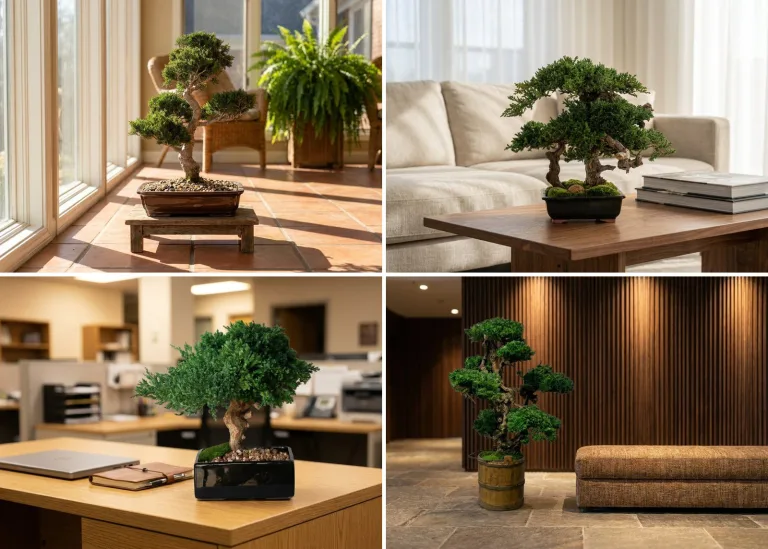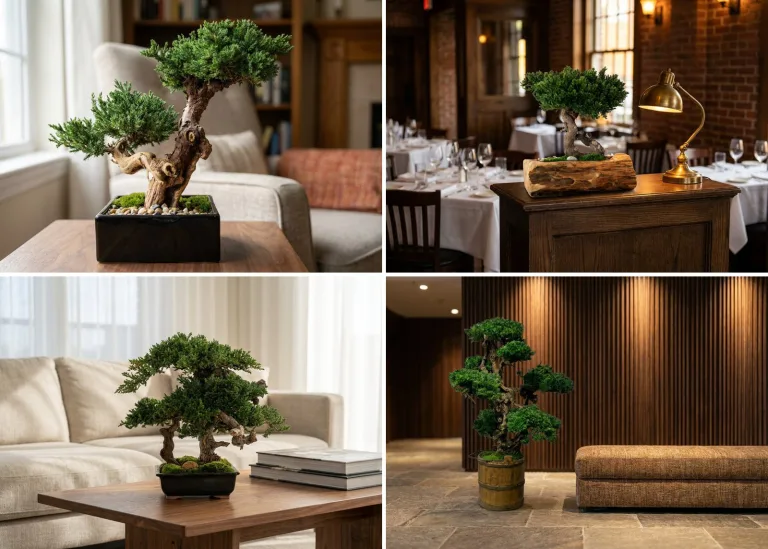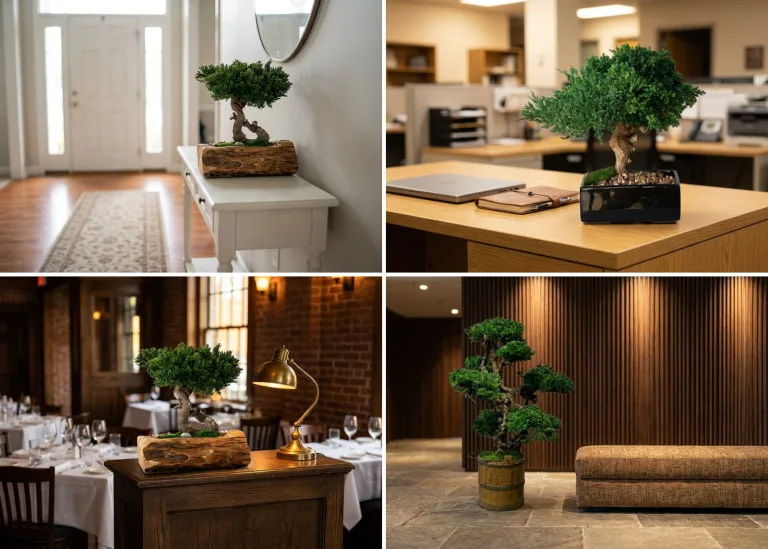
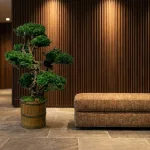



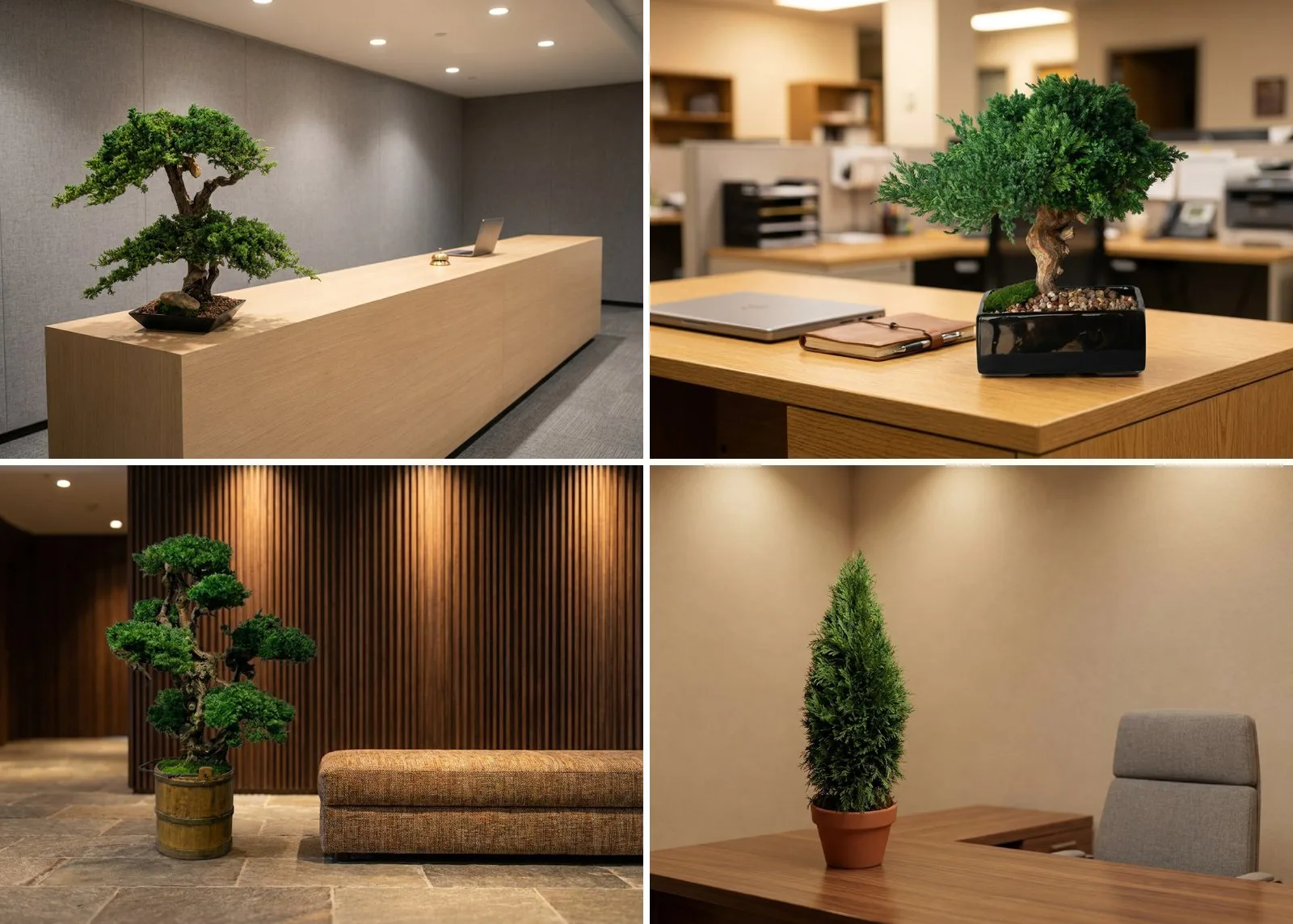
The best bonsai for an office or a room with no natural light is a preserved one. It is real juniper treated so it needs no light, no water and no pruning, and it lasts seven years or more indoors. A live bonsai will not survive a windowless room, however many lamps you add.
Interior rooms like this turn up in almost every building. The air conditioning runs dry, the cleaning contract does not include watering, and nobody has the job of noticing a plant.
Why live bonsai fail at work
Three things go wrong, and each makes the others worse.
Light. No interior corridor gives a bonsai what it needs. The species that tolerate life indoors are tropical and want a bright window. Juniper and pine, the trees most people picture, are outdoor trees that need a cold winter rest.
Office lighting is designed for people to read by. That is a fraction of what a plant needs, and extra lamps do not add up to daylight.
Water. A bonsai pot holds very little soil and dries in hours. It needs checking daily in summer, which no facilities contract covers. A tree that misses a long weekend in July can be past saving by Tuesday.
Ownership. A plant in reception belongs to everybody, so it belongs to nobody. The person who used to water it left in March.
A plant rental contract solves the replacement problem if you want live plants for their own sake. You keep paying for it every month.
What a preserved bonsai does instead
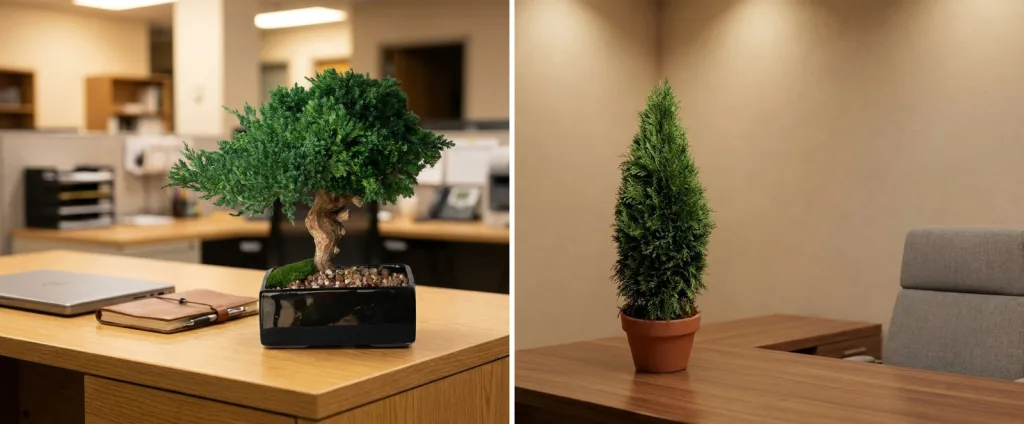
It needs no light at all. A preserved piece is no longer alive, so a windowless room suits it as well as a bright one.
It needs no water, so there is nothing to schedule and nothing to spill on a reception desk. It does not grow, so it never outgrows the spot or drops leaves on the carpet.
The juniper pieces are expected to last seven years or more, which outlasts most office fit-outs. What a preserved bonsai is explains how preserving works and what the lifespan figure assumes.
The rooms it suits
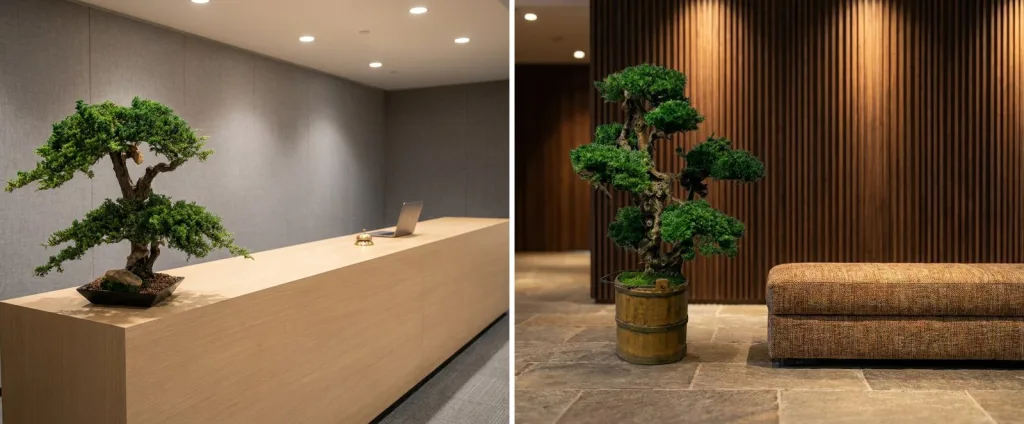
Reception and the front desk. The best case of all. People stand there and wait, so it is the one spot where a bonsai gets looked at closely. The counter is usually deep enough for a 16 to 22 inch piece.
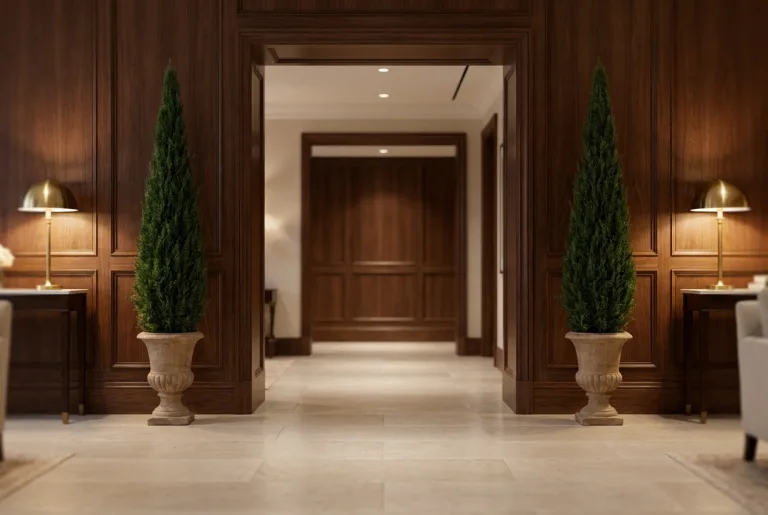
Meeting rooms. Put a desk-size piece on the credenza. Interior meeting rooms are the darkest spaces in most buildings.
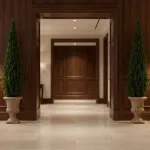
Corridors and elevator lobbies. The three to four foot pieces work here, on the floor or on a plinth. Check the traffic first. Preserved foliage does not like being brushed past all day, so choose a recess over a narrow spot.
Hotel landings and guest rooms. Watering is rarely part of a housekeeping round, and a preserved piece is fine in a room that stands empty for weeks.
Treatment rooms, spas and consulting rooms. Check the humidity first. It is the one thing that rules a preserved piece out.
The two places it does not work
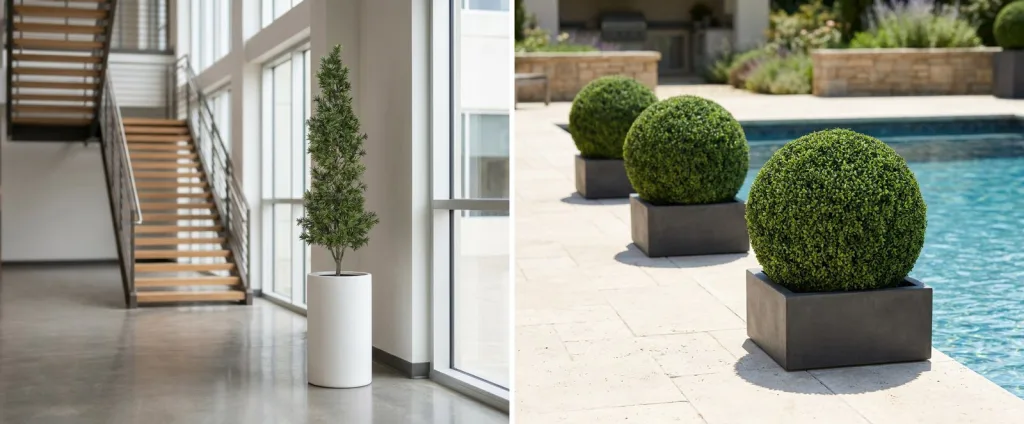
Direct sun through glass. Sun fades preserved foliage, unevenly and permanently. That rules out an atrium, a south or west-facing glass wall, and a glass walkway between buildings. A west-facing lobby in Phoenix takes hard afternoon sun for months, and a piece in that light will show it within a year.
Use UV-rated artificial pieces in those spots. Read what UV-rated means before you choose, because the term is used loosely.
Real humidity. Glycerin pulls water from the air, so preserved foliage turns tacky in a damp room and can drip glycerin. Pool areas, spa wet rooms and coastal lobbies with the doors open in August are all wrong for it.
A conditioned interior at ordinary office humidity is fine, and that covers most of a building. Air conditioning, no windows, a move between floors and two quiet weeks do not touch it.
What size to choose
| Spot | Size |
|---|---|
| Desk or credenza | 10 to 14 in |
| Reception counter | 16 to 22 in |
| Corridor or landing floor | 3 to 4 ft |
For a desk, the single mound at 12 to 14 inches is $150. For a counter, the double double at 20 to 22 inches is $474. For a corridor, the 36 inch vintage is $664. The bonsai size guide covers the spread measurement that catches people out.
Choose the pot as well as the tree. A black ceramic pot and a carved teak bowl put the same tree in different rooms.
Then decide on a plinth. A three-foot bonsai on the floor reads low, and the same piece at counter height looks deliberate. Floor pieces travel by freight, and your quote includes delivery. How delivery works.
Ordering several
Offices usually order more than one, and our team quotes multiples together. Tell us the rooms and the surfaces and we will put a set together.
Vary the height and keep the species. That is what makes four pieces look like a collection rather than a bulk order. For larger projects, see topiary for hotels and commercial topiary. The full range, with prices, is in the bonsai category.
Quick answers
Can a bonsai live in a room with no windows?
A live one cannot. A preserved one can, because it no longer needs light. An interior corridor suits it as well as a bright room.
Is a preserved bonsai fire rated?
No. The preserved pieces carry no fire rating. If your building needs a rated finish, say so before you order, because some artificial materials come with a fire-retardant option and preserved foliage does not.
Who looks after it?
Whoever cleans the room. Dusting is all it needs, so put it on the cleaning round rather than leaving it to whoever notices.
Can you supply several at once?
Yes. Tell us the rooms and the surfaces, and our team will price the set in one quote.
Keep reading: preserved, artificial or live bonsai and what a preserved bonsai is.