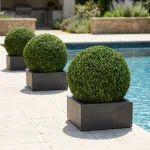
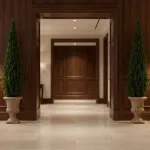
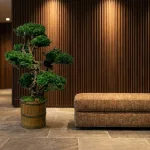
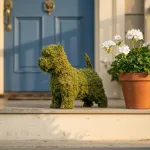
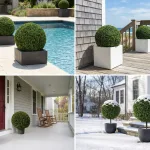
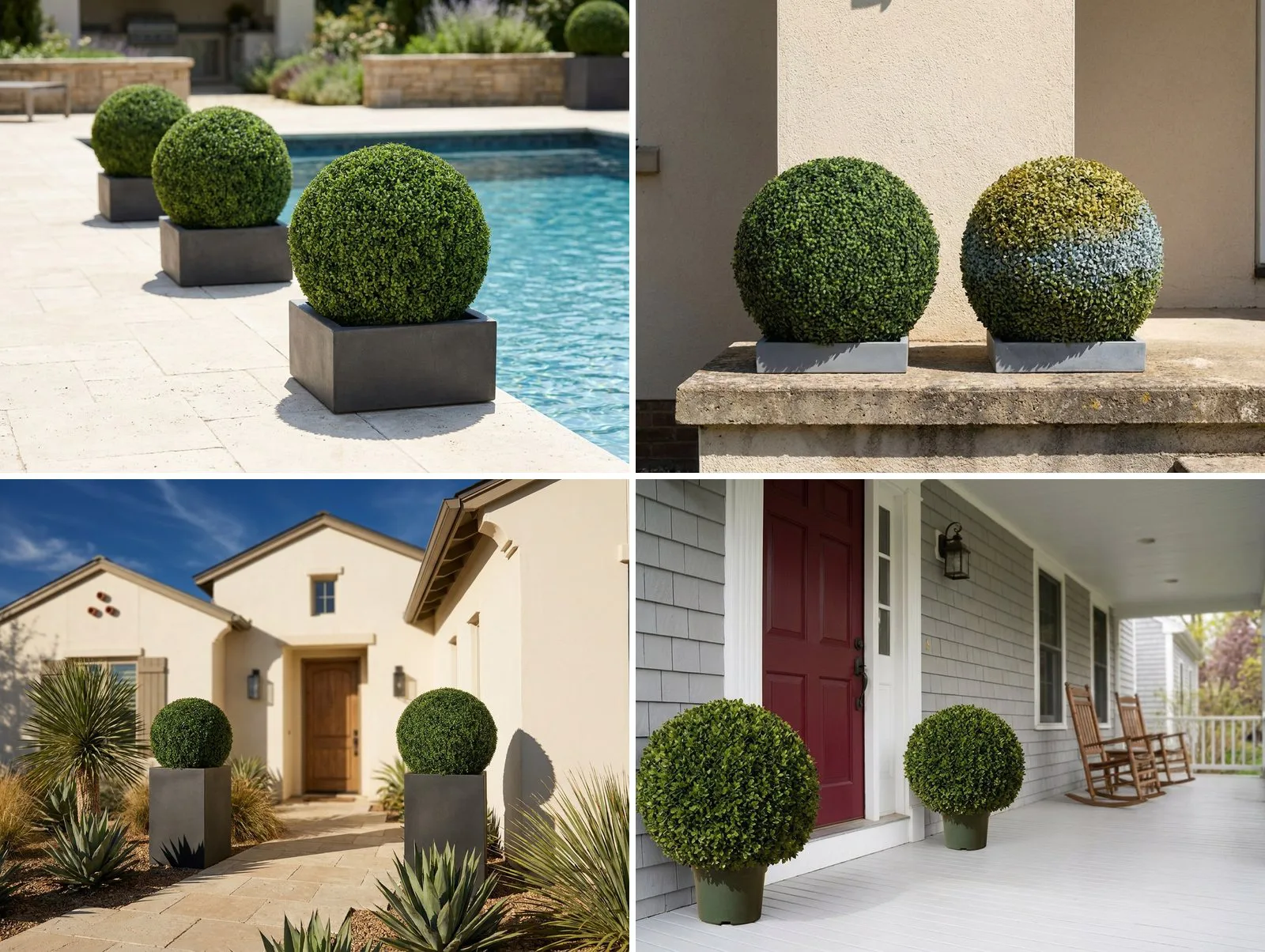
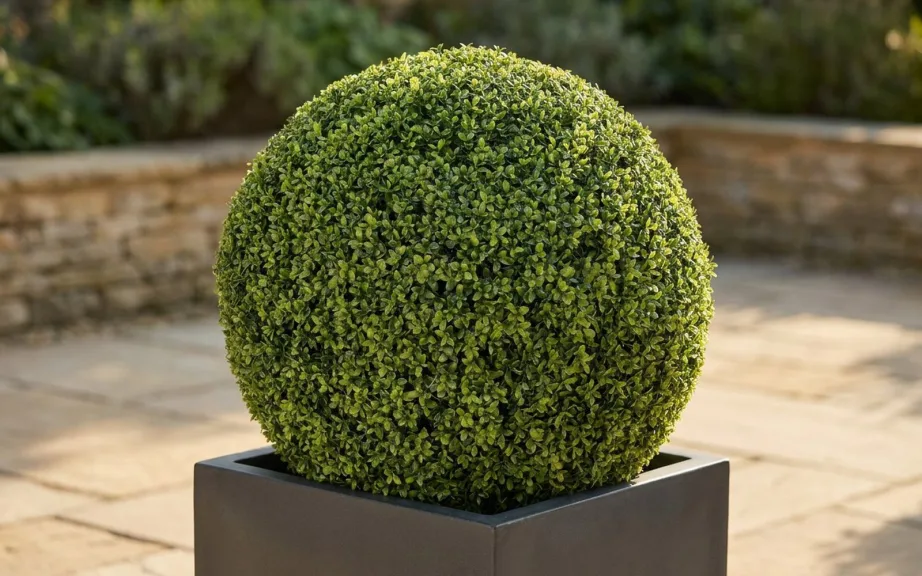
UV-resistant means the UV protection is mixed into the plastic before the leaves are molded, so it runs all the way through each leaf. UV-proof usually means a coating sprayed on the outside of a finished leaf. The coating wears away in rain and sun, and then the plastic under it fades fast.
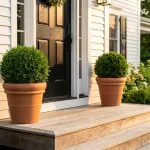
For an artificial topiary ball that will live outside, UV-resistant is the one to buy, even though “proof” sounds stronger.
What sun does to an artificial ball
Most of the ultraviolet light that reaches the ground is UVA. It passes into plastic and slowly breaks down the long molecules that hold the color and keep the leaf flexible.
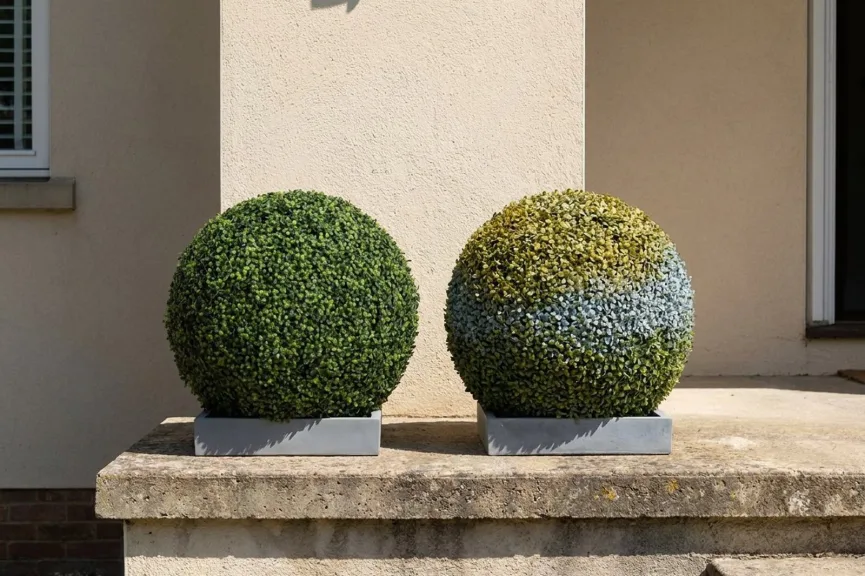
That is why a failing ball does not fade evenly. The top and the side facing the sun go yellow or gray first while the shaded side still looks green.
Leaf edges turn stiff and brittle, and the surface can take on a chalky look that does not wash off. By the time you notice it from across the yard, the plastic has been breaking down for a season or two.
UV-resistant vs UV-proof: where the protection sits
| UV-resistant | “UV-proof” coating | |
|---|---|---|
| Where the protection is | Mixed through the plastic | A layer on the surface |
| How it ages | Slowly and evenly | Fine until the coating wears, then fast and patchy |
| What wears it | Only time in the sun | Rain, grit, handling, heat and sun |
A coated leaf may look as good as a UV-resistant one on the day it arrives. But a coating is a layer, and layers weather. Once it thins or cracks, the plastic underneath has no protection at all.
No colored plastic is truly UV-proof. Every honest seller is offering a slow rate of change, not immunity from the sun.
The two outdoor grades we sell
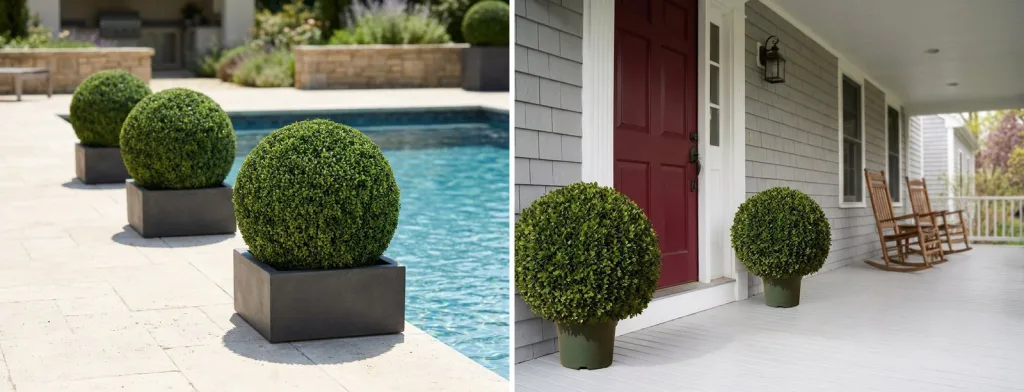
Our outdoor artificial balls come in two grades. Both have UV inhibitors in the plastic; they differ in how much sun they are made to take.
| Grade | Fade life | Best position |
|---|---|---|
| Full outdoor grade | 5-year fade warranty, 3 years in Florida and Arizona | Open sun, all year |
| Lighter UV grade | Up to about 2.5 years, no fade warranty | Shade, covered porches, seasonal use |
Full outdoor grade is tested to ASTM G155, a lab test that speeds up sun exposure with a xenon arc lamp. In a full-sun installation in Arizona, it still had 90 to 95 percent of its color after six years. What that material is and why it lasts is explained in full outdoor grade artificial foliage.
How long it lasts where you live
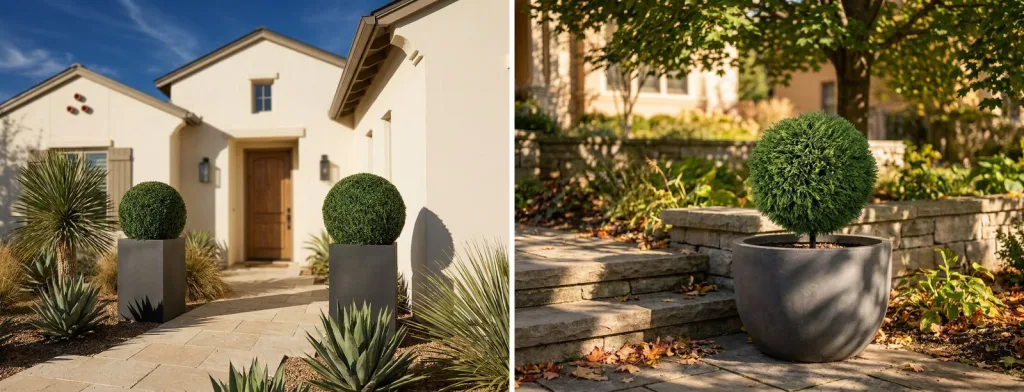
Hours of direct sun on the exact spot decide it. Latitude matters too: the Southwest and the Deep South get the strongest sun, which is why the warranty drops to 3 years in Florida and Arizona. But a shaded north-facing door in Phoenix can outlast an open south-facing terrace in Ohio.
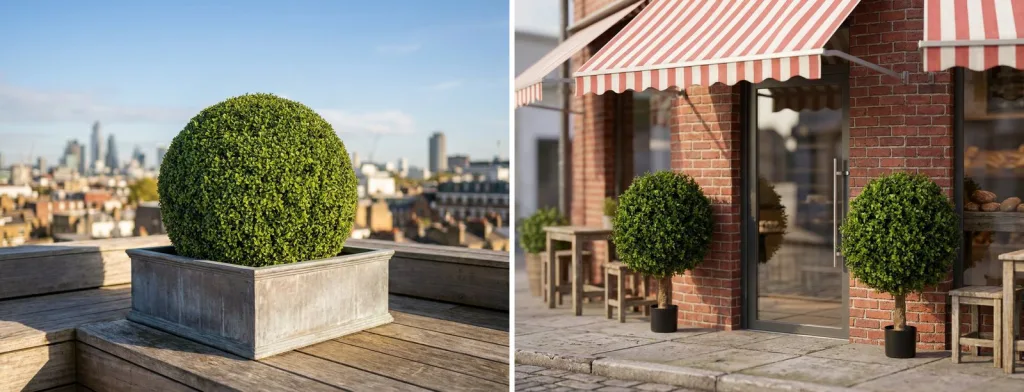
Pale walls, light paving and glass reflect sun back onto a ball and add to its dose. If a ball will take direct afternoon sun all summer, choose the full outdoor grade. Under a porch roof, the lighter grade is enough. The whole question of placement is covered in what the position decides.
How to tell which one you are buying
- Ask where the protection is. “Mixed into the plastic” or “UV inhibitors in the resin” is the answer you want. “UV coating” or “treated surface” is the other kind.
- Ask for a warranty against fading. Many warranties cover the frame and say nothing about the color of the leaves, which is the part the sun attacks.
- Ask for a test standard, not an adjective. A named test such as ASTM G155 can be checked. “Fade resistant” cannot.
- Be wary of “proof”. On anything that lives outdoors, it promises more than any plastic can deliver.
Quick answers
Is UV-proof better than UV-resistant?
Usually not. “UV-proof” normally describes a surface coating, which wears off. UV-resistant foliage has the protection mixed through the plastic, so it ages slowly and evenly.
How long do UV-resistant artificial boxwood balls last outside?
Full outdoor grade carries a 5-year fade warranty, or 3 years in Florida and Arizona, and often looks right for longer. The lighter UV grade lasts up to about 2.5 years in sun, longer in shade.
Can I spray UV protectant on an artificial topiary?
A UV spray can slow fading on foliage that has little protection of its own, but it is a coating and has to be renewed. It will not turn an indoor piece into an outdoor one.
Why is my artificial topiary turning yellow or blue?
Sun damage. The green in artificial leaves is a mix of pigments, and they break down at different rates, so a fading ball can drift toward yellow or blue-gray. It does not reverse. More on this in do artificial topiaries fade.
Browse our artificial topiary balls and the outdoor artificial topiary range. If you are still weighing artificial against live, read faux vs real outdoor topiary.