




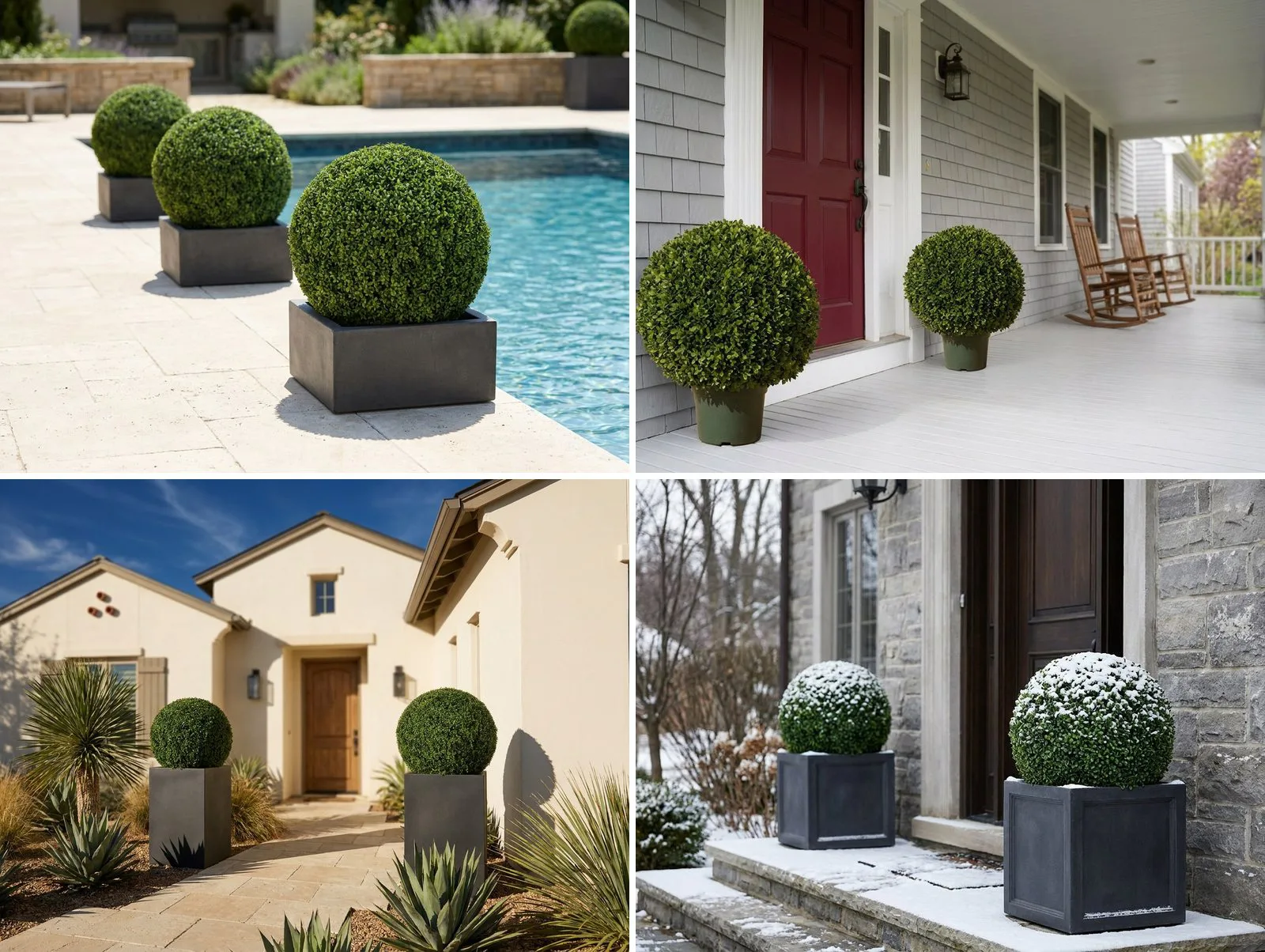
Where you put an artificial topiary decides how long it lasts. Hours of direct sun decide how fast the foliage fades, wind decides whether it stays upright, and heat reflected off a pale wall or paving ages it faster than open ground. Two identical pieces bought on the same day can look completely different four years later.
Read the sun first
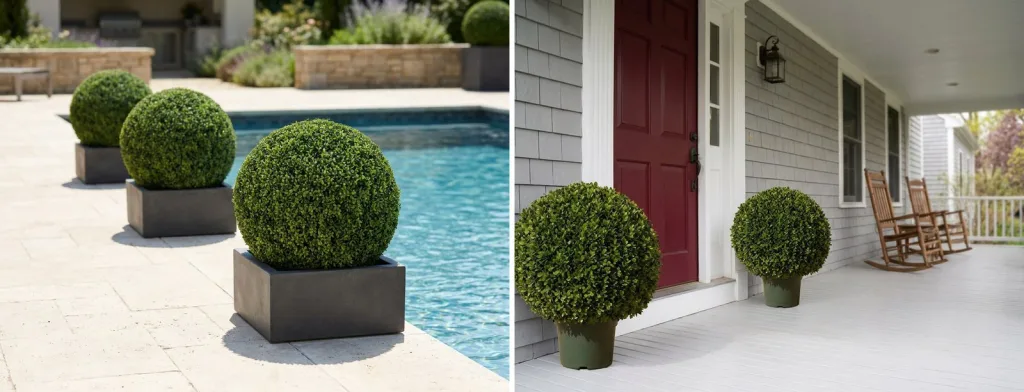
Hours of direct sun is the number that matters. It is not the same as which way the yard faces, so work out roughly how long the sun falls on the exact spot, not on the property.
| Direct sun | Grade to buy |
|---|---|
| Under 4 hours | The lighter UV grade holds up well here. |
| 4 to 8 hours | Full outdoor grade, unless the spot is covered. |
| 8 hours plus, unshaded | Full outdoor grade, and expect sun to be the limit. |
Full outdoor grade carries a 5-year fade warranty, or 3 years in Florida and Arizona. The lighter UV grade lasts up to about 2.5 years in sun, with no fade warranty. UV-resistant vs UV-proof explains how the protection works.
Reflected heat ages a piece faster than open ground
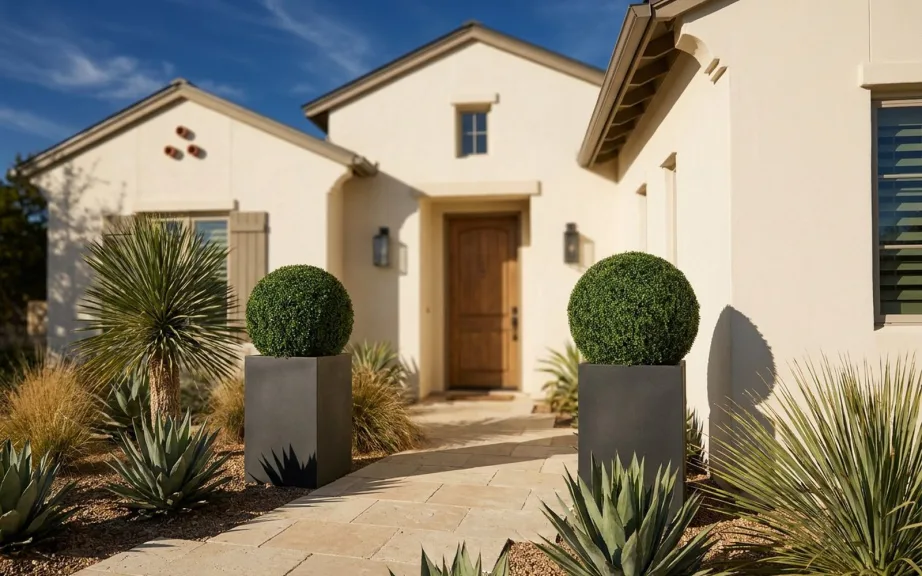
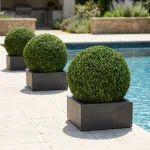
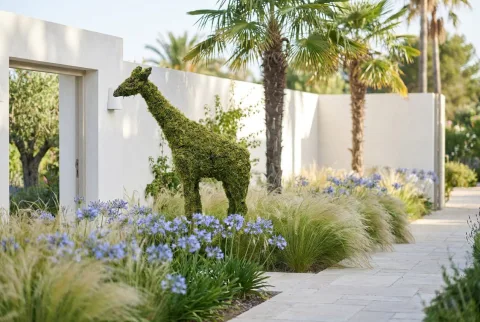
A piece against a light-colored wall, or standing on pale paving, gets the direct sun and a second dose reflected back at it. The same applies beside glass.
A topiary in a bright courtyard can age faster than one in an open field with the same sun hours. So if the position bounces light, treat it as a harsher spot and buy the full outdoor grade.
Wind fails a topiary in two ways
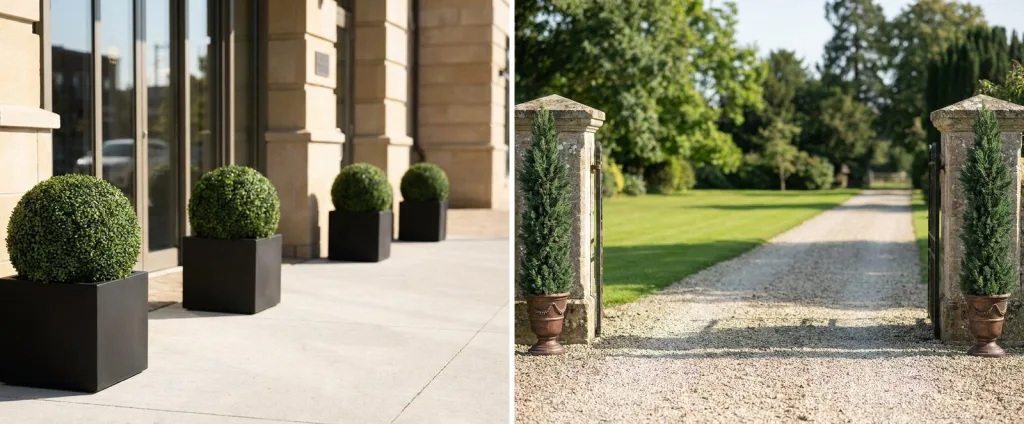
A dense head on a stem is a lever. Either the piece goes over, or the stem breaks at the pot line.
Corners of buildings, gaps between structures and the tops of steps catch people out, because wind speeds up through them. A piece that is fine in the middle of a terrace can go over repeatedly six feet away at the corner.
Weight the container with gravel, sand or concrete, not shipping filler. Do not leave the grower’s pot loose inside a decorative one. Secure anything tall or anything on a pillar. How to plant artificial topiary trees in pots covers the method.
Cold is rarely the problem
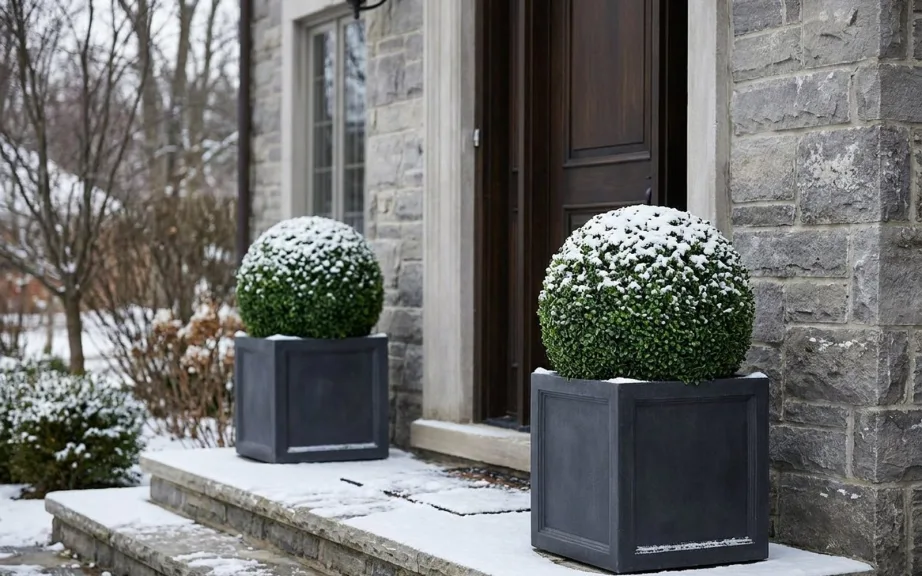
Outdoor grade materials are stable through normal winter temperatures, so pieces do not need bringing in.
Water sitting in a container can freeze and split the pot. Make sure there is drainage even though nothing is growing.
Snow load on a dense flat-topped piece can distort it. Knock the worst off, and do not leave a hedge or a wide ball carrying weight for a week.
Buy the top grade only for the exposed spots
Buy full outdoor grade for the exposed positions and the lighter UV grade for the sheltered ones. A piece under a porch roof and a piece on an open south terrace are not having the same experience, so paying for the top grade on the porch is money wasted.
Buy for the position, not the region. A shaded north-facing entrance is an easy spot even in a hot climate, and an unshaded balcony is a hard one even in a mild one.
The outdoor range is in outdoor artificial topiary. Read how to tell good artificial topiary from bad to judge quality, and full outdoor grade artificial foliage for what the top grade is made of.
Quick answers
How long does artificial topiary last outdoors?
Hours of direct sun decide it more than anything else. Full outdoor grade is warranted against fading for 5 years (3 in Florida and Arizona); the lighter UV grade lasts up to about 2.5 years in sun and longer in shade.
Does reflected light matter?
Yes, and it is usually ignored. A piece against a pale wall or on light paving takes the direct sun plus a second dose bounced back, so treat that position as harsher than it looks.
Do I need to bring artificial topiary in for winter?
No. Make sure the container drains so trapped water cannot freeze and split it, and knock heavy snow off wide flat-topped pieces.
Where does wind cause trouble?
Building corners, gaps between structures and the tops of steps, where wind speeds up. A piece that is stable in the middle of a terrace can go over a few feet away.
Should I buy full outdoor grade everywhere?
No. Buy it for the exposed positions and the lighter UV grade for sheltered ones. Paying for the top grade under a porch roof is money wasted.