
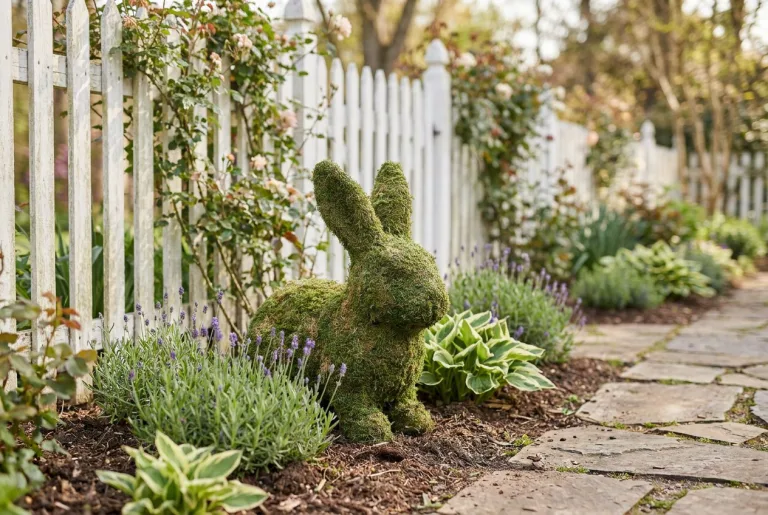
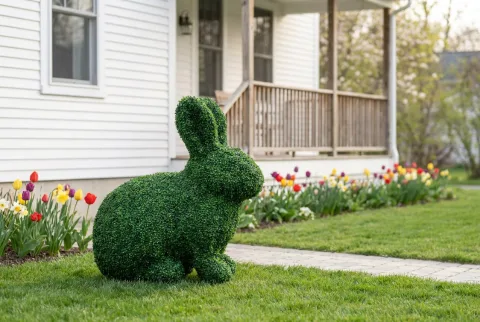
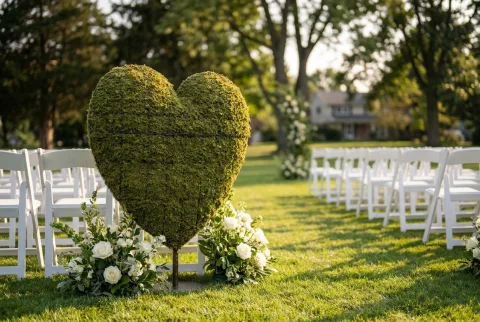
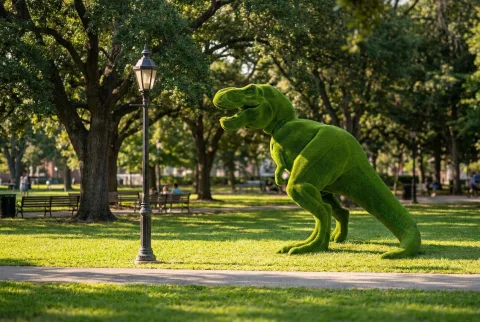
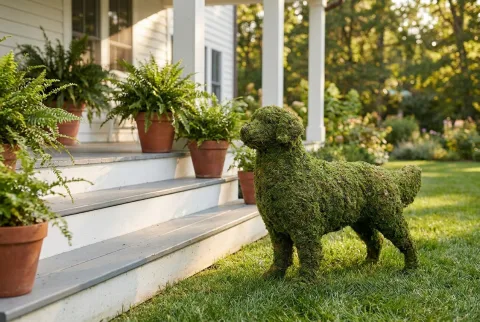
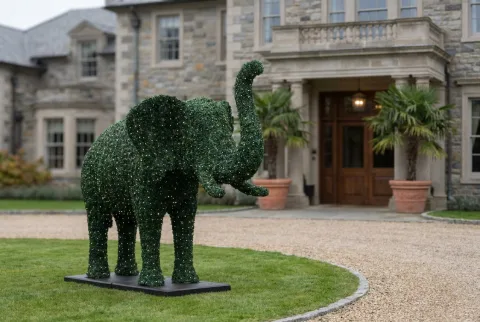
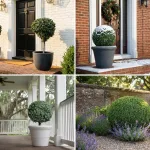
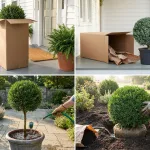
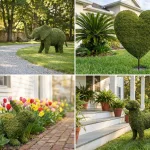
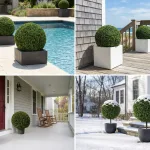
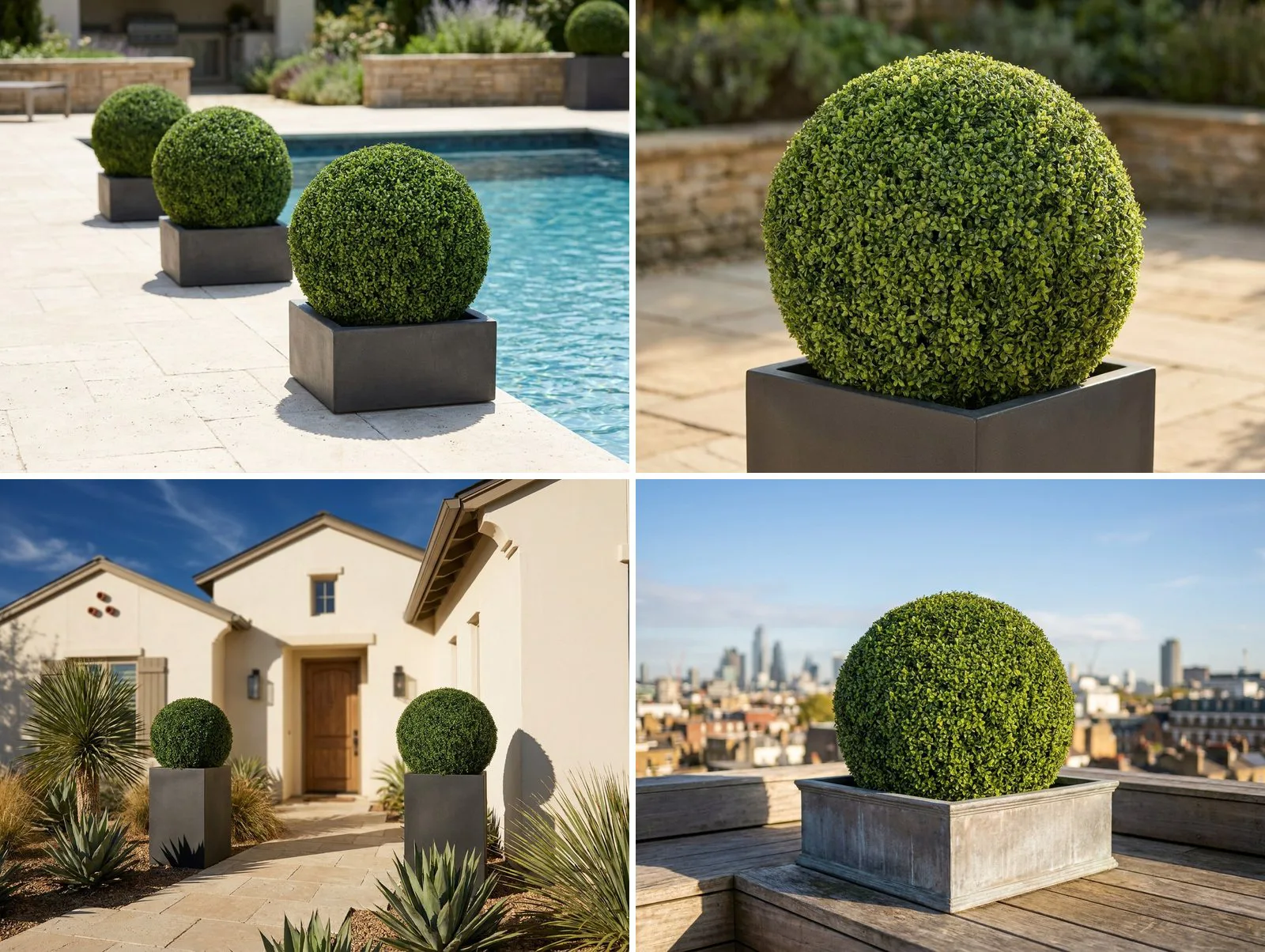
Full outdoor grade artificial foliage is plastic made for years of open sun: UV inhibitors and stabilizers are blended into the resin before the leaves are molded, and the branches sit on a steel frame. It carries a 5-year fade warranty, or 3 years in Florida and Arizona.
Most artificial foliage is not made this way, which is why so much of it fades or cracks within a couple of summers outside.
What full outdoor grade is made of
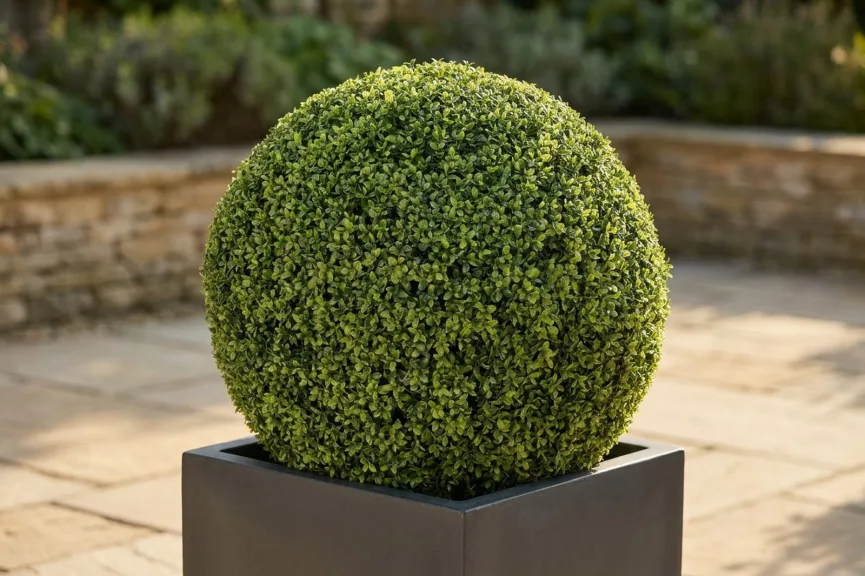
The leaves are a blend of commercial resins with UV inhibitors, UV stabilizers and light-fast colorants mixed in. Because the protection is part of the plastic, it goes all the way through each leaf. Nothing is sprayed on afterward, so nothing can weather away and leave the leaf underneath unprotected.
The material is tested to ASTM G155, the standard xenon arc test that speeds up sun exposure in a lab. Under the leaves, the branches and trunk are built on steel, so the piece holds its shape through wind and ice.
Full outdoor grade, lighter UV grade and indoor pieces
The artificial topiary we sell comes in three kinds. If a product page does not make the grade clear, ask us before you order.
| Grade | Fade life in sun | Where it belongs |
|---|---|---|
| Full outdoor grade | 5-year fade warranty (3 years in FL and AZ) | Open sun, all year |
| Lighter UV grade | Up to about 2.5 years, no fade warranty | Shade, covered porches, seasonal use |
| Indoor | Not rated for sun | Inside only |
The lighter UV grade has some UV protection, enough for a covered porch or a shady entrance. It is a good buy for those spots. In full sun all day, pay for the full grade.
How long it lasts in sun
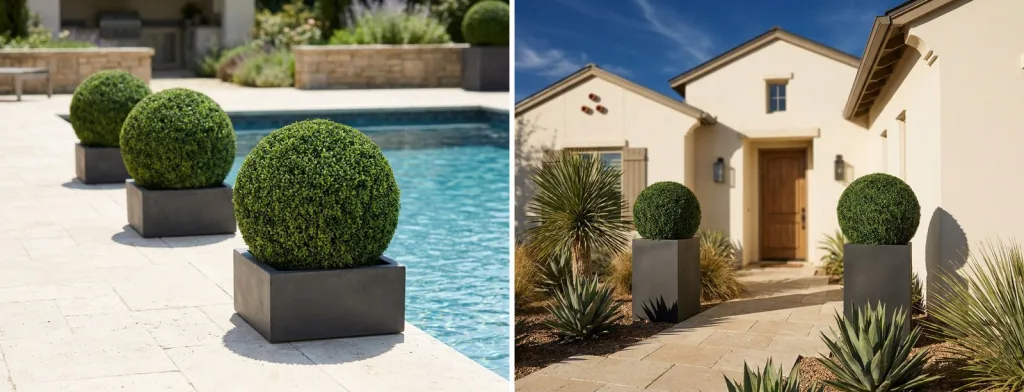
The warranty is the firm number: 5 years against fading, cut to 3 in Florida and Arizona, where heat, humidity and strong sun are harder on any plastic.
The field record goes further. In a full-sun installation in Scottsdale, Arizona, the same material showed no color loss after one year and still had 90 to 95 percent of its color after six years. Where the sun is gentler, or the piece gets some afternoon shade, it lasts longer still.
All colored plastic shifts a little as it ages. With good pigments the change is slow and even, so the piece goes a shade lighter rather than patchy.
Built on steel for wind and snow
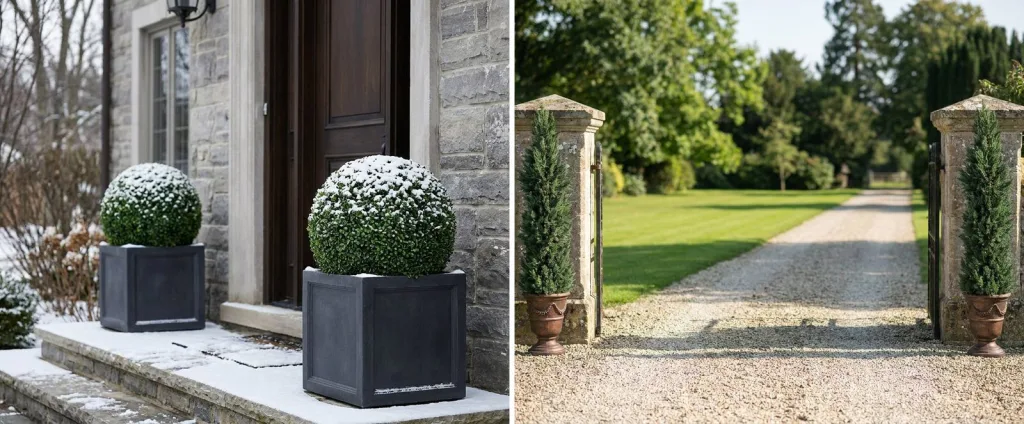
Outdoor pieces have to survive more than sun. Indoor artificial plants are often put together from light segments on thin rods, and they bend or snap in weather. Full outdoor grade pieces are built on steel, so a ball holds its round shape under snow and a tall tree stands up to wind.
Cold does not damage the plastic. Knock heavy snow off a wide, flat-topped piece so it does not sit for days, and make sure the planter drains so trapped water cannot freeze and crack it. For weighting a tall tree, see how to plant artificial topiary trees in pots.
The fire-retardant option
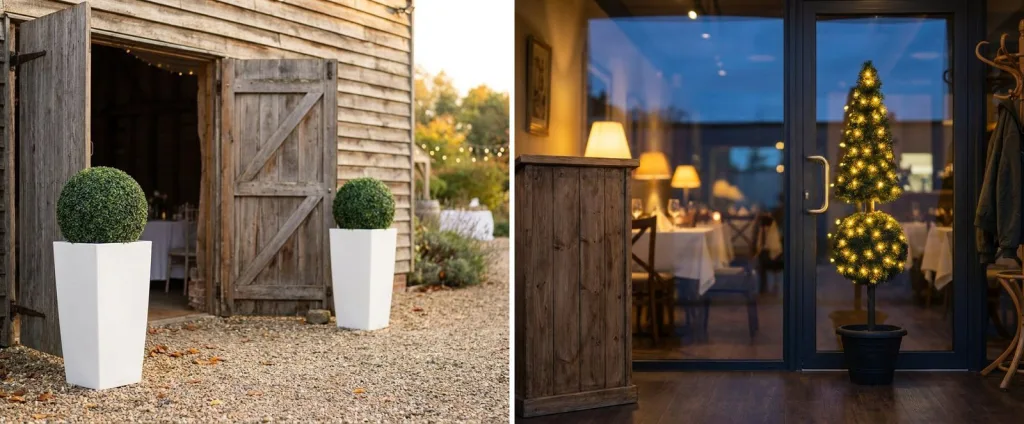
Nothing we sell is fire retardant by default. On many full outdoor grade pieces, a fire-retardant option can be ordered, with the fire-retardant additives mixed into the plastic when it is made. It passes NFPA 701 and UL-94.
Because it is part of the material, it cannot rub or wash off, but it also cannot be added once a piece has shipped. Ask for it when you order, for a venue, a restaurant or an event tent.
Where full outdoor grade makes sense
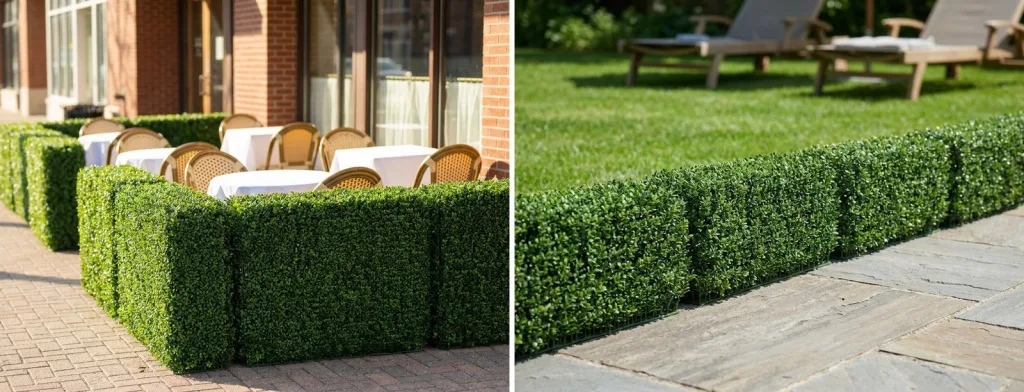
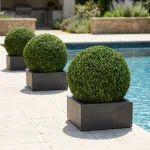
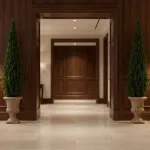
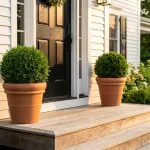
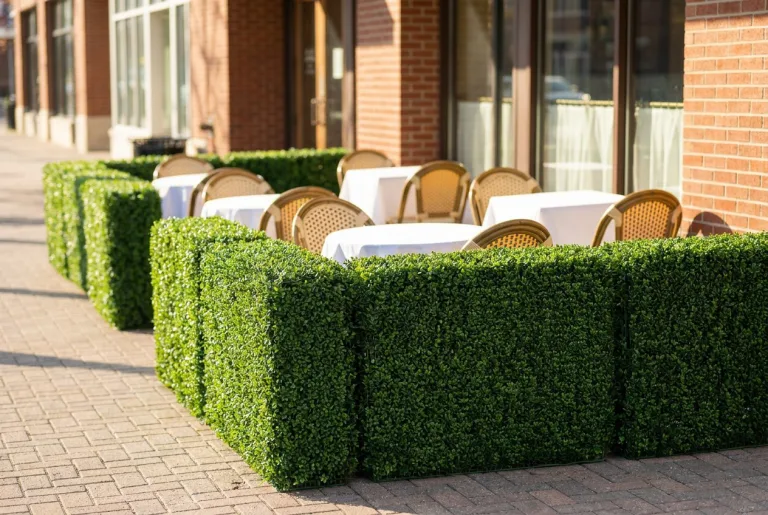
Use it where live plants struggle or cannot be looked after: full-sun fronts and pool decks, rooftops, restaurant patios, and planters nobody will water. It is also the practical choice for a matched pair by a door, because two pieces of the same item look the same for years.
For a spot under a porch roof or in afternoon shade, the lighter UV grade does the job for less. Indoors, any grade works.
Quick answers
Can artificial topiary stay outside all year?
Full outdoor grade can, in sun, rain and snow. The lighter UV grade is better in shade or under cover. Indoor pieces should not go outside.
How do I know which grade a piece is?
Ask us before you order and we will tell you whether a piece is full outdoor grade, lighter UV grade or indoor. Our team replies within hours, usually the same day.
Does full outdoor grade fade at all?
Slowly. All colored plastic changes a little over the years, but full outdoor grade is warranted against fading for 5 years (3 in Florida and Arizona), and in full Arizona sun it kept 90 to 95 percent of its color after six years.
How do I clean outdoor artificial topiary?
Rinse it with a garden hose on a gentle setting a few times a year, or more often near the coast or a busy road. Let it dry in place. More care tips are in do artificial topiaries fade.
Browse the outdoor artificial topiary range, read UV-resistant vs UV-proof for what the labels mean, or compare artificial and live in faux vs real outdoor topiary.