
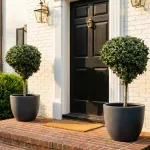


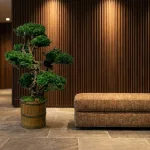
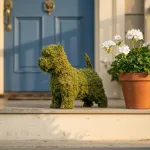




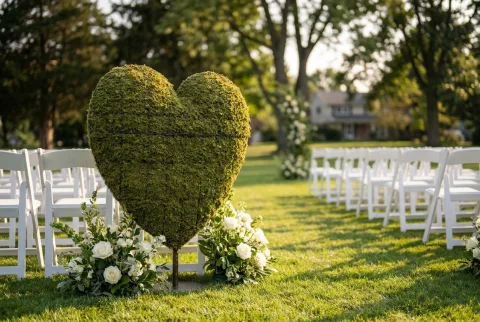
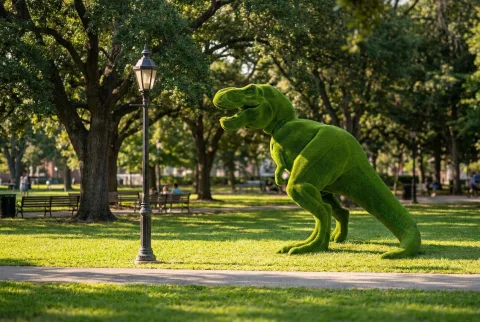
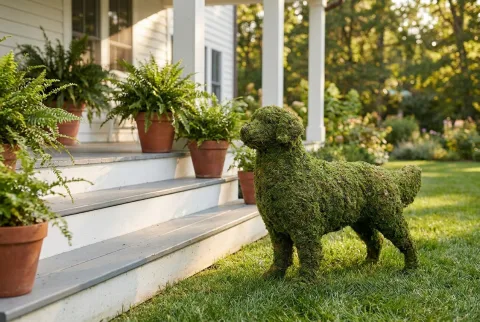
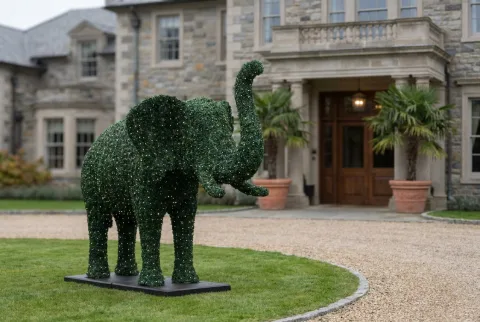
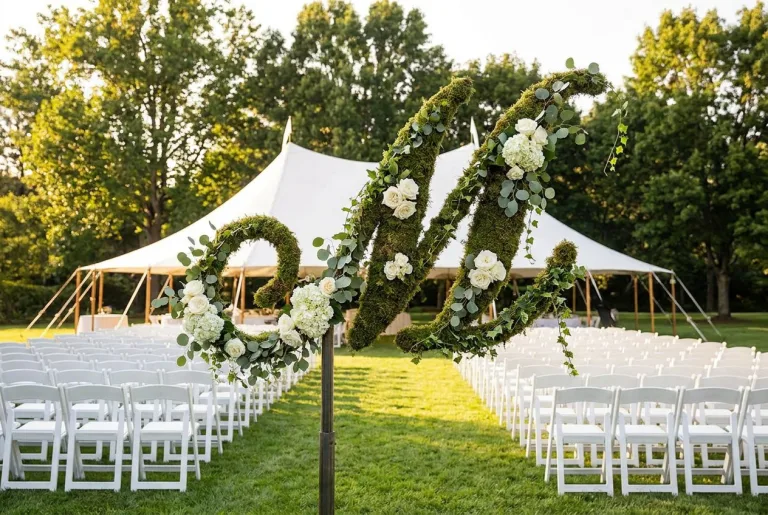
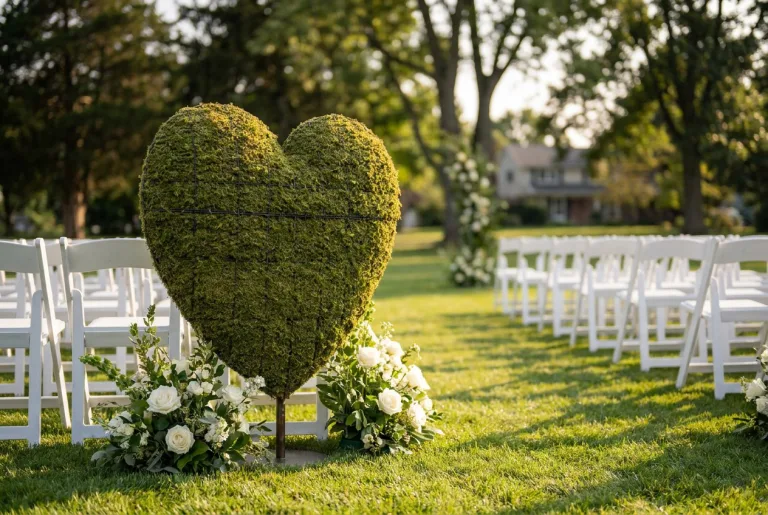
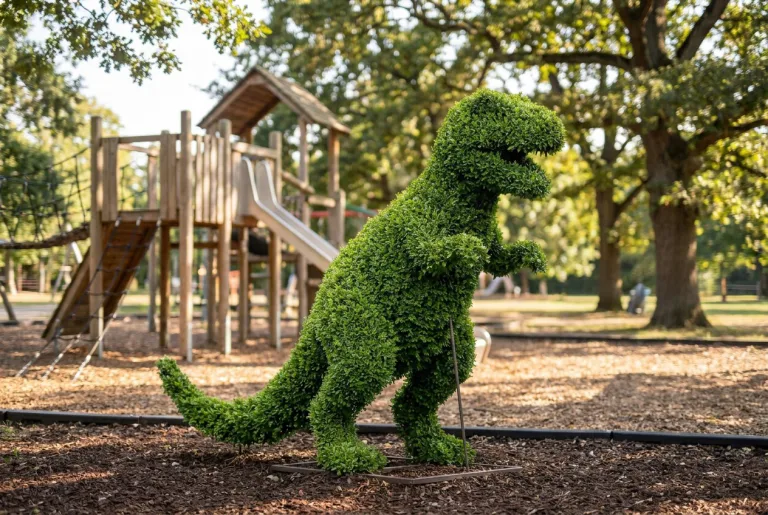
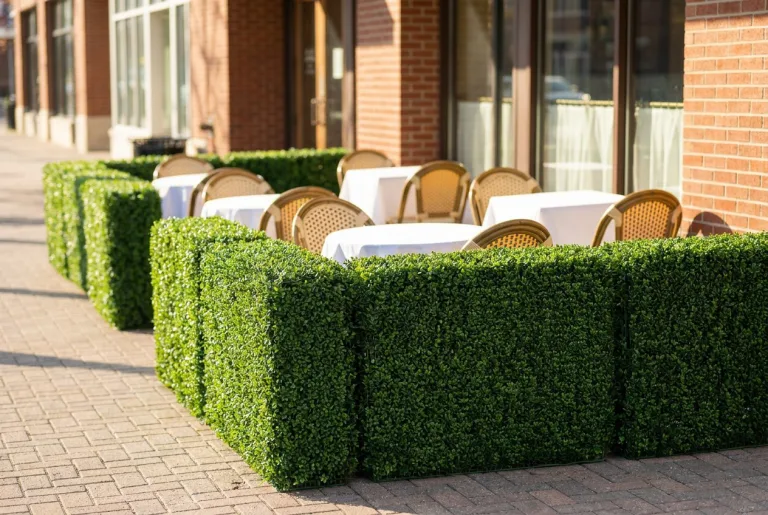




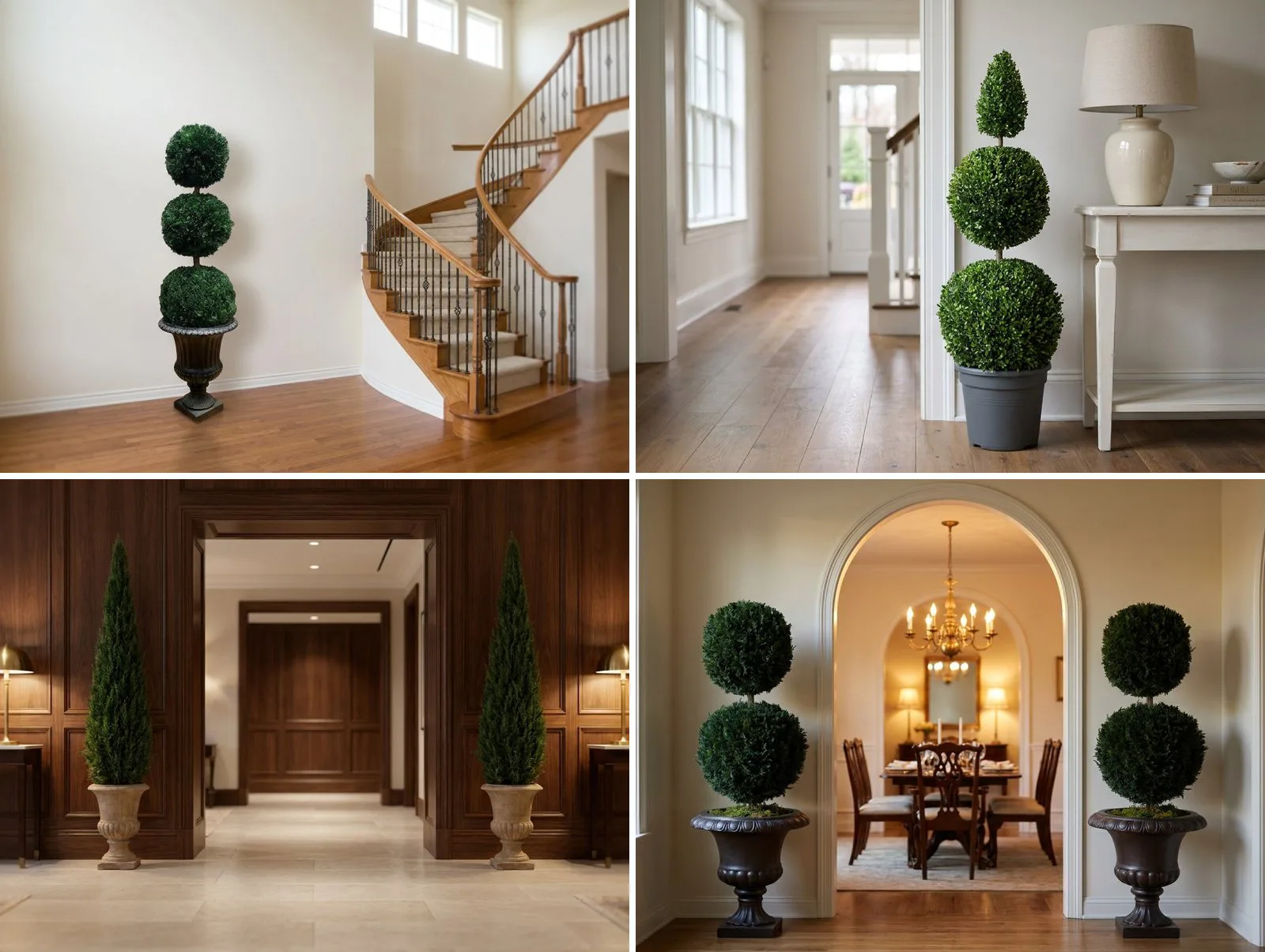
Boxwood is preserved by replacing the water in its leaves and stems with glycerin, so the foliage stays soft and green without water, soil or light. Commercial preservers do this over about two weeks, often adding dye to hold the color. At home, you can preserve cut boxwood branches by standing them in a mix of one part glycerin to two parts hot water for two to four weeks.
We do not preserve plants ourselves. Every preserved piece we sell is bought in already preserved. This page explains how the process works, how to do it with cut branches at home, and how to judge a preserved piece when you shop.
How commercial preservation works
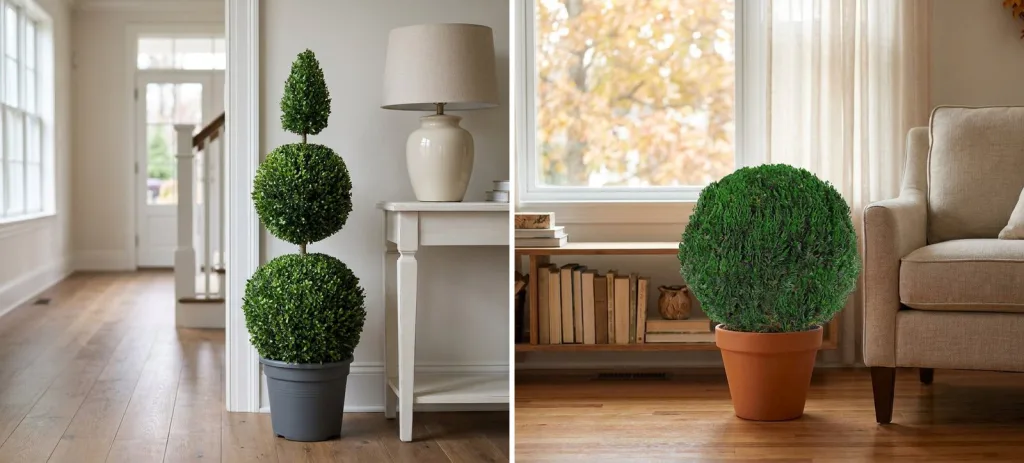
The plant is grown and clipped to shape first, because only foliage that has reached its final form is worth preserving. The branches are then cut and slowly dried while they draw up a glycerin solution in place of their water. The glycerin stays inside the leaves and stems and keeps them supple, so they do not dry out and shatter the way dried flowers do.
Dye is usually added to the solution to hold the natural green, or sometimes to shift it. The whole process takes about two weeks. The preserved foliage is then fixed to a frame and trimmed to the finished shape.
How to preserve boxwood at home with glycerin
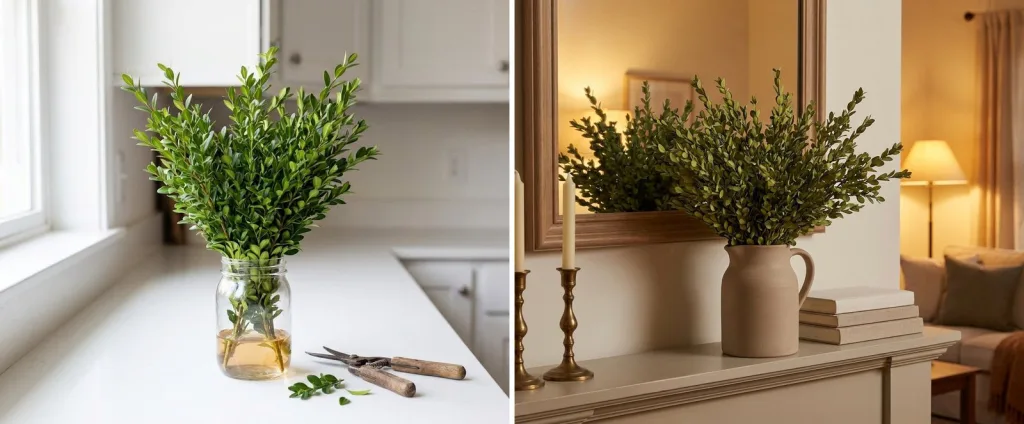
This is a home method for cut branches, for wreaths, garlands and arrangements. It will not preserve a whole living topiary in its pot. Expect the leaves to turn a deeper olive or bronze green rather than stay bright green, unless you add a little green floral dye to the mix.
- Cut in summer or fall. Choose healthy branches 12 to 18 inches long, with mature, firm leaves. Soft new spring growth does not take up the glycerin well.
- Prepare the stems. Strip the leaves from the bottom few inches. Recut each stem at an angle and split the bottom inch with pruners so it can drink.
- Mix the solution. Stir one part glycerin into two parts hot water until it is clear. Glycerin is sold at pharmacies and craft stores.
- Stand the branches in it. Use a jar or vase with 3 to 4 inches of solution. Keep it somewhere cool and out of direct sun.
- Wait two to four weeks. Top up the solution as the branches drink it. They are done when the leaves change color evenly to the tips and feel soft and slightly oily.
- Dry and store. Wipe the stems, hang the branches upside down for a day or two, then use them. Keep them out of sun and damp.
Home-preserved branches last a year or more indoors. If the tips stay green and brittle, the branch did not drink enough; recut the stem and give it more time.
How long preserved topiary lasts
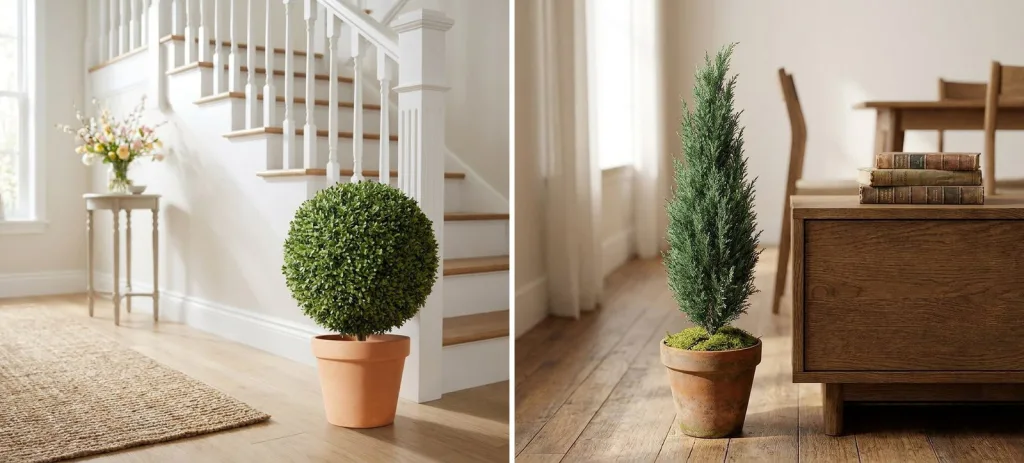
Kept indoors and out of the sun, a well-made preserved piece lasts for years. Preserved boxwood is usually expected to last around seven years, and juniper about the same or longer. The preserved moss pieces we sell are rated for seven years or more. Sun and damp shorten that, sometimes to a single season.
Care is simple. Do not water it. Keep it out of direct sun and away from damp. Dust it now and then with a feather duster, or with canned air held a few inches away.
How to judge a preserved piece
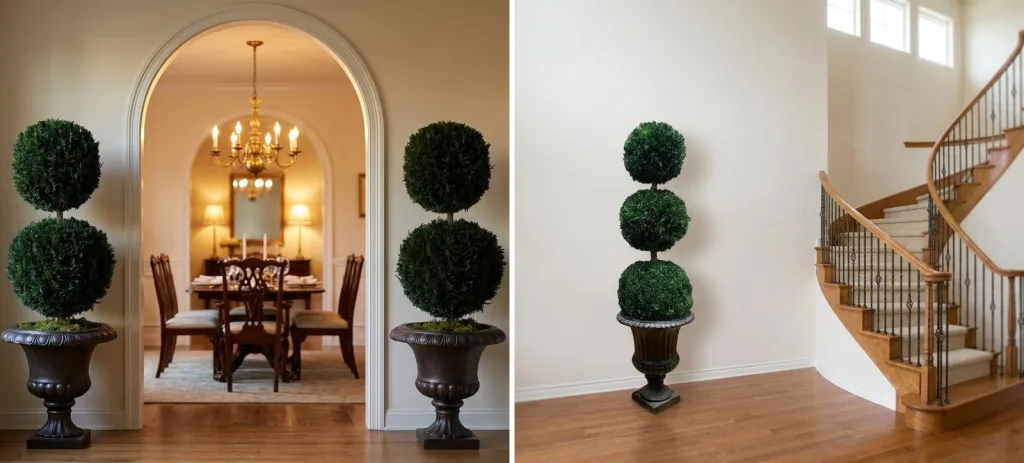
The same checks apply wherever you buy.
- Color variation. Real preserved boxwood has slightly lighter tips and greener centers, sometimes with soft olive tones. A flat, evenly bright ball is over-dyed or low grade.
- Layering. Look for shorter leaves tucked inside and longer tips reaching out, with some stem showing under the foliage. A perfectly smooth surface usually means cheap factory packing.
- The frame underneath. A good piece sits on a rigid steel frame with a rust-resistant finish. Ask the seller what the frame is. If they do not know, you have your answer.
Indoors, always
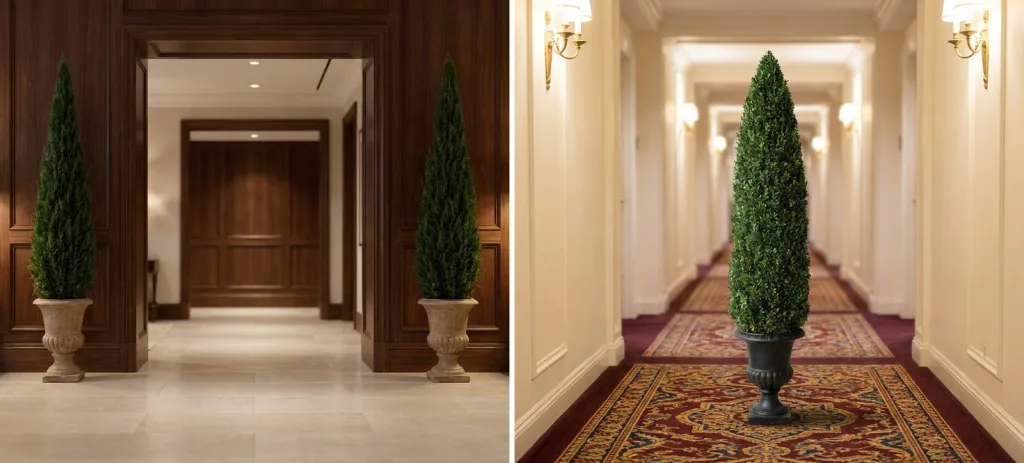
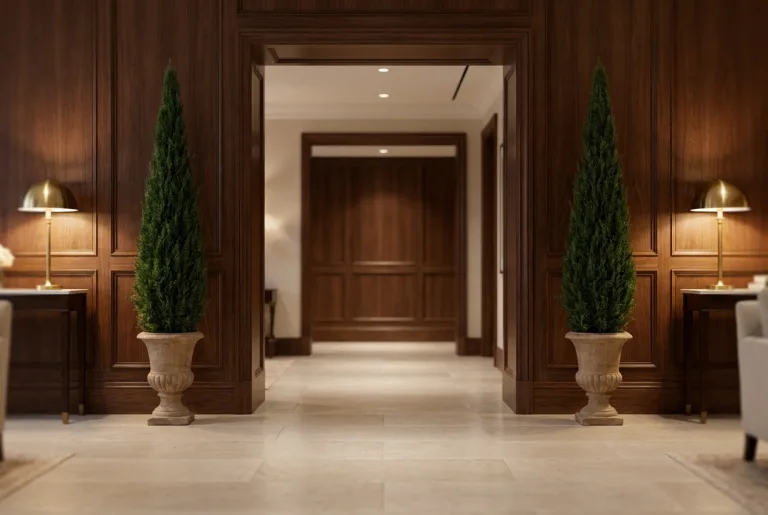
Preserved foliage is for interiors and covered spaces. Direct sun fades it, and damp breaks it down. It suits hallways, offices, hotel lobbies and rooms with no window at all, because it needs no light. For a spot in the open, choose UV-rated artificial topiary instead.
Browse the preserved topiary collection, or ask about a custom preserved piece built to order to your dimensions.
What about preserved moss?
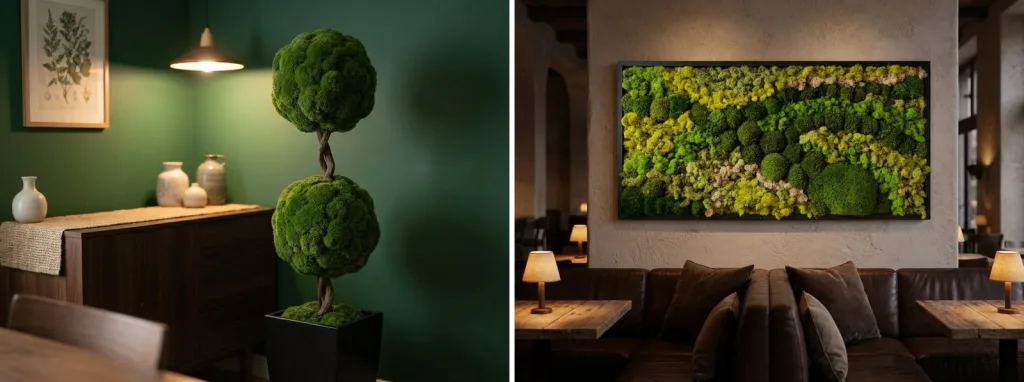
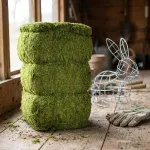
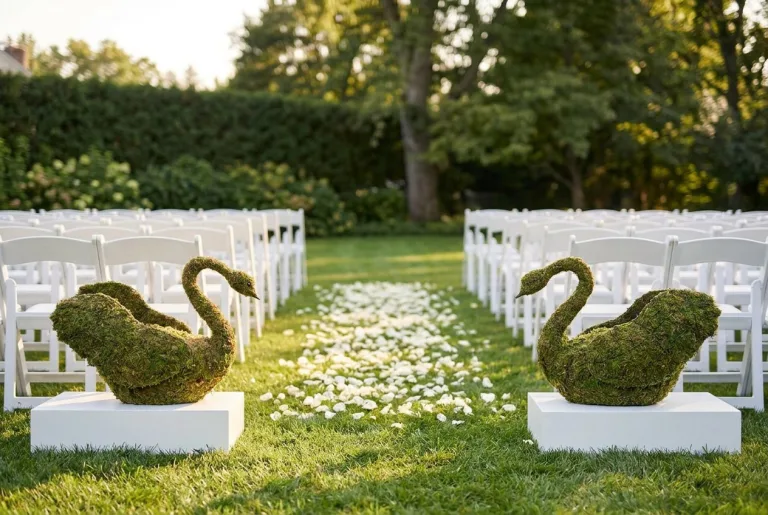
Moss is preserved the same way as foliage. Its water is replaced, so it keeps its color and texture without staying alive. Moss has no woody stems, so it stays soft and springy. That is why it works as a wall surface where preserved branches would not.
Care is the same: no light, no water, no feeding. Direct sun fades it, and steady damp ruins it, so keep it off exterior walls and out of unventilated rooms. Framed panels are in preserved moss wall art, and sphagnum by the bale is in bulk preserved moss.
Quick answers
How do you preserve boxwood?
Stand freshly cut branches in one part glycerin to two parts hot water, somewhere cool and shaded, for two to four weeks, until the leaves feel soft to the tips. Commercial preservers use the same principle with dye and controlled drying.
Is preserved boxwood real?
Yes. It is real boxwood that has been cut and treated so it no longer grows but keeps its leaves soft and green. It is not plastic or silk.
Can preserved boxwood go outside?
Only under full cover, such as a deep porch, out of direct sun and rain. In the open, sun fades it within a season.
How do you refresh preserved boxwood?
Dust it gently and keep it out of sun and damp. Faded preserved foliage does not regain its color, so a piece that has faded badly needs new foliage.