

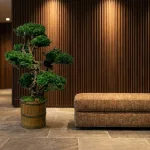
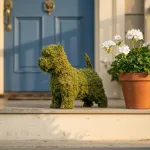

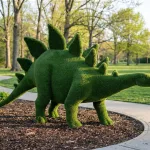
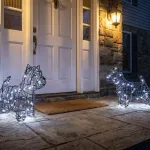

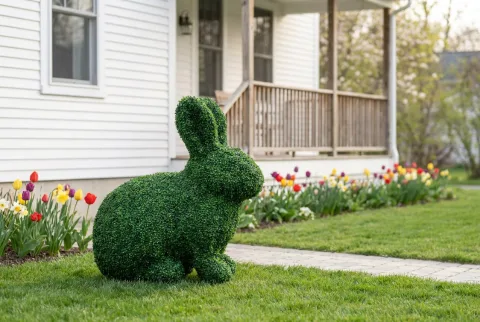
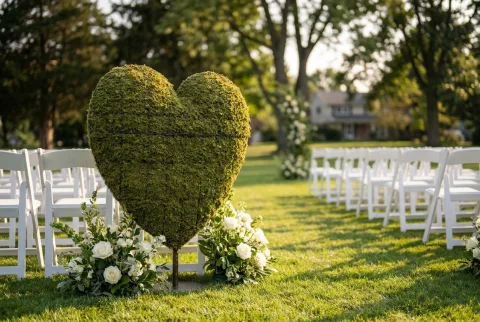
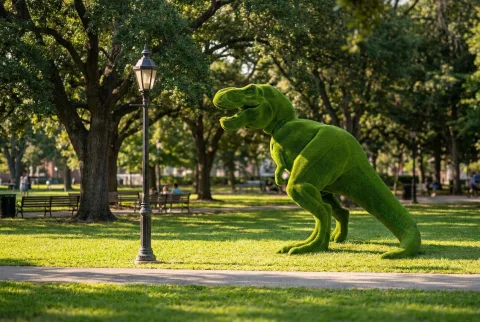
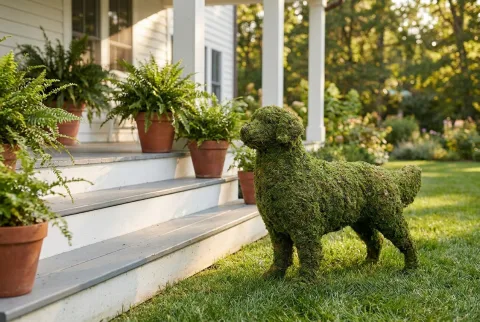
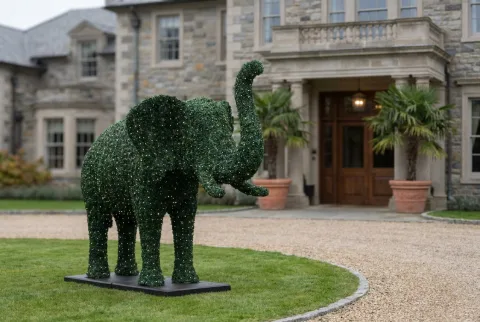
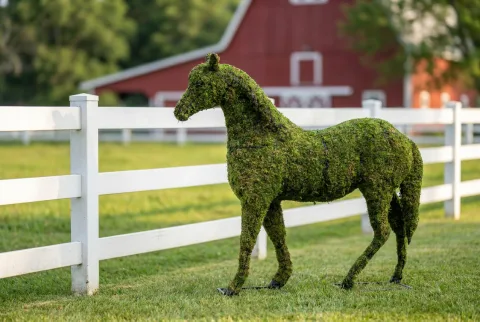
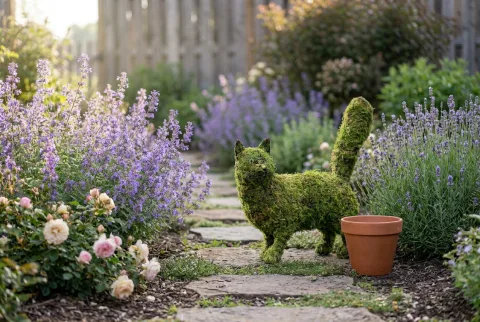
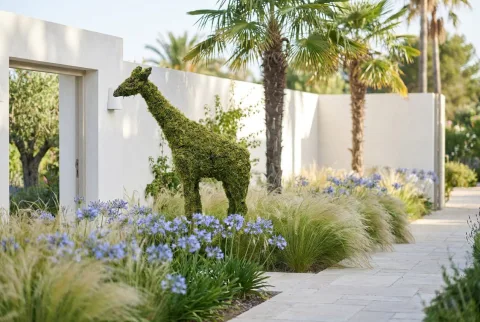





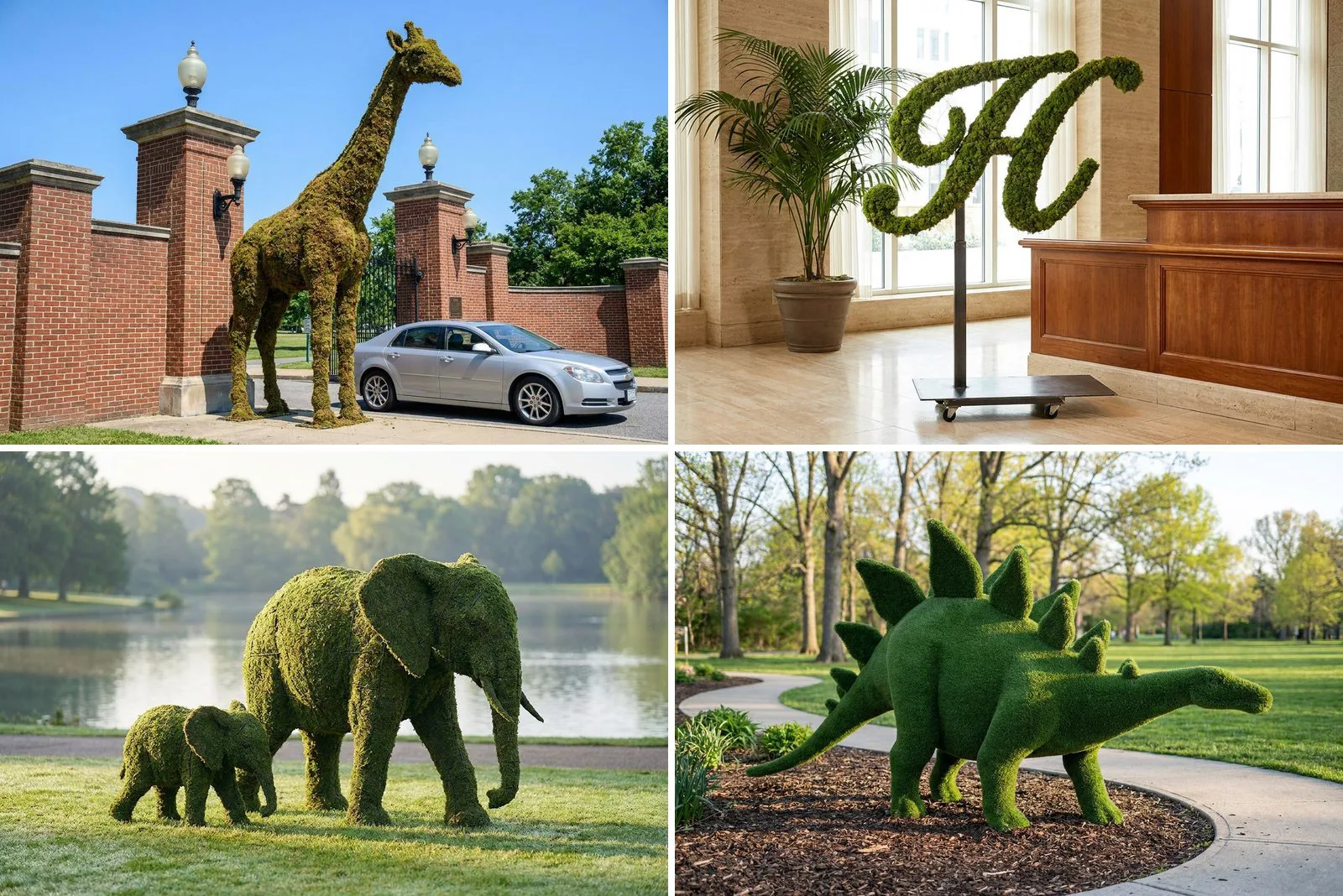
A topiary commission runs in five steps: you send a reference, a height and where the piece will stand; you approve a drawing; a deposit starts the build; the piece is built to order; and it arrives by freight. Every commission is quoted on its own, with delivery included. Most custom pieces fall between 3 and 9 feet, and the custom range reaches 40 feet.
What we need from you
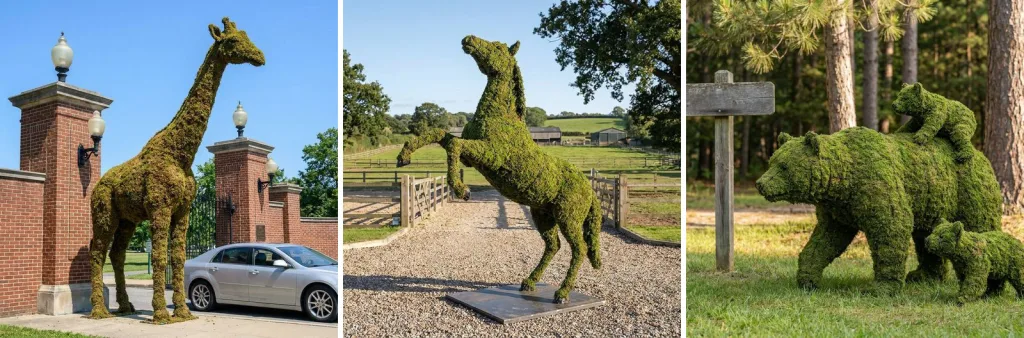
A reference. A photograph, a sketch on paper, a logo, a drawing your child did. It does not need to be good. It needs to show the pose and the character you want, because those two cannot be changed once the piece is built.
A height. Most of the rest follows from it: footprint, weight, freight and the size of any footing. Tell us the width the piece can occupy as well. A rearing animal and a walking one of the same height need very different floors.
Where it will stand. Indoors or out, sun or shade, public or private, permanent or for one event. This decides the covering and the mounting.
If you have a deadline, say it first. A deadline changes what is possible more than the budget does.
The five steps
| Step | What happens |
|---|---|
| 1. Brief | You send the reference, height, spot and date |
| 2. Drawing | You check the proportions and ask for changes |
| 3. Deposit | You approve the drawing and quote; the deposit starts the build |
| 4. Build | The piece is built to the approved drawing |
| 5. Delivery | Freight to your site, anchored if it is large |
The drawing. Your reference becomes a drawing with the main dimensions, and the proportions are settled there, where changes are free. Check the height, the width and the pose against what you sent. A tail that is too short on the drawing is a quick fix. A tail that is too short in steel is a rebuild.
The frame. The piece is built on a welded steel frame, galvanized as standard so it does not rust from inside the joints. Powder coating in a color is an option. The frame outlasts several coverings.
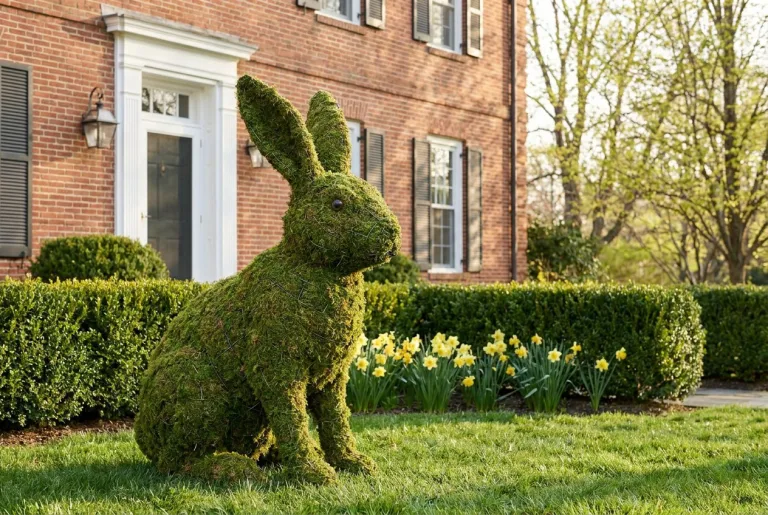
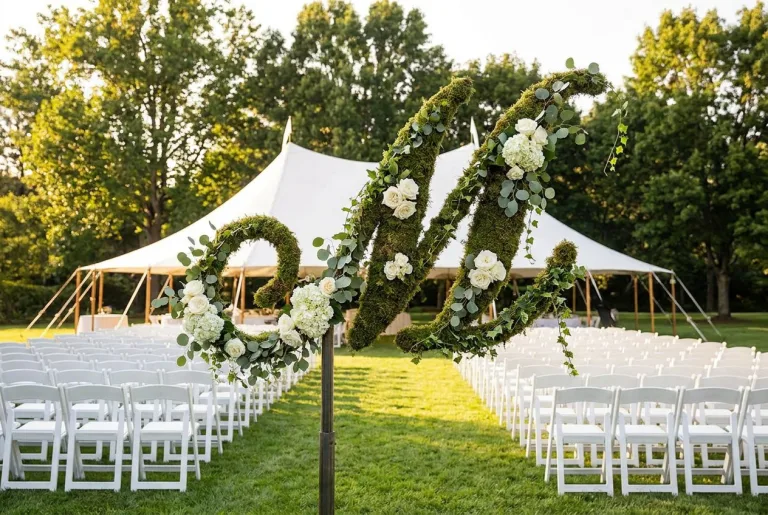
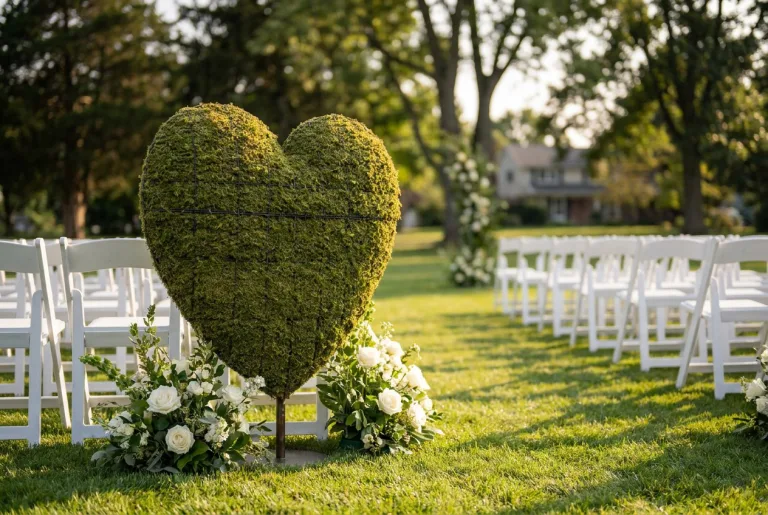
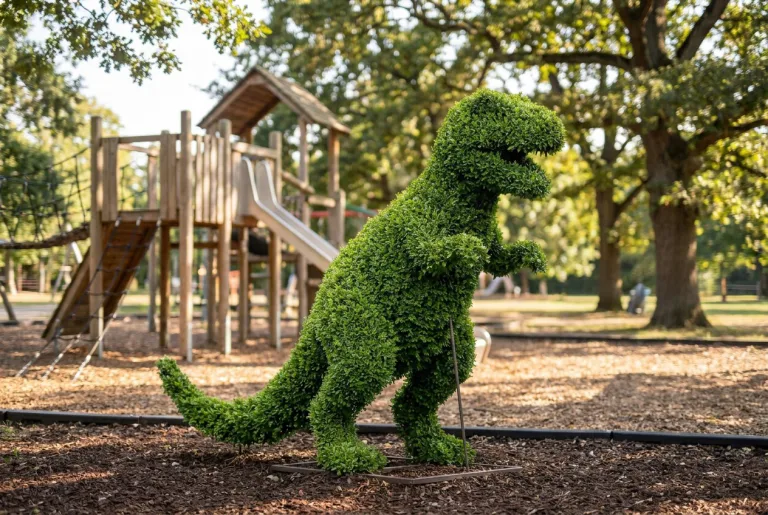
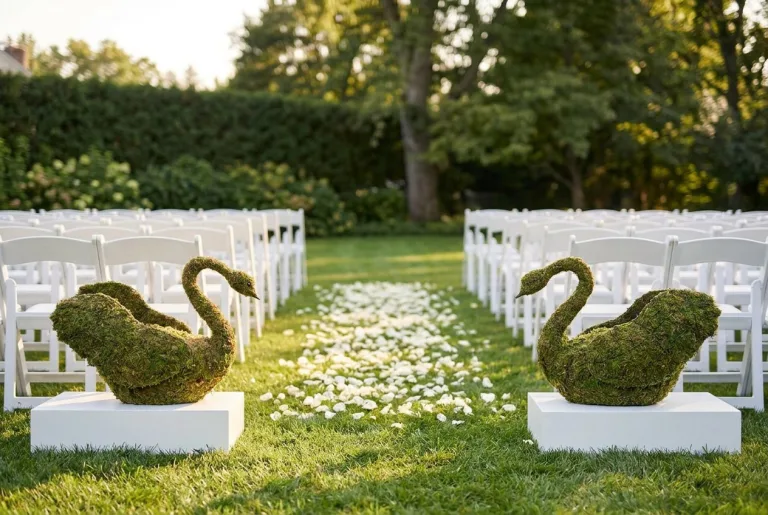
The covering. Moss, turf, preserved foliage or artificial foliage, chosen for where the piece will stand.
Choosing the covering
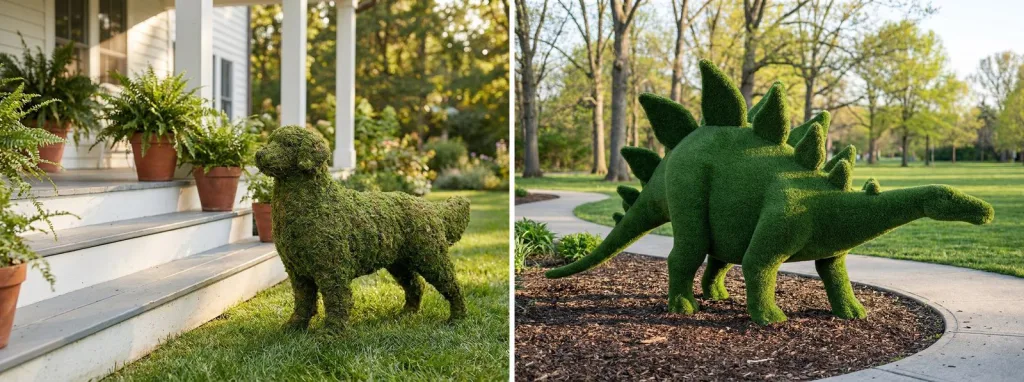
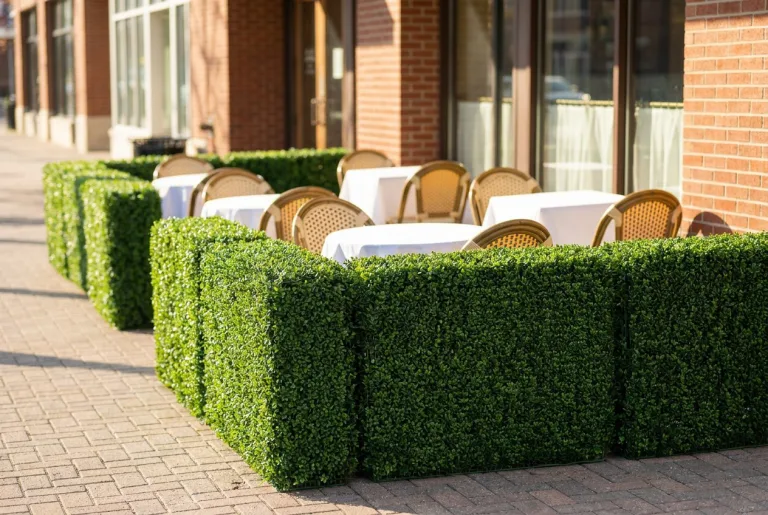
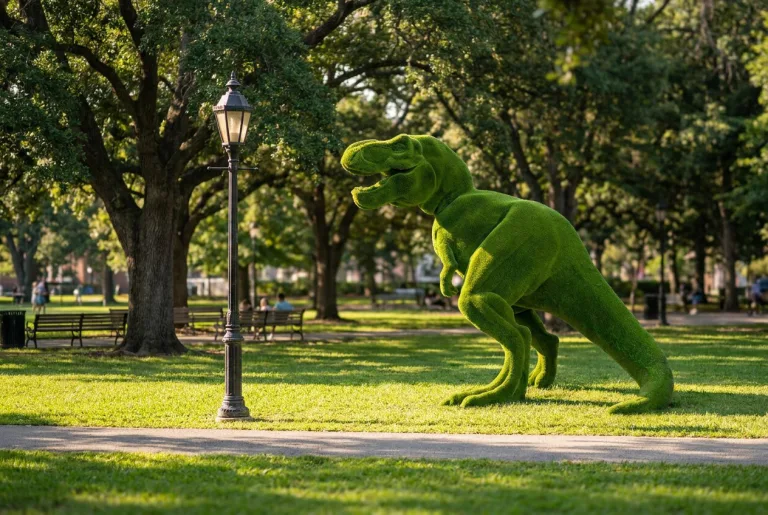
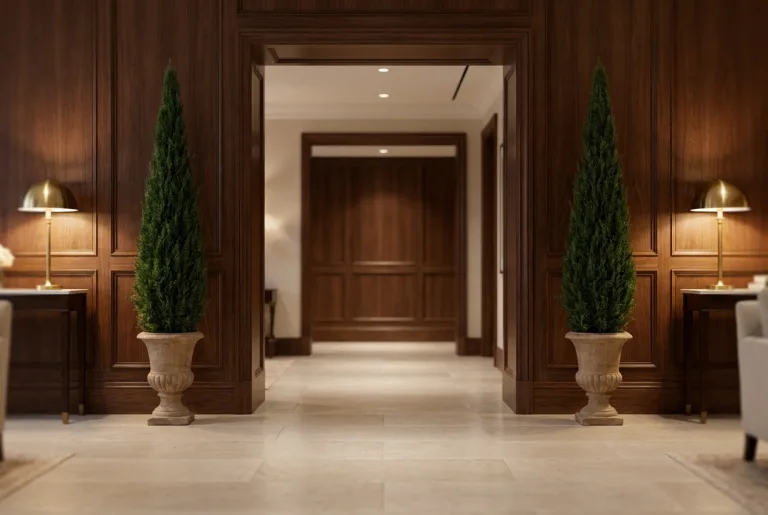
Moss looks softest and needs watering. Artificial foliage and turf are the two that hold up in open weather, and on artificial foliage the life outdoors depends on its UV grade more than on the seasons. Preserved foliage is for interiors only. Turf, moss or boxwood compares them side by side.
What scale changes
The jumps between sizes are not even. Each band brings new questions about delivery and anchoring.
Under about 3 feet is a garden or tabletop piece. It travels easily and stands on its own.
3 to 9 feet is where most commissions land. A 9 foot rearing tiger with three cubs at its base sits at the top of this band. Pieces this size need a level base and a delivery plan.
Above 9 feet, expect a route check to the site, a footing and a lift on the day. An 11 foot owl needs this planning, and the custom range goes up to a 40 foot peacock.
Groups are their own kind of job: a family of raccoons, a lemur group, a herring 4 feet by 12. The animals in a group have to relate to each other, and that is settled on the drawing.
What it costs, and how long it takes
Every commission is quoted, because two 9 foot animals can differ a lot in price. The number depends on surface area, the pose, thin parts such as tails and horns, and the covering. Send a height and a reference and you get one figure back rather than a range. What topiary costs shows where commissions sit against ready-made pieces.
Commissions take weeks, not days, and the wait depends on how many orders are ahead of yours. Ask for a current lead time. For a December display, get in touch in late summer, because the Christmas list is usually full by late fall.
Delivery and install
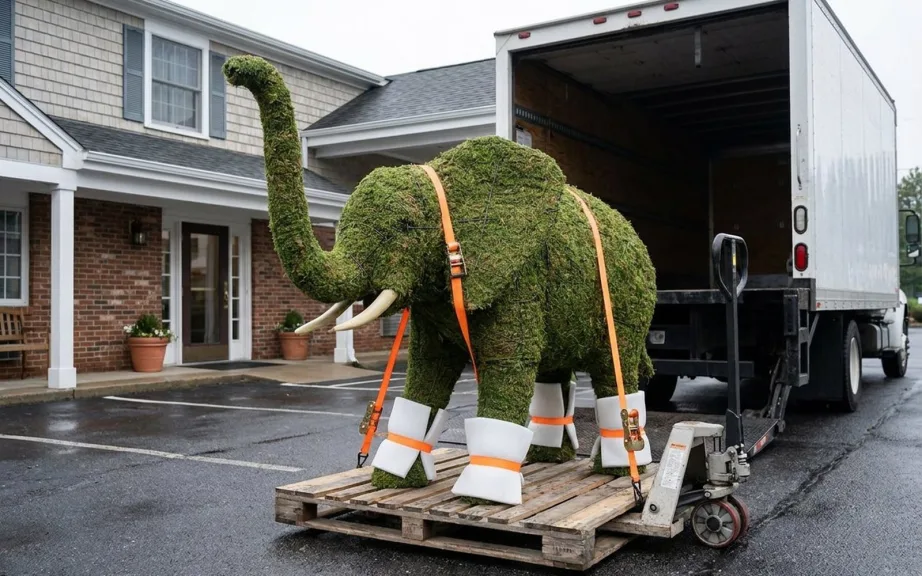
Pieces travel by freight, braced on a pallet or crated. Large pieces anchor to a footing, and pieces for public sites need fixings that stop them being moved. Measure gates, doors and turns on the route before you order, and read what freight delivery involves.
Refurbishment is often the better answer
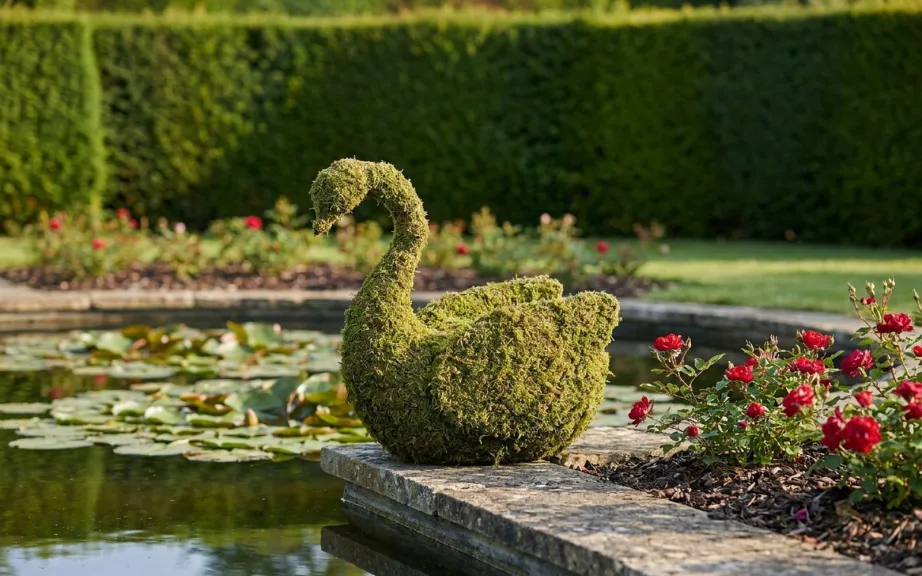
Re-covering a tired sculpture usually costs a fraction of replacing it. The steel frame outlasts its covering, so the frame under a worn piece is often still sound. Send a photo of what you have and our team will say whether it is worth saving, including when it is not. The refurbishment service shows an example.
Where commissions end up
Hotels, resorts, town centers, trade shows, brand events, public gardens and private ones. See the portfolio and the pages for hotels and resorts, events and brand activations and cities and public art. The whole range is in custom made topiary, and custom topiary design and fabrication covers coverings, sizes and frames.
Quick answers
What do you need from me to start?
A reference photo or sketch, a height and where the piece will stand. Add your deadline if you have one. Our team replies within hours, usually the same day.
How much does a commission cost?
Every commission is quoted with delivery included. Two animals of the same height can differ a lot in price because of the pose and the covering, so send a reference and a height for one figure.
How long does a commission take?
Weeks rather than days, depending on the queue when you ask. For a December display, start in late summer.
Can you repair a piece I already own?
Usually. The frame outlasts its covering, so a tired sculpture is often a re-cover rather than a replacement. Send a photo first.