












The best plants for topiary are boxwood, Japanese holly, yew, privet and arborvitae for outdoor shapes, rosemary, lavender and thyme for small tabletop pieces, and ivy or creeping fig for covering a wire frame. For an animal shape, the frame is usually packed with sphagnum moss first. All of these plants have small, dense leaves that grow back evenly after a trim.
Boxwood is the best all-round choice for most of the country. The table below compares the rest, and the sections after it show each plant as a finished topiary.
Topiary plants compared
| Plant | USDA zones | Light | Growth | Best for |
|---|---|---|---|---|
| Boxwood | 4 to 8 | Sun to part shade | Slow | Every classic shape |
| Japanese holly | 5 to 8 | Sun to part shade | Slow to medium | Balls and low hedges |
| Yew | 4 to 7 | Sun or shade | Slow to medium | Cones, columns, tall shapes |
| Privet | 5 to 8 | Sun | Fast | Standards and large shapes |
| Arborvitae | 3 to 7 | Sun | Medium | Spirals and tall cones |
| Rosemary | 8 to 10 | Full sun | Medium | Small standards and cones |
| Lavender and thyme | 5 to 8 | Full sun | Medium | Tabletop balls |
| English ivy | 5 to 9 | Shade to bright indirect | Fast | Covering wire frames |
| Creeping fig | 9 to 11 | Bright indirect | Fast | Small frames, indoors |
| Eugenia (brush cherry) | 10 to 11 | Sun to part shade | Fast | Tiered balls in warm areas |
Zones are typical ranges, and cultivars vary, so check the plant tag. Only the hardy boxwood hybrids reach zone 4. Rosemary and creeping fig can spend winter indoors in colder areas.
What makes a good topiary plant
A good topiary plant has small leaves, grows densely, and pushes out new shoots evenly after a cut. Small leaves let the shape look crisp. Dense growth hides the stems. Even regrowth means the outline comes back the same shape. For the full test, read what plants make good topiaries.
1. Boxwood: the best plant for most topiary
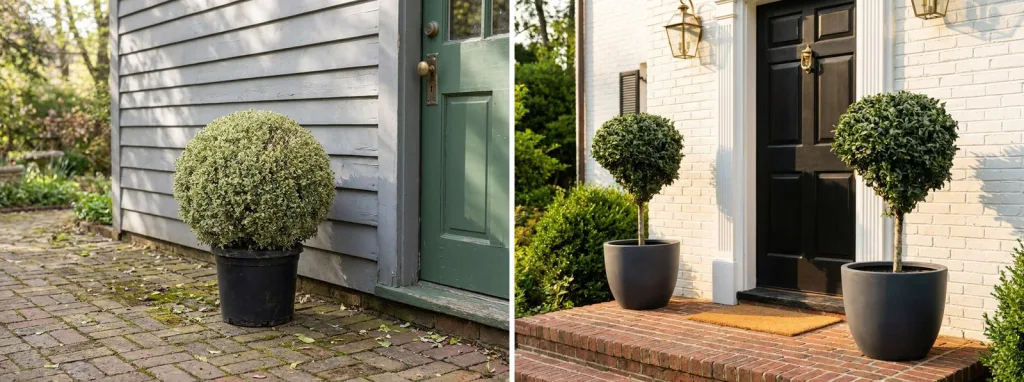
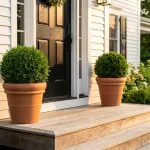
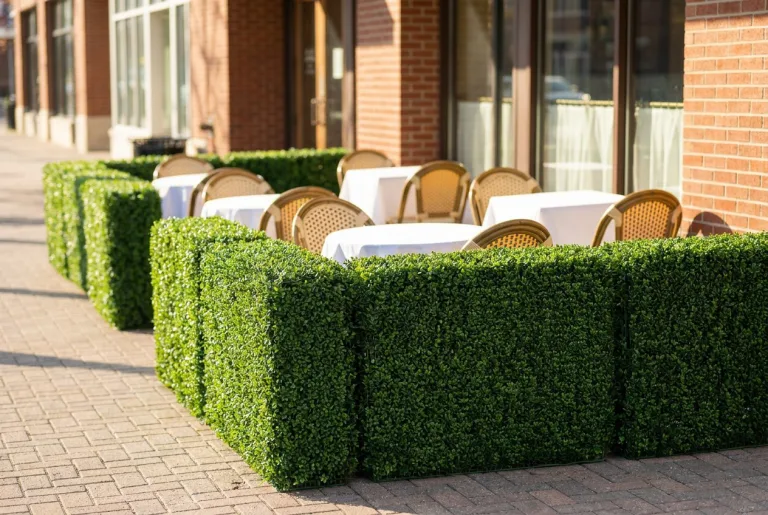
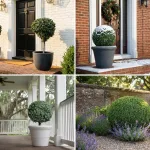
Boxwood is the classic topiary plant, and for good reason. Its leaves are tiny, it grows slowly, and it takes clipping better than almost anything else. A boxwood ball or cone keeps its outline with two light cuts a year, one in late spring and one in late summer.
It grows in zones 5 to 8, and the hardy hybrids such as ‘Green Velvet’ and ‘Green Mountain’ take zone 4. Slow dwarf types like ‘Morris Dwarf’ hold a tight shape almost without cutting. To pick one for your climate, read the boxwood care guide for USA zones. Ready-shaped plants are in our live boxwood topiary range.
2. Japanese holly and privet: boxwood lookalikes
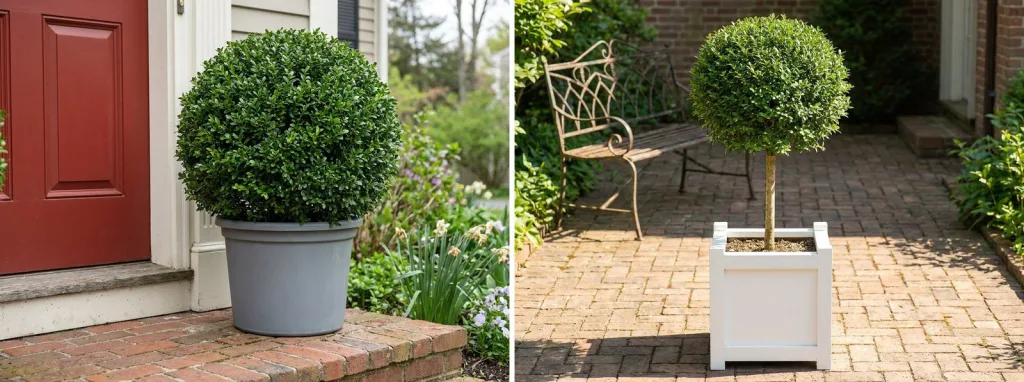
Japanese holly (Ilex crenata) looks so much like boxwood that most visitors cannot tell them apart. Its leaves are a little larger and glossier. It is a good choice where boxwood blight has killed boxwood before, because blight does not attack holly.
Privet grows fast, often a foot or more a year. That means more trimming, but you get a finished shape in two or three seasons instead of five. Use it for large standards, hedges and big geometric shapes in full sun.
3. Yew and arborvitae: for tall cones and spirals

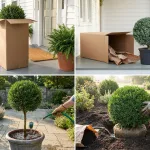
Plants with needles or fine scale leaves make the best tall shapes. Yew is the traditional choice for formal cones and columns. It is one of the few topiary plants that grows well in shade, and it recovers even from a hard cut.
Arborvitae grows naturally narrow and upright, so it does half the work of a spiral or a tall cone for you. It is very cold hardy, down to zone 3. Our tallest live piece is a 17 foot arborvitae spiral.
4. Rosemary, lavender and thyme: herbs for tabletop topiary
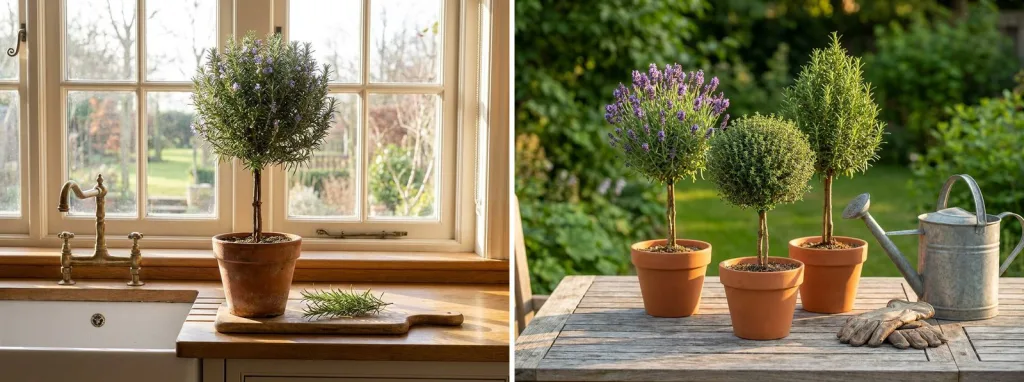
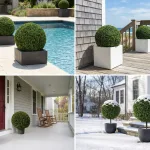
Herbs make small, fragrant topiary for a table, a windowsill or a gift. Rosemary makes the classic small standard, lavender and thyme make neat little balls, and you can cook with the clippings.
All three need full sun and a gritty, fast-draining soil. Rosemary is only hardy to about zone 8, so in colder areas keep it in a pot and bring it inside to a bright, cool window for winter. Water herbs when the top inch of soil is dry. Soggy soil kills them faster than drought.
5. Ivy and creeping fig: the fast way to cover a frame
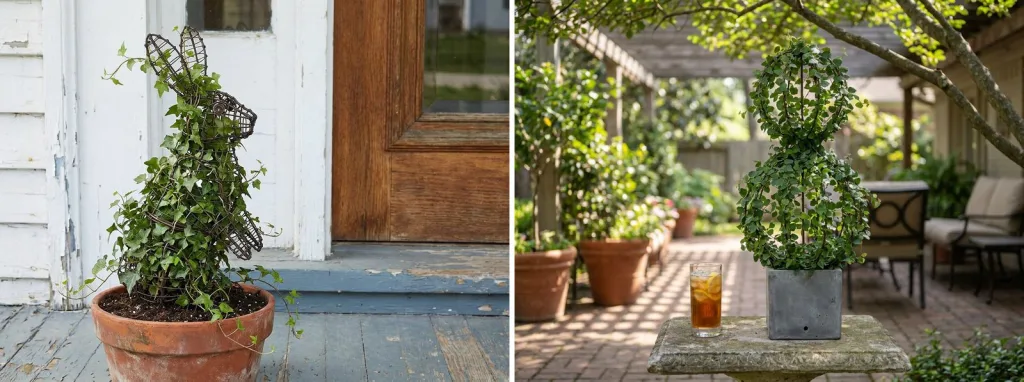
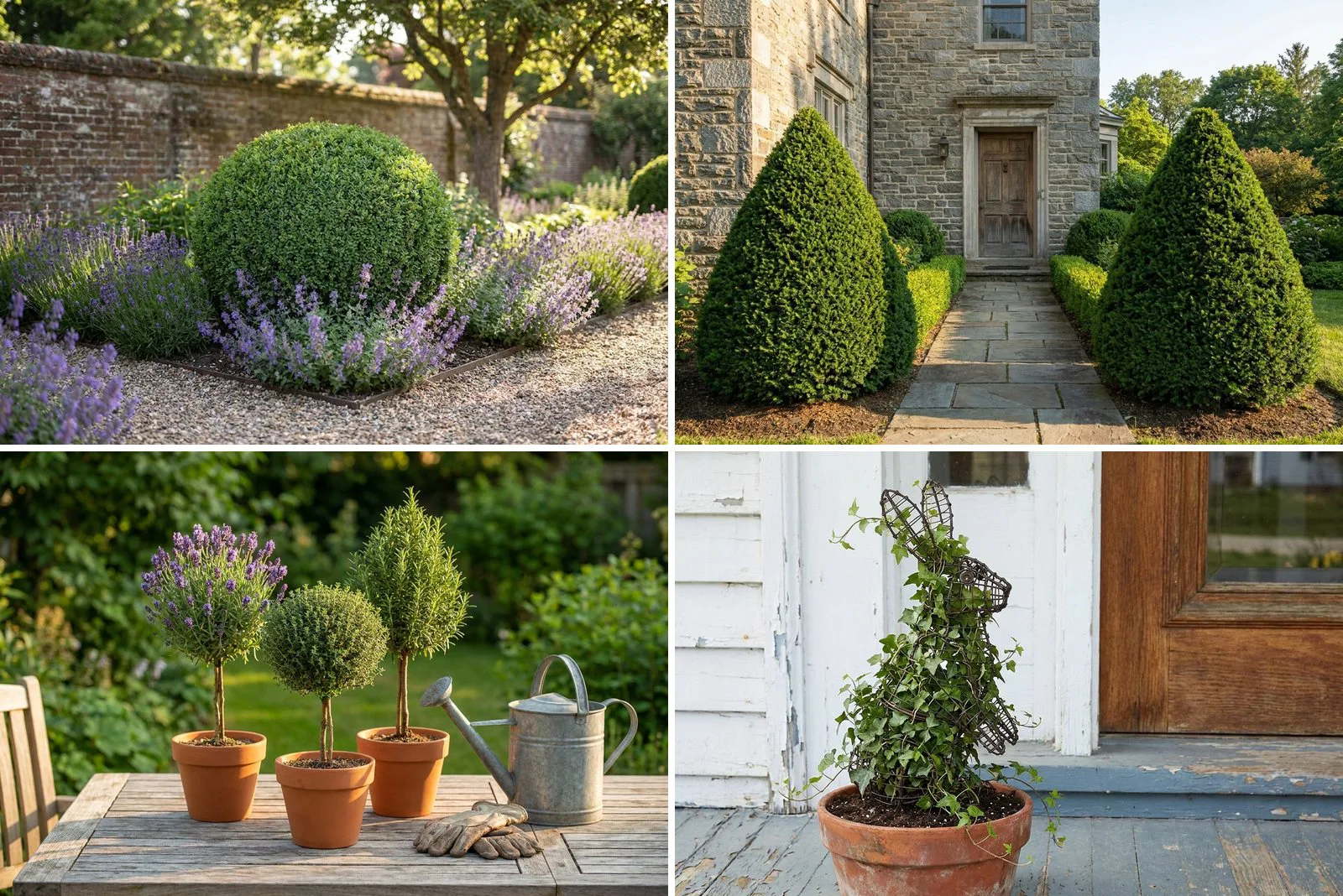
Vines are the quickest route to a green shape. Plant ivy at the base of a wire frame, wind the shoots around the wires and tie them in as they grow. A small frame can be covered in one growing season, where a shrub takes years.
English ivy is the hardier choice for outdoors. Creeping fig has smaller leaves and gives a finer finish, but it is only hardy in warm zones, so it is mostly grown indoors. Both like bright light without hot afternoon sun. Pick a frame from our wire topiary frames.
6. Sphagnum moss: the base of most animal topiary
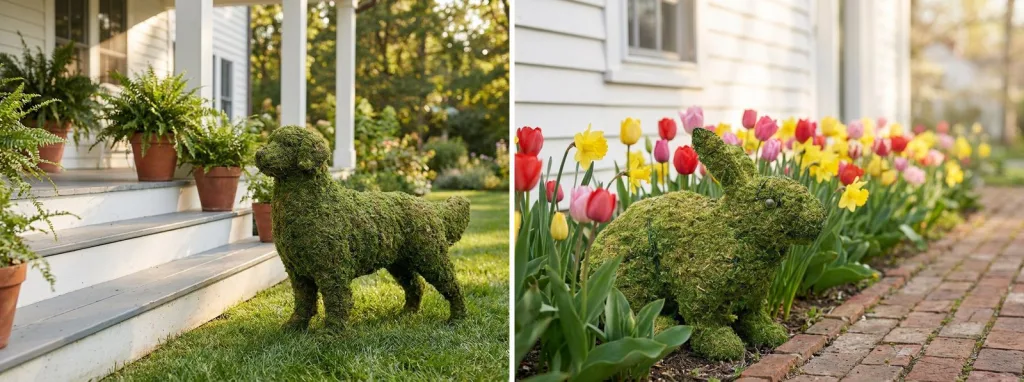
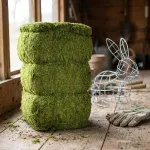
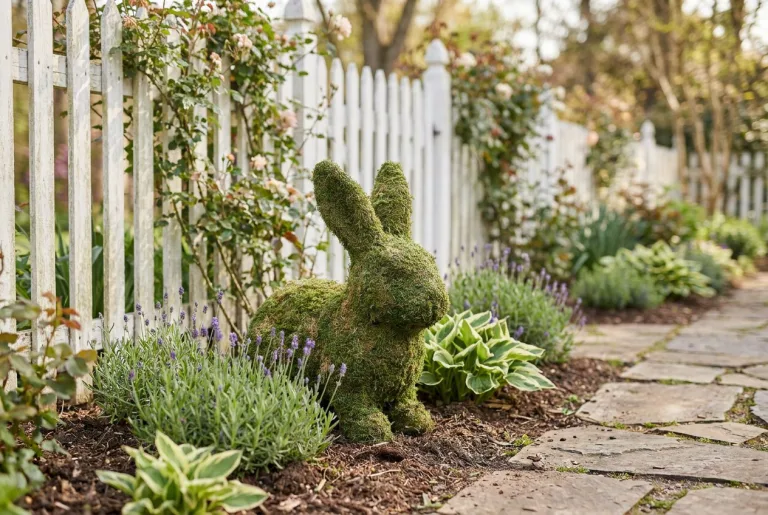
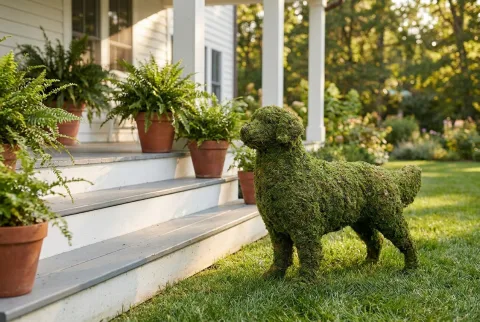
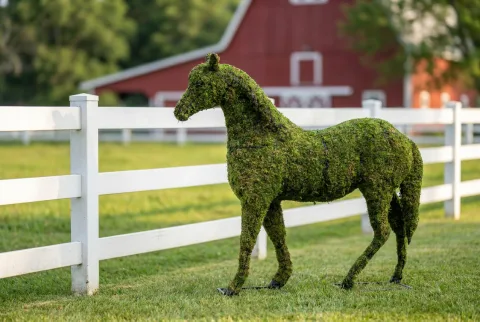
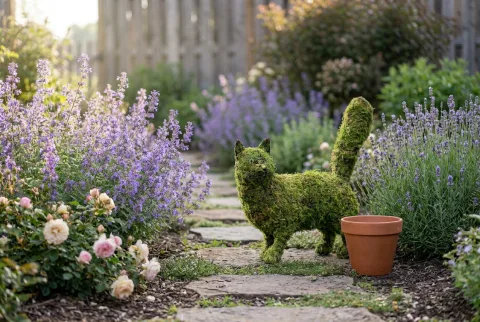
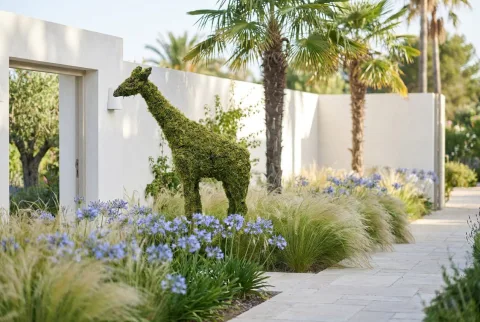
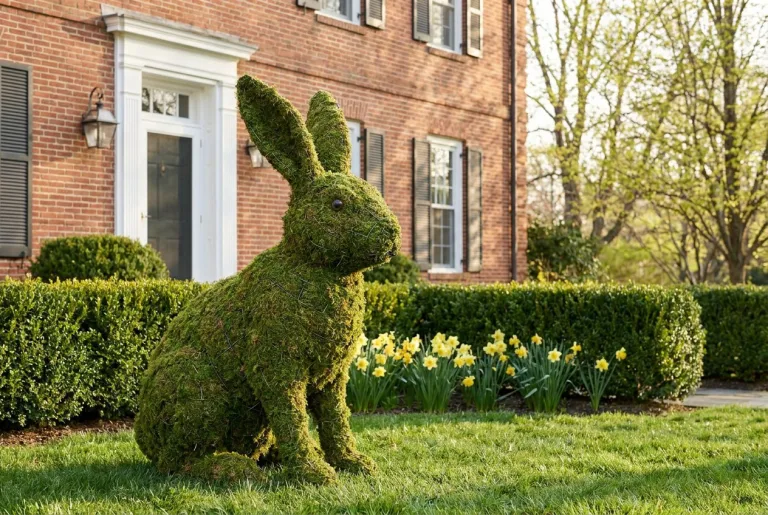
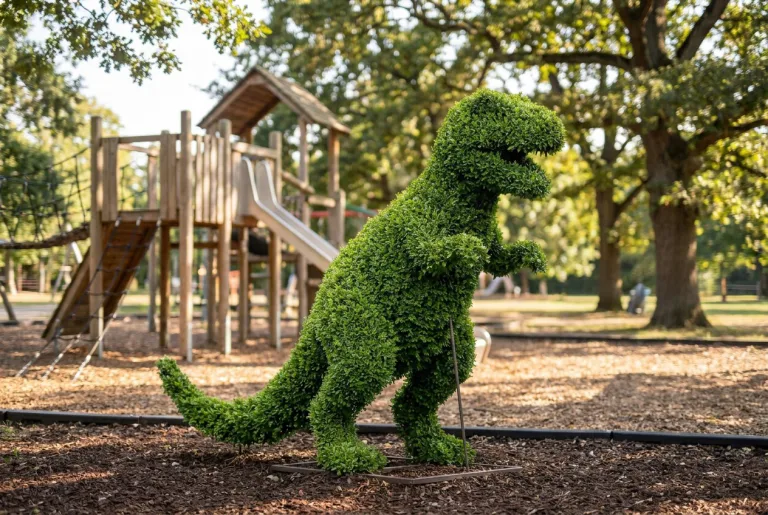
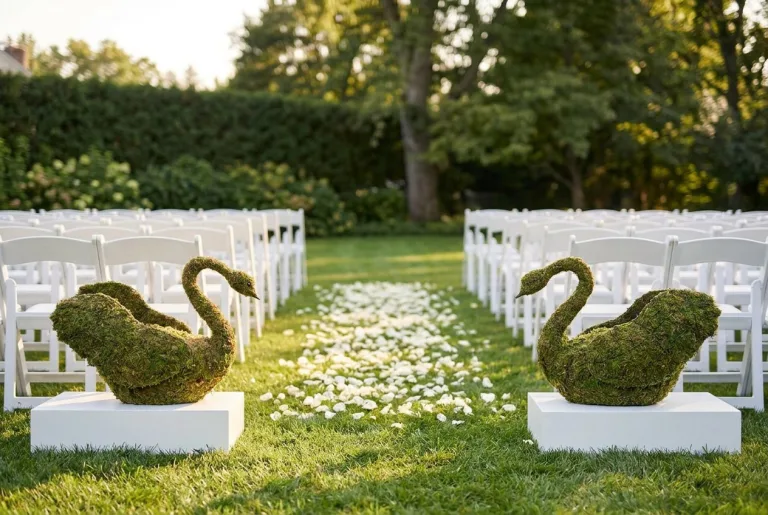
Most animal topiary starts with sphagnum moss. The wire frame is stuffed tight with damp moss, and the moss holds water and gives roots somewhere to grow. You can display it as a green moss sculpture or push small plants through the mesh into the moss.
Moss on its own browns in time, so plan to plant into it or refresh it once or twice a year. Our sphagnum moss care guide explains how. For a finished piece, see mossed animal topiary, or read how to make an animal topiary.
7. Eugenia: the warm-climate choice
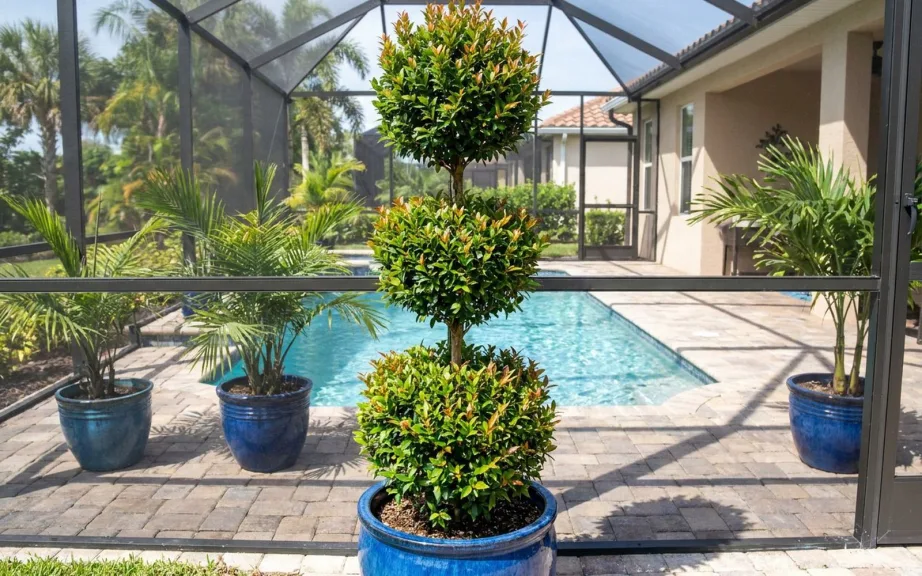
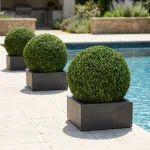
Eugenia, also called brush cherry, is the go-to topiary plant in South Florida and southern California, where boxwood struggles. It has glossy leaves, grows fast in heat, and makes the double and triple ball standards you see by pools and front doors.
It will not take a hard frost. Outside zones 10 and 11, grow it in a pot and move it into a bright room before the first freeze.
Best topiary plants for pots
For a pot outdoors, choose boxwood, Japanese holly or a dwarf yew. They grow slowly, so they stay in proportion to the pot for years. A pot’s root ball gets colder in winter than the ground, so pick a plant rated one zone colder than yours.
For a pot indoors, a live shrub will not last. Boxwood needs a cold winter rest and thins out inside within a season. Indoors, grow rosemary or creeping fig in a bright window, or choose preserved topiary, which needs no light or water. For pot sizes, see what size planter for a topiary.
Which plant for which project
- A formal ball, cone or spiral outdoors: boxwood. Yew or arborvitae for tall ones.
- Where boxwood blight has struck: Japanese holly.
- A shape in full shade: yew.
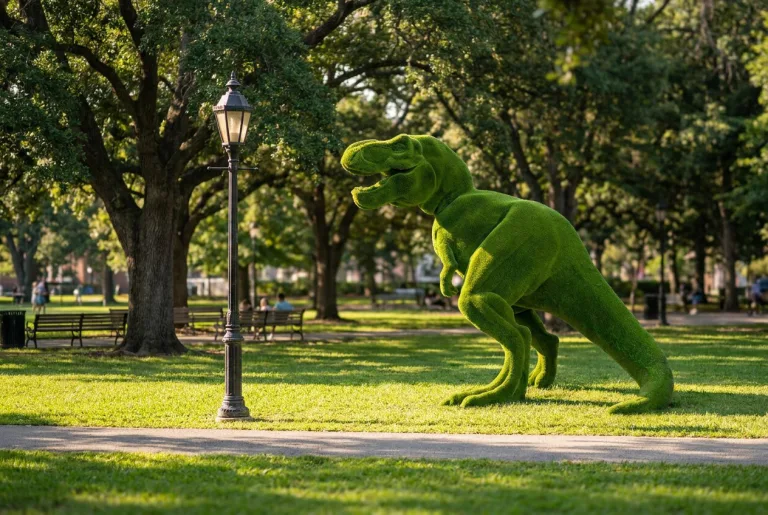
- An animal shape: a wire frame packed with sphagnum moss, planted with ivy or left mossed.
- A tabletop piece or a gift: rosemary, lavender or thyme.
- Fast results on a budget: ivy on a wire frame.
- Florida and other frost-free areas: eugenia.
- No watering, no trimming: skip live plants. Preserved topiary keeps real foliage indoors with no care, and UV-rated artificial topiary stays green outdoors year-round.
Quick answers
What is the easiest plant to grow as a topiary?
Boxwood, for most of the United States. It grows slowly, holds its shape between cuts and forgives a mistake. Ivy on a wire frame is the easiest if you want a shape quickly.
What is the fastest-growing topiary plant?
Ivy and creeping fig cover a small frame in one season. Among shrubs, privet and eugenia grow fastest, often a foot or more a year, so they need trimming more often.
Can you grow a topiary indoors?
Only a few plants. Rosemary, creeping fig and small ivy frames can live in a bright window. Boxwood, yew and holly are outdoor plants and decline indoors. For an indoor shape that lasts, choose preserved topiary.
What plants do you use in a topiary frame?
Fill the frame with damp sphagnum moss, then plant ivy, creeping fig or small succulents into it. Planting into the moss within the first few months gives the roots the best start.
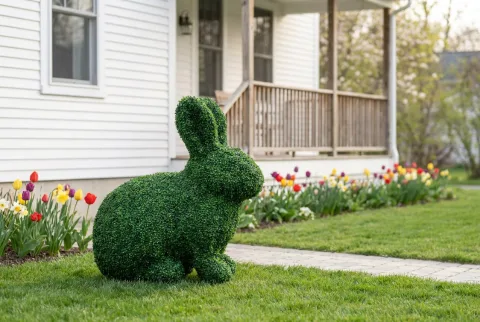
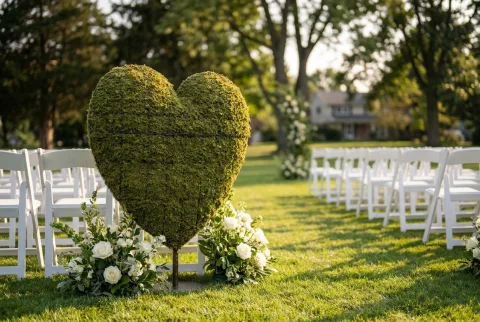
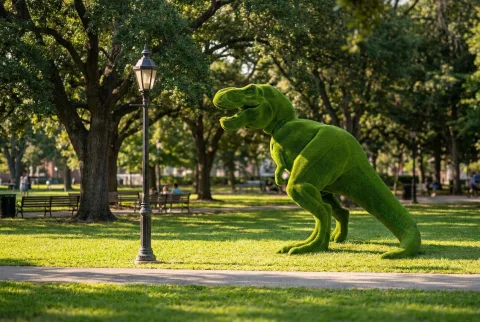
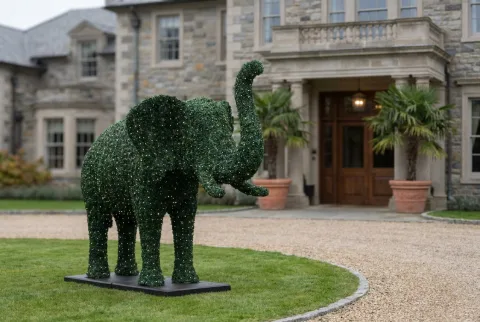
Some photographs on this page are staged illustrations of plants we do not stock, such as yew, holly and eugenia.