





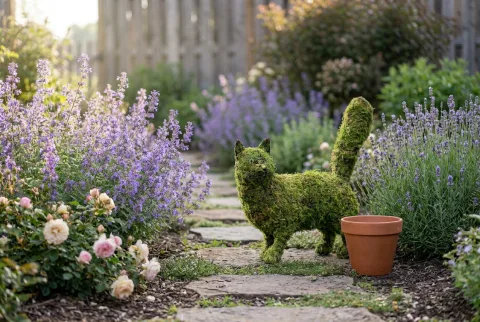
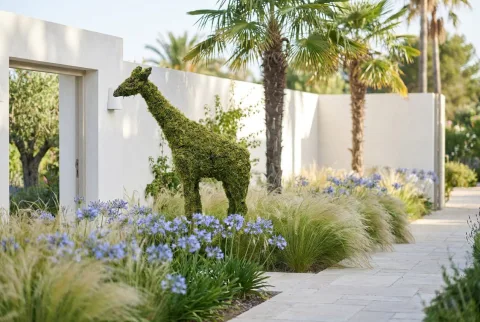
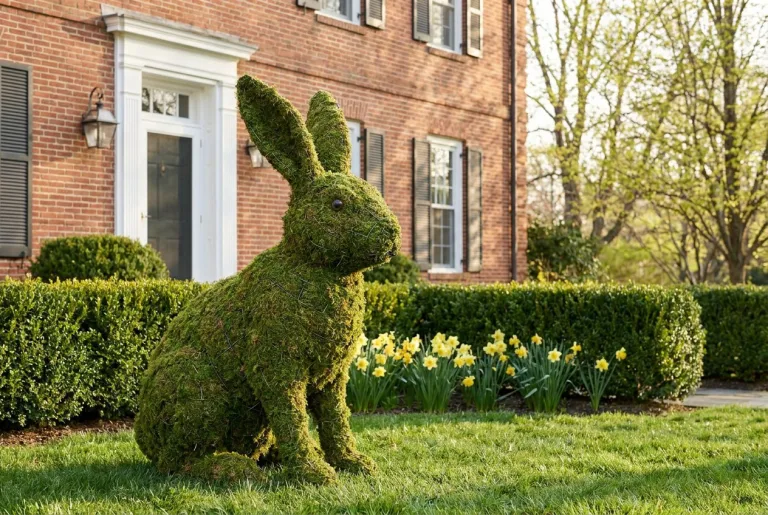






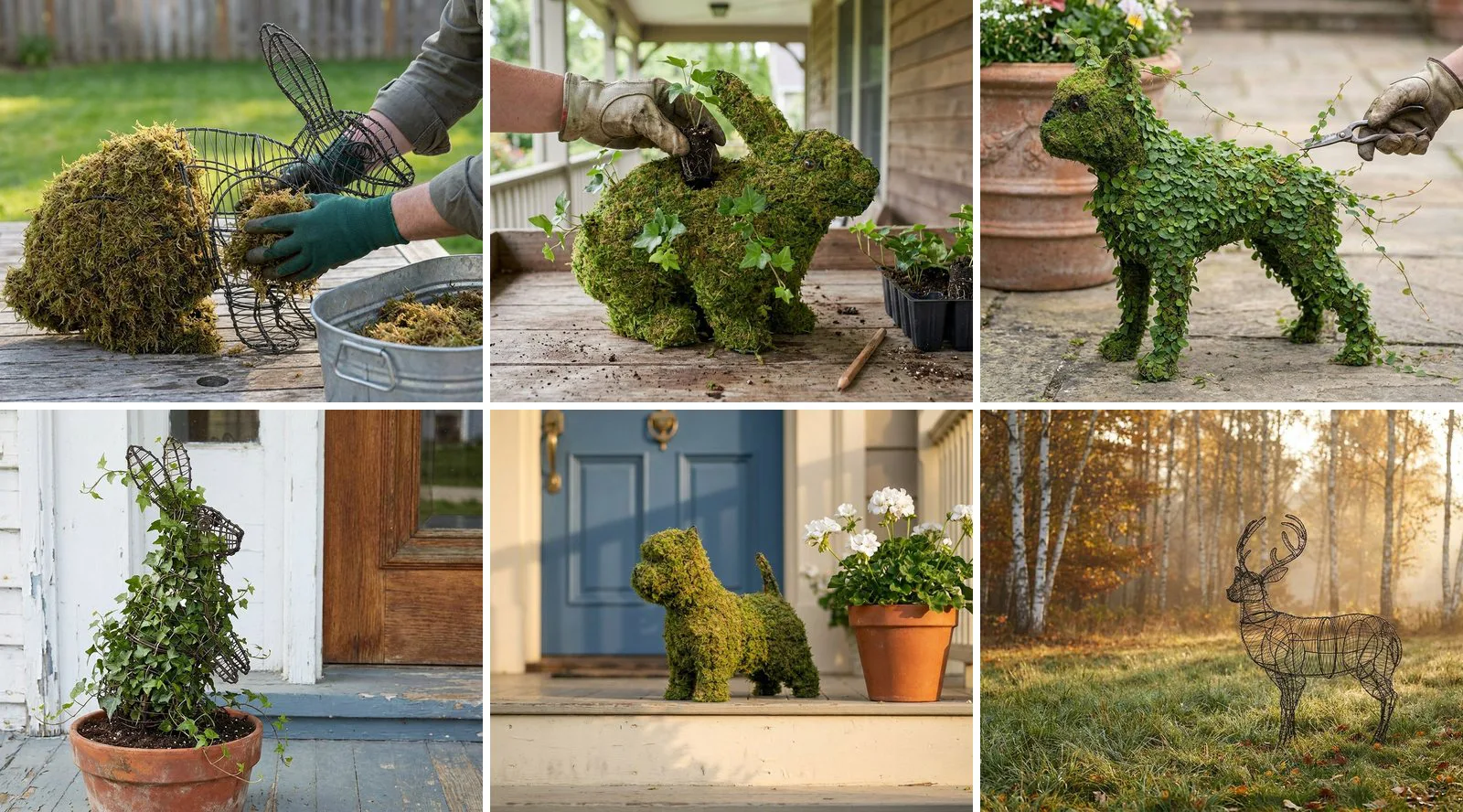
To make an animal topiary from plants, buy or bend a wire frame in the animal’s shape, pack it tight with damp sphagnum moss, then plant small ivy, creeping fig or succulents into the moss and trim them to the outline as they grow.
A small animal takes an afternoon to pack and plant. The plants cover it in one to three growing seasons, depending on its size.
This guide goes through each step in order, with what to buy, how long each stage takes, and how to keep the finished piece alive.
What you need
| Item | What to look for |
|---|---|
| A wire animal frame | Steel rod with welded joints. Under 20 inches for a first piece. |
| Sphagnum moss | Long-fiber sphagnum. One cubic foot fills a 14 to 24 inch frame. |
| Plants | Small ivy or creeping fig plugs, or small succulents |
| Floral pins | U-shaped wire pins to hold stems against the moss |
| Tools | Gloves, long sleeves, a tub or bucket, a pencil or dibber, small snips |
| Fertilizer | A starter fertilizer, then a balanced liquid feed |
Wear gloves and long sleeves the whole time. Sphagnum can carry a fungus that causes a skin infection through small cuts.
Step 1: Choose a frame
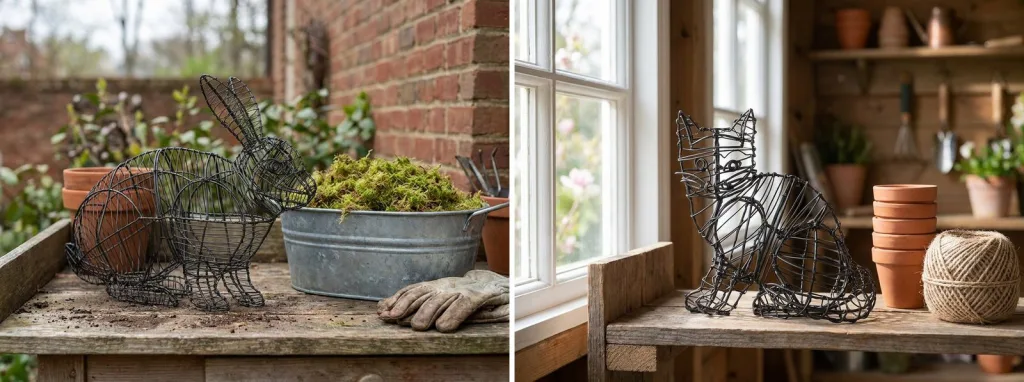
The frame is the animal. Plants cannot fix a pose or a proportion that looks wrong, so choose a frame that already reads as the animal from across the garden.
For a first project, pick something under 20 inches. The 9 inch sitting kitten costs about $72 and the 13 inch hopping rabbit about $90.
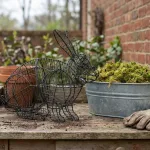
Our wire animal frames start at $57 for a small turtle and run up to a 60 inch moose. Look for steel rod rather than thin wire, and a weld at every crossing. The guide to choosing a topiary frame covers size and gauge in more detail.
You can also bend your own frame from heavy galvanized wire and chicken wire. It is cheaper, but a homemade frame flexes at the joints, and the shape is hard to get right. Most people who try it once buy a frame the second time.
Step 2: Soak and pack the moss
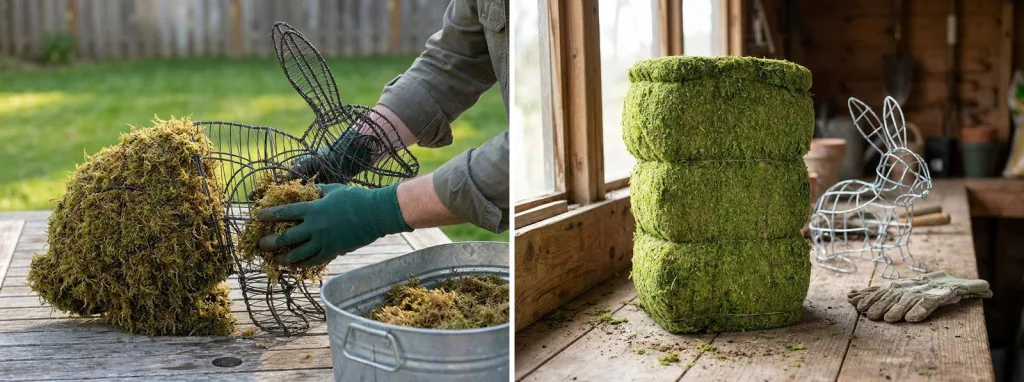
Soak the moss in a tub of water for about 15 minutes, then squeeze out the extra so it is damp but not dripping. Pull the clumps apart with your fingers. Damp, loose moss packs into corners. Dry moss springs back out.
Start at the parts farthest from you, such as the tail and the back legs, and push small handfuls through the wires.
Pack it much harder than feels right. When you press the finished body with a finger, it should feel firm, with no soft spots. Use the end of a wooden spoon or a dowel to push moss into ears, feet and other thin parts.
How much moss you need:
| Frame height | One cubic foot of sphagnum fills |
|---|---|
| Under 10 inches | 8 to 10 frames |
| 10 to 14 inches | 3 to 4 frames |
| 14 to 24 inches | 1 frame |
| 24 to 36 inches | Take 2 cubic feet or more each |
Once it is packed, trim the stray fibers flush with the outline. The moss packing guide shows this step in close-up.
Step 3: Choose the plants
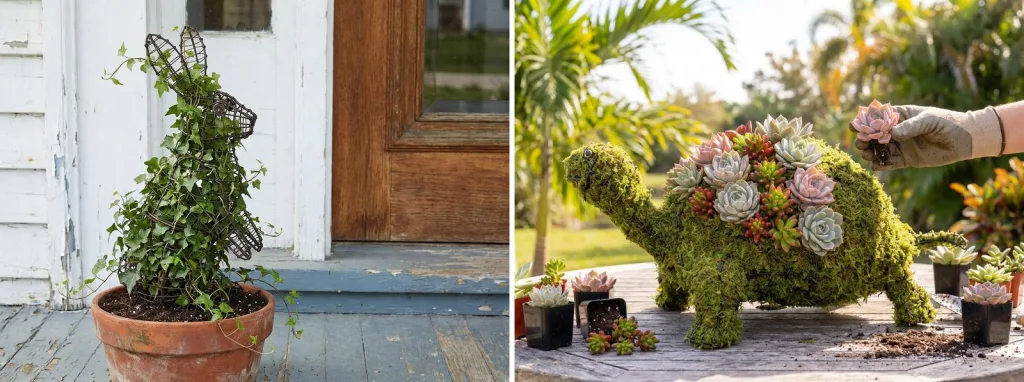
Use plants with small leaves that grow densely and root easily into moss. Small leaves keep the details sharp. Big leaves blur a face or an ear into a lump.
| Plant | Best for |
|---|---|
| English ivy | The easiest choice outdoors. Fast, hardy, forgiving. |
| Creeping fig | The finest, flattest finish. Warm zones, or indoors. |
| Succulents | Hot, dry, sunny spots. Echeveria, sedum and hens and chicks. |
| Creeping thyme, creeping Jenny | Low, soft coats on small animals |
Pick plants that like the same light and water, so one watering routine suits the whole animal. English ivy is invasive in parts of the Pacific Northwest and cannot be sold in Oregon or Washington, so use creeping fig or a native groundcover there. The best plants for topiary page compares more choices by zone.
Step 4: Plant into the moss
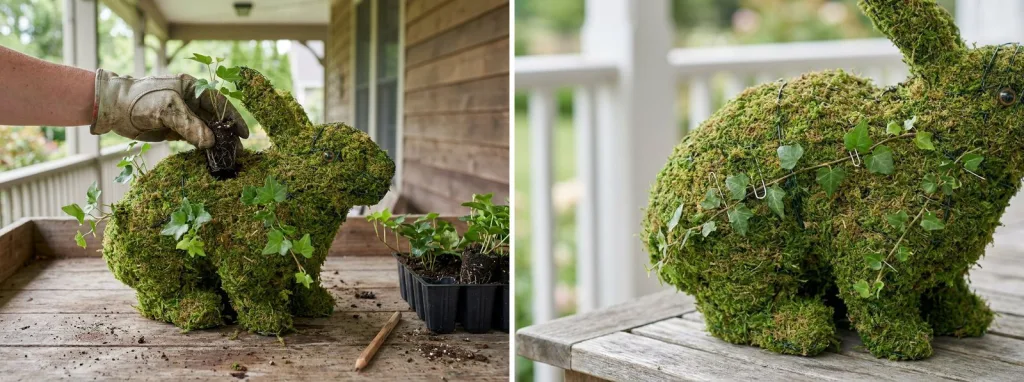
Soak the packed animal again and let it drain. Then work over the body one plug at a time.
- Poke a hole in the moss with a pencil or dibber, about as deep as the plug’s roots.
- Squeeze most of the soil off the roots and push the plug into the hole.
- Press the moss closed around the stem.
- Lay any long stems flat along the body and hold them down with a floral pin every few inches. Each pinned stem roots where it touches the moss.
Spacing decides how fast it fills. Plant every 2 inches if you want a green animal within weeks, for a party or a gift. Plant every 4 to 6 inches if you are happy to watch it fill over a season.
Ears, legs and tails dry out fastest, so many people leave those parts as moss and plant the body only.
A larger frame can also be planted from the inside. Open the frame at its seam, set the plants in with their root balls, repack the moss around them and close it again. Our guide to adding live plants to a topiary frame explains that method.
Step 5: Rest, water and feed
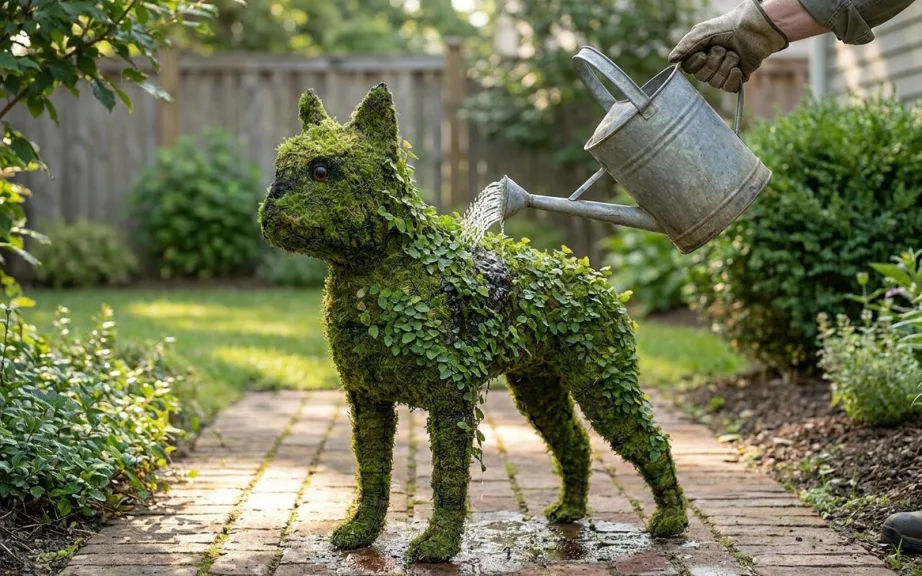
Water the new planting with a starter fertilizer such as 10-52-10. Then keep the animal in shade, out of the wind, for several days while the roots settle. After that, move it to its spot.
A planted animal dries out like a hanging basket. Check it every day in summer, and water when the moss feels dry just under the surface. Water slowly so it soaks in, or stand a small piece in a tub for a few minutes.
Feed every two weeks in the growing season with a balanced liquid fertilizer such as 20-20-20. Succulents are the exception: let the moss dry between waterings and feed them once a month at most.
Step 6: Train and trim
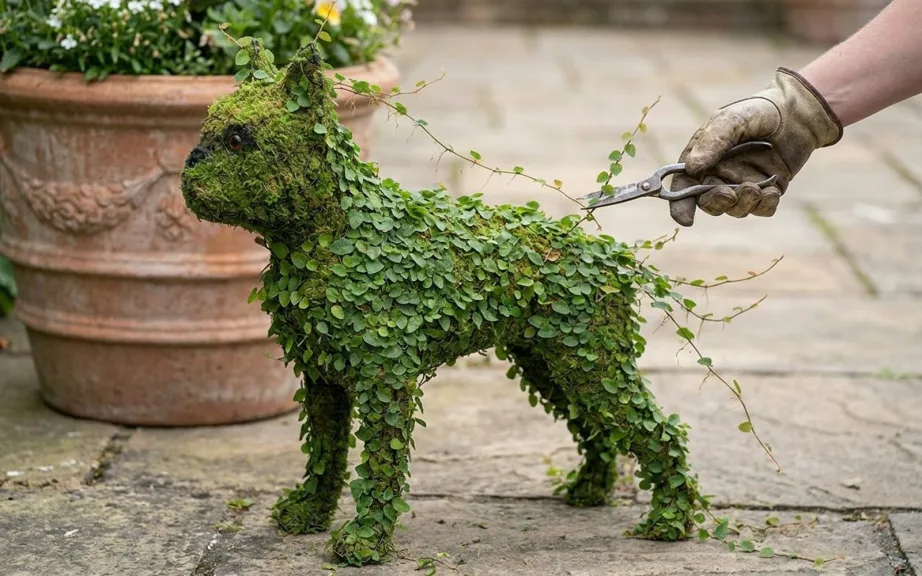
Once the plants start growing, go over the animal every week or two. Pin or tuck new shoots into bare patches. Cut off any shoot that grows out past the outline. Clip lightly and often, because a hard cut on a small animal leaves bare moss that takes weeks to cover again.
How long it takes
| Stage | Time |
|---|---|
| Pack a small frame with moss | An hour or two |
| Plant a small animal | About an hour |
| Rest in shade after planting | Several days |
| Ivy covers a small frame | One growing season |
| Full cover on a medium frame | Two to three seasons |
Plant into the moss within about six months of packing it. Bare moss browns in time, and roots take best in moss that is still fresh.
Two other ways to make an animal topiary
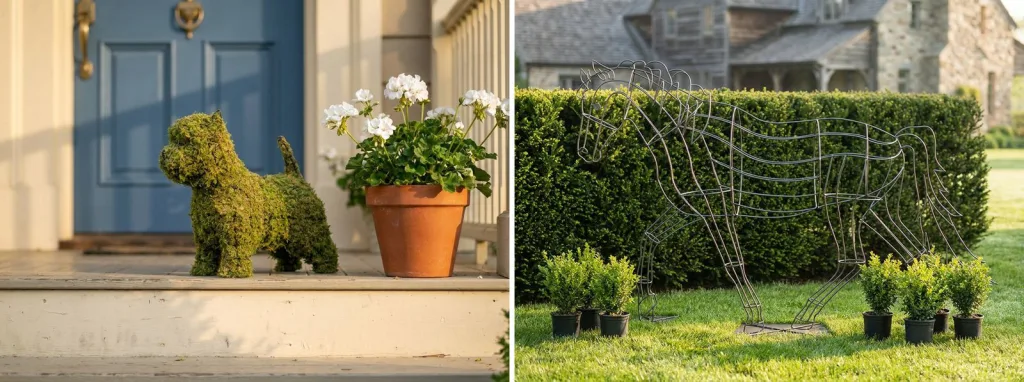
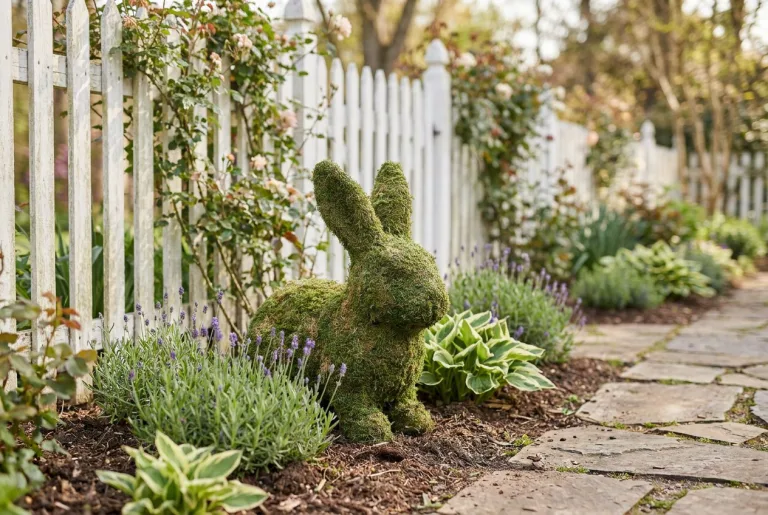
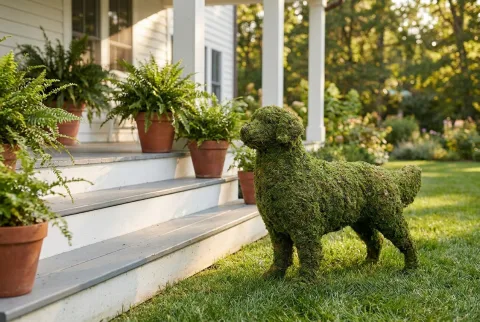
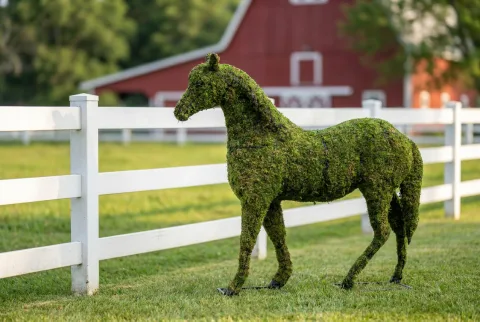
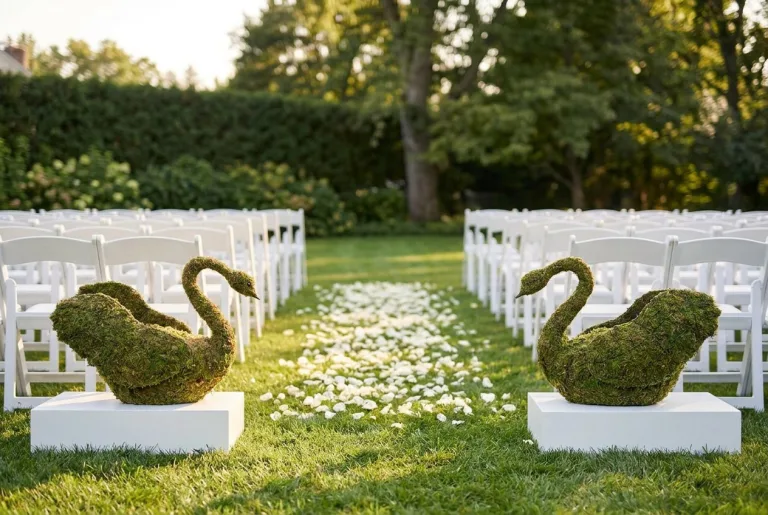
Leave it mossed. A packed frame already looks like a soft green animal, with no plants at all. Mist or water it when it feels dry, and bring back faded color with a moss green spray. Work fresh moss into the old once or twice a year.
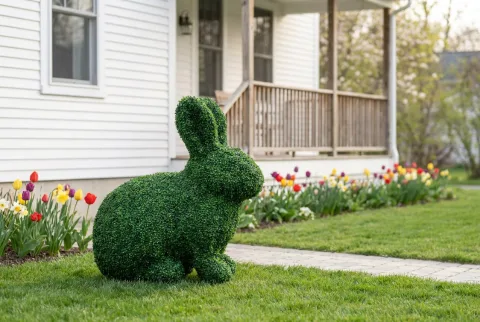
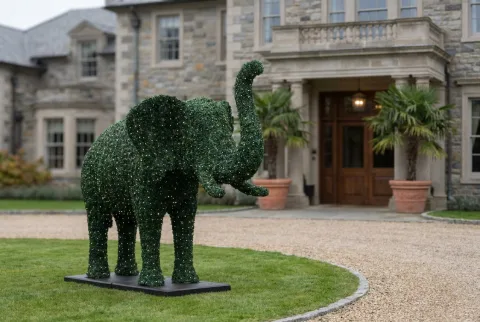
Grow a shrub into it. This is how large hedge animals are made. Set a big frame over a young boxwood, privet or euonymus, and clip every shoot that grows past the wire. It takes years, but the finished animal is a solid shrub that needs only two trims a year.
Winter care
Hardy plants such as ivy and boxwood can stay outside through a normal winter. Water the animal well before the ground freezes, and mulch around a planted frame.
Move small pieces and anything planted with creeping fig or succulents to shelter before the first frost. An unheated garage with a window works well. Water there about once a month until spring.
What to buy
- A bare frame to plant yourself: wire frame animal topiary, 44 animals from $57.
- A frame already packed with moss: mossed animal topiary, ready to plant or display, from $72.
- Moss and green spray: topiary supplies. There are no kits, so order the moss with the frame.
- A finished animal with no planting: the topiary animals collection, or custom-made topiary for an animal we do not list.
Quick answers
What plants are used for animal topiary?
Small-leaved climbers and groundcovers that root into moss: English ivy, creeping fig, creeping thyme and small succulents. Large hedge animals use boxwood, privet or yew grown into a frame over several years.
Can you make an animal topiary without a frame?
Only by clipping a large shrub freehand, which takes years and a good eye. A frame gives you the outline to follow, so it is the easier route for almost everyone.
How long does an ivy animal topiary take to fill in?
A small frame planted every 2 to 3 inches looks green in a few weeks and covers in one season. A medium frame takes two to three seasons for full cover.
Do mossed animal topiaries need water?
Yes. Unplanted moss needs water when it feels dry so it keeps its color. A planted one needs water as often as a hanging basket, which can be every day in summer.
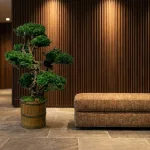
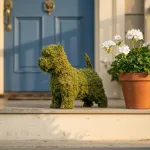
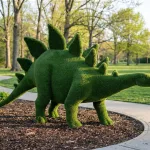
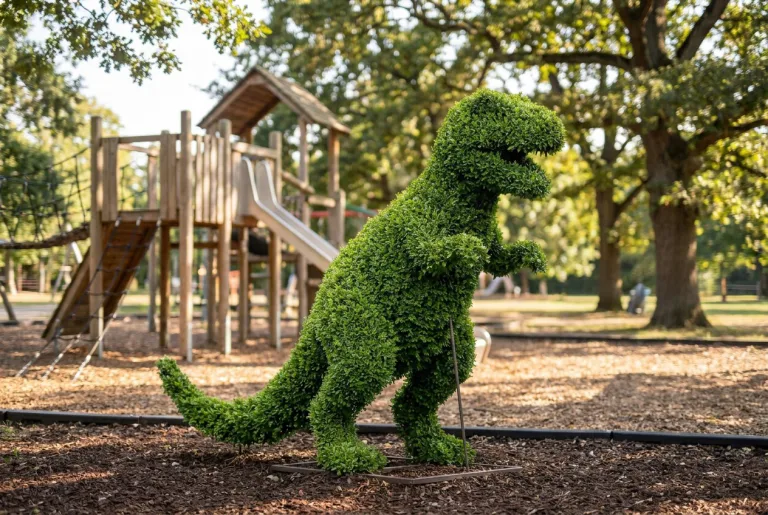
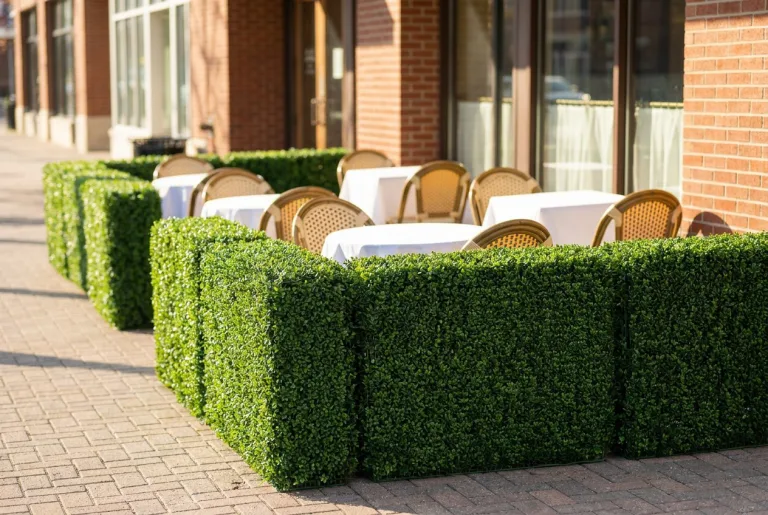
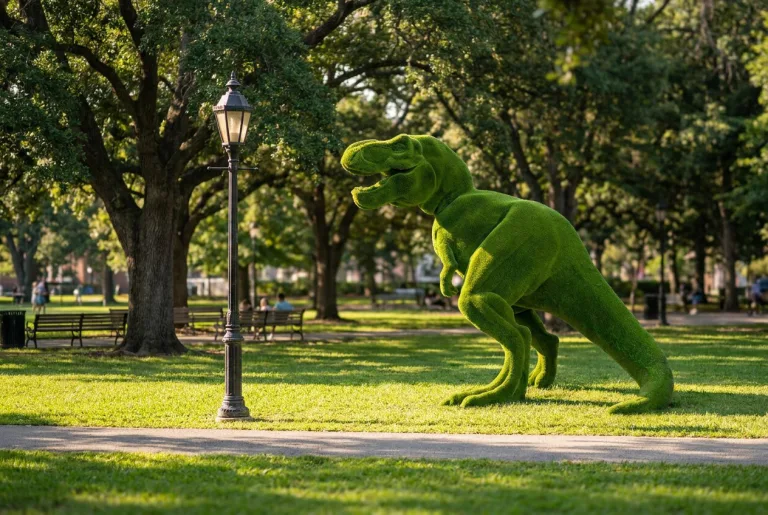
Some photographs on this page are staged illustrations of plants we do not sell, such as ivy, creeping fig and succulents.