








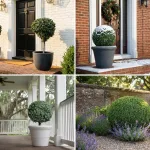

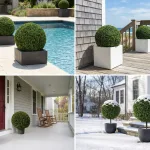

Cone Topiary
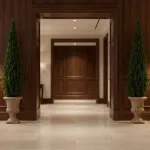
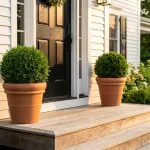
Artificial cone topiary adds height to a doorway, a gate or a planter with no trimming. A matched pair of faux boxwood cones is the simplest way to frame an entrance, and it keeps the same shape through every season. Some cones are made for outdoor sun and some for indoors only. Ask us before yours goes outside, and we can help you size a pair to the door.

Need a size or shape you don’t see?
Tell us the space and the height. We will suggest pieces and quote them with delivery to your ZIP.
Why choose artificial cone topiary
A cone is the plainest formal shape, and that is why it looks tidy beside almost any door, on almost any style of house. A faux cone keeps its point and its straight sides without a single trim. What changes from piece to piece is where it can stand, so the rows below sort the cones by indoor and outdoor use.
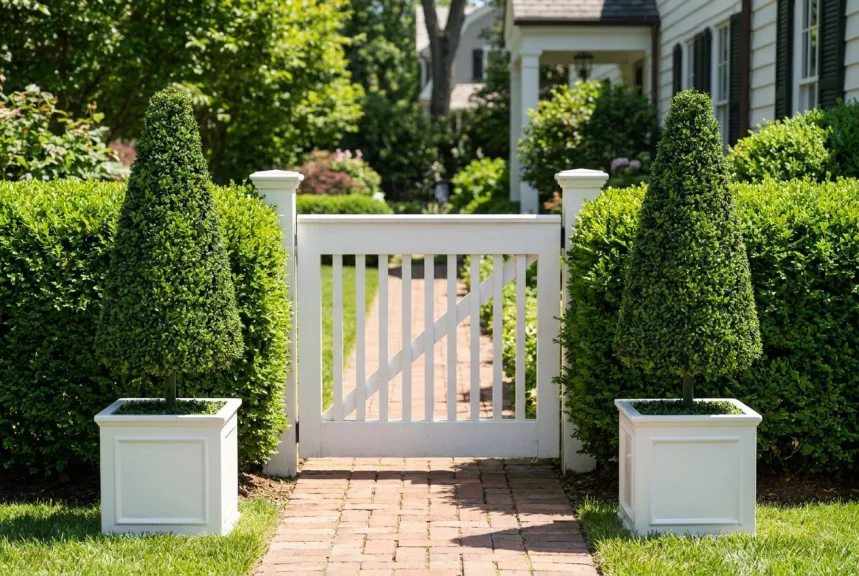
UV outdoor rated boxwood cones
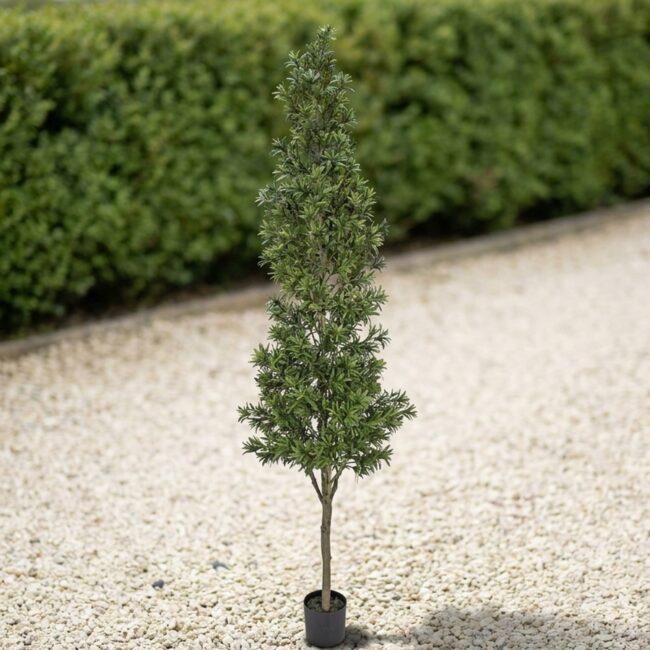
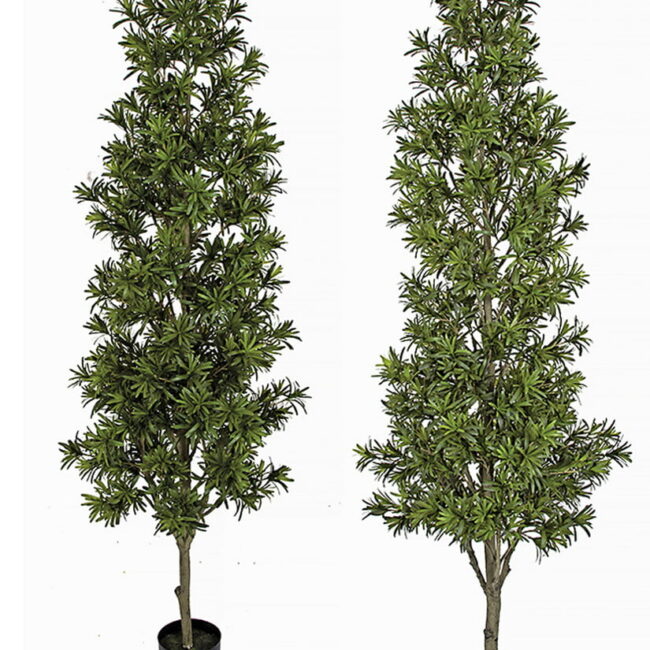
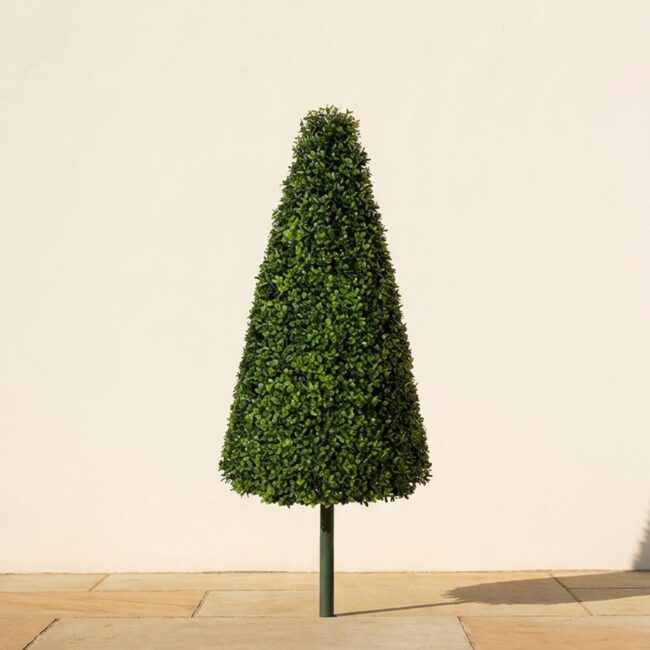
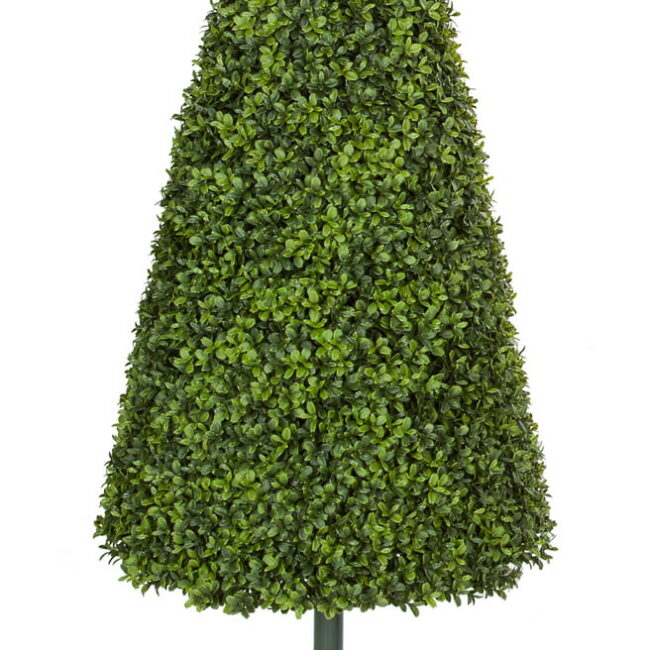
The 34 in boxwood cone is the full outdoor grade, made for sun all year, so a pair can stand at a gate or on a sunny front step. It is 19 in wide on a metal frame with a pipe stem, which sets down into a planter of your choice.
For a restaurant or venue entrance, it can also be ordered in a fire-safe version with the retardant built into the material, which meets NFPA 701. Nothing is fire retardant by default. Ask for it with the quote.
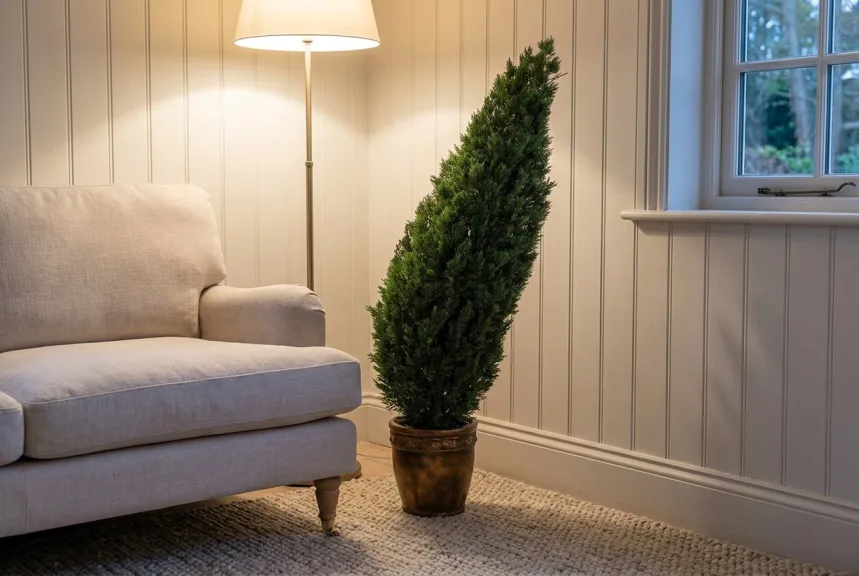
Artificial cedar cone for indoors
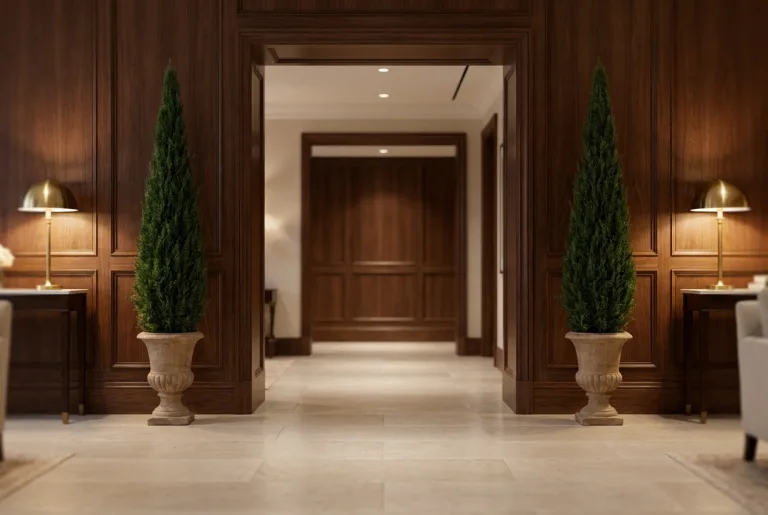
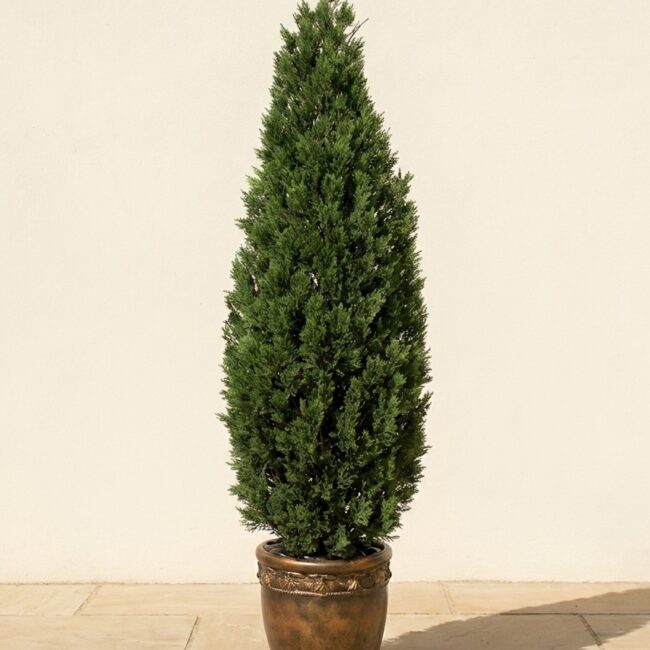
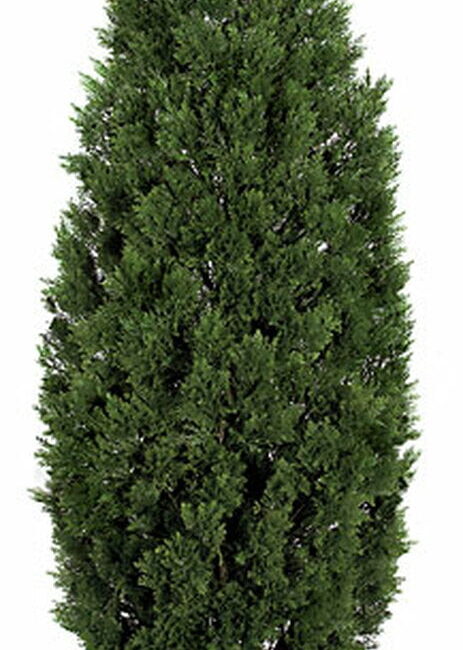
The 6 ft cedar cone has a looser, needled texture than boxwood, and it is about 20 in wide at the base. It is for indoors only. Use it to fill the corner of a living room, a hotel lobby or an office reception.
It comes in two pieces that fit together, on a weighted base, and the decorative pot is sold separately. At 6 ft it goes by freight, quoted with delivery to your address.
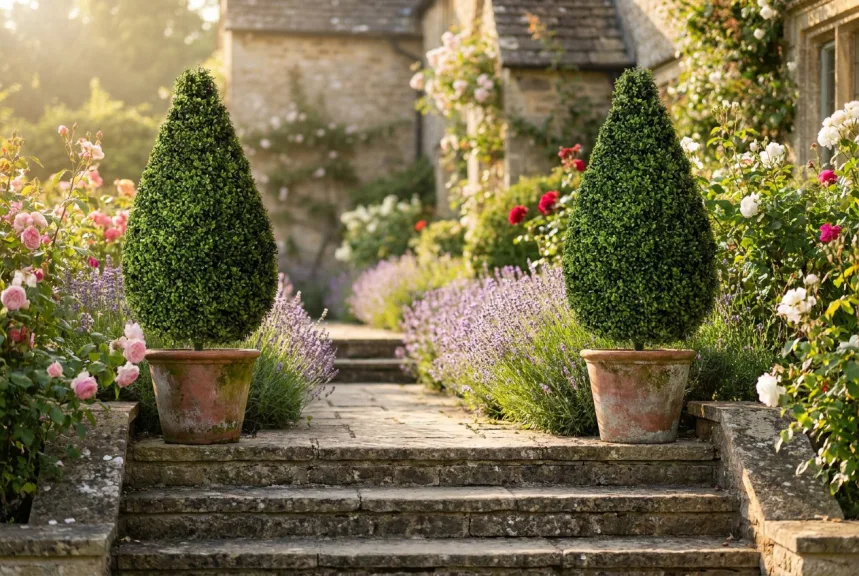
A boxwood teardrop for a softer outline
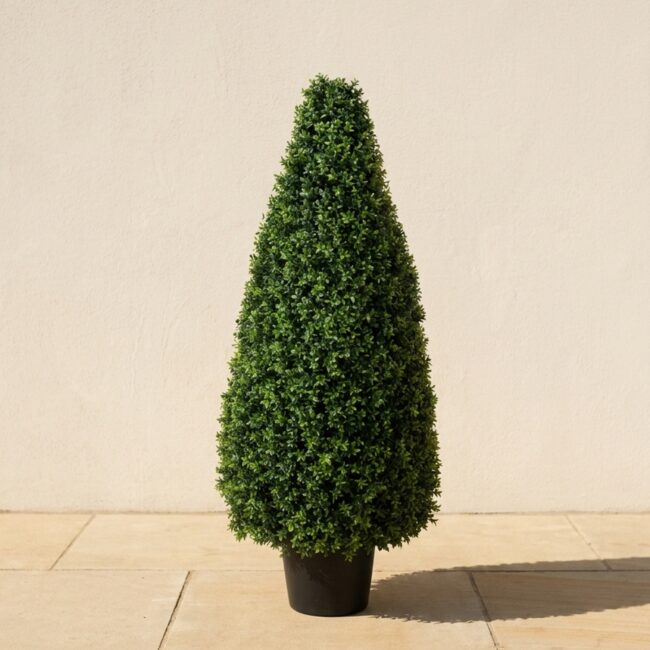
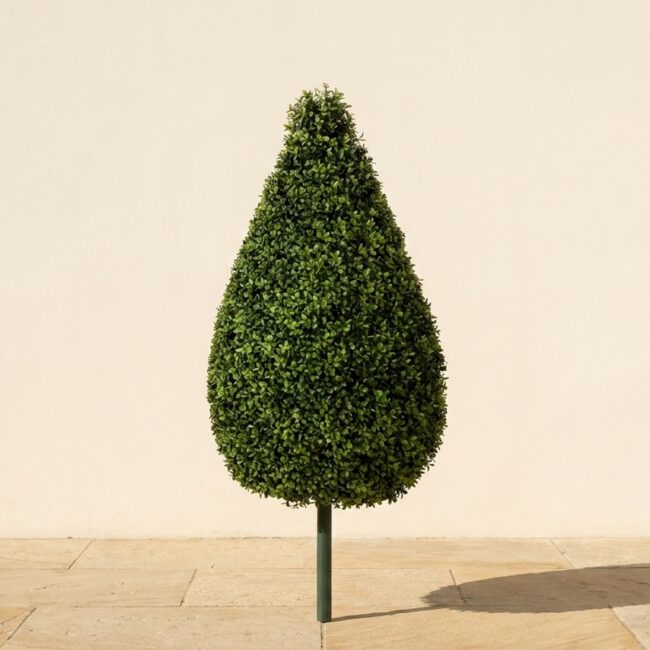
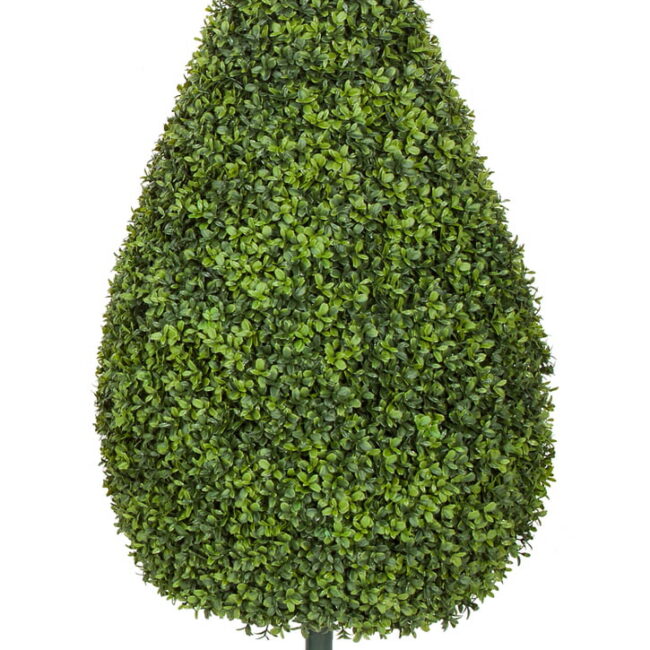
A teardrop is a rounded cone. It reads softer than a straight cone, which suits a cottage door or a curving path. The 36 in English boxwood teardrop is 16 in wide and the full outdoor grade, on a metal frame with a pipe stem.
It can be ordered in the fire-safe version too. Buy every piece for one entrance in the same order, because the green can vary slightly between dye batches and two cones side by side show it.
Questions about Cone Topiary
Should I buy a live or artificial cone?
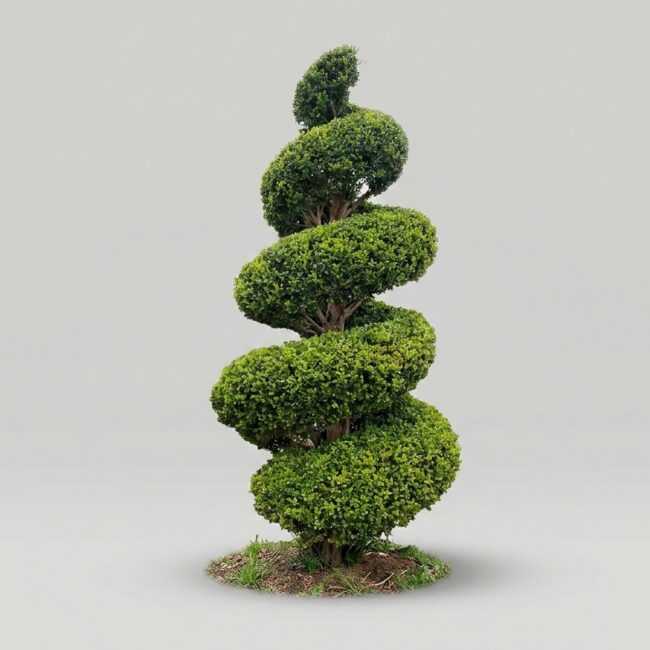
Live boxwood, if the spot has light, water and your patience. If it lacks any one of those, choose an artificial cone; its only care is a rinse when dusty. Compare our live boxwood cones.
Can artificial cones stay outside in winter?
The full-grade boxwood cone and teardrop can stay out all year. Brush off heavy snow and ice, which can break tall shapes, and use a heavy pot so wind cannot tip them. Keep the indoor cones inside.
Do artificial cones come with a pot?
Not usually. The cones come on a pipe stem or a weighted base, and the decorative pot is sold separately. Tell us your planter and we will confirm the fit, or choose one from our planters.
Do you sell cone topiary frames?
Not as a stock item on this page. We build custom frames to your drawing or photo, so a bare cone frame can be quoted. Start with custom made topiary, or see our wire topiary frames.
How do I clean an artificial cone?
Rinse it with a hose to remove dust or pollen. Nothing else is needed. Keep indoor cones out of a sunny window, because window glass lets through the UV that fades plastic foliage.
Can I order a cone in another size?
Yes. Custom sizes are quoted to order. Send the height, the width and where it will stand, and we will quote it with delivery to your address.