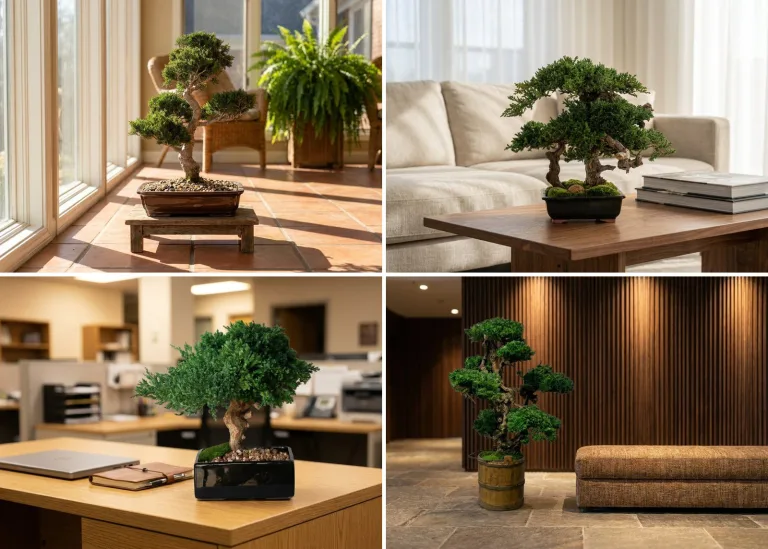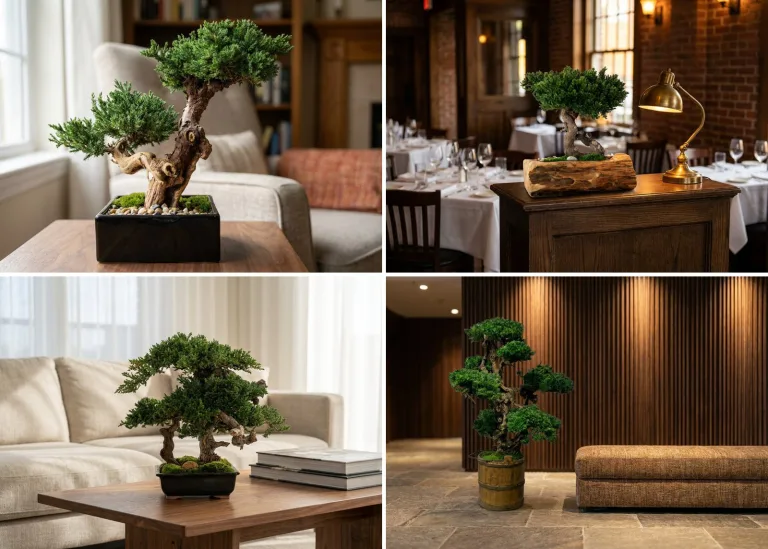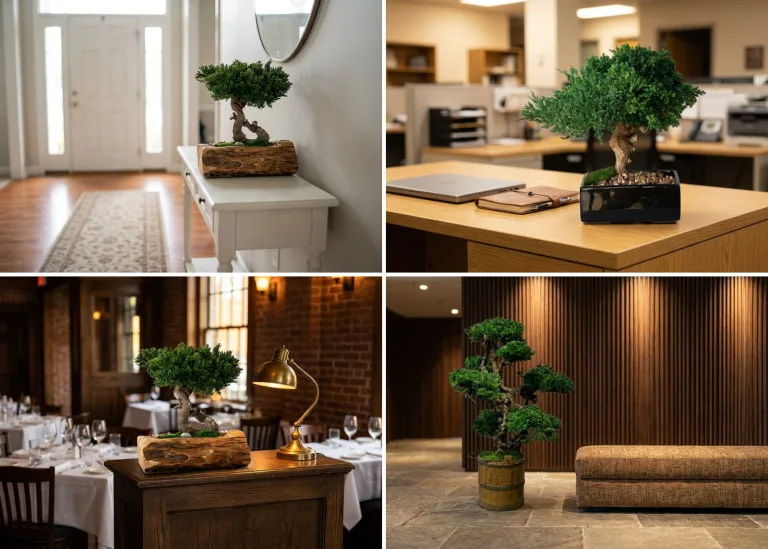




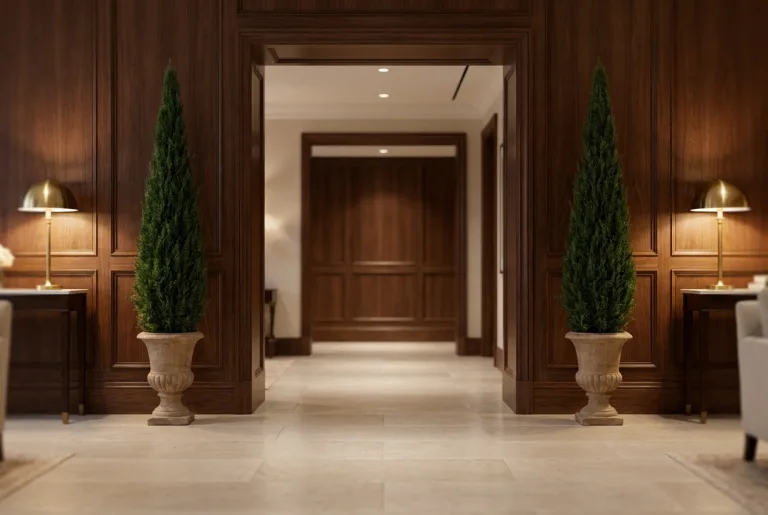
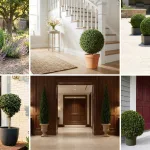
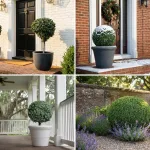
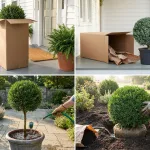

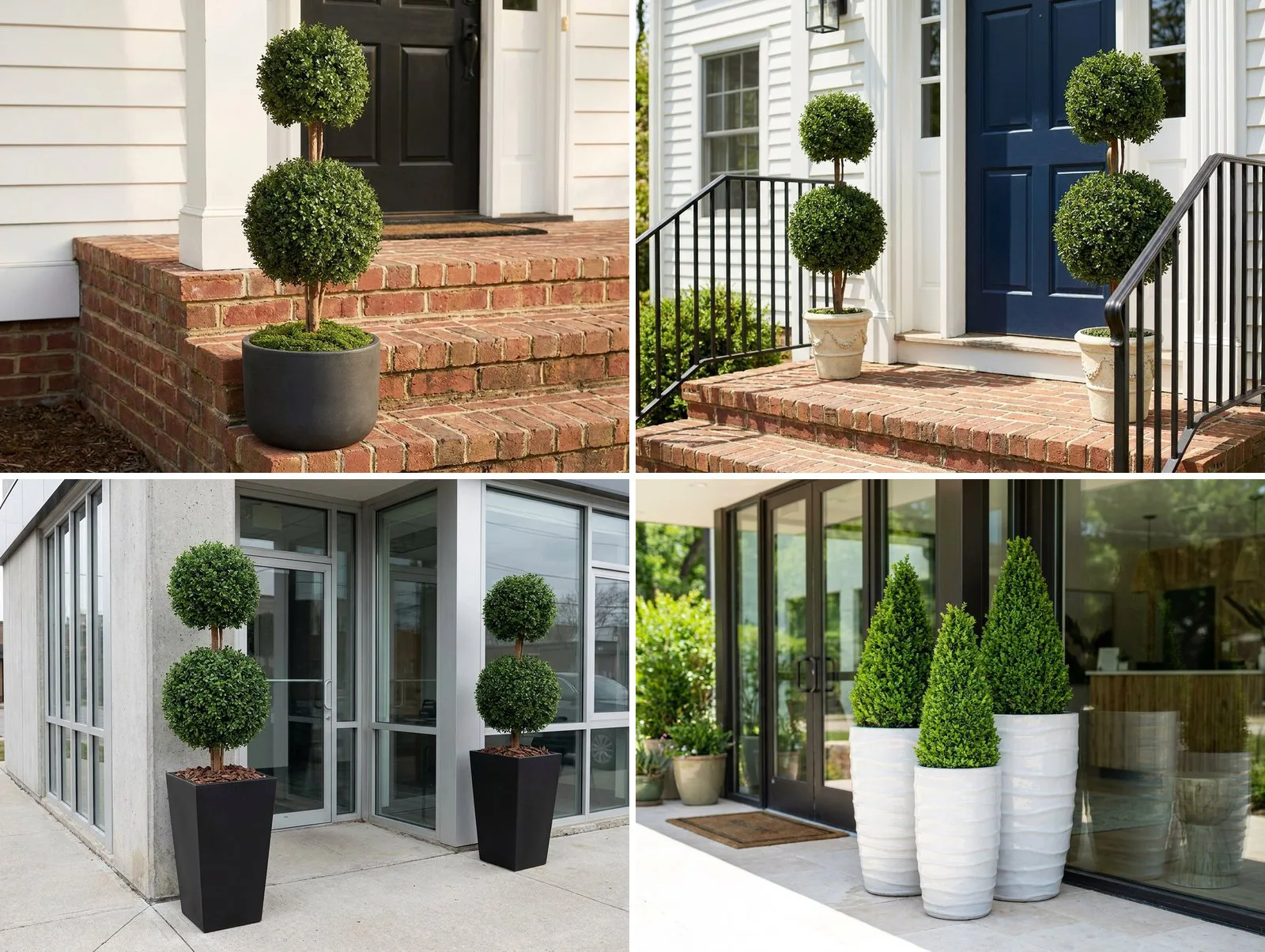
To plant an artificial topiary tree in a pot, set its plastic grower’s pot inside a larger planter, fill the space around it with something heavy such as gravel, sand or concrete, and hide the top with moss, bark or stones. There is no soil and no watering.
The weight in the bottom is what keeps the tree standing, so that is the step not to skip.
This page is about artificial trees. Planting a living one is a different job, covered in how to plant a live topiary in a planter.
What you need
- A planter at least 2 inches wider than the tree’s grower’s pot on every side, and deep enough to hide it.
- Weight: pea gravel, sand, or a bag of quick-set concrete for a permanent outdoor spot.
- Dry floral foam or packing foam, only for light indoor pieces.
- A top dressing: preserved sheet moss, bark mulch or small river stones.
Step 1: Choose the right pot
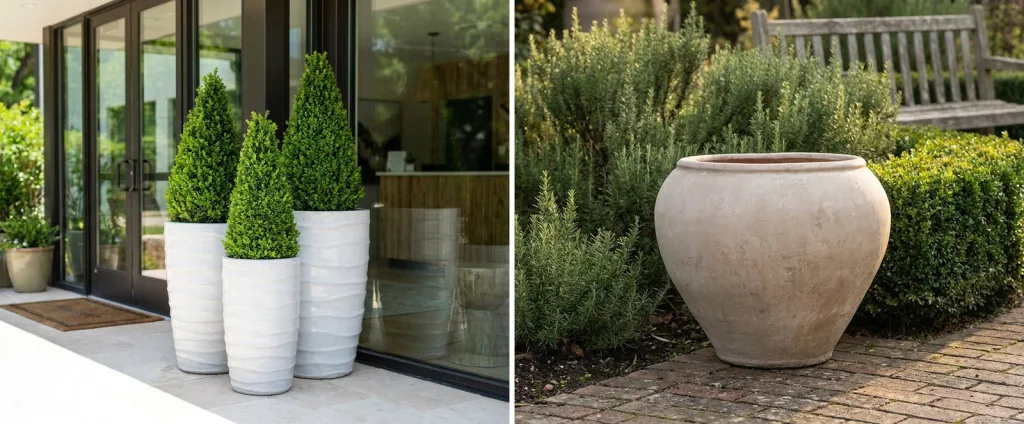
Measure the grower’s pot the tree came in, then pick a planter that is at least 2 inches wider on every side and a little deeper. That gap is where the weight goes. A pot that only just fits leaves no room to anchor the tree, and it will rock.
For looks, a planter of roughly a third of the tree’s total height sits well with most standards and cones.
Heavier materials help outdoors: stone and glazed ceramic resist tipping better than thin plastic. For an outdoor planter, check for a drainage hole. Nothing is growing, but rain still collects, and trapped water can freeze and crack the pot in winter.
Our planters run from about 23 to 49 inches tall. For proportions, see what size planter for a topiary.
Step 2: Fluff and shape the foliage
Artificial trees are packed tight to ship, so the head arrives flattened. Before you pot it, bend each branch tip out from the center and fan the sprigs so no stems show. Work from the inside out and turn the tree as you go. Ten minutes here makes more difference to the finished look than the planter does.
Step 3: Add weight to the bottom
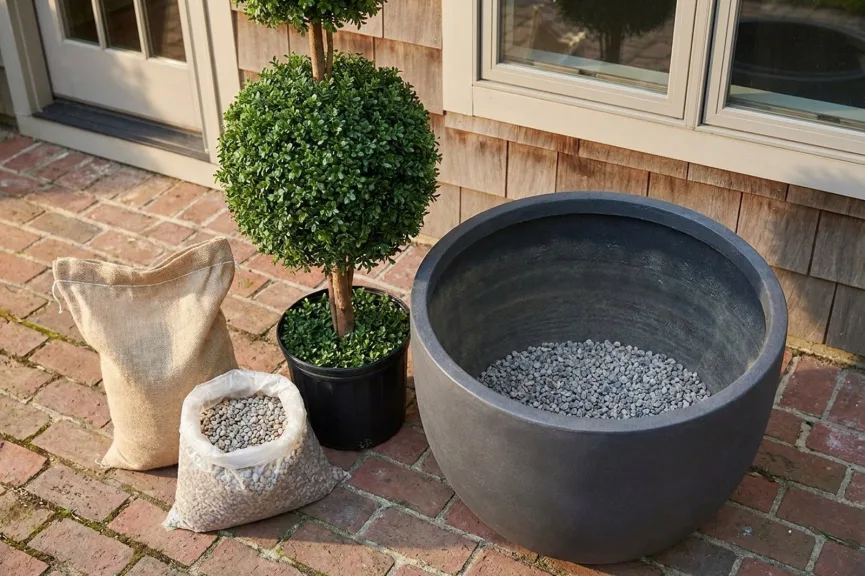
Pour pea gravel or sand into the bottom of the planter until the grower’s pot, set on top, sits an inch or two below the rim. For most planters that means filling about the bottom third.
Which weight to use depends on where the tree will stand:
| Filler | Best for |
|---|---|
| Pea gravel | Most outdoor pots. Heavy, drains well, easy to undo. |
| Sand | Extra weight in a small pot. Bag it first if the pot has a drainage hole. |
| Quick-set concrete | Tall trees in exposed, windy spots. Permanent. |
| Dry floral foam | Light indoor pieces that need to move. Adds no weight. |
Step 4: Center the tree and anchor it
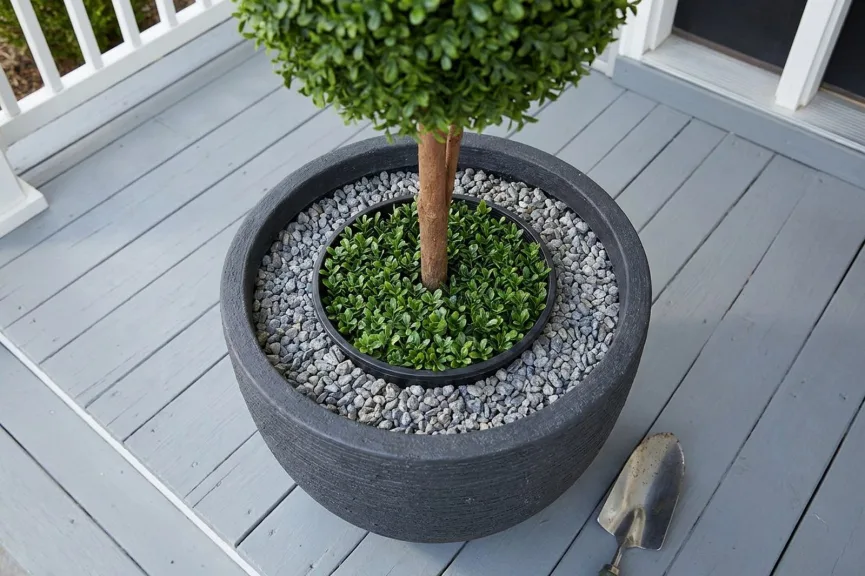
Set the tree, still in its grower’s pot, in the middle of the planter. Stand back and check it from two sides, because a trunk that leans a little in the pot looks very crooked at full height.
Now fill around the grower’s pot with more gravel, pressing it down as you go, until it sits about 2 inches below the rim. Rock the trunk gently. If the pot moves, add more and pack it harder.
For a tall tree in a windy spot, use concrete instead. Mix quick-set concrete, pour it around the grower’s pot, hold the trunk straight while it sets, and leave it to cure fully before you dress the top. It will not come out again, so do this only in a planter you mean to keep.
Step 5: Top dress with moss, bark or stones
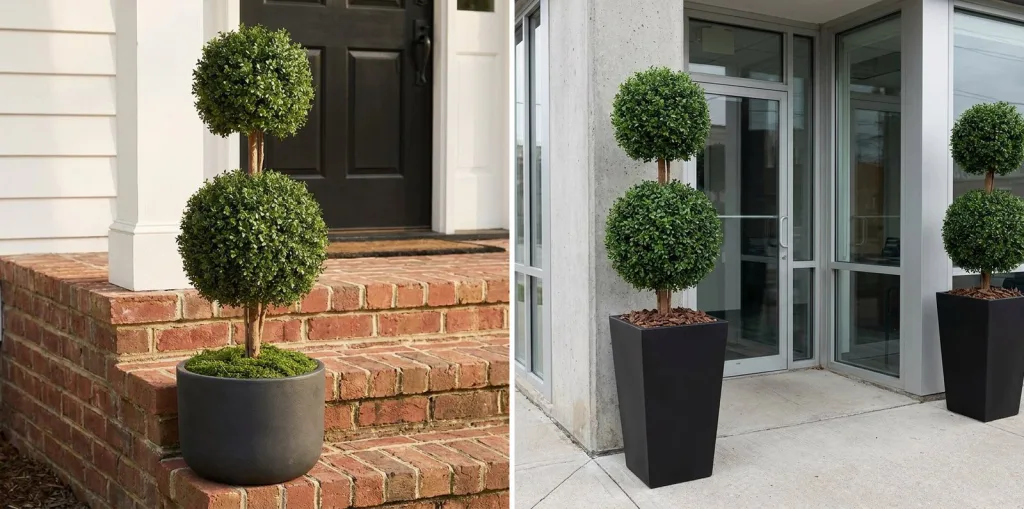
The last layer is the one people see. Cover the gravel and the rim of the grower’s pot completely, because a strip of black plastic is what gives an artificial tree away.
Preserved sheet moss looks softest and suits a front door or a hallway. Bark mulch looks natural outdoors and matches garden beds. River stones or pebbles are the tidiest option for a modern planter and do not blow away. Keep the dressing about an inch below the rim so rain does not wash it over the edge.
Keeping it standing outdoors
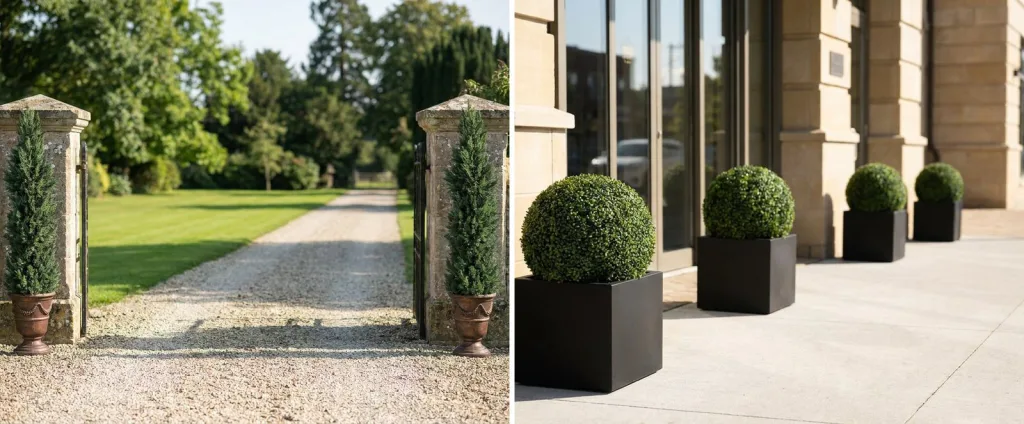
A dense head on a trunk acts like a sail. The taller the tree, the more weight it needs at the base. Gravel is enough for most pieces up to about 5 feet in a sheltered spot. Above about 6 feet, or anywhere wind funnels between buildings, use concrete or fix the planter to the wall or the ground.
Corners of buildings, the tops of steps and open terraces are the usual places trees blow over. A tree that is fine in the middle of a porch can go over a few feet away at the corner. What the position decides covers sun and wind in more detail.
Indoor vs outdoor potting
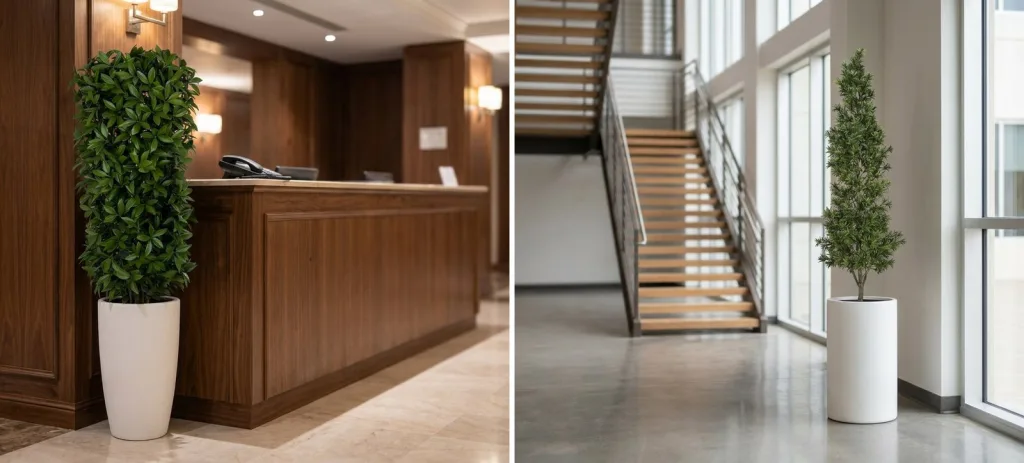
| Indoors | Outdoors | |
|---|---|---|
| Weight | Light. Foam or a little gravel. | Heavy. Gravel or concrete. |
| Drainage hole | Not needed. | Needed, so water cannot freeze in the pot. |
| Top dressing | Sheet moss. | Bark or stones, or moss in shelter. |
| Foliage grade | Any. | A UV-rated grade. |
Outdoors, the foliage matters as much as the pot. Artificial topiary for outdoor use comes in two grades: a full outdoor grade for open sun, and a lighter UV grade for shade and covered porches. Indoor-only pieces fade quickly in sun. What full outdoor grade means explains the difference.
Quick answers
What do you put in the bottom of a pot for an artificial tree?
Something heavy. Pea gravel is the easiest choice for most pots, sand adds weight to small ones, and quick-set concrete is best for tall trees in windy spots. Only use foam indoors, where nothing needs holding down.
Do you need soil for an artificial topiary?
No. Soil adds nothing and holds moisture against the base of the trunk. Gravel or sand is heavier, cleaner and drains better.
How do you stop an artificial topiary tree from falling over?
Take it out of any loose decorative pot, set the grower’s pot in gravel or concrete, and choose a planter at least 2 inches wider on every side. Fix anything over about 6 feet to a wall or the ground.
Can I just drop the grower’s pot into a decorative planter?
Indoors, for a small piece, yes, as long as you hide the rim with moss. Outdoors, no. A loose grower’s pot inside a planter is the most common reason these trees blow over.
What is the best top dressing for artificial topiary?
Preserved sheet moss for a front door or indoors, bark mulch in a garden setting, and river stones for a modern planter or a windy spot, because stones do not blow away.
Ready to choose a tree? Browse our outdoor artificial topiary and the full artificial topiary range, and pair it with one of our planters.