















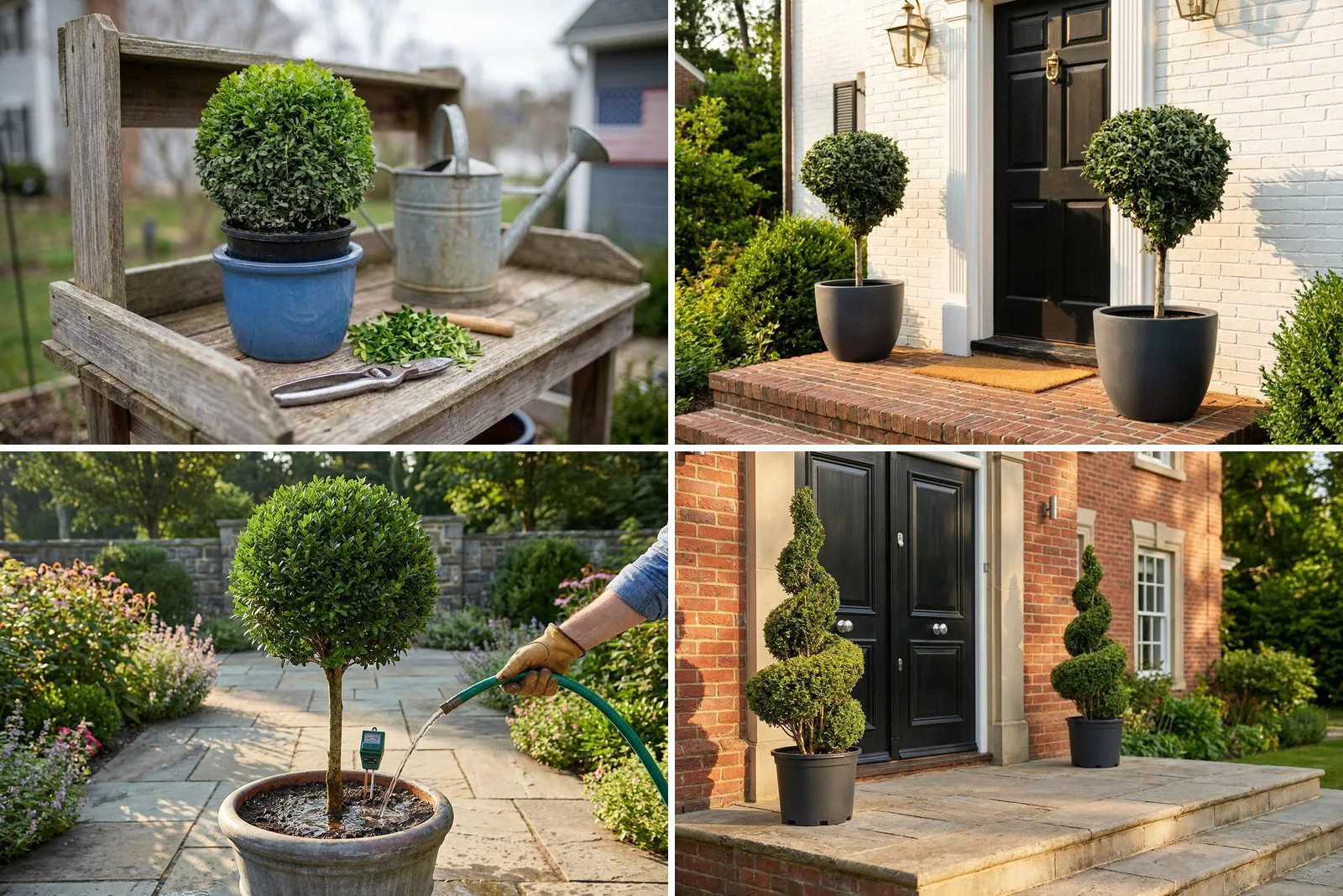
An established live boxwood topiary takes about an hour of work a year on a simple shape: two cuts, a feed in March and another in October, and a look every few weeks for pests. The first two summers also need regular watering.
Materials cost little, a bag of balanced fertilizer and a sharp pair of shears. The real cost is doing that hour in the right weeks.
The work, in hours
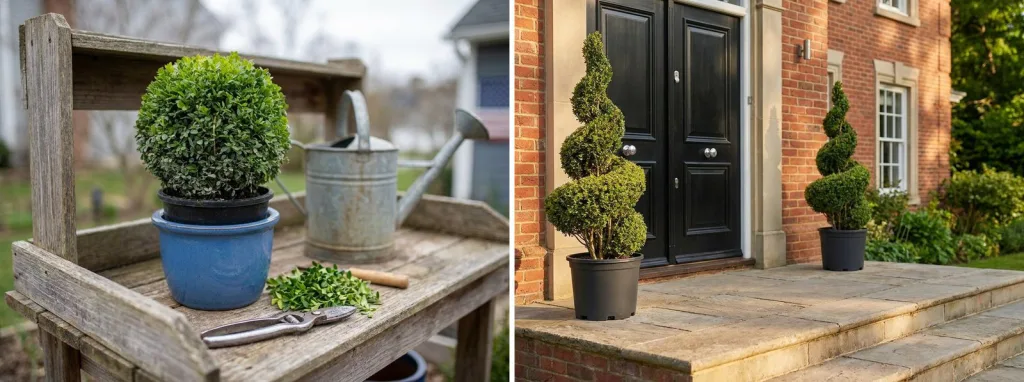
A settled boxwood ball or cone in the ground needs two cuts a year: the main cut in early June and a light tidy in late summer. A spiral or a pom pom takes longer per cut, because the shape has more edges to keep sharp. It is still the same two visits.
As a rough guide, allow about twenty minutes a cut on a ball and forty on a spiral. Add a feed in early March and again in October, a few minutes each. Then look the plant over every few weeks in the growing season, to catch pests before the damage shows.
| Shape | Time a year, roughly |
|---|---|
| Ball or cone | About 1 hour |
| Spiral, pom pom or animal | About 2 hours |
| Extra in the first two summers | Watering once or twice a week |
When to cut matters more than how
Make the main cut in early June, once the spring growth has firmed. A light tidy in late summer keeps the outline sharp; finish it by early September. Between those two cuts, leave it alone.
Never cut in winter. A late cut pushes soft growth that cannot harden before the cold, and that growth burns in the first cold wind. The damage shows in February, and people blame the frost.
Avoid cutting in the heat of the day in high summer too. The fresh cut edges scorch and the surface goes bronze. Cut early in the morning, on a cool day, with sharp blades.
A dull blade crushes the stem instead of cutting it. The crushed end dies back, and a whole surface of crushed ends gives a boxwood that brown haze a week later.
Water, and the two summers that decide it
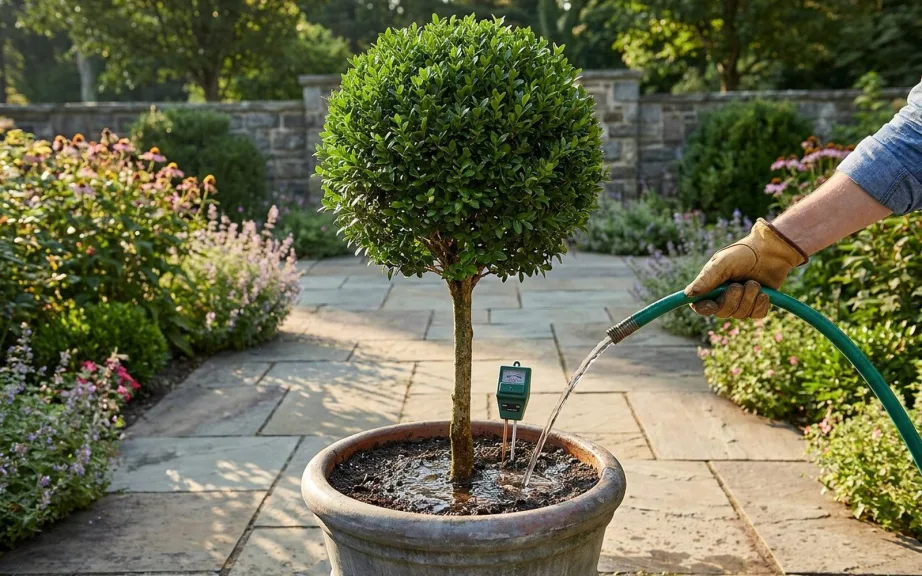
In the first two summers, water the root ball itself deeply and check it with a finger instead of trusting a schedule. The soil around it can be damp while the ball at the center is bone dry. That one failure looks exactly like disease.
The roots are still spreading beyond the ball they arrived in, so the plant drinks from a much smaller volume of soil than its size suggests. Once established in the ground, a boxwood is drought-tolerant and looks after itself in all but a very dry year.
A pot is harder work, because it dries out much faster than the ground. The details are in boxwood in a planter.
What goes wrong, and what it costs
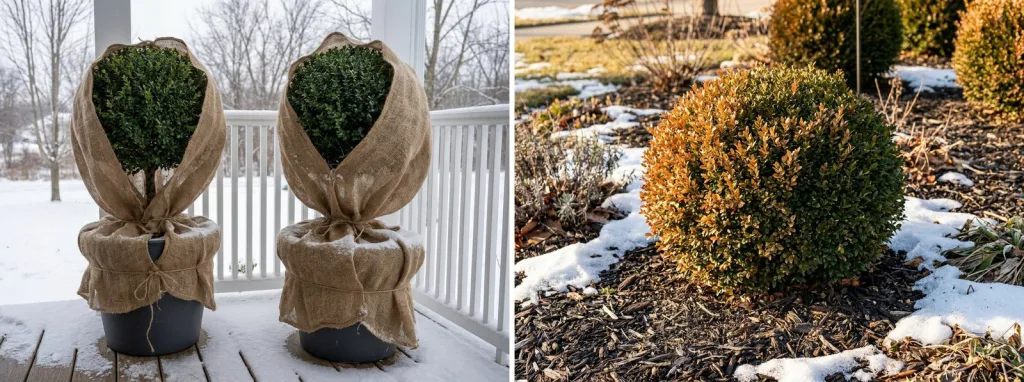
Three things cause most losses.
Winter drying. Water deeply through fall, right up until the ground freezes. It costs nothing but time, and it is the cheapest thing you can do for a boxwood. An evergreen keeps losing water through its leaves all winter. A plant that goes into December dry cannot replace it, and the bronzing shows in late winter.
Potted plants need a cultivar hardy to one zone colder than yours, because roots in a pot get about one zone colder.
Blight. It is real and serious, so understand it before you buy. The boxwood diseases guide covers identification and what to do. The short version: good airflow and keeping water off the leaves come before any treatment.
The wrong cultivar in the wrong place. Check the cultivar table in the zone guide before you buy. Published growth rates for common cultivars run from about half an inch a year to six inches. A fast cultivar where a slow one belongs means more cutting, and more taken off each time, for the life of the plant.
Live or artificial: which to buy
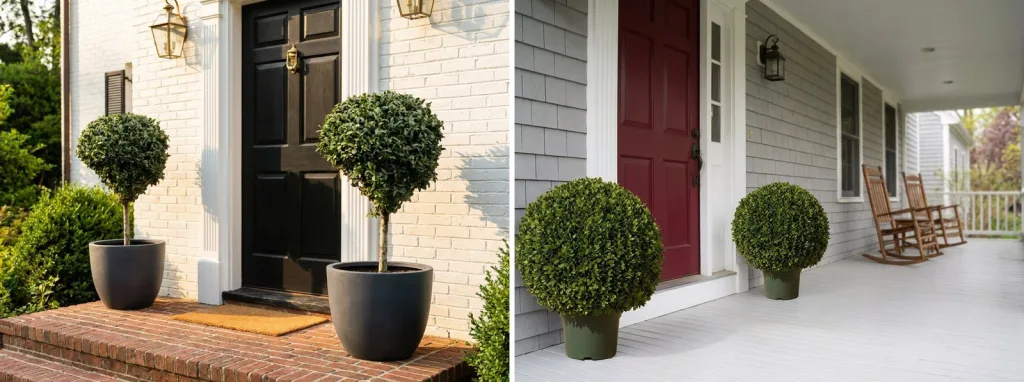
If you will enjoy holding the shears, buy live. It needs the hour a year above, and it gets fuller and better every season. An artificial piece needs nothing at all, and it stays exactly as it arrived.
For a commercial entrance where the grounds contract changes every couple of years, artificial is often the honest answer. The arguments are in the faux versus real comparison.
Buy the shape you want in three years, not the shape you want now. A boxwood grows into its form, and a piece bought slightly small settles better than one bought large and cut back hard to fit.
The live range, with sizes and root ball measurements, is on the live boxwood category. Read the receiving guide before your delivery arrives; it takes five minutes.
Quick answers
How often does a boxwood topiary need cutting?
Twice a year. The main cut in early June, then a light tidy in late summer, finished by early September.
Can I cut it in winter?
No. A winter cut pushes soft growth the plant cannot harden, and that growth burns in the first cold wind.
How much water does it need?
Very little once it is established in the ground. In the first two summers, water the root ball deeply once or twice a week, and check with a finger first.
Which cultivar should I buy?
The one whose growth rate matches how often you want to cut. A slow cultivar means less work for the life of the plant.
Is blight a reason not to buy live?
Not on its own. It is a real risk and worth understanding first. Airflow and keeping water off the leaves come before any spray.