
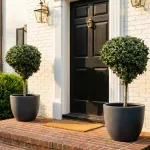
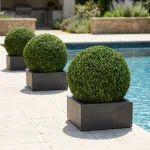
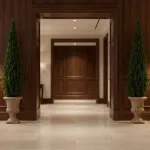
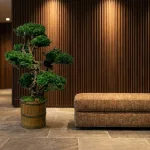
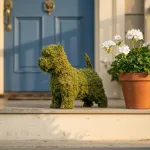
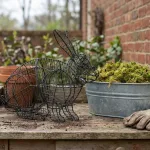
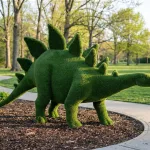
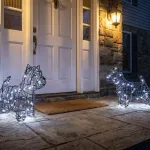

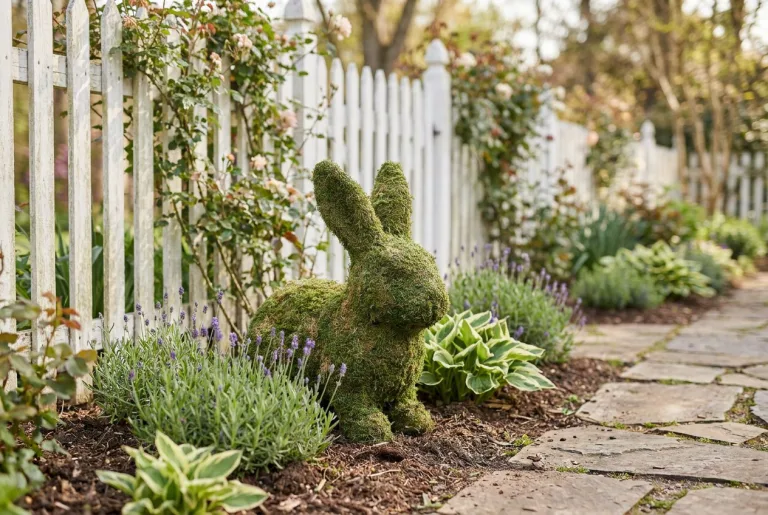
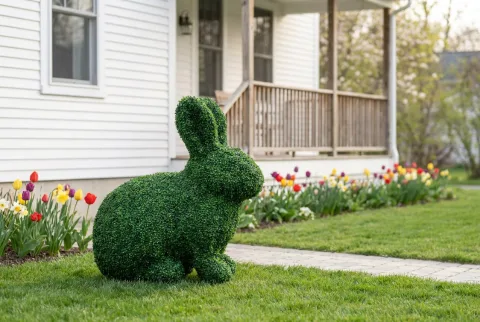
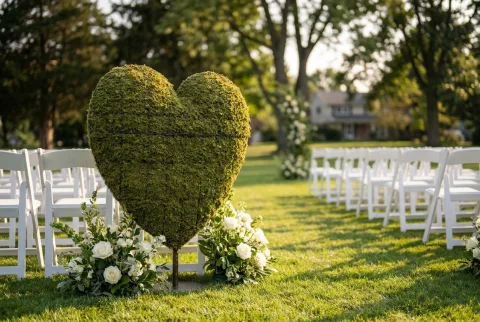
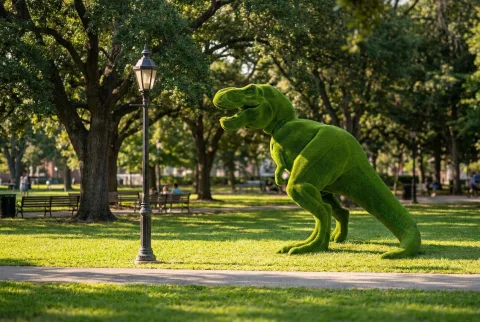
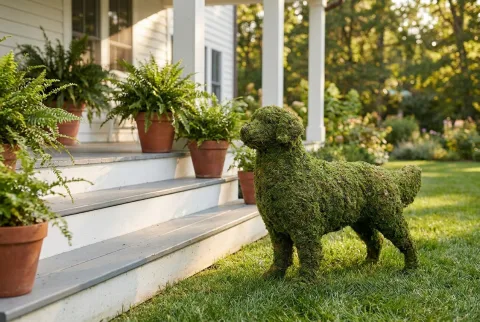
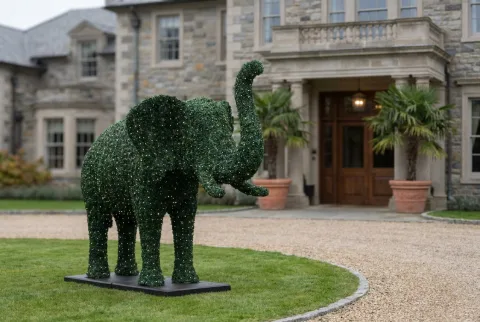
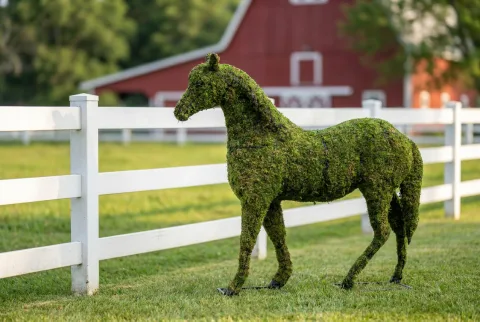
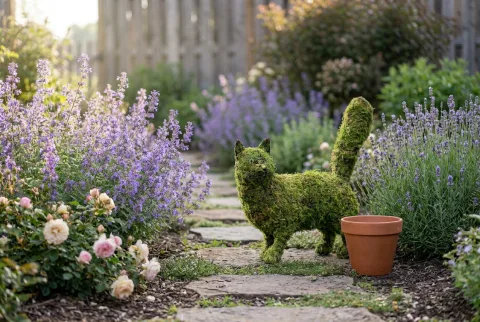
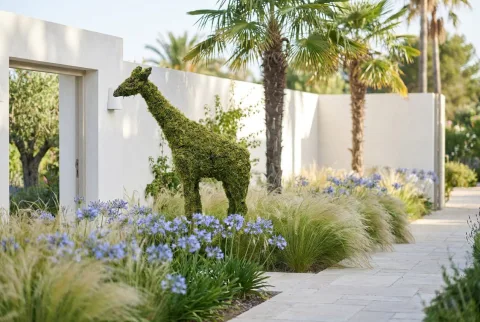
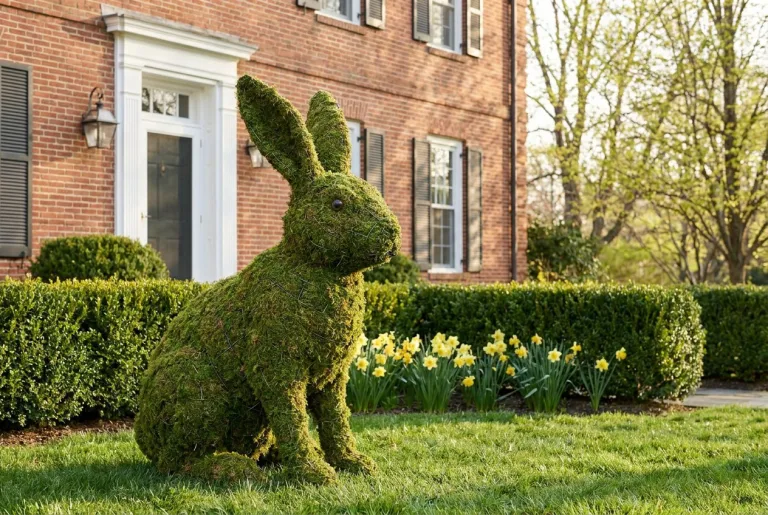
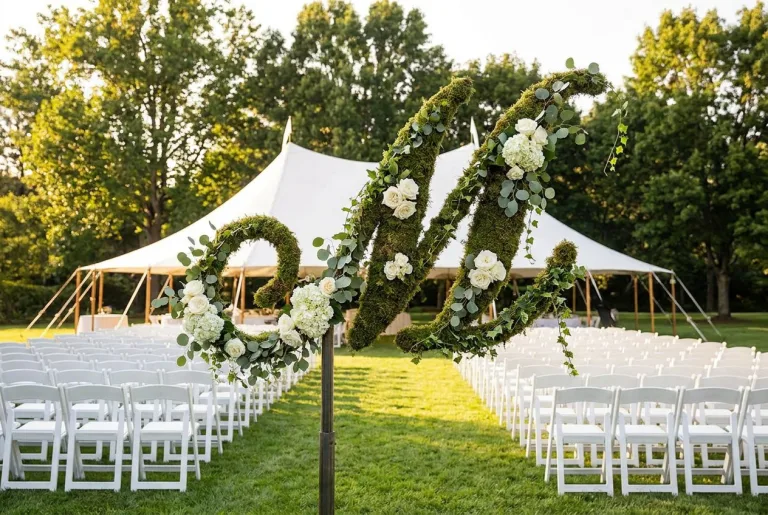
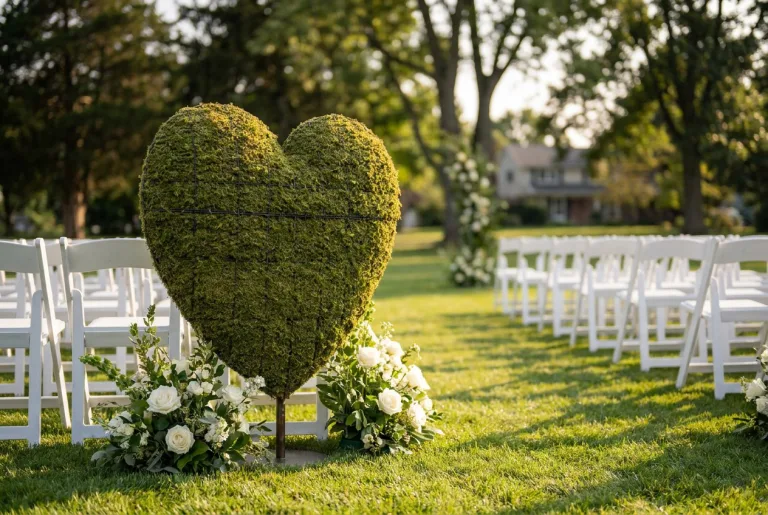
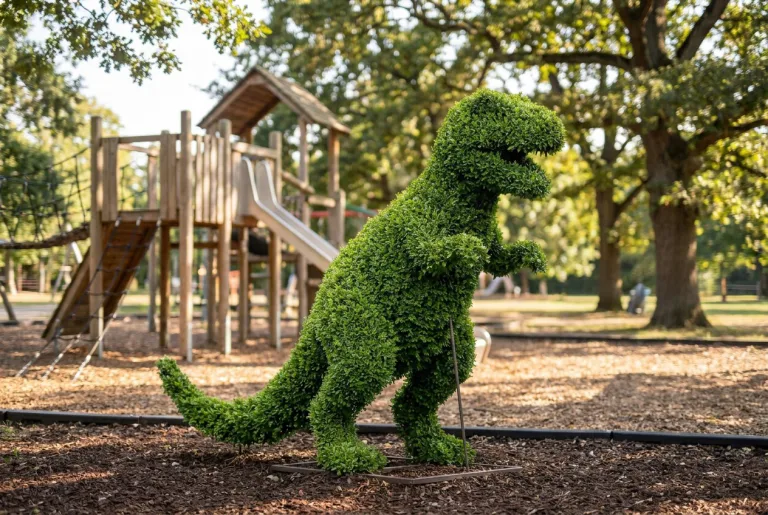

To make your own topiary form, bend galvanized wire into the outline of your shape, brace it into a rigid cage, then train or pack plants over it. The frame does the sculpting and the plants follow. This page covers the wire build. For packing and planting the finished form, see how to make topiary animals from plants.
A wire form works for any shape, live or artificial: squares, circles and triangles at the simple end, animals at the other. Making one is not hard.
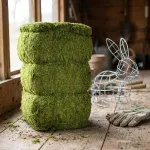
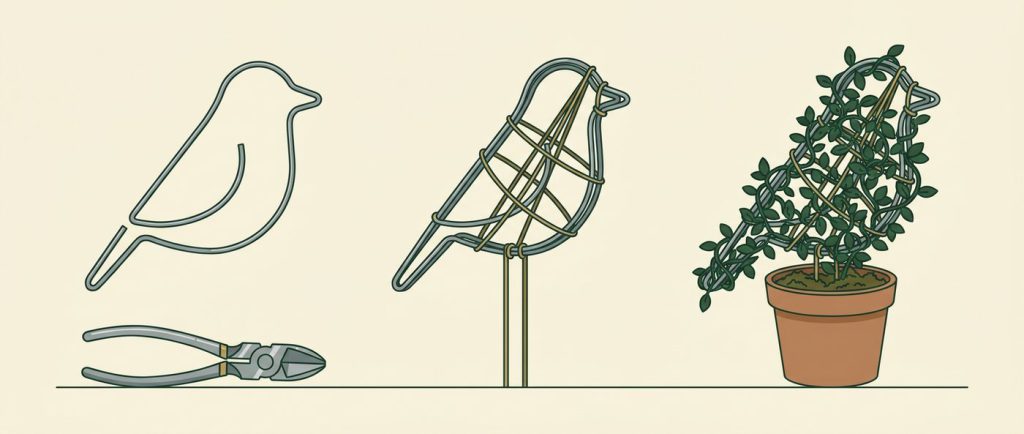
1. Decide on the size and shape. You can usually freehand a two-dimensional topiary, so you only need to measure out enough wire. A three-dimensional one needs something to build around. For an animal, a stuffed toy animal makes a good guide.
Keep the pot in mind when you pick the size. A topiary that is too big for its pot may not balance.
2. Cut a little more light-gauge wire than you think you will need, using wire cutters. It should bend easily. Then shape your animal or form with pliers and trim the wire as you go. You need no training for this, because the wire is soft and easy to adjust.
3. Fix the frame securely over the pot where the plant will go, then train the plant along it. Usually you just wind the stem around the wire. But you may need thin florist’s wire to hold it in place. As the plant grows, prune it so it keeps filling in and holds the shape.
Artificial plants on a three-dimensional topiary need more care when you attach them, because they will not grow into position. But once they are placed, you never prune them.
Use a plant with small leaves. Small leaves train into a shape more easily and give a more even surface. Holly, boxwood and ivy are the usual choices; check which does best in your climate.
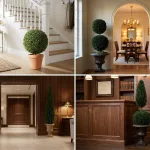
A topiary works indoors as a small plant or outdoors as a large tree, and making your own frame is the cheap way to get one into an office. For the shapes rather than the method, start with the nine that work hardest.
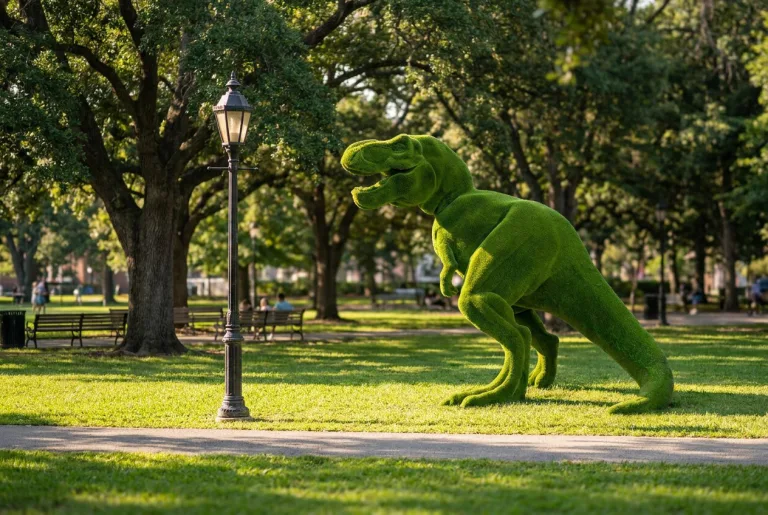
We build the forms that are beyond home bending: a life-size animal, a face, or anything over six feet. Those get welded ¼–⅜ inch rod instead of bent wire, a mesh skin, an access hatch for planting and internal tubing, so they stand for years.
A ready-made DIY boxwood shaping frame is the halfway option. The full range of wire topiary frames is galvanized steel as standard, with powder coat as an option, and starts around $57.