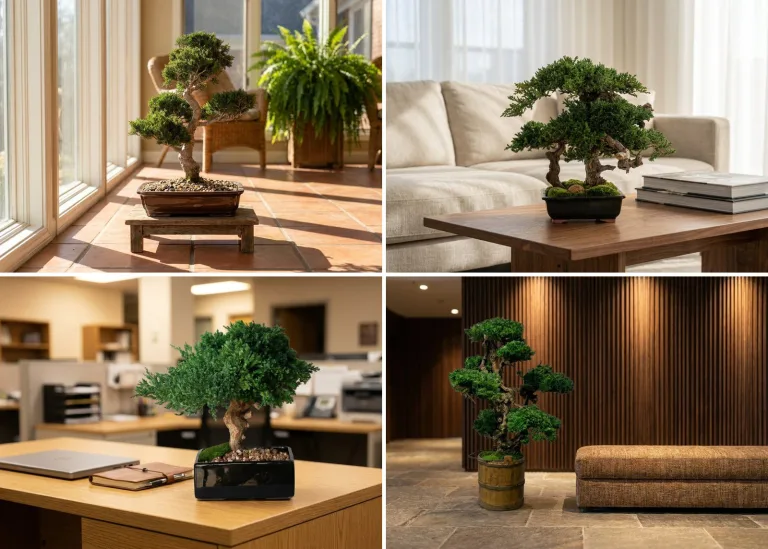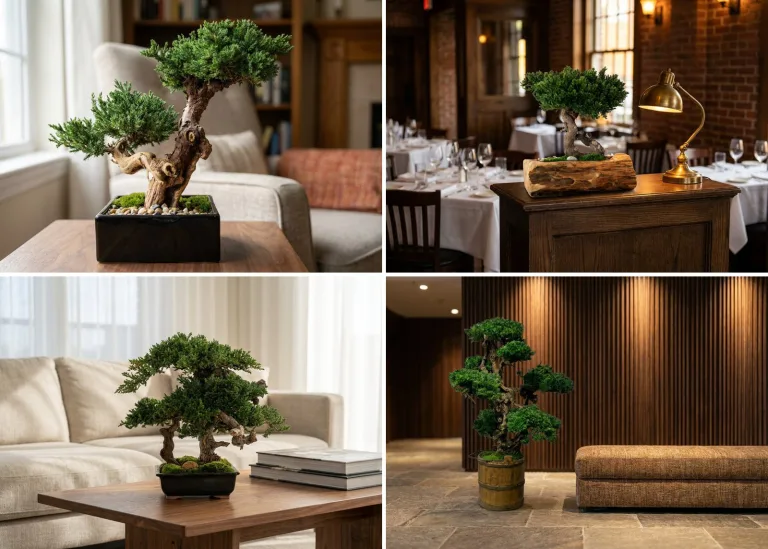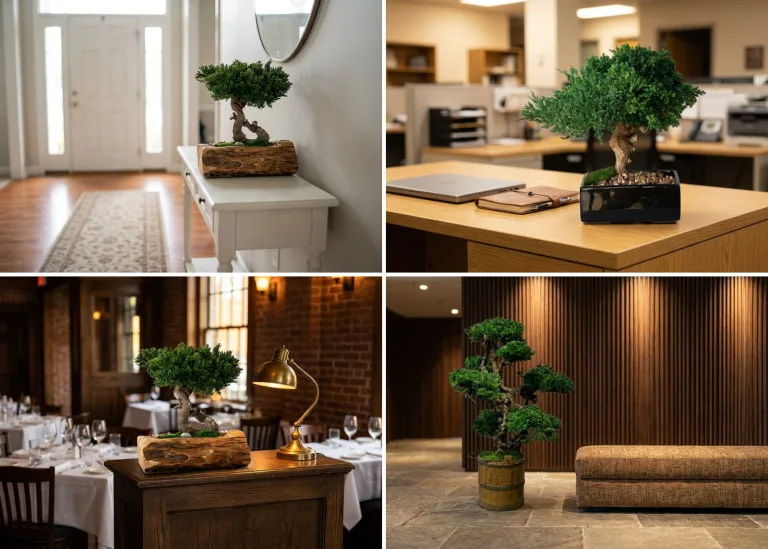
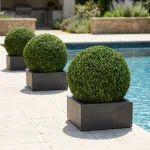
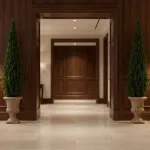
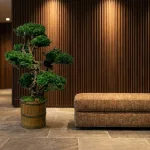
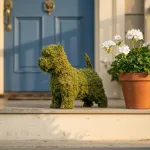
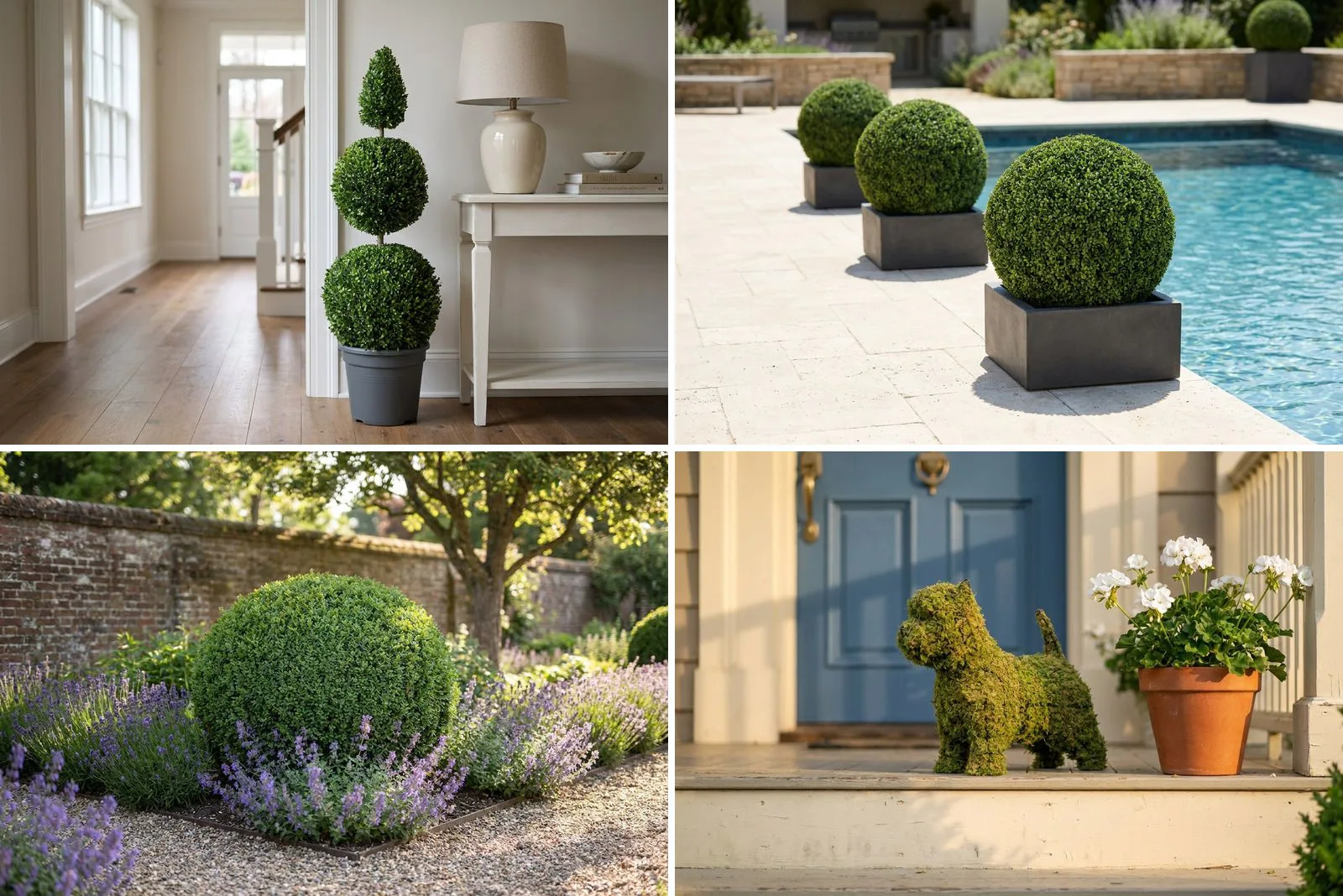
How long topiary lasts depends on the material and the spot. A live boxwood can last for decades and gets better with age. Preserved topiary lasts about seven years or more indoors. Artificial topiary outdoors lasts as long as its UV protection holds against the sun on that exact spot, and a mossed piece lasts as long as you keep renewing the moss.
Most sellers quote one figure for a whole category, which tells you nothing: a preserved juniper indoors and an artificial ball on a hot terrace run out in completely different ways. Here are the figures we stand behind, and where we will not quote one.
Topiary lifespan at a glance
| Material | How long it lasts |
|---|---|
| Live boxwood or yew | Decades, with care |
| Preserved, indoors | About 7 years or more, by plant |
| Artificial, outdoors | Set by hours of direct sun, not years |
| Artificial, indoors | Many years, away from a sunny window |
| Mossed | As long as the moss is renewed or planted |
Preserved: seven years and up, by plant
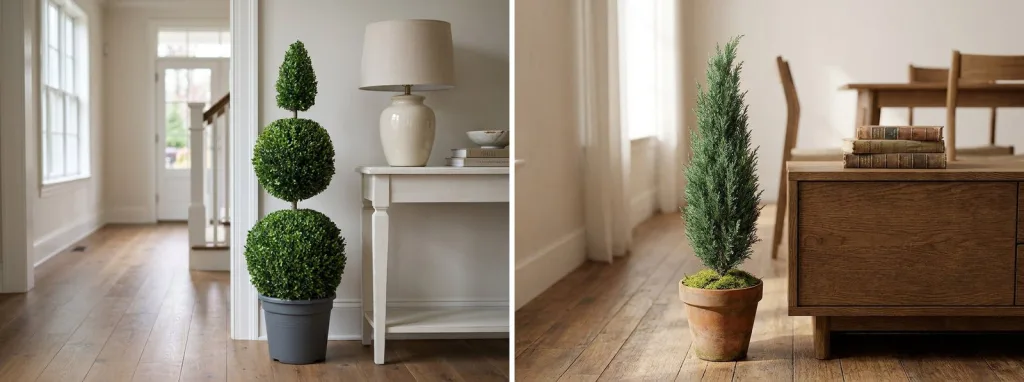
These plants last for the following periods indoors, out of direct sun and out of damp. The figures come from the preservation records for the lines we carry:
Juniper: seven years or more. Boxwood: around seven. Eucalyptus: ten or more. Anything with floral elements: about three, because flowers take more handling.
These figures are expected lifespans, not measurements taken on the pieces we sell or a warranty we offer.
Direct sun and real damp are what shorten it. Sun fades preserved foliage unevenly and damp softens it, and neither comes back, so design both out rather than fixing them later. A room with no daylight at all is normal service.
Artificial: measured in sun hours, not years
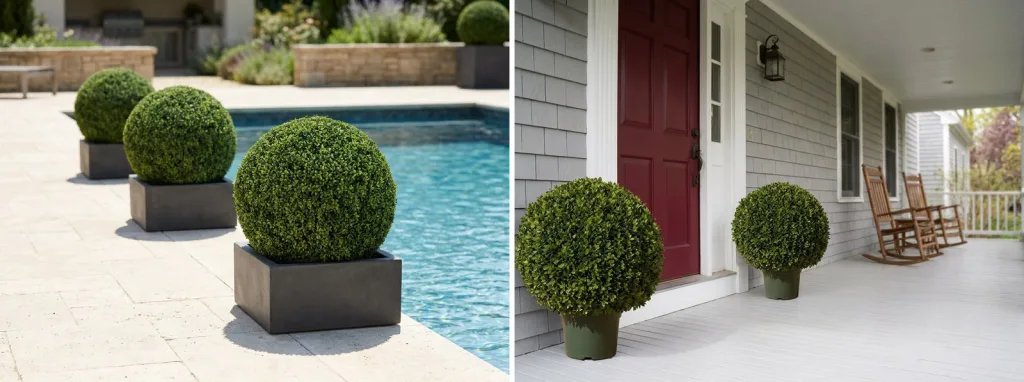
Artificial foliage ages by ultraviolet exposure, so we will not give you a single lifespan figure. Ask any seller who quotes one how they tested it.
The same ball can hold its color for years on a shaded northern porch and look tired within a season or two on an unshaded terrace in the Southwest. The variable is hours of direct sun on that exact spot, and it swamps everything else.
Check whether the UV protection runs through the material or forms a surface coating. Protection spread through the material degrades gradually. A surface coating holds until it wears, then goes patchy. Position matters more still. The UV guide has the published test numbers and what they mean.
Indoors the ultraviolet load is a fraction of what it is outside, so fading is rarely what ends an artificial piece. Dust, handling or a spot beside a sunlit window usually does. You can manage the first two.
Live: decades, and it improves
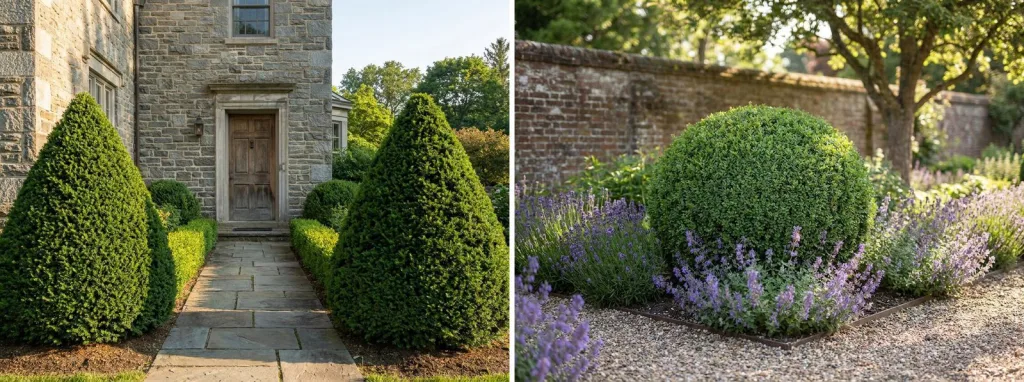
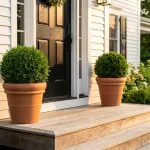
A boxwood in suitable ground, cut twice a year and kept clear of disease, can easily outlive the person who planted it. Yew routinely does. Live is the one material here that improves rather than degrades, which is the argument for living plants wherever somebody will look after them.
Live topiary rarely dies of old age. It dies from winter desiccation after going into the cold dry, root problems in soil that never drains, blight, or a container that is too small. Each of those is avoidable, and the boxwood care guide by zone covers every one.
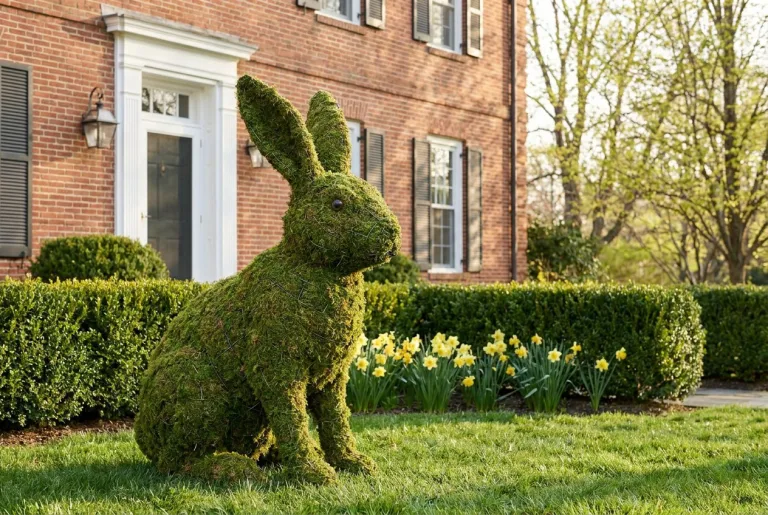
Mossed: as long as you keep renewing it
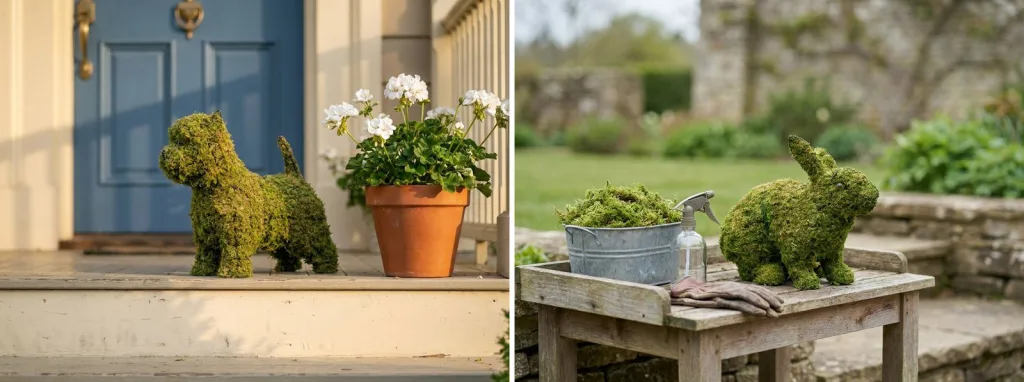
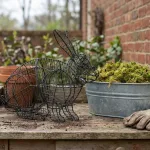
The frame is effectively permanent. The moss is a consumable.
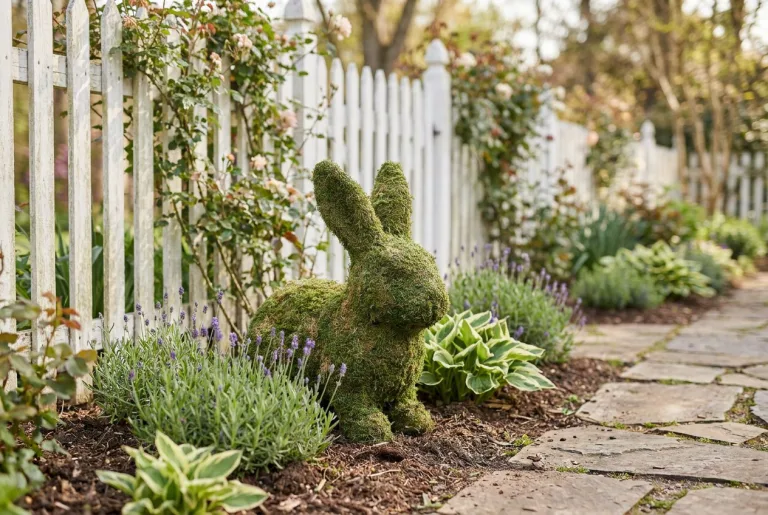
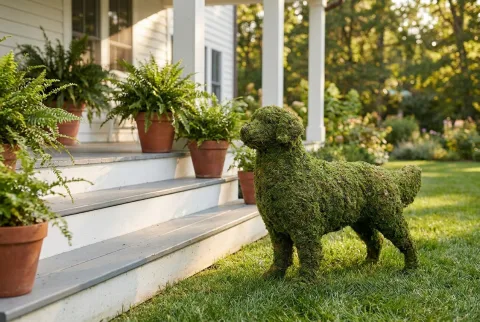
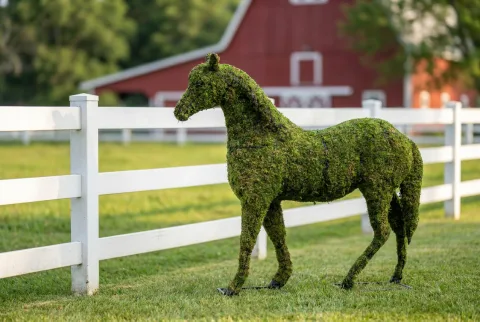
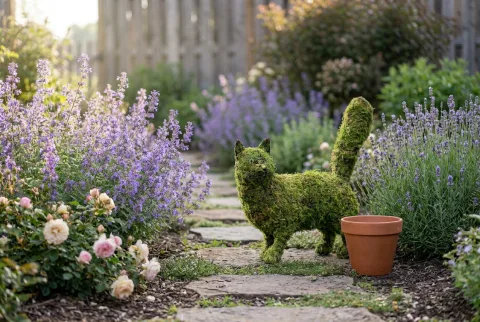
A mossed piece stays good for as long as somebody either plants into it within the first months, so a living surface takes over, or works fresh sphagnum into it once or twice a year. A piece that gets neither goes thin. Then it wants stripping and repacking, which is a job rather than a loss.
So a mossed animal lasts indefinitely with attention and looks tired within a few seasons without it. The sphagnum moss care guide explains the routine.
Turf and large sculpture: the frame outlives the skin
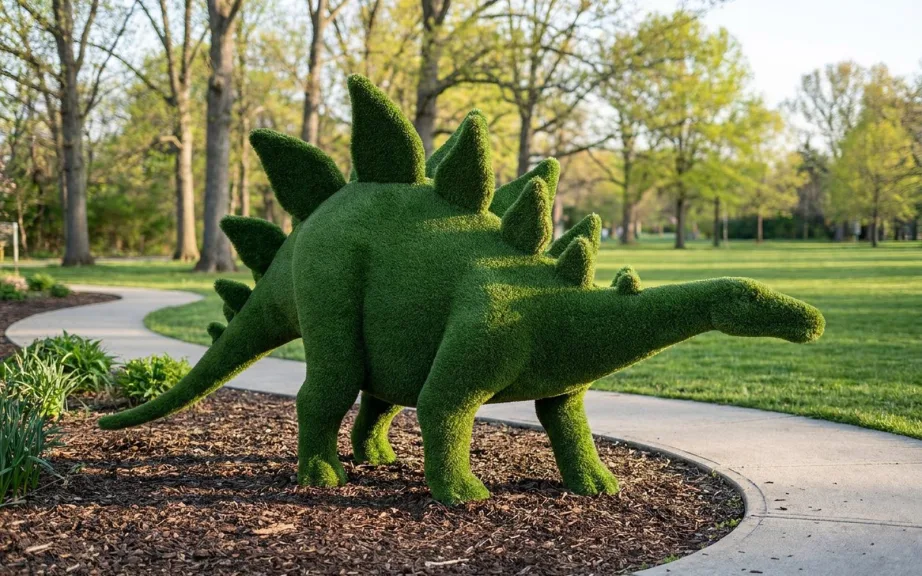
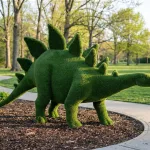
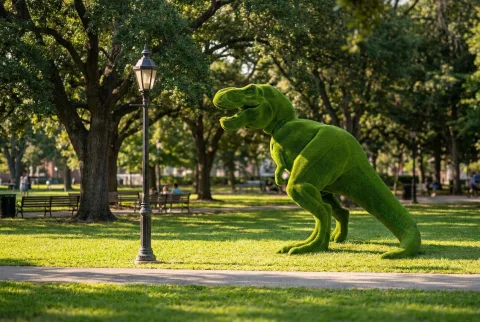
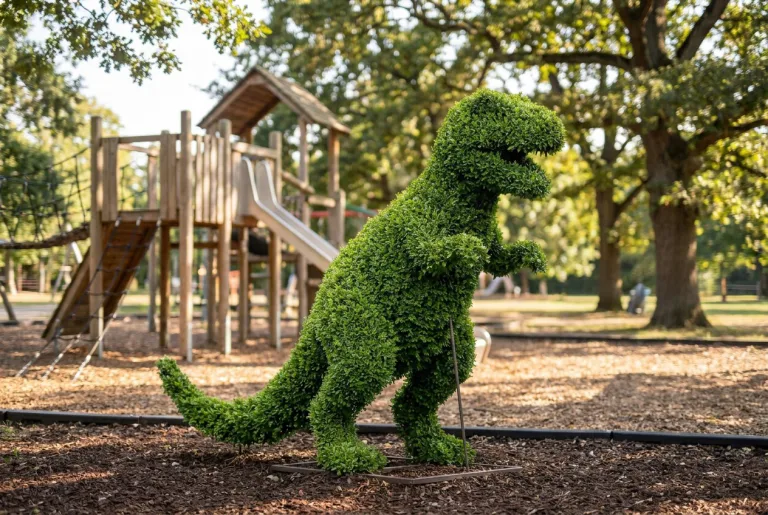
A faded piece built over a galvanized steel frame can be re-covered rather than replaced, because the covering fades long before the structure fails. We do not publish a figure for how many times a piece can be re-covered.
The structure underneath decides whether you can re-cover the piece. A foam-cored piece generally cannot be re-covered, so ask when you buy rather than in year eight. Rescuing a neglected piece covers what can be recovered.
The short version
Buying for a windowless interior: preserved, and pick the plant for the years you need. Eucalyptus is the ten-year one, boxwood around seven. Keep it out of the sunbeam either way.
Buying for an exposed sunny position: artificial with the best UV grade, and accept it is a consumable on a long cycle.
Buying for a garden with a gardener: live, and it will outlast everything else here.
Buying something that will be tended now and then: mossed, and plant into it early.
Quick answers
How long does preserved topiary last?
Juniper seven years or more, boxwood around seven, eucalyptus ten or more, kept indoors and away from direct sun and damp. Pieces with floral elements run shorter, about three years.
How long does artificial topiary last outdoors?
It depends on hours of direct sun far more than on years, so we will not quote a single figure. The same piece can hold for years in shade and look tired in a season or two on an unshaded terrace in a hot region.
Does artificial topiary last forever indoors?
Close to it, as long as it is away from a sunlit window. The ultraviolet load indoors is a fraction of what it is outside, so what dates a piece is usually fashion rather than wear.
How long does a live topiary live?
Decades. Boxwood and yew are long-lived shrubs, and a well-kept live topiary gets fuller and better with age. Most losses come from winter drought, poor drainage or disease, not old age.
Can a faded piece be saved?
Usually, if it is built on a galvanized steel frame, because the frame outlives the surface. A foam-cored piece generally cannot be re-covered, which is why it is worth asking what is underneath before you buy.