



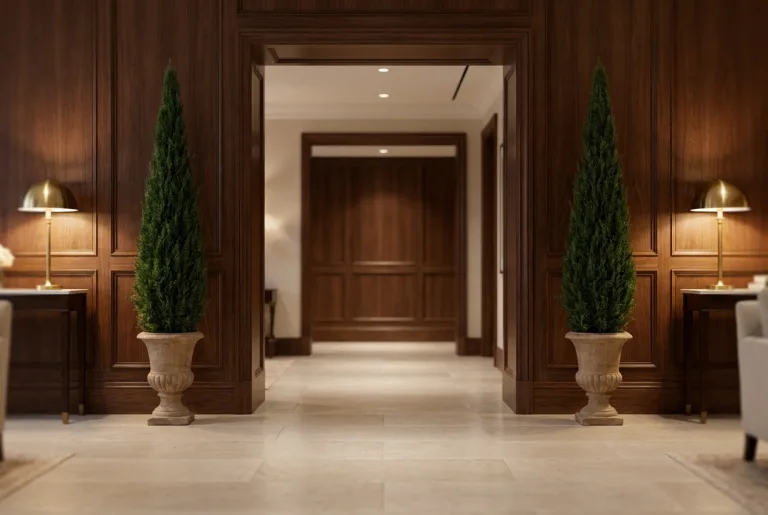



A topiary needs a planter whose opening is at least 4 inches wider than its root ball, so a 24 inch root ball needs an opening of 28 inches or more.
For looks, the plant should stand about one and a half times the height of the planter. Check the opening, not the listed width, because most planters are listed by the widest part of the body.
The listed width is not the opening
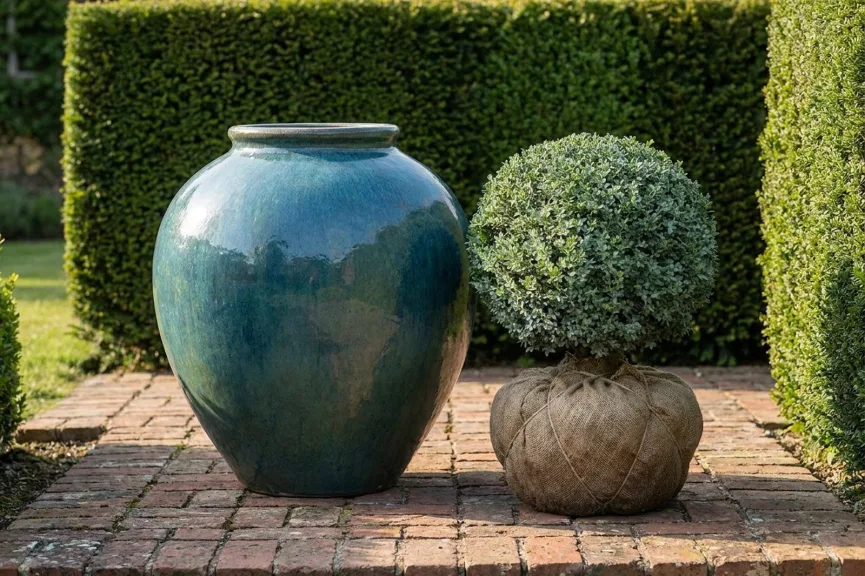
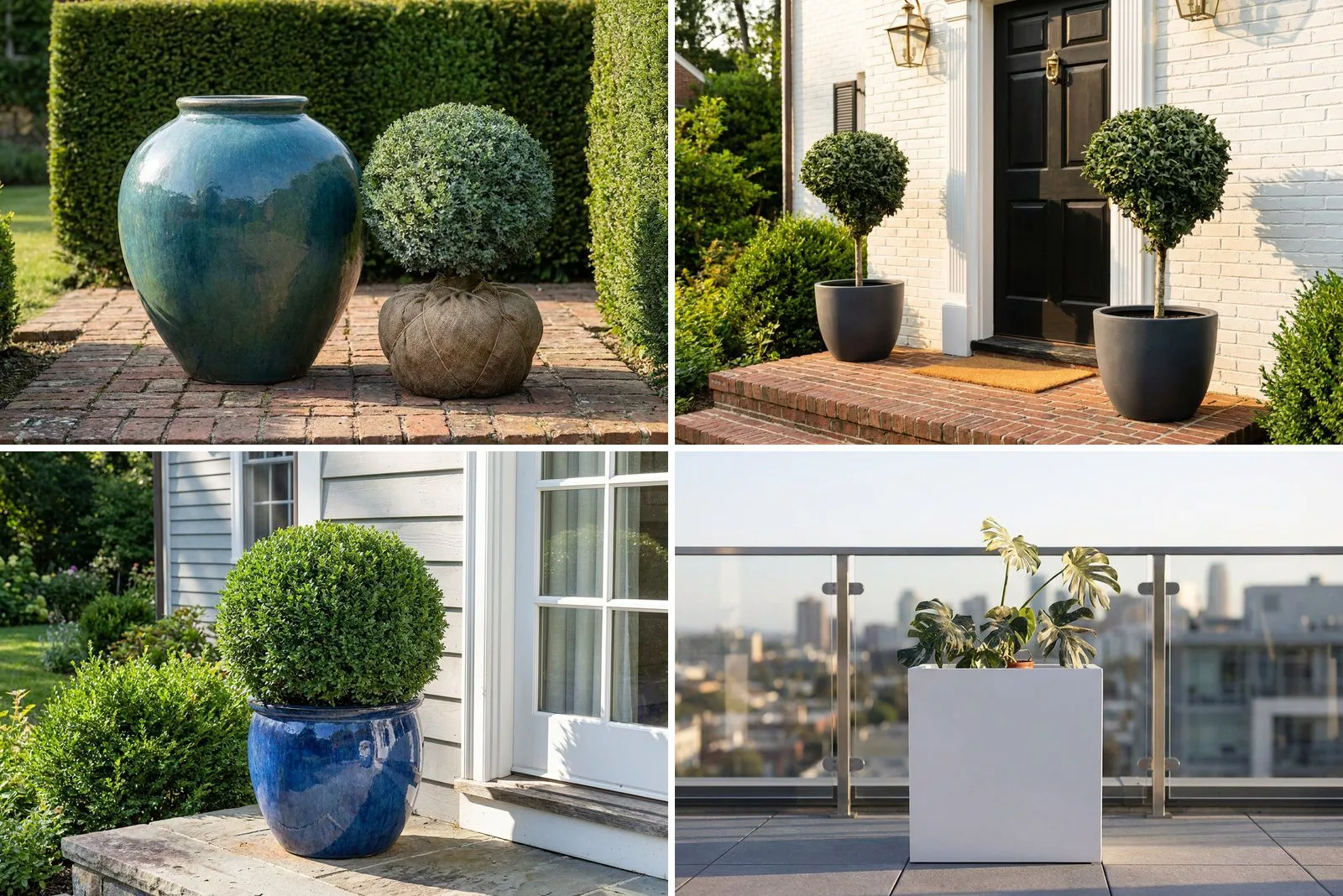
Pottery is measured across its widest point. On a straight-sided pot that is about the same as the mouth. On a jar it is nothing like it, because the shoulders draw in above the belly, so a piece that looks huge in a listing can have an opening little more than half its stated width.
Nobody is playing a trick. It is the convention the trade measures by, and the second number is usually not published at all. Of the 39 planters we carry, the true opening is stated for four. For the rest, ask and our team will measure it.
The most extreme example in our range is the Jardin de St. Paul. It is listed at 39.5 inches wide, and its mouth is 21 inches. A mature boxwood on a 24 inch root ball does not go into it, and no amount of careful reading of the width would tell you that.
Start from the root ball, not the plant
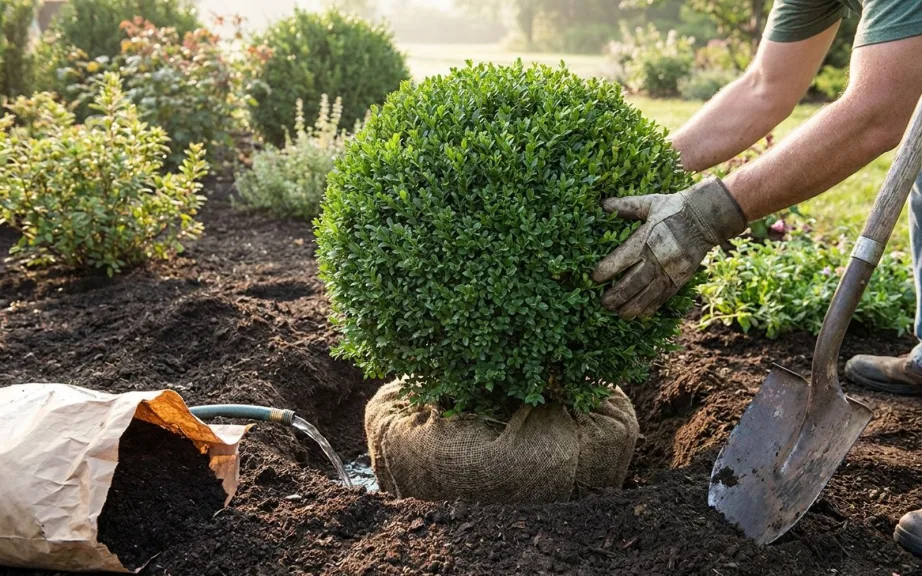
For a living plant, the root ball is the limit, and it does not change. Most of our mature live boxwood comes on a 24 inch root ball. Some smaller pieces come on 18 inches, and the largest pom pom on 36. Where the listing does not state it, ask.
The ball has to pass through the opening with room around it for planting mix, so the working rule is simple:
Opening at least root ball plus 4 inches. A 24 inch ball wants a 28 inch opening or more. At exactly the ball’s width you cannot get mix down the sides, and the plant sits in a ring of air that dries out and kills the roots at the edge.
Artificial and preserved pieces are easier, because there is no root ball. They arrive on a spike, a base or a small pot, and the only question is whether the base is hidden and the piece stands steady. That job is covered in planting artificial topiary in pots.
Proportion: how tall a plant suits which planter
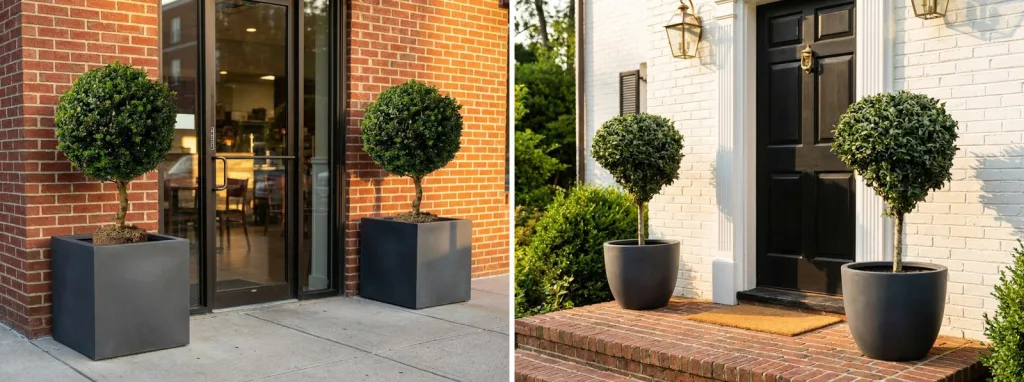
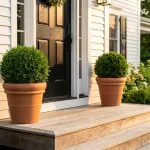
Once it fits, the question is whether it looks right. A planted piece looks settled when the plant stands about one and a half times the height of the planter.
Much shorter and the pot takes over. Much taller and the whole thing looks top-heavy, and in a windy spot it can blow over.
| Planter height | Plant that suits it | Total height |
|---|---|---|
| 18 in | about 27 in | 3 ft 9 in |
| 24 in | about 36 in | 5 ft |
| 30 in | about 45 in | 6 ft 3 in |
| 39 in | about 58 in | 8 ft 1 in |
The last column is the one people forget. A four-foot jar with a five-foot topiary in it is a nine-foot object. Add the two before you decide, and measure the doorway or the porch ceiling it has to stand under. Topiary height is measured from the soil line, not the bottom of the pot, as how we measure a topiary explains.
Some planters look better empty
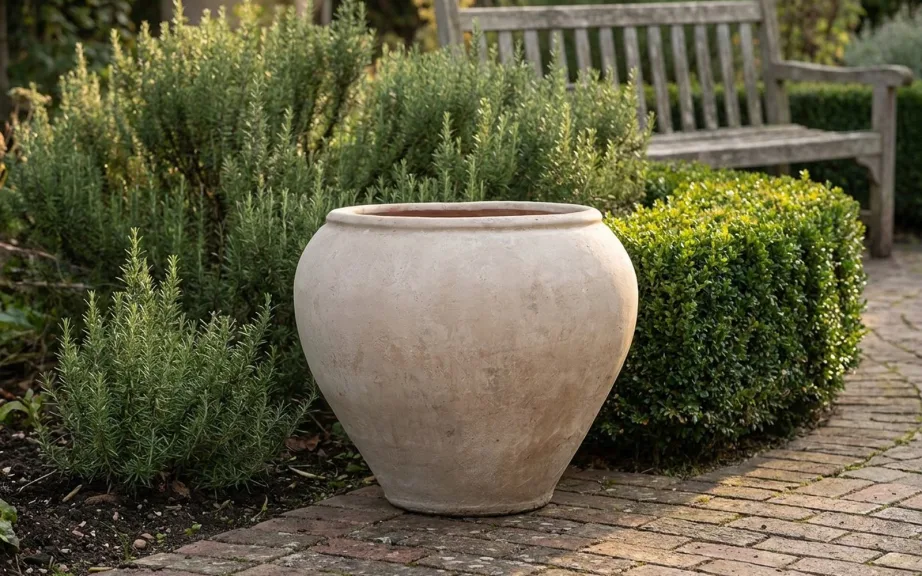
Several of the tallest planters we carry are 44 to 49 inches high. By the rule above, filling one properly needs a plant of five and a half to six feet, and the finished piece is over eight feet tall. Most gardens do not want that.
A tall jar holds a corner well on its own, and treating it as a sculpture is often the better answer. If you do plant one, plant low and wide: a single ball at the mouth looks far better than a standard that takes the whole thing past eight feet.
Weight, wind and the ground underneath
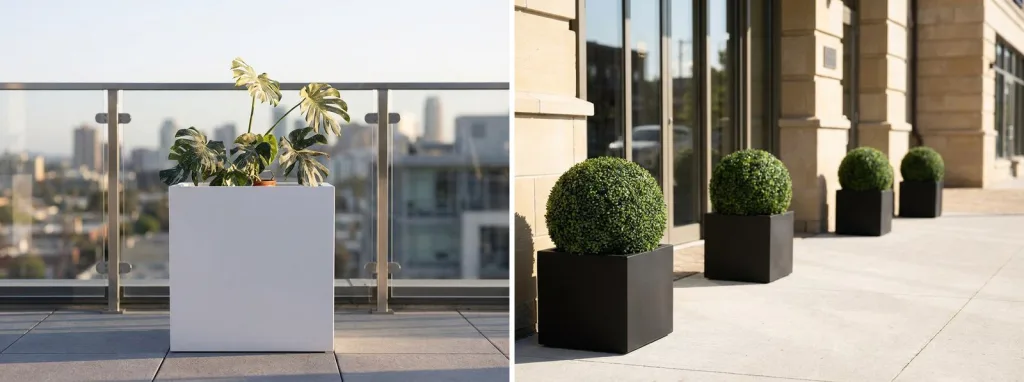
Size decides two practical things besides fit. A large glazed planter with wet mix and a mature plant in it can weigh several hundred pounds, so it goes in place before it is filled. And a tall, narrow planter with a heavy head on top is the most likely to blow over, so in an exposed spot choose wide, low containers.
Fiberglass is the exception on weight. It is much lighter than it looks, which makes it the practical choice for a roof terrace or a balcony. What each material does to the plant is in planter materials for live plants.
If you want us to check
Tell us the plant you want and the planter you are looking at, and our team will measure the opening before you order. It costs nothing, and it is the honest answer to a number the makers do not publish for all 39.
The range is on the planters pages, and the plants that go in them are on live boxwood topiary.
Quick answers
How much bigger than the root ball should a planter be?
The opening should be at least 4 inches wider than the root ball, which gives about 2 inches of mix all around.
How tall should a topiary be for its pot?
About one and a half times the height of the planter. A 24 inch planter suits a plant of about 36 inches.
What size pot for a 24 inch root ball?
One with an opening of at least 28 inches. Check the opening itself, not the listed width.