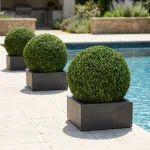
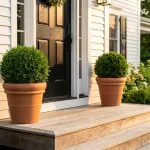
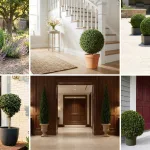
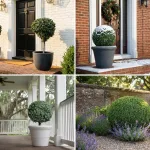
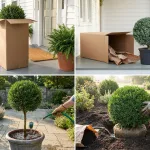

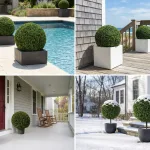
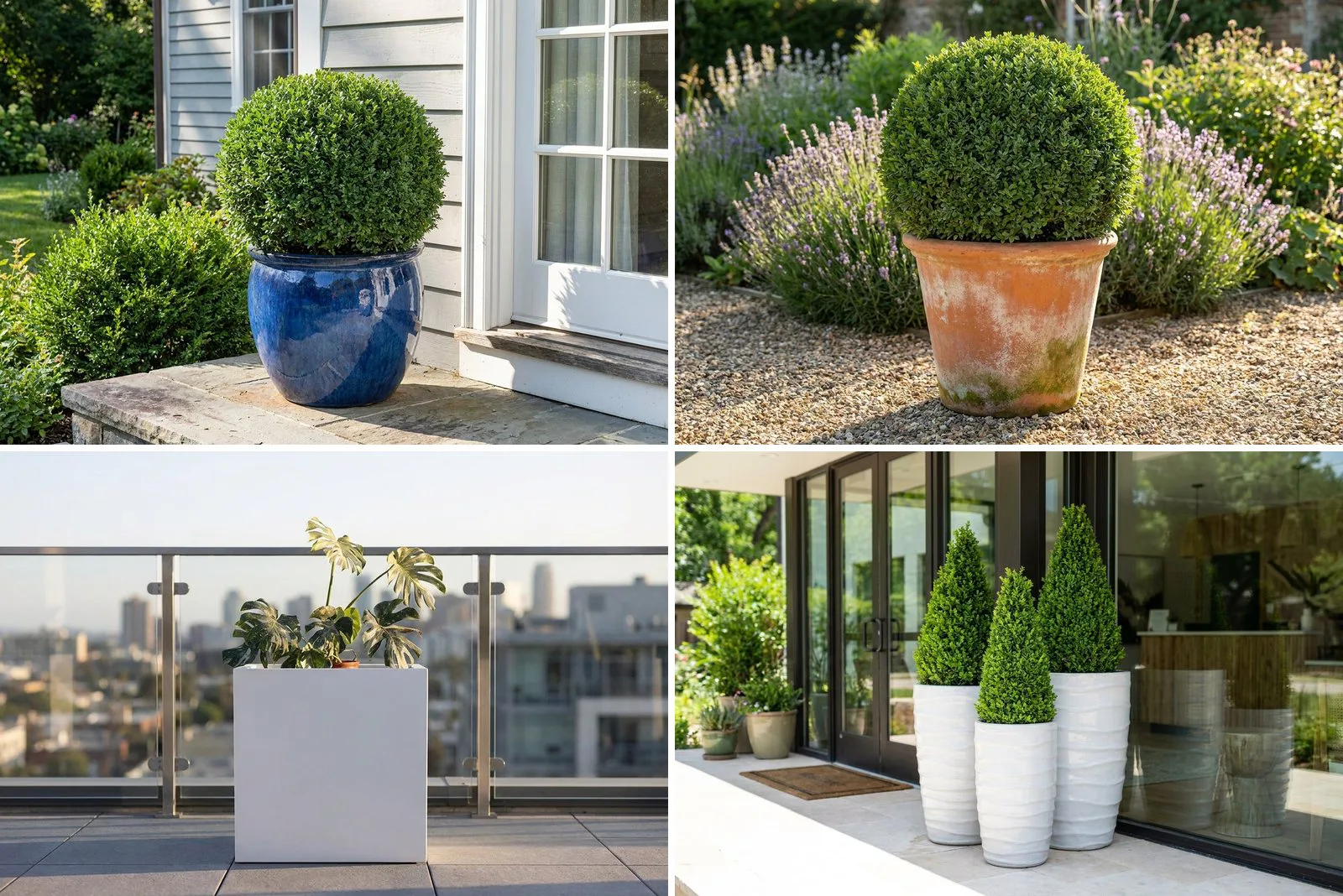
For a live plant such as boxwood, glazed pottery is usually the best planter material, because the glaze seals the wall and the soil stays moist longer. Unglazed terracotta breathes and dries fastest, so it needs more watering. Fiberglass is the lightest and does not crack in frost. Whatever the material, the planter must drain.
Most comparisons of planter materials compare surfaces. If something is going to live in the pot, three other things matter more: how fast it dries, whether it survives a freeze with wet soil in it, and whether you can move it once it is full.
The three you will actually choose between
Large outdoor planters come down to three materials in practice. Most of the 39 planters we carry are glazed pottery. Two are fiberglass, and one, the Pithari urn, is bare unglazed terracotta.
| Material | For a live plant |
|---|---|
| Glazed pottery | Holds water longest. Heaviest. Needs good drainage. |
| Unglazed terracotta | Breathes and dries fastest. Weathers with age. |
| Fiberglass | Does not breathe or crack. A fraction of the weight. |
Glazed pottery
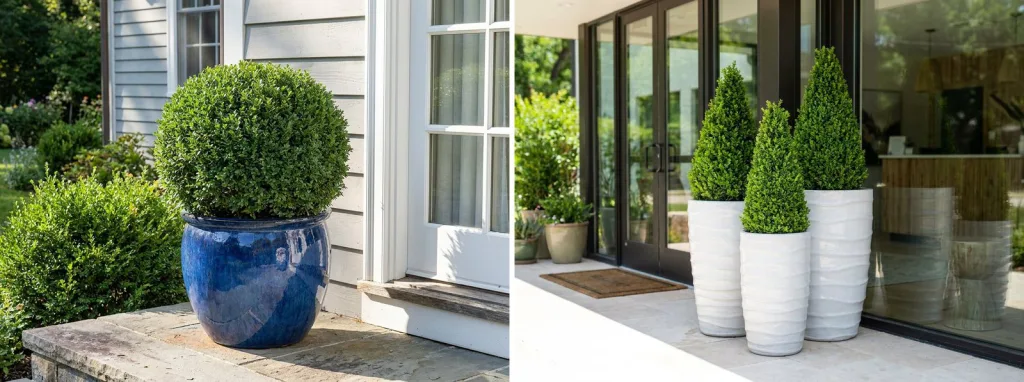
Glazed pottery is fired clay with a glaze over it. The glaze seals the wall, so a glazed pot holds water far longer than bare clay and needs watering less often. For a boxwood, which hates drying out at the root ball, that is the right side of the trade.
It cuts both ways. With a sealed wall, water leaves only through the top and the drainage hole, so a glazed planter that drains poorly stays wet at the bottom for a long time. Boxwood roots in standing water rot. Drainage matters more on a glazed pot than on any other kind.
Weight is the other point. A large glazed piece is heavy empty and much heavier full, so put it in place before you fill it.
On frost: fired pottery is not damaged by cold itself. What damages any pot is water freezing inside the wall or the soil. Keep the drainage clear, and do not leave a planter standing in a saucer of water through winter.
Unglazed terracotta
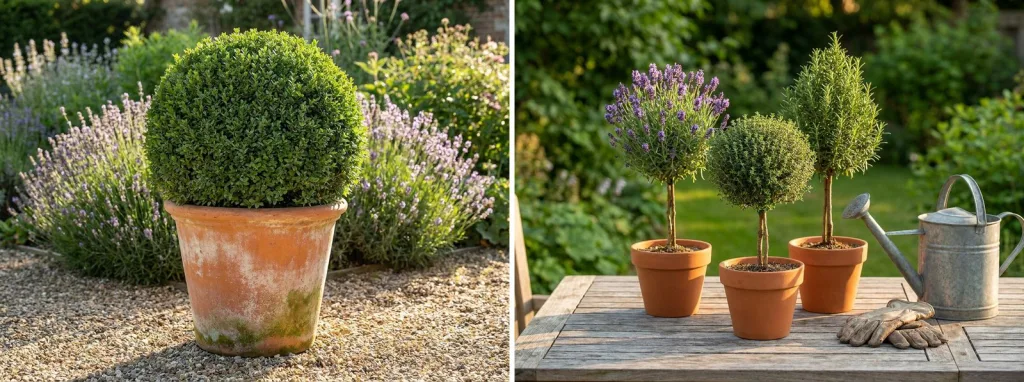
Unglazed terracotta is bare fired clay. It is porous, so the pot breathes and the soil dries from the sides as well as the top.
That suits plants that hate wet feet, such as rosemary and lavender. It is a nuisance for plants that hate drying out, and boxwood is one of them. A boxwood in unglazed terracotta in a sunny spot needs watering noticeably more often than the same plant in a glazed pot beside it.
Terracotta also changes with age. It picks up a patina, and in cold climates it is the material most likely to flake or crack if it goes into winter soaked. Ours is one piece, the Pithari urn, and it is the right choice if you want the surface to age.
Fiberglass
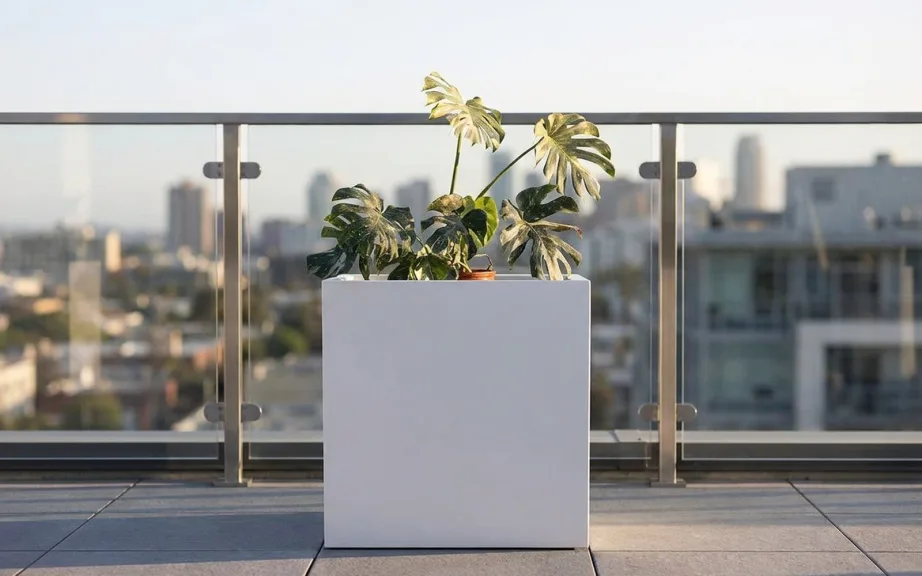
Fiberglass is the practical option, and neither of the other two can match it on weight. A fiberglass planter weighs a fraction of a glazed piece the same size, which makes it the answer for a roof terrace, a balcony, or anywhere the pot has to be moved after planting.
It does not breathe, so it waters like glazed pottery. It does not crack in frost. Our two fiberglass pieces are the large modern shapes, a cube and a rectangular box, where a smooth, even finish looks deliberate.
What the finishes do, and what is not damage
People sometimes report three things as faults that are normal for the ranges they belong to.
High-gloss glazes develop a fine network of surface lines over time. This is crazing. It happens because the glaze and the clay shrink at slightly different rates, and it does not weaken the piece. Keep such a planter away from sudden temperature swings, but a crazed gloss glaze is behaving normally.
Some ranges leave bare clay at the rim and the base on purpose, for contrast with the glazed body. That is a design choice, not a missed patch.
Textured glazes carry small pits and craters that imitate natural stone. That is the intended surface. Each product page says which of these applies, and the planters category page sums it up.
Choosing, in one paragraph
If a live plant is going in it and the spot gets sun, choose glazed pottery and make sure it drains. If you want the pot to age and you will water more often, choose terracotta. If weight matters, or the planter has to move once planted, choose fiberglass.
None of this decides whether the plant fits. That is a separate question, answered in what size planter a topiary needs. How to put the plant in is the planting method.
Quick answers
Is glazed or unglazed better for boxwood?
Glazed, in most places. It keeps the root ball moist longer, which boxwood needs. Just make sure it has a drainage hole.
Can planters stay outside in winter?
Glazed pottery and fiberglass can, if they drain freely and do not stand in water. Unglazed terracotta is the most likely to crack if it freezes while soaked.
What is the lightest material for a large planter?
Fiberglass. It weighs a fraction of a glazed pot the same size.
Keep reading
- What size planter a topiary needs: opening, root ball and proportion
- Boxwood in a planter: cultivar, watering and winter
- Planting a live topiary in a planter, step by step
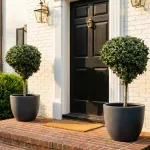
Some photographs on this page are staged illustrations, including the planted glazed and terracotta pots.