









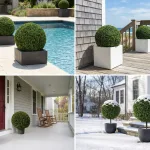

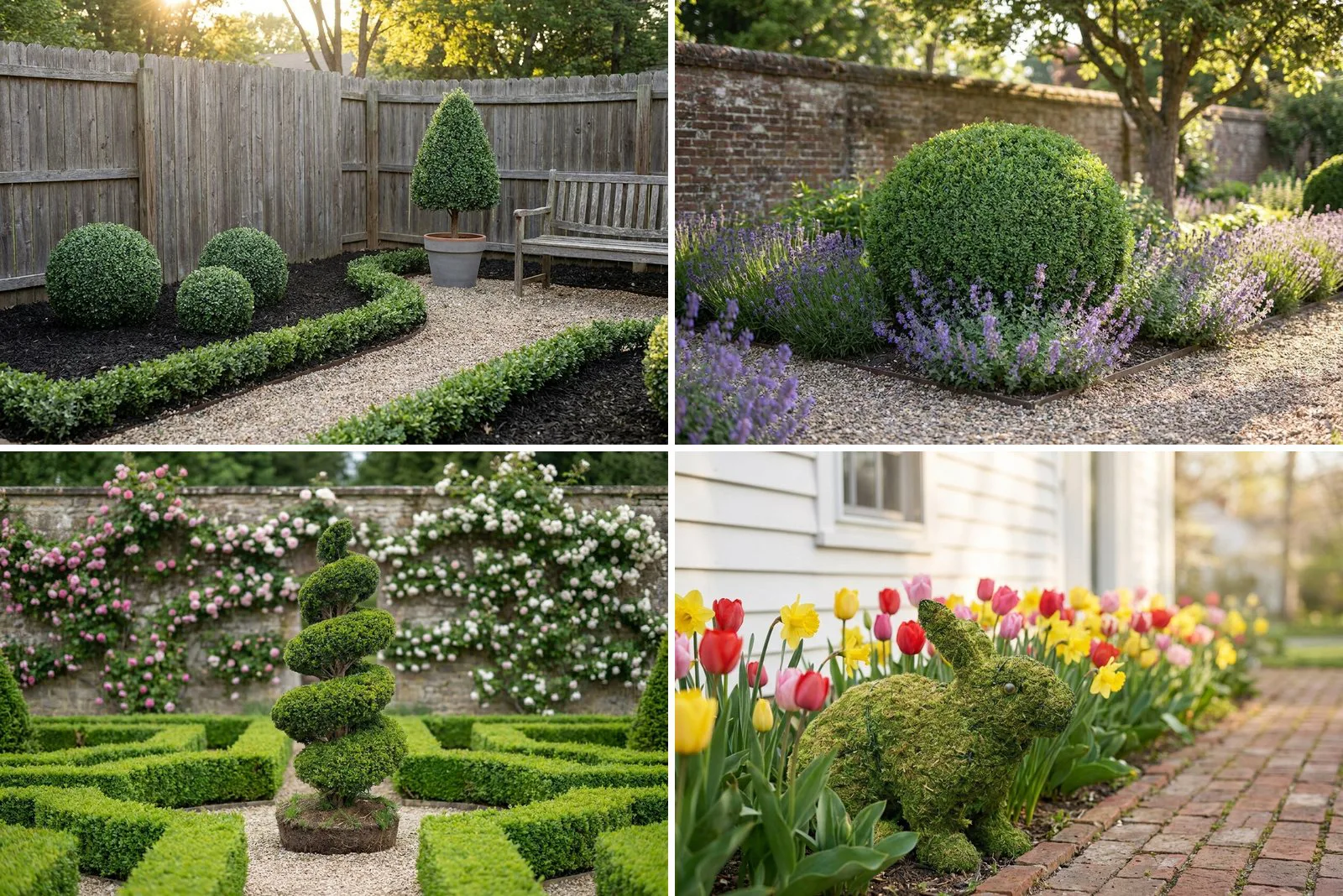
Topiary gardening is growing and clipping shrubs into clear shapes, such as balls, cones, spirals and animals. To start, pick one slow, small-leaved plant (boxwood suits most of the country), one simple shape and one spot where you will see it every day. A ball or a cone in a pot by the door is the easiest first piece.
You can grow a shape from a young plant, cover a wire frame with ivy or moss, or buy a plant that is already shaped. This guide covers all three, with examples of where topiary works in an ordinary garden.
How to start a topiary garden
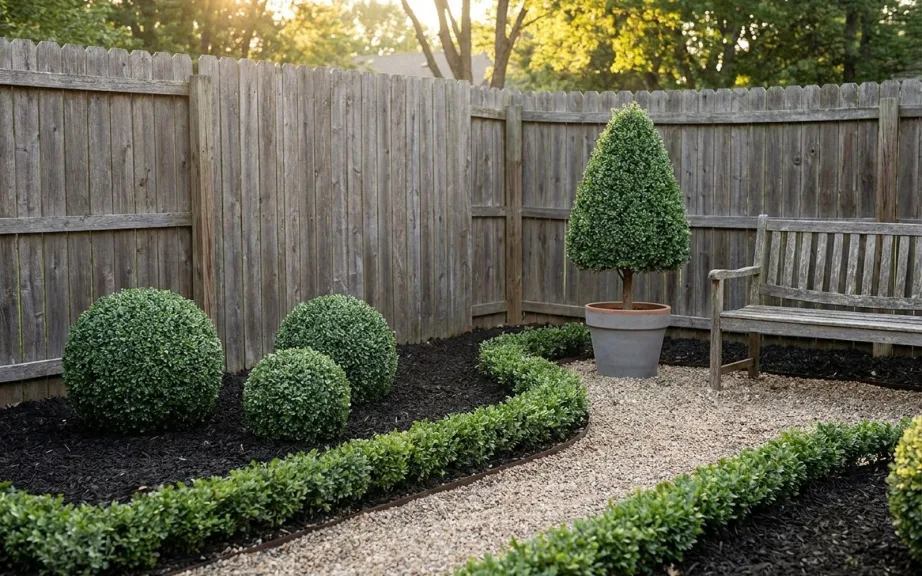
- Choose the spot. Most topiary plants want sun for at least half the day. Pick a place you pass often, so you notice when it needs a trim.
- Choose the plant. Boxwood for most of the country, yew for shade, Japanese holly where boxwood blight has struck. The full list is in the best plants for topiary.
- Choose one shape. Start with a ball or a cone. Both forgive an uneven cut. The guide to topiary shapes shows where each shape works.
- Plant it well. A wide hole, the top of the root ball level with the soil, and a thin ring of mulch kept clear of the stems.
- Trim twice a year. The main cut in early June, then a light tidy finished by early September.
Topiary garden ideas
You do not need an estate. Most good topiary in American gardens is one pair or one feature, placed where the eye lands. These are the spots where it works best.
| The spot | Topiary that suits it |
|---|---|
| Front door or gate | A matched pair of cones, spirals or balls on stems |
| Front bed | One large ball or a group of three balls in different sizes |
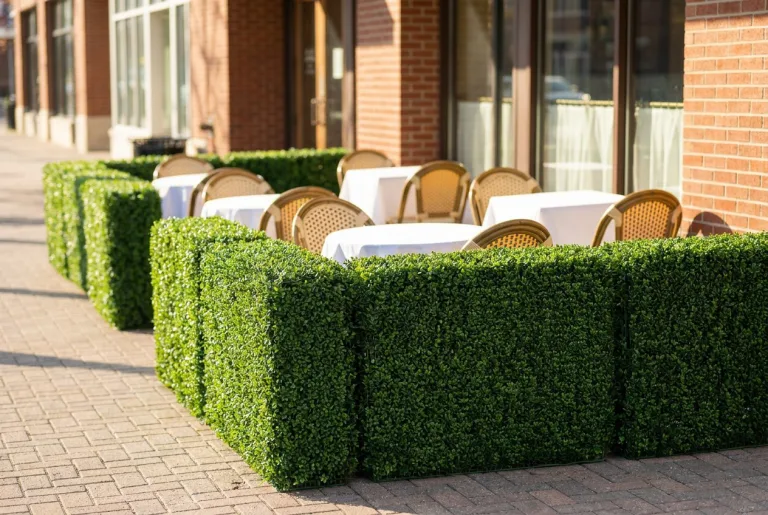
| Path or border edge | A low clipped hedge |
| Patio | A tiered ball in a pot, or herb topiaries on the table |
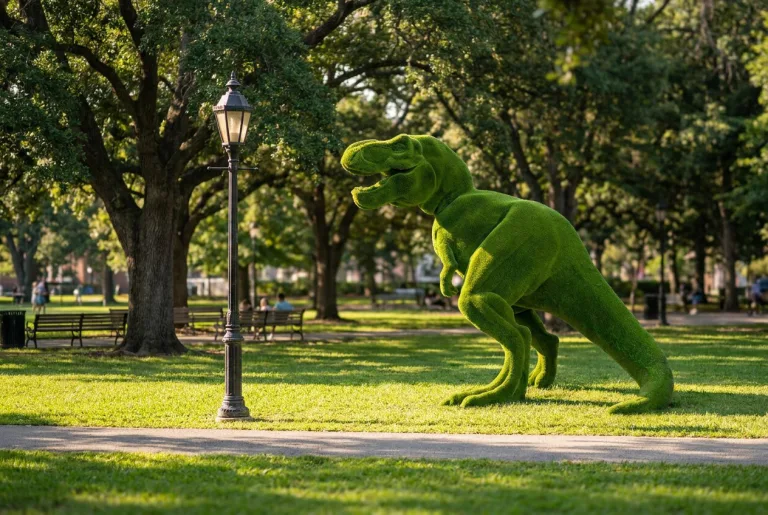
| Lawn | A spiral or an animal as the centerpiece |
| A shady corner | Yew, or an ivy-covered frame |
A pair at the front door
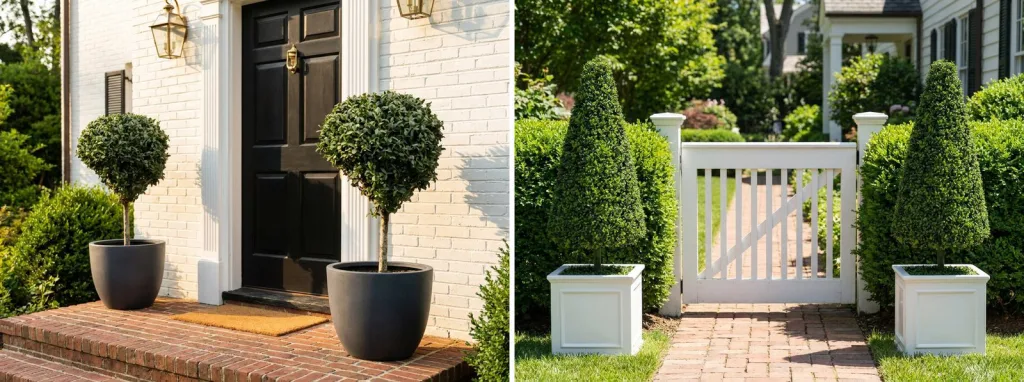
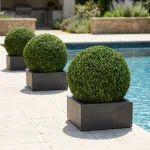
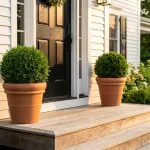
Two matching plants either side of a door or gate give a house a finished look for very little work. Cones and balls on stems are the usual choice, because they are narrow at the height where people pass. Sizing a pair is covered in topiary for a front door.
A focal point in a bed
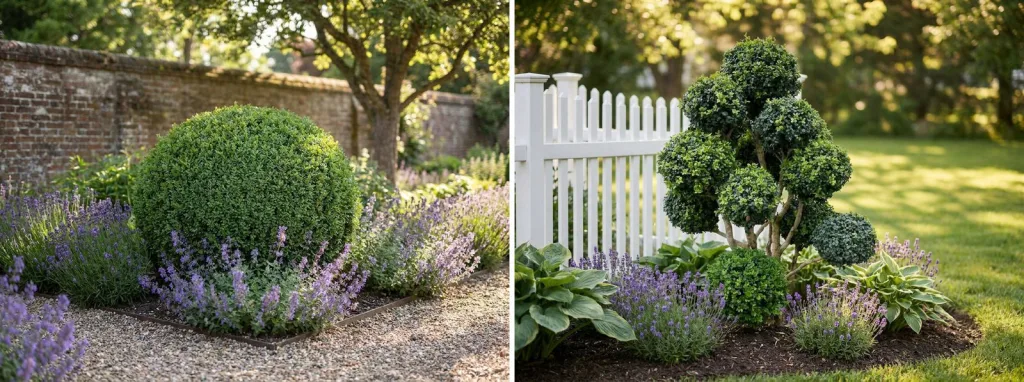
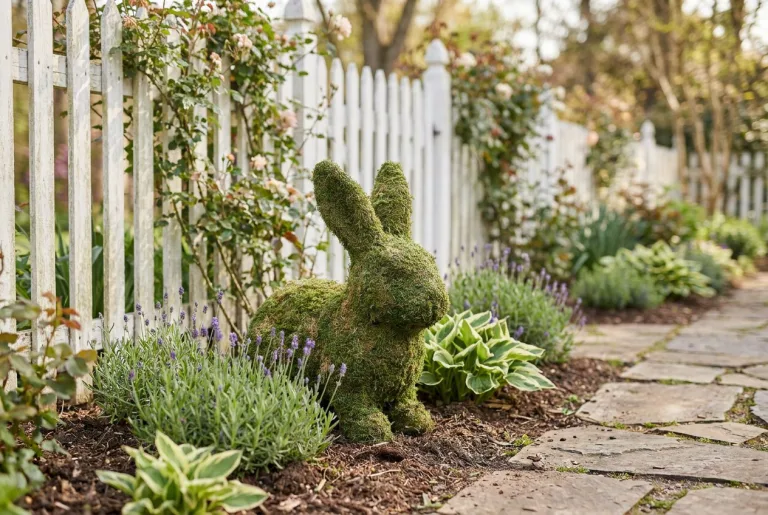
A single clipped shape among loose, soft planting is one of the best topiary garden ideas. The round outline of a boxwood ball looks sharper next to lavender or grasses. A pom pom or cloud-pruned plant does the same job with more character.
A formal garden in miniature
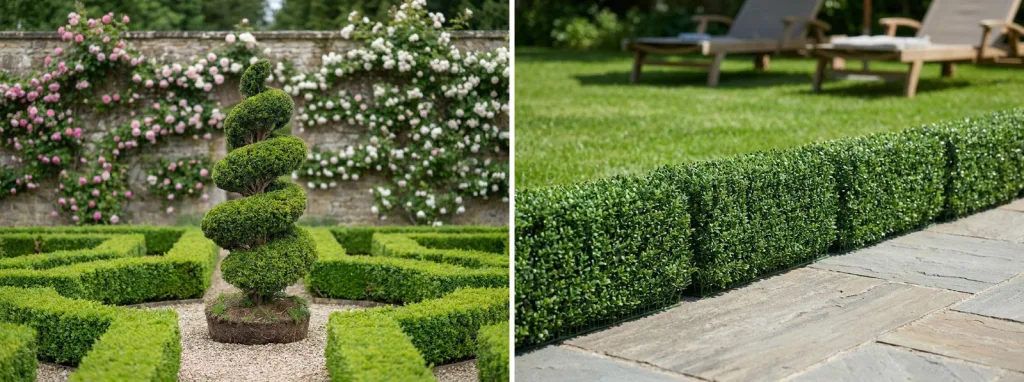
Low clipped edging along a path is the start of every formal garden. Add a spiral or a cone at the center or at the corners and you have a small parterre. Keep the edging low, about a foot, so it stays easy to cut straight.
Patio and table topiary
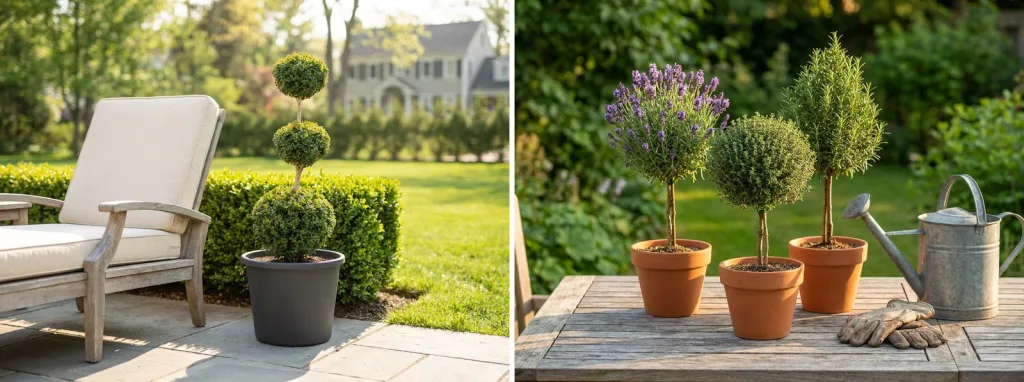
If you have no garden beds, grow topiary in pots. A tiered ball in a large pot suits a patio. Small rosemary, lavender or thyme topiaries sit on a table and give you clippings for the kitchen. Pots dry out quickly, so check them every day or two in summer.
An animal for fun
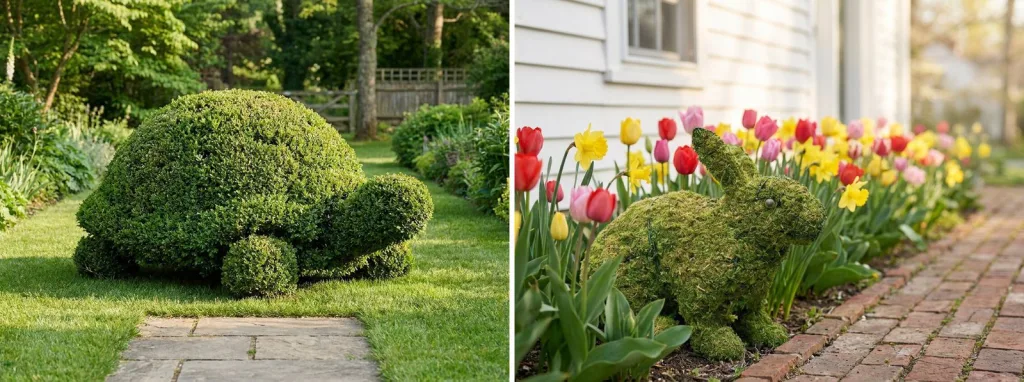
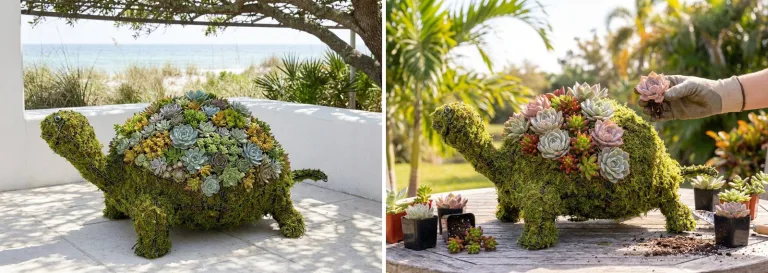
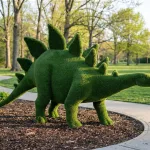
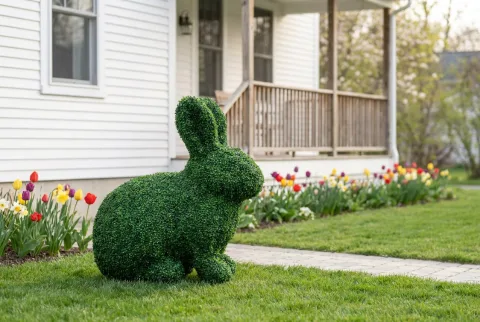
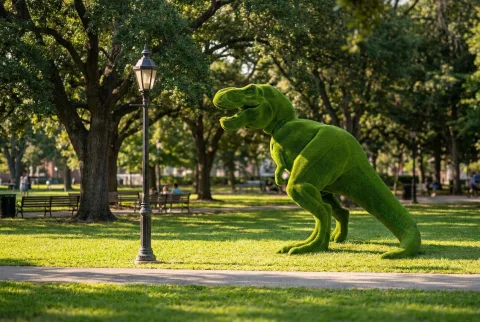
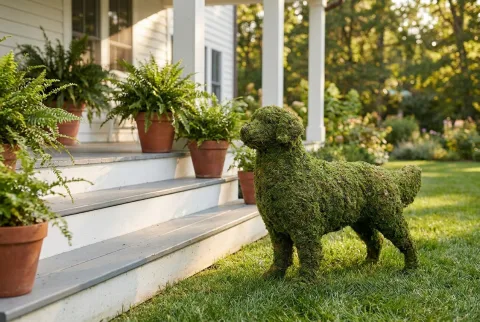
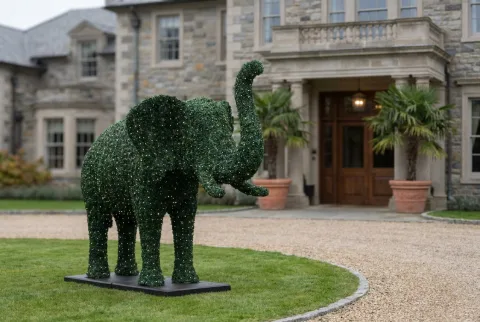
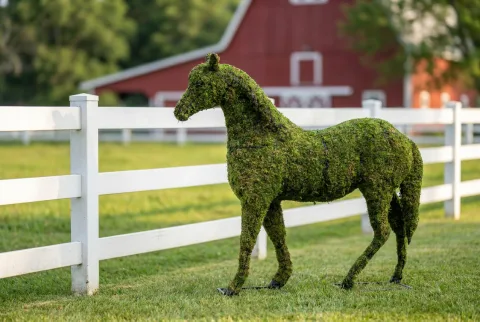
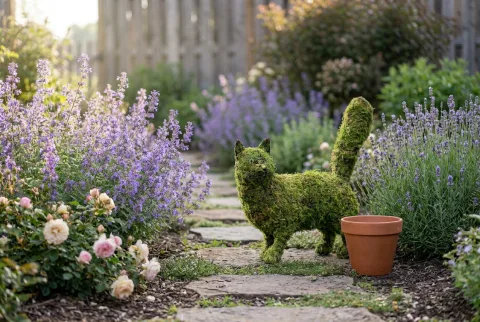
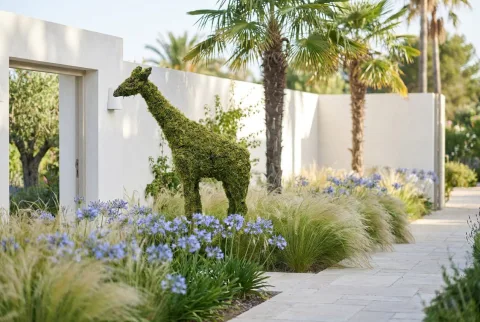
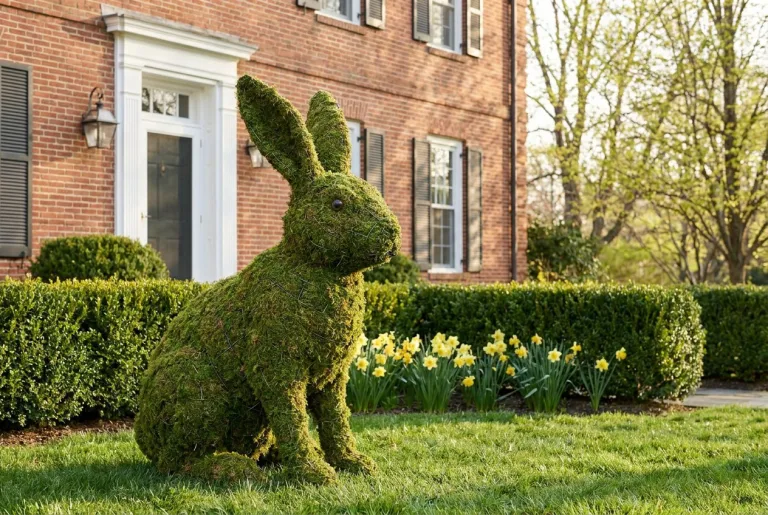
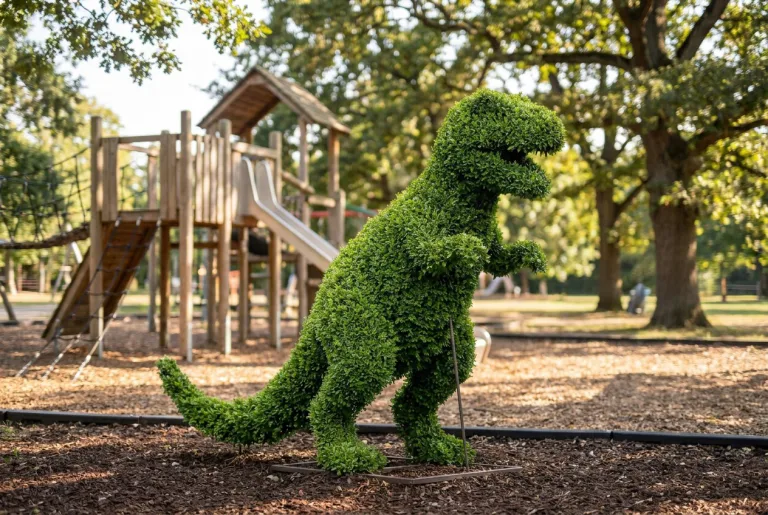
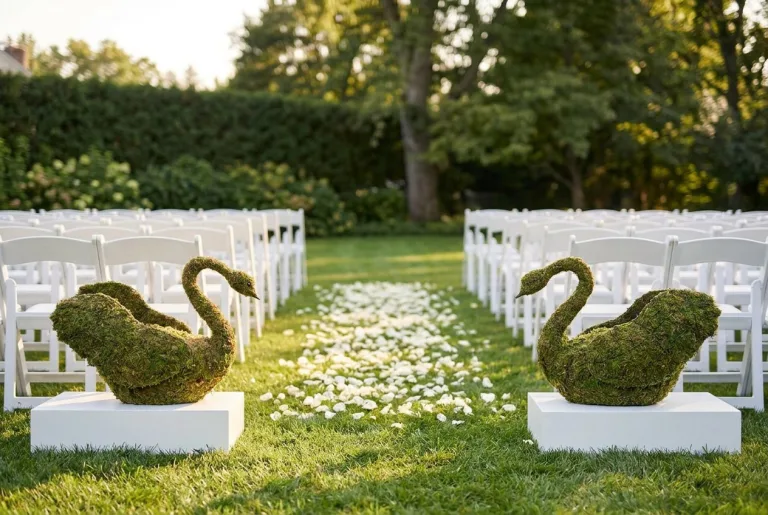
An animal is the shape that makes visitors smile. A clipped live animal takes years to grow. A mossed wire frame gives you the figure at once, and you can plant into the moss or leave it green. Browse the topiary animal collection for ideas.
Three ways to get a topiary
Grow a shape from a young shrub. This is the cheapest way and the slowest. A boxwood ball can be shaped from a bushy nursery plant in two or three seasons. A spiral or an animal takes several years. The ball and stem topiary guide walks through the first one.
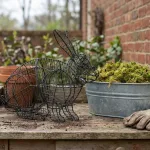
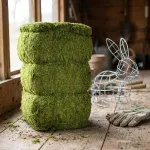
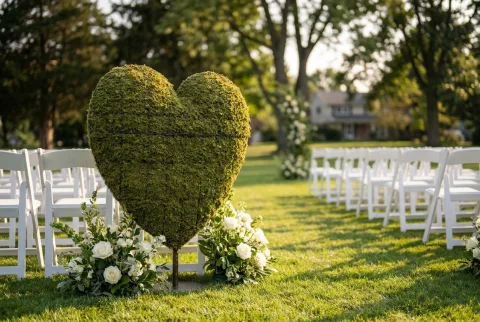
Cover a wire frame. This is the fastest way to a green shape you made yourself. Plant ivy or creeping fig at the base, or pack the frame with sphagnum moss and plant into it.
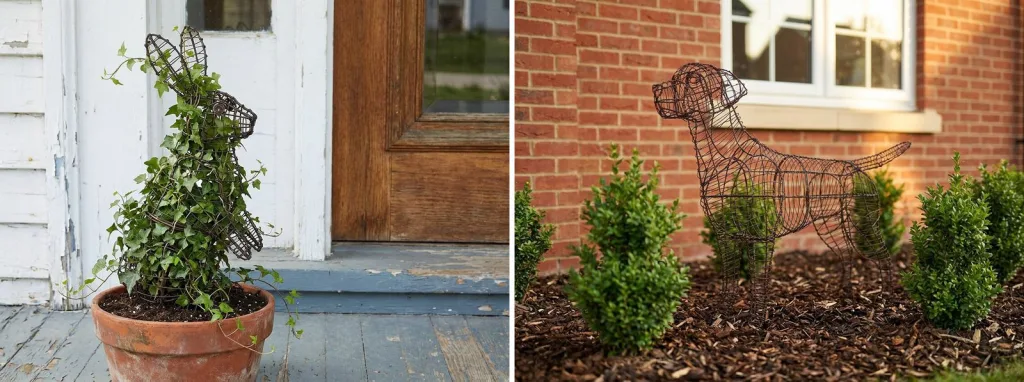
A small frame can be covered in one growing season. Choose a wire topiary frame and read how to make an animal topiary.
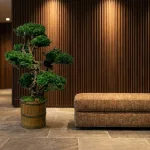
Buy it already shaped. A live boxwood topiary arrives with the years of growing and cutting done. You keep the shape with the same two trims a year.
Tools you need
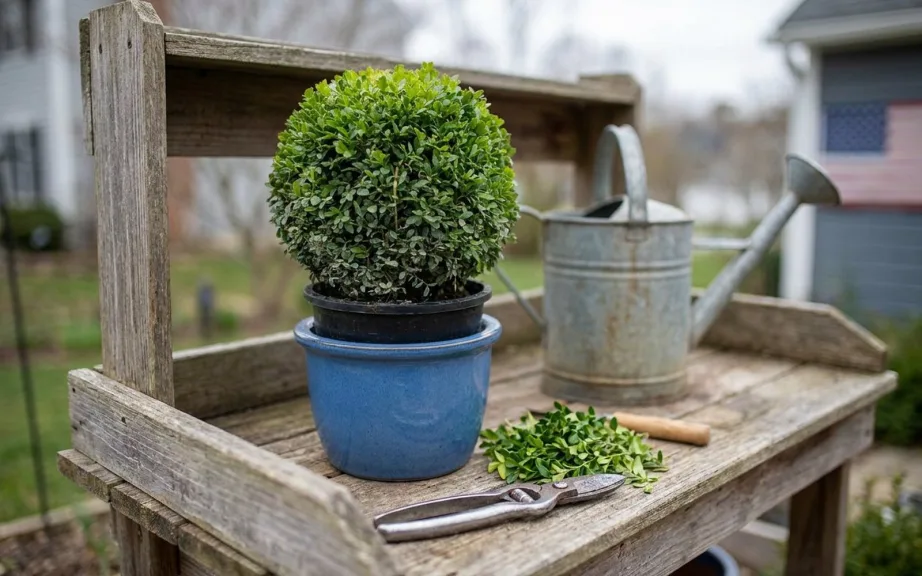
For a first topiary you need only a pair of sharp hand shears and a watering can. Hand shears give more control than hedge trimmers on small shapes. Add long-bladed hedge shears for hedges and large balls, and a couple of bamboo canes to cut a cone straight.
Keep the blades sharp and clean. Dull blades tear the leaves and leave brown edges, and clean blades are the simplest way to avoid spreading disease between plants.
Looking after your topiary garden
A live topiary needs the same care as any shrub, plus two cuts a year. The rules for boxwood, the most common topiary plant:
| Job | When |
|---|---|
| Feed | Early March and October |
| Main trim | Early June |
| Light tidy | Late summer, done by early September |
| Water | About an inch a week in dry spells; pots every day or two in summer |
| Mulch | One inch, kept clear of the stems |
For zones, watering and winter care, read the boxwood care guide by USDA zone. The month-by-month version is a topiary year.
Quick answers
What is the easiest topiary for a beginner?
A boxwood ball or cone. Both grow slowly, hold their shape between cuts and hide small mistakes. Leave spirals and animals until you have kept one simple shape for a year.
How long does it take to grow a topiary?
A simple ball from a bushy young boxwood takes two or three seasons. A spiral or a large animal in boxwood takes several years. Ivy on a wire frame can cover a small shape in one season.
What are some examples of topiary?
The common ones are balls, cones, spirals, pom poms, tiered balls, low hedges and animals. Famous public examples include Levens Hall in England and Ladew Topiary Gardens in Maryland. The history of topiary has more.
Can I do topiary without a garden?
Yes. Grow it in pots on a step, a patio or a balcony. Choose a slow plant, a pot with drainage holes, and water more often than you would in the ground.
Can topiary grow in shade?
Yew and ivy handle shade well. Boxwood is fine in part shade but grows thin in deep shade. See topiary for shade and low light.
Some photographs on this page are staged illustrations of plants and frames we do not stock, such as the herb topiaries and the planted ivy frame.