












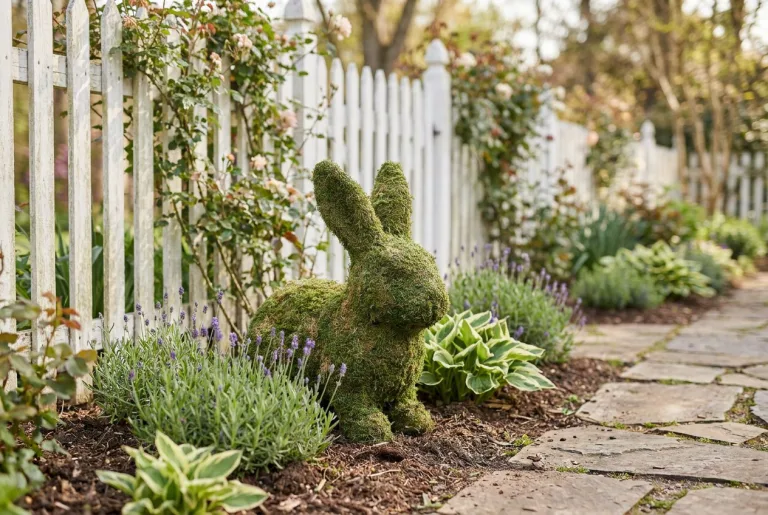




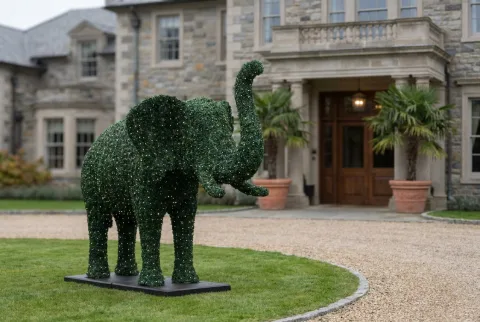
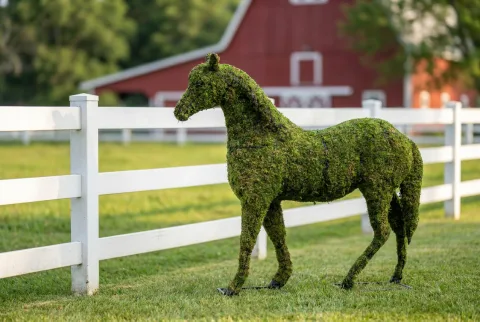

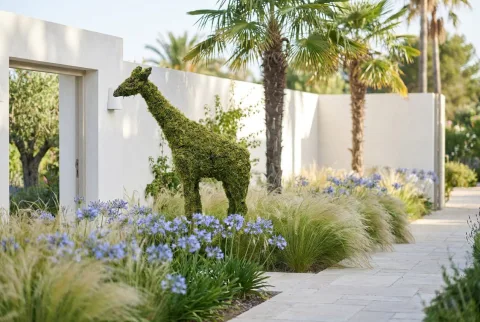











Topiary began in ancient Rome, more than two thousand years ago, when gardeners started clipping box and cypress into shapes. It faded after Rome fell, came back with the Renaissance in Italy, and reached its peak in the formal gardens of 17th century France, Holland and England. Today it lives on in public gardens and ordinary front yards.
The word comes from the Latin topiarius, the name for the ornamental gardener in a Roman household. A sculpture made from a living bush is called a topiary, and the gardener who clips it is a topiarist.
Topiary history at a glance
| When | What happened |
|---|---|
| 1st century BC | Clipped gardens become fashionable in Rome. |
| About AD 100 | Pliny the Younger describes box cut into animals and letters at his Tuscan villa. |
| 15th and 16th centuries | Italian Renaissance villa gardens revive the Roman shapes. |
| 17th century | Versailles, Dutch and English formal gardens. Levens Hall is laid out in the 1690s. |
| 1713 | Alexander Pope mocks topiary, and English taste turns to the natural landscape. |
| 19th century | The Victorians bring clipped shapes back. |
| 20th century | American topiary gardens open to the public, and theme parks make frame topiary famous. |
Who invented topiary? The Roman beginning

The Romans invented topiary. Pliny the Elder, writing in the first century AD, credits Matius, a friend of the emperor Augustus, with the idea of clipped groves. That puts the start in the late first century BC.
By about AD 100 the fashion was well established. Pliny the Younger wrote to a friend about the garden at his villa in Tuscany. It had box trees clipped into the shapes of animals, and box cut into letters that spelled his own name and his gardener’s.
Evergreens such as box and cypress were the favorite plants, as they still are.
When Rome fell, the great villa gardens went with it. For most of the Middle Ages, clipped shapes survived only in small monastery and castle gardens.
The Renaissance: topiary returns in Italy
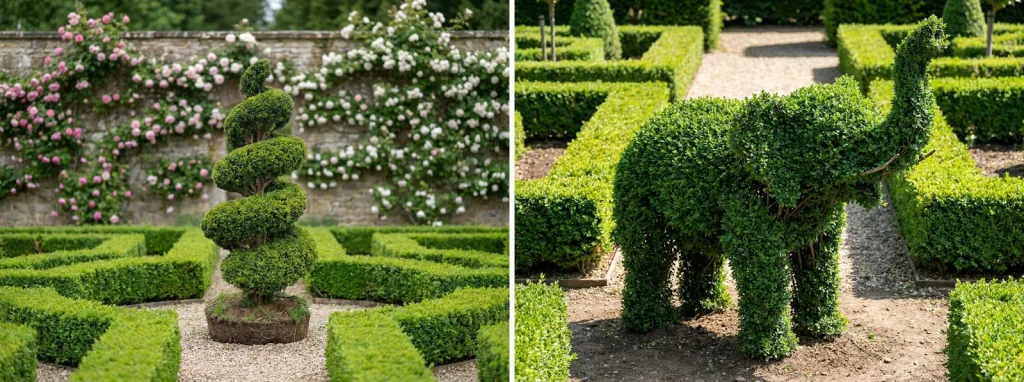
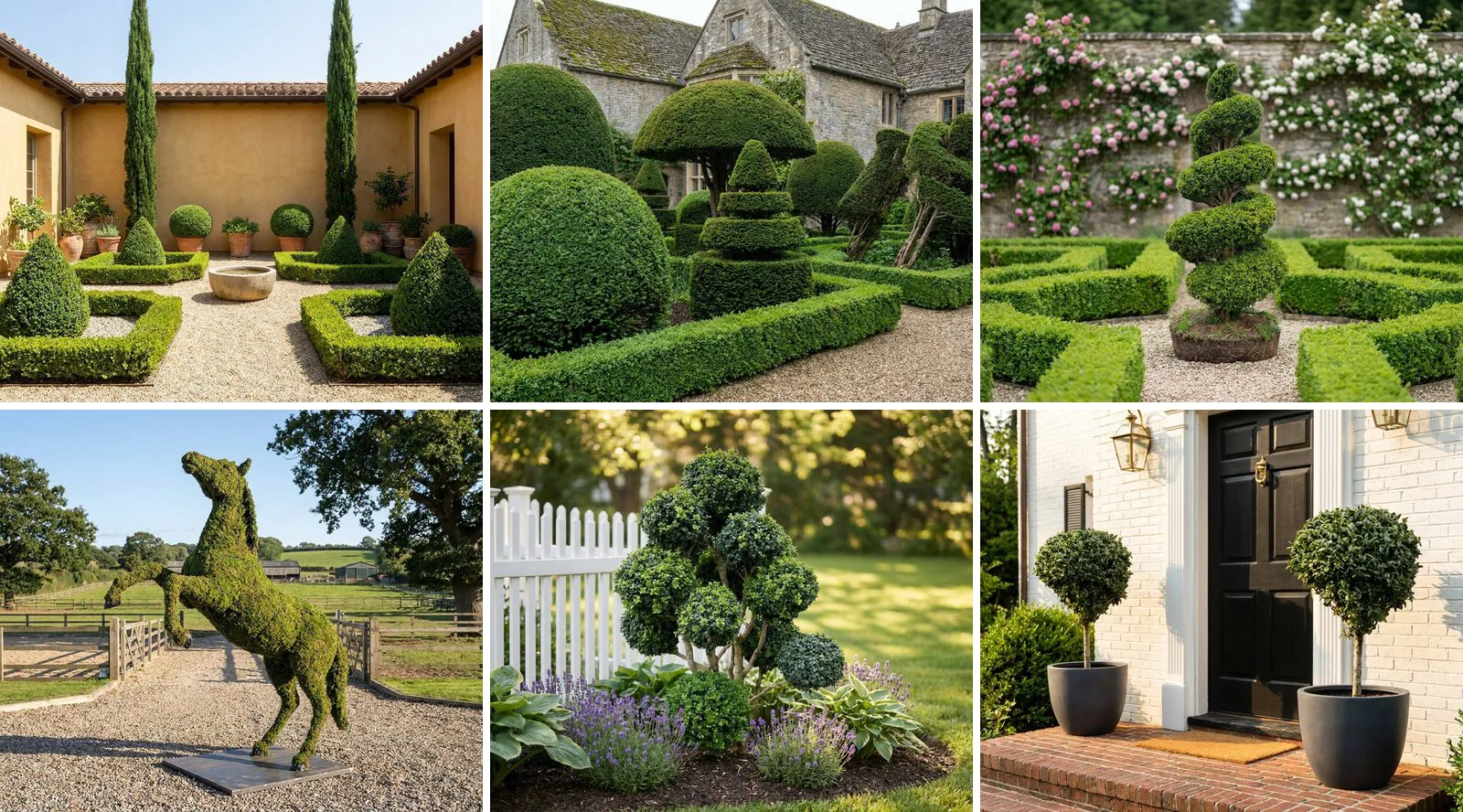
Topiary came back in 15th century Italy, when scholars and rich families fell in love with everything Roman. Villa gardens were laid out in terraces and beds edged with clipped box. Spheres and tiered cones stood at the corners, and a few gardens had clipped animals and ships.
From Italy the style spread north. In 17th century France it turned grand. At Versailles, André Le Nôtre filled the parterres with low box patterns and lined the walks with clipped cones and pyramids.
Dutch and English gardens in the 17th century
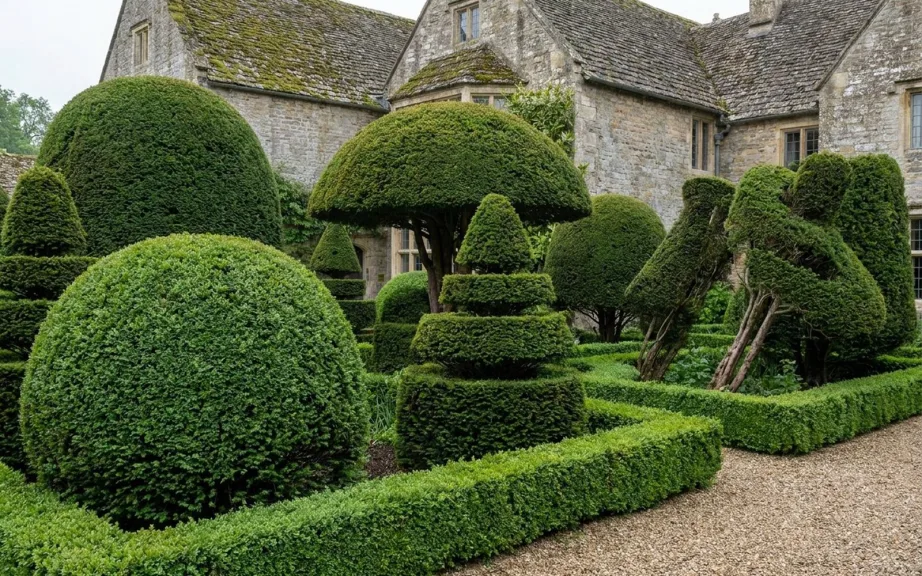
The Dutch liked their topiary playful. Their smaller town gardens were full of clipped birds and animals in box and yew.
When William of Orange took the English throne with Queen Mary in 1689, Dutch garden taste came with them, and English gardens filled with clipped yew.
Levens Hall in Cumbria, in the north of England, has the best survivor of that period. Its topiary garden was laid out from 1694, and it is often called the oldest topiary garden in the world that still keeps its original design.
Pope, the landscape garden and the Victorian comeback
In 1713 the poet Alexander Pope wrote an essay in The Guardian that made fun of clipped greenery. He listed imaginary pieces for sale, such as Adam and Eve cut in yew. Fashion turned against topiary soon after.
Through the 18th century, English estates tore out their formal gardens and replaced them with rolling lawns and lakes.
The Victorians brought clipped shapes back in the 19th century. Many English country houses replanted formal gardens, and clipped peacocks and birds became cottage garden favorites.
Cloud pruning: the Japanese tradition
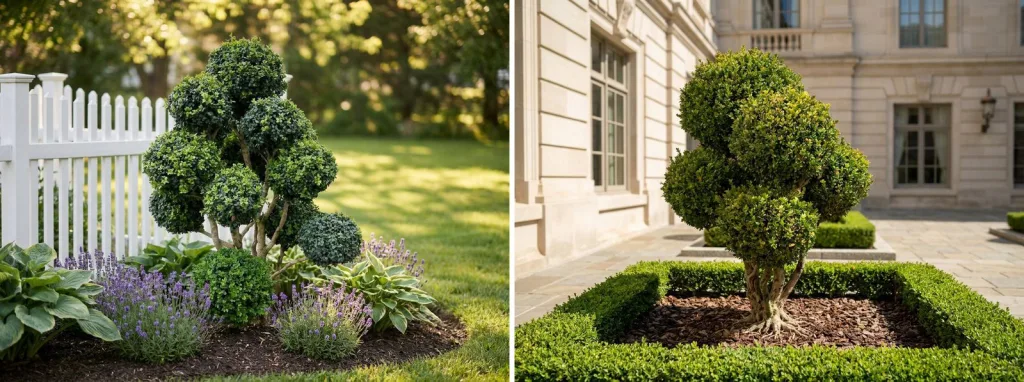
Japan developed its own clipping tradition, called niwaki. Gardeners shape pines and junipers into separate rounded pads on bare branches, so a tree looks old and windswept rather than geometric. In the West it is called cloud pruning.
It is related to bonsai, which does the same thing to a tree small enough to sit in a dish.
The European pom pom and poodle shapes look similar, and many cloud-pruned plants are sold under those names. Pom pom, cloud and poodle topiary explains the difference.
Topiary in America: Green Animals and Ladew
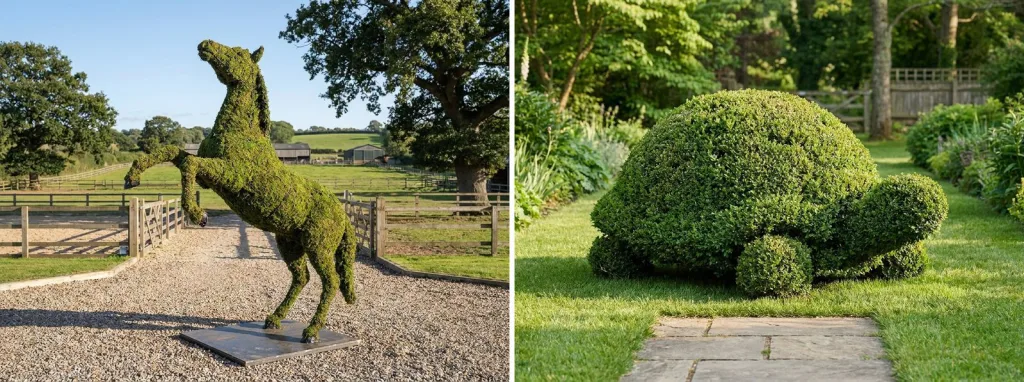
Two of the best-known American topiary gardens are open to visitors today. Green Animals in Portsmouth, Rhode Island, was planted from about 1905 and has dozens of animals and shapes.
Ladew Topiary Gardens in Monkton, Maryland, was created by Harvey Ladew from 1929. Its most famous piece is a hunt scene, with a horse and rider jumping a fence behind a pack of hounds.
Both gardens show the American taste in topiary: animals on open lawns, often with a sense of humor.
Frames, moss and theme parks

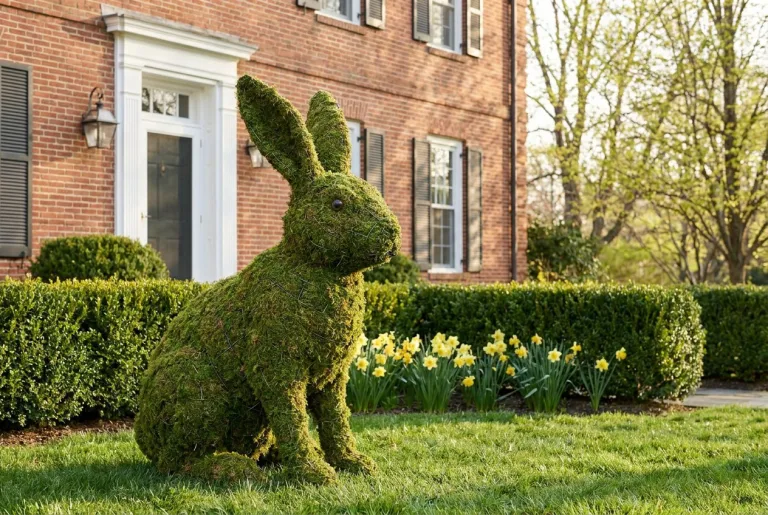
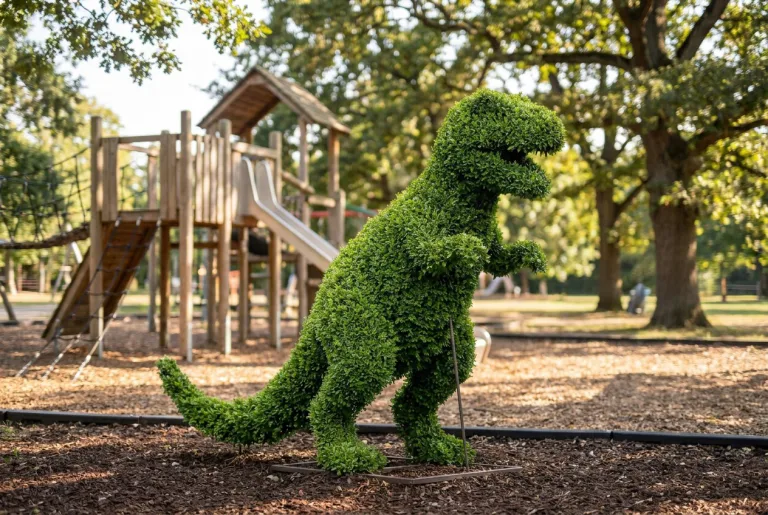
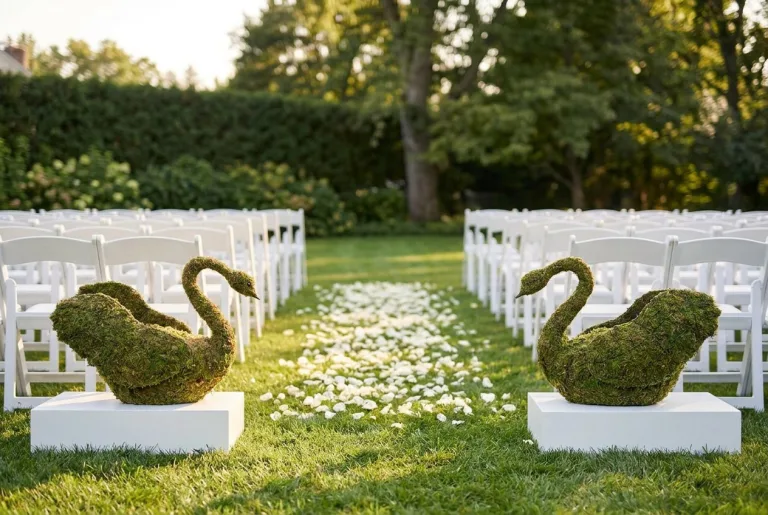
Classic topiary takes years, because the shape is cut into a growing plant. In the 20th century, gardeners found a faster way. A wire frame gives the outline, and it is packed with sphagnum moss and planted with ivy or creeping fig, which cover it in months.
Theme parks made the method famous. Disney parks have shown frame topiary since the 1960s, and flower shows and public events picked it up because a finished figure can be ready for a season.
The same idea is behind the wire animal frames and mossed animal topiary sold today. To try it yourself, read how to make an animal topiary.
Topiary today
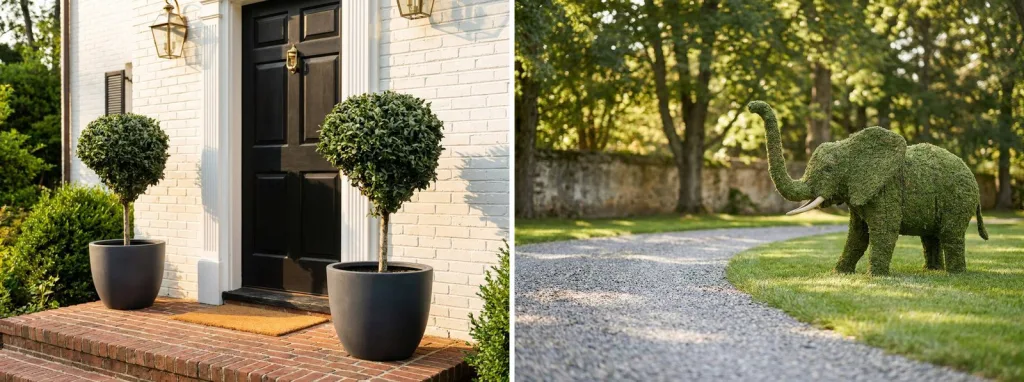
Modern topiary runs on two tracks. Clipped live plants are still grown the Roman way, over years, and sold ready-shaped for doors and gardens. Frame pieces, in moss, turf or artificial foliage, give a finished shape without the wait.
The shapes have hardly changed. The ball, the cone and the spiral would all have looked familiar in an Italian villa garden. For the most popular ones today, see the ten most popular topiary shapes. To start your own, read topiary gardening for beginners.
Quick answers
What is a bush sculpture called?
A topiary. The person who clips it is a topiarist. Alexander Pope called it “verdant sculpture”, and people also say green sculpture or living sculpture.
What does topiary mean?
Topiary is the art of clipping living shrubs and trees into clear shapes, such as balls, cones, spirals or animals. The word comes from the Latin topiarius, an ornamental gardener.
Where did topiary originate?
In ancient Rome, in the late first century BC. Pliny the Elder credits the idea to Matius, a friend of the emperor Augustus.
What is the oldest topiary garden?
Levens Hall in Cumbria, England, laid out from 1694, is usually called the oldest topiary garden that still has its original design.
What plants were used for topiary in history?
Box and yew, above all, with cypress and bay in warmer gardens. Boxwood is still the first choice. See the best plants for topiary.
The photographs on this page are staged illustrations in the style of each period. They are not pictures of the historic gardens named.