







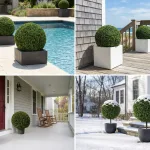

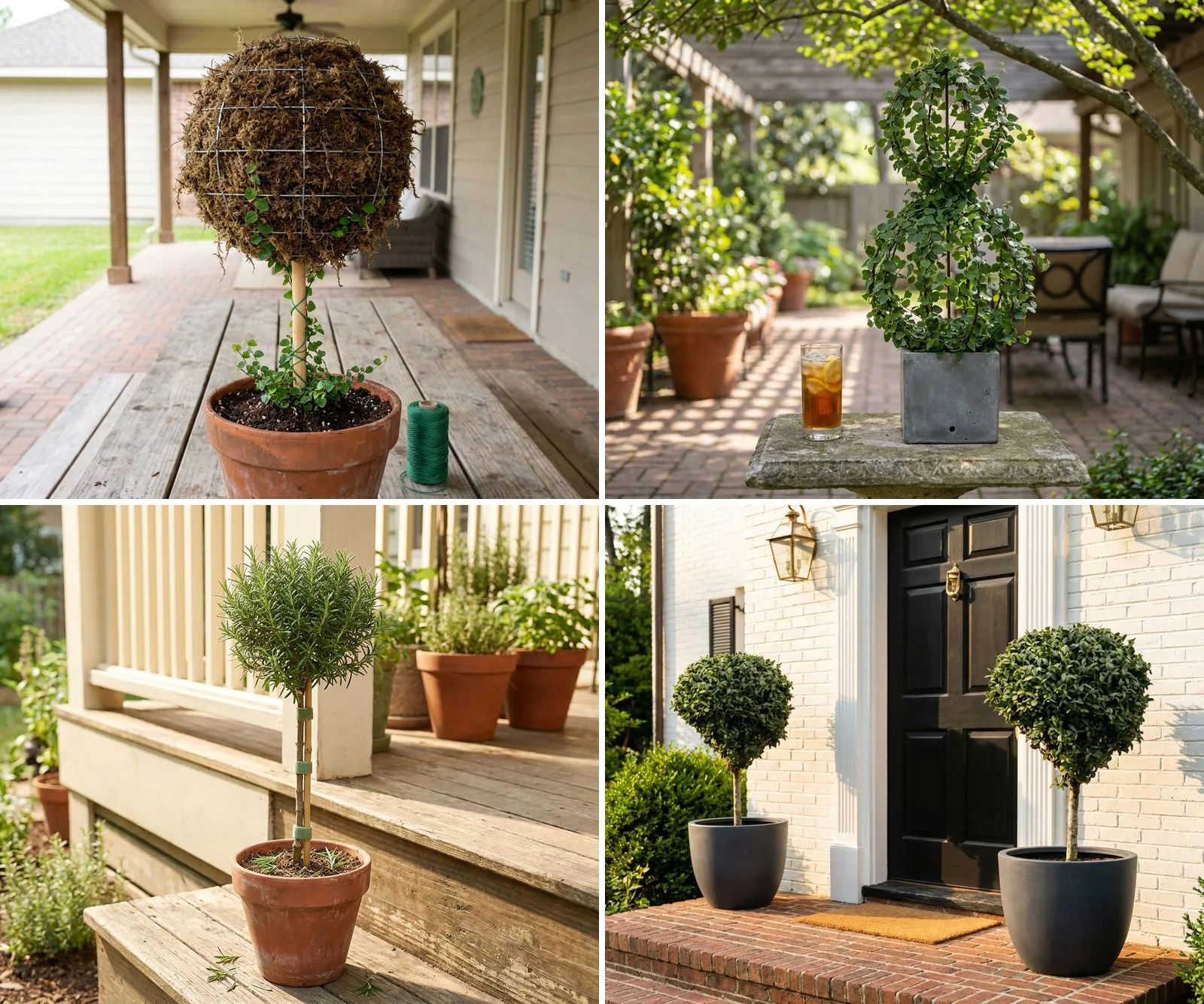
There are two ways to make a ball-on-a-stem topiary. The quick way is to fix a wire ball on a straight stem in a pot, pack it with sphagnum moss and grow ivy or creeping fig over it, which gives a green ball in one season.
The slow way is to train a young plant such as rosemary or boxwood up a stake, strip the lower stem and clip the top into a ball, which takes two years or more.
Both start with the same thing: a straight stem and a pot heavy enough to hold it. If you came here to make an animal shape, the step-by-step animal topiary guide is the page you want.
Which method to choose
| Moss ball on a stem | Trained live standard | |
|---|---|---|
| Time to a finished look | One season | Two years or more |
| Cost | Low | Very low |
| Plants | Ivy, creeping fig | Rosemary, boxwood, myrtle |
| Best for | A quick project, a gift, a table | A long project, a door or patio |
What you need
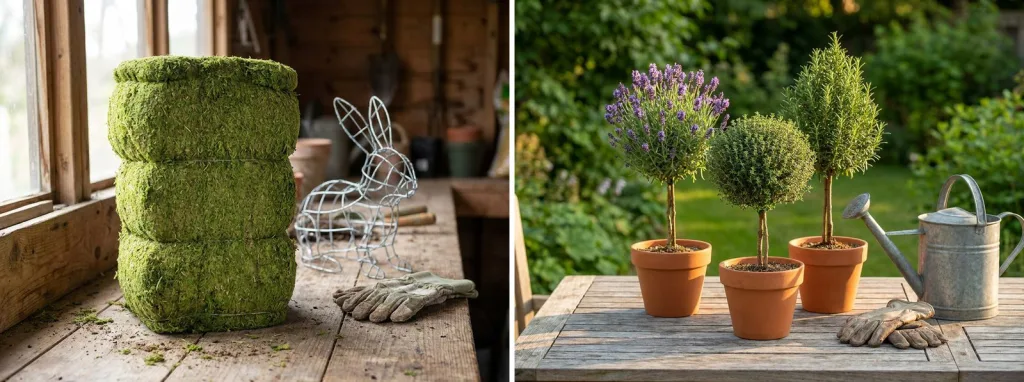
- A pot at least as wide as the ball, filled with potting mix. A heavy clay or stone pot stops the topiary tipping over in wind.
- A straight stem: a hardwood dowel, a bamboo cane or a length of metal rod, about one and a half times the pot’s height.
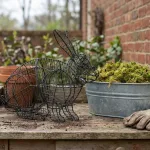
- For the moss method, a wire ball frame. Two wire hanging baskets wired rim to rim make a good ball up to about 14 inches.
- Sphagnum moss, soaked and squeezed out, and green garden twine or floral wire.
- Gloves and long sleeves for handling the moss.
Method 1: A moss ball on a stem
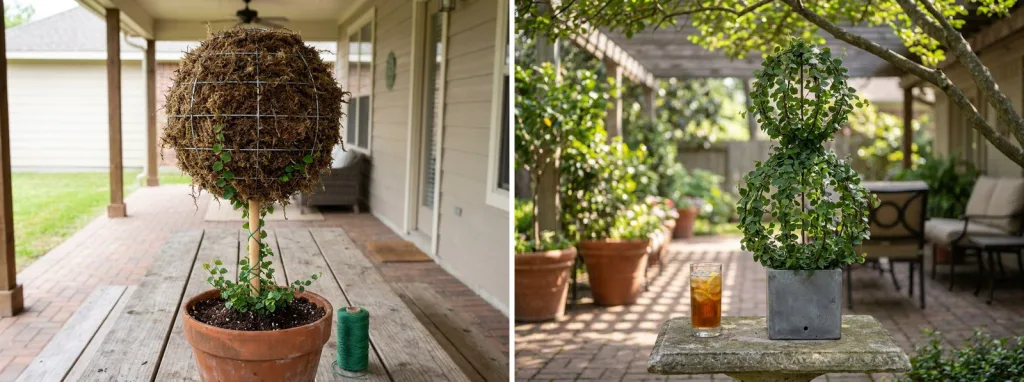
- Set the stem. Push the dowel to the bottom of the empty pot, then fill with potting mix and firm it hard around the stem. For a tall stem, set it in a small bag of quick-set concrete at the bottom of the pot first.
- Pack the ball. Fill the wire ball with damp sphagnum, pressing it in until it is firm all over with no soft spots. Trim the loose fibers flush.
- Fix the ball on the stem. Push the top of the dowel into the center of the ball and wire the frame to it in two or three places.
- Plant. Either plant small ivy or creeping fig plugs straight into the moss ball every 2 to 3 inches, or plant them in the pot and train them up the stem. Planting into the ball is faster. Planting in the pot gives a green stem as well.
- Pin and trim. Pin new stems flat against the moss so they root, and trim anything that grows past the round outline.
Water the moss ball whenever it feels dry, which can be every day in summer, and feed every two weeks while it grows. The moss packing guide has more on getting the moss firm.
Method 2: Train a live plant into a standard
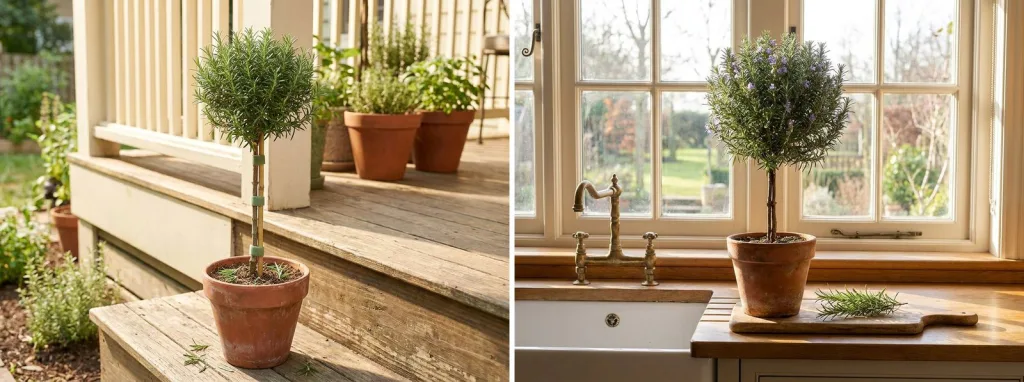
A standard is a plant with a clear stem and a ball of growth on top. You make one by letting a single shoot grow straight up, then letting it branch only at the top.
- Pick a plant with one strong, straight shoot. Rosemary is the easiest to start with. Boxwood and myrtle also work.
- Stake it. Push a cane in beside the main shoot and tie the shoot to it every few inches with soft ties.
- Remove the side shoots from the lower stem. Leave the leaves on the stem itself for now, because they feed it. Keep the side shoots on the top third.
- Stop it at the height you want. When the main shoot is about 3 inches above the height you want for the ball, pinch out its tip.
- Build the head. Pinch the tip of every shoot in the head each time it grows 2 or 3 inches. Each pinch makes two shoots, and the head gets denser.
- Clean the stem. Once the head is full, rub off the remaining leaves on the stem.
Rosemary makes a small standard in about two growing seasons. Boxwood is slower, which is why a ready-grown boxwood standard costs more than a young plant.
Rosemary is only hardy to about zone 8, so in colder areas keep it in a pot and bring it indoors to a bright, cool window for winter. The best plants for topiary page lists other choices by zone.
Looking after a ball on a stem
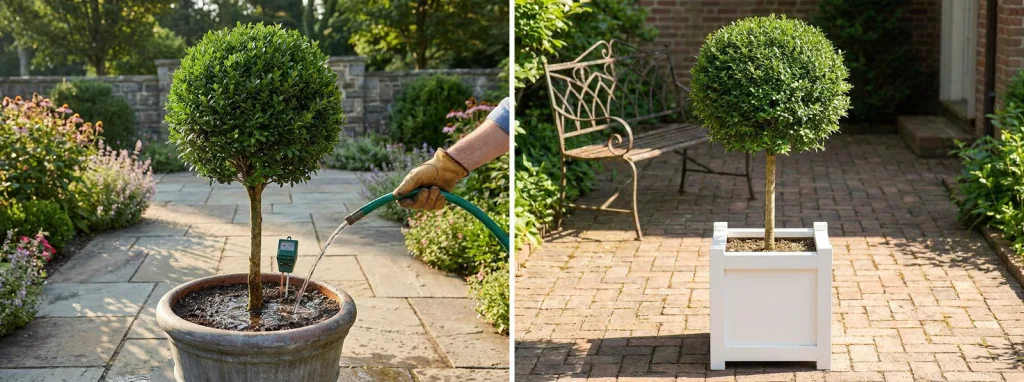
Water. A ball on a stem sits in a pot, and pots dry out fast. Water when the top inch of soil is dry, and water until it runs out of the bottom.
Trim. Clip the ball lightly and often, working around it so it stays round. Step back after every few cuts to check the shape.
Stake. Leave the stake in until the stem is thick enough to hold the ball on its own. A full head catches wind, and a thin stem snaps where it meets the ball.
Turn. Turn the pot a quarter turn every week or two so every side gets light and the ball grows evenly.
Or buy one ready-made
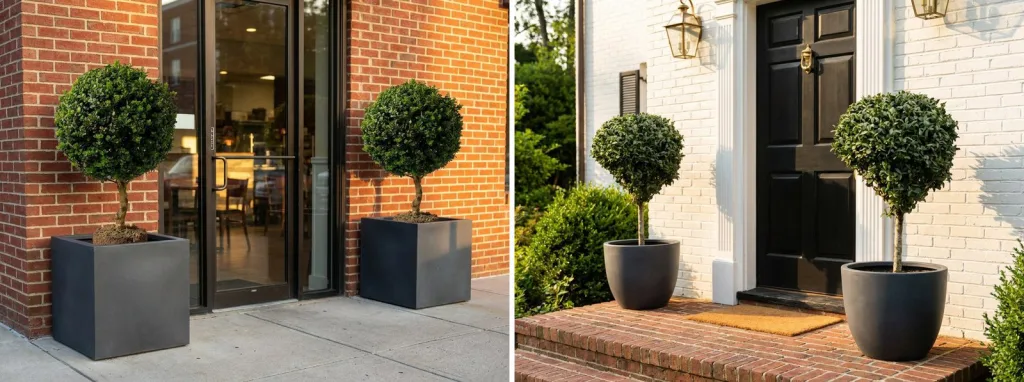
Training a boxwood standard takes years. If you want one at your door this season, our live boxwood ball topiary includes standards from about 2 feet to 7 feet. For a spot where you cannot water, see the artificial topiary balls.
Quick answers
How do you start a topiary ball?
Either pack a wire ball frame with damp sphagnum moss and plant ivy into it, or clip a small, bushy plant such as boxwood into a rough ball and refine it with light trims over a season. A ball frame placed over a young shrub gives you a line to trim to.
What is a ball topiary on a stem called?
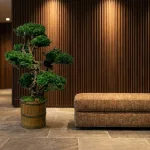
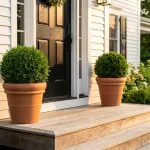
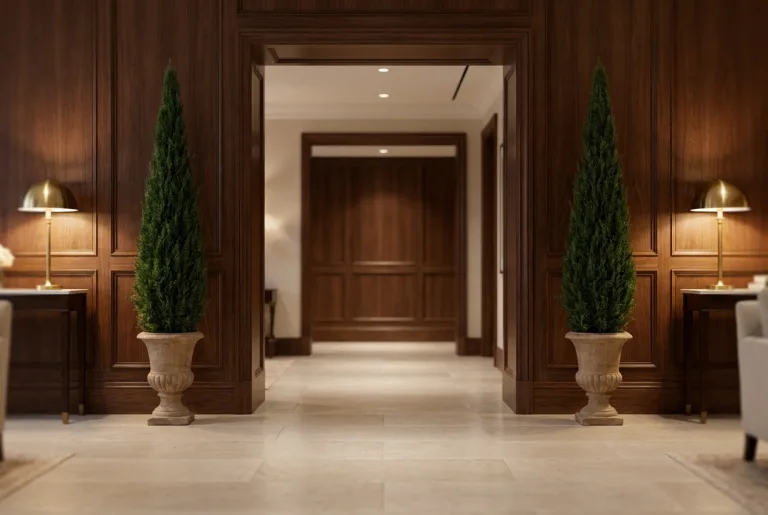
A standard. A pair of standards is the classic choice for either side of a front door.
How long does a homemade ball topiary take?
A moss ball planted with ivy or creeping fig looks green in one season. A live standard trained from a young rosemary takes about two seasons, and boxwood takes longer.
What can I use for the stem?
A hardwood dowel, a bamboo cane or a metal rod for a moss ball. On a live standard, the plant’s own trunk is the stem, and it needs a stake until it thickens.
Some photographs on this page are staged illustrations of plants we do not sell, such as rosemary and creeping fig.