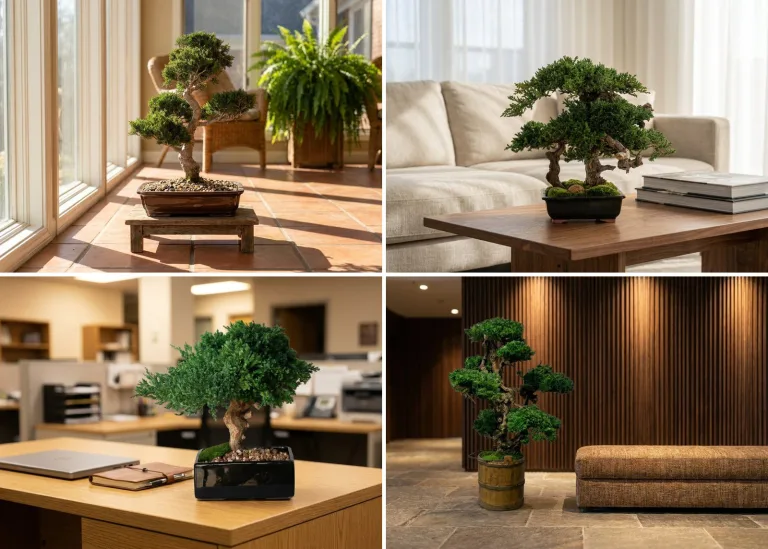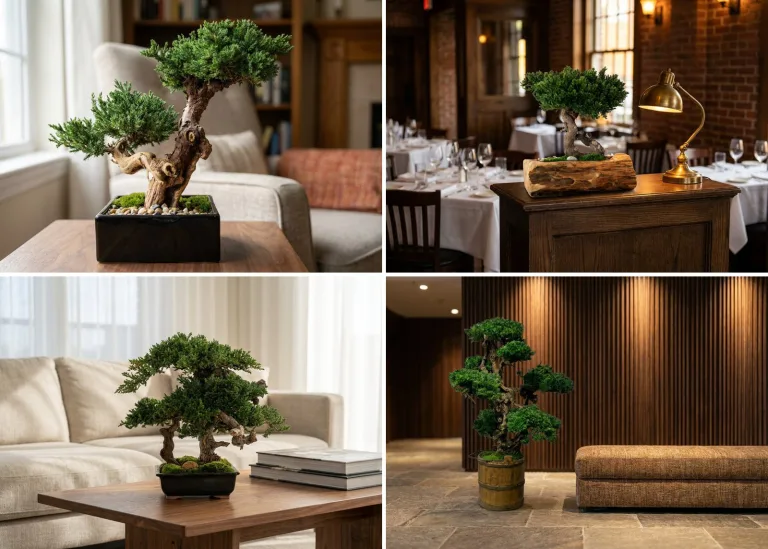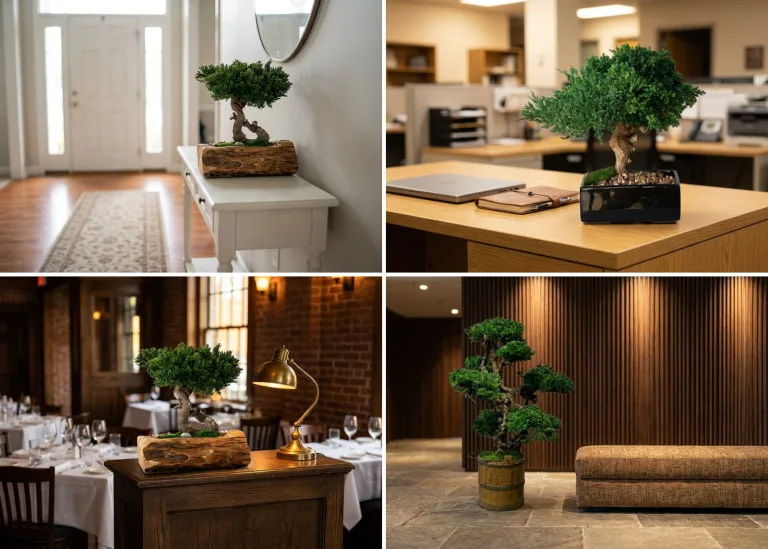



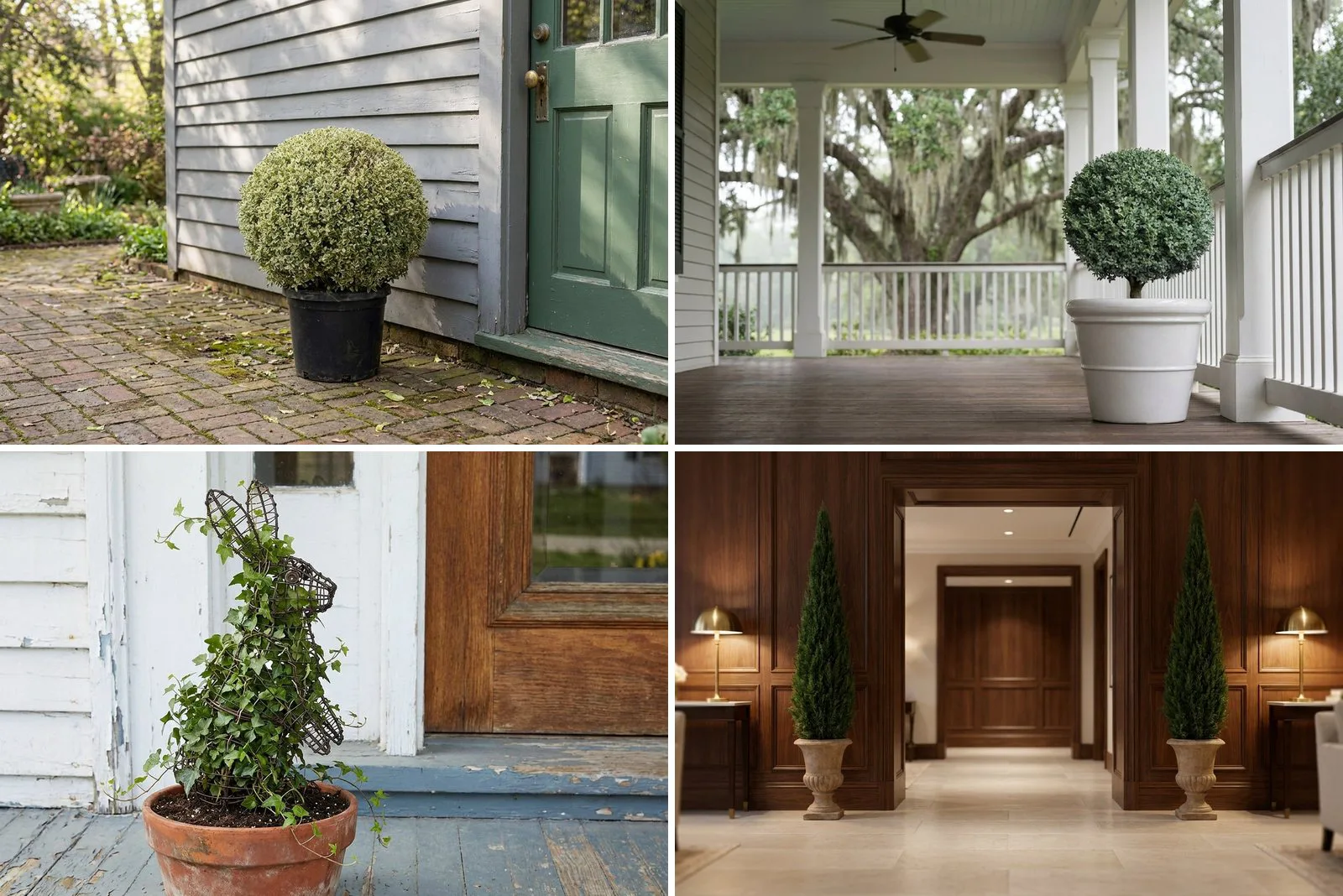
For a shady spot, choose ivy, yew or boxwood for living topiary, and expect slower, looser growth than in sun. Boxwood is fine in part shade; deep shade needs yew or an ivy-covered frame. Artificial topiary does better in shade than anywhere else, and preserved topiary needs no light at all, so both are the answer for a dark porch or a windowless room.
Living plants are harder to keep dense in shade. Artificial foliage lasts longer there, because sunlight is the main thing that ages it.
Shade makes a living topiary looser and slower
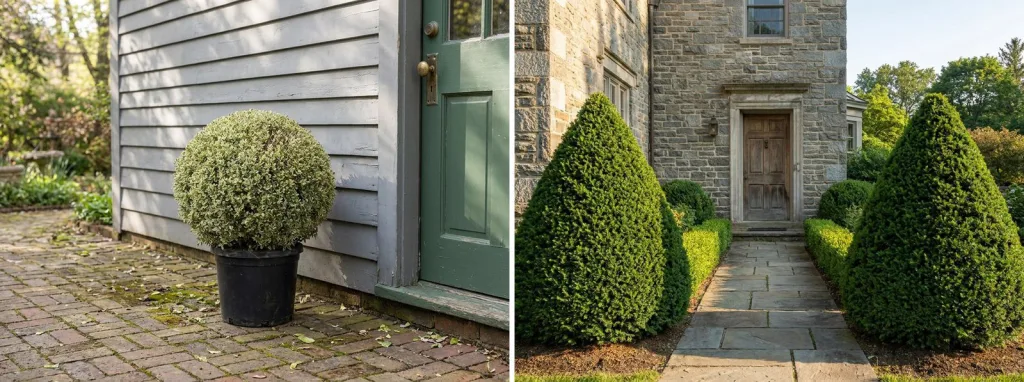
In shade you cut less often, but the shape stays less crisp between cuts.
A plant in shade puts out fewer, longer shoots reaching for light, so the surface becomes looser and less dense. Interior foliage also thins, so a plant clipped hard in shade can show its stems where the same plant in sun would not.
Shade keeps foliage wet for longer, which encourages fungal problems, especially in a damp climate. In a shaded, still corner the answer is airflow rather than a spray, which is the same conclusion the disease guide reaches.
Which plants tolerate shade
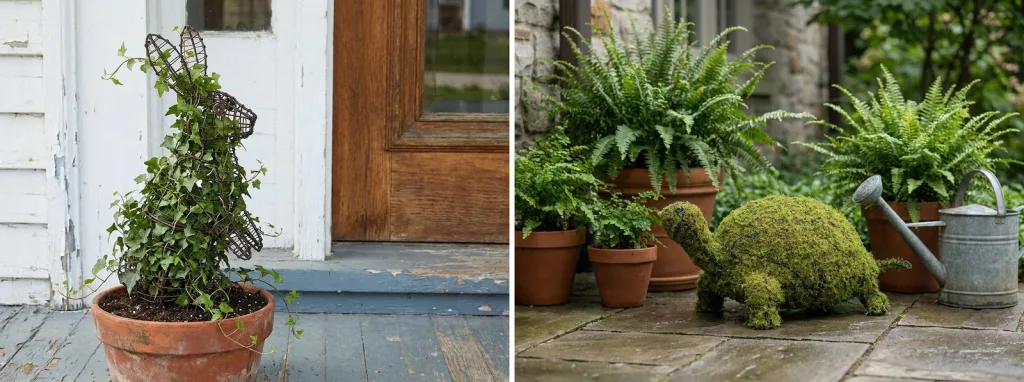
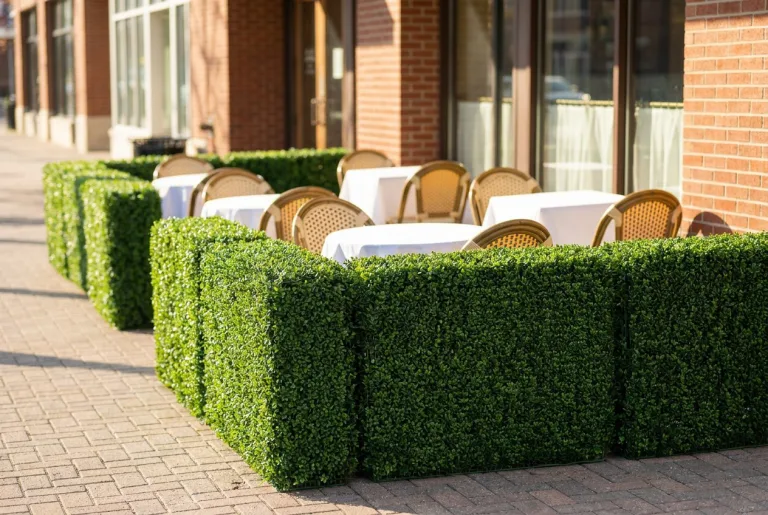
Boxwood is one of the better evergreens for shade, and it will grow in part shade without complaint. Full, deep shade under dense tree canopy is a different matter: expect thin, open growth rather than a tight clipped surface.
Ivy is the shade specialist. It is a woodland climber by nature, so a shaded courtyard is closer to its native conditions than an open border, and it will cover a frame where boxwood would thin out. Our live ivy topiary page covers what that involves.
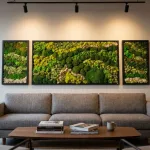
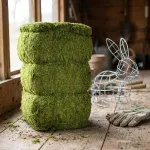
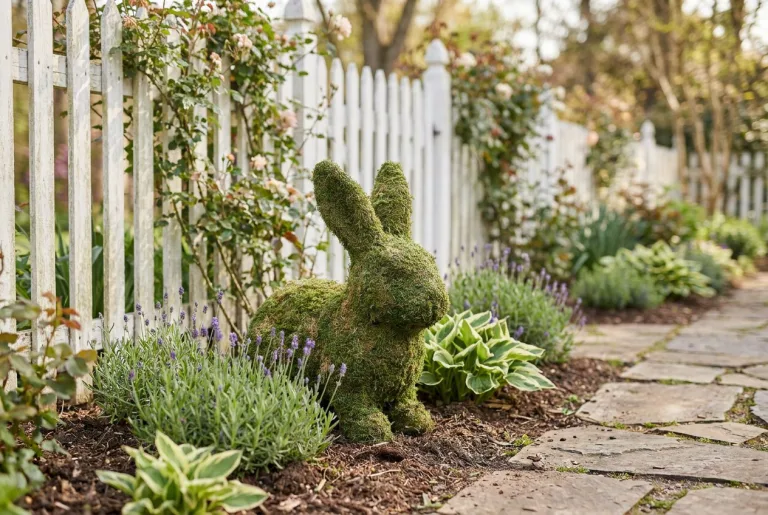
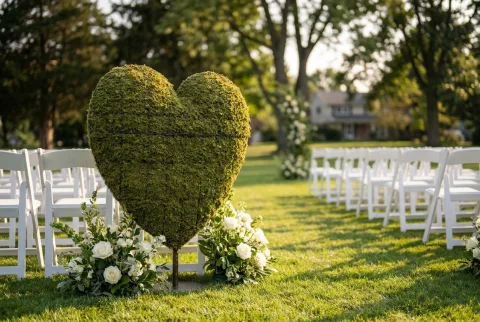
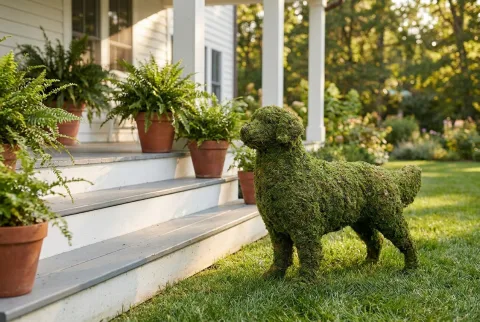
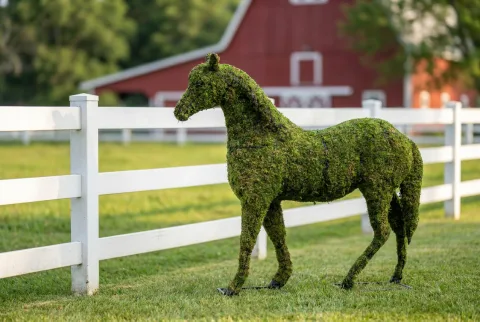
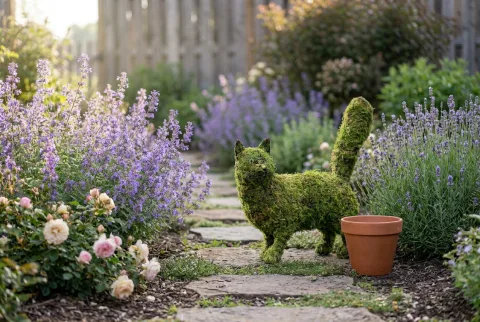
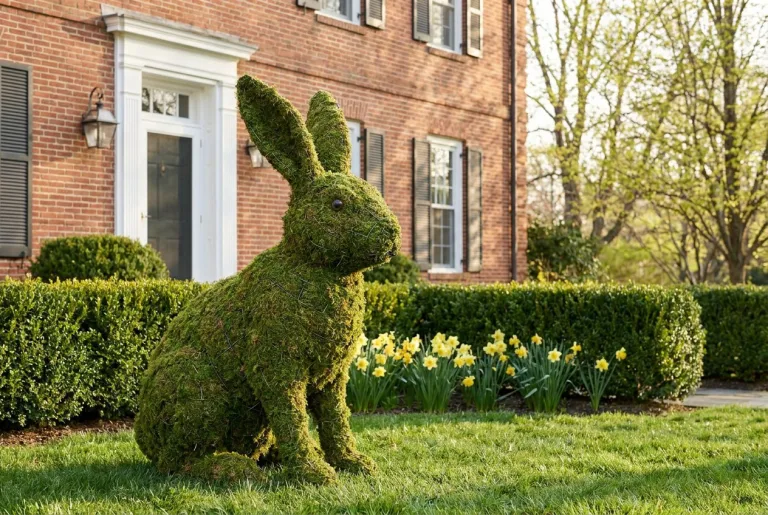
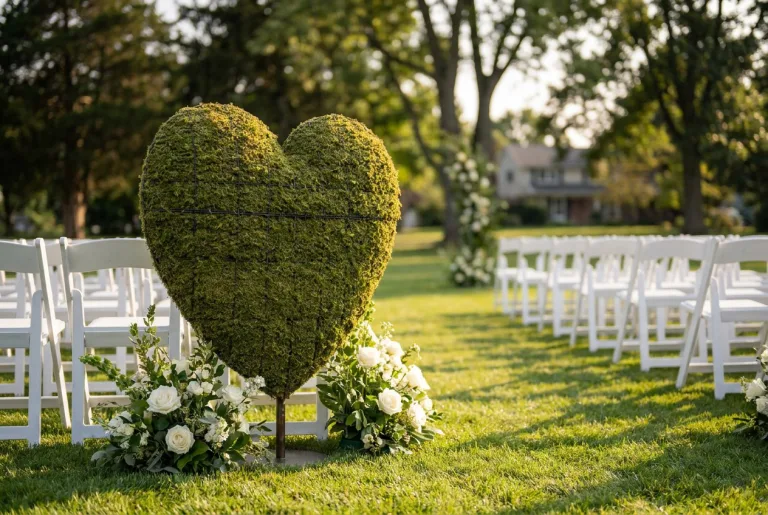
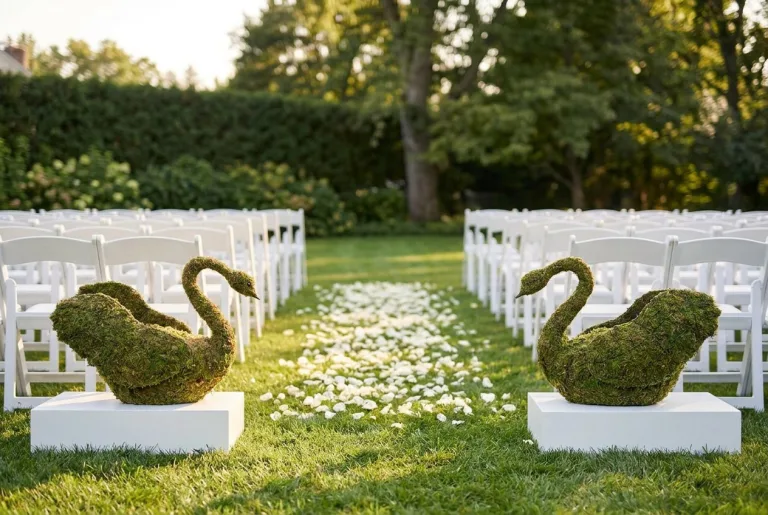
Mossed pieces prefer dappled or partial shade to full sun, so shade suits them. Moss stays damp longer in shade, so give the piece drainage underneath and avoid standing water.
Yew and podocarpus handle shade better than most alternatives if boxwood is not working for you. Yew is the traditional choice for cones and columns in shade. More options are in the best plants for topiary.
Where shade is an advantage
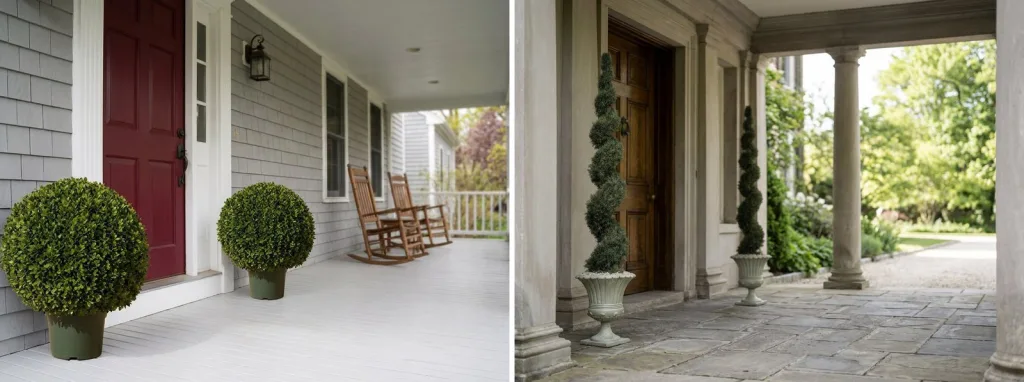
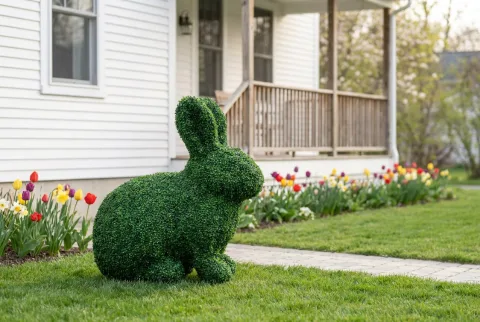
Put the best pieces in the sun and economize in the shade if your budget will not stretch to the top UV grade everywhere. Ultraviolet is the main thing that ages artificial foliage, so a lower grade lasts longer under a porch roof, in a courtyard or at a north-facing entrance than on an open terrace.
It will still get dirty and take knocks. But it will fade more slowly. The reasoning is set out in what the position decides.
Preserved foliage needs no light at all, so shade is simply normal for it. Keep it out of the direct beam and a shaded interior is ideal rather than a compromise.
Indoors, low light and darkness are different problems
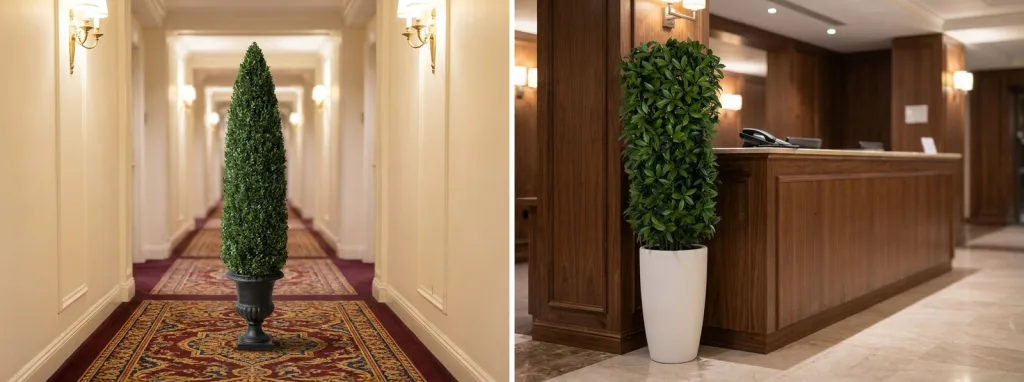
A room with a window that never gets direct sun is shade. A corridor with no window is darkness, and no living plant will hold a clipped shape in it for long.
With usable daylight, a shade-tolerant plant can work if you are patient. With none, the honest options are preserved or artificial. Pretending otherwise produces a replacement schedule rather than a plant.
For help choosing pieces for commercial spaces, read specifying topiary for a commercial interior.
How to look after a shaded living piece
Cut less, and later. Growth is slower, so a shaded plant often wants one proper cut a year, in early June, rather than two. Judge by the plant rather than the calendar.
Cut less hard. Interior foliage is thinner, so taking a shaded plant back to the same depth as a sunny one risks exposing bare stem that will be slow to recover.
Give it air. Leave space between plants, and keep anything from crowding it at the base.
Water less. Shaded soil dries slowly, and overwatering in shade is a common way to lose a plant that was coping fine with the light.
Quick answers
Will boxwood grow in shade?
In part shade, yes, with slower and slightly looser growth. In deep shade under dense canopy expect thin, open growth rather than a tight clipped surface.
What is the best topiary plant for a shaded courtyard?
Ivy on a frame, or yew for a clipped cone or column. Ivy covers a frame where boxwood would thin out, and yew is one of the few classic topiary shrubs that grows well in shade.
Is shade good or bad for artificial topiary?
Good. It is the best position artificial topiary can have. Sunlight is the main thing that ages the foliage, so a shaded piece can be a lower grade and still look right for years.
Can I put a living topiary in a windowless room?
No. A room with a window that gets no direct sun is shade; a corridor with no window is darkness, and no living plant holds a clipped shape in it. Preserved or artificial are the honest options there.
Should I cut a shaded plant differently?
Yes. Cut less often, since growth is slower, and less hard, because interior foliage is thinner and exposed stem recovers slowly in shade.