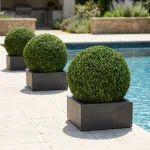
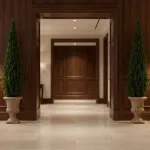
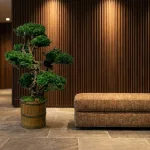
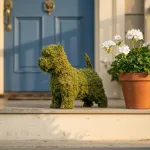
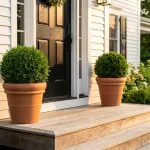
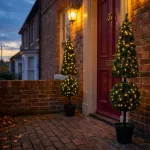
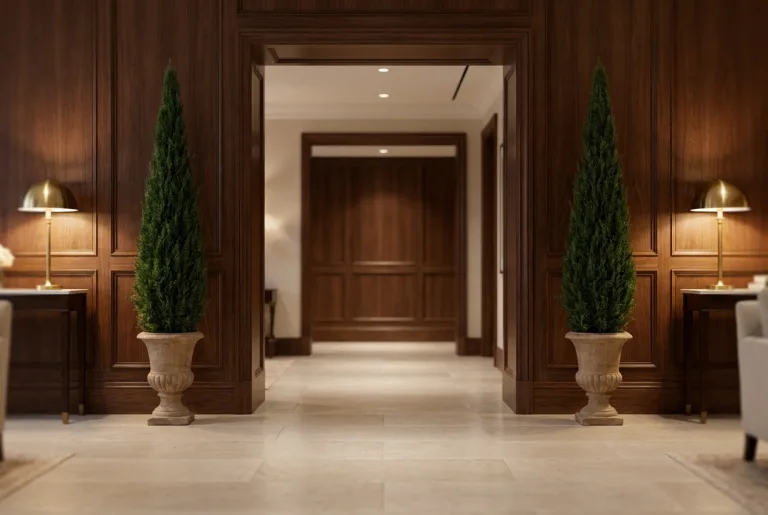
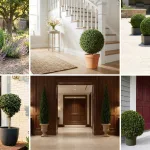
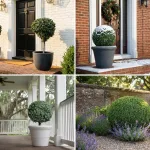
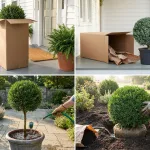

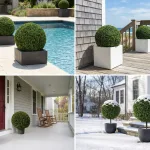
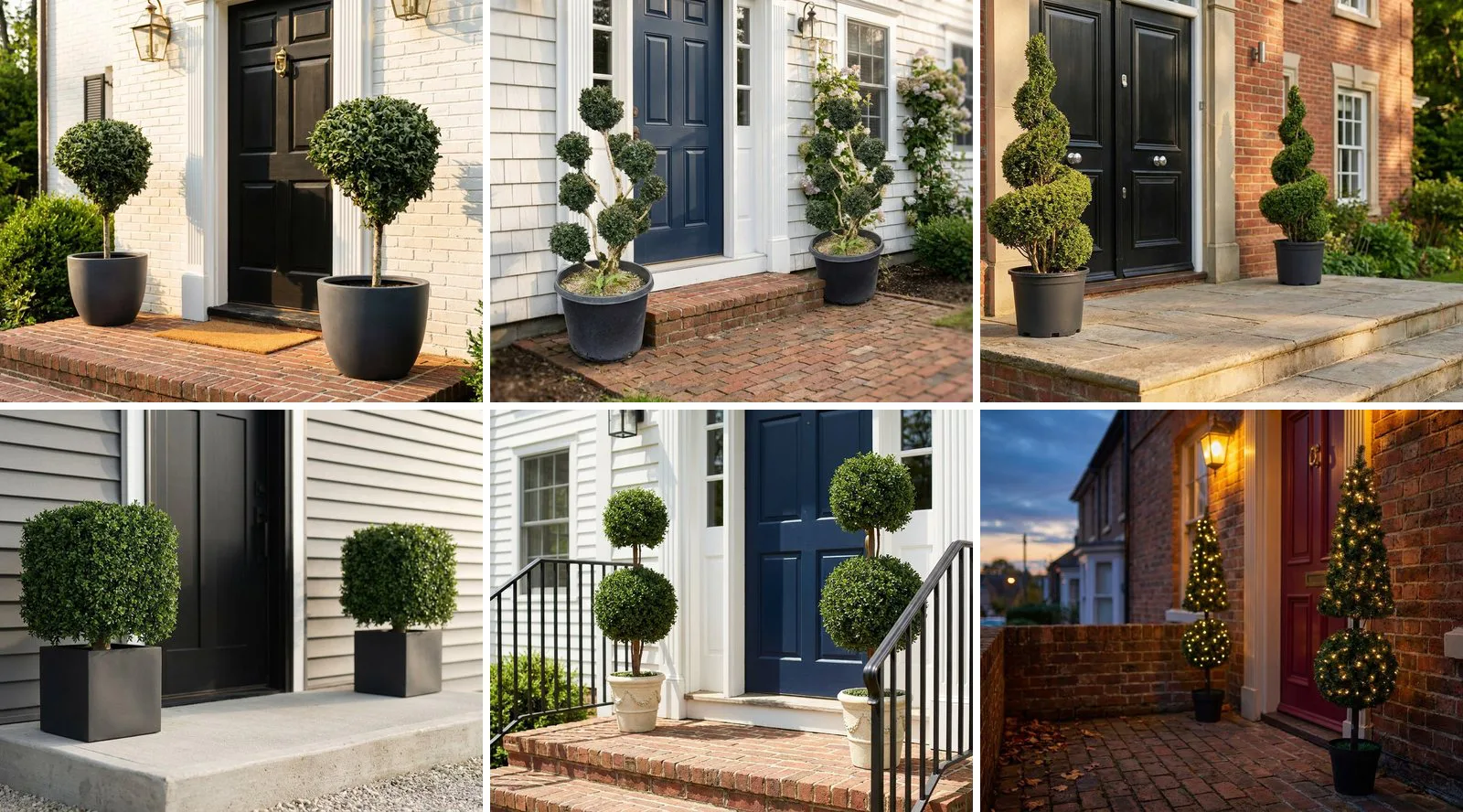
For a front door, choose a matched pair: live boxwood if someone will water it, artificial if nobody will. Size the pair against the door, not the step. On a standard 80 inch door, aim for a total height, pot included, of roughly a third to a half of the door, about 27 to 40 inches. Balls, cones and stemmed standards are the safest shapes.
A pair either side of a front door is the arrangement we get most inquiries about. Two decisions settle it, and both come before you look at a single product.
Decision one: will anyone water them?
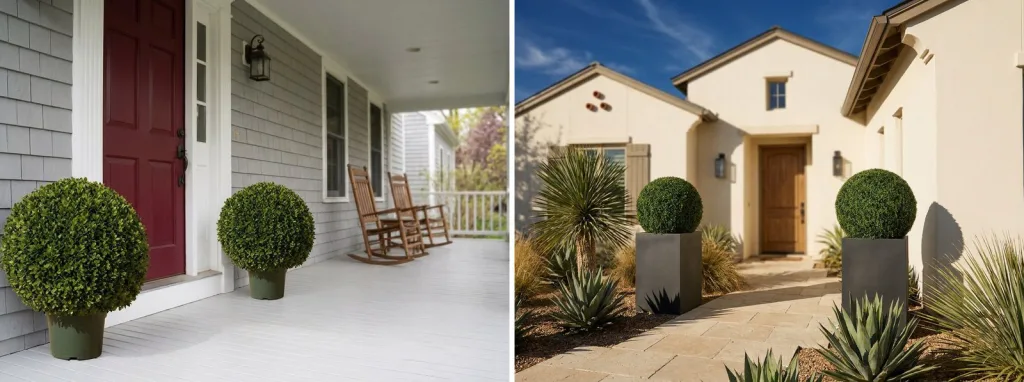
Choose living plants if somebody will water them, and artificial if nobody will. Preserved pieces work only if the doorway is truly indoors.
Front doors are awkward positions. Many sit under a porch or an overhang, so they get less rain than the rest of the garden and often less light. Others face south and take sun all afternoon off a wall that reflects it back.
A sheltered, shaded doorway is hard on living plants, because rain never reaches them. Anything live there needs watering by hand all summer. It is an easy position for artificial, because there is little sun to age it.
An open, sunny doorway reverses the artificial half of that. The foliage sits in full sun, so it wants the best UV grade you can get.
Living plants in an open doorway depend on the species and on how hot your summers are. In a hot climate, a doorway with afternoon shade is much kinder than an open one.
Decision two: size it against the door
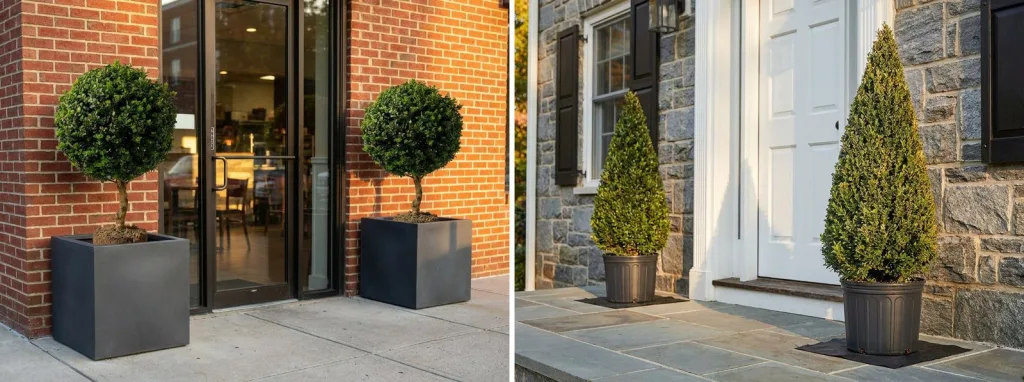
Size against the door rather than the step, because the door is what the eye measures against.
On a standard door of about 80 inches, look for a total height including the container of roughly a third to a half of the door, about 27 to 40 inches. A stemmed ball needs a head of 12 to 18 inches. A cone or a spiral means a plant of about two feet or more.
The common mistake is buying small. An object outdoors has nothing around it to give scale, so a piece that looked generous in a photograph can look lost on a step.
Measure the clear space either side of your doorway and keep each container inside it. Leave enough room to carry a sofa through.
How to get two that match
Artificial pieces are molded, so two of the same item are as close to identical as this gets. Preserved is a middle case: the foliage is consistent, but anything built on natural wood varies in its trunk line. Ask before you assume a preserved pair will be twins.
With living plants, say you want a pair when you order, so the two can be selected together rather than picked from stock on different days.
Buy a third and grow it on out of sight as a replacement. If one fails in year three, a new plant of the same nominal size will not match a three-year-old one that has been clipped twice a year.
Which shape: start with a ball
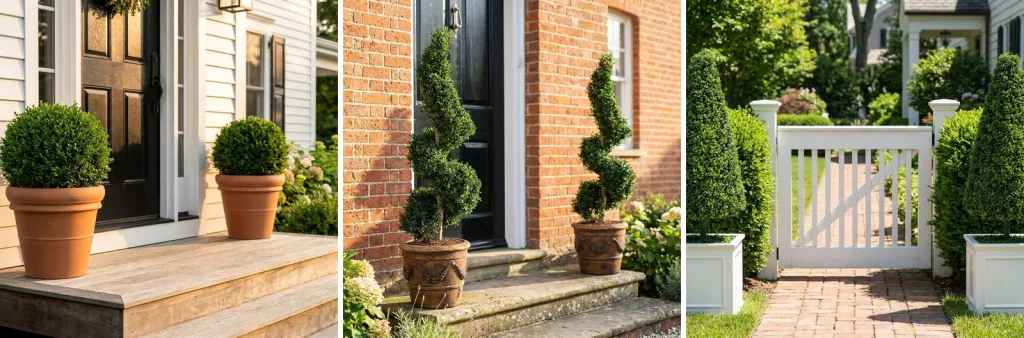
Balls read well at every scale and suit almost any architecture, so they are the hardest shape to get wrong.
Cones read more formal and take up less width, which matters on a narrow step. They are also the easiest living shape to keep, because the eye reads the two straight sides and forgives the rest.
Spirals want a plain background and a door big enough to carry them.
Stemmed standards lift the foliage above a low wall or a railing, which solves a sightline problem that a ball on the ground does not.
Practical details people forget
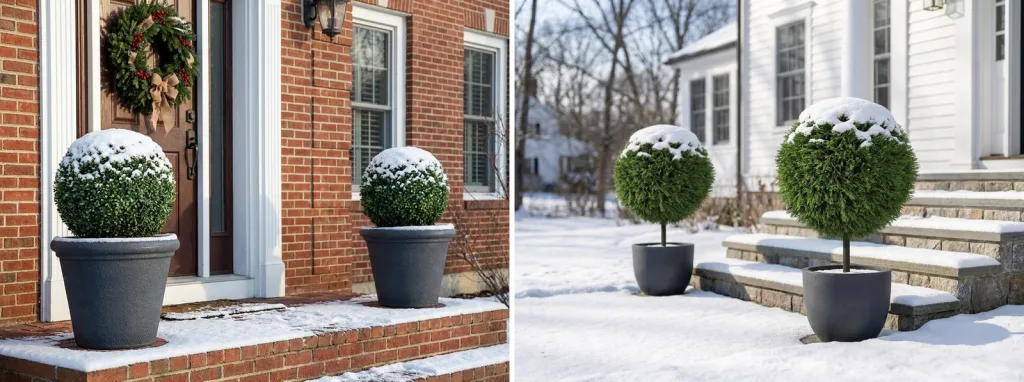
Wind. Weight the containers with sand or gravel rather than the shipping filler. Doorways are often sheltered, but wind speeds up around corners.
Snow and salt. Anywhere the path gets salted, keep containers off the run-off line. Salt is hard on living plants and stains pale containers. A live plant in a pot also gets about a zone colder in winter than one in the ground, so wrap the pot or move it into shelter in a hard freeze.
Security. Bolt the container down or plant anything valuable into something that cannot be carried, because pieces at a front door are visible from the street.
The shapes we carry sit across several categories: artificial balls, living balls, living cones and artificial spirals. The sizing arguments are in choosing an artificial ball and globe, ball or standard.
Quick answers
What size topiary for a front door?
Against a standard door of about 80 inches, aim for a total height including the container of roughly a third to a half of the door, about 27 to 40 inches. On a stemmed ball that means a head of 12 to 18 inches. Buying small is the usual mistake.
Live or artificial for a doorway?
Choose living plants if you will water them, and artificial if you will not. Covered porches get little rain, so anything live there needs hand watering all summer, while artificial does well because so little sun reaches it.
How do I make sure a pair matches?
Artificial pieces are molded, so two of an item are as close to identical as this gets. With living plants, say you want a pair when ordering so they are selected together, and buy a third to grow on as a replacement.
Which shape suits a narrow step?
A cone. It reads formal and takes up less width than a ball of the same height, and it is the easiest living shape to keep.
Do they need anchoring?
Yes, weight them. Fill the containers with sand or gravel rather than shipping filler, especially on a corner where the wind picks up.