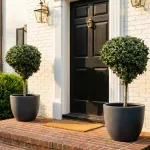
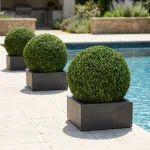

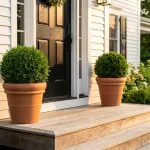

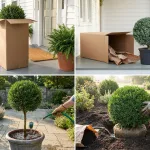

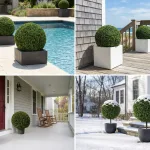
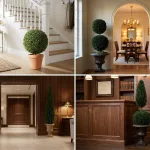
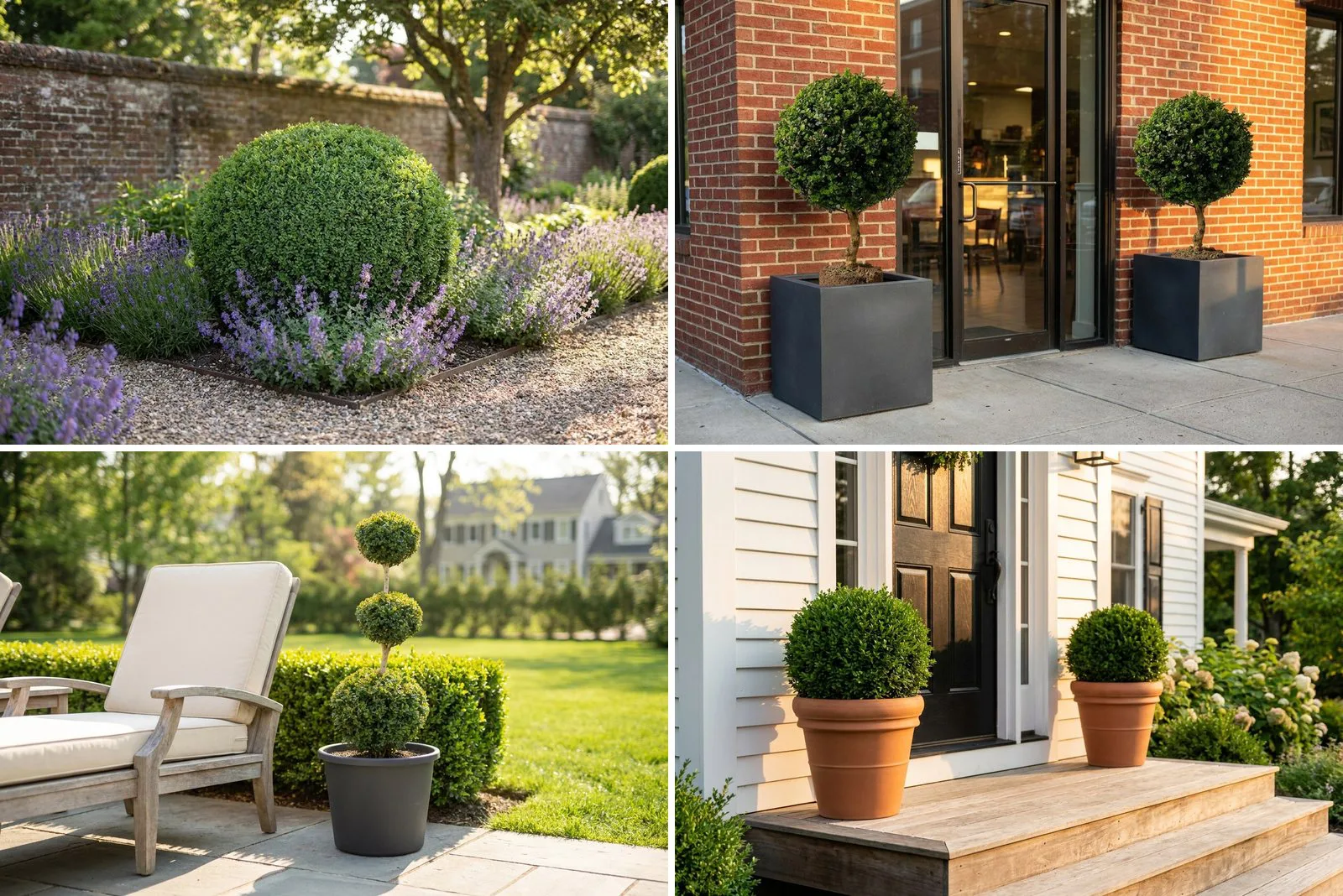
For a pair either side of a front door, buy boxwood balls with an 18 to 24 inch head. For a pot on a step, 12 to 15 inches is enough, and for a border, 24 inches and up. Then check the root ball against the opening of your planter, because that decides whether it fits at all.
A ball and a globe are the same plant. A standard is that ball on a bare stem, which changes the price and the planting.
Ball and globe are the same plant
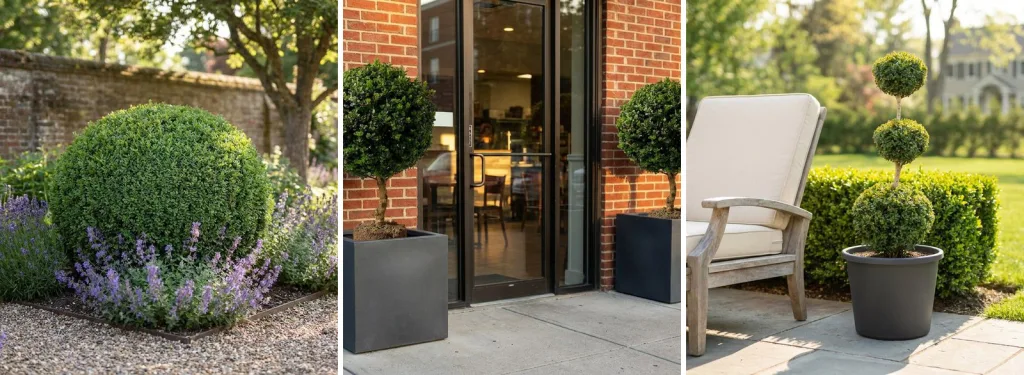
Ball and globe mean the same thing: a rounded head of foliage clipped to a sphere, with the leaves carried down to the base. Sellers use whichever word they prefer, and shoppers search for both.
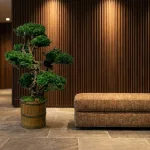
A standard is a ball on a clear, bare stem. The head sits above the planting instead of in it. It costs more than a ball of the same head size, because the stem took years to grow straight and clean, and because a standard is harder to move without damage.
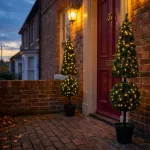
Double and triple balls are stacked heads on one stem. They are priced by the number of heads and the height, not by the amount of foliage.
Globe juniper is not boxwood. It is a juniper clipped to the same shape, with needles instead of leaves and different needs. If a listing says globe and you assumed boxwood, check the species.
The root ball decides your planter
Check the head diameter for looks and the root ball for fit. Sellers usually quote only the first.
Head diameter is the width of the clipped sphere. It is what you judge by eye.
Root ball is the size of the soil ball the plant arrives on, and it decides whether the plant fits a container. Where our listings state one, 24 inches comes up most often. Our 45 to 48 inch boxwood bear is listed on exactly that.
Many large planters narrow sharply at the mouth. A pot nearly forty inches across its belly can have an opening of 21 inches, and a 24 inch root ball will not pass through it. The arithmetic is in what size planter a topiary needs.
What size to buy, by position
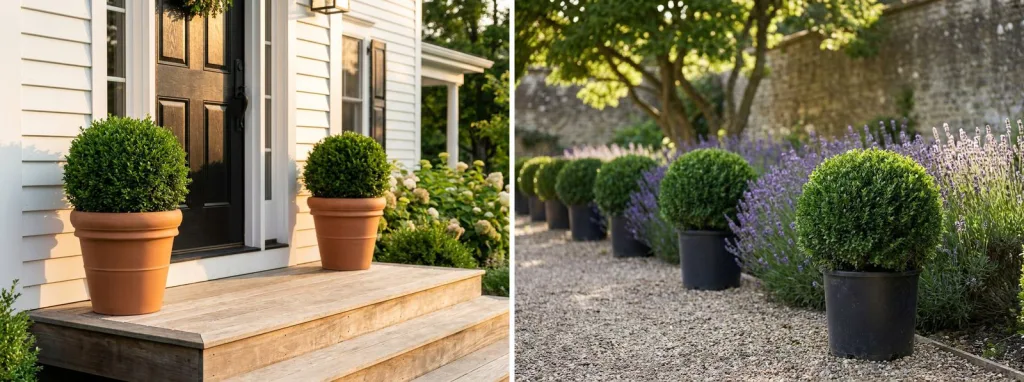
| Where it goes | Head size |
|---|---|
| Pot on a step or terrace edge | 12 to 15 in |
| Pair by a standard front door | 18 to 24 in |
| Garden border or bed | 24 in and up |
For a pair flanking a front door, 18 to 24 inches is the size most people end up happy with. The size people regret is 12 inches, because it looks small next to a door.
In a border, the plant has to hold its own against the planting around it, so go to 24 inches and up. Then check the root ball against the opening of whatever it is going into. That limit overrules everything above.
The smallest ball we sell is the 12 to 15 inch Green Beauty globe at $155. The next size up, 15 to 21 inches, is $250.
Order a pair together so it matches
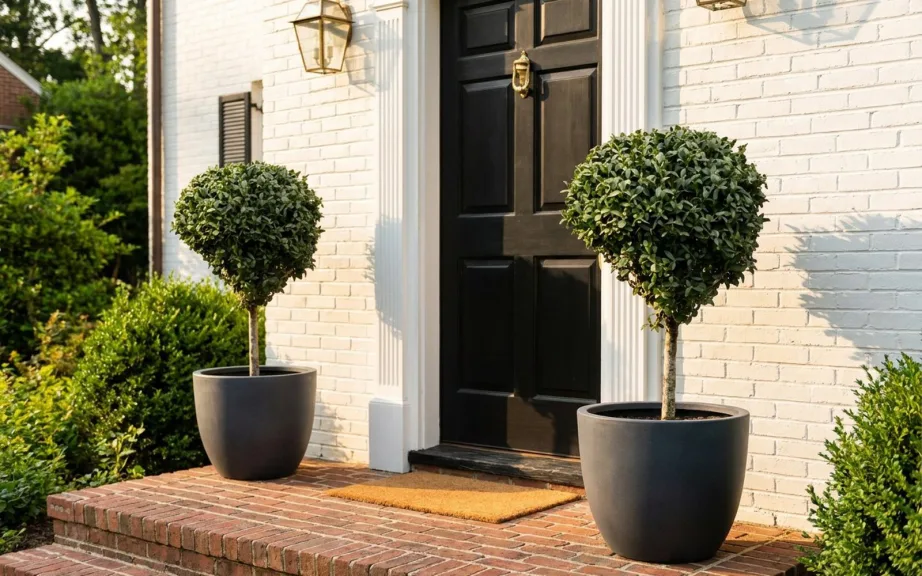
Living plants vary. Two boxwoods of the same cultivar and head size will still differ in density and in the exact shape of the sphere. Say it is a pair when you order, and they are picked together instead of from stock on different days. It is the most common request we get.
The same goes for replacements. If one of a pair fails in year three, a new plant of the same size will not match one that has been clipped twice a year for three years. Some people buy a spare at the start and grow it on somewhere out of sight.
The cultivar sets your workload
Growth rate decides how often you cut and how much you take off each time. Published rates for common cultivars run from about half an inch a year to six inches, and two plants that look the same in the pot can sit at opposite ends of that range.
Slow cultivars hold a tight sphere with two cuts a year and stay in proportion to their pot for a long time. Fast ones look full sooner, then need cutting to stay round, where a slow one only needs cutting to stay tidy.
Cultivars by zone are in the zone guide, and growth rates for pots are in boxwood in a planter. The running cost of keeping any of them is in what a live boxwood costs to keep.
Small ones ship by parcel, large ones by freight
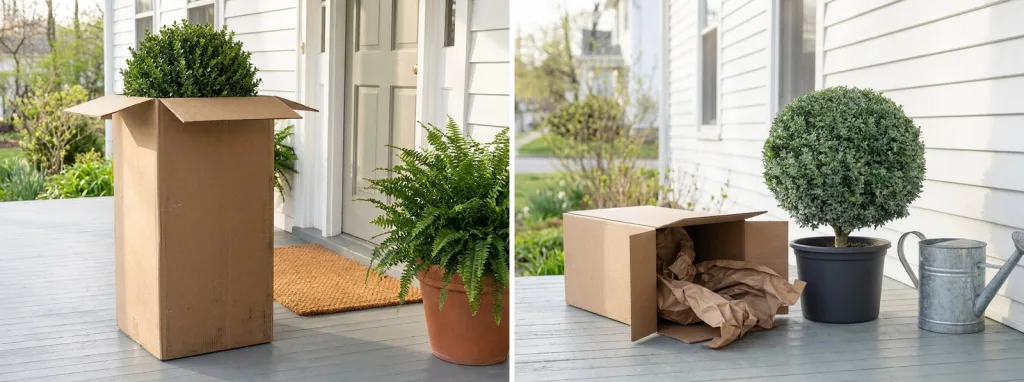
Smaller plants, up to about 45 inches, travel by parcel. Larger ones travel by freight on a pallet. The root ball and the overall height set the dividing line, and price does not come into it.
So the same category holds a 12 to 15 inch globe that arrives in a box and a 58 inch ball on a 24 inch root ball that arrives on a truck. Read the receiving guide before delivery day. A live plant left boxed for a weekend gets a bad start.
The full range is on the live ball topiary category. Where nothing living will survive, artificial boxwood balls do the same job and need no cutting.
Quick answers
Is a globe the same as a ball?
Yes. Both words mean the same clipped sphere. A standard is different: the same head on a clear, bare stem, and it costs more because the stem took years to grow.
What size boxwood ball for a front door?
18 to 24 inches across the head, for a standard single door. Go larger for a double door or a tall entrance.
What size root ball will it arrive on?
It varies with the plant. Where our listings state one, 24 inches is the most common. Check it against the opening of your planter, not its widest point.
Can I order a matched pair?
Yes, and say so when you order. A pair picked together looks like a pair. Two ordered on different days may not.
How often will I have to cut it?
Twice a year on a slow cultivar: the main cut in early June and a light tidy in late summer.