









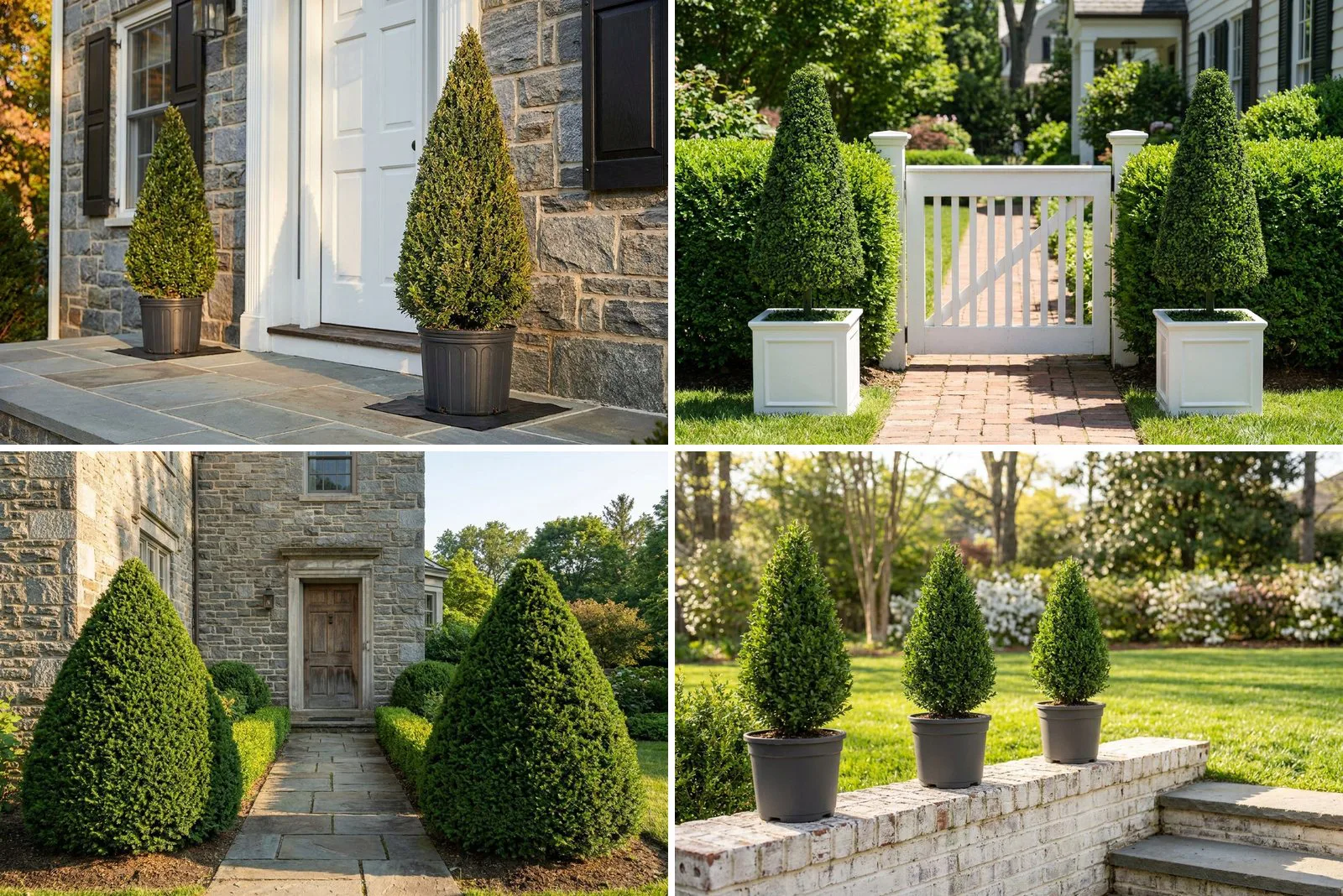
The cone is the easiest topiary shape to keep, because you only have to keep two straight sides and a point. The eye reads those lines and ignores small bumps between them. Buy a cone if you have never kept a topiary and want one that still looks right in three years.
A ball shows every dent. A spiral shows every hesitation. A cone forgives an uneven hand.
Why a cone is forgiving
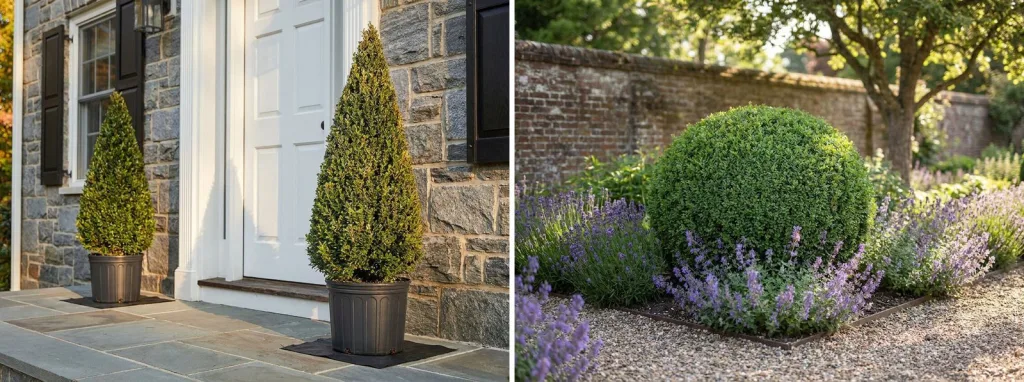
You only need to keep the two sides of a cone straight and make them meet at the top. The surface between them can be a little uneven and nobody will see it, because the two edges and the point are the only things anybody looks at.
A ball has no reference line, so every flat spot shows.
Cutting one straight
A cone needs two cuts a year, the same as any boxwood: the main cut in early June once the spring growth has firmed, and a light tidy in late summer, finished by early September.
Stop judging it by eye. Stand back after every few passes, and turn the plant or walk around it instead of finishing one side first. Most crooked cones are made by somebody standing in one place.
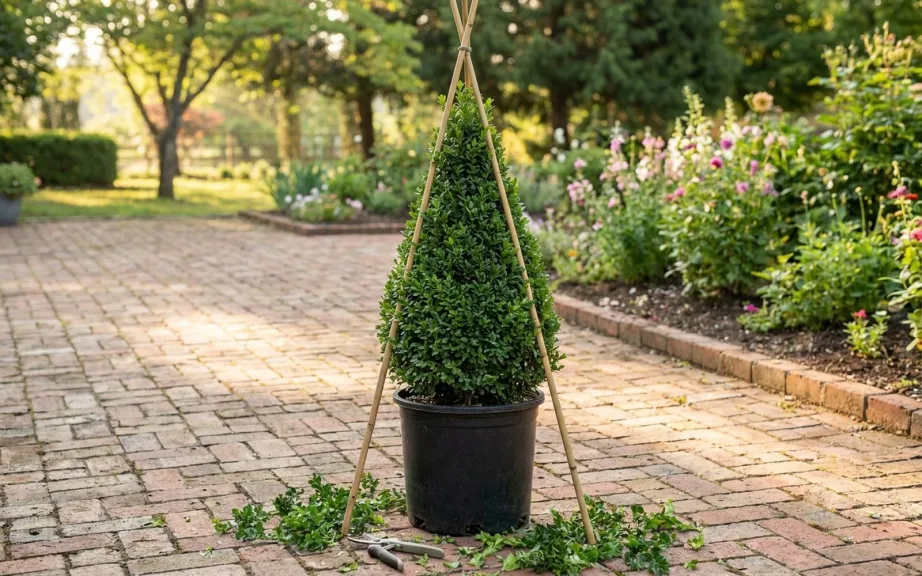
For a formal position, a cane helps more than skill does. Push a bamboo cane in beside the plant and you have a true vertical to cut against; two canes leaning in to meet above the tip give you the taper. It looks fussy, and it is the difference between a cone and a lump.
Feeding and the winter watering rule are the same as for every boxwood. Both are set out in what a live boxwood costs to keep.
Sizes, and what each is for
Our live cones run from about 15 inches to about six feet.
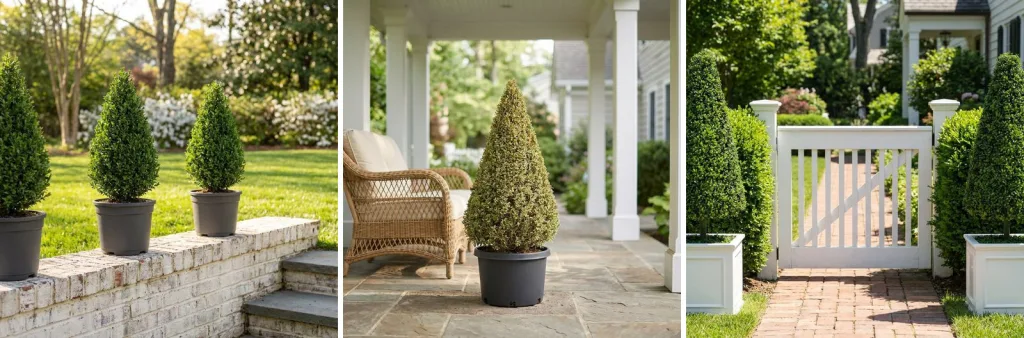
Under two feet is a container plant. Put a pair on a step, run them along a terrace edge, or use one as a table piece for an event.
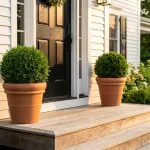
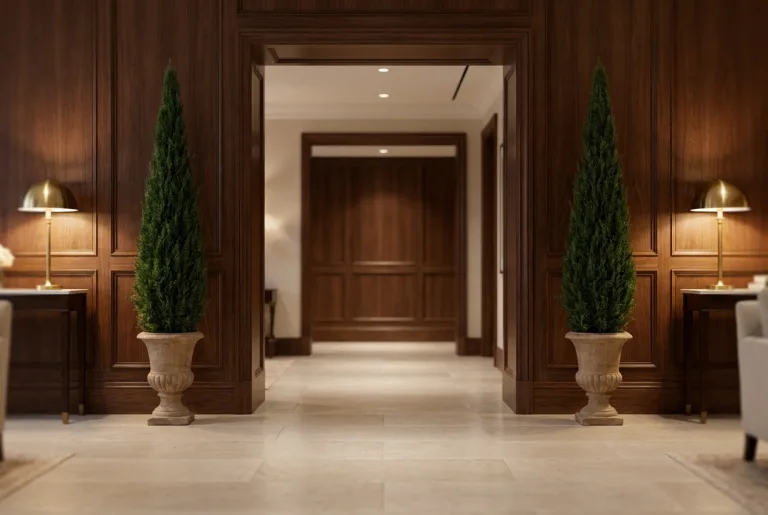
Two to four feet is the doorway size. Most of the cone inquiries we get describe a pair either side of an entrance, and that is the arrangement this shape suits best.
Above four feet is a border or a formal line, often planted in a row. At that size the plant sits on a large root ball and arrives by freight rather than parcel.
We also carry variegated cones, from 48 to 68 inches: the same shape in a cream-edged foliage. It reads lighter against a dark wall, and it is harder to find than the plain green.
Cones against the other shapes
Against a ball: the cone is easier to keep and reads more formal. A ball reads softer and suits a looser planting.
Against a spiral: the cone costs much less, because the shape did not take years to find. A spiral draws attention to itself. A cone frames whatever you want people to notice.
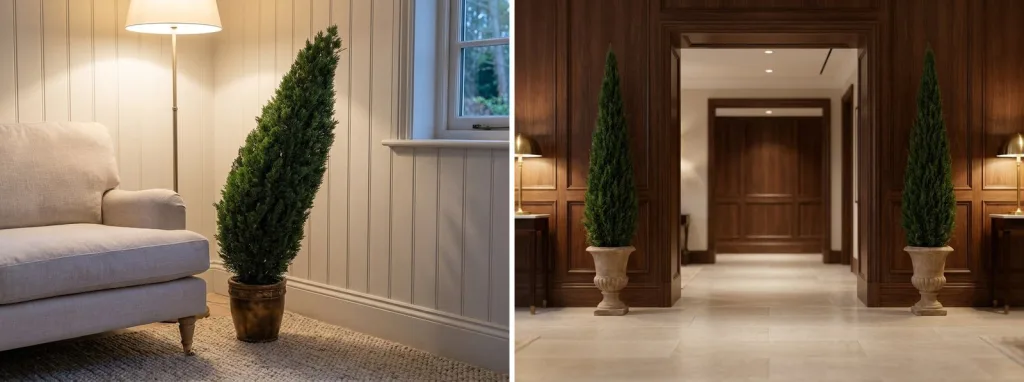
Against an artificial cone: the live one improves with each cut, and it asks for two cuts a year plus the feeding and watering in the boxwood guide above. If the position gets no attention, or takes no light, the artificial cones hold the same silhouette permanently, and preserved cones do it indoors with real foliage.
The live cone range is in the cone category. The receiving FAQ covers what to do on delivery day.
Quick answers
Why is a cone easier to keep than a ball?
The eye reads a cone by its two straight sides and the point, and forgives the surface between them. A ball has no reference line, so every flat spot shows.
How do I cut a cone straight?
Walk around the plant instead of finishing one side, and stop judging it by eye. For a formal position, push a bamboo cane in beside the plant and cut against it as a true vertical.
When do I trim a boxwood cone?
Make the main cut in early June and a light tidy in late summer, finished by early September. Do not cut in winter or right after a freeze.
What size cone for a doorway?
Two to four feet. It is the size most people ask for, and it is the one the shape suits. Under two feet is a container plant; above four is a border or a formal row.
How does it arrive?
Smaller plants come by parcel and larger ones by freight on a pallet. The root ball and the overall height decide which, not the price.