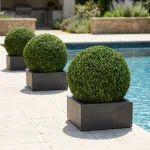
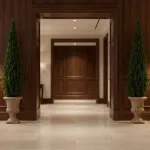
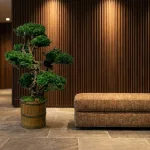
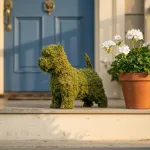

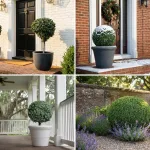
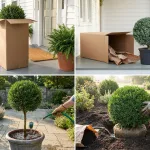

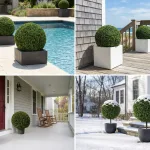
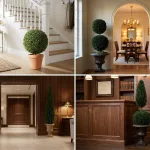
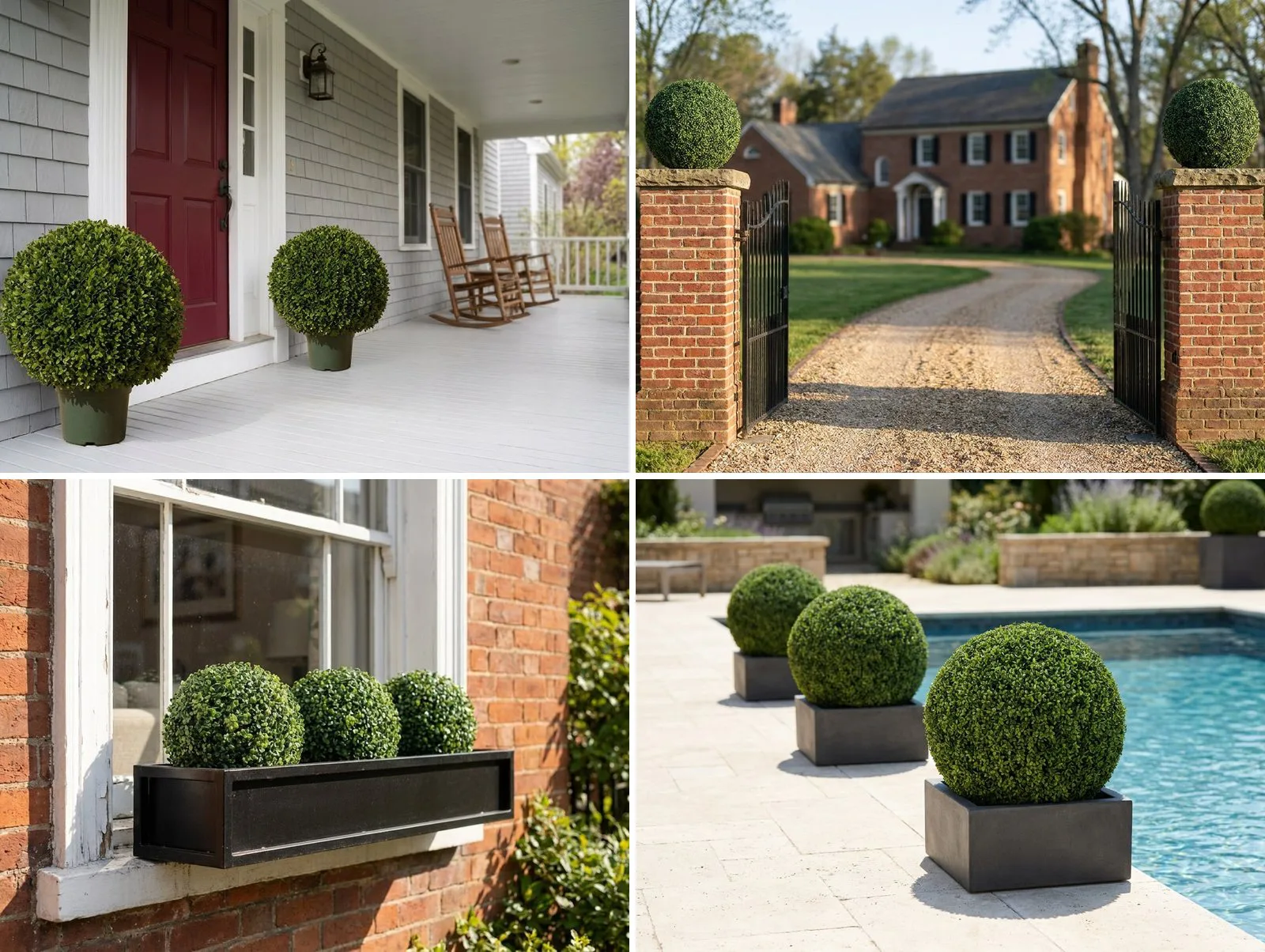
Choose an artificial boxwood ball by the position first: size it against the door or wall it will stand by, pick full outdoor grade for open sun or the lighter UV grade for shade, and plan how it will be held down.
The most common mistake is buying a ball too small, because you cannot judge a ball’s diameter from a photograph.
Why people undersize the diameter
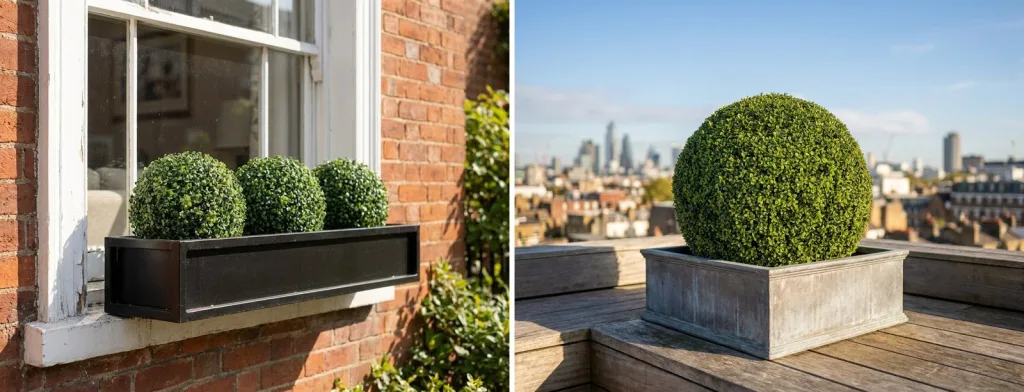
Our artificial boxwood balls run from 10 inches to 42 inches across, and most people buy at the bottom of that range for a position that wanted the top.
It happens for two reasons. A ball looks bigger in a photograph than it does in a doorway, because the photograph has no doorway in it. And outdoors there is nothing around it to give scale, so the ball that looked substantial indoors looks modest on a path.
So hold up something you already own. A basketball is about 9 and a half inches across, so a 10-inch ball is barely bigger. A 24-inch ball is two and a half basketballs wide.
The total height, including the container, decides how the piece looks beside your door. Check that separately from the ball’s diameter.
Buying a pair
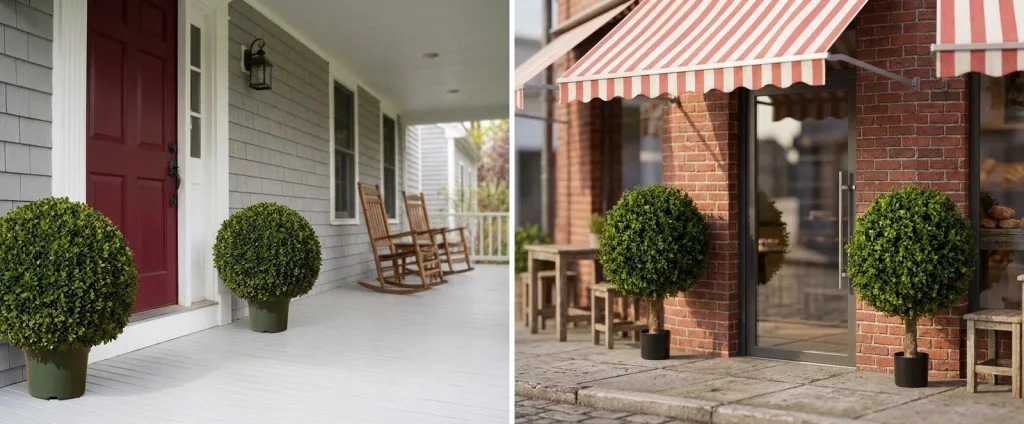
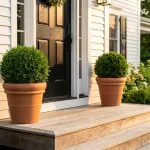
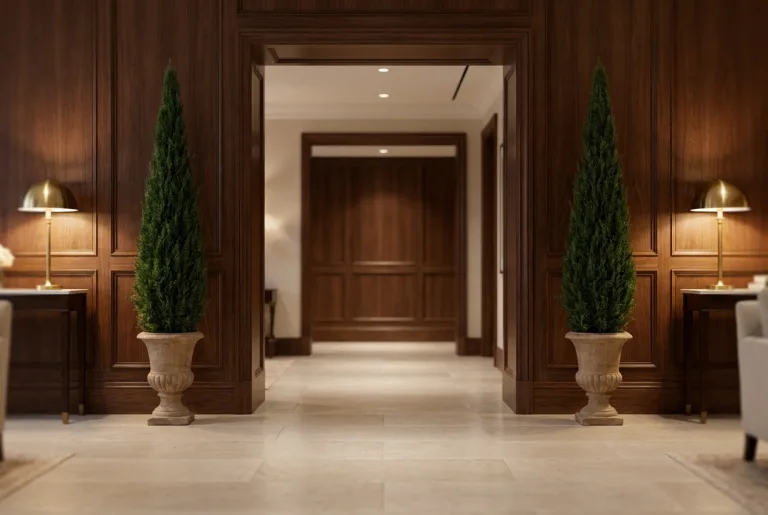
For a pair either side of a door, order two of the same item and they will match: the same diameter, the same foliage and the same container. Artificial pieces do not vary the way living plants do.
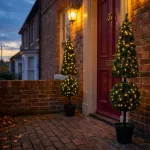
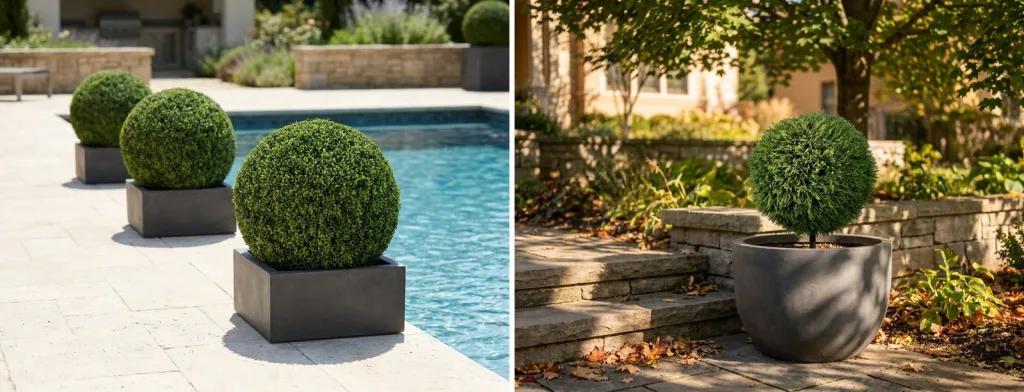
Size the pair against the door, not the step. On a standard door of about 80 inches, a piece whose total height including its container lands between roughly 20 and 30 inches sits comfortably. On most pieces in a planter, that means a ball of 12 to 18 inches.
A 24-inch ball is a bigger statement. It wants a wide entrance, or a pair of generous piers to sit against. The 30 and 42-inch balls ship in two halves by truck.
The stem fails before the ball does
A ball on a stem is two objects, and the stem is the one that goes. The head is a lever, so all its weight and all its wind load arrive at the point where the stem meets the pot.
So ask what the stem is on a taller piece. A steel core takes handling and weather. A hollow plastic one eventually does not.
A plain ball with no stem avoids the problem entirely, which is worth remembering for an exposed position.
Mounting and wind
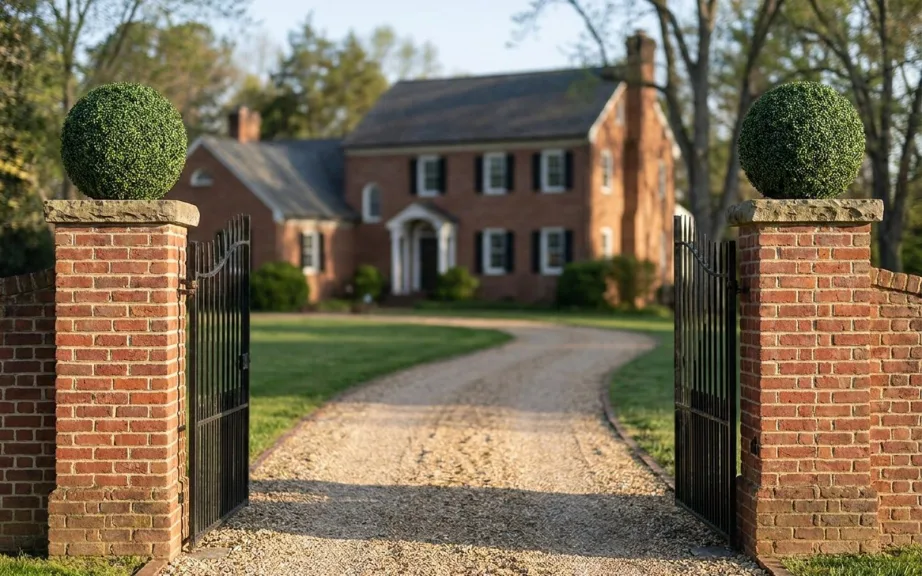
In a container on the ground: weight the base with gravel or sand, not shipping filler, and do not leave a grower’s pot loose inside a decorative one. How to plant artificial topiary trees in pots covers the method.
On a wall or pier cap: fix it to the cap. A ball resting on a pier is one of the pieces most likely to come down, and its own weight will not hold it.
Indoors: nothing needed. Sunlight is what ages artificial foliage and an interior has very little of it, so any grade works inside.
UV: choose the grade for the spot
| Grade | Fade life | Use it |
|---|---|---|
| Full outdoor grade | 5-year fade warranty, 3 in FL and AZ | In open sun |
| Lighter UV grade | Up to about 2.5 years in sun | In shade or under cover |
Full outdoor grade has its UV protection mixed through the plastic, so it fades slowly and evenly. UV-resistant vs UV-proof explains the labels. For the leaf itself, the shades of green and the density, read how to tell good artificial topiary from bad.
Nothing we sell is fire retardant by default. Several of our full outdoor grade balls can be ordered with a fire-retardant option, mixed into the plastic when the ball is made, for venues that require it. Ask before you order, because it cannot be added afterward.
The range is in artificial topiary balls. For the living version, what size boxwood ball to buy covers sizing a real one.
Quick answers
What size artificial boxwood ball do I need?
Size it by the total height, not the ball alone. Against a standard door of about 80 inches, a total height including the container of roughly 20 to 30 inches sits comfortably, which usually means a ball of 12 to 18 inches.
Will two artificial balls match?
Yes. Two of the same artificial item match in size, foliage and container, which is the one clear advantage of artificial for a pair by a door.
Can artificial boxwood balls stay outside?
Full outdoor grade can stay out all year in open sun. The lighter UV grade is better in shade or under a porch roof.
How do I stop one blowing off a pillar?
Fix it to the cap. A ball on a pier held down only by its own weight is one of the pieces most likely to come down.
Can a fire-retardant option be added?
On several full outdoor grade balls, yes, if you order it with the ball. It is mixed into the plastic when it is made, so it cannot be added later.