
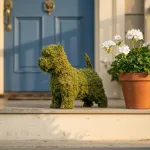
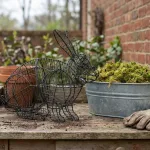
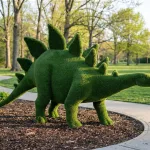

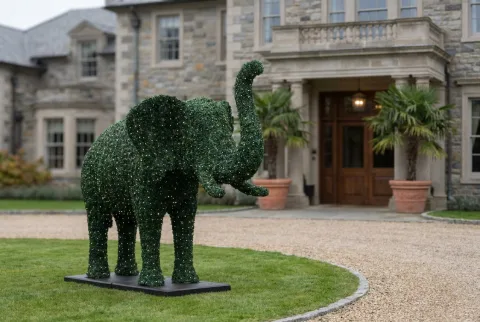
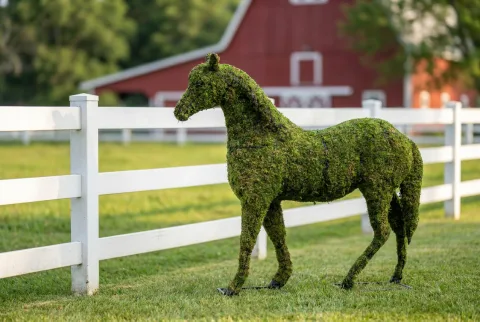
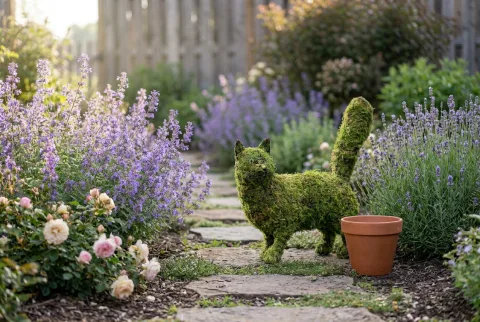
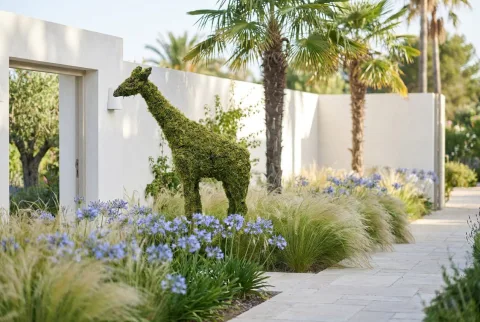


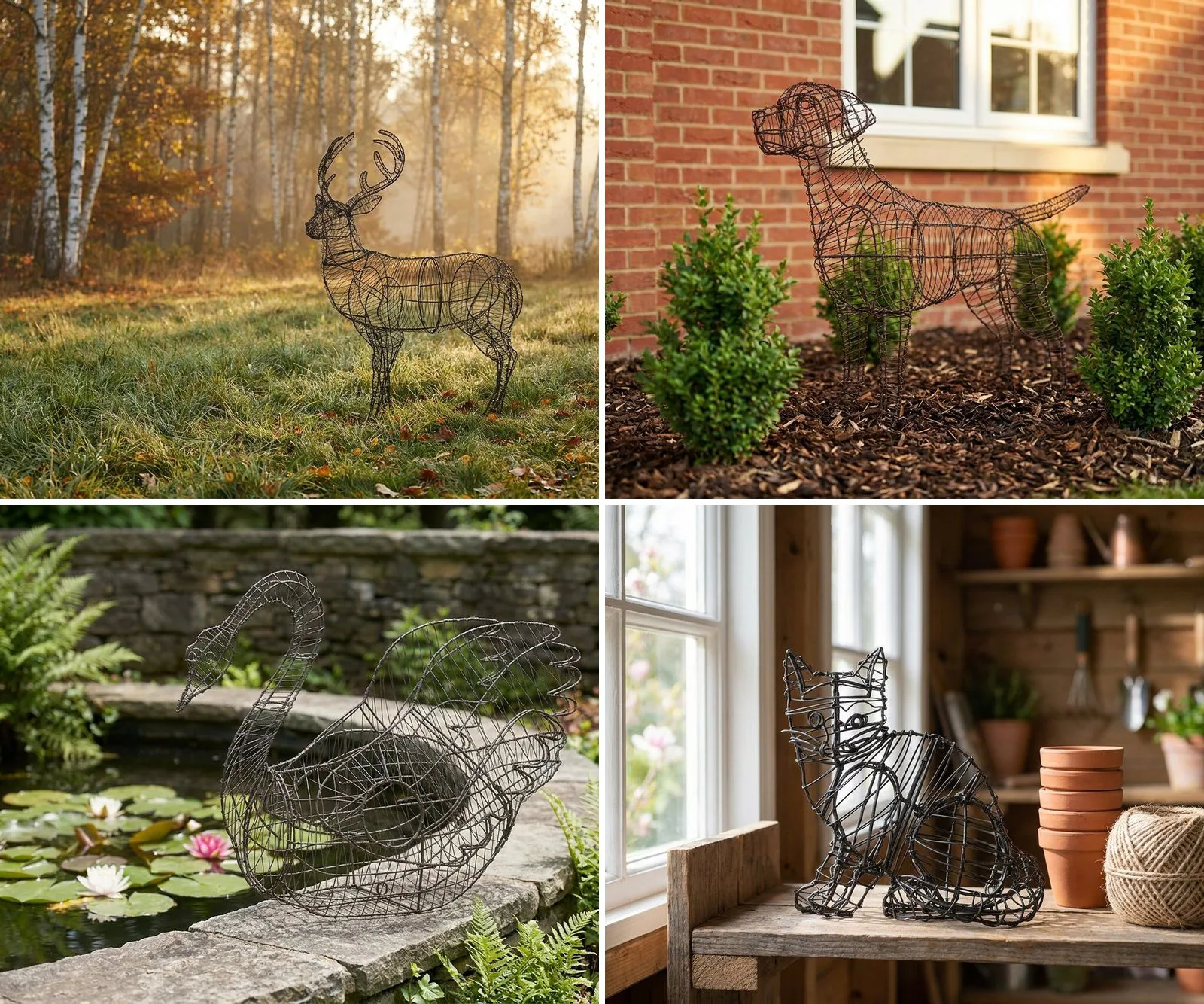
A good wire topiary frame is made of steel rod with a weld at every crossing, finished against rust, and sized for the spot and for what will cover it. Check those four things before you buy.
For a beginner, a frame under 20 inches is the best start, because it is cheap, needs little moss and fills with plants in one season.
This guide explains each check, compares bare, mossed and planted frames, and lists the frames we would pick for a first project.
Steel rod or wire: what the frame is made of
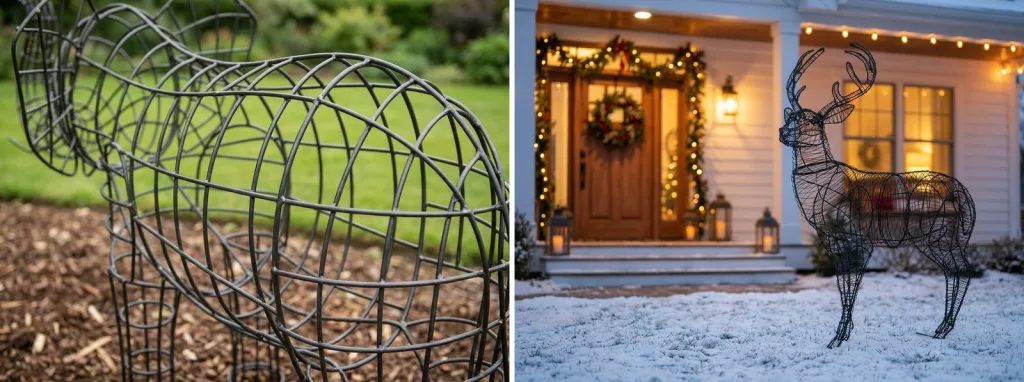
The best topiary frames are steel rod, which is solid round bar, rather than bendable wire. Rod holds its shape when a dog leans on it, when snow sits on it and when someone picks it up by the neck.
A frame bent from light wire or chicken wire flexes at the joints, and every knock bends it a little further.
The joints matter as much as the rod. A welded joint cannot slip. A twisted or tied joint loosens over a season or two, and the pose slowly sags. Press a joint with your thumb. A good one does not move.
Chicken wire still has a job on a mossed piece. It is wrapped over the rod frame to hold the moss in, but it never carries the weight.
Gauge: how thick the rod should be
Thicker rod suits bigger frames. Our frames use these sizes, and they are a fair guide to what to expect from any maker.
| Frame size | Rod thickness |
|---|---|
| Small, under 20 inches | 1/8 to 3/16 inch |
| Large, 30 inches and up | 1/4 to 3/8 inch, with internal steel tubing |
Fine rod is used on ears, tails and faces, where detail matters more than strength. The legs and back carry the load, so they take the heaviest rod. A large animal also needs steel tubing inside the body, because moss, plants and wind add a lot of weight to a big frame.
Finish: galvanized or powder-coated
Bare steel rusts, and it rusts first inside the joints, where you cannot see it. So an outdoor frame needs a finish.
| Finish | What it does |
|---|---|
| Galvanized | A zinc coating over every surface, welds included. The longest-lasting choice outdoors. |
| Powder-coated | A baked-on paint layer, usually black or dark green. Good protection and a neat look on a bare frame. |
| Painted or raw | Fine indoors. Outdoors it lasts only a few seasons. |
Check the finish on each listing before you buy. Why galvanizing matters explains how the zinc protects the welds.
Open, mossed or planted: pick what will cover it
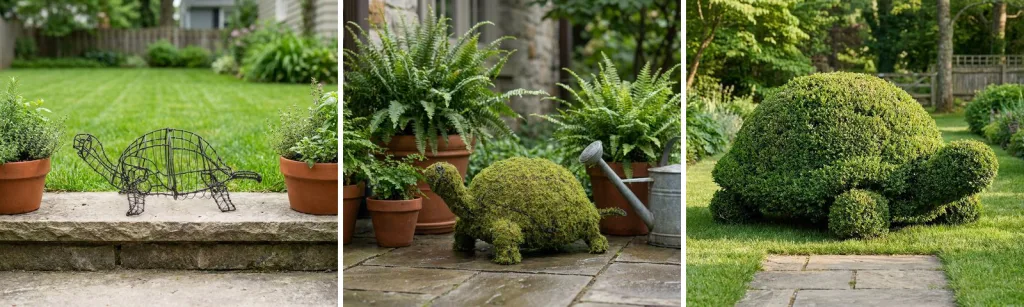
Decide how the frame will be finished before you choose it, because each finish wants a different kind of frame.
| Finish | What to look for |
|---|---|
| Left bare, as a sculpture | Clean welds and even rod spacing, because both stay on show |
| Packed with moss | Closer rod spacing to hold the moss in |
| Planted with ivy or creeping fig | Wider spacing is fine, because the plant bridges it |
| Set over a growing shrub | A large open frame with legs you can set around the plant |
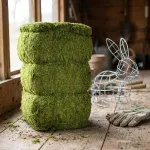
A mossed frame is the easiest start, because it looks finished the day it is packed and you can plant into it later. To pack one yourself, read how to add moss to a topiary frame. To plant one, see how to make an animal topiary.
Sizes and prices
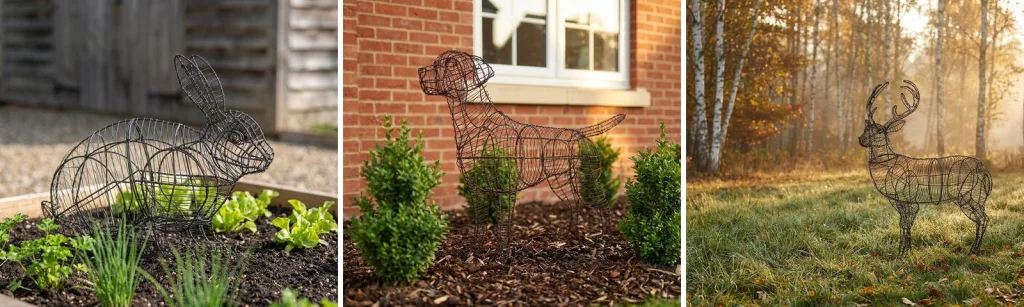
Our wire frame animal topiary range has 44 animals.
| Size | Examples and prices |
|---|---|
| Small, under 20 inches | Turtle from $57, 9 inch kitten $72, 13 inch rabbit $90, 13 inch dachshund $114 |
| Medium, 20 to 40 inches | 30 inch Labrador $378, 36 inch Doberman $286, 24 inch swan $246 |
| Large, 40 inches and up | 52 inch deer $680, 60 inch moose $1,649, a giraffe that runs to 14 feet |
Frames are listed as height by length by width, and the length often decides whether a frame fits. The 20 inch Boston terrier is 23 inches long. A walking animal needs much more floor than a sitting one. Allow one to two inches more all around once a frame is packed with moss.
Frames are shipped in sections, which keeps the boxes smaller. Pieces over $750 are quoted with delivery included.
Best wire topiary frames for beginners
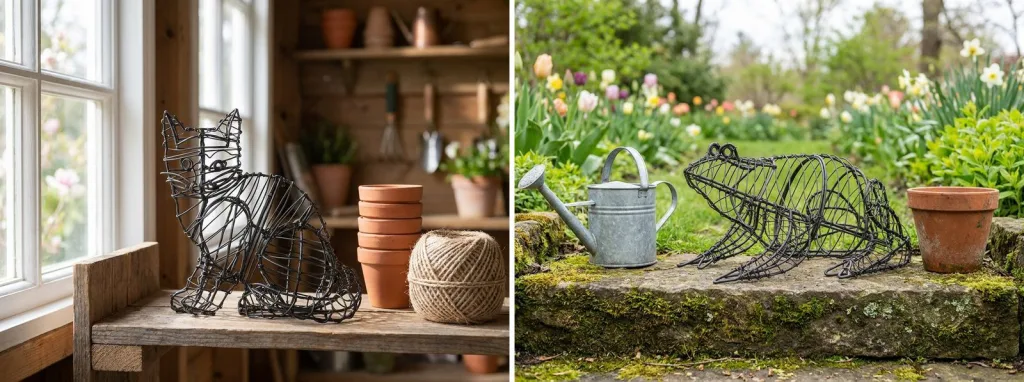
Start small. A small frame needs less than a cubic foot of moss, takes an afternoon to pack and plant, and fills with ivy in one season. Mistakes are cheap to fix.
- Sitting kitten, 9 inches: about $72. Compact and easy to pack.
- Turtle: from $57, the least expensive frame. Its broad shell is simple to plant with succulents.
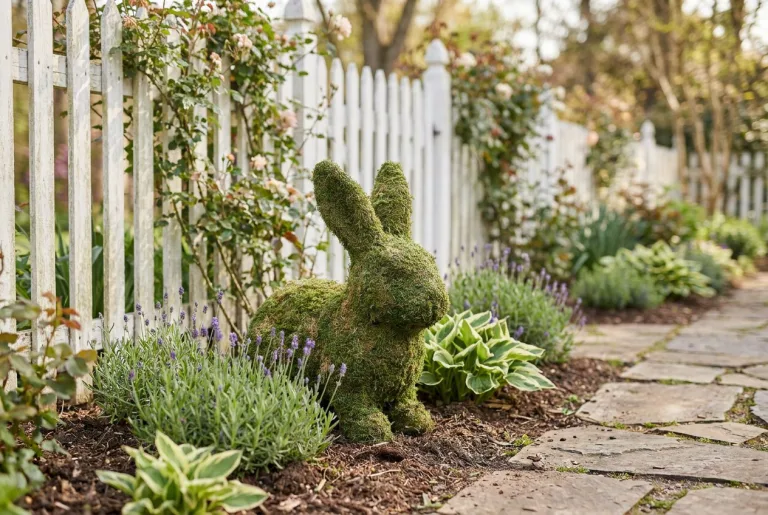
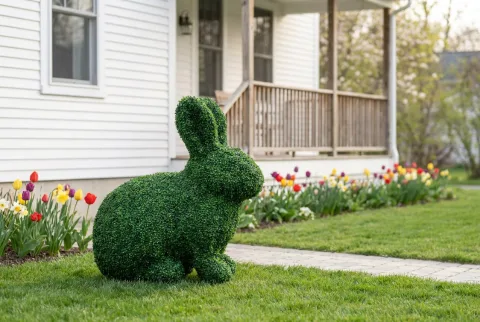
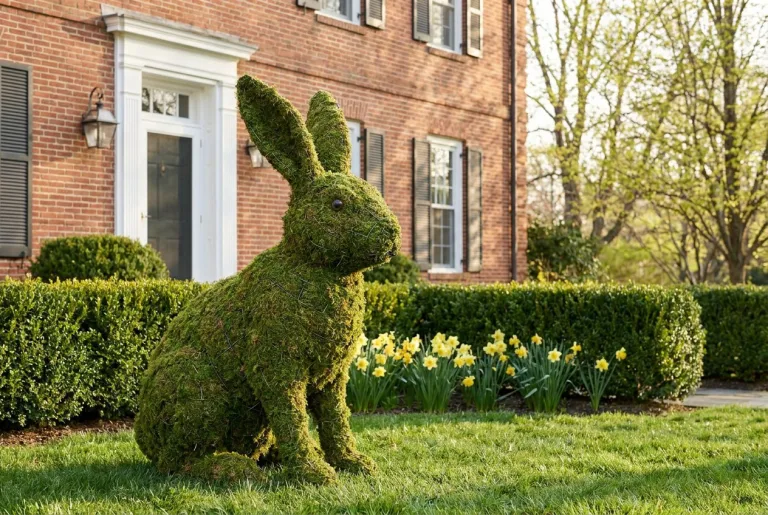
- Hopping rabbit, 13 inches: about $90. A classic first animal.
Leave long necks, thin legs and big antlers for a second project. They are harder to pack and dry out faster once planted. We do not sell kits, so order the moss from topiary supplies with the frame.
Anchoring a frame outdoors
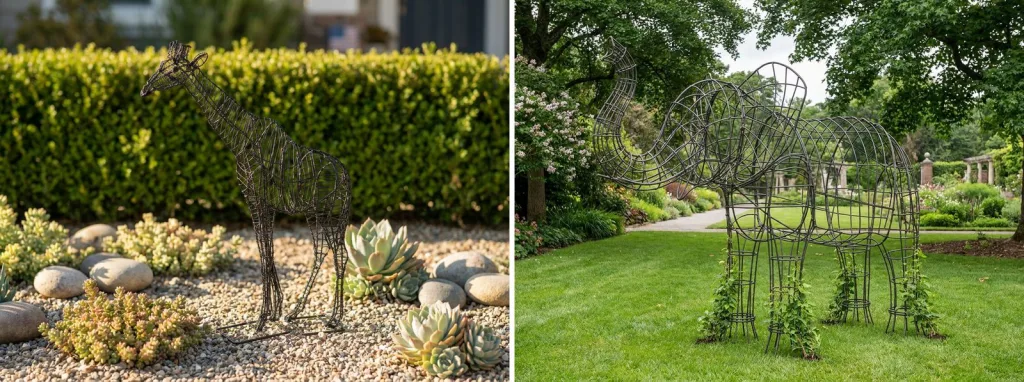
Most frames have legs or stakes that push into soil. On paving or gravel, weight the base or bolt it down. A large frame covered in foliage acts like a sail in a storm, so a big piece in an open spot should be bolted to a concrete pad or footing.
A bare, open frame lets wind pass through and rides out normal weather on its own. Coverage plus wind is what calls for heavier rod and a fixed base.
Quick answers
What is the best material for a topiary frame?
Steel rod with welded joints, galvanized or powder-coated. Chicken wire and light wire bend under the weight of wet moss and plants.
What gauge wire is used for topiary frames?
Small frames use rod about 1/8 to 3/16 inch thick. Large frames use 1/4 to 3/8 inch rod with steel tubing inside.
Can a wire topiary frame stay outside all year?
Yes, if it is galvanized or powder-coated. The steel is fine in winter. Any plants on it may need protection.
Can I order a frame in a shape you do not list?
Yes. Custom frames are built to order from a drawing or a photo, and quoted before anything is charged.
For ideas on where frames work in a garden design, read wire topiary frames in landscape design. For a short checklist on choosing one, see choosing a topiary frame.
The boxwood turtle and the ivy on some frames are staged illustrations.