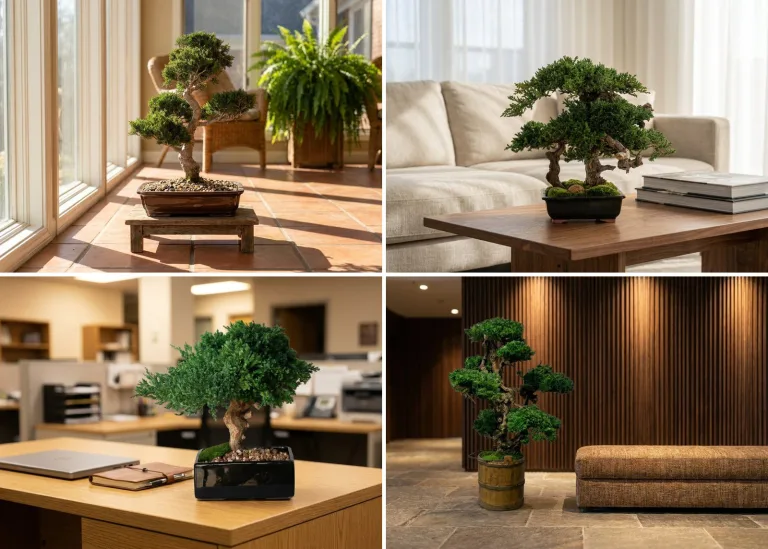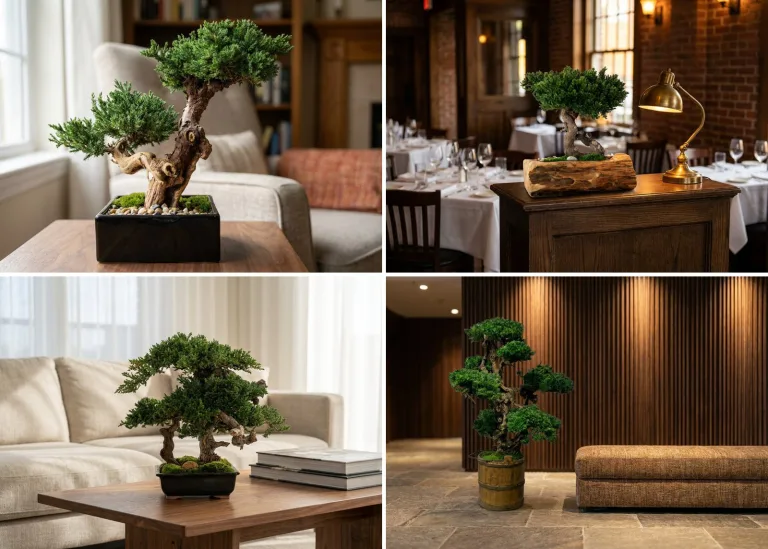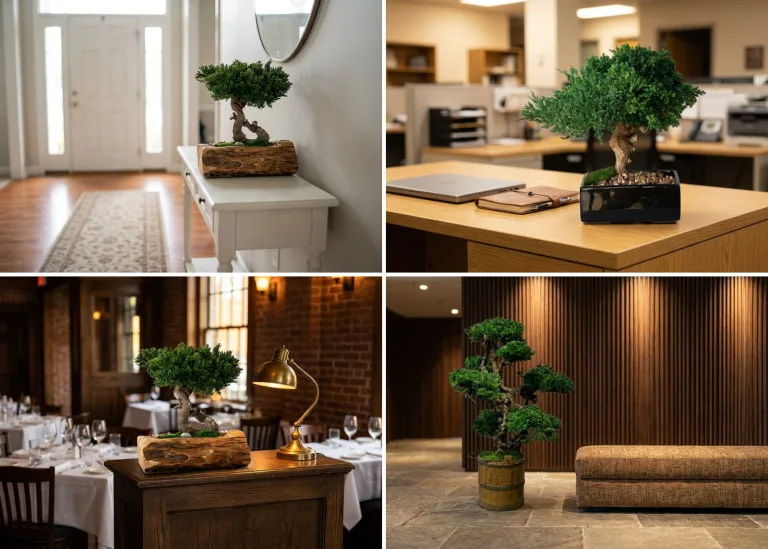










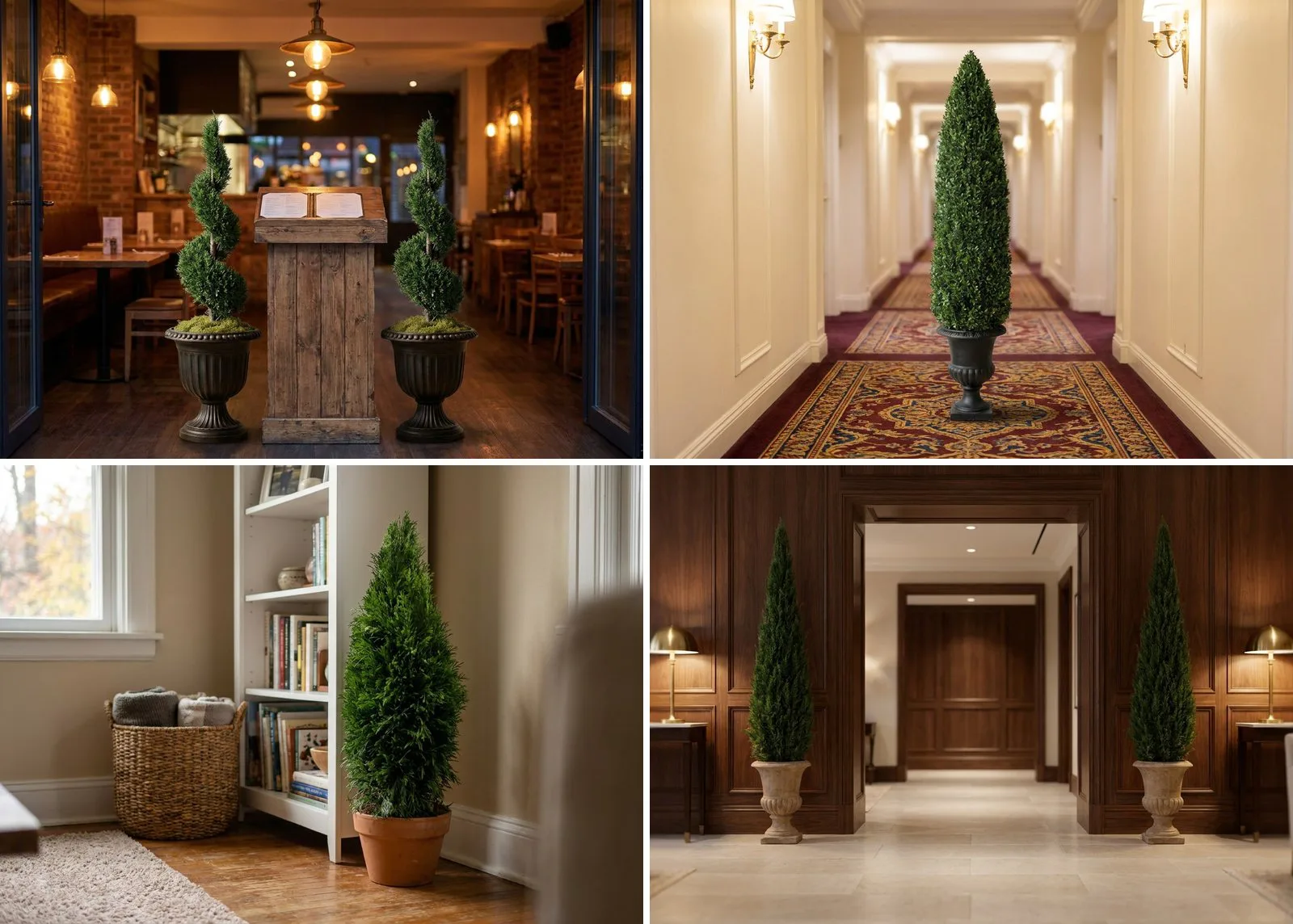
For an indoor spot, a preserved spiral or cone is usually the better buy, because it never needs cutting, watering or light. For outdoors, or a bright room with someone who enjoys the work, a live one is better, because it keeps growing and fills out.
Both cost about the same to buy. What differs is the cost of keeping them.
Preserved against live at a glance
| Preserved | Live | |
|---|---|---|
| Where | Indoors, out of sun and damp | Outdoors, or a bright room |
| Care | Dusting | Water, feed, two cuts a year |
| Lasts | 7 years or more (juniper) | Decades, if kept well |
| Our prices | $450 to $1,398 | From $895 |
What you are buying
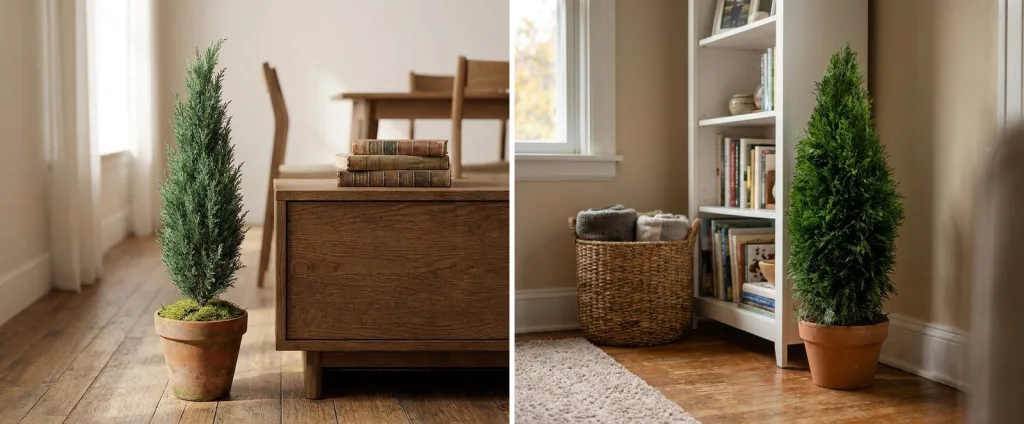
You are buying real foliage. It was grown and shaped as a live plant, then treated so it holds that state without water. Its water is replaced with a food-grade glycerin solution, which sets inside the leaf and keeps it soft. How preserved foliage is made explains the steps.
On a tall shape, ask what holds it up. A spiral or cone over about three feet needs a stiff core or frame to keep its line, and a flimsy one will lean long before the foliage wears out.
Price, against the live equivalent
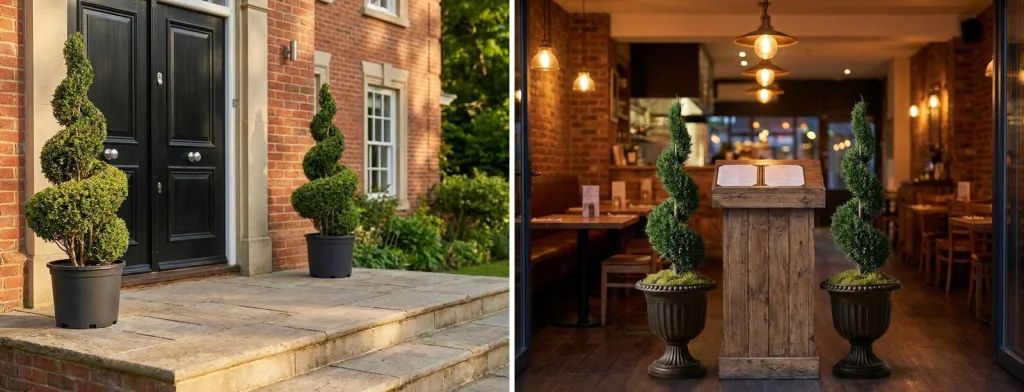
Our preserved cones run from $450 for a 40 inch juniper cone to $1,398 for an 84 inch arborvitae cone. The 84 inch juniper spiral is priced by quote.
Purchase price rarely decides it, because preserved and live sit in the same range. Our live boxwood spirals start at $895 for 30 to 36 inches. Those are different shapes at different heights, so it is not an exact comparison.
Running cost decides it. A live spiral needs two cuts a year for its whole life, by somebody who can cut a spiral without flattening it. A preserved one needs dusting. Over five years in an office or a hotel, you pay for that skilled cutting ten times.
When live is still right
Outdoors, live wins every time. A preserved piece cannot take up water, so sun and rain break it down, and it does not recover from a season outside.
Live is the better buy indoors too, if the room has real daylight and somebody enjoys the work. A live plant thickens and improves as it grows. A preserved one stays exactly as it is.
Choose live for a bright atrium. Sun fades preserved foliage permanently. Why a boxwood spiral costs what it does covers the live side.
When preserved wins
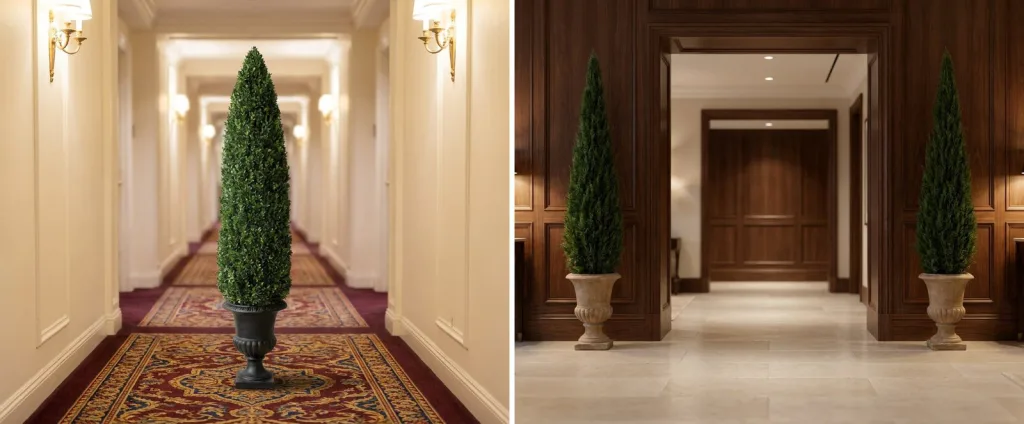
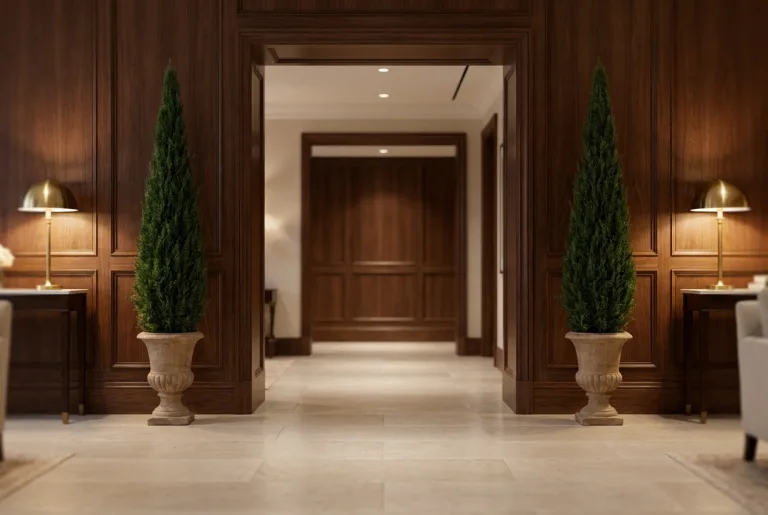
Preserved wins wherever there is no daylight, which covers most corridors, elevator lobbies and inner meeting rooms. It also wins in buildings where nobody is responsible for plants, and wherever the piece has to look the same on day one and day one thousand.
The juniper pieces are expected to last seven years or more indoors, out of sun and damp. Direct sun fades them unevenly and permanently. Damp makes them tacky and can make them drip glycerin, so a pool area or an unventilated wet room is the wrong home.
A few juniper cones can stand on a covered porch out of sun and rain, and their listings say so. Everything else stays indoors.
Choosing one
Start with the plinth. Standing a three-foot piece on a plinth changes how it looks more than any other choice, so settle that before you fix the height and the container.
These pieces carry no fire rating. Where a building needs a rated finish, ask about an artificial piece with a fire-retardant option. Raise it early, before you order.
Pieces over about four feet travel by freight and are quoted with delivery. The whole range is in the preserved spiral and cone category. For the wider case, read preserved topiary for interiors.
Quick answers
Is a preserved spiral cheaper than a live one?
They cost about the same to buy. Our preserved cones start at $450 for 40 inches, and our live boxwood spirals start at $895 for 30 to 36 inches. The live one then needs cutting twice a year for its whole life, which is where the money goes.
Can a preserved spiral go outside?
Not in the open. Sun and rain break it down, and it does not recover. A few juniper pieces can go on a covered porch; the listing says which.
How long does a preserved cone last?
Seven years or more for juniper, kept indoors and out of sun and damp.
Does a preserved spiral need trimming?
No. It does not grow, so it keeps the shape it arrived in. Dust it now and then with a feather duster.
Keep reading: preserved ball topiary and preserved topiary for interiors.