
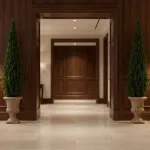
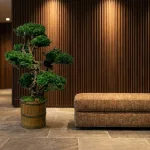


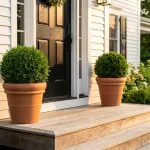



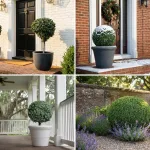

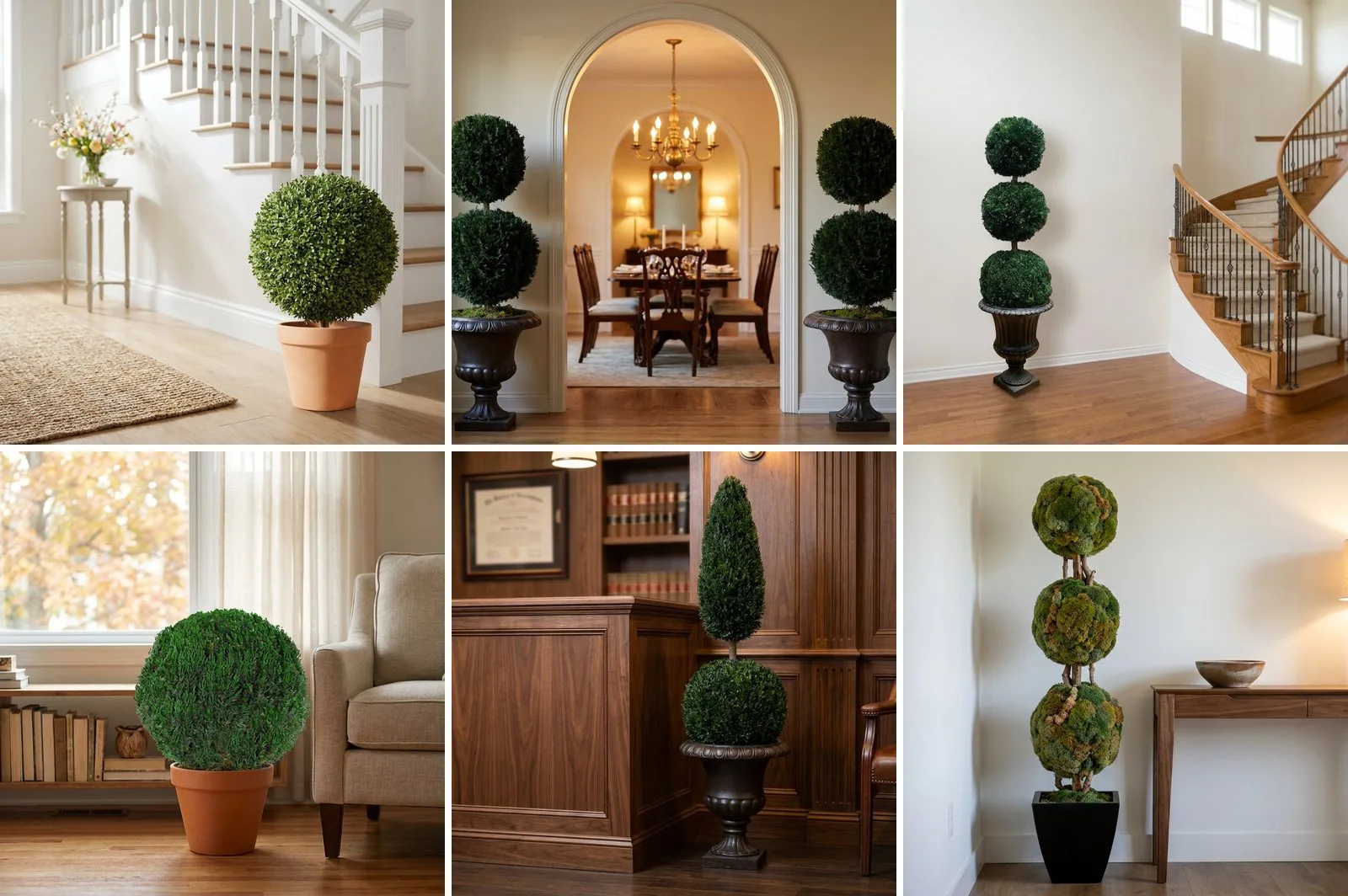
Choose a single ball for a low spot beside a chair or a door, a double for the floor of an ordinary room, and a triple where the ceiling is high. Your ceiling height decides more than taste does. Stacked balls give you height without taking more floor, because the heads sit one above another on a single stem.
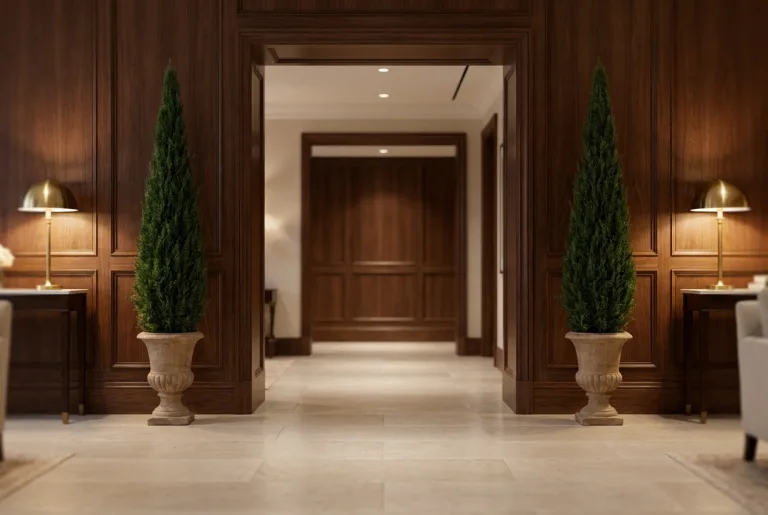
That is why you see them in lobbies, beside elevators and in the narrow gap between a window and a wall.
Single, double or triple: which fits
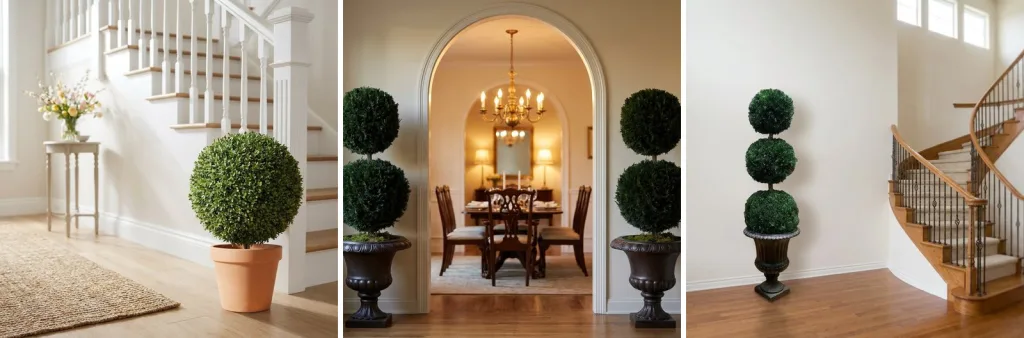
| Type | Height in our range | Where it fits |
|---|---|---|
| Single | 30 to 36 in | Beside a chair, a door or a staircase |
| Double | 40 to 50 in | The floor of an ordinary room |
| Triple | 40 to 72 in | Tall foyers and double-height lobbies |
Single. One ball in a pot or on a short stem. It reads as an object rather than a tree, so it suits a low spot where you want a round shape and some green.
Double. Two graded heads on one stem. This is the floor-standing size for an ordinary room, and it is the one people order most, because it gains height without needing a tall ceiling.
Triple. Three heads, taller again. It needs headroom or it looks squeezed. In a double-height lobby it finally looks the right size.
Leave at least as much clear space above the top ball as that ball’s width. Less than that, and the piece looks as though it did not quite fit.
What they cost
Most of our preserved ball topiaries cost $450 to $1,350. The number of heads and the total height drive the price more than the amount of foliage.
| Piece | Price |
|---|---|
| Moss ball on grapewood, 30 in | $450 |
| Juniper globe, 30 to 36 in | $499 |
| Double ball, 40 in | $598 |
| Juniper ball and cone, 45 to 50 in | $799 |
| Boxwood triple ball, 60 in | $1,350 |
Boxwood, juniper or moss
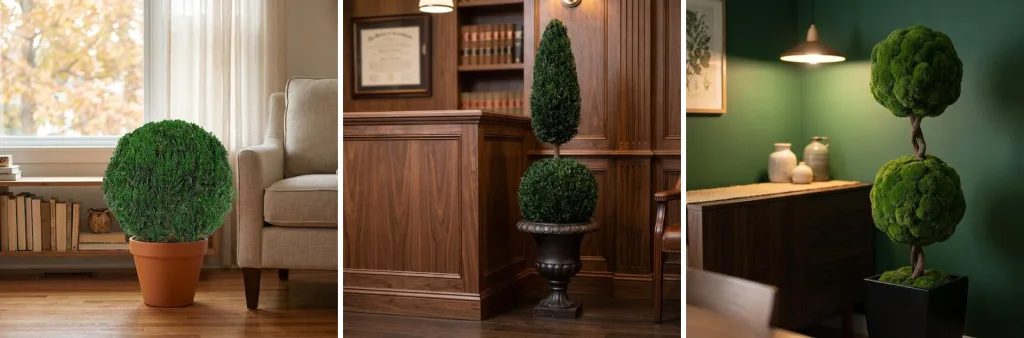
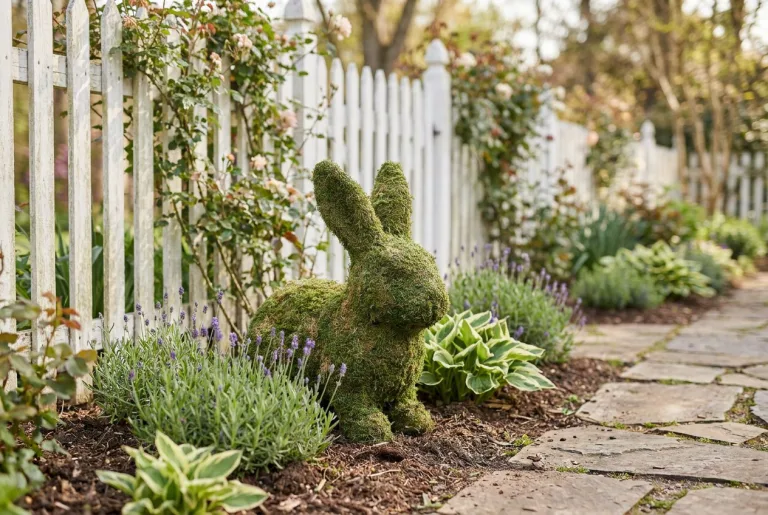
Boxwood has small leaves and looks formal. Juniper is finer and softer. Moss-covered pieces are a third look, closer to a garden ornament than a clipped plant.
All of them are real foliage. The plants are grown and shaped, then treated so their water is replaced with a food-grade glycerin solution, which keeps them soft instead of brittle. How preserved foliage is made covers the steps.
Where they go, and where they do not
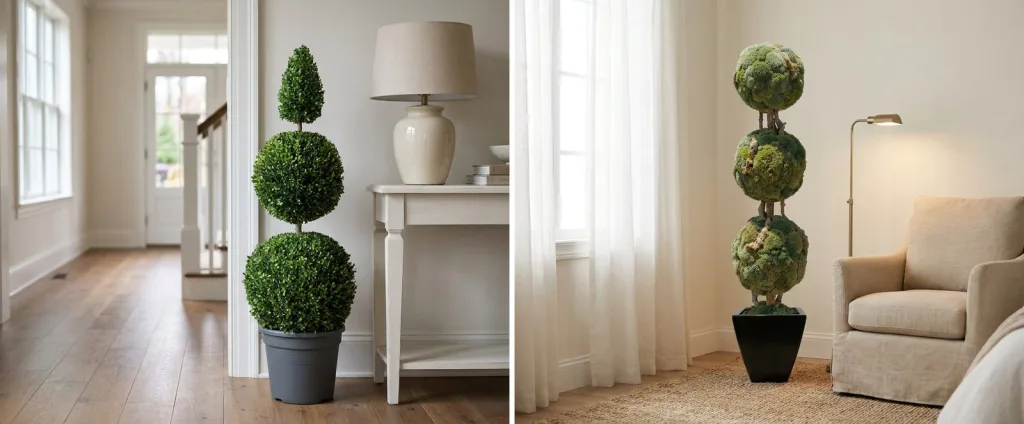
An interior with no daylight is the best case. The piece needs no light at all, while a living plant in that spot needs replacing every year or two.
Direct sun fades preserved foliage unevenly and permanently, so an atrium or a west-facing glass wall is the wrong home. Real damp makes it tacky and can make it drip glycerin, which rules out wet rooms and pool areas. The humidity of a heated or air-conditioned room is fine.
The juniper pieces are expected to last seven years or more indoors, out of sun and damp. A few juniper pieces, such as the juniper globe, can also stand on a covered porch out of sun and rain. The boxwood pieces are for indoors only.
These pieces carry no fire rating. If your building needs a rated finish, ask about an artificial piece with a fire-retardant option before you order.
The full range is in the preserved ball category. For the wider case for preserved pieces indoors, read preserved topiary for interiors.
Quick answers
How much clear space does a triple ball need above it?
At least as much as the width of the top ball. Less than that and the piece looks as though it did not fit the room.
Boxwood or juniper?
Boxwood has small leaves and looks formal. Juniper is finer and softer, and a few juniper pieces can go on a covered porch. Boxwood stays indoors.
How long does a preserved ball topiary last?
Seven years or more for juniper, kept indoors and away from direct sun and damp.
Do preserved ball topiaries need water?
No. Do not water them at all. Dust them now and then with a feather duster.
Can they go outside?
Not in the open. Sun and rain break preserved foliage down. A covered porch out of sun and rain is the only outdoor spot, and only for the juniper pieces that say so.
Keep reading: preserved spirals and cones and preserved topiary for interiors.