

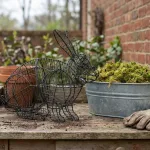
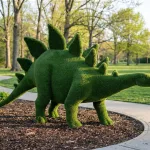
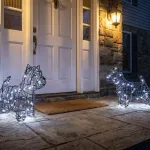
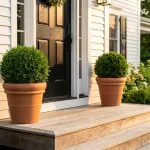



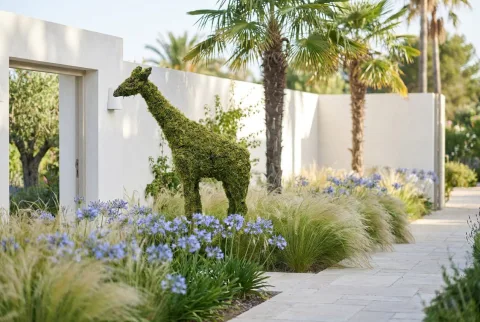
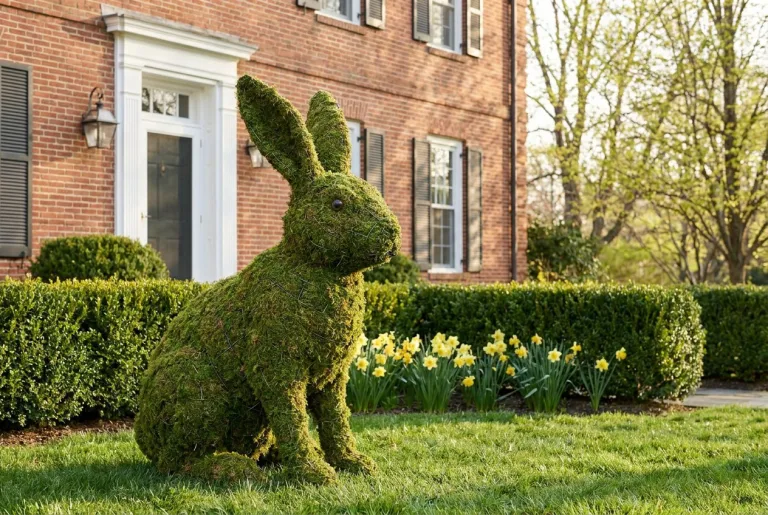
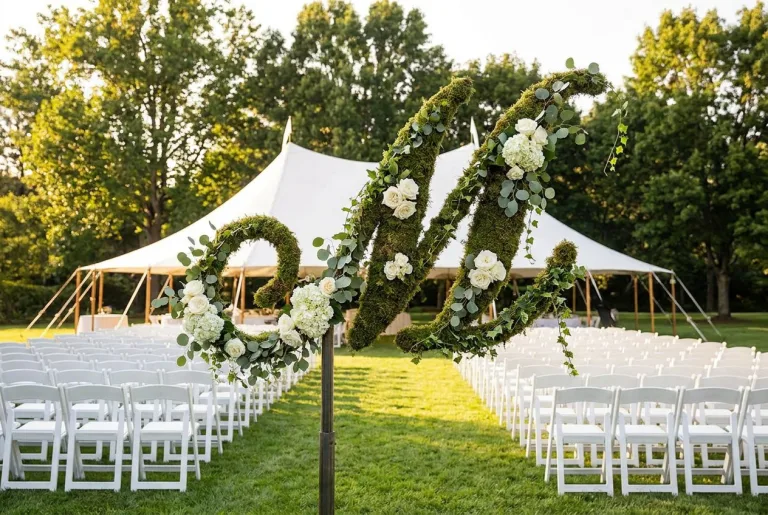

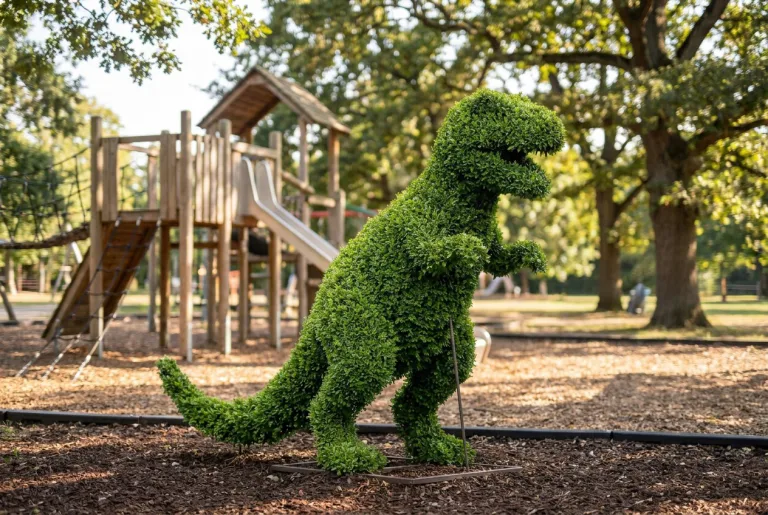
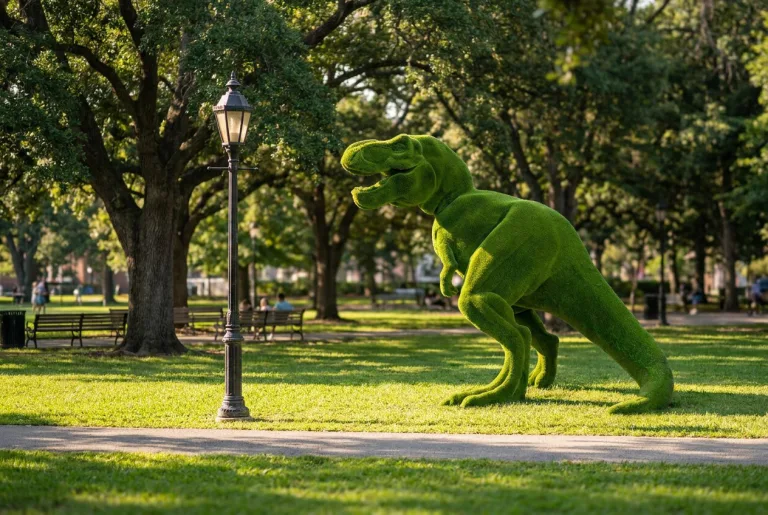


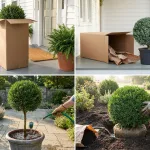



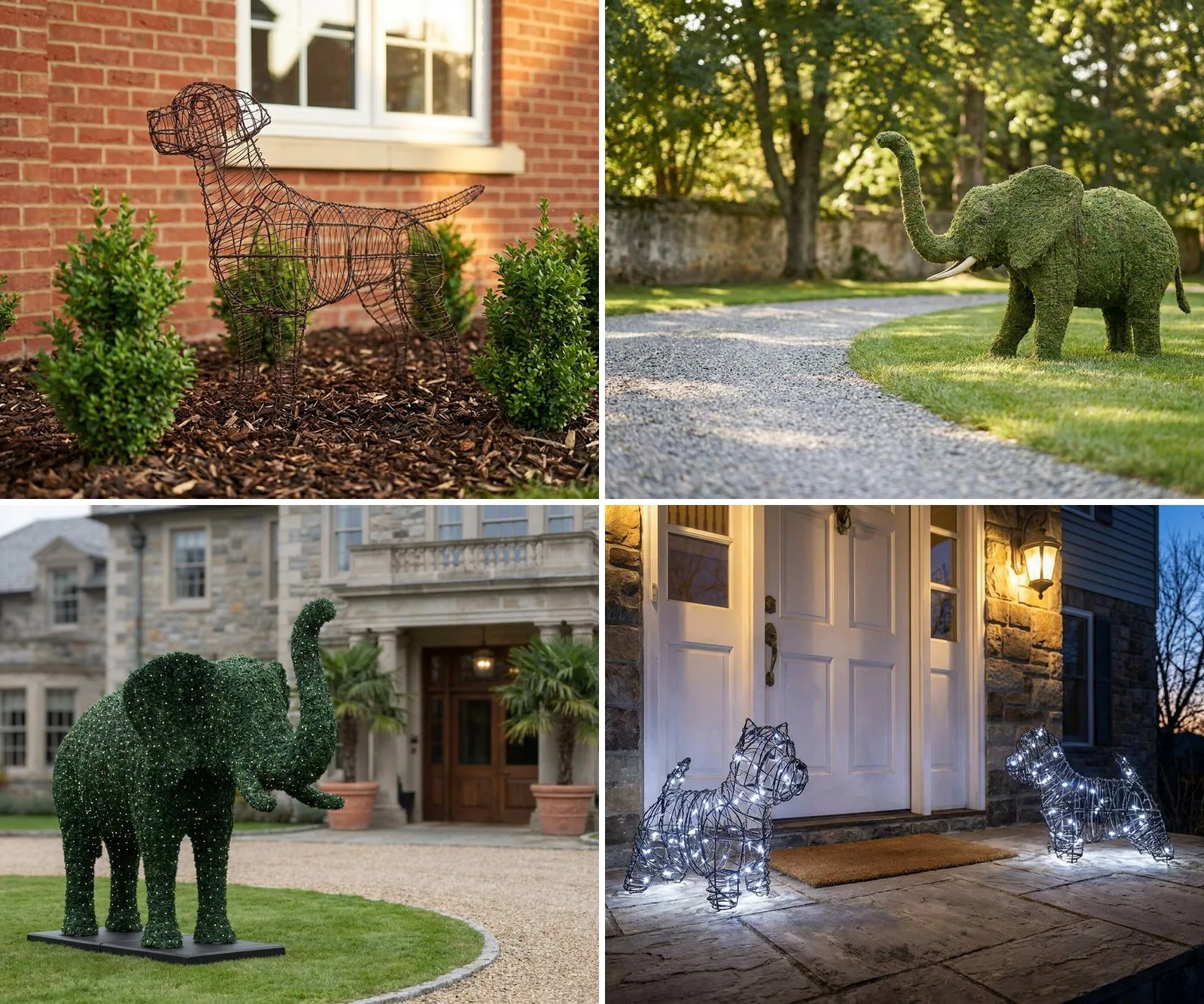
A mossed, framed or lighted topiary always starts as a steel frame in the shape of the animal. For a framed piece, the frame is the finished product. For a mossed piece, the frame is packed tight with sphagnum moss. For a lighted piece, clear mini lights are wound along the rods.
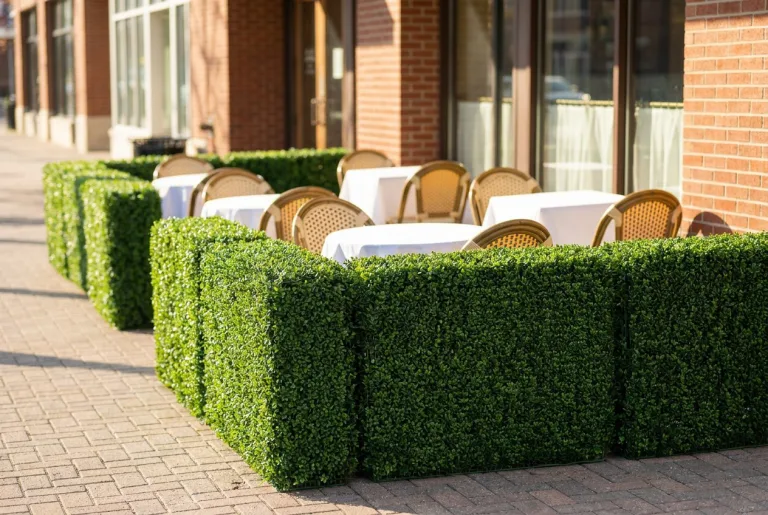
Boxwood-covered pieces take one more step: foliage is fixed over the frame in small sprigs.
Here is what goes into each kind, what that means for you as an owner, and how to make a simple one yourself.
The four kinds at a glance
| Kind | What it is | Care |
|---|---|---|
| Framed | Bare welded steel rod | Almost none |
| Mossed | A frame packed with sphagnum moss | Water when dry |
| Lighted | A frame wound with mini lights | Check the lights each season |
| Boxwood-covered | A frame covered in preserved or artificial boxwood | Dust or rinse |
The frame comes first
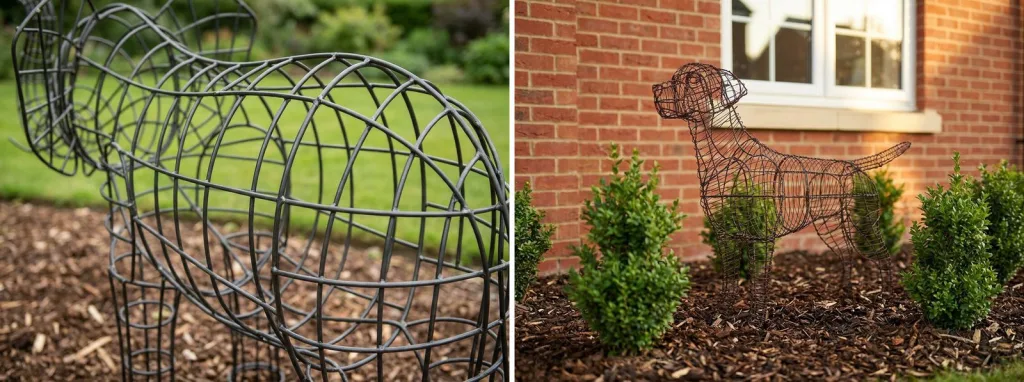
Each frame is a three-dimensional outline of the animal in steel rod. The rod is bent to shape and welded wherever two rods cross, so the pose cannot sag.
Small tabletop animals use rod about 1/8 to 3/16 inch thick. Large ones use 1/4 to 3/8 inch rod with steel tubing inside the body, so they stay rigid under the weight of moss and in wind.
The frame is then finished against rust, galvanized or powder-coated. How galvanizing protects a frame explains the difference.
Most of the larger frames are made in sections. That keeps the boxes smaller, which cuts freight cost, and it lets you open the frame to plant from the inside. Our bare frames are in wire frame animal topiary, and the wire frame buyer’s guide covers what to check.
Mossed topiary
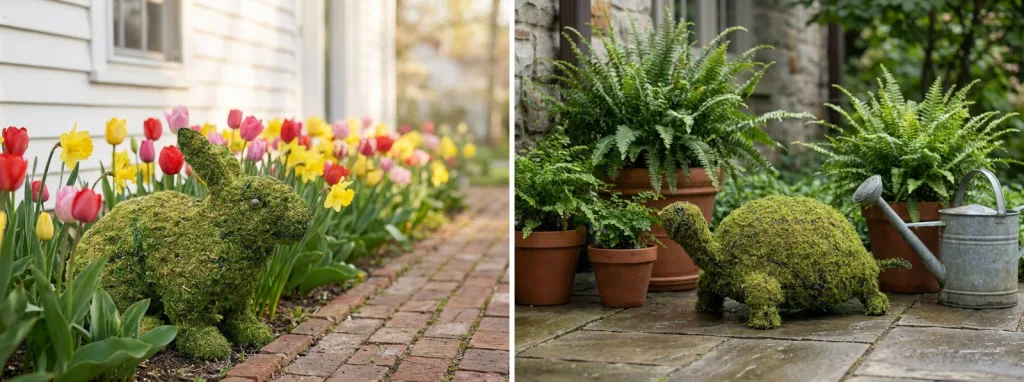
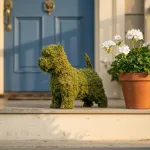
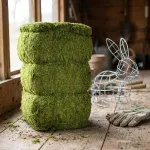
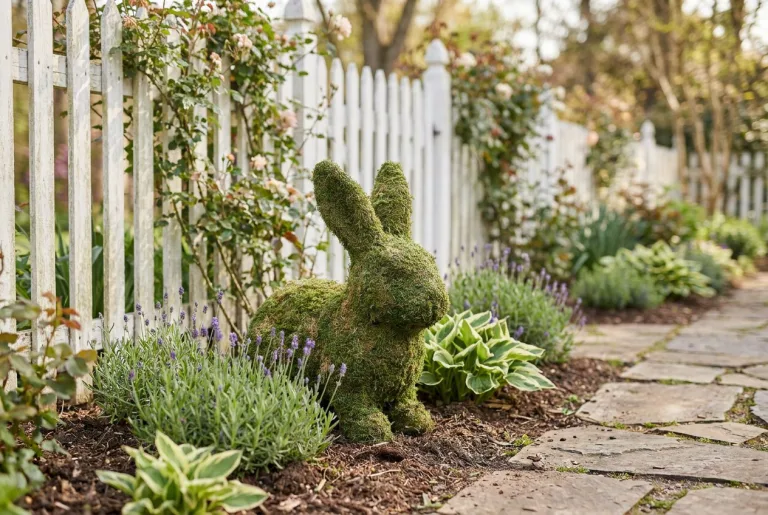
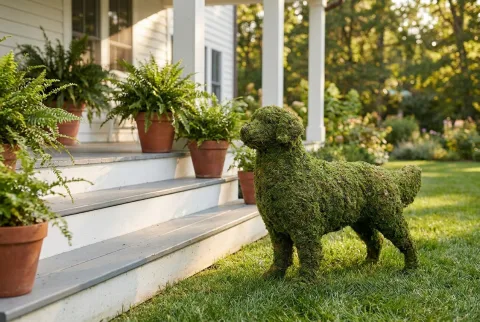
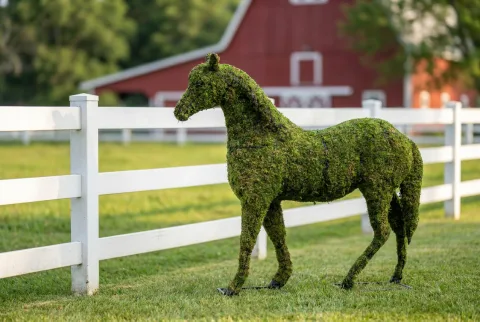
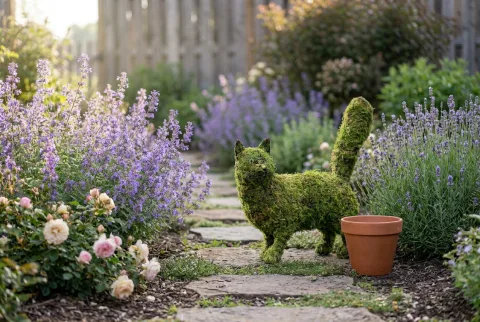
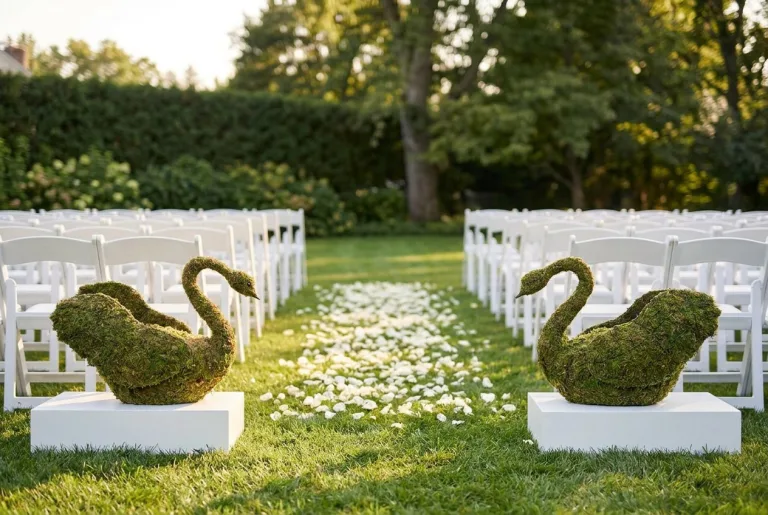
A mossed topiary is the same frame packed with sphagnum moss. A layer of chicken wire goes over the rods to hold the moss in. The moss is pressed in until the whole body feels firm, then the stray fibers are trimmed to the outline. The moss used on finished pieces is dyed green, so the color is even.
The moss is a growing medium, like soil, and it does not grow on its own. You can leave it as a green moss sculpture and water it when it feels dry, or plant ivy or creeping fig into it and care for it like a hanging basket.
To pack one yourself, read how to add moss to a topiary frame. Finished pieces are in mossed animal topiary.
Boxwood-covered topiary
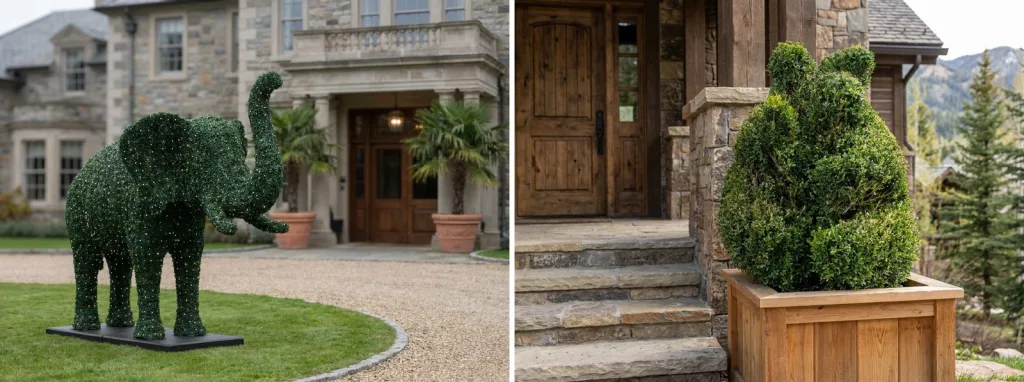
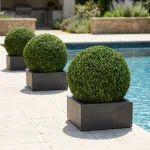
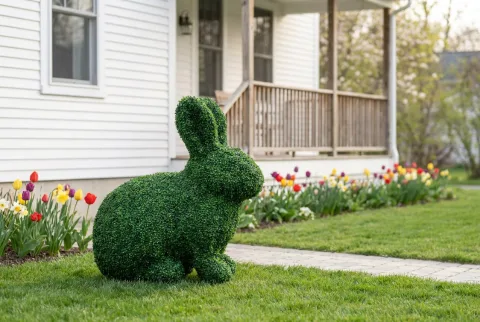
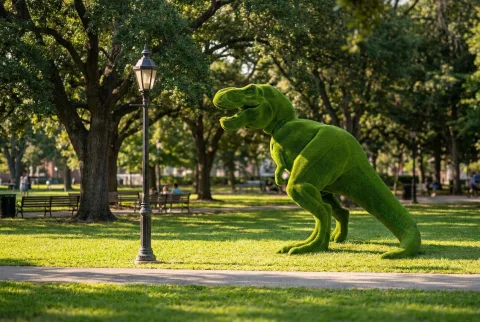
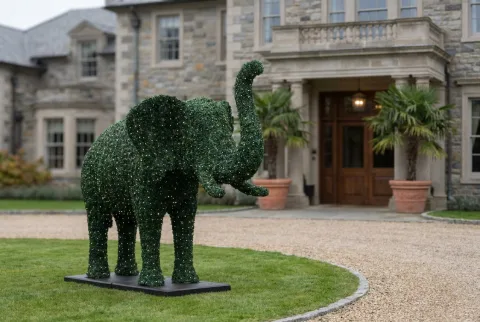
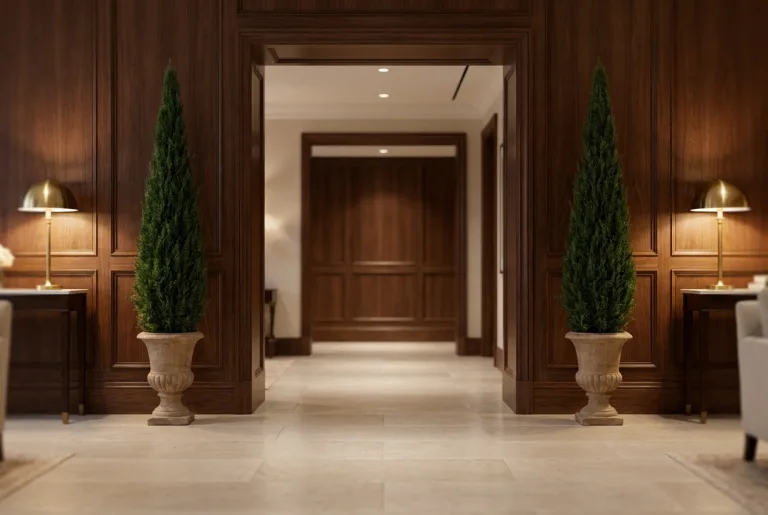
For a piece that should look like a clipped shrub from the first day, the frame is covered in boxwood foliage. Preserved boxwood is real foliage treated to stay soft and green indoors. UV-rated artificial boxwood is for outdoors.
The foliage is fixed to the frame in small sprigs, and round shapes take the longest because the curve leaves gaps that have to be filled one piece at a time.
Neither kind needs water or trimming. Read how preserved foliage works, or see custom-made topiary for a covered animal built to order.
Lighted topiary
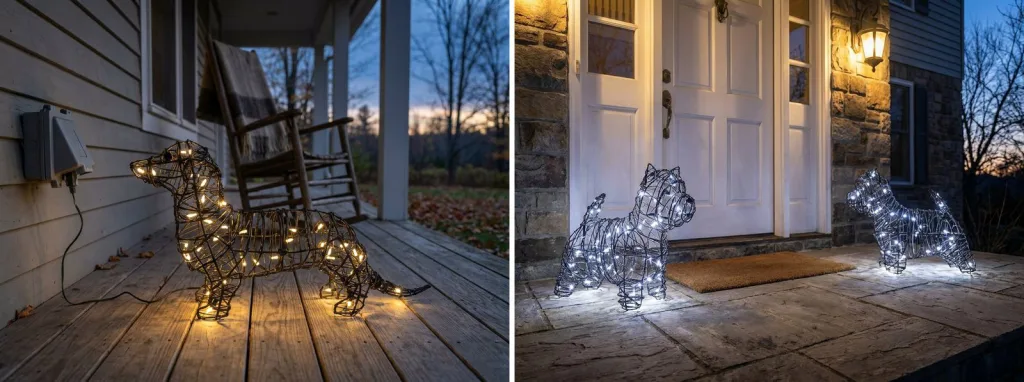
A lighted topiary is a bare frame wound with clear mini lights that follow the rods, so the outline stays readable in the dark. Lighted pieces come ready to plug in, with a replacement bulb and a flashing bulb in the box. They are light, so they are easy to move and store after the holidays.
The steel can stay outdoors all year. The lights need more care. Outdoors, use an outdoor-rated set plugged into a GFCI outlet with a weatherproof cover, and check for cracked sockets or frayed wire each season. See the lighted animal topiary range.
How to make one yourself
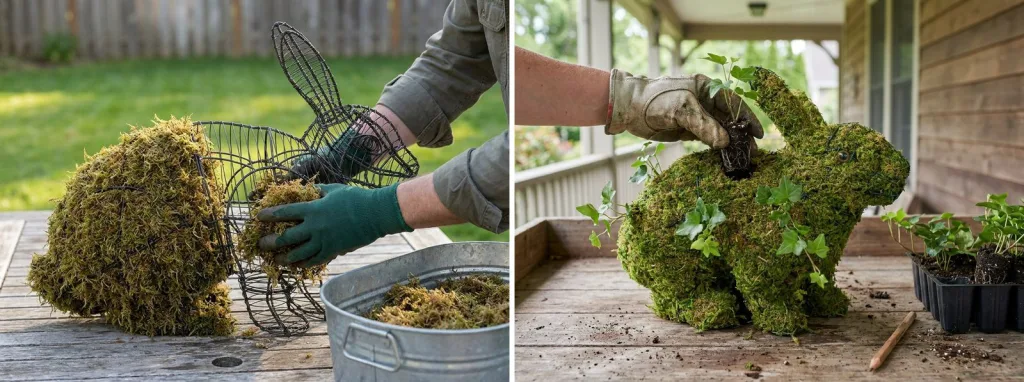
You can make a mossed or planted animal at home with a bare frame, a bag of sphagnum and a tray of small plants. Pack the frame with damp moss, plant ivy or creeping fig into it every few inches, and trim as it grows.
A small animal takes an afternoon. The full step-by-step, with timings and plant choices, is in how to make an animal topiary.
Quick answers
What are topiary animals made of?
A welded steel frame in the animal’s shape. It is left bare, packed with sphagnum moss, wound with lights, or covered in boxwood or plants.
What is inside a moss topiary?
A steel frame, a layer of chicken wire and packed sphagnum moss. Larger animals also have steel tubing inside for strength.
Can a mossed topiary be planted?
Yes. Push small ivy, creeping fig or succulent plants into the moss, ideally within about six months while the moss is fresh.
Can lighted topiary stay outside?
The frame can. Use outdoor-rated lights on a GFCI outlet, and check the set each season.