








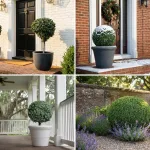
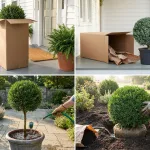

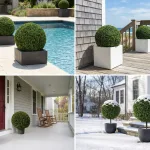

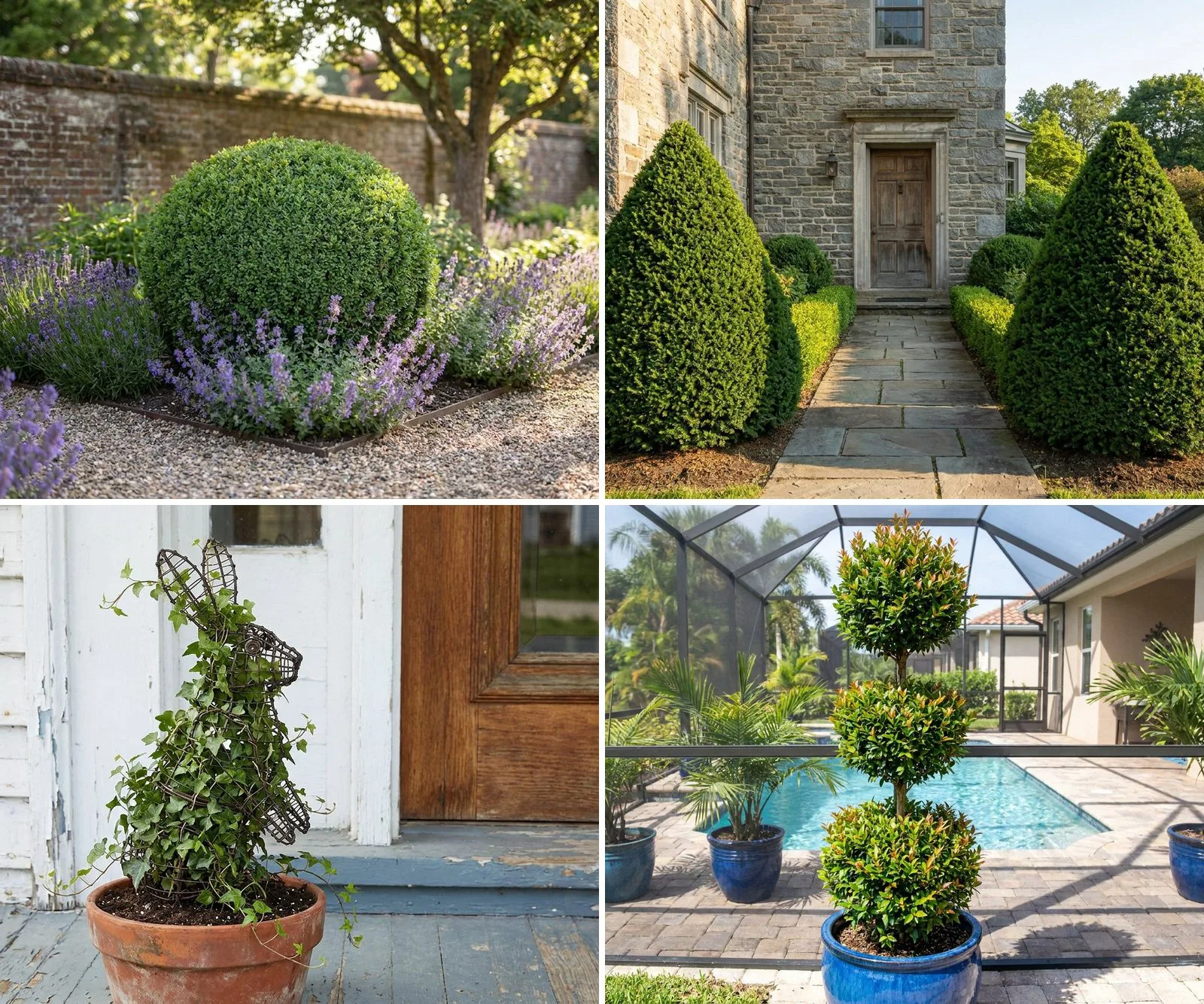
A plant makes a good topiary when it passes four tests: small leaves, dense growth close to the stem, even regrowth after a cut, and hardiness where it will stand. Boxwood passes all four, which is why it is the classic topiary plant. Any plant that fails one of the tests will struggle to hold a clean shape.
This page explains how to judge a plant against each test. For the plants that pass, with zones and uses, see the best plants for topiary.
The four tests at a glance
| Test | What to look for | Good examples |
|---|---|---|
| Leaf size | Leaves under about an inch long | Boxwood, Japanese holly, yew |
| Density | Branches close together, right down to the base | Boxwood, yew, arborvitae |
| Regrowth | New shoots break evenly below a cut | Boxwood, privet, yew |
| Hardiness | Rated for your USDA zone, or one colder in a pot | Check the plant tag |
1. Leaf size sets the level of detail
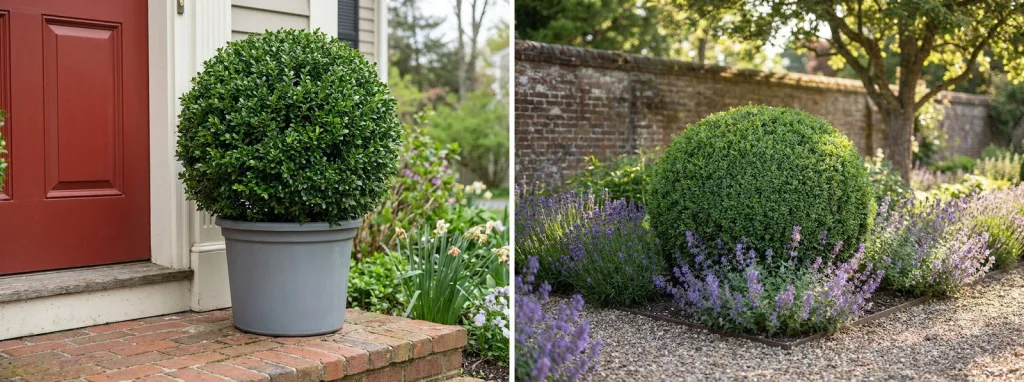
The smaller the leaf, the finer the shape a plant can hold. A cut through a small leaf barely shows, and a surface of small leaves looks smooth from a few feet away. Big leaves look ragged when cut, and they blur a small detail such as an ear.
So match the leaf to the size of the shape. Use boxwood, Japanese holly or yew for balls, cones and animals. Save larger-leaved plants such as cherry laurel for big hedges, where the leaves are small compared with the whole.
2. Density decides whether the shape reads
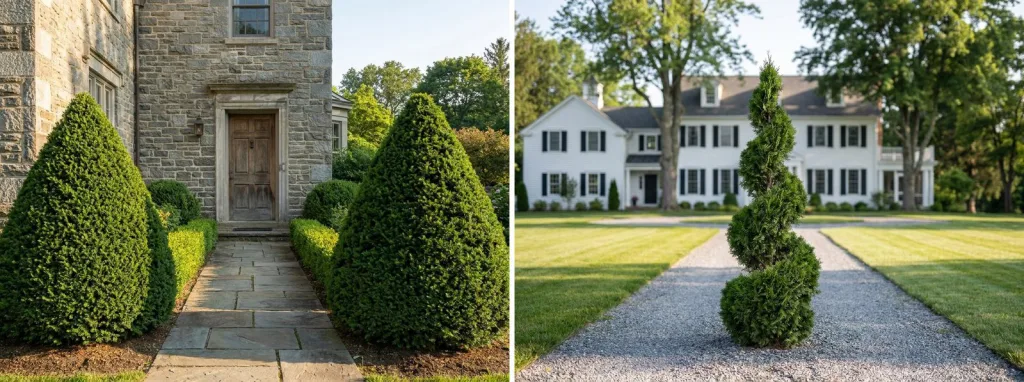
A topiary is a silhouette, and gaps break it. Good topiary plants branch close together along the whole stem, so clipping makes a solid surface. Leggy plants with long bare stretches between leaves never close up, however often you trim them.
A quick test at the nursery: part the outer leaves with your hand. If you see a thicket of fine twigs, the plant will clip well. If you see a few long bare stems, it will not.
3. Regrowth after a cut
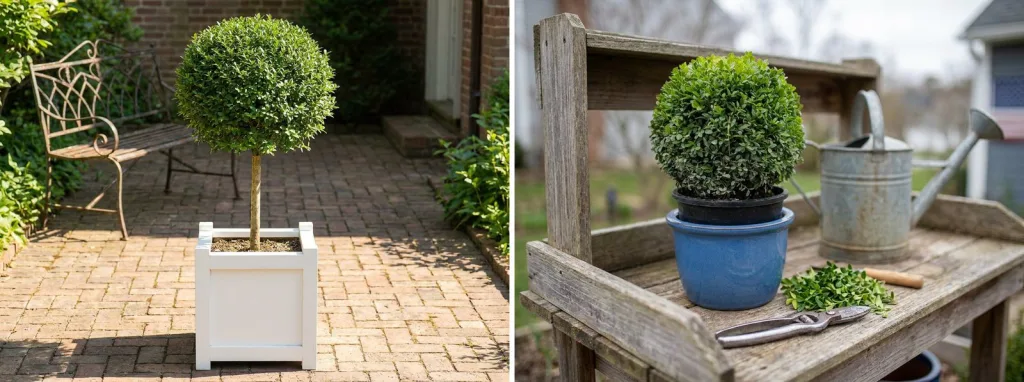
Every cut should make the plant branch just below it. That is how a topiary gets denser each year. Boxwood, privet and yew all do this well. Most pines do not, because a cut into old wood leaves a bare stub that never regrows.
Speed is a trade-off. Fast growers such as privet reach a finished shape in two or three seasons, then need cutting several times a year. Slow growers such as boxwood take longer to reach size, then hold their shape with two cuts a year. Choose by how much trimming you want to do.
4. Hardiness for your zone
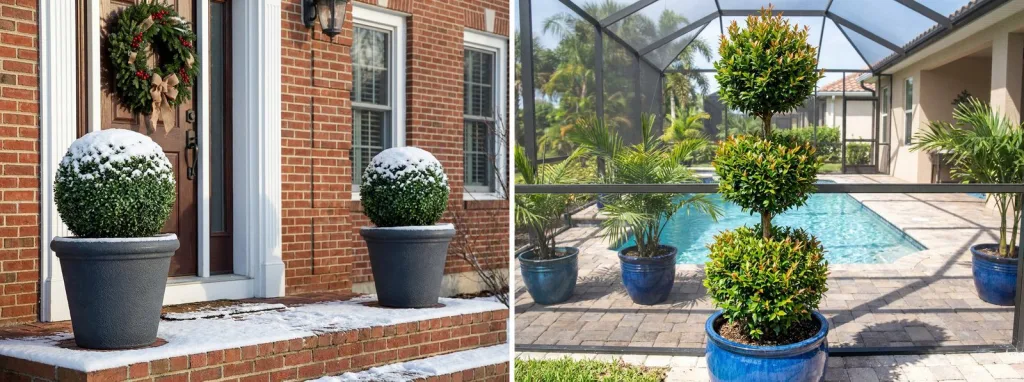
A topiary takes years to grow, and one wrong winter can kill it. Check the plant’s USDA zone against yours before anything else. For a plant in a pot, choose one rated a zone colder than yours, because roots in a pot get colder than roots in the ground.
Heat matters too. Boxwood struggles in the hot, humid far South, where eugenia is the usual choice. Our boxwood care guide by zone lists which cultivars do well where.
Matching the plant to the shape
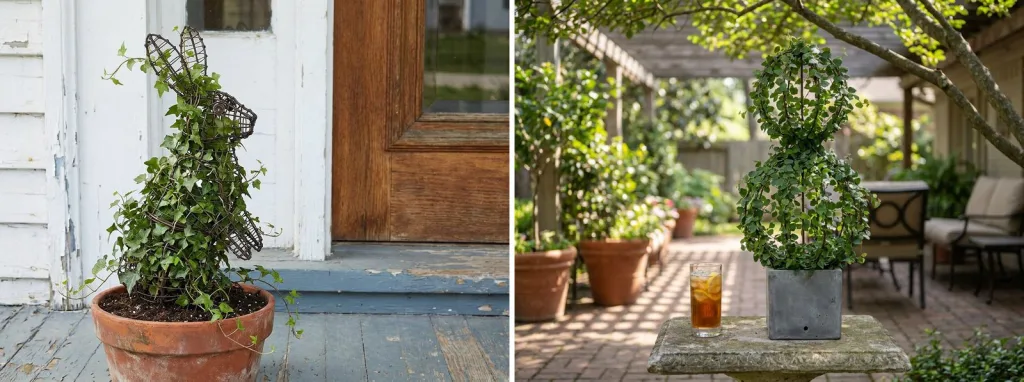
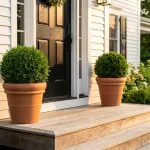
- Balls, cones and spirals: boxwood, yew or arborvitae. Needle and fine-leaved plants hold a straight line.
- Standards (a ball on a stem): boxwood in most areas, eugenia where there is no frost, rosemary for a small one. See how to make a ball-on-a-stem topiary.
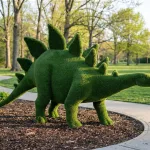
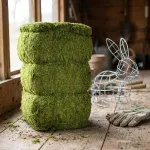
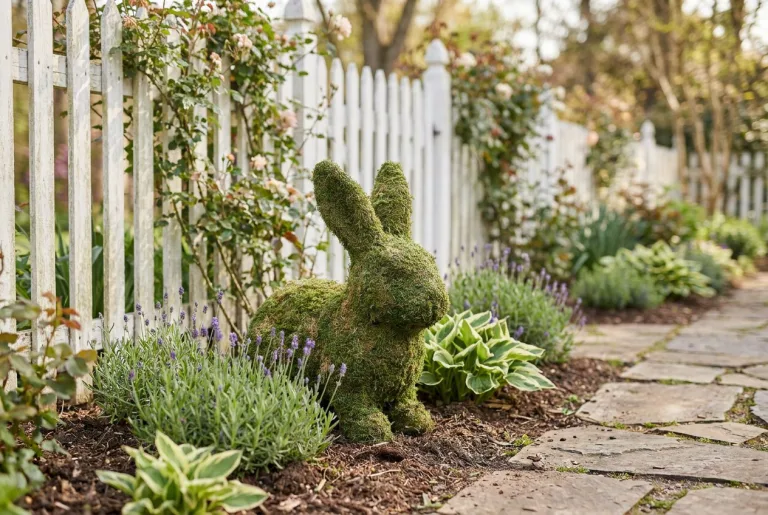
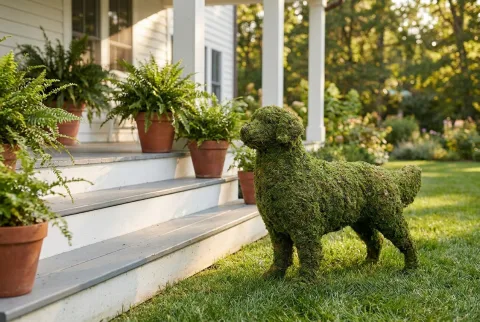
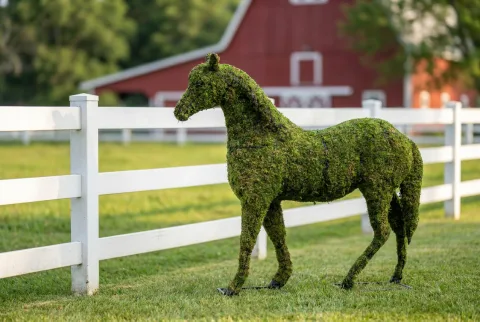
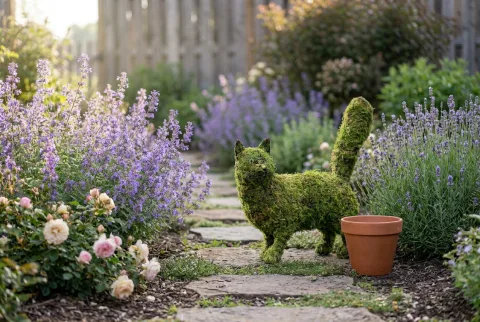
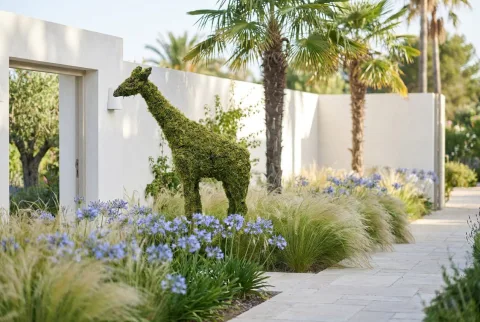
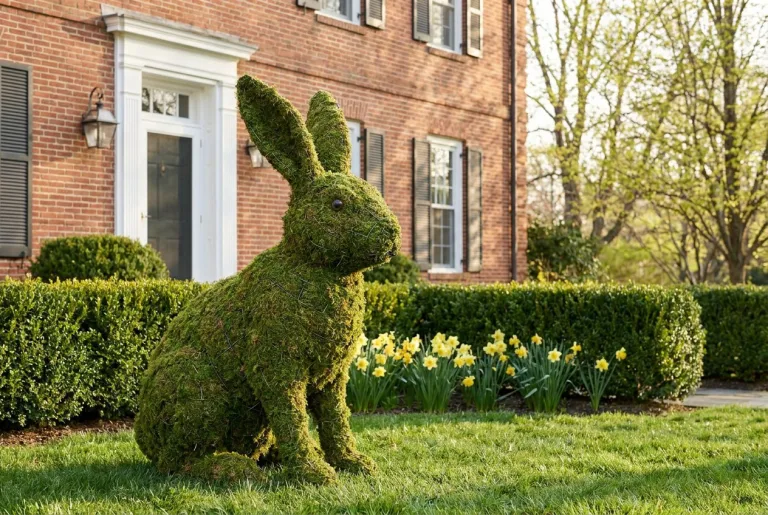
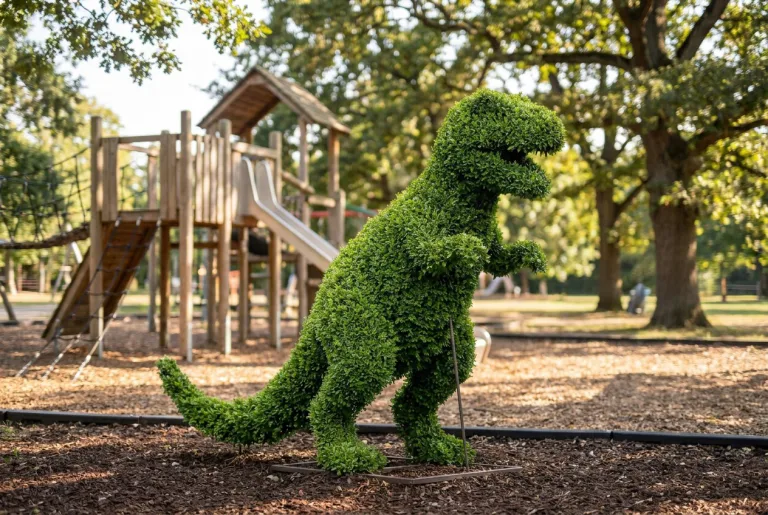
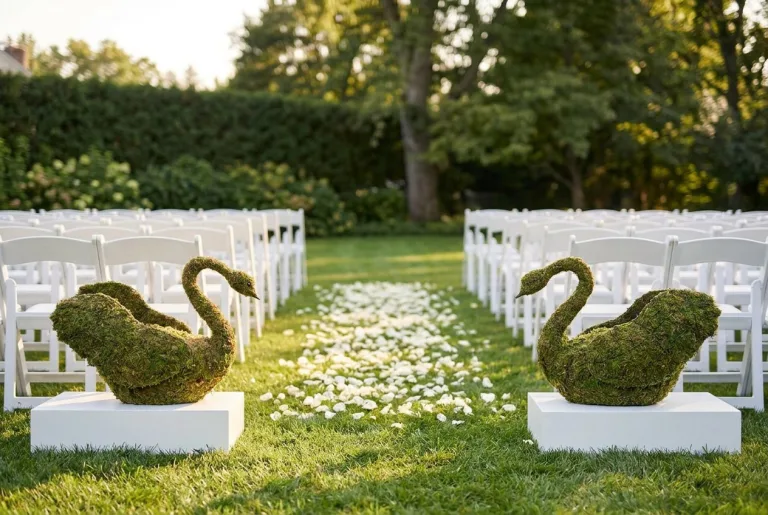
- Animal shapes: a wire frame packed with sphagnum moss and planted with ivy or creeping fig. Here the frame gives the shape, so the plant only needs small leaves and fast growth. The steps are in how to make an animal topiary.
- Tabletop pieces: rosemary, thyme or lavender.
When no living plant fits the spot
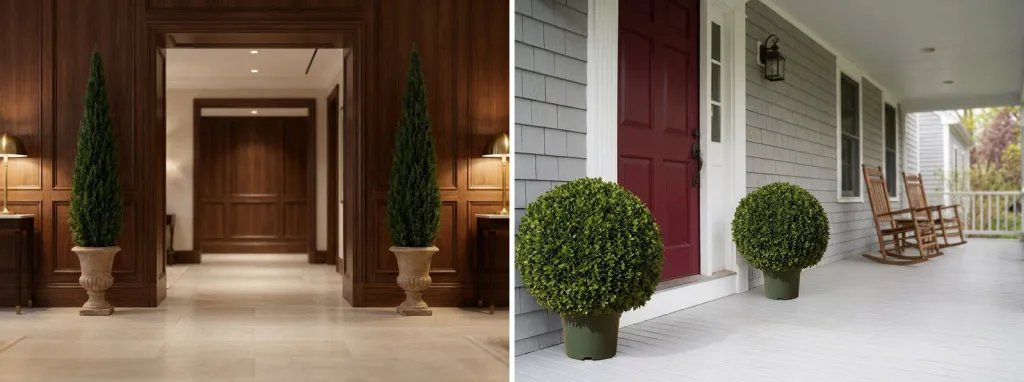
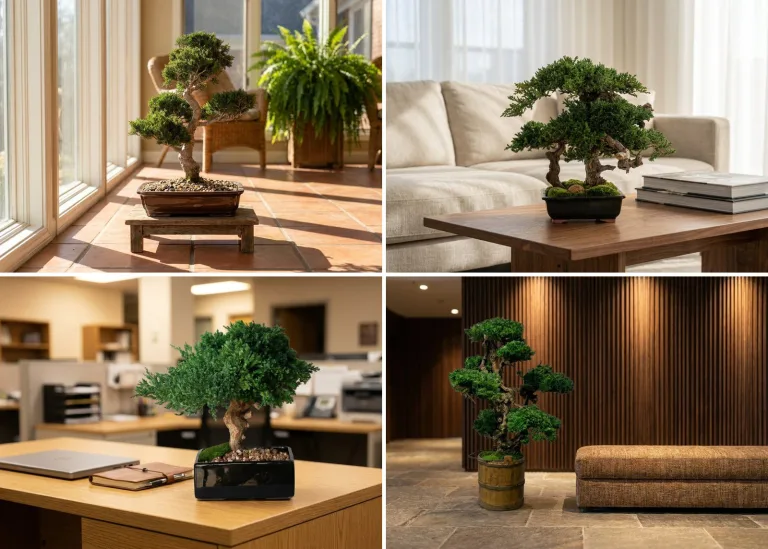
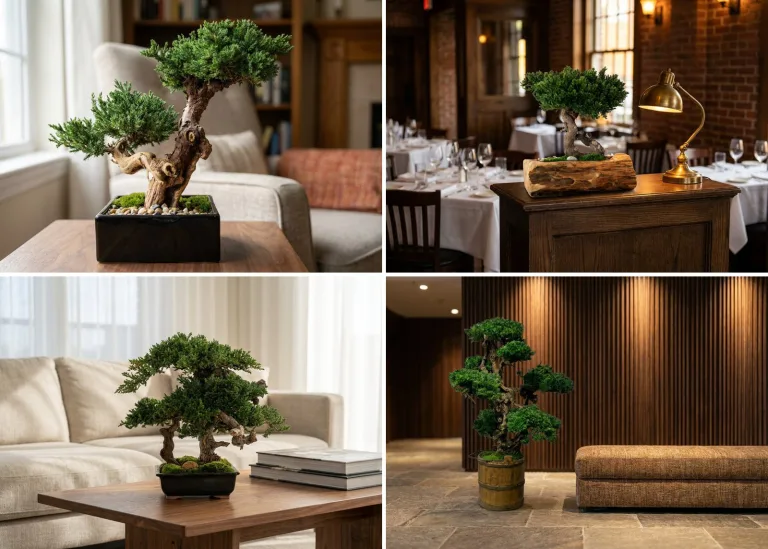
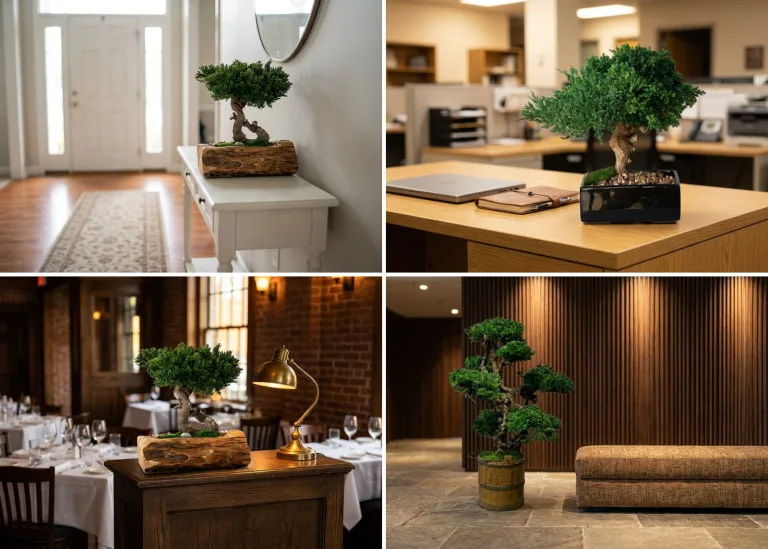
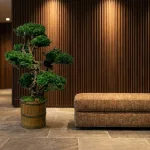
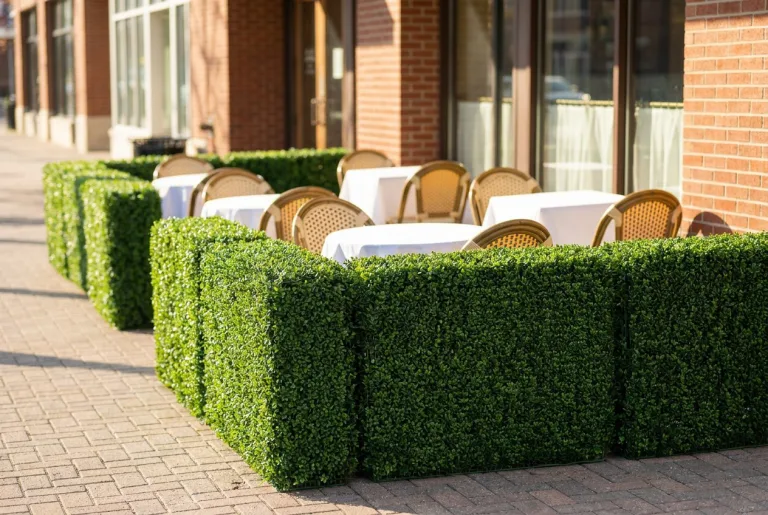
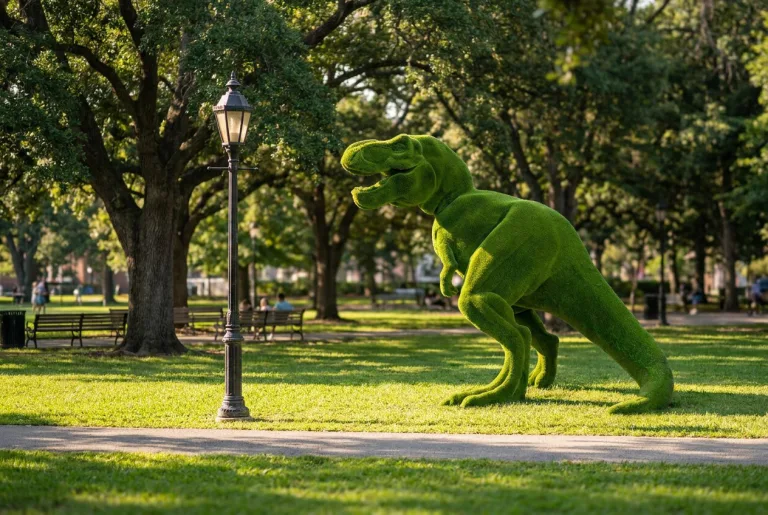
Some spots fail every plant: a lobby with no daylight, a rooftop with no water, a south-facing wall in Texas sun. There, choose preserved topiary for indoors, which is real foliage that needs no water or light, or UV-rated artificial topiary for outdoors.
Quick answers
What is the best plant for topiary?
Boxwood, for most of the United States. It has small leaves, grows densely, regrows evenly and is hardy from zone 5, or zone 4 for the hardiest hybrids.
What are some examples of topiary plants?
Boxwood, Japanese holly, yew, privet and arborvitae for outdoor shapes; rosemary and lavender for small ones; ivy and creeping fig for wire frames.
Can any plant be made into a topiary?
No. Plants with big leaves, open growth or poor regrowth after cutting never hold a clean shape. Pines, for example, do not regrow from old wood.
What plants are used to make topiary animals?
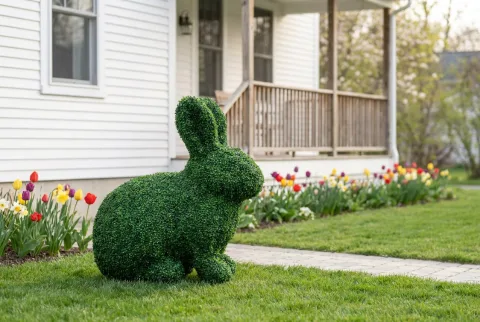
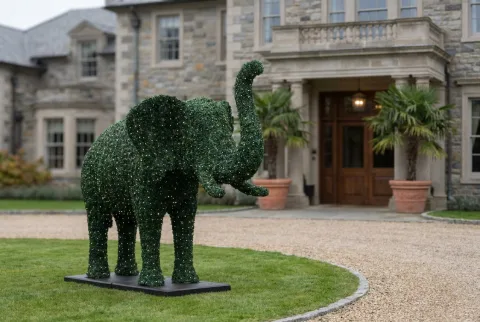
Ivy or creeping fig planted into a moss-filled wire frame for small animals, and boxwood, privet or yew grown into a large frame for hedge animals.
Some photographs on this page are staged illustrations of plants we do not stock, such as holly, yew, privet and eugenia.