








Planters
The right planter makes a topiary look finished. These large planters, from glazed jars and urns to fiberglass boxes and graduated sets, are sized for grown topiary trees at an entrance, on a terrace or in a lobby. Check two things before you choose: the width the root ball needs and how cold your winters get. Tell us your topiary and we will suggest a planter that fits it.
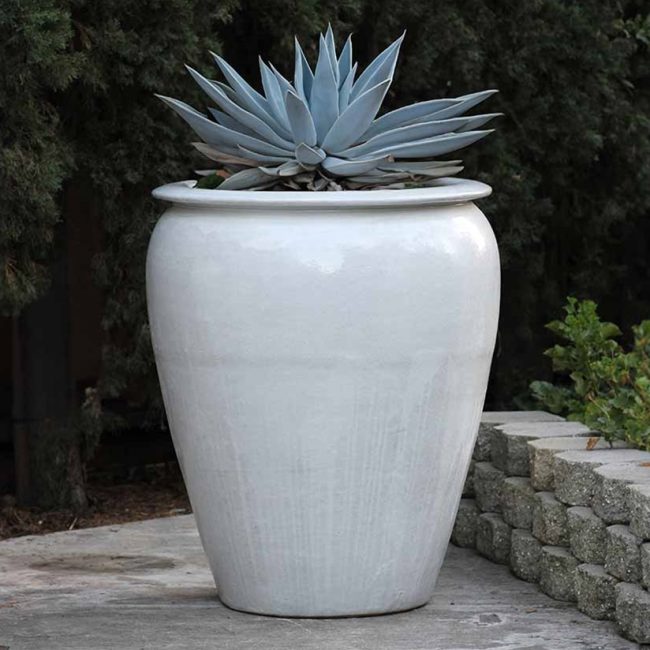
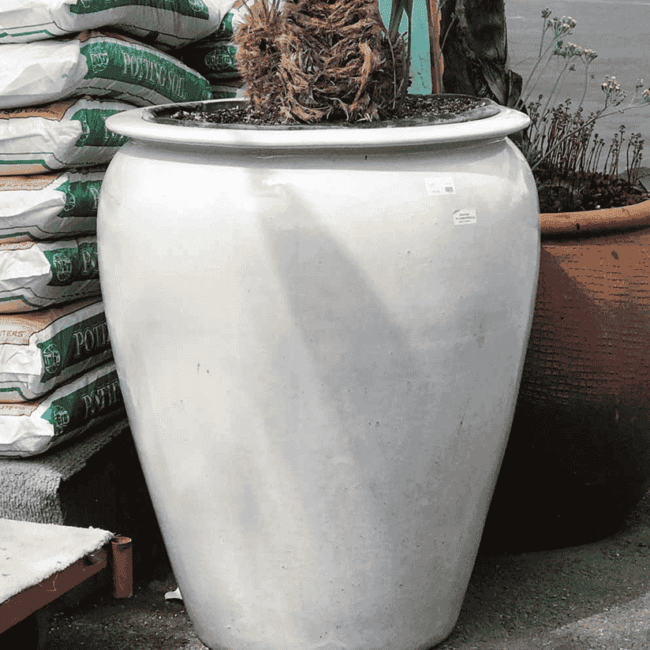
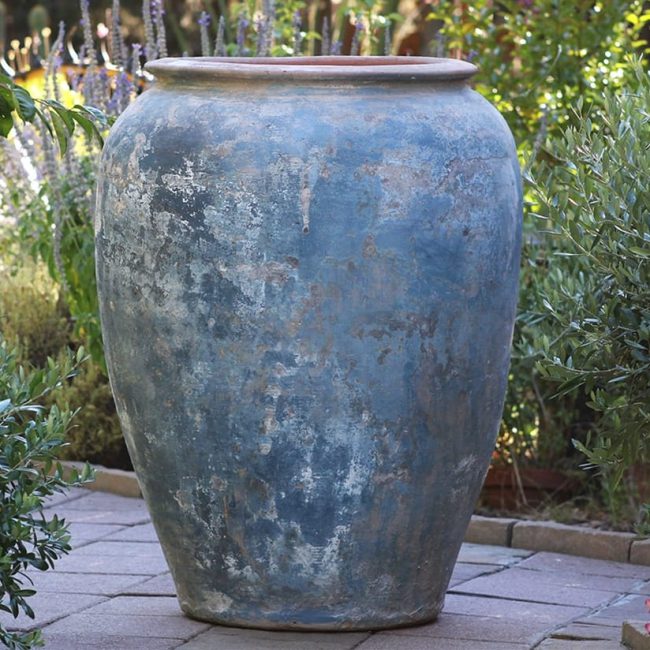
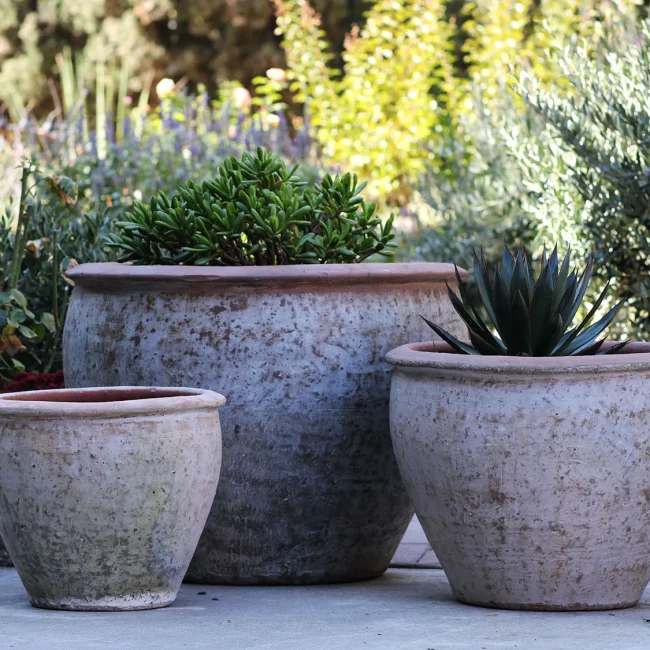
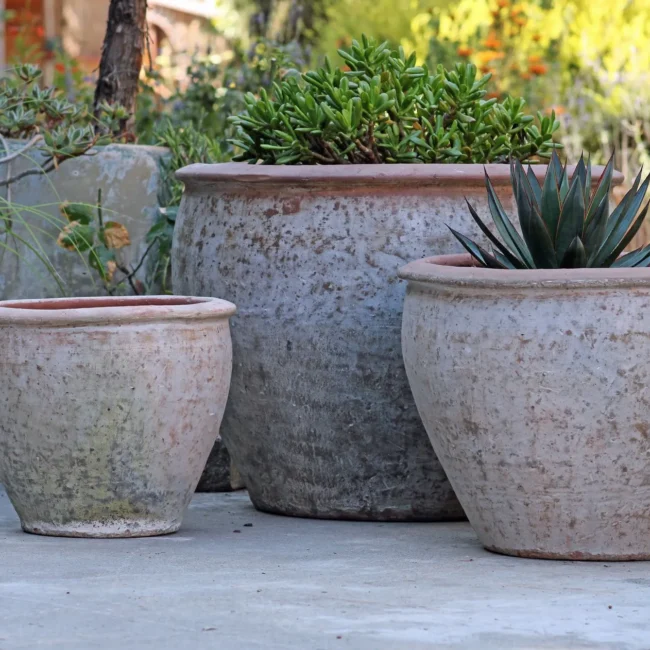
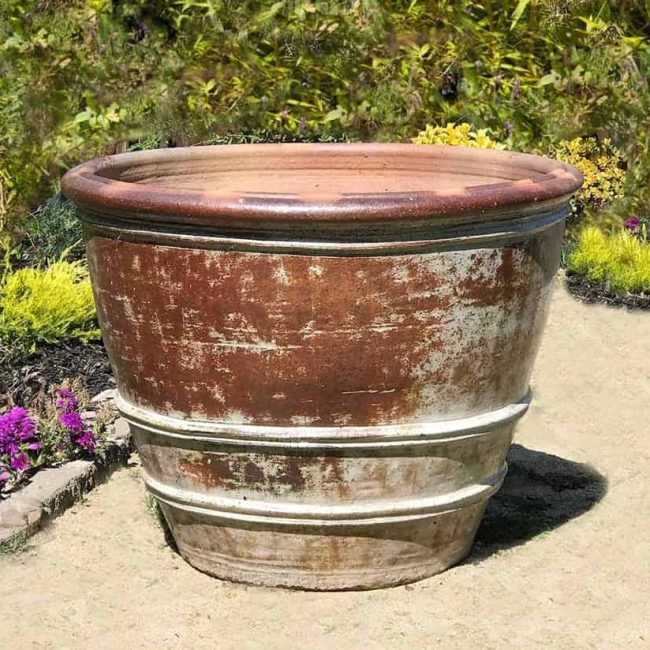
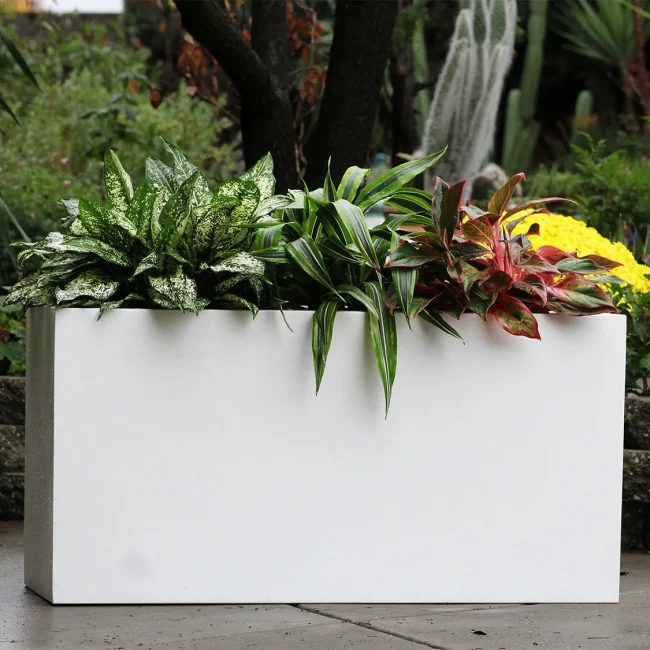
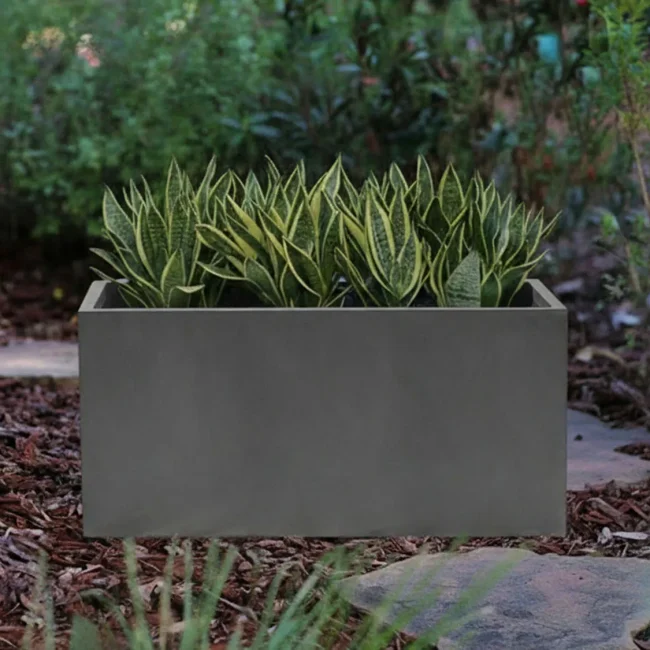
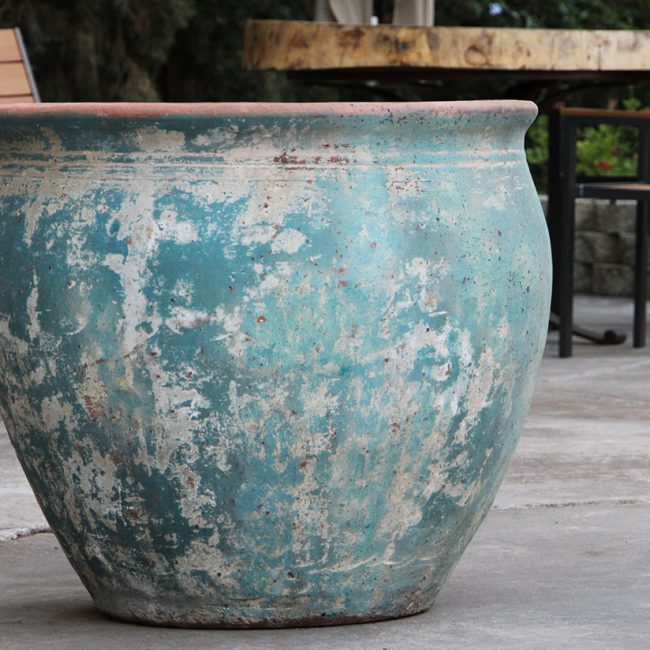
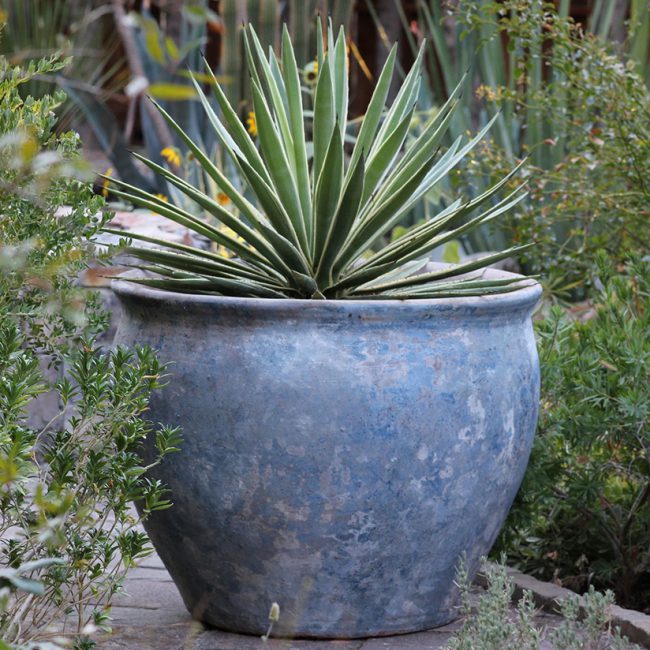
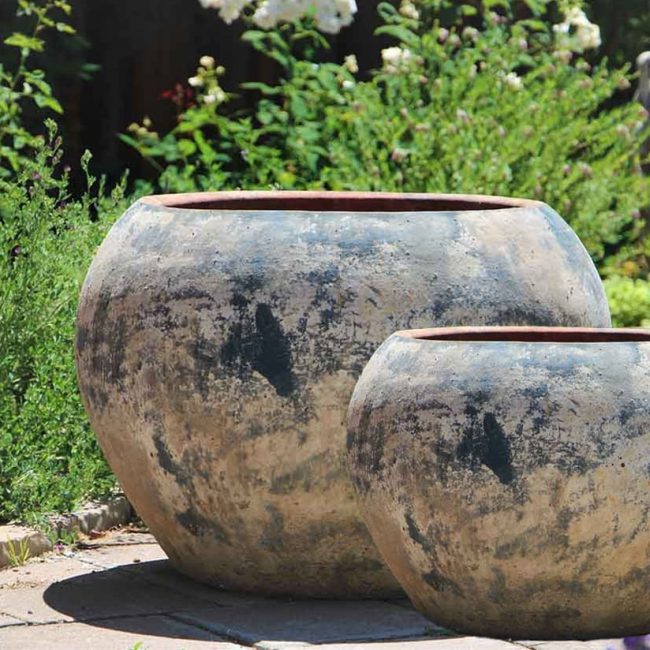
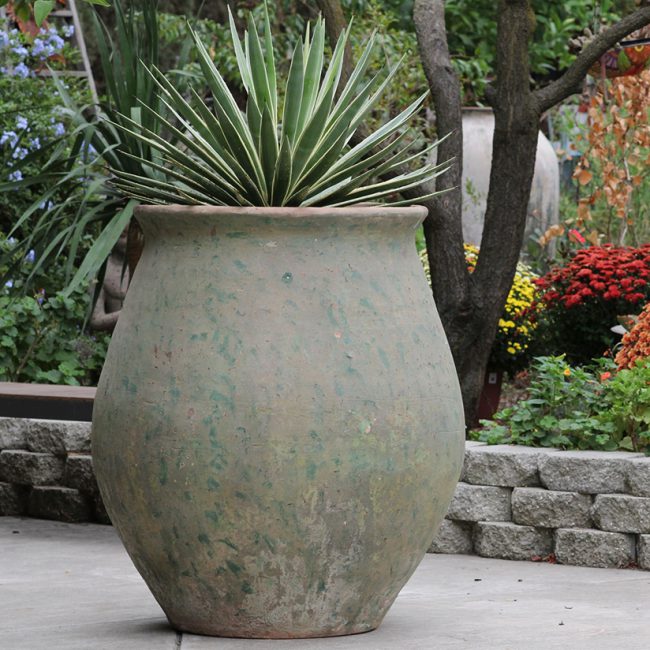
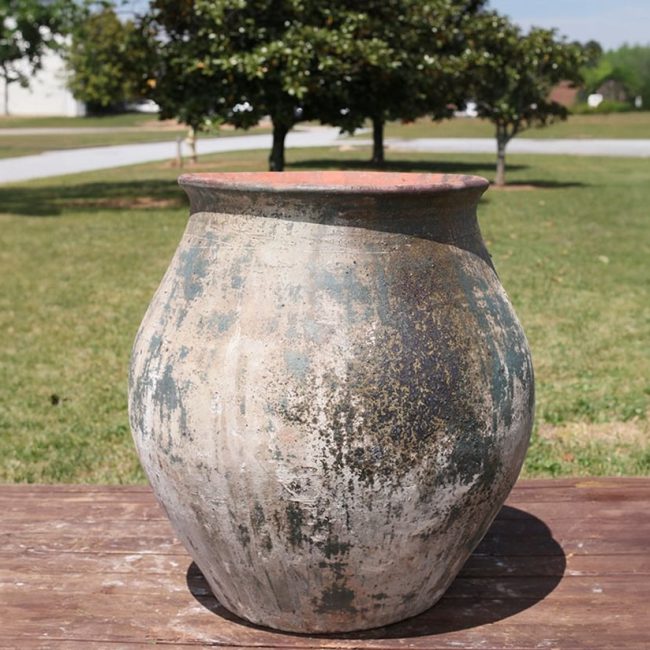
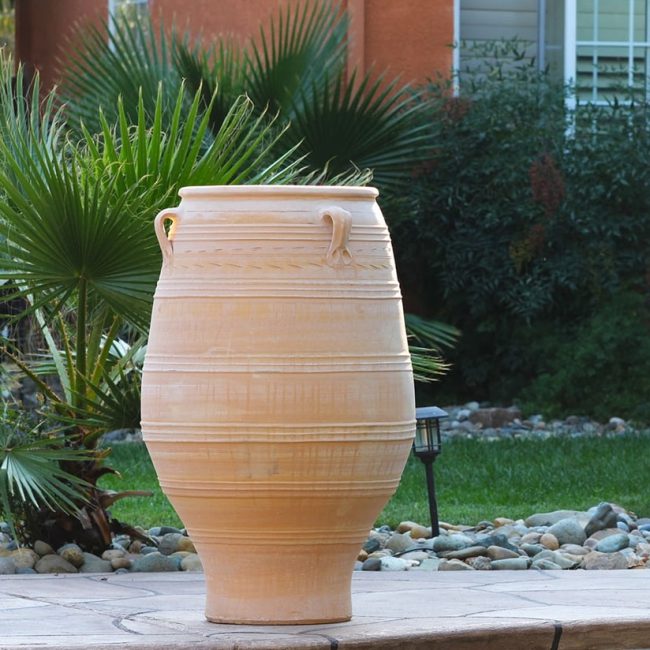
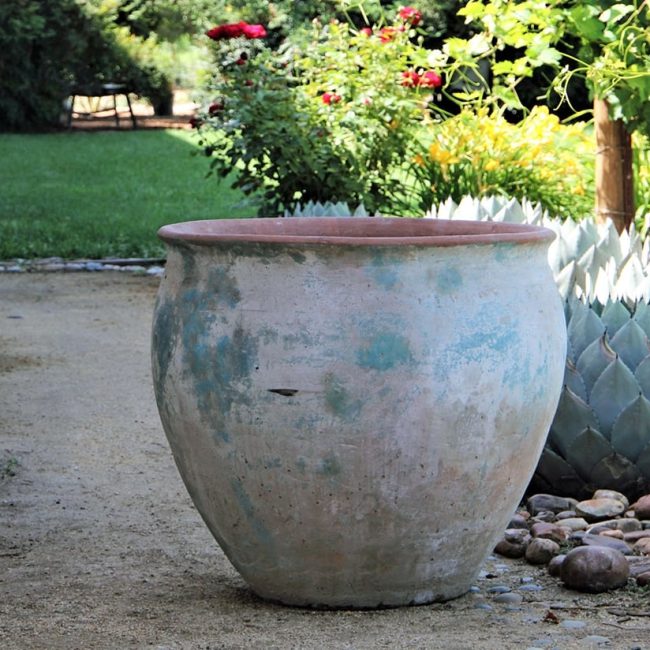
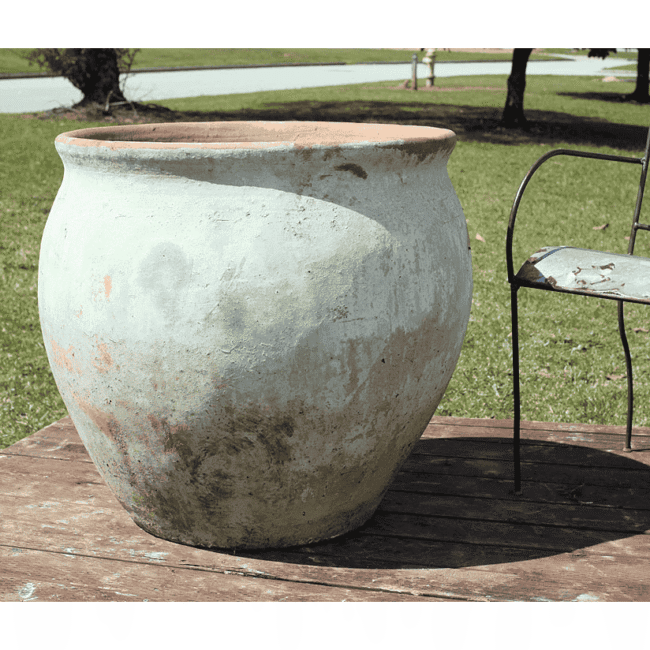
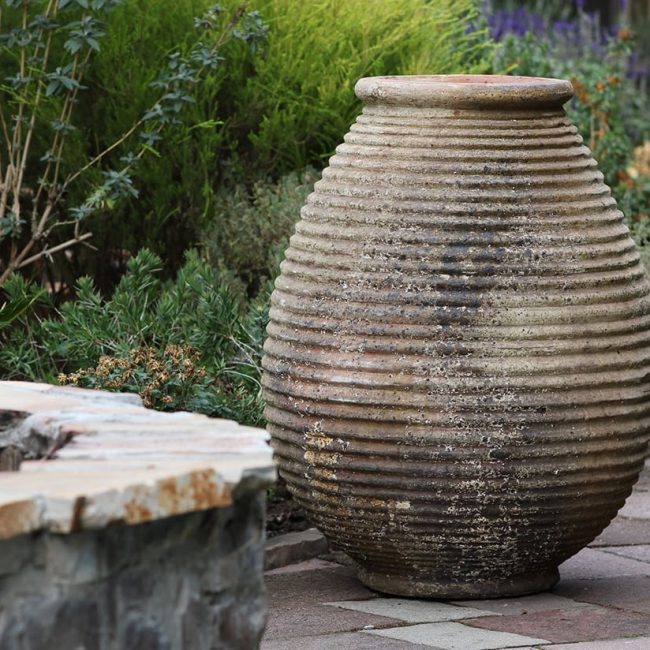
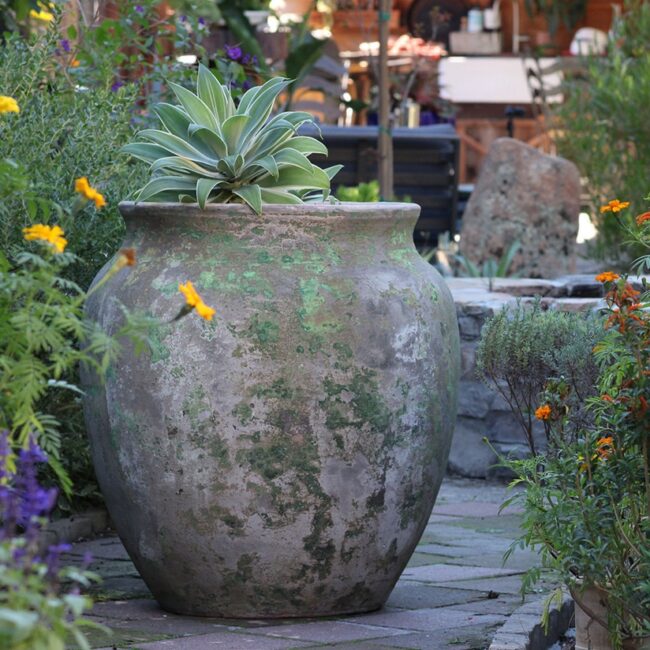
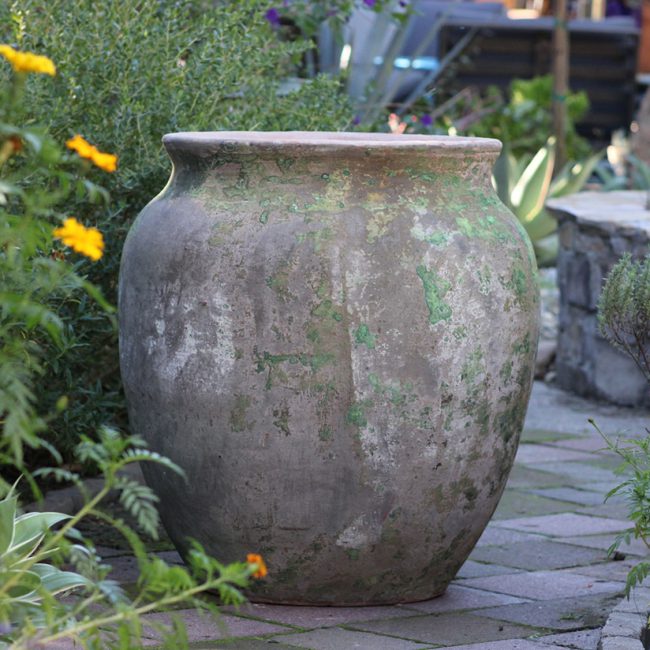
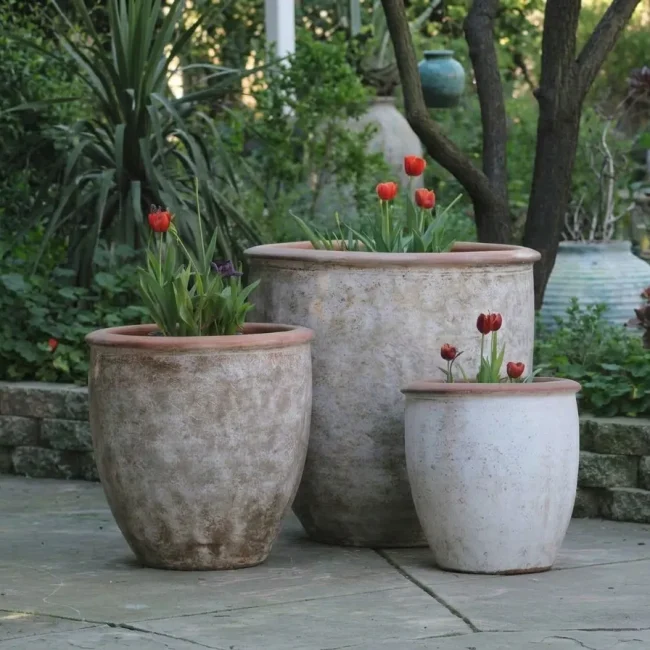
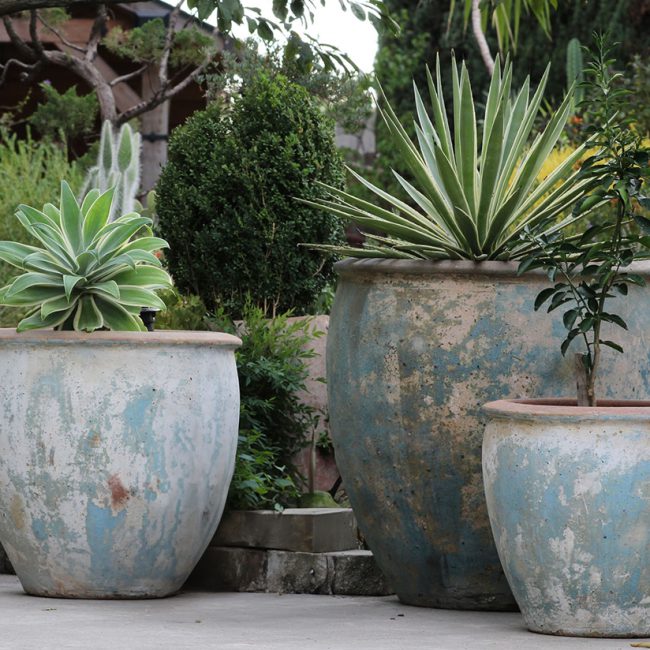
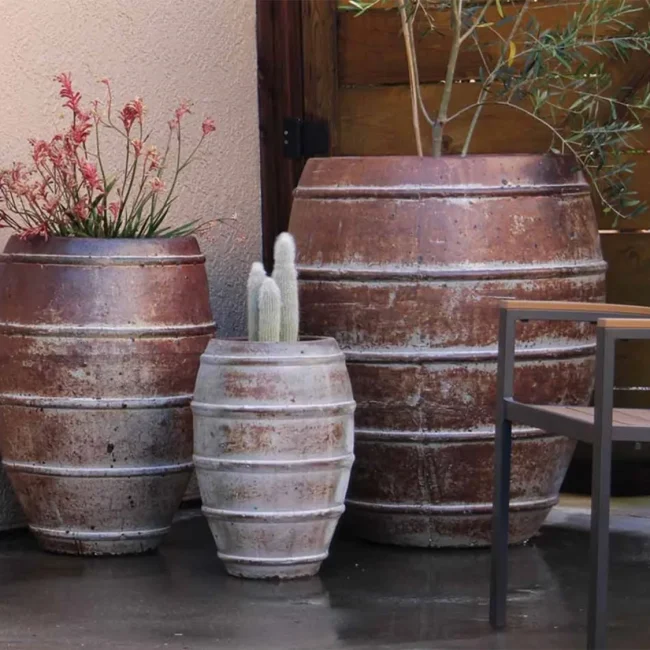
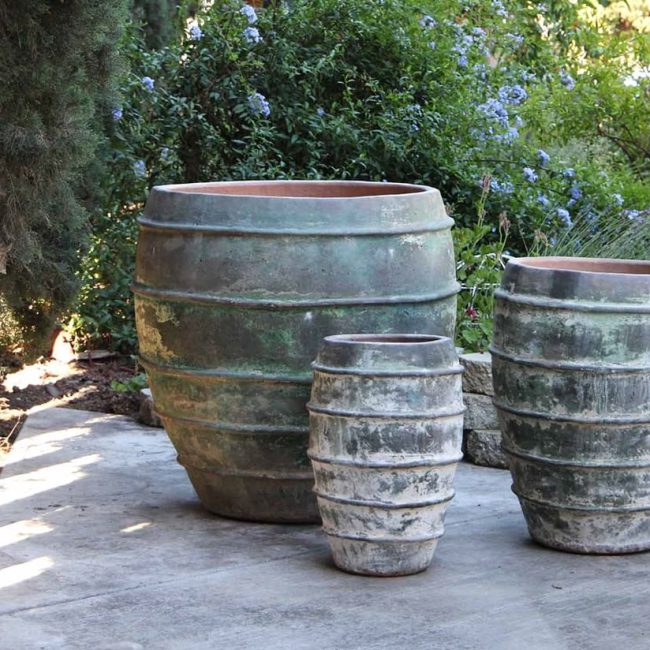
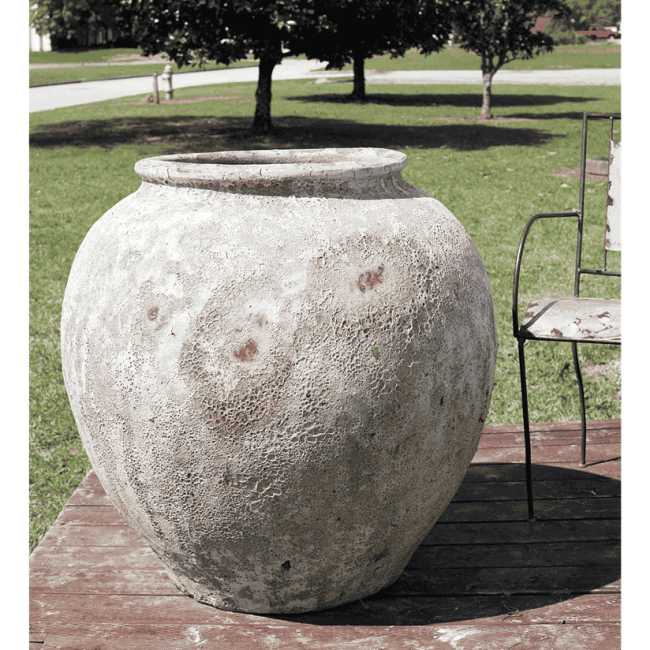
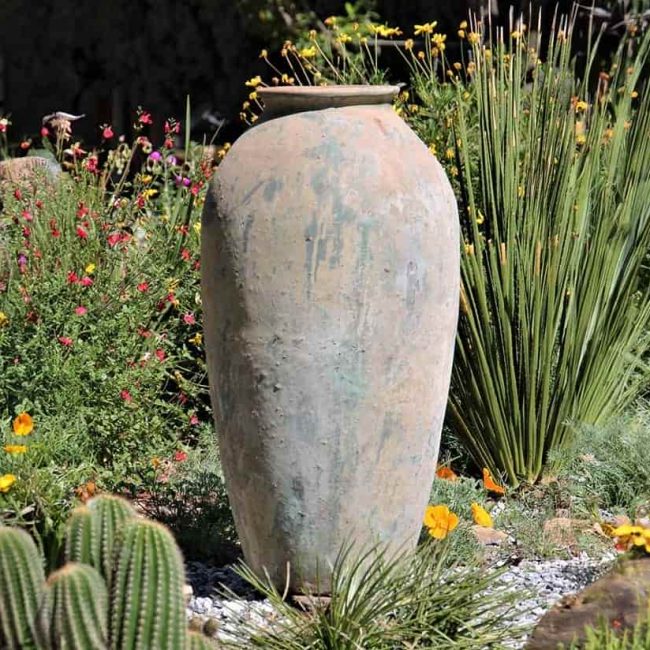
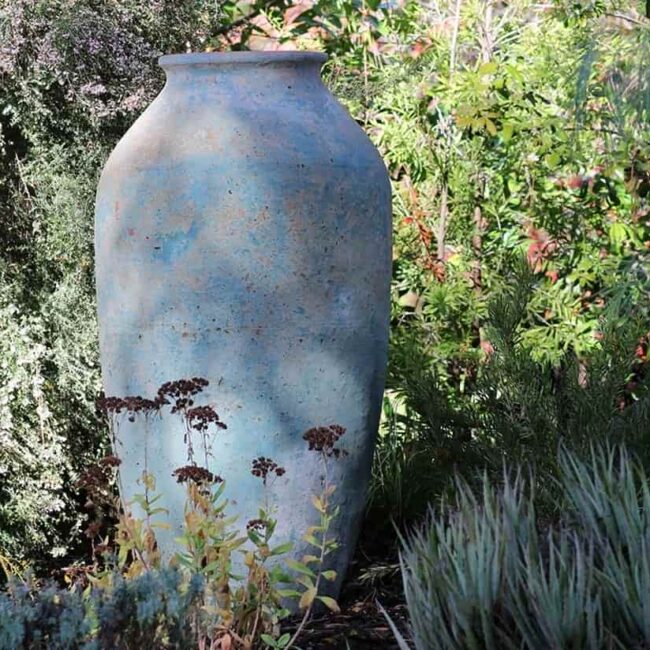
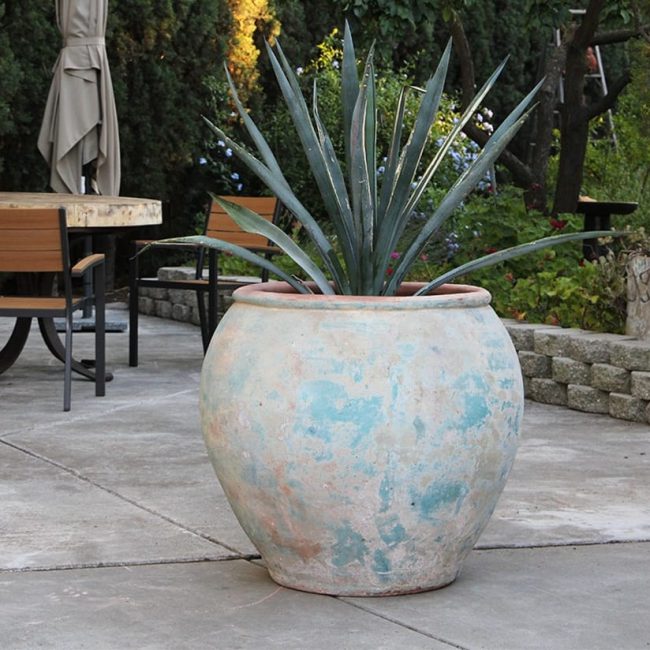
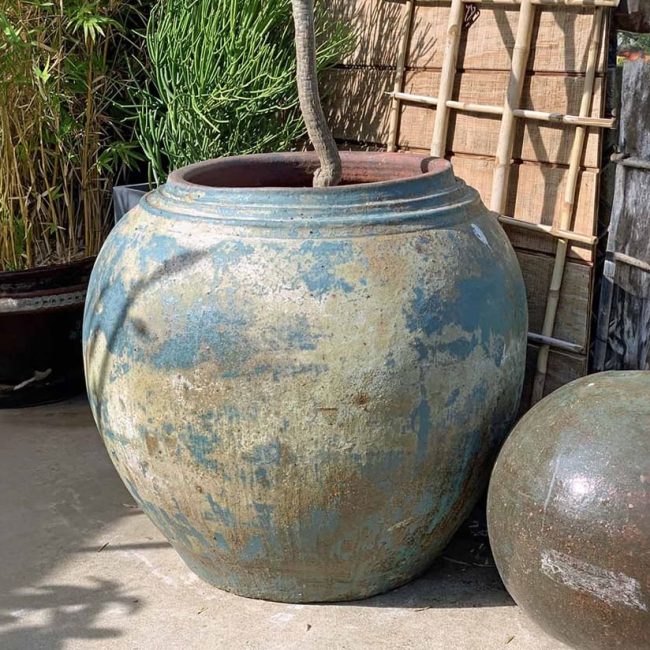
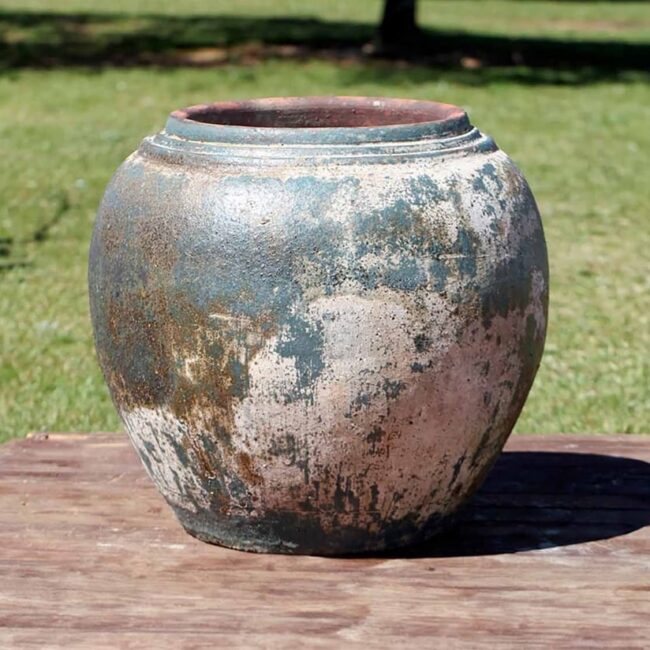
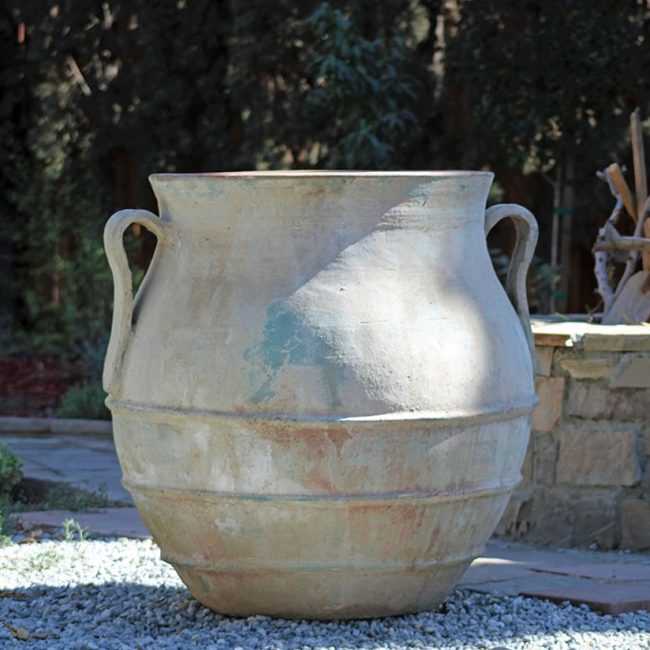
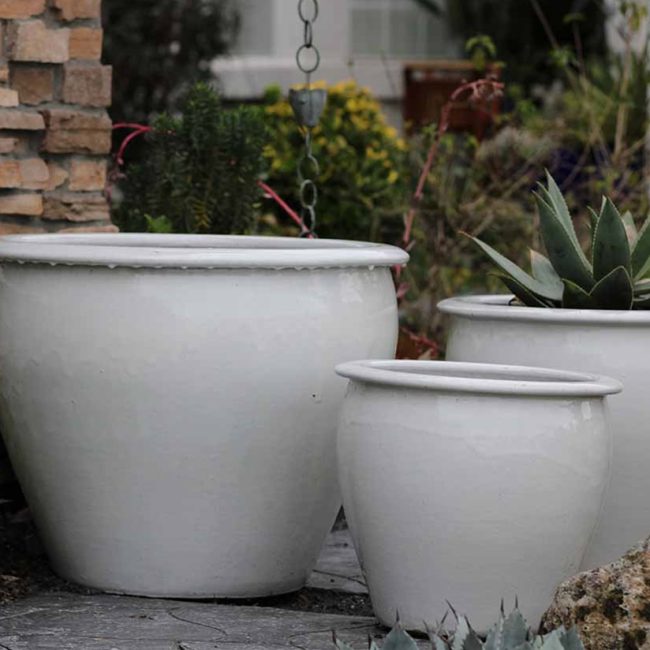
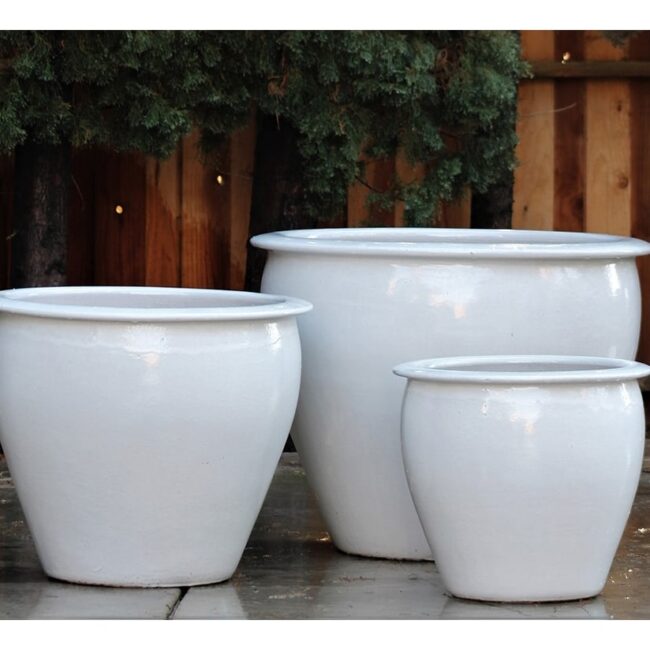
Need a size or shape you don’t see?
Tell us the space and the height. We will suggest pieces and quote them with delivery to your ZIP.
Why choose a large planter for your topiary
Most topiary arrives in a plain nursery pot. The planter is what makes it part of the house or the terrace. Size matters more than style: too small and a tall piece looks top-heavy and catches the wind. These planters are sold empty, so you choose the plant and the pot separately. The rows below cover sizing, winter, faux plants and getting a heavy piece into place.
Planters for topiary trees start with size
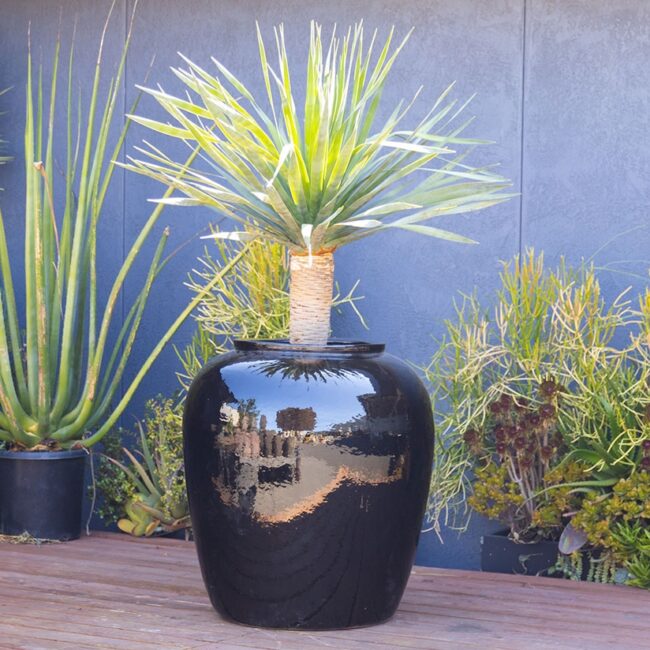
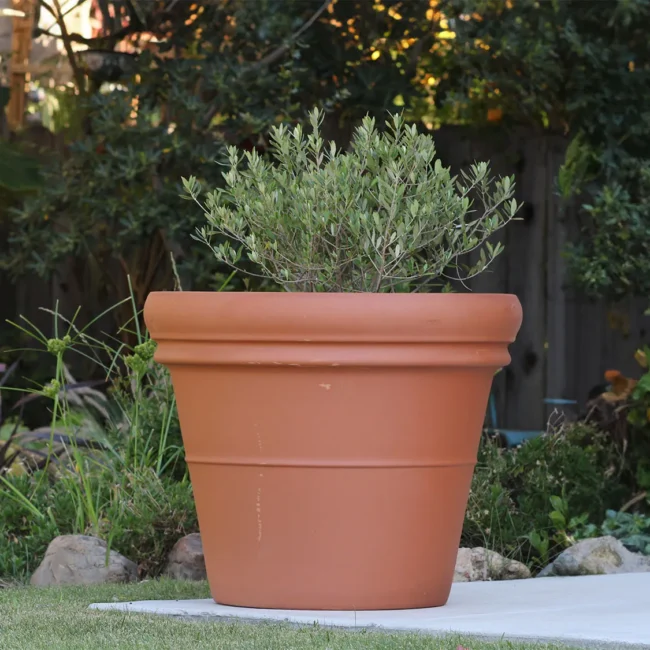
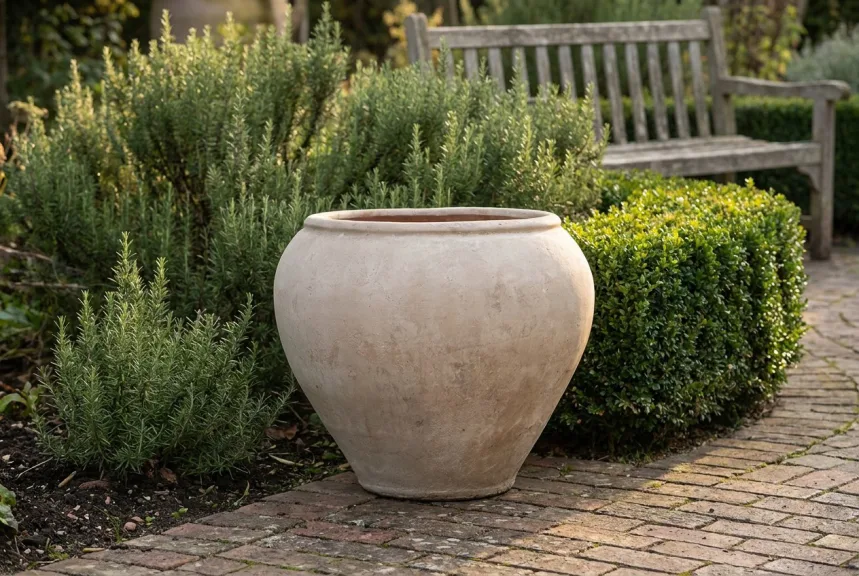
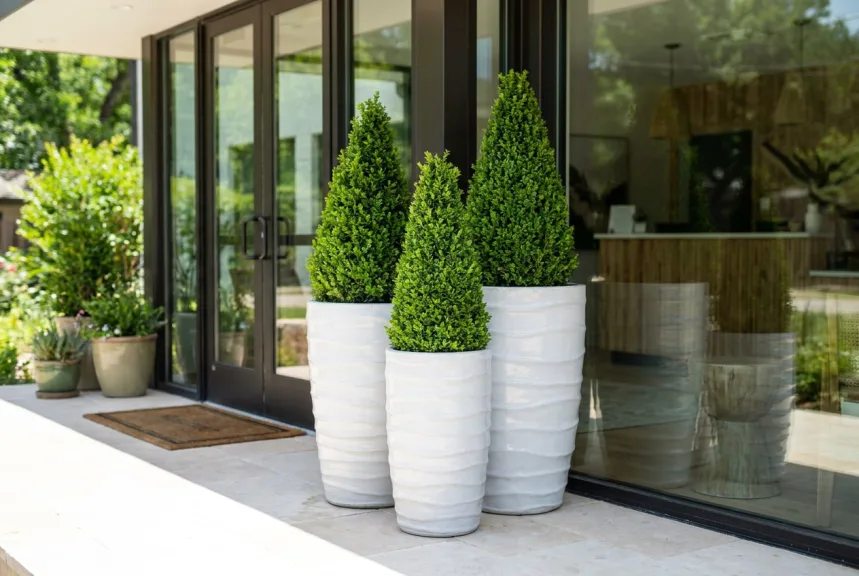
A planted topiary looks settled when the plant stands about one and a half to two times the height of the container. Add the two heights together too. A four-foot jar with a five-foot tree in it is a nine-foot object.
On a jar, check the mouth as well as the body. The listed width is the widest point, and the opening can be far narrower. Tell us the topiary you plan to use and we will measure the opening before you order.
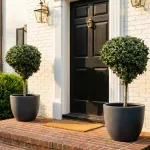
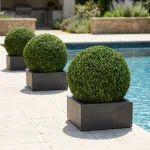
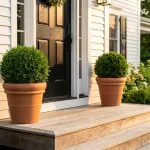
A boxwood planter for a front door
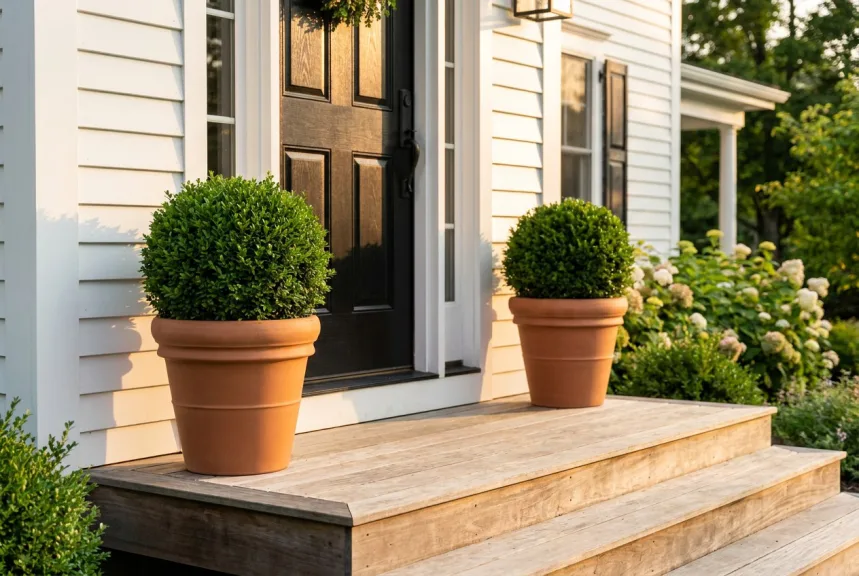
Every planter for a live boxwood needs a drainage hole, because waterlogged soil pushes out the air the roots need. Skip the gravel layer in the base. It raises the wet zone instead of draining it.
Think about winter first. Unglazed terracotta is the most frost-prone material, and fiberglass handles freezing better. We give no frost rating for the glazed pieces, so ask us about your zone. Over winter, raise any planter on pot feet or bricks. Boxwood in a planter covers the plant side.
Planters with fake plants, chosen separately
Many people want the pot and the plant together. Here they are separate purchases: every planter ships empty, and artificial topiary is sold on its own. Add both to one order and they arrive together.
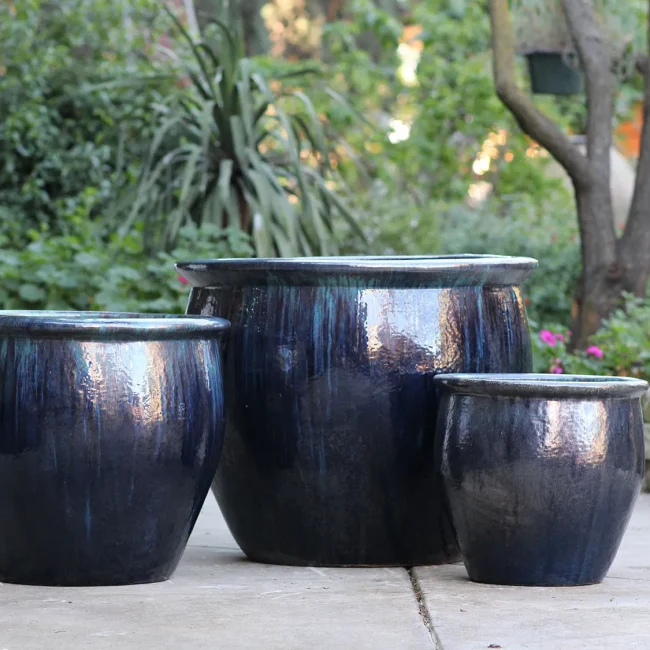
For a faux plant outdoors, the grade matters more than the pot. Some artificial pieces are made for sun all year and others for part shade, and the names do not show which. Ask us which grade suits your spot. A graduated set of three suits an entrance or a flight of steps.
Getting a heavy planter into place
A large planter travels by freight on its own pallet, and home freight is usually curbside. For anything over about 150 pounds, ask for a liftgate. Decide where the planter will stand before it arrives. One person cannot move a piece three feet across.
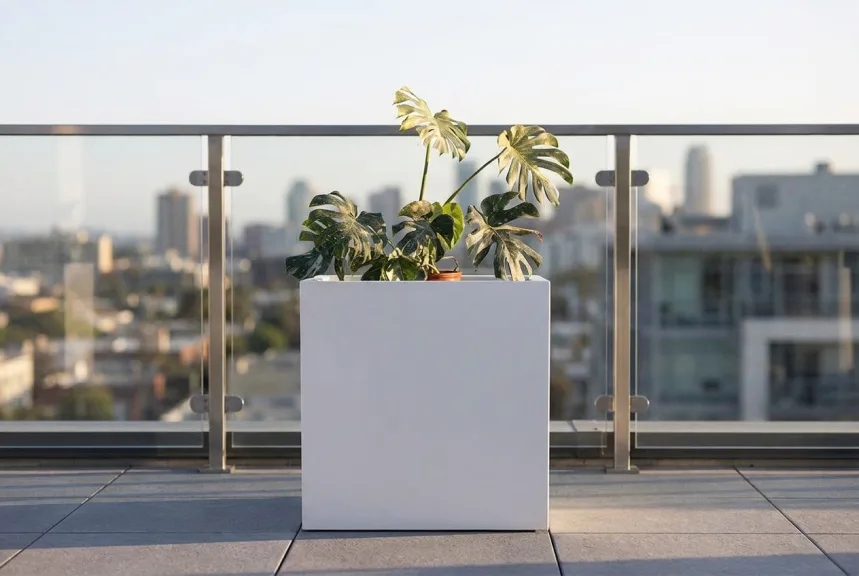
Weight also rules out some spots. The fiberglass cube and box are much lighter for their size, which helps on a roof terrace or a balcony. Note any damage on the delivery receipt before you sign.
Questions about Planters
Which planter fits the topiary I am buying?
Start with the planters suggested on your topiary’s own page, then tell us the exact piece and we will measure the opening before you order. Listed sizes are the widest point of the body and the height, and on a jar the mouth can be half the width of the belly. See what size planter a topiary needs.
Do you sell these planted or empty?
Empty. The planter and the topiary are separate purchases, so you can plant something you already own, or replace a container without replacing the plant. If you want both, add them together and they arrive as one order. Live boxwood is under live topiary.
How much is delivery on a large planter?
It is quoted, not charged at checkout, because it depends on the piece and where it is going. A planter this size travels by freight on its own pallet. We work out the cost to your address and agree it with you before the piece ships.
Are the sets one planter or several?
Several. A set of three is three planters in graduated sizes, and the product page lists the dimensions of every piece. Fourteen of the 39 here are sets of two, three or four; the rest are single pieces.
What are the planters made of?
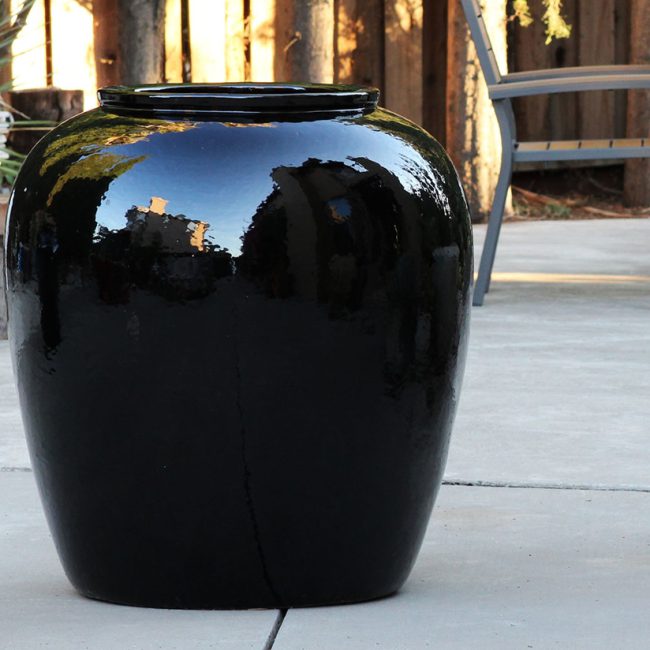
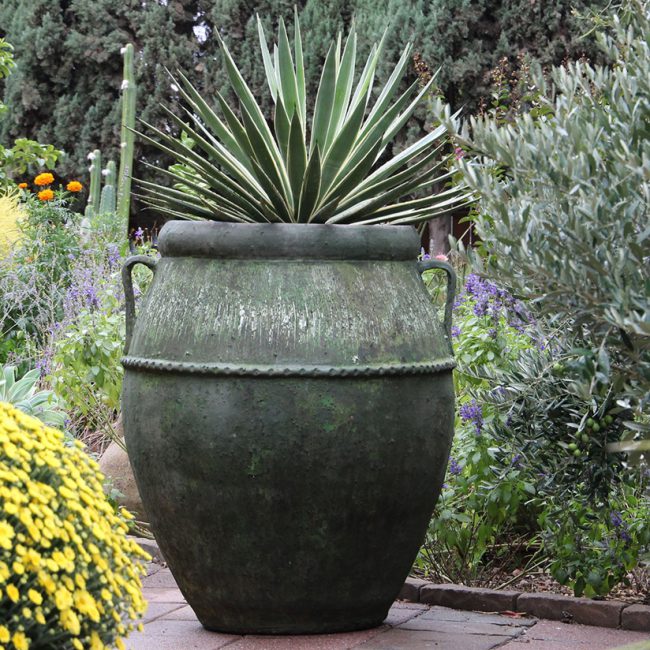
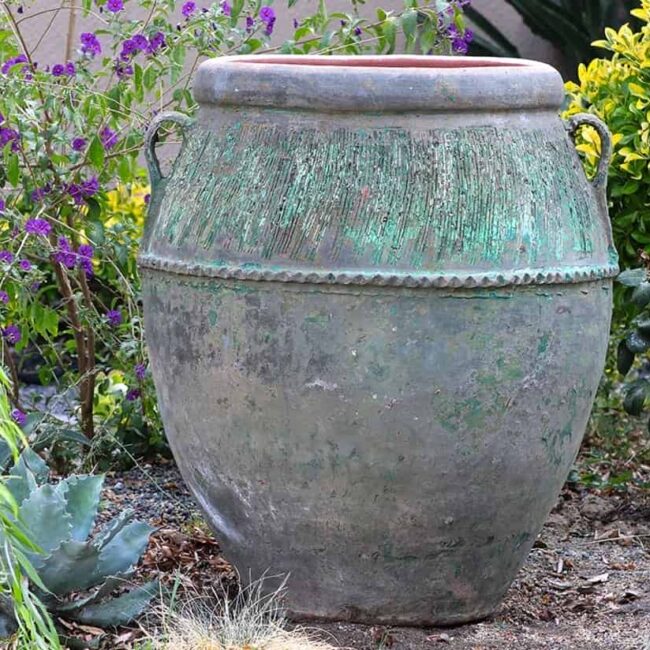
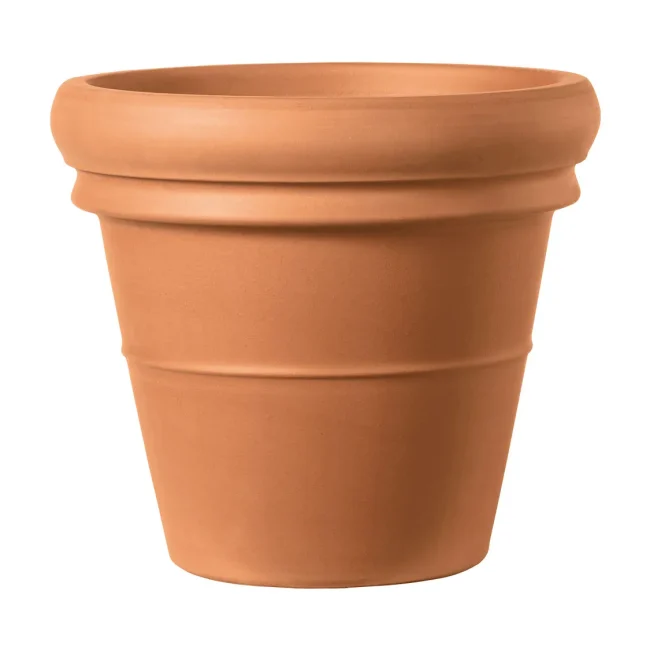
Mostly glazed pottery, a fired clay body under a glaze. That covers the Le Beau, Tuscan Sun and Château de Maisons ranges. The Seasons planter is ceramic, the Metropolis box and cube are fiberglass, and the Pithari urn is unglazed terracotta.
Can the planters stay outdoors in winter?
It depends on the piece and your zone, so ask us. Fiberglass handles freezing better than clay, and unglazed terracotta such as the Pithari urn is the most at risk. Raise any planter on pot feet over winter. For the plant, see boxwood in a planter.
Do the planters have drainage holes?
Check the product page, and ask us if it does not say. A planter for a living topiary needs one, because waterlogged soil pushes out the air the roots need. Do not add gravel to the base; it keeps the soil wetter, not drier.