
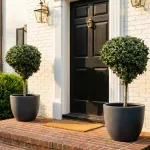
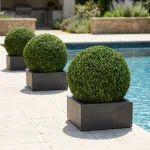
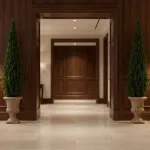
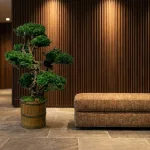
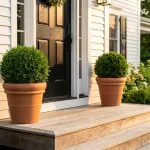
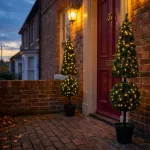
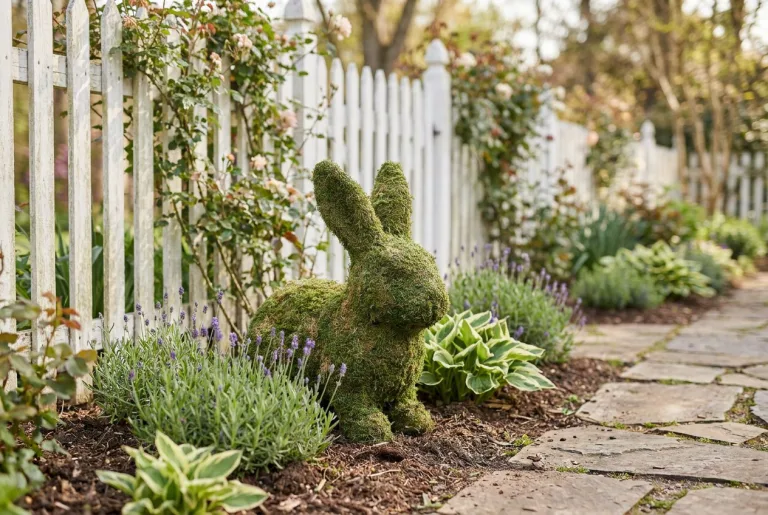
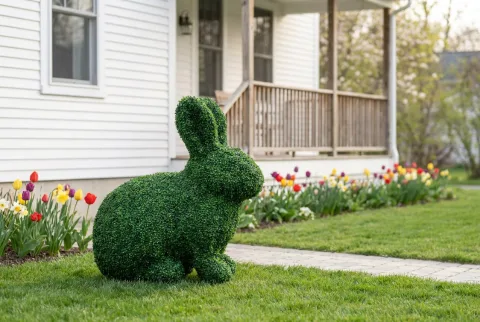
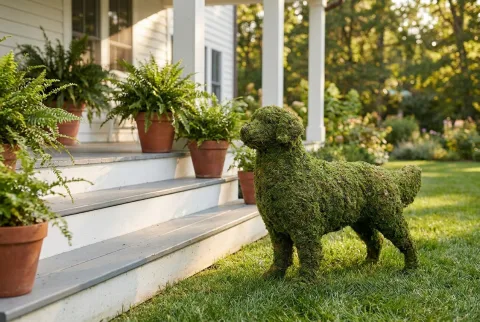
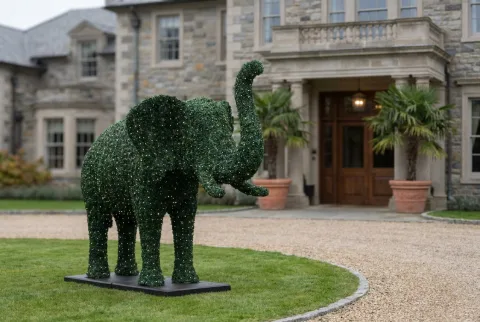
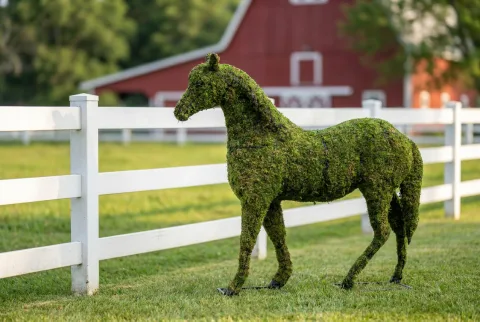
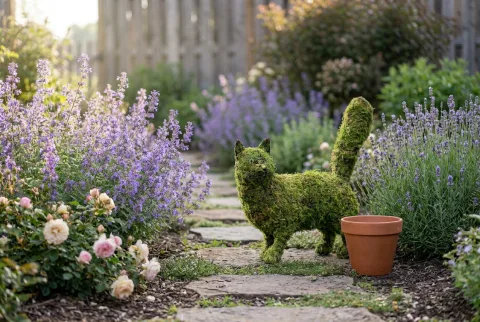
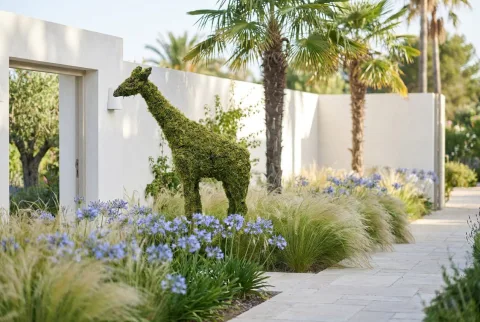
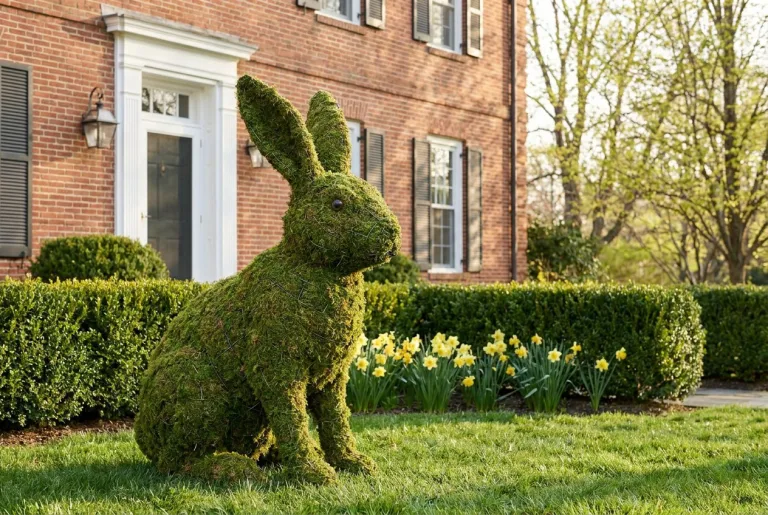
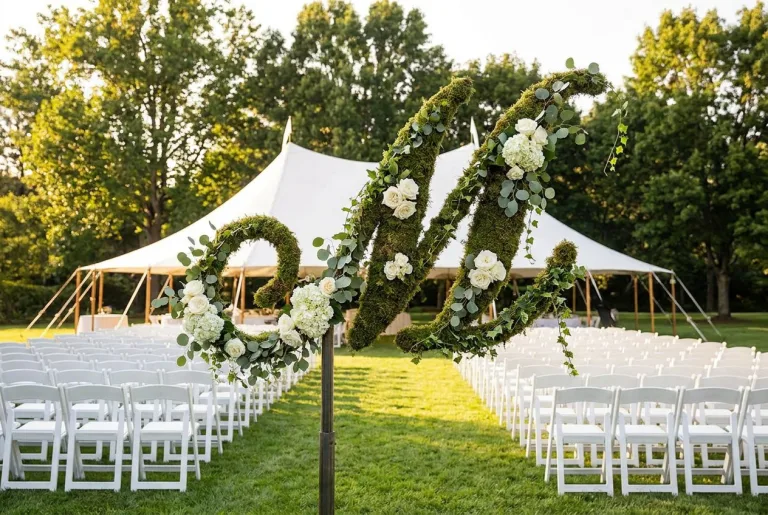
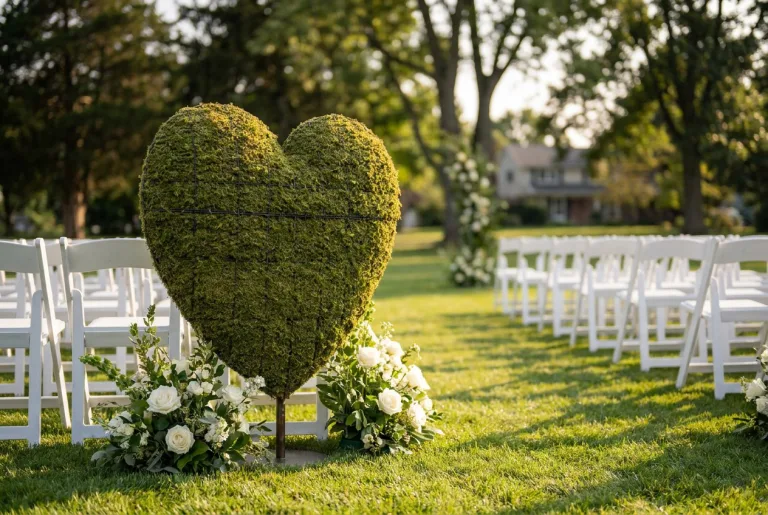
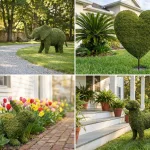
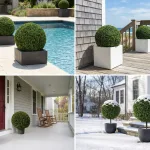
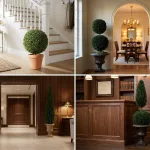
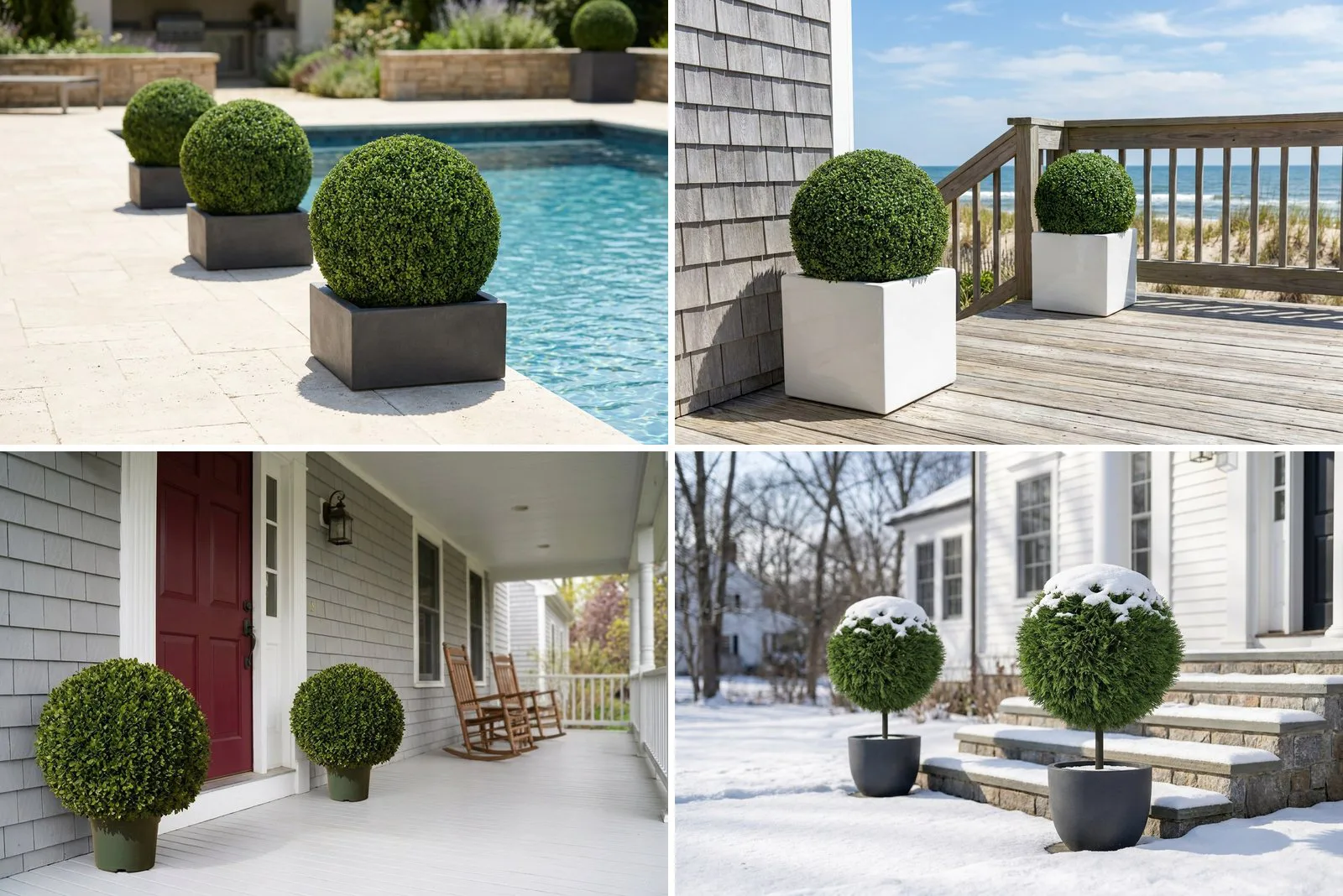
The best way to keep artificial plants from fading in the sun is to buy a UV-rated outdoor grade, put it where it gets the fewest hours of hard sun the spot allows, and keep it clean. UV protection mixed into the material does far more than any spray or routine. Dust and grime also cause much of the dullness people take for fading.
Good outdoor pieces still change color slowly over the years. This page covers why, how to slow it down, and how artificial topiary handles winter and wind.
Why artificial plants fade in the sun
Ultraviolet light breaks down the pigment and the plastic in artificial leaves. On cheap foliage, the green goes yellow in patches, the leaf tips harden, and a chalky bloom appears that will not wash off. The side that faces the sun goes first.
How fast that happens depends on two things: the pigment, and whether UV stabilizers are mixed through the plastic. With light-fast pigments and stabilizers in the material, the change is slow and stays below what most people notice. With cheap pigments, no care routine will save it.
Buy the right grade for the sun
| Grade | Where it suits |
|---|---|
| Full outdoor grade | Full sun all year, pool decks, south and west fronts, the coast |
| Lighter UV grade | Part shade, covered porches, seasonal use |
| Indoor grade | Indoors only, away from sunny windows |
Our full outdoor grade UV boxwood ball carries a 5-year fade warranty. Under the hard sun of the Deep South and the Southwest, expect full outdoor grade foliage to stay looking right for about three to five years, and longer in the north. The lighter UV grade is meant for part shade or seasonal use. In all-day direct sun, expect its color to start fading after about two and a half years. Check any product for a warranty that mentions color, because many cover only the frame. Our guide to UV-resistant versus UV-proof explains what to ask.
Where you put it matters as much as the grade
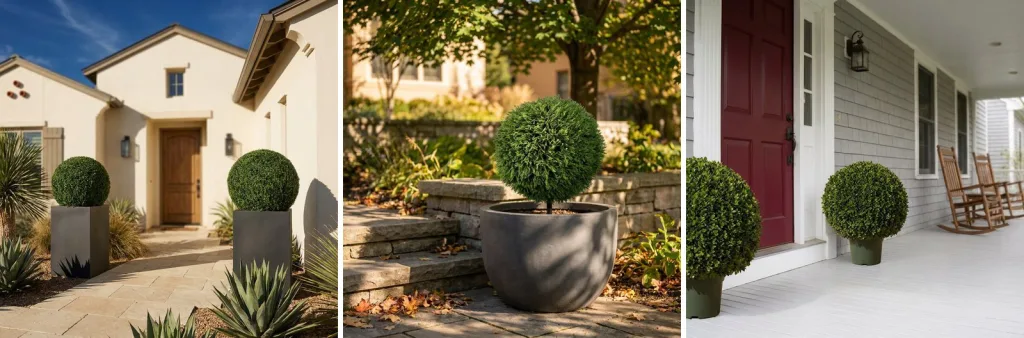
Count the hours of direct sun on the exact spot. Under four hours is easy, and a lighter UV grade will last for years there. Four to eight hours is the normal case, where a UV-rated grade earns its money. Eight hours or more, unshaded, is the hard case, so buy the full outdoor grade.
Reflected light counts too. A piece against a pale wall, on light paving or beside glass gets the sun twice. Treat that spot as harsher than the compass suggests. More in what the position decides.
Full sun, pools and the coast
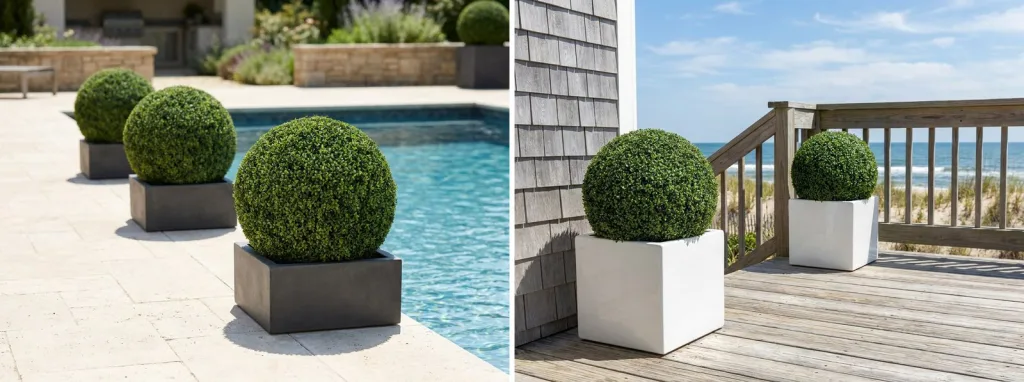
A pool deck and a beach house take direct sun, reflected light off water and pale surfaces, and salt or chlorine spray. Use the full outdoor grade here. Rinse the pieces with fresh water every few weeks in summer, because salt and chlorine residue dulls the leaves. If you can, turn the piece a quarter turn each season so one side does not take all the sun.
How do you clean an outdoor artificial topiary?
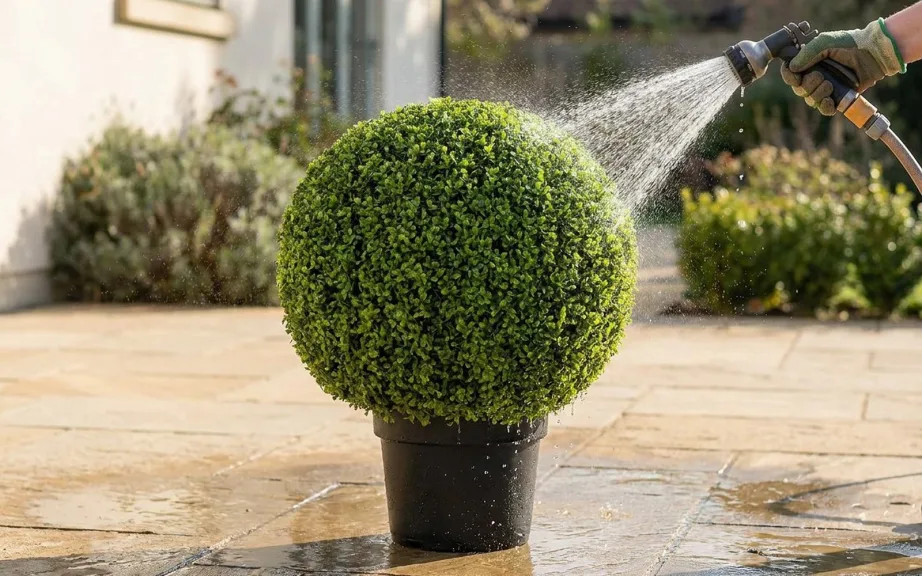
Clean a piece before you decide it has faded. A grayed piece is very often just dirty, and from a few feet away the two look the same.
Dust first. A soft duster handles the outside. For the tight spots inside, use a hair dryer on cool or a can of compressed air. Outdoors, a gentle shower from a garden hose does the same job. Never use a pressure washer, because it bends and strips the leaves.
For grime that stays, wipe the leaves and stems with a cloth dipped in mild soapy water and wrung out. Grimy stems are what make a neglected piece look old. Let it air dry.
Does UV spray help?
A clear UV-protectant spray, sold at most home improvement stores, adds a thin layer over the leaf. It helps a lighter grade piece in a sunnier spot than it was meant for. It adds little to a piece that already has UV stabilizers in the material, so check the label first.
A spray sits on the surface, and rain and sun wear it off, so repeat it every few months in strong sun. Spray outdoors, hold the can about two feet away, keep it moving in light passes, and let the piece dry for a couple of hours before it goes back in place.
Can artificial topiary balls handle extreme weather?
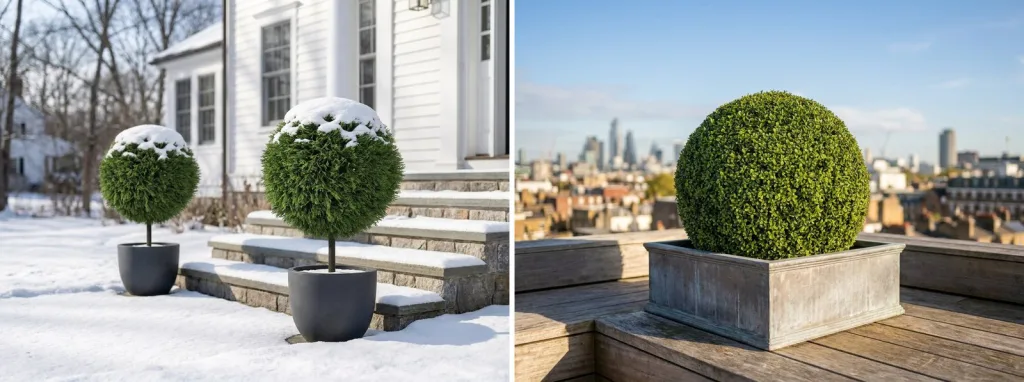
Yes. A UV-rated artificial cedar or boxwood ball handles frost, snow and summer heat, and it does not need to come inside for winter. Plastic foliage does not dry out or freeze the way a plant does. Our UV cedar balls are the lighter UV grade, so cold and snow are fine, but give them part shade rather than all-day sun. Three things still need care.
- Wind. A ball on a stem acts as a lever. Weight the pot with sand or gravel, and secure tall pieces on rooftops, balconies and building corners. Bring small pieces in before a hurricane or a named storm.
- Snow load. Heavy wet snow can bend a wide or flat-topped piece. Brush the worst of it off by hand.
- Trapped water. Water sitting in a pot can freeze and crack it. Make sure the container drains.
What shortens an outdoor piece’s life
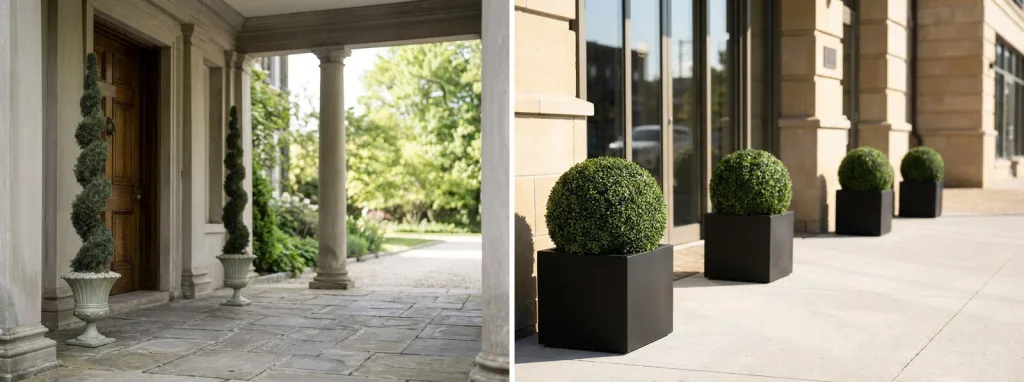
The grade and the build, usually long before fading. Silk flowers and indoor-grade foliage are too fragile for weather. A piece built on thin center rods comes apart in wind and snow before its color becomes the problem. Before you buy, look for a sturdy frame, a weighted base and UV protection in the material. How to tell good artificial topiary from bad has the checklist.
Quick answers
How long does outdoor artificial topiary keep its color?
A full outdoor grade piece usually looks right for three to five years in hard southern sun and longer in the north. Pieces in part shade or under a porch roof last longer still.
Can artificial topiary stay outside in winter?
Yes. Cold does not hurt it. Weight the pot for wind, make sure it drains, and brush off heavy snow.
Are there UV-resistant artificial topiary options?
Yes. Most of our outdoor artificial topiary is UV-rated, and the artificial topiary balls come in both grades.
How do you keep artificial flowers from fading outside?
The same way as foliage: buy a UV-rated outdoor product, keep it out of the harshest afternoon sun, and rinse off dust. Silk flowers are not made for outdoors and fade quickly in any sun.
Not sure which grade a spot needs? Tell us where the piece will stand through our contact page or call 866-306-1020. Our team replies within hours, usually the same day. To set a piece in its pot, read how to plant artificial topiary trees in pots, and to compare with live boxwood, see live, preserved or artificial topiary.