



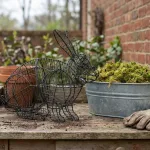










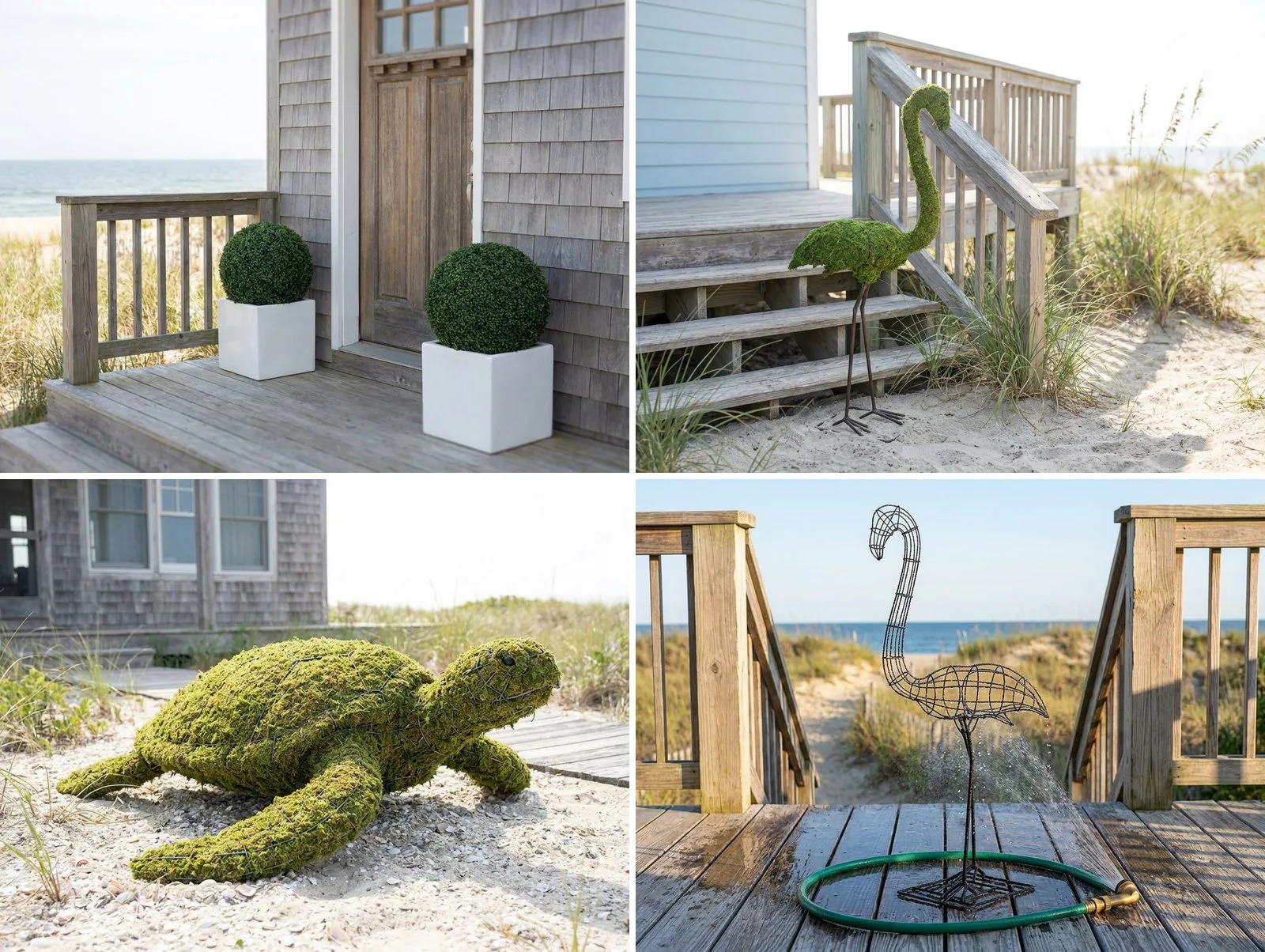
Near the ocean, salt in the air settles on a topiary’s steel frame, holds moisture and attacks any bare metal it finds.
To keep a coastal topiary sound, choose a frame finished in galvanizing, powder coat or both, rinse it with fresh water about once a month, and touch up chips before rust spreads. Artificial foliage and turf cope with salt air far better than moss, because they do not hold salty water against the frame.
What salt air does to a topiary frame
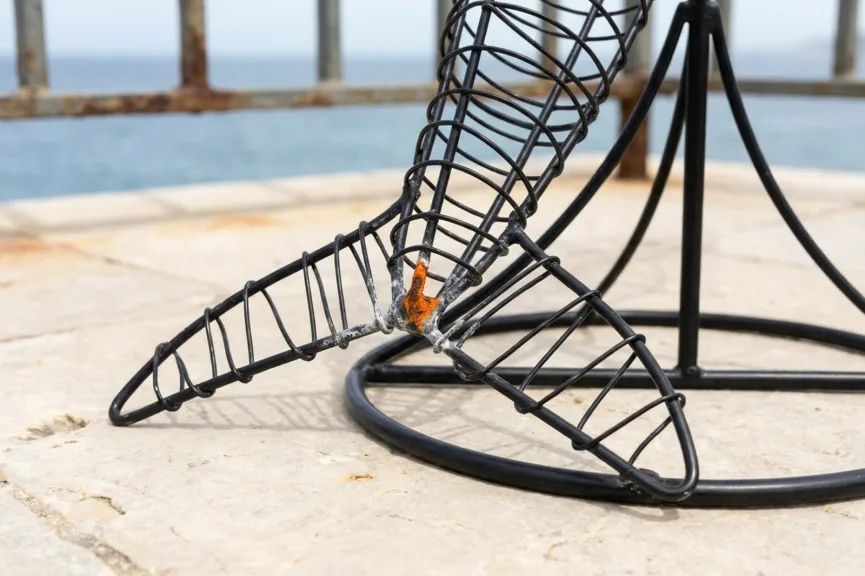
Salt spray and sea mist leave a fine crust of salt on everything within reach of the wind. Salt draws moisture out of the air, so the metal under it stays damp far longer than it would inland. Wherever the coating has a chip or a scratch, that damp salt reaches bare steel and rust begins.
The weak points are always the same: welded joints, the feet or base plate, and any spot the frame rubs against paving or a planter rim. Check those first.
The finishes, and how they hold up by the sea
| Finish | Near salt water |
|---|---|
| Powder coat | A tough, sealed skin while it is unbroken. A chip rusts, so touch it up quickly. |
| Galvanized | Zinc protects the steel even at small scratches, but it wears away faster in salt air. |
| Galvanized and powder coated | The best choice for the coast. The coat protects the zinc, and the zinc protects any chip. |
A thin white powder on galvanized steel is normal. It is the zinc doing its job, not rust. Orange or brown staining means bare steel, and that needs attention.
Our custom frames are built to order in galvanized steel, powder coat, or both. If the piece will stand within sight of the water, say so when you order and ask for both. The options are on our custom topiary design page.
How to rinse a coastal topiary
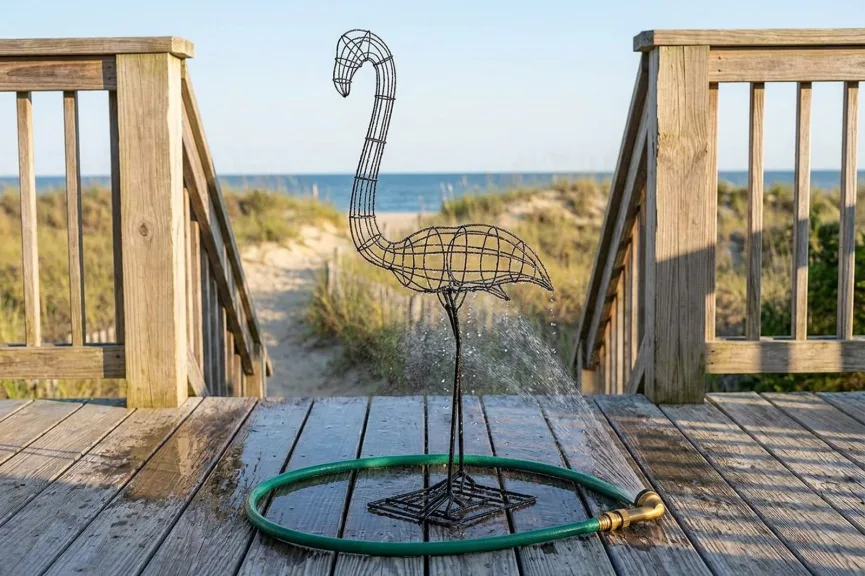
- Use fresh water on a gentle setting. A garden hose with a soft spray nozzle is right. A pressure washer can strip moss and chip coatings.
- Rinse from the top down. Salt collects on top surfaces and runs down to the base, so finish at the feet and base plate.
- Do it about once a month, and after any storm that brings spray inland. Early morning or evening is best, so the piece dries slowly without spotting.
- Let it drain. Make sure water does not pool around the base or in the bottom of a planter.
Moss, turf or artificial foliage by the sea
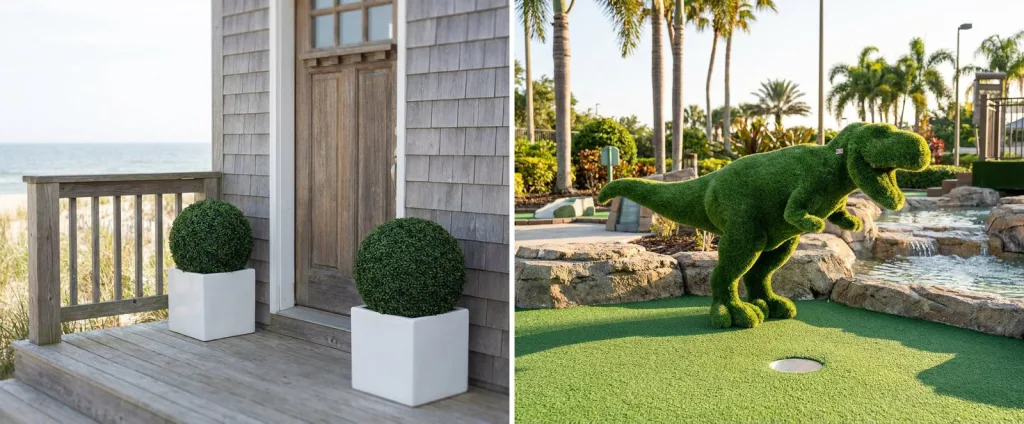
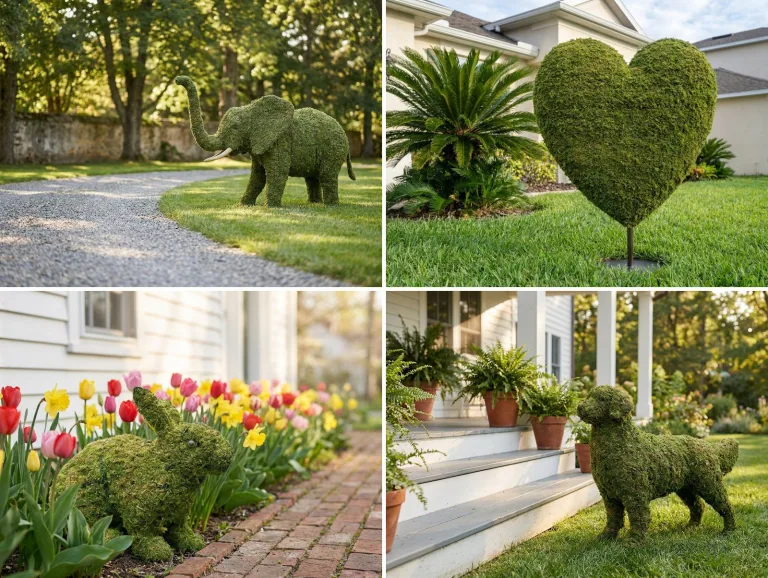
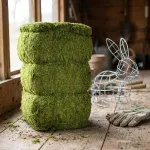
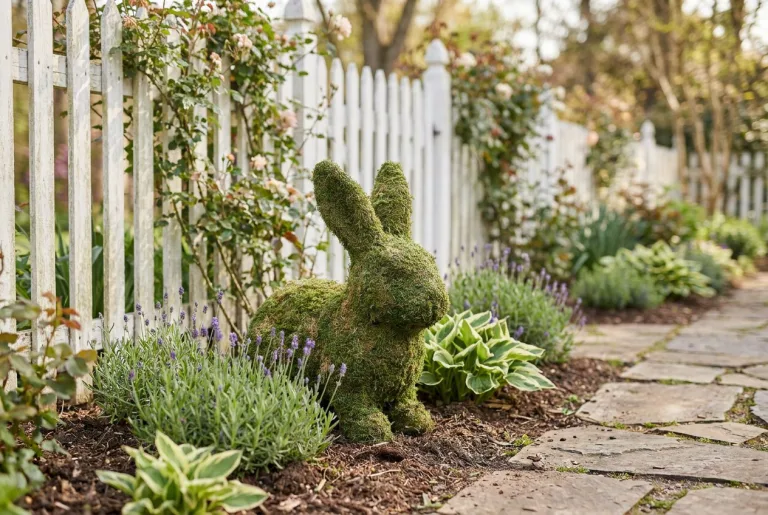
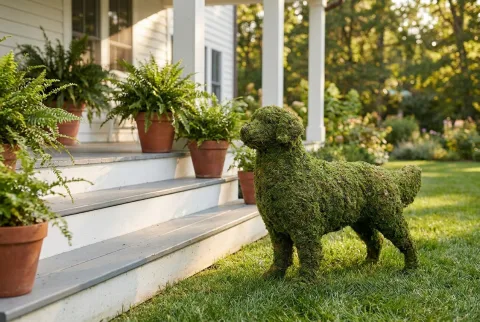
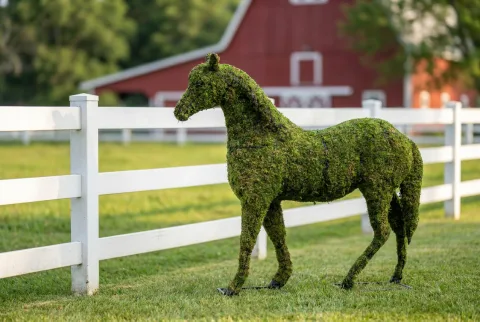
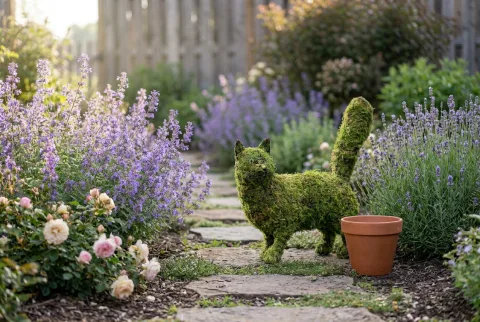
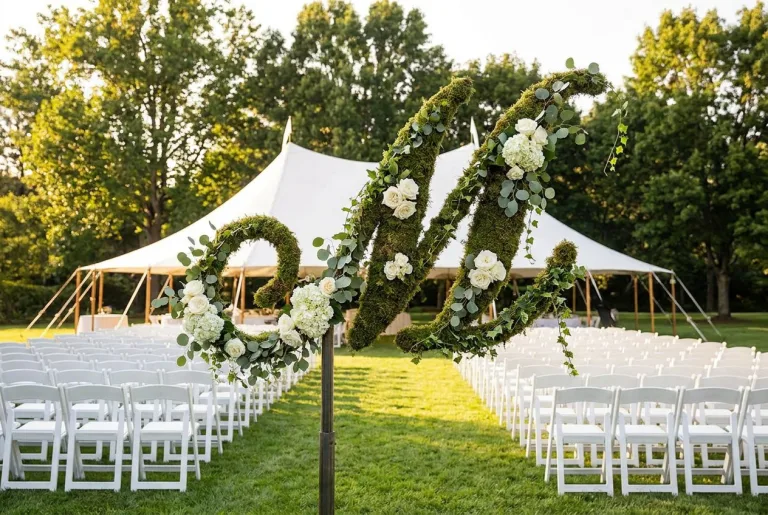
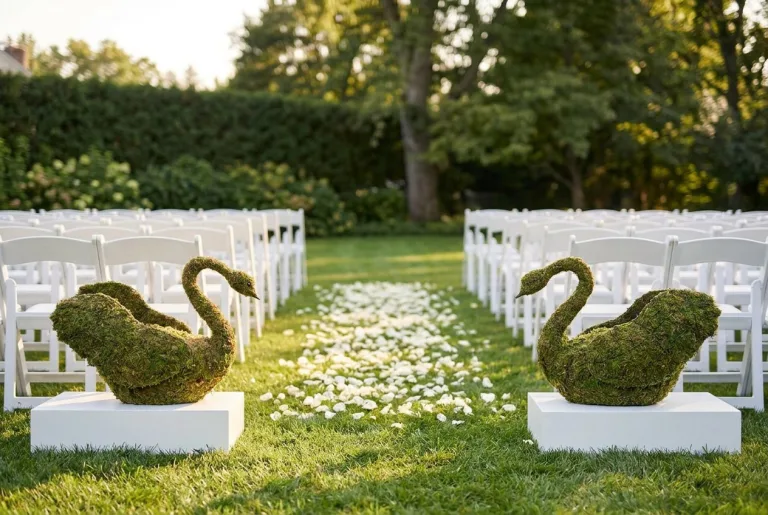
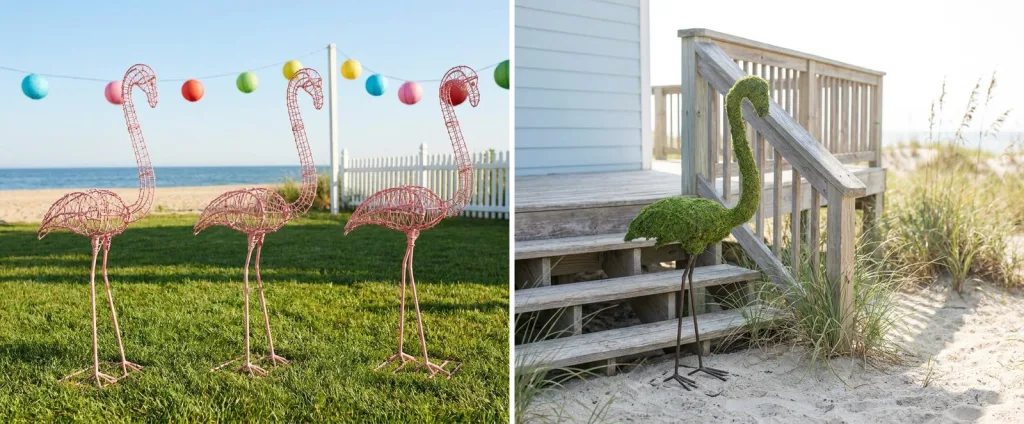
The covering changes how hard the frame has to work. Sphagnum moss holds water like a sponge, and near the coast that water is salty, so a mossed frame stays wet with brine.
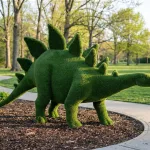
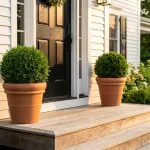
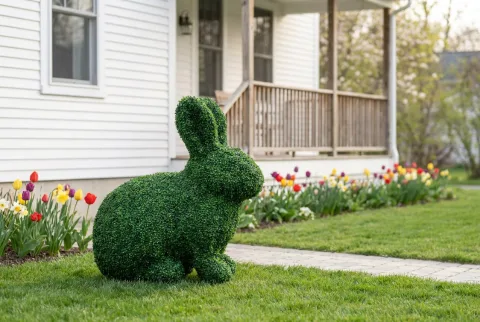
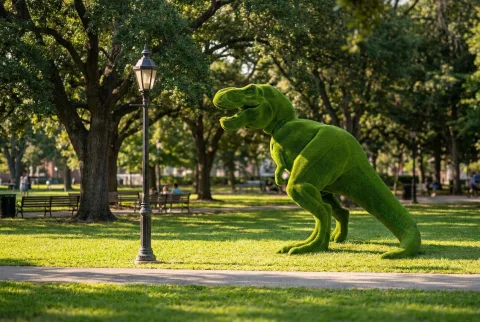
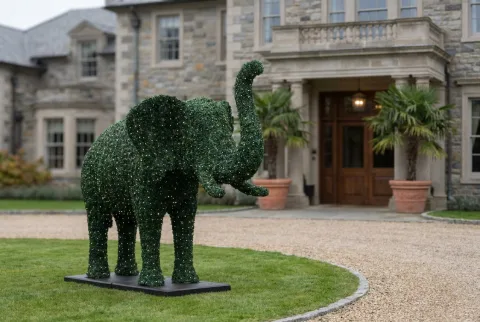
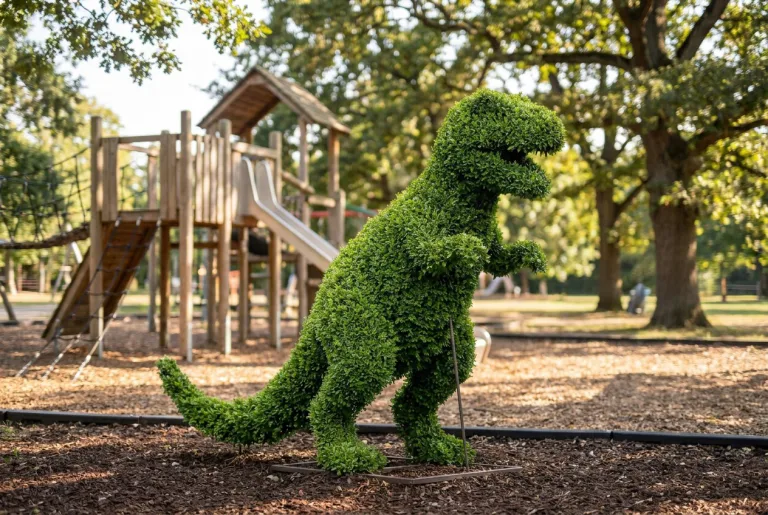
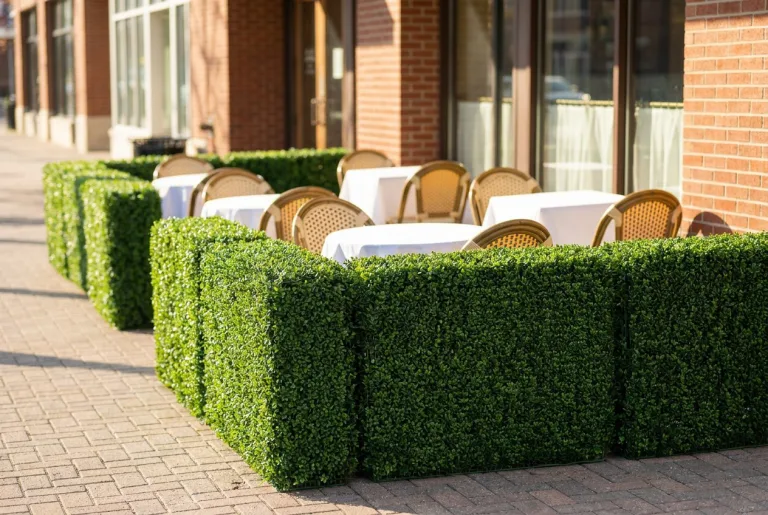
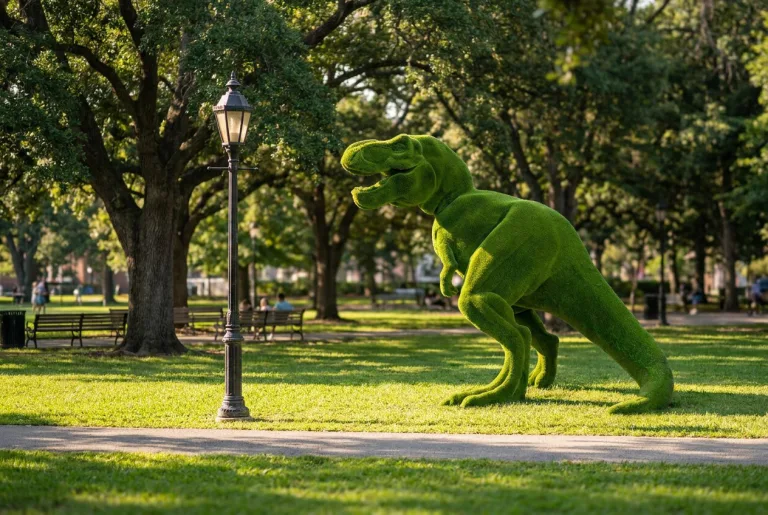
Artificial boxwood holds no water, so the frame under it dries within hours. Our turf sculptures are a fiberglass shell covered in artificial turf, with no steel frame to rust.
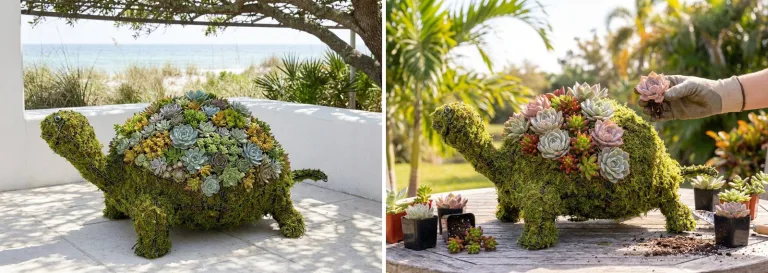
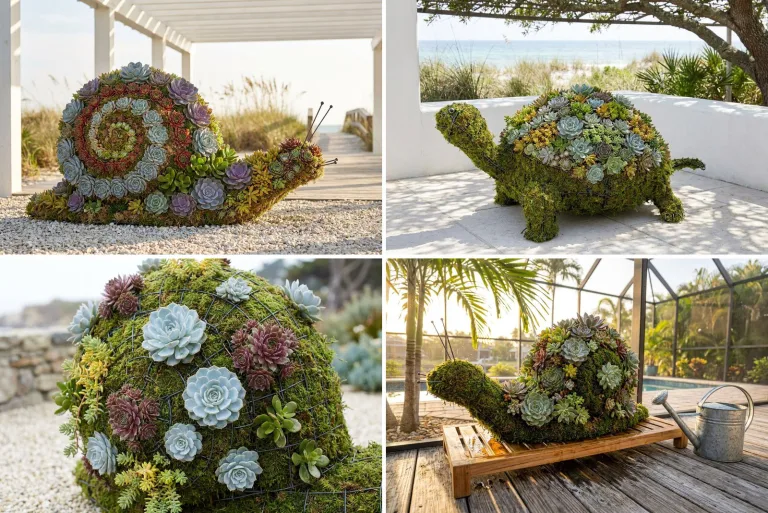
So within sight of the water, choose artificial foliage or turf. Mossed pieces do better a street or two back from the beach, on a galvanized and powder-coated frame, with the moss replaced when it thins. See turf, moss or boxwood to compare the coverings.
For artificial foliage, choose the full outdoor grade. Sun, heat, humidity and salt all work on plastic, which is why its fade warranty is 5 years inland and 3 years in Florida and Arizona. Full outdoor grade artificial foliage explains the grades.
A yearly check
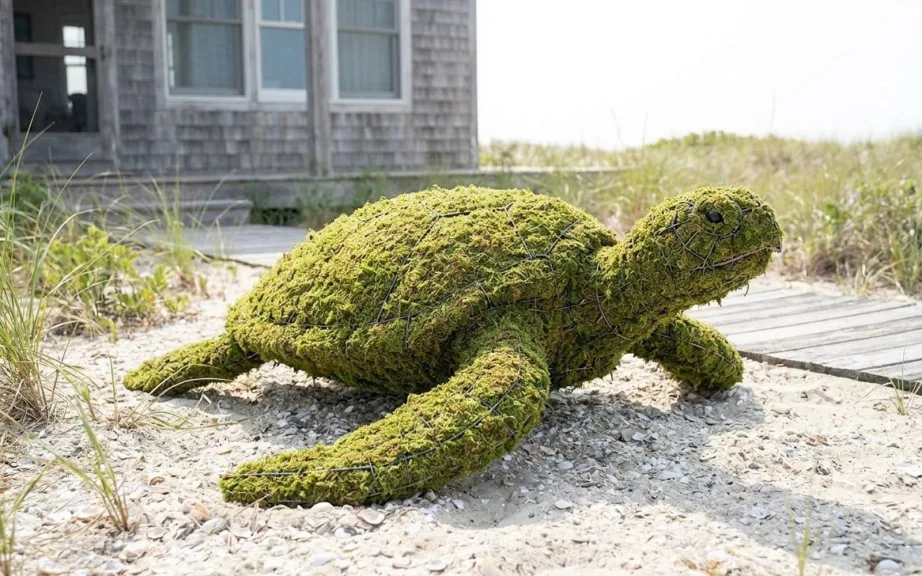
Once a year, before summer, give the piece a closer look:
- Look at every joint and the base for chips, bubbling paint or orange stains.
- On a mossed piece, part the moss at the feet and at any joint you can reach.
- Rub rust spots back to bright metal with a wire brush, wipe them clean, and paint them with a zinc-rich cold galvanizing spray. Add a color-matched topcoat on a powder-coated frame.
- Check fixings and ground anchors. Salt works on bolts and screws too.
If a mossed piece has rust spreading under the moss in several places, it is time to strip the moss so the whole frame can be cleaned, treated and re-covered.
Quick answers
Can topiary survive by the ocean?
Yes, with the right choices. Use artificial foliage or turf close to the water, a galvanized and powder-coated frame, and a monthly rinse with fresh water.
How often should I rinse a topiary near the beach?
About once a month, and after storms that carry spray inland. Use a gentle spray of fresh water, from the top down.
Is the white powder on my galvanized frame rust?
No. A white or gray film is the zinc coating reacting with the air. It is normal. Orange or brown staining is rust on bare steel and needs a wire brush and a coat of cold galvanizing paint.
Does salt air fade artificial topiary?
Salt on its own does not bleach the leaves, but coastal sun, heat and humidity together are hard on any plastic. Rinse artificial foliage with the frame, and choose the full outdoor grade.
For a piece built for a coastal site, start with custom topiary design. For ready-made pieces that suit salt air, browse the outdoor artificial topiary and turf topiary ranges. A living piece on the Florida coast is covered in coastal care for a mosaic topiary.