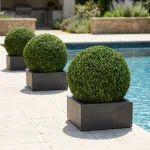
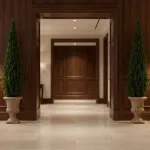
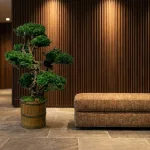
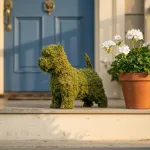
Outdoor artificial topiary trees usually fail at the trunk where it meets the pot, or because the pot blows over. The leaves are rarely what goes first, even though they are what people shop by. Check the trunk, weight the pot, and match the foliage grade to the sun, and an outdoor tree will stand for years.
Ask about the trunk first
Cheap outdoor trees break where the trunk meets the pot. A topiary tree is a head of foliage on a stem, and that stem is a lever. The taller the tree and the denser the head, the more force lands on that one joint.
So ask what the trunk is. A steel core inside a molded finish will take wind and handling. A hollow plastic stem eventually will not. Our full outdoor grade trees are built on steel.
On a tree over about four feet, the trunk matters more than the foliage. A faded tree still reads as a tree. A snapped one does not.
Some pieces have real-wood trunks and they look excellent. Ask what is inside those too.
Wind: how to keep it standing
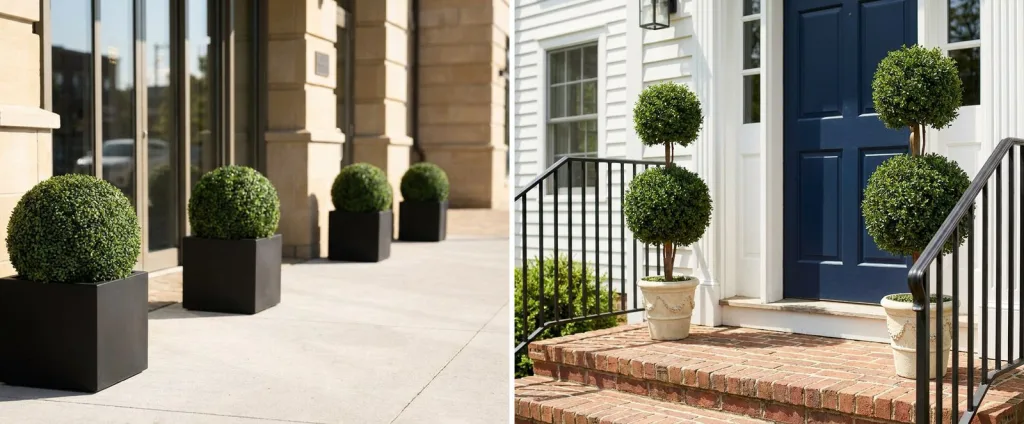
A dense head is a sail. That is why the same tree stands for years in a courtyard and goes over twice a winter on an exposed corner.
Weight the pot. Put gravel, sand or concrete in the base, in place of the shipping filler it arrives with.
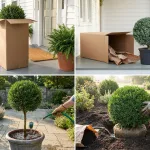
Pot it properly. Most of these trees arrive in a plain grower’s pot, and a grower’s pot sitting loose inside a decorative one is how most of them blow over. How to plant artificial topiary trees in pots covers the method.
Or fix it. Use a wall bracket or a ground anchor in any position that is regularly exposed.
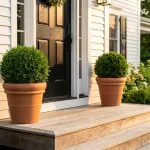
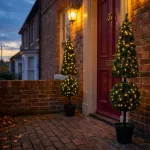
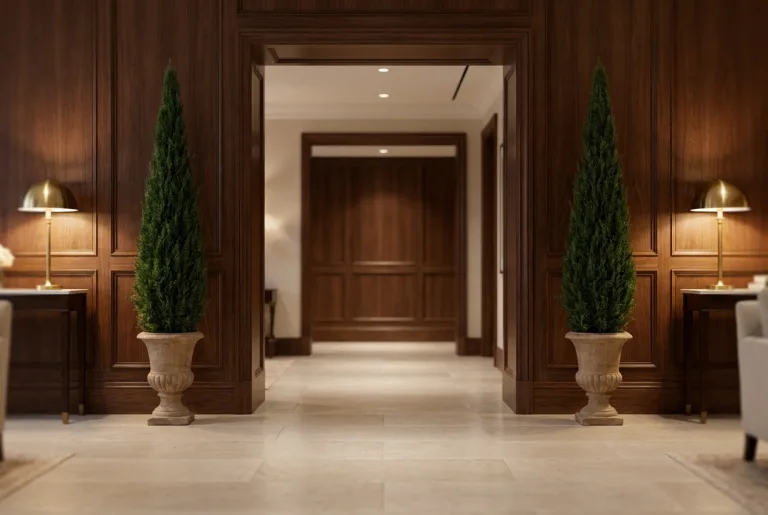
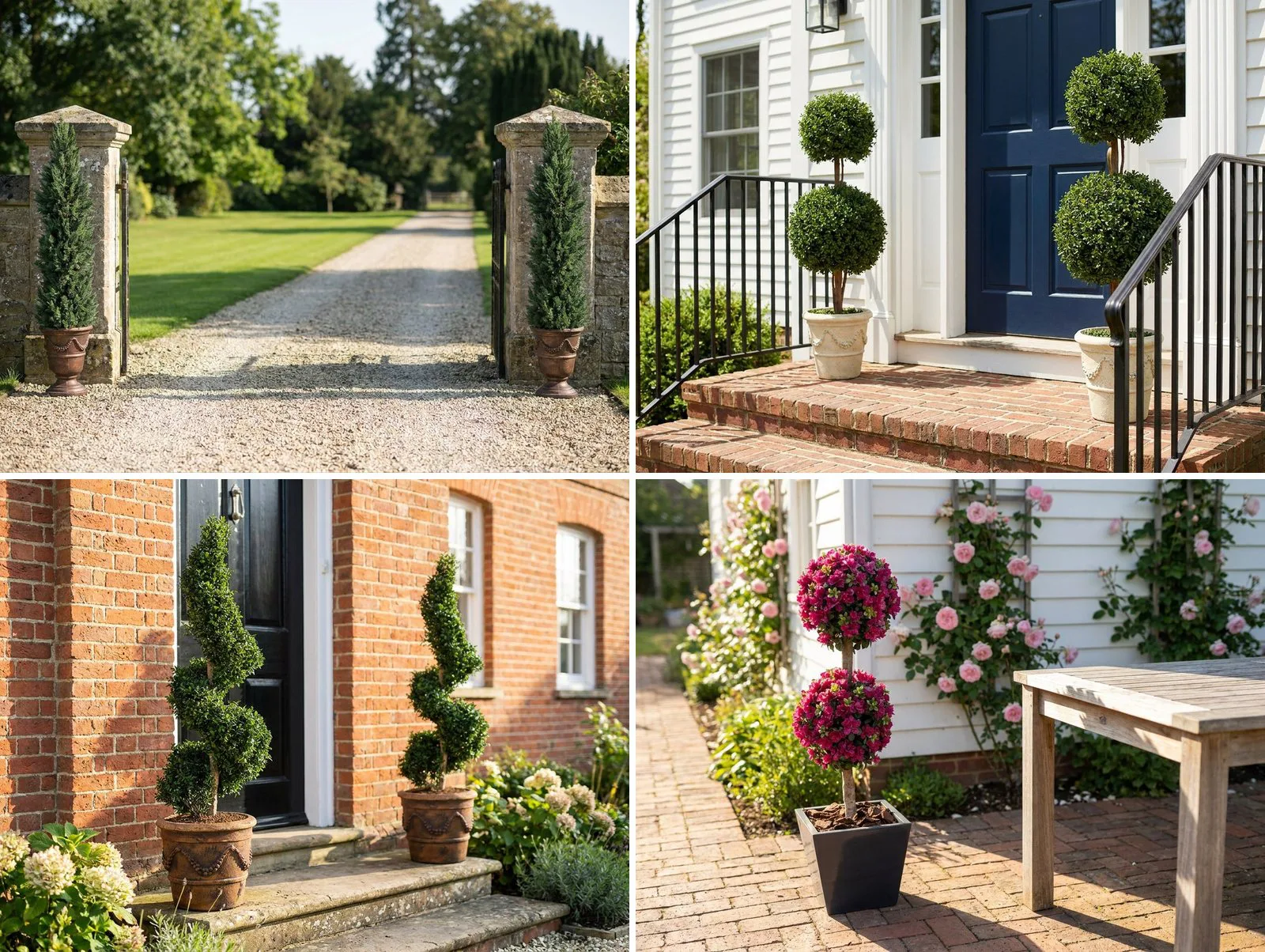
A pair flanking a door is the most common arrangement and the most forgiving. A doorway is usually sheltered on at least two sides.
Heights, and what each size is for
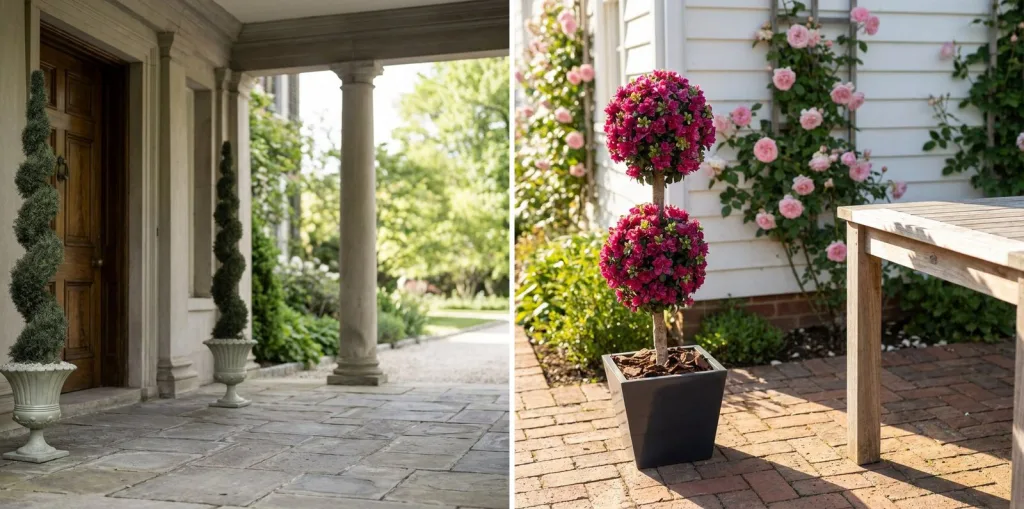
Ours run from 10-inch boxwood balls up to cypress trees of 10 to 12 feet.
Under two feet is a table and step piece, usually a ball or a small bush.
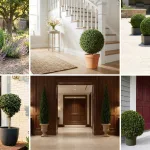
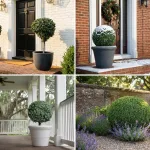
Three to five feet is the doorway and terrace size, and where most of the range sits. A four-foot spiral or double ball is the usual choice for a pair.
Six feet and over defines a corner or an entrance. Anything above about six feet needs weighting or fixing as part of the install, not as an afterthought.
UV: match the grade to the sun
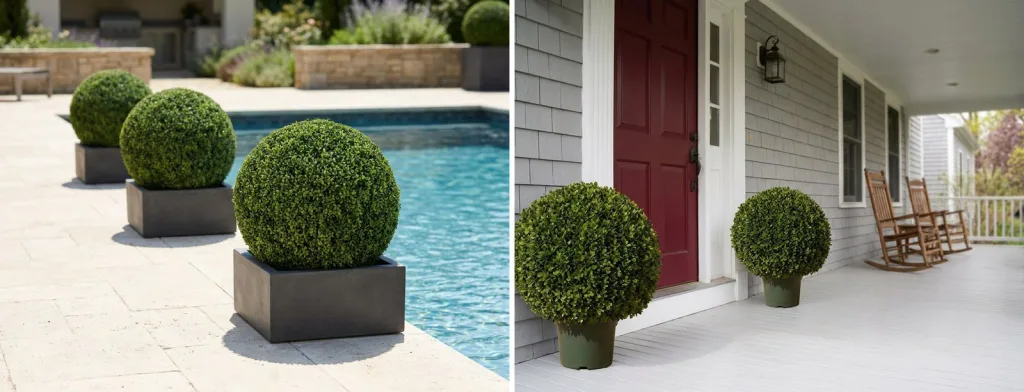
Sunlight is what ages artificial foliage. Our outdoor trees come in two grades:
- Full outdoor grade has the UV protection mixed into the plastic and carries a 5-year fade warranty, or 3 years in Florida and Arizona. Use it in open sun.
- The lighter UV grade lasts up to about 2.5 years in sun, with no fade warranty. Use it under a porch roof, in shade, or for a season.
Some trees in the range, such as the double spiral cypresses and the bay laurel, are indoor pieces and should not go outside. Ask which grade a tree is before you order. UV-resistant vs UV-proof explains what the labels mean.
Nothing we sell is fire retardant by default. Many full outdoor grade trees can be ordered with a fire-retardant option, mixed into the plastic when it is made, for venues that require it. It cannot be added after a tree has shipped, so ask when you order.
Buying several
For multiples, tell us the quantity and the destination together. Most of the larger trees are quoted rather than listed, because freight on a ten-foot tree depends on where it is going. You get one number, not a list price plus a surprise. Trade volumes go through the wholesale route.
The range is in artificial topiary trees. If you want the same shape in something real, live spirals and preserved ones are the two alternatives.
Quick answers
What fails first on an outdoor artificial tree?
Usually the trunk at the pot line, or the pot going over in wind. The foliage usually outlasts both. A steel core takes handling and wind; a hollow plastic stem eventually will not.
How do I stop one blowing over?
Weight the pot with gravel, sand or concrete in place of the shipping filler. Do not leave the grower’s pot loose in a decorative one. Fix anything over about six feet to a bracket or a ground anchor.
How long will the color last outdoors?
Full outdoor grade carries a 5-year fade warranty, 3 years in Florida and Arizona. The lighter UV grade lasts up to about 2.5 years in sun and longer in shade.
Can these be made fire retardant?
Many full outdoor grade trees can, as an option chosen at order. The fire retardant is mixed into the plastic when it is made, so it cannot be added after a tree has shipped.
Do you quote for multiples?
Yes. For the larger trees you should ask, because freight is a real part of the cost and depends on the destination.