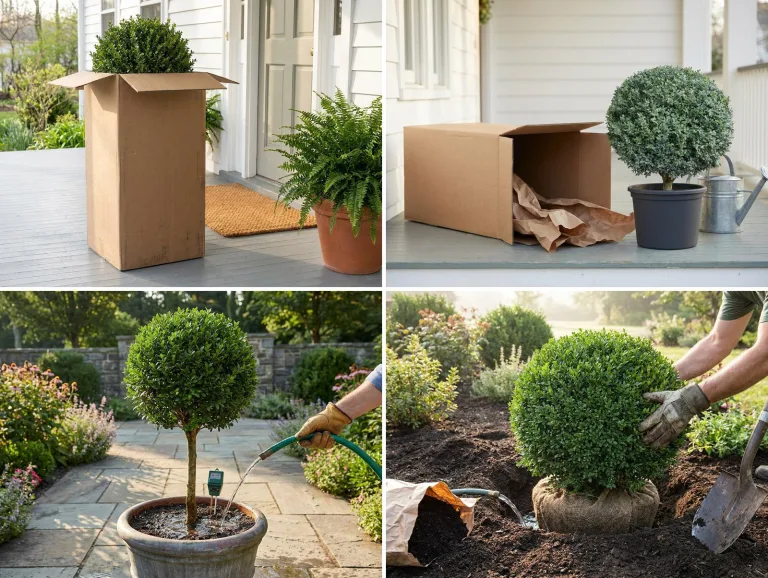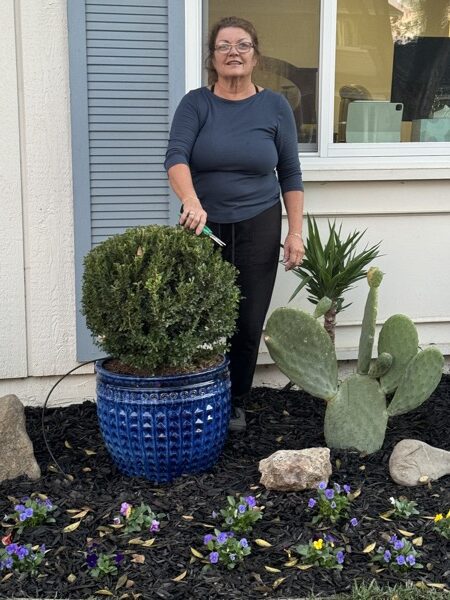










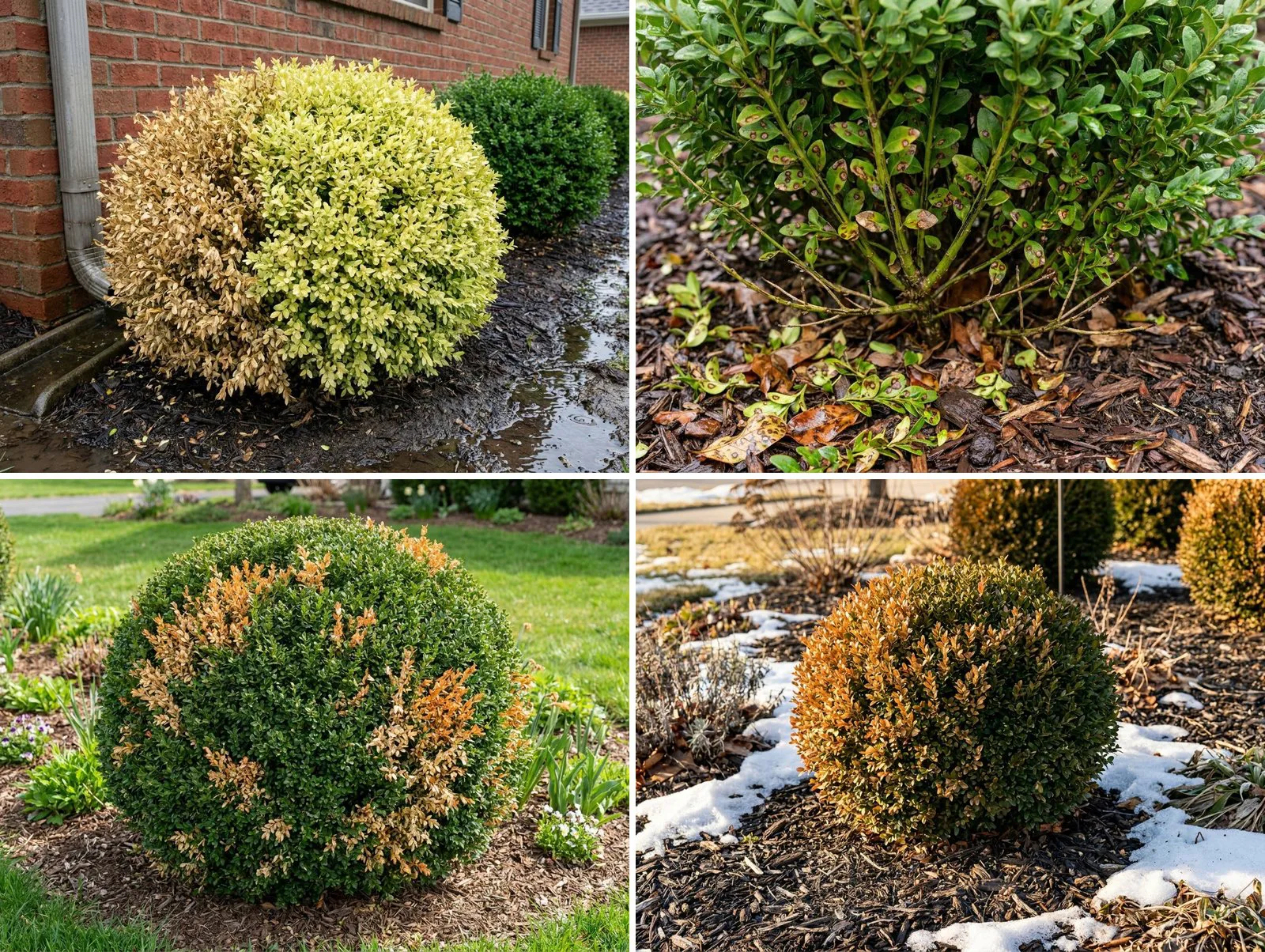
The main boxwood diseases are Phytophthora root rot, boxwood blight and Volutella blight. Root rot and Volutella can often be managed by fixing drainage and pruning out dead wood. Boxwood blight has no cure: infected plants are removed, and fungicides only protect the healthy ones nearby. Before you treat anything, rule out the common lookalikes, winter bronzing, dog urine and sun scorch, which cause most brown boxwood and are not diseases at all.
This guide follows the advice published by university extension services. For a firm diagnosis, send a sample to your state’s extension plant diagnostic lab. Most charge a small fee and reply within a week or two.
Boxwood problems at a glance
| What you see | Likely cause |
|---|---|
| Whole plant fades to pale green, then straw, in wet soil | Phytophthora root rot |
| Dark leaf spots, black streaks on stems, fast leaf drop | Boxwood blight |
| Single branches turn orange, then straw, in spring | Volutella blight |
| Orange or bronze leaves after winter, on the sunny side | Winter bronzing |
| Yellow-brown patch low on one side, by a path | Dog urine |
| Tan, crisp outer leaves after a summer trim | Sun scorch |
| Cupped leaves at the shoot tips in spring | Boxwood psyllid |
| Fine pale speckles, dull grayish leaves | Boxwood spider mite |
| Blisters on the leaf undersides, yellow blotches | Boxwood leafminer |
Phytophthora root rot
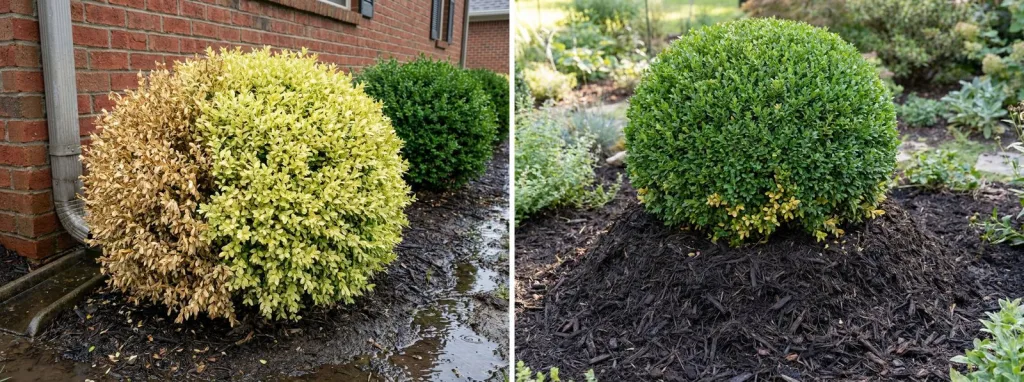
Root rot is the most common boxwood killer in heavy, poorly drained soil. It is caused by Phytophthora, a water mold that attacks roots sitting in wet ground.
Signs. The plant stops growing. The leaves turn a lighter green, then yellowish, then straw, often one section at a time over several months. The leaves may curl upward. Near the soil line, the bark turns brown. Dig down and the roots are brown and soft, and their outer layer slips off, where healthy roots are white and firm.
What to do. Once most of the plant is affected, it cannot be saved. Caught early, at the first pale green tint, it sometimes recovers if the roots dry out:
- Stop watering until the top two inches of soil are dry.
- Pull any mulch back from the stems and keep it one inch deep.
- Send rain water elsewhere: extend a downspout or regrade a low spot.
- If the plant is small, lift it and replant it an inch or two higher, in a spot that drains.
Fungicides for Phytophthora protect healthy roots but do not cure infected ones, so they are a tool for professionals and nurseries rather than a rescue. If a plant dies of root rot, do not replant boxwood in the same spot. The water mold stays in the soil.
Prevention. Plant only in soil that drains, set the root ball level with the ground or a little higher in clay, and never pile mulch against the stems. American and English boxwood tend to suffer more in wet ground than the Asian and hybrid types.
Boxwood blight
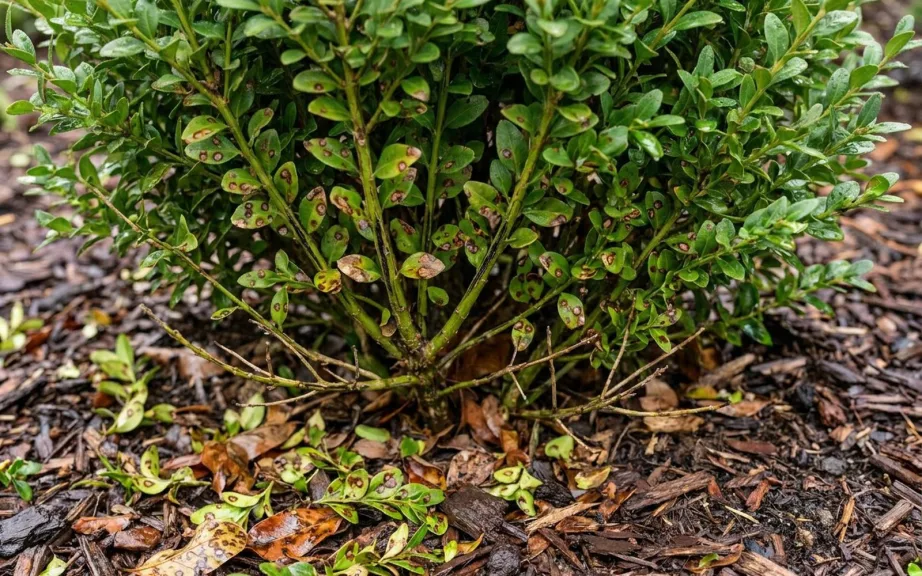
Boxwood blight is a fungal disease, caused by Calonectria pseudonaviculata, that spread across much of the eastern United States after 2011. It moves fast in warm, humid weather and can strip a hedge in a few weeks.
Signs. Round, dark or light brown spots with a darker edge appear on the leaves. Narrow black streaks run along the green stems. Leaves then fall quickly, starting low on the plant, and a pile of spotted brown leaves collects underneath. The bare stems often stay green for a while, which is a good clue: root rot and Volutella leave the dead leaves on the plant.
What to do. There is no cure for an infected plant.
- Confirm it. Send a bagged sample to your extension diagnostic lab. Some states ask to be told about new cases.
- Remove infected plants, with their fallen leaves, and bag them for the trash. Do not compost them.
- Clean your shears and gloves with a disinfectant such as a 10 percent bleach solution or 70 percent alcohol, and wash your clothes, because the spores are sticky and travel on them.
- Protect nearby healthy boxwood with a fungicide labeled for boxwood blight, such as chlorothalonil, applied as the label directs through the warm, wet months.
Prevention. Keep new boxwood apart from your existing plants for about a month and watch for spots before you plant them. Water at the roots, not over the leaves. Trim in dry weather and clean your tools between plants.
The spores survive in fallen leaves for years, so a bed that has had blight should not get boxwood again. Plant Japanese holly there instead, or use a UV-rated artificial piece for the same formal look. See what to plant instead of boxwood.
Volutella blight
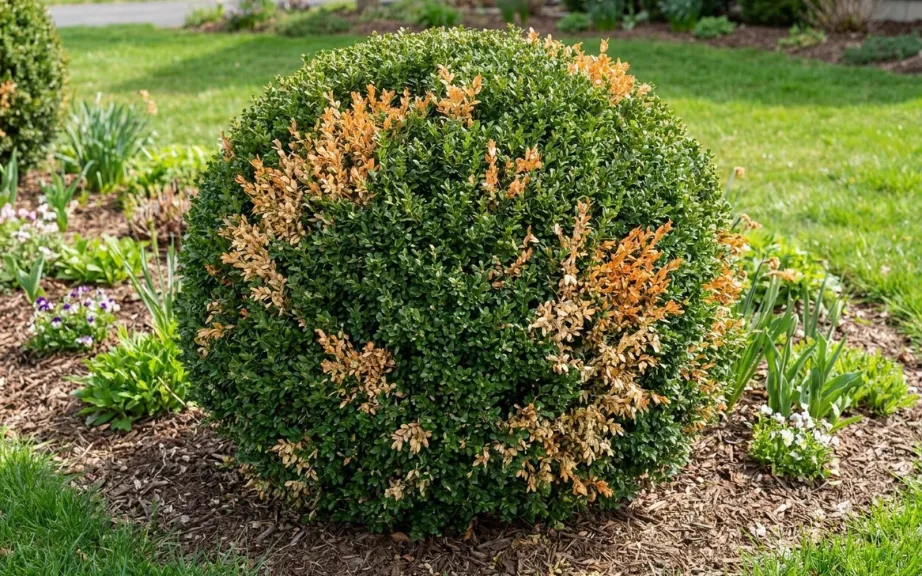
Volutella blight is a fungal canker that attacks boxwood already weakened by winter damage, bark splits or crowded, damp growth inside the plant.
Signs. In spring, single branches turn red or orange-bronze, then straw colored, while the rest of the plant stays green. The dead leaves stay on the stem and point upward, close to it. In wet weather, small salmon-pink spore pads form on the undersides of the leaves. The bark at the base of a dead branch often peels away.
What to do.
- On a dry day, cut out every dead branch back into healthy green wood.
- Shake and rake out the dead leaves caught inside the plant and from the ground below it.
- Thin the plant a little so air and light reach the middle.
- Clean your shears between cuts. A copper or other labeled fungicide after pruning helps protect the cut surfaces in wet springs.
Prevention. Avoid shearing in wet weather, protect plants from winter wind, and clear out the dead leaves inside a clipped shape each spring.
Lookalikes: winter bronzing, dog urine and sun scorch
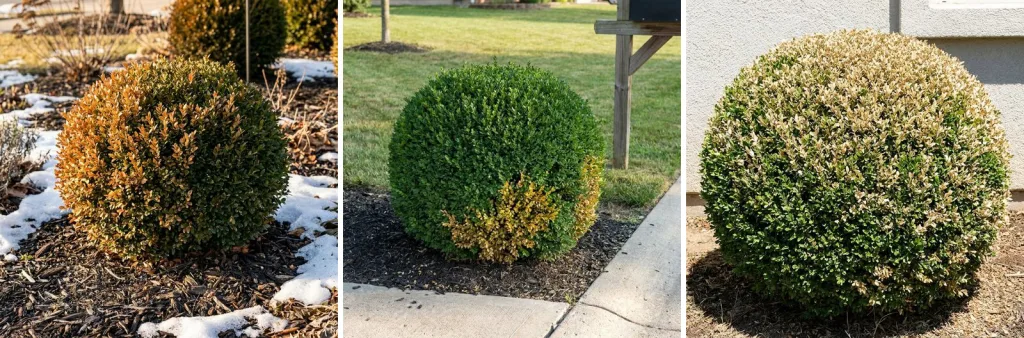
Most brown boxwood is not diseased. Check these three before you buy any spray.
Winter bronzing. The leaves turn orange or bronze in winter, mostly on the side facing the sun and wind. The leaves stay on and the stems are healthy. It is a reaction to cold sun, and the color returns in spring. Cultivars such as ‘Green Beauty’ and ‘Green Velvet’ bronze less.
Dog urine. A yellow or brown patch low on one side, at about dog height, usually on a plant by a walk or a mailbox. Water the spot heavily to flush the soil. Trim out the dead growth in spring and let the plant fill in. A short fence or a stone edge keeps dogs off.
Sun scorch. Tan, crisp leaves on the outer surface, on the top and the sunny side, often right after a summer trim exposed inner leaves to hot sun. The green growth underneath is fine. Trim in early June, before the heat, and water deeply in dry spells. In the Southwest, afternoon shade helps most.
Pests: psyllid, mites and leafminer
Three insects cause most pest damage on boxwood. They rarely kill a plant, but they spoil the look of a clipped shape.
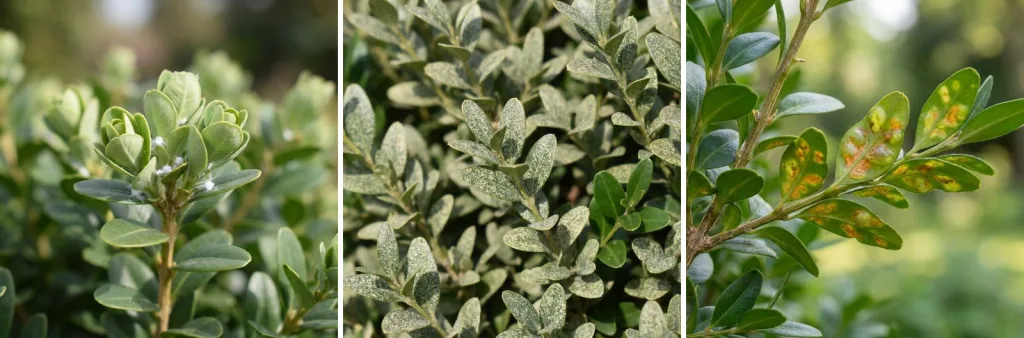
Boxwood psyllid
Signs. In spring, the new leaves at the tips cup inward into small, tight cups, like tiny cabbages. Open one and you may find a small green nymph in a white, waxy fluff. The damage is mostly cosmetic.
What to do. The June trim removes most of the cupped tips. On a heavily affected plant, spray horticultural oil or insecticidal soap in early spring, when the nymphs are active.
Boxwood spider mite
Signs. Fine, pale yellow-white speckles on the upper surface of the leaves, which turn dull and grayish green. The damage is worst in hot, dry weather. To check, hold a sheet of white paper under a branch and tap it. Tiny moving specks on the paper are mites.
What to do. A strong spray of water knocks many off. For a bad case, spray horticultural oil or insecticidal soap, covering both sides of the leaves, in spring or early fall. Too much nitrogen fertilizer encourages mites, so stick to the March and October feeds.
Boxwood leafminer
Signs. The most serious boxwood insect. Larvae feed inside the leaves, which show yellow or orange-brown blotches on top and raised blisters underneath. In spring, small orange flies swarm around the plant as the adults come out.
What to do. On a small plant, trim off and bag the most infested growth before the adults emerge in spring. For a heavy infestation, ask your extension office for a treatment and the right timing in your area, because sprays only work at certain stages.
Box tree moth
A newer pest found in a few northern states since 2021. The green and black striped caterpillars chew leaves and leave webbing inside the plant. If you see them, report them to your state department of agriculture.
What to do when your boxwood turns brown
- Look at the pattern. The whole plant, one side, single branches or the tips only? The table at the top of this page matches each pattern to a cause.
- Check the soil. Push a finger two inches in. Wet and cold points to root rot. Dust dry points to drought or a pot that dried out.
- Look under the plant and inside it. Fallen spotted leaves suggest blight. Dead leaves held on the stems suggest Volutella or root rot.
- Look at the leaves closely. Spots, stippling, blisters or cupped tips each point to one problem.
- If blight is possible, stop. Do not trim or move the plant until a lab confirms it, so you do not spread the spores.
- Treat only what you have confirmed. Most brown boxwood needs better watering and drainage, not a spray.
Prevention: keeping boxwood healthy
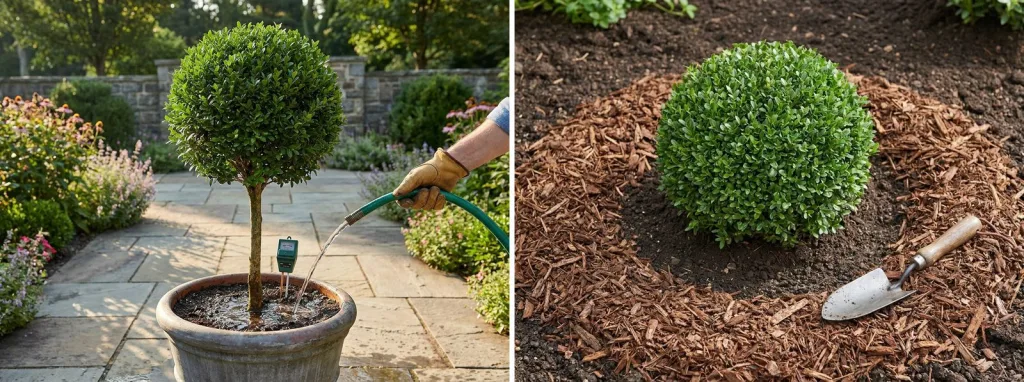
- Plant in soil that drains, with the root ball level with the ground or a little higher.
- Water deeply at the base, about an inch a week in dry spells, and never over the leaves in the evening.
- Mulch one inch deep, in a ring kept clear of the stems.
- Give it air. Space plants so they do not touch, and thin crowded growth.
- Trim in dry weather with sharp, clean shears: the main cut in early June and a light tidy by early September.
- Feed in March and October with a balanced fertilizer, and not in late summer.
- Buy from a clean source and keep new plants apart from existing boxwood for a month.
The full routine for your climate is in our boxwood care guide by USDA zone. For a boxwood in a pot, a dry root ball can look just like disease, so read boxwood in a planter before you treat anything.
Where boxwood keeps failing
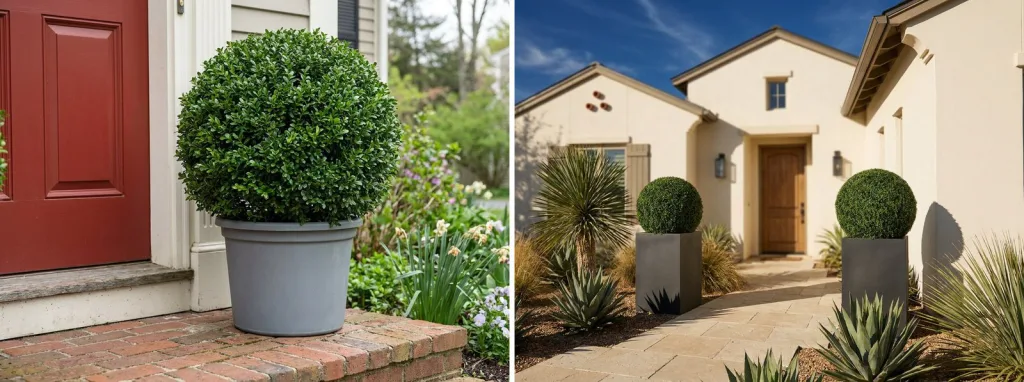
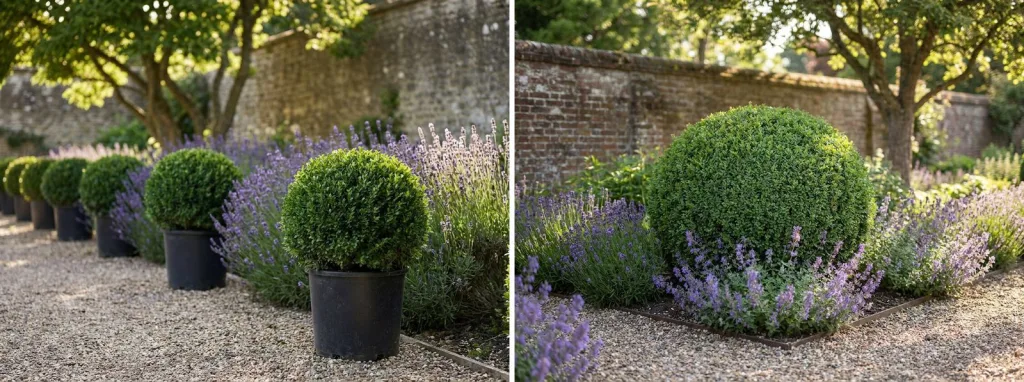
If blight has struck, or a bed stays wet no matter what you do, stop replanting boxwood there. Japanese holly gives the same clipped look and is not affected by boxwood blight. For a spot where live plants keep failing, a UV-rated artificial topiary keeps the same shape with no disease risk.
Quick answers
How do you treat boxwood fungus?
It depends on the fungus. For Volutella, prune out dead branches in dry weather, clear the dead leaves and spray a labeled fungicide. For root rot, fix the drainage. For boxwood blight, remove infected plants and protect the healthy ones with a fungicide such as chlorothalonil.
Can boxwood recover from blight?
An infected plant sometimes pushes new leaves, but it stays infected and spreads spores to other boxwood. Extension services advise removing it. Resistant cultivars exist, and your extension service keeps the current list for your state.
What does Phytophthora look like on boxwood?
The whole plant or one section fades to pale green, then straw, over months, usually in wet soil. The bark near the soil line turns brown, and the roots are brown and soft instead of white.
Why is my boxwood turning brown in the middle?
Usually because light and air no longer reach the inside of a dense, clipped plant, so the inner leaves drop. Thin the plant a little and clear out the dead leaves. If whole branches inside are dead, check for Volutella.
Should I cut off brown parts of a boxwood?
Yes, back to healthy green wood, on a dry day, with clean shears. The one exception is suspected blight. Get it confirmed first, because trimming can spread the spores.
The photos of plant problems on this page are staged illustrations of what each problem looks like.
Replacing a lost plant? Browse our live boxwood topiary, and read receiving your plant for the first month after it arrives.