
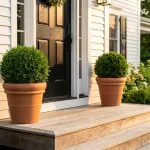

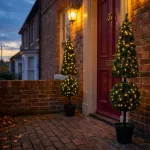


Live boxwood is the best plant for most topiary because it has tiny leaves, grows slowly and holds a clipped shape with two light cuts a year. It stays green all winter, deer leave it alone and it lives for decades. Choose live boxwood for a shape that will stay outdoors in USDA zones 5 to 8 and that someone will water and trim.
Why boxwood makes the best topiary
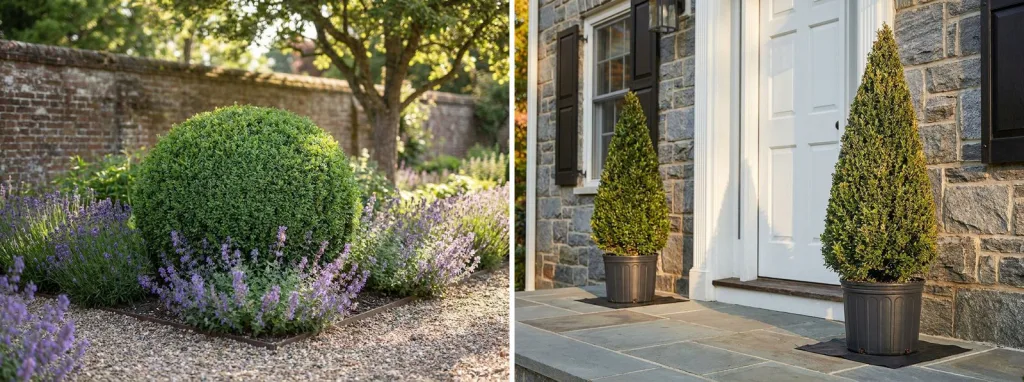
A good topiary plant needs small leaves, dense growth and even regrowth after a cut. Boxwood has all three. Its leaves are small enough to give a sharp outline, and it grows slowly enough that the shape holds between trims.
- Evergreen. It keeps its color and shape through winter, so the front door looks finished all year.
- Deer-resistant. Deer rarely browse it.
- Drought-tolerant once established. A settled plant in the ground needs little extra water outside dry spells.
- Takes sun or part shade. Many cultivars do as well in part shade as in sun.
- Long-lived. A boxwood topiary is a permanent plant. It thickens and looks better every year.
Which cultivar to plant depends on your climate. The boxwood care guide for USA zones matches cultivars to zones.
Live, preserved or artificial boxwood?
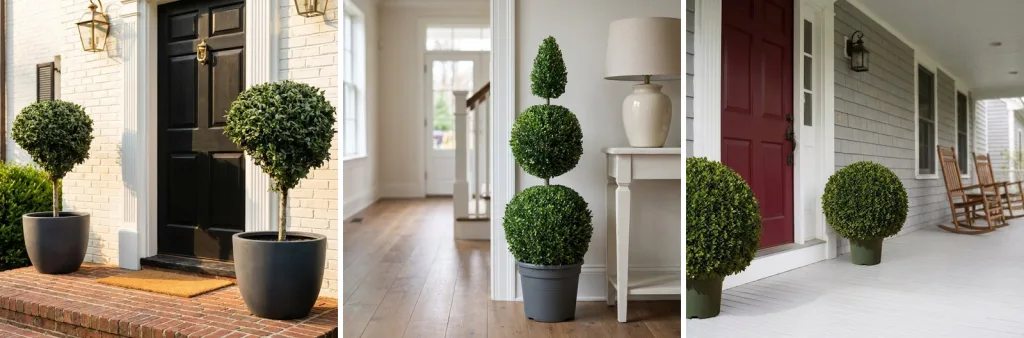
All three look like boxwood. The difference is where they can live and how much care they need.
| Type | Where it works | Care |
|---|---|---|
| Live boxwood | Outdoors, in its zone | Water, two trims and two feeds a year |
| Preserved boxwood | Indoors, out of direct sun | None. No light or water |
| Artificial boxwood | Outdoors in hard spots, or indoors | None. Choose UV-rated for sun |
Live boxwood is the right choice when the plant goes outdoors in the ground or a large pot, gets some sun, and someone can water it through the first summer. It is the only one of the three that grows, so it fills out and gets better with age.
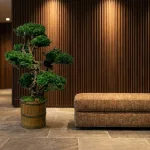
Choose something else when those conditions are missing. Boxwood cannot live indoors for long, because it needs a cold winter rest and indoor air is too warm and dim. Indoors, choose preserved topiary. For a hot, sunny Florida front or a spot nobody will water, choose UV-rated artificial topiary. The long comparison is in faux versus real outdoor topiary.
Live boxwood topiary shapes and sizes
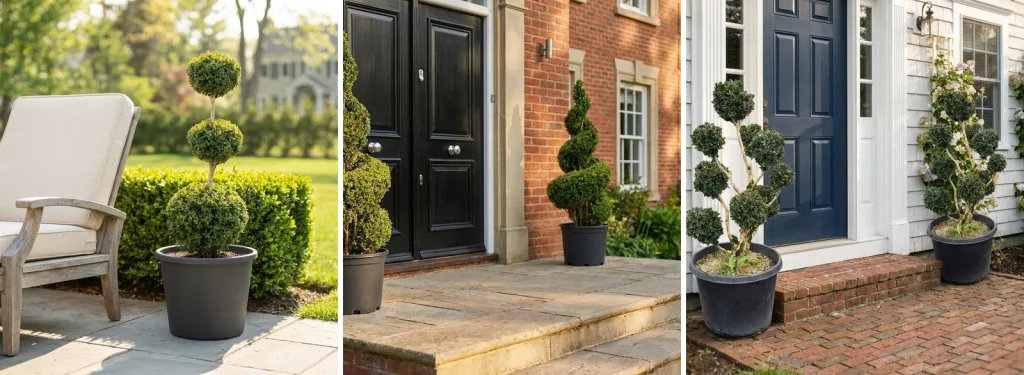
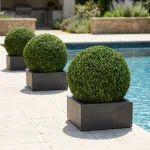
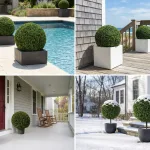
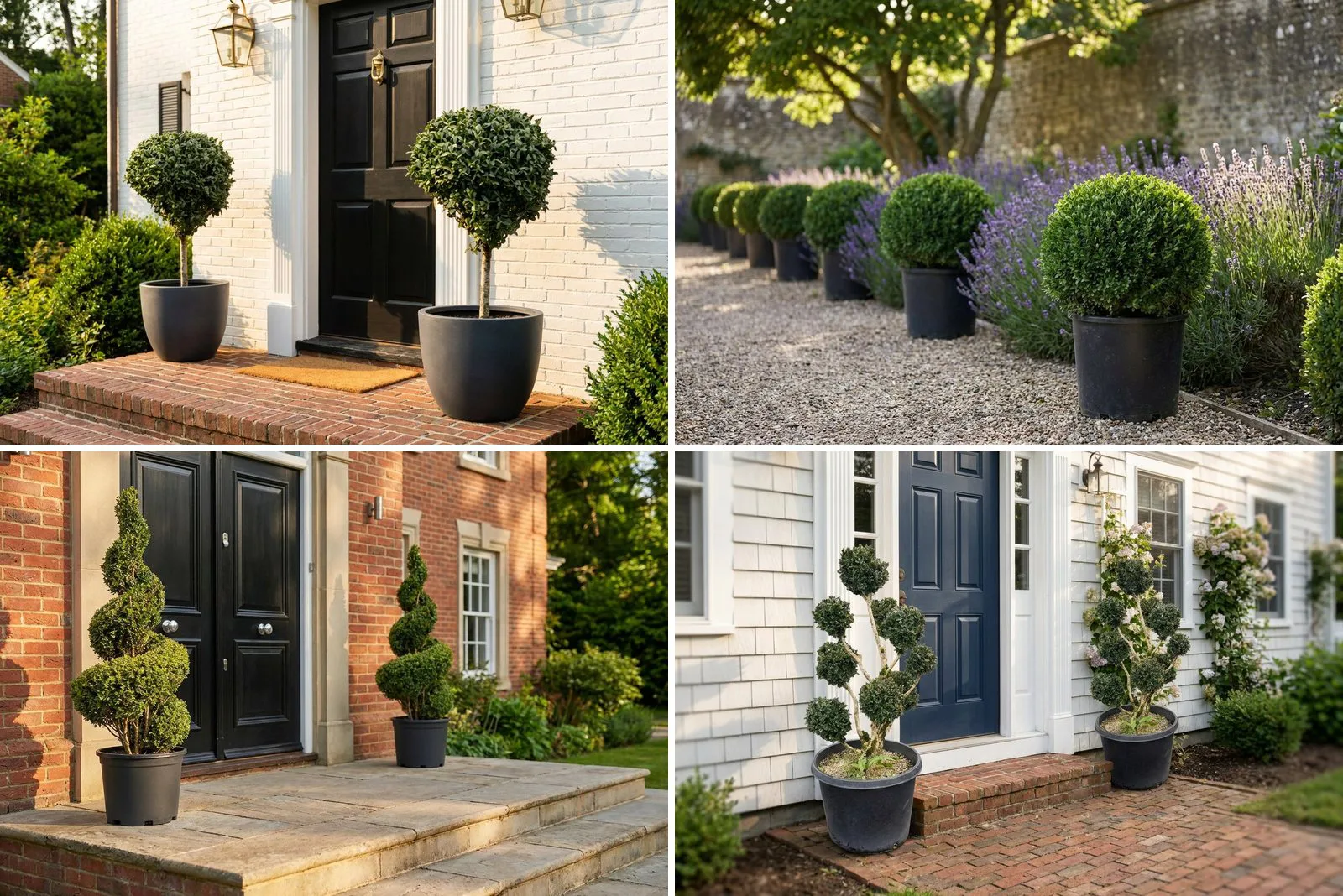
We sell live boxwood as balls, cones, spirals, pom poms and standards (a ball on a clear stem), plus double and triple balls. The smallest are 12 to 15 inch Green Beauty globes at $155. The largest boxwood pieces are 9 foot spirals, and a 17 foot arborvitae spiral tops the range.
- Live ball topiary: globes, balls on stems and tiered balls, 23 pieces.
- Live cone topiary: single tapers from about 15 inches to 71 inches.
- Live spiral topiary: boxwood spirals from 24 inches to 9 feet, plus the 17 foot arborvitae.
- Live pom pom topiary: rounded tiers on strong stems, from about 35 inches to 12 feet.
For help picking a size, read what size boxwood ball to buy.
How live boxwood arrives
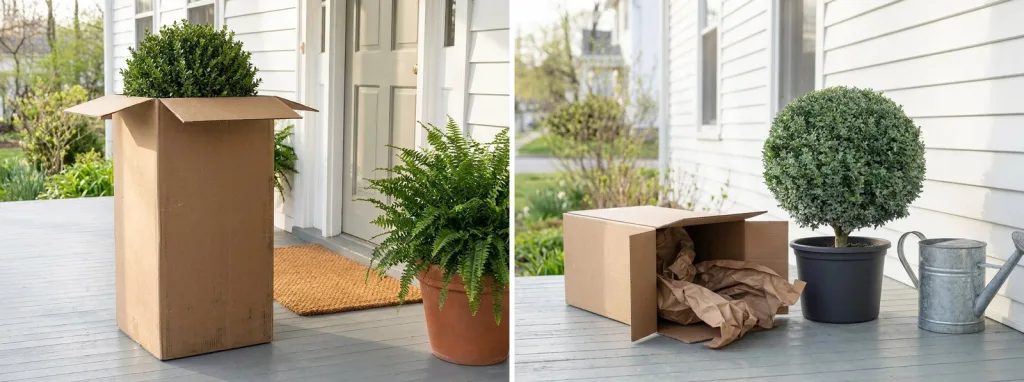
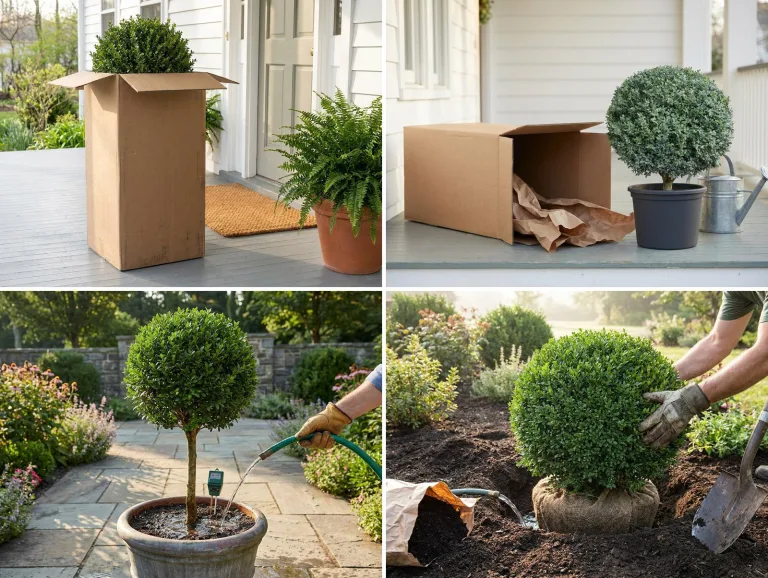
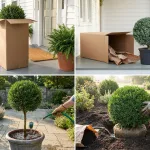
Smaller pieces, up to about 45 inches, ship by parcel in a box. Larger ones travel by freight on a pallet, and the carrier calls to set a delivery window. Each listing says which way it ships.
Open the box the day it arrives, stand the plant upright and water the root ball deeply. The receiving guide covers the first month.
The first year with a live boxwood
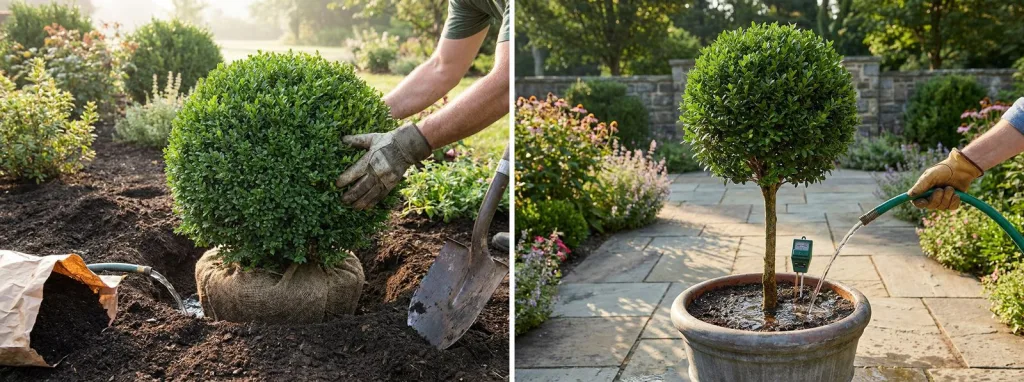
The first summer decides how a boxwood settles. Its roots are fine and shallow and grow out of the original root ball slowly, so until they do, the plant drinks from a small volume of soil.
- Water deeply once or twice a week through the first growing season. Check with a finger first: if the top inch is damp, wait.
- Take off the burlap if the root ball is firm. Leave it on a loose ball.
- Mulch one inch deep in a ring, kept a couple of inches clear of the stems.
- Feed with a balanced 10-10-10 or 14-14-14 in early March and again in October. Pots need a lighter liquid feed more often.
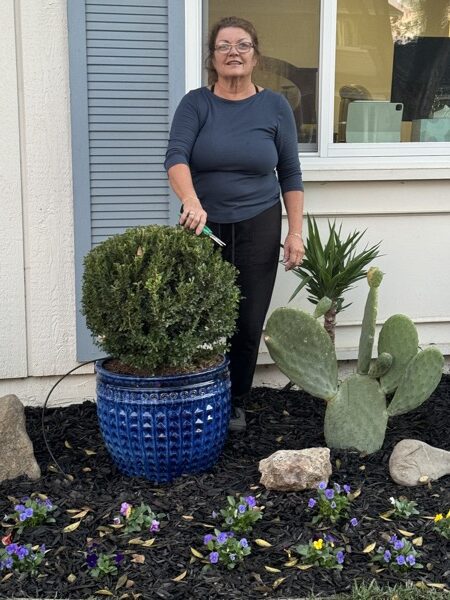
Planting in a pot? Read boxwood in a planter and how to plant a live topiary in a planter.
Trimming and winter
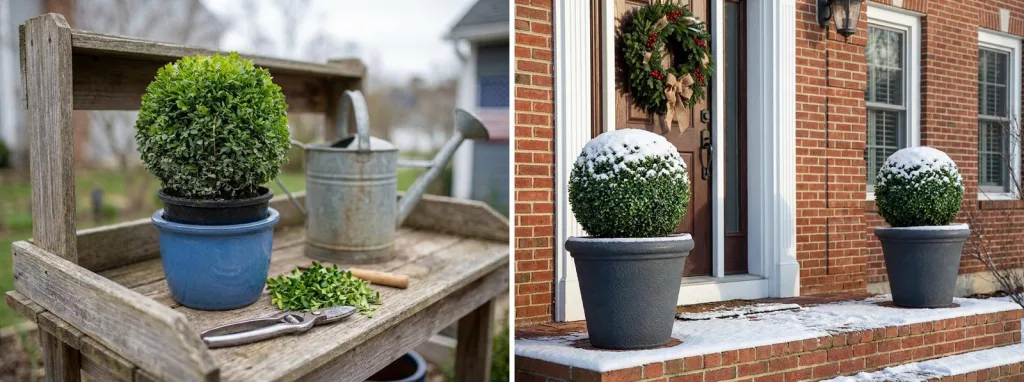
Make the main cut in early June, once spring growth has firmed. A light tidy in late summer keeps the outline sharp; finish it by early September so new growth can harden before frost. Use sharp shears, because dull blades tear the leaves and brown the edges.
In winter, keep watering deeply until the ground freezes. Roots in a pot get about one zone colder than roots in the ground, so choose a cultivar hardy to one zone colder than yours for a potted boxwood that stays out all winter.
Common boxwood mistakes to avoid
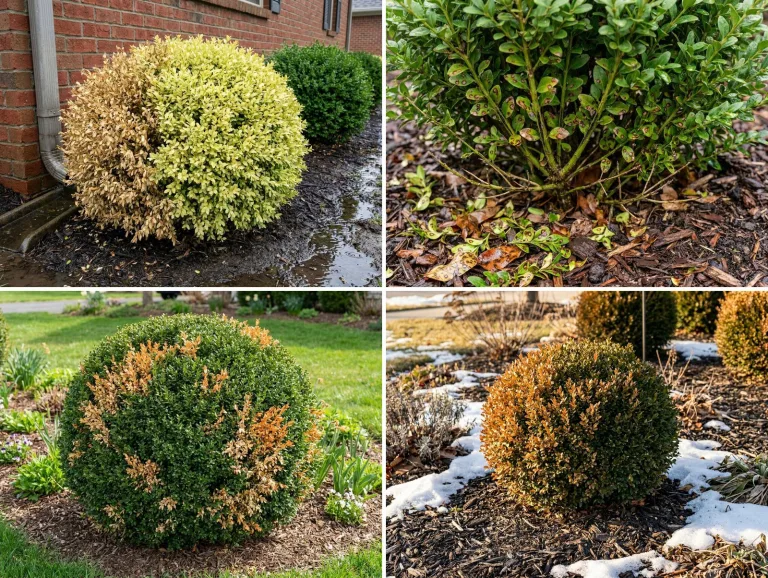
- Letting a male dog use the same spot. Repeated visits turn the leaves yellow at leg height. Clip out the damage and move the dog elsewhere.
- Hot exhaust. Gas trimmers, leaf blowers or a car parked with its exhaust against the plant can burn a patch in the foliage.
- Weed killer drift. Spray on a still day and shield the boxwood. It usually survives, but it looks poor for a season.
- Piling mulch against the stems. A mulch volcano keeps the bark wet and invites rot.
- Trimming in winter. Soft new growth from a late cut burns in the cold.
Boxwood forgives most mistakes, because its dense roots pull it through. If leaves turn orange, yellow or spotted, the boxwood diseases guide explains what each color means.
Quick answers
Is live boxwood better than artificial?
Outdoors in its zone, with someone to water and trim it, yes. It grows fuller every year. In full hot sun, deep shade or a spot nobody waters, UV-rated artificial boxwood is the better buy.
Can live boxwood topiary live indoors?
Not for long. It needs a cold winter rest and more light than a room gives, so it thins and drops leaves within a season. Use preserved topiary indoors.
How long does a live boxwood topiary last?
Decades, in the right spot. Boxwood is one of the longest-lived garden shrubs, and a clipped shape keeps improving as it thickens.
How often does a live boxwood need trimming?
Twice a year. The main cut in early June and a light tidy in late summer, finished by early September.
Browse the full live boxwood topiary range, or read the zone guide before you choose.