Boxwood has been the backbone of formal gardens for centuries, and it is having another moment: deer browse it and give up, it shrugs off drought, and new cultivars keep arriving. If you are choosing a plant for topiary, this is the case for boxwood, and the do’s and don’ts we give every customer.
Why boxwood
- Deer-resistant and drought-tolerant
- Evergreen: structure in the landscape all year
- Slow, dense growth that holds a clipped shape with little pruning
- Versatile: many cultivars take shade as happily as sun
- Long-lived. A boxwood is a permanent resident, not a season’s decoration
Which cultivar suits your climate is its own question: the zone-by-zone care guide answers it properly.
Do

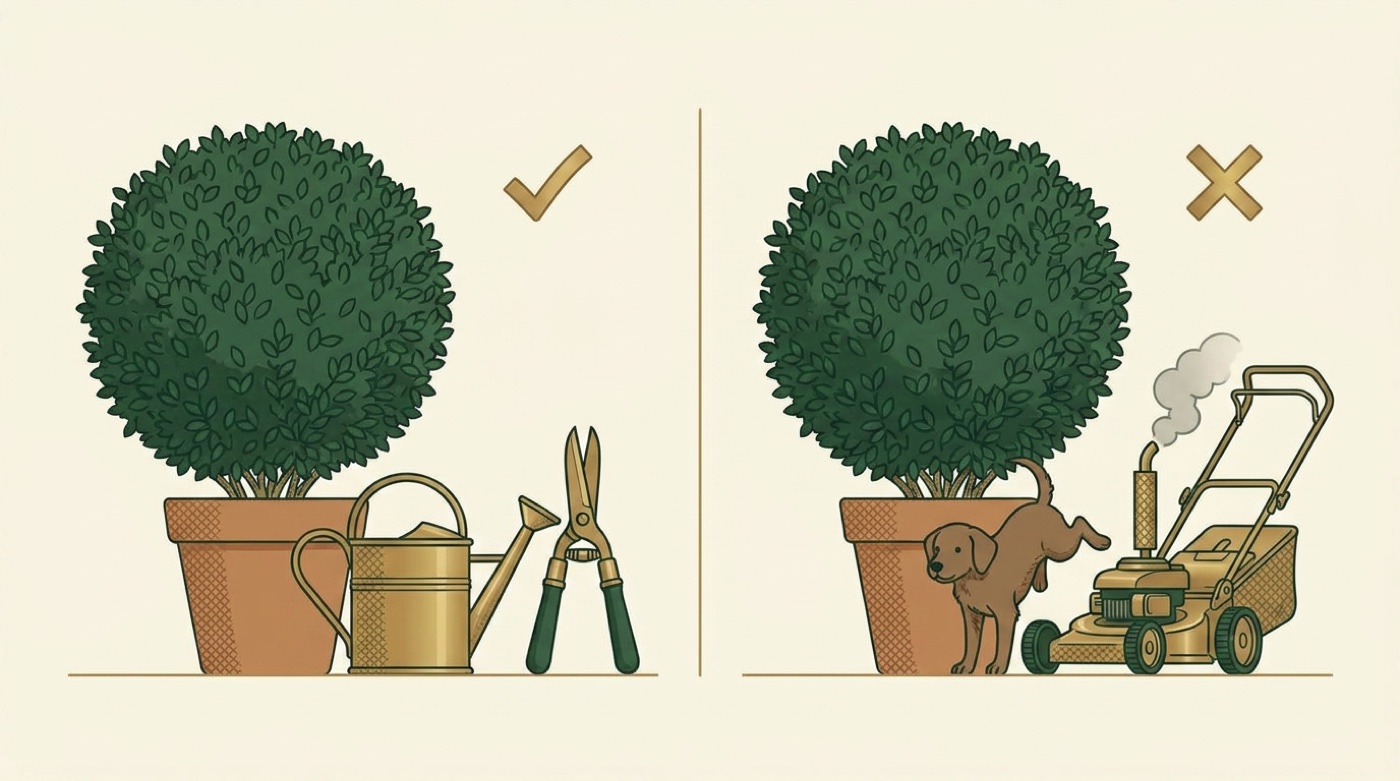
- Do saturate the root ball on arrival and keep watering while the roots establish: boxwood’s fine, hair-like roots take time to grow beyond the ball.
- Do remove burlap from a firm root ball; leave it on a loose one.
- Do feed with a balanced fertilizer (10-10-10 to 14-14-14) in early March, with a lighter feed in early fall; containers need more frequent liquid feeding.
- Do prune the week of June 1: new growth covers the cut leaves by mid-August. Enthusiasts pluck rather than shear.
- Do try cuttings: 4-inch tips in November, set in dense soil or sand somewhere warm, and you may have little boxwoods by spring.
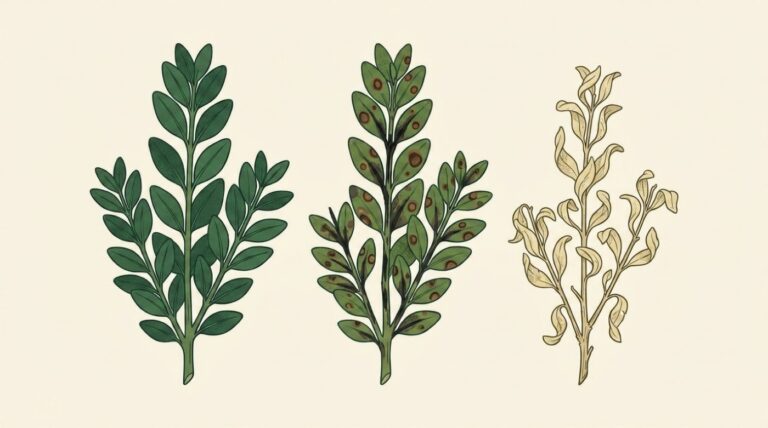
- Do inspect before you buy anywhere: dark green leaves, no curl or scale marks, succulent white roots.
Don’t
- Don’t let a male dog make a habit of one spot: repeated visits yellow the foliage at exactly leg height. Clip out the damage and retrain the dog to a tree trunk.
- Don’t run gas shears or park a vehicle with a side exhaust against the plant; hot exhaust burns a hole in boxwood at the point of contact.
- Don’t let herbicide drift onto the leaves. It survives, but it sulks for a season.
- Don’t worry too much. Boxwood is forgiving; its dense root system pulls most plants through most mistakes.
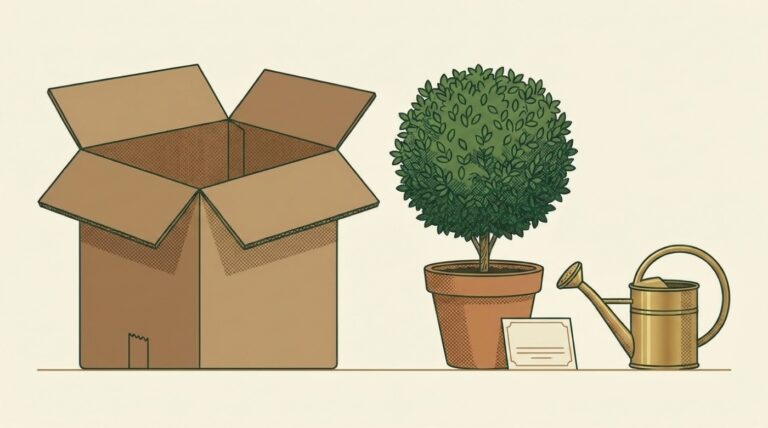
Ready-shaped plants: balls, cones, spirals and pom poms, five to ten years grown, are in the live boxwood collection. What arrives in the box, and the first month’s care, is covered in the receiving FAQ.
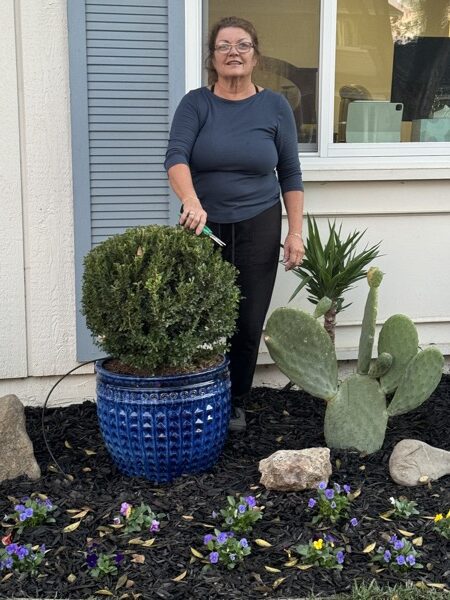
Boxwood in a container behaves differently again, and the cultivar you choose decides how long it stays comfortable: which boxwood survives in a pot.