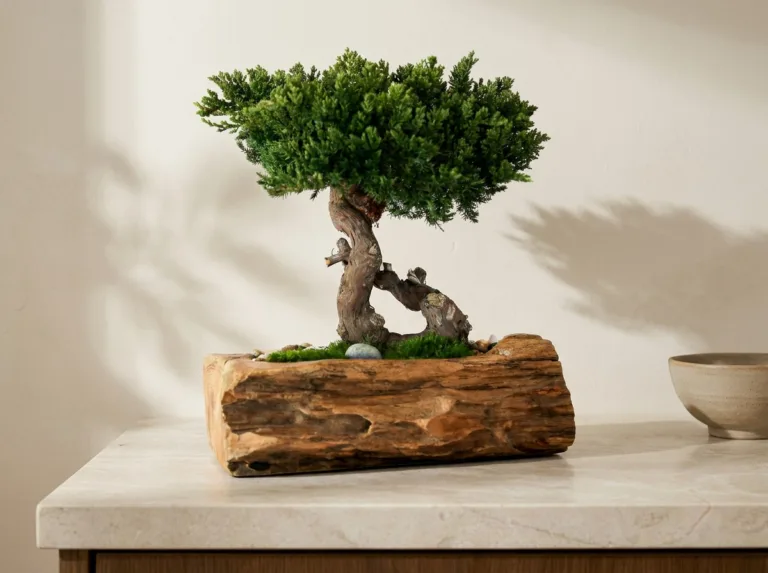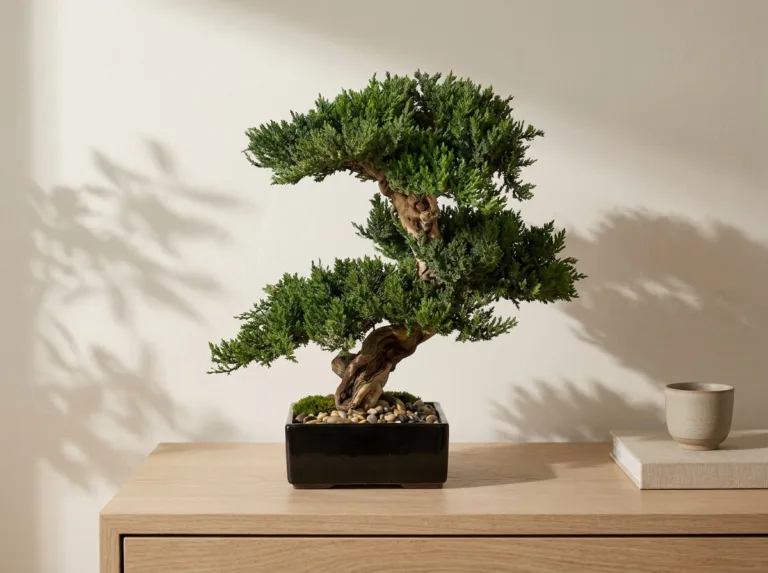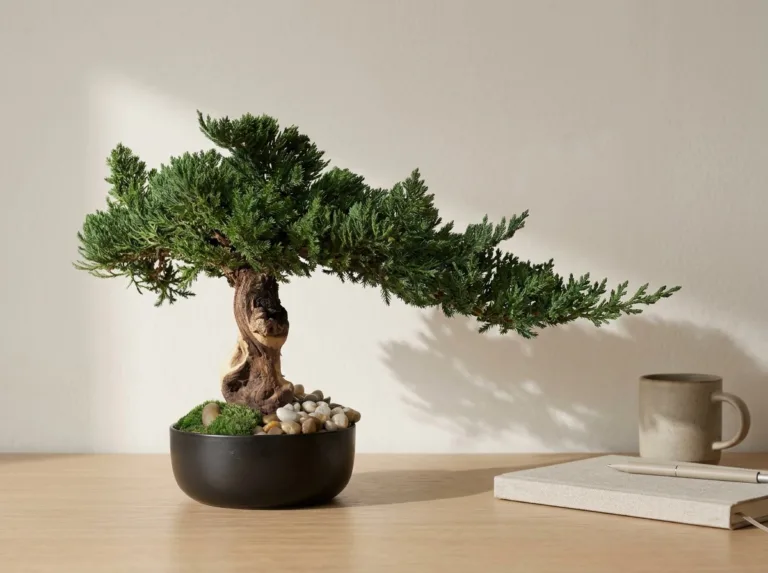
Check the leaves, the density, the frame and the UV method before you buy. Those four tell you more than the price does about how a piece looks from a foot away, and how it holds up by the end of its second summer.
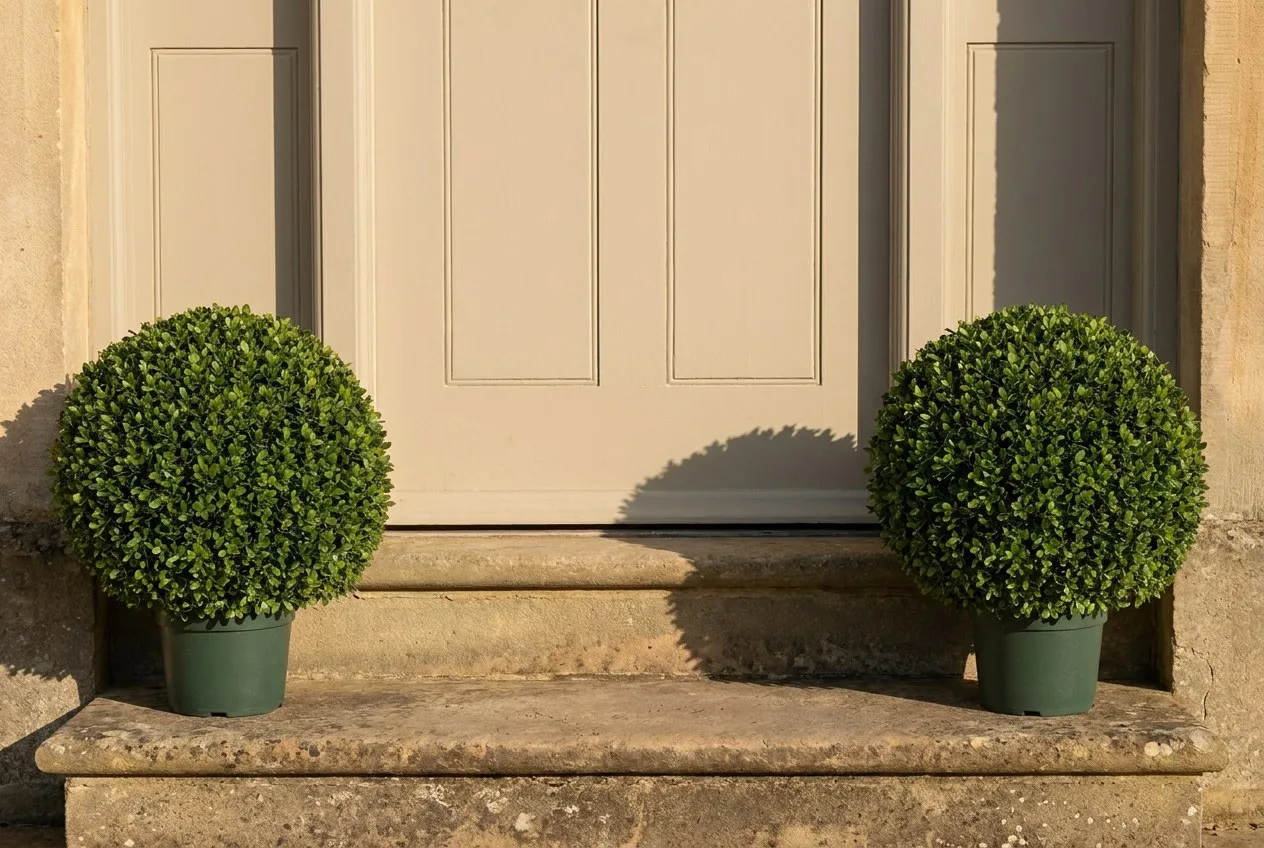
A pair either side of a door, the position people ask us for most. It is also the one every visitor sees at arm's length.
1. Leaf variation: you can check it in the photograph
Look for artificial foliage with at least two or three tones and a mix of leaf sizes. Cheap foliage is molded in a single green, so it looks like a solid block of color from across a room.
Real boxwood has lighter new growth at the tips, deeper green older leaves and paler undersides that show when the wind moves the plant. Your eye reads texture instead of a surface.
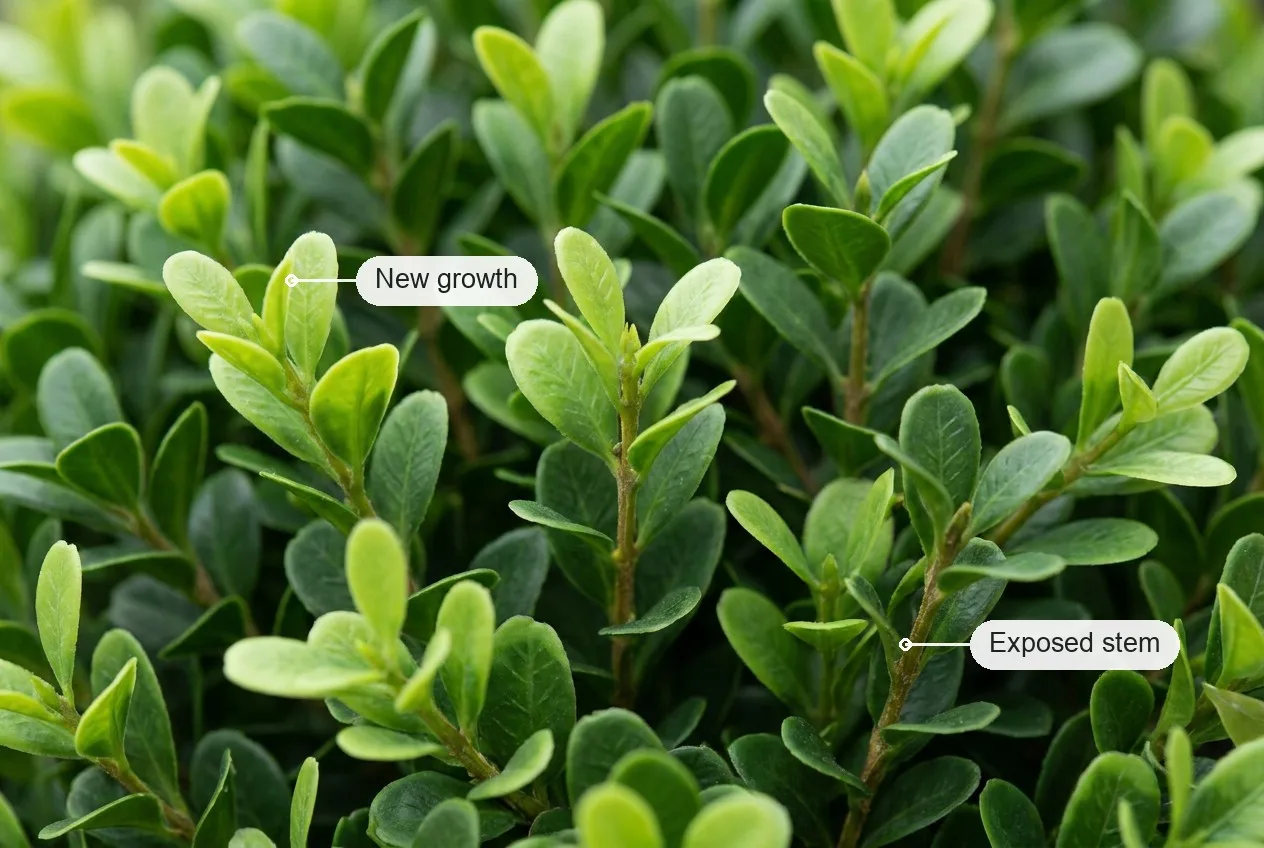
Zoom into the product photograph before you buy. If every leaf is the same shade and the same size, that is what will arrive.
2. Density is what you are actually paying for
Ours start at $98 for a 10-inch ball, and the extra money mainly buys more foliage.
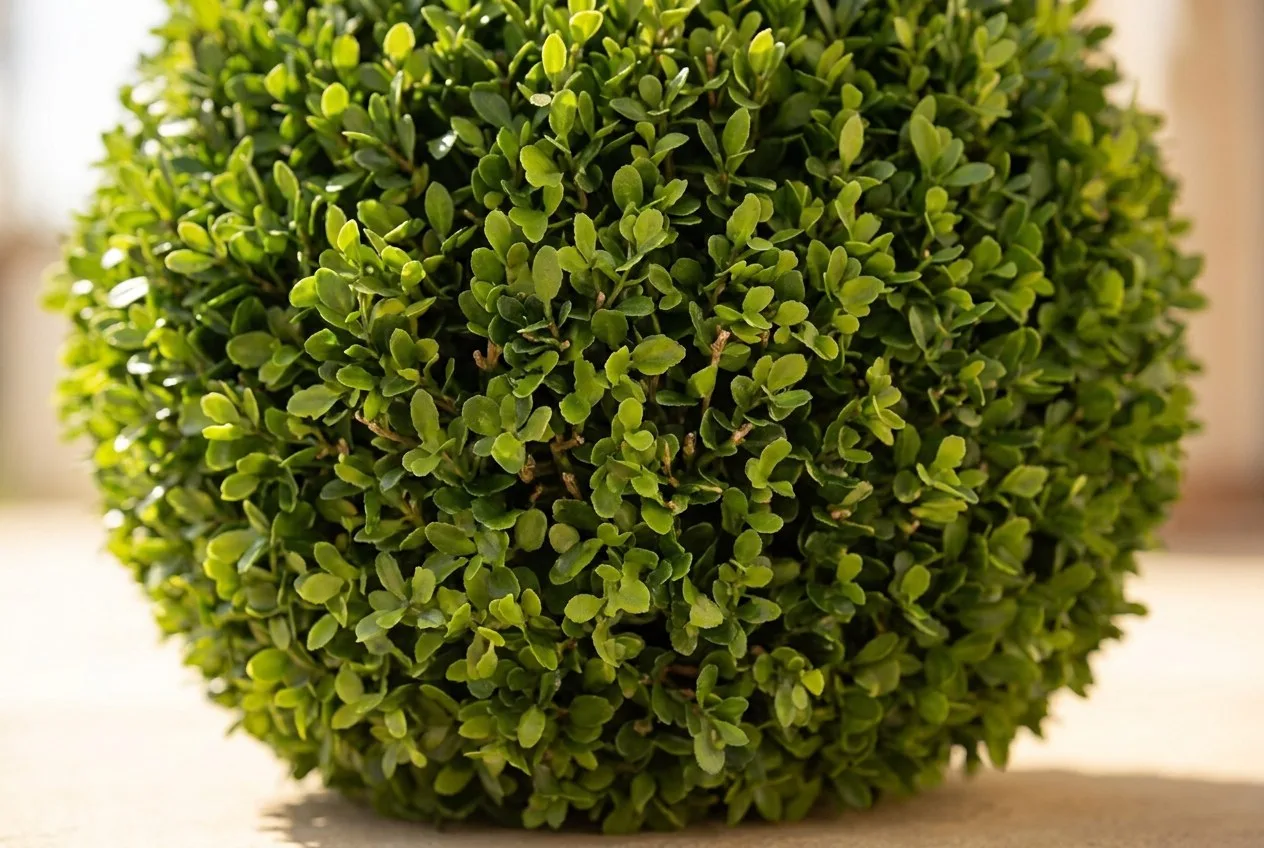
A thin piece shows its frame when you look into it, especially from below and from the side away from the light. It also ages badly, because any thinning at all takes it from sparse to bare.
Look at the silhouette edge in the photograph. A dense piece has a broken, slightly irregular outline where single sprigs poke past the line. A thin one has a smooth, almost geometric edge, because there is not enough foliage to disturb it.
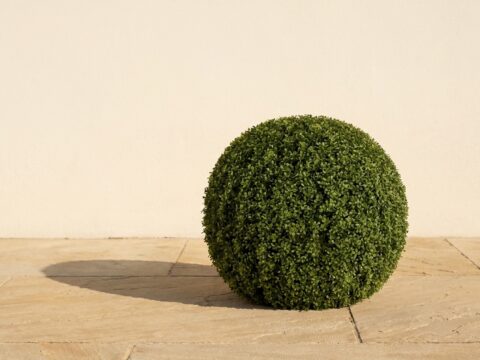
Quoted. A UV-rated ball at 36 in.
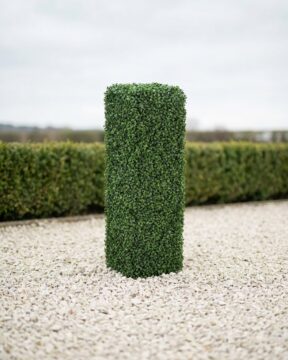
Quoted. Column hedging at 3 ft.
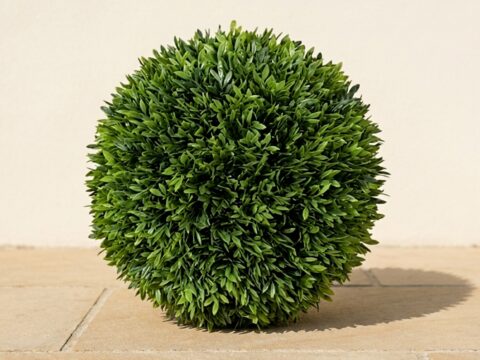
Quoted. Podocarpus rather than boxwood, 10 to 12 in.
3. Ask what the armature is
For anything permanently outdoors, check the frame before the leaf quality. A slightly faded piece still reads as a plant. A bent one does not. On a ball or a cone, look for a molded or wire form that holds its shape under its own weight and under snow.
On a tree, look for a rigid trunk, ideally with some steel in it rather than plastic alone. On a cheap outdoor piece, the frame usually softens in heat or the trunk snaps at the pot line in wind before the foliage fails. Both usually happen in year two or three.
4. UV-rated means less than it sounds
UV protection is built one of two ways. Either the stabilizer is mixed into the polymer itself, or it is applied as a surface coating. The first degrades slowly and evenly. The second protects well until it wears through, and then the foliage underneath fades quickly and patchily.
Ask which of the two methods a piece uses before you believe a number. Nothing is UV-proof; the honest word is UV-rated. You can find the hour counts in UV-resistant versus UV-proof .
Hours of direct sun decide how much this matters. State lines do not. The same piece ages far faster on an unshaded terrace in the Southwest than on a shaded northern porch. What actually causes the fading covers the mechanism, and the hour counts are in the UV guide.
Where to spend the money
Spend more on the pieces at eye level and close to a door. If the budget is tight, save on anything you will see from a distance.
A ball flanking an entrance gets inspected by everybody who visits. A hedge panel hiding an air-conditioning unit at the side of the building does not.
Match the grade to the light the piece will sit in. Sunlight is what ages artificial foliage, so a piece in deep shade under a porch roof can be a cheaper grade and still look right years later. The same piece on a south-facing terrace is a different purchase entirely.
The range, with sizes, is on the artificial category. If the piece is going into a container, how to pot one properly saves the commonest wobble.
Questions we get asked
What does UV-rated actually mean?
That the piece has some protection against sunlight, either from a stabilizer mixed through the material or from a surface coating. The two age very differently, and nothing is genuinely UV-proof. Ask which method a piece uses.
How can I judge realism from a photograph?
Two checks. Look for more than one shade of green and more than one leaf size. Then look at the silhouette edge: a dense piece has a broken, irregular outline, and a thin one looks geometric.
How long does artificial topiary last outdoors?
Your sun decides it far more than the piece does. The same ball can look tired after one Deep South season and hold three or four years further north.
Is artificial cheaper than live?
Usually more expensive up front on a like-for-like size, and cheaper over time because it wants nothing.
What fails first?
On a cheap outdoor piece, the structure goes before the leaves. A frame softens in heat or a trunk snaps at the pot line in wind, usually in year two or three.