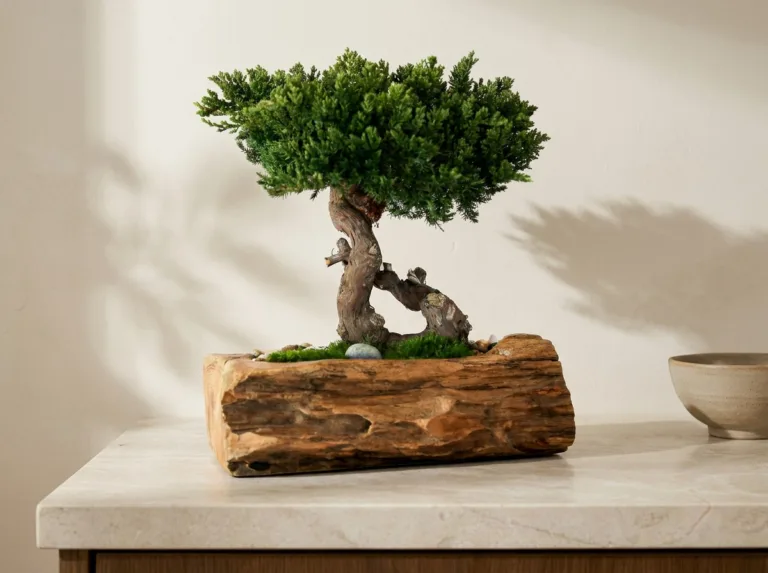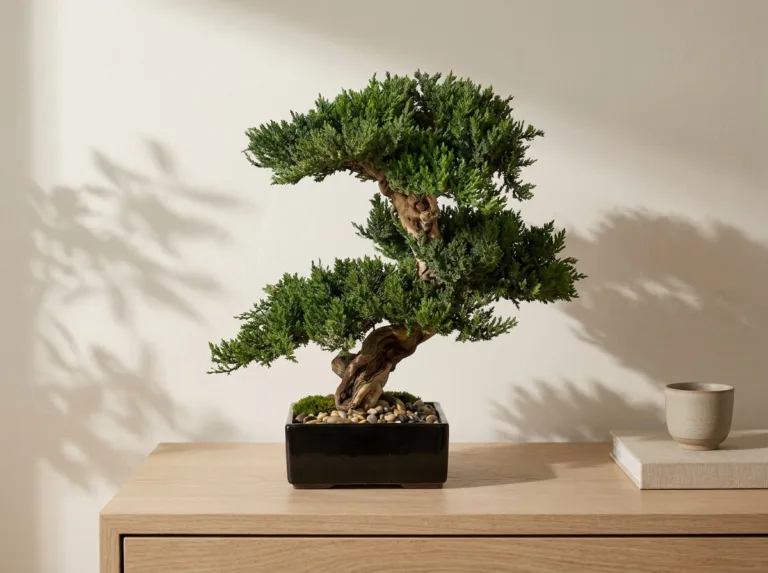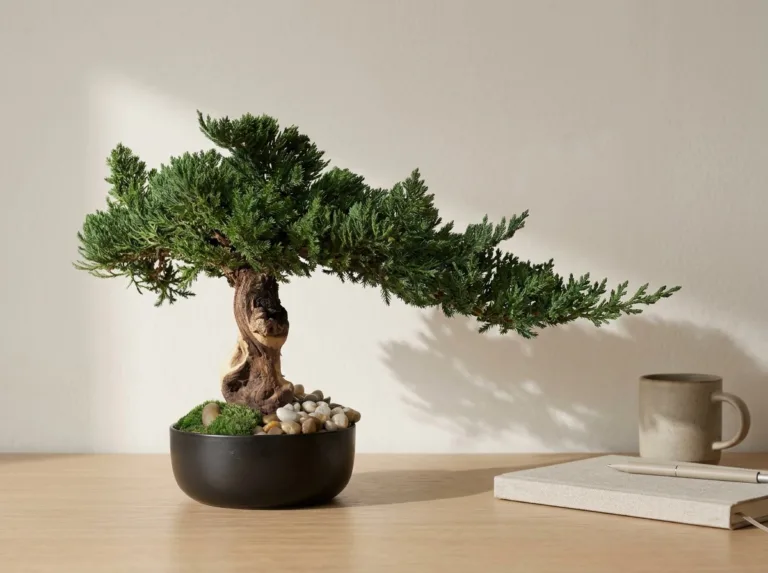
Preserved topiary gives you a real plant that needs no water and no daylight. Seven feet of spiral juniper can stand in a windowless hotel lobby, or a pair of boxwood balls can flank a doorway that nobody is going to water. That brief comes up constantly in commercial interiors, and no living plant can meet it.
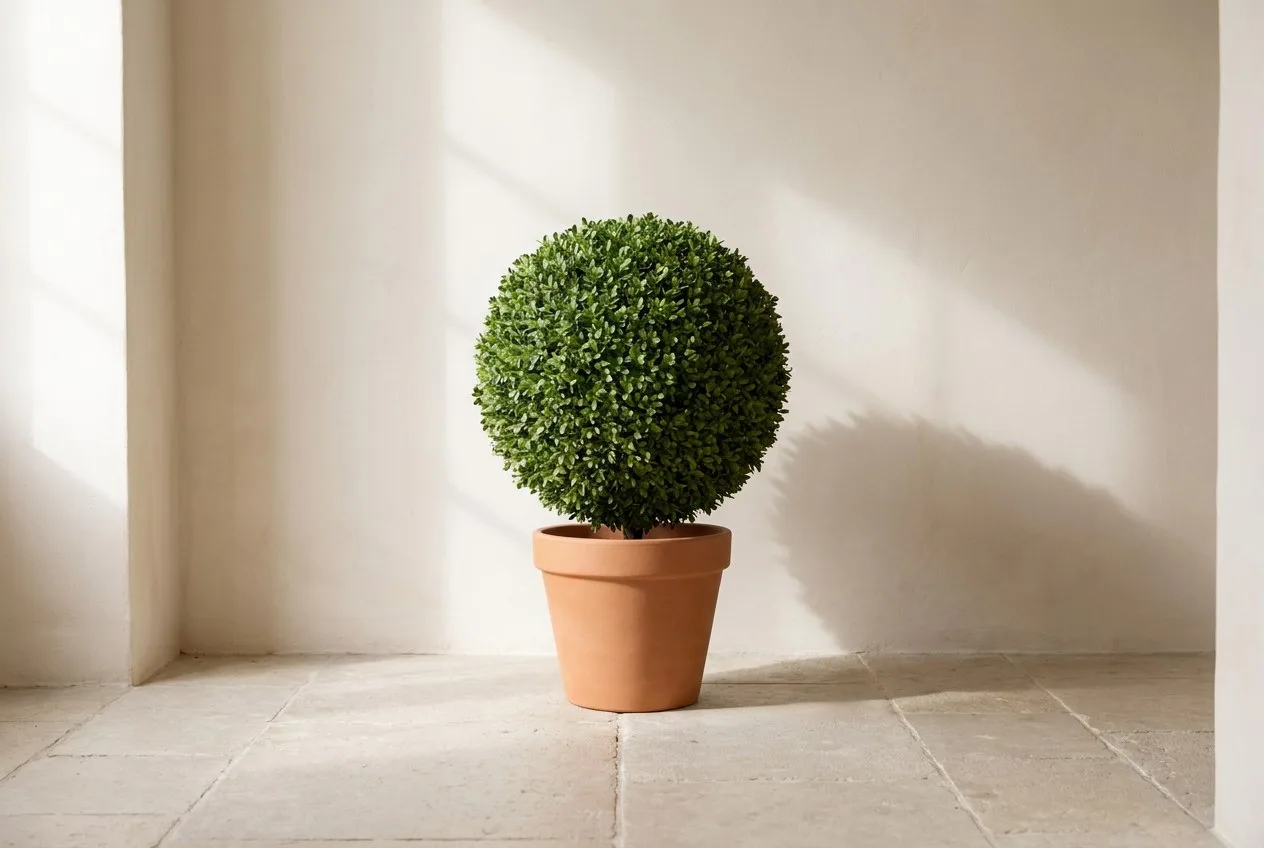
A preserved boxwood ball in a hallway with no daylight. It does not need any.
What preserved means at this scale
Large pieces are preserved like small ones. Foliage is grown and shaped first, then held in a room at controlled heat and low humidity for 10 to 14 days. It loses its own moisture and takes up a food-grade glycerin solution instead. The glycerin sets inside the leaf and stem, so the texture stays soft instead of drying brittle.
Our page on how boxwood and live foliage are preserved sets out the stages, the dyes and the lifespan by plant.
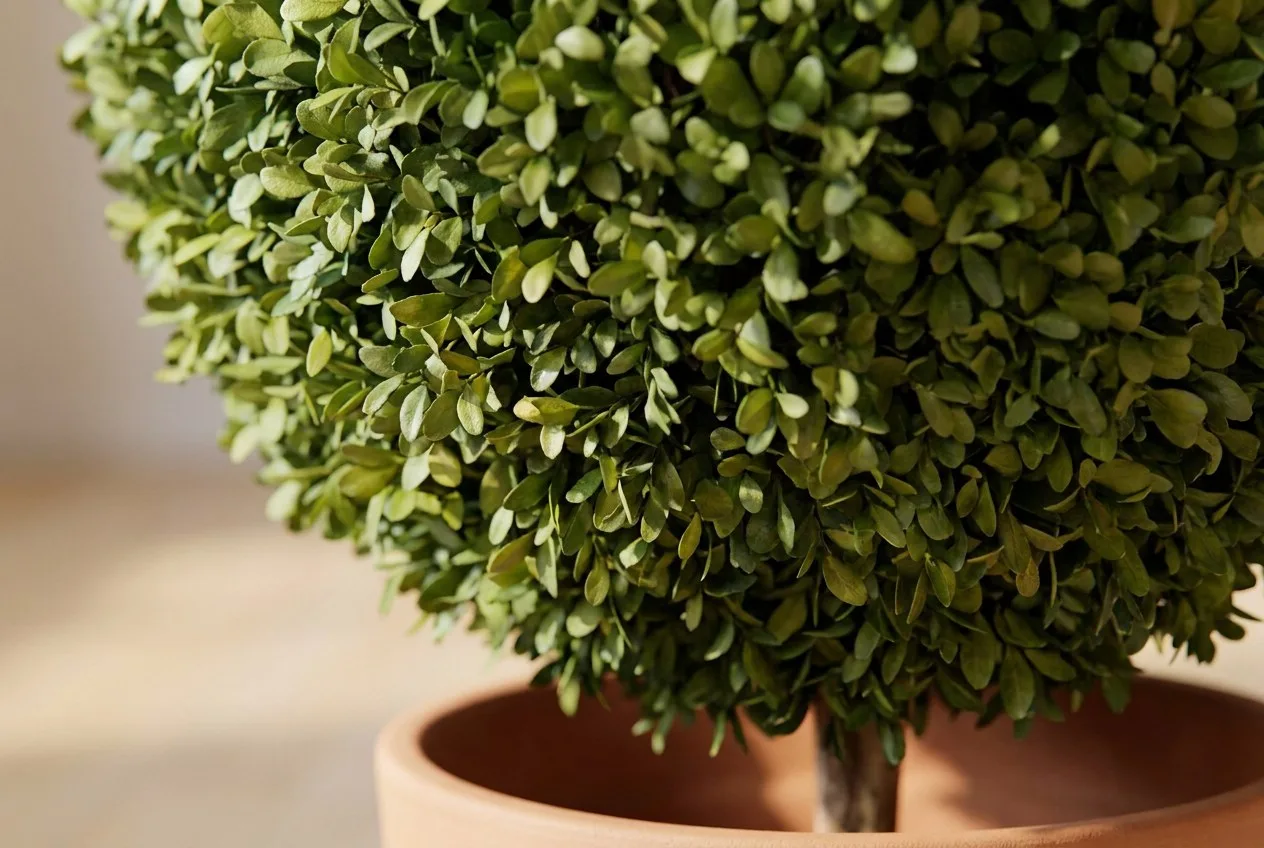
Large preserved pieces also need an armature to hold their shape. A seven-foot spiral is preserved foliage worked onto a welded steel frame, and that frame decides whether the shape is still true in year five. Ask what is inside a large preserved piece before you buy it.
The shapes, and what each one is for
Balls. The workhorse. A pair either side of an entrance is the single most requested arrangement we get, and preserved is the version that survives an entrance nobody tends. Sizes run from about 19 inches to 36 and beyond.
Cones. Height without width. That is why they suit corridors, narrow lobbies and the gap between a window and a wall. A 60-inch cone takes far less floor than a ball of the same height.
Spirals. The one people stop and look at. A spiral is a lot of hand work on a live plant, and preserving it keeps that work for good. Ours go to 84 inches.
Doubles and triples. Stacked balls on a clear stem, which give you height and a formal line. The 50-inch double ball is in the range below.
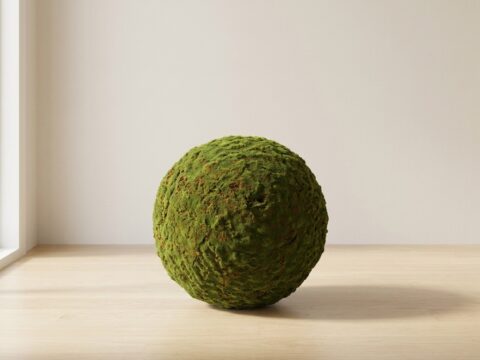
Quoted. Balls from 19 to 35 in.
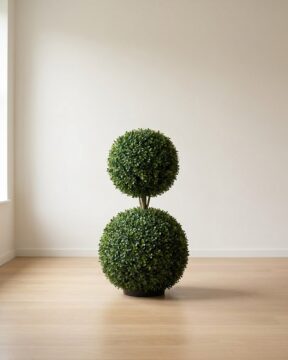
$799. A double ball at 50 in.
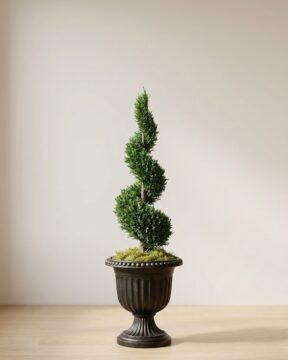
Quoted. Juniper spiral at 84 in, quoted with freight.
What it costs
Preserved sits between artificial and live in price, and closer to live on the larger pieces. The material started as a real plant that somebody grew and shaped, and you pay for that.
The range we carry runs from a few hundred dollars for a tabletop ball to the high hundreds for a 50-inch double. The largest spirals and floor pieces are quoted individually and delivered by freight.
Height, shaping work and foliage set the price. Boxwood and juniper behave differently and cost differently. A spiral carries far more hand work than a ball of the same height, so it costs more.
How long it lasts
Boxwood lasts around seven years, juniper seven or more, eucalyptus ten or more. Those figures come from our records on the range we carry. The plant decides the lifespan. Anything with floral elements is shorter, about three years, because flowers take more handling.
Those numbers assume the conditions in the next section. A piece in an interior corridor will outlive one on a sunlit landing by years, because a corridor contains nothing that ages preserved foliage.
The two positions it cannot take
Direct sun. Sunlight fades preserved foliage. The fading is uneven and permanent, and the side facing the window goes first. An atrium, a glass-roofed link or a west-facing lobby wall is the wrong home for it. Use a UV-rated artificial piece there instead, and read what UV-rated actually means before you specify.
Real damp. Glycerin pulls moisture from the air, so preserved foliage goes tacky in a genuinely humid room and breaks down over time. Pool surrounds, spa wet rooms and coastal lobbies with the doors standing open in August are all wrong for it.
Outdoors is out. With no roots and no water uptake there is nothing for weather to work with, and the piece will not recover. We would not recommend even a covered porch out of the sun and out of driven rain.
Specifying for a building
Four things belong in the spec. First, the container, because a black planter and a woven basket put the same piece in different rooms. Second, whether you want a plinth: a three-foot piece on the floor reads low, and the same piece at counter height reads deliberate.
Third, the delivery route. Large preserved pieces travel by freight, and curbside means curbside. Fourth, who dusts it. Preserved needs no water, but it collects dust like anything else in the room.
The preserved pieces do not carry a flame-spread rating, and we will not claim one. If your specification needs a rated interior finish, raise it before you order.
Some of our artificial lines can be special-ordered with a fire-retardant treatment, and that is usually the route when a venue insists. It is a different piece, though, rather than a treatment put on preserved foliage. Ask the venue which test it needs and check the treated piece against that before you order.
Multiples are quoted together. Tell us the rooms and the surfaces and we will price the set in one go. For a hotel or restaurant, start with our page on topiary for hotels and hospitality.
Questions we get asked
Is preserved topiary real?
Yes. It is a real plant that was grown, shaped and treated to hold its shape. It is no longer alive and needs no water or light.
Can preserved topiary go outside?
No. It has no roots and takes up no water, so there is nothing for weather to work with, and it will not recover. We would rather you kept it inside, even if you have a covered porch out of direct sun and driven rain.
How long will a large preserved piece last?
About seven years on boxwood and seven or more on juniper, going by our records. That assumes it is indoors and out of sun. A piece in a windowless corridor will do better than one on a sunlit landing.
Is it fire rated?
No, and we will not claim it is. When a venue insists on a rated interior finish, the usual route is an artificial piece with a fire-retardant treatment on special order. That is a different piece, and the treatment does not go on preserved foliage. Raise it before you order.
What is inside a large one?
A welded steel armature. On anything over about three feet, that frame decides whether the shape is still true in year five, so ask the seller what it is before you buy.