

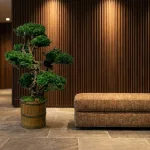


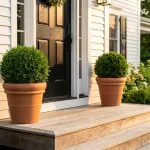






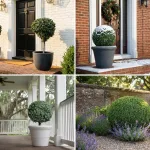


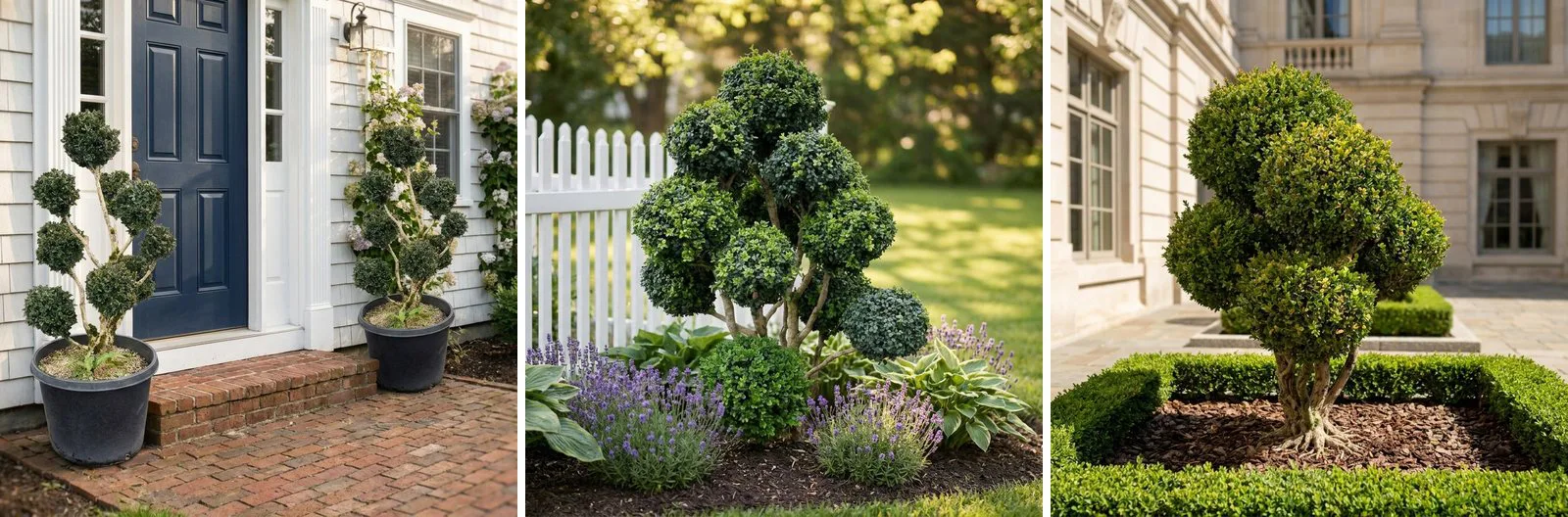
Pom pom, cloud and poodle topiary all mean the same basic shape: separate round heads of foliage on bare stems, with air between them. A poodle is the formal version, a pom pom is a little looser, and a cloud is the loosest, from the Japanese tradition. Sellers use the three names loosely, so the same plant turns up under all of them.
That costs you time when you search, so here is what each name usually means, and how to keep the shape once you have one.
What the three names mean
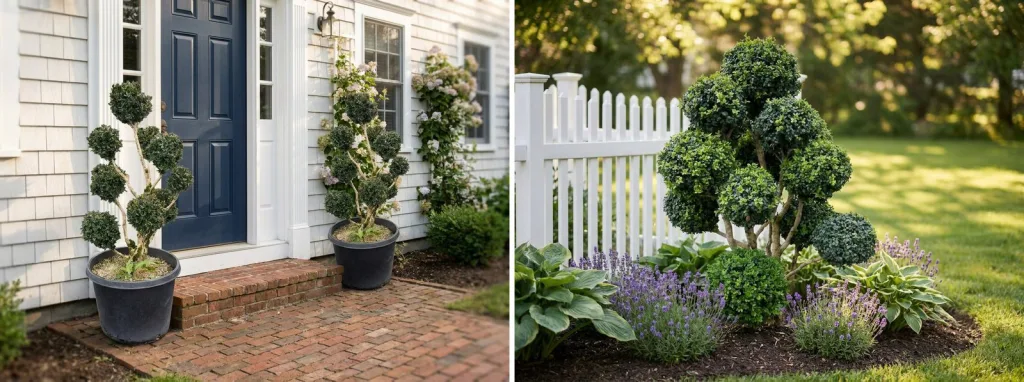
Poodle is the formal one. Two or three round heads of decreasing size sit on one straight stem, evenly spaced, and the whole plant is clipped tight.
Pom pom is the same idea, a little looser. Sellers use it most when the heads sit on a single trunk but are not perfectly graded in size.
Cloud, or cloud-pruned, is the loosest and the oldest of the three. It comes from Japanese niwaki. The heads are irregular, the branches go their own way, and the plant is meant to look like a tree in miniature rather than a piece of geometry.
Search under all three names, because the same plant is listed under any of them. But if you are specifying one, say which you mean. A formal poodle and a cloud-pruned plant are different objects in the same price bracket.
Why they take longer than any other shape
A pom pom needs two jobs. You cut each head into its own sphere, then you go back and strip any growth that has broken out along the bare stems. A ball or a cone needs one job: cut the outside of a single mass.
Keep the stems bare so the heads stay separate.
Budget roughly the cutting time of a ball for each head, plus the stem work. You still need the same two visits a year as any boxwood, the main cut in early June and a light tidy by early September, but each visit takes longer.
Sizes, and what the big ones are for
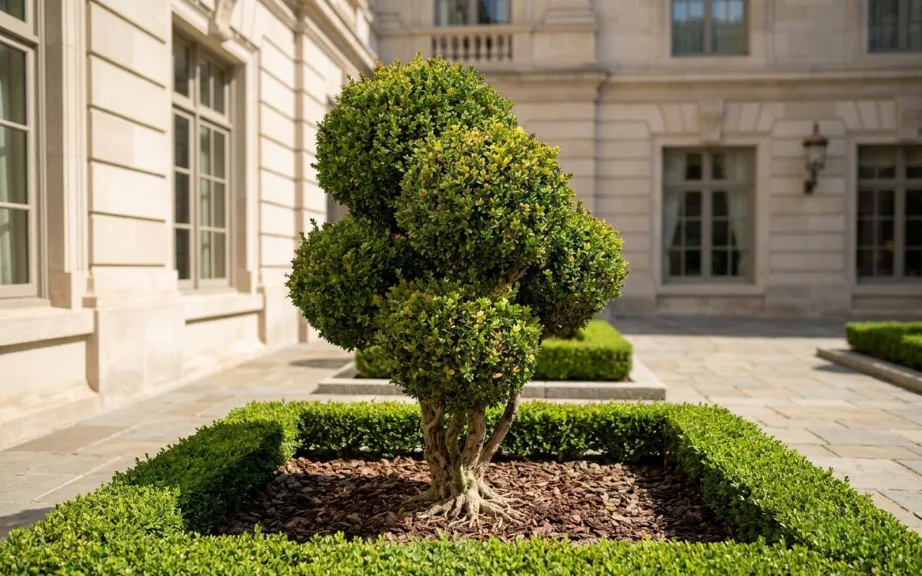
Our live pom poms run from about 35 inches to twelve feet, and there is a formal boxwood poodle at four to five feet.
The small ones are for containers and terraces. The very large ones, eight feet and above, are specimen plants: one on its own in a courtyard, or a pair framing a gate. They come on a large root ball and arrive by freight.
You pay for the years of growing and cutting, rather than the height alone.
How to keep the gaps open
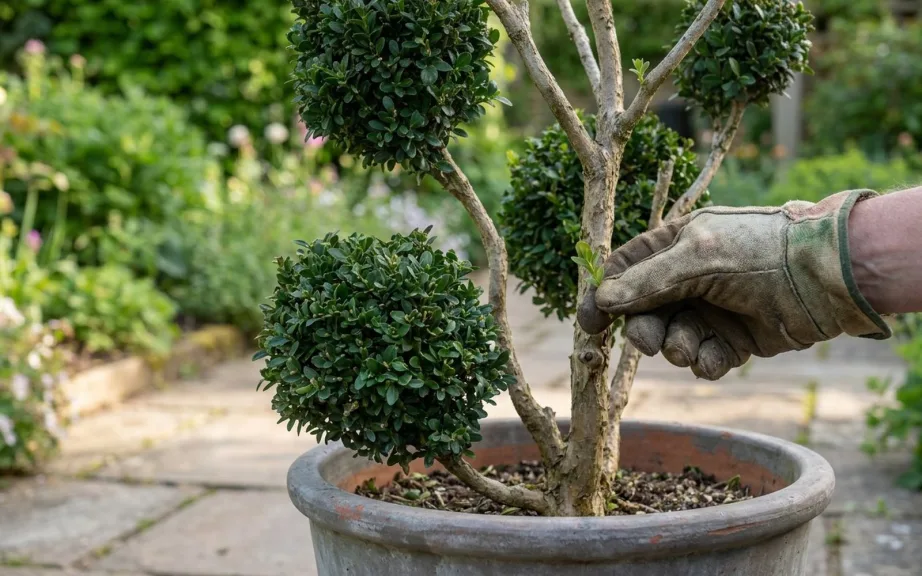
Keep the stem clean. Rub new shoots off the bare stem with a thumb while they are still soft. A soft shoot removed early leaves nothing behind. Leave it to harden and it has to be cut, and a cut stub on a bare stem thickens rather than disappears.
Do not let the heads grow into each other. Cut the underside of each head as well as the top. The underside is the part everybody forgets, and it is where two heads meet and merge.
Feeding, cutting dates and winter watering are the same as for any boxwood: what a live boxwood costs to keep.
The range is in the pom pom category.
The same look without the cutting
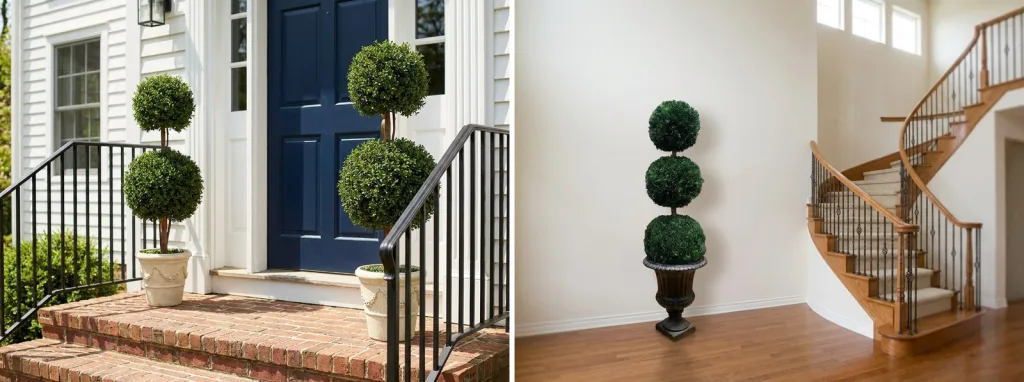
If you want the silhouette without the cutting, there are artificial versions, and preserved double and triple balls for indoors. The bare stem is the part artificial reproduces least convincingly, so look closely at the joins before you buy one.
Quick answers
What is the difference between pom pom, cloud and poodle?
Poodle is the formal version: graded round heads, evenly spaced on a straight stem. Pom pom is the same idea, a little looser. Cloud, or cloud-pruned, is irregular and meant to look like a miniature tree rather than a piece of geometry.
How much work is a pom pom?
More than a ball or a cone. Each head is cut on its own and the bare stems have to be kept clear. Budget the cutting time of a ball for each head, plus the stem work, across the same two visits a year.
How do I stop the heads merging?
Cut the underside of each head as well as the top. The underside is where two heads meet, and it is the part everyone forgets.
What do I do about shoots on the bare stem?
Rub them off with a thumb while they are soft. A shoot removed in spring leaves nothing. The same shoot cut months later leaves a stub, and the stub thickens.
Why are the large ones so expensive?
The price reflects the years of growing and cutting behind the plant, rather than its height.