









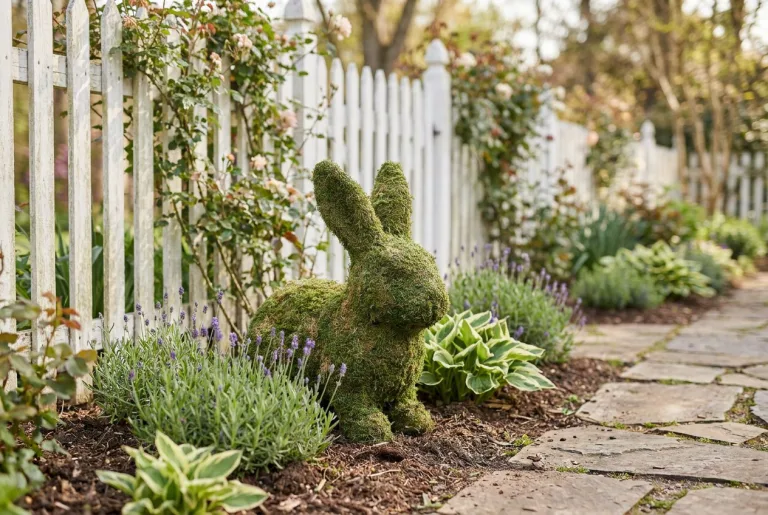
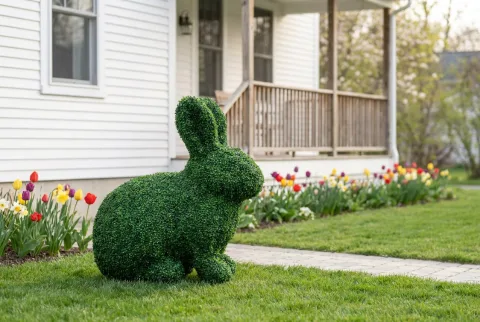

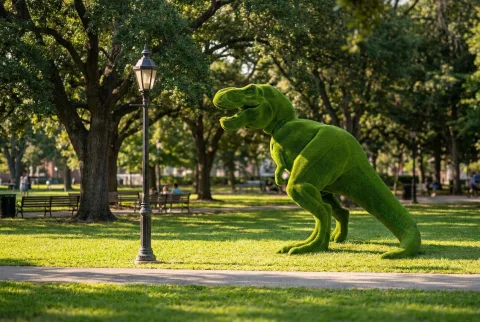
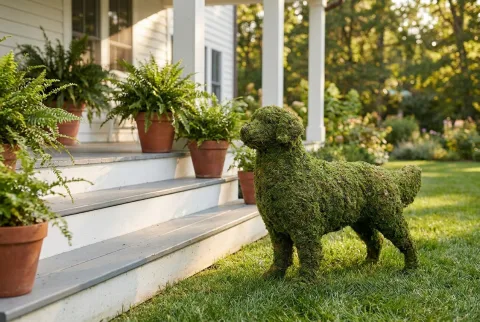
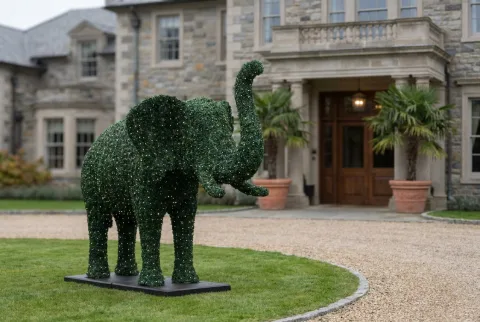
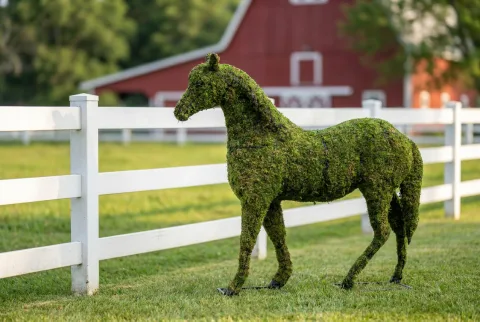
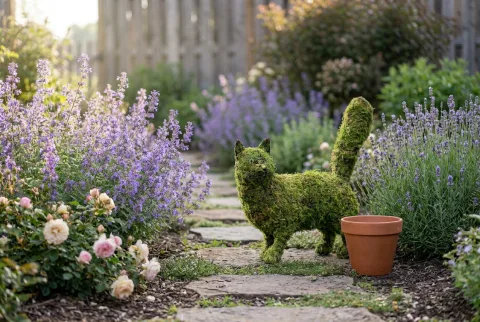
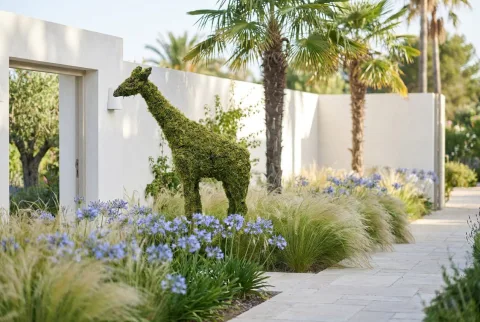







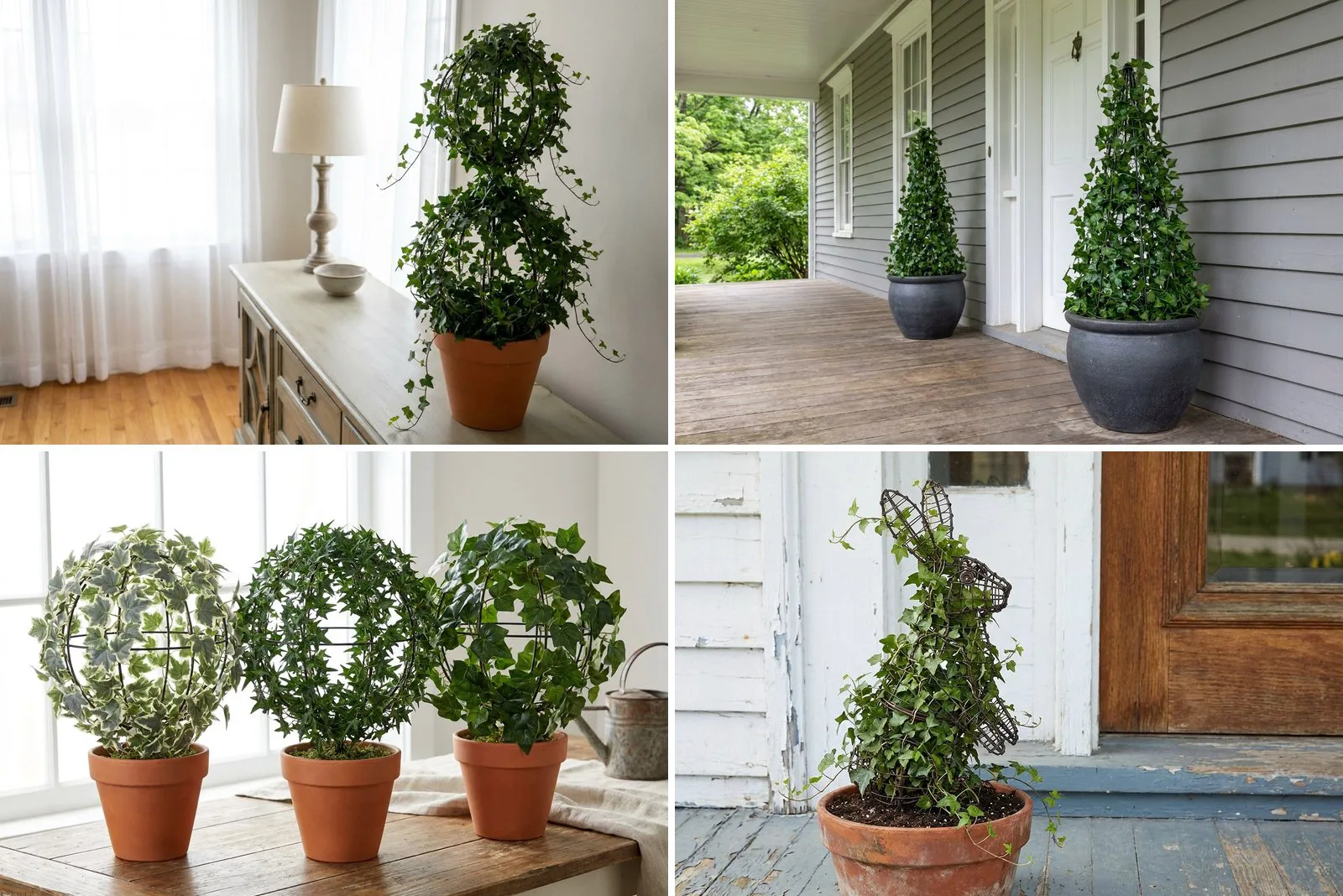
An ivy topiary is live ivy trained over a wire frame until the leaves cover it and the frame reads as a green shape. Small-leaved English ivy is the usual plant, and a small frame can be covered in one growing season. It grows indoors in bright, indirect light or outdoors in shade.
We do not sell finished live ivy topiary at the moment. We sell the wire frames and the moss to start one, and young ivy plants are easy to find at any garden center. This guide covers choosing the ivy and the frame, training it, and keeping it healthy inside and out.
Which ivy to use for topiary
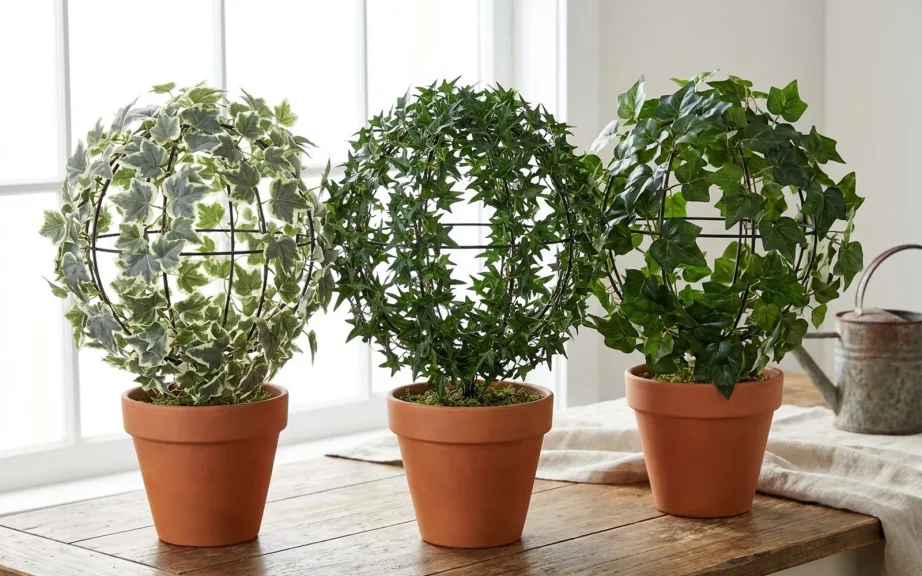
Choose an English ivy (Hedera helix) with small leaves and short gaps between them. Small leaves follow the curve of a frame closely, so the shape stays crisp. Large-leaved ivy covers faster but blurs the outline on anything under two feet.
| Ivy type | What it looks like | Best for |
|---|---|---|
| Needlepoint types | Tiny, pointed dark green leaves | Small frames, fine detail |
| Plain English ivy | Glossy green, medium leaves | Outdoor frames, fastest cover |
| Variegated types, such as ‘Glacier’ | Gray-green with cream edges | Indoor pieces in good light |
Variegated ivy grows more slowly and needs more light to keep its color. Plain green types are the tough choice for outdoors. English ivy is generally hardy in USDA zones 5 to 9.
Choosing a frame
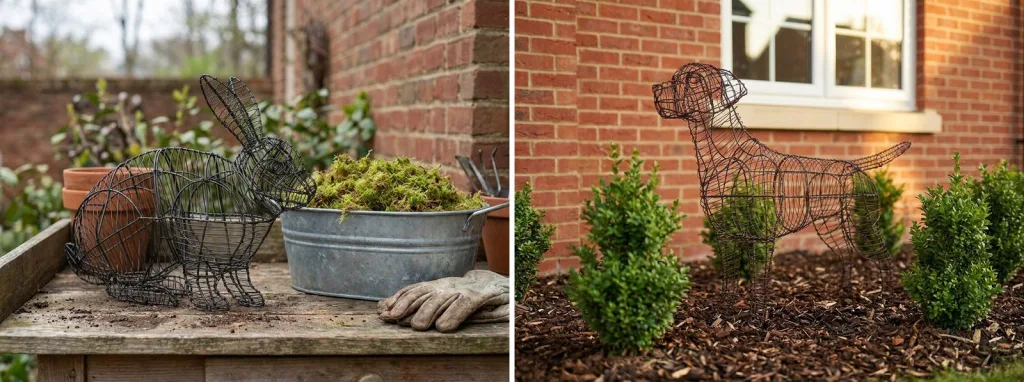
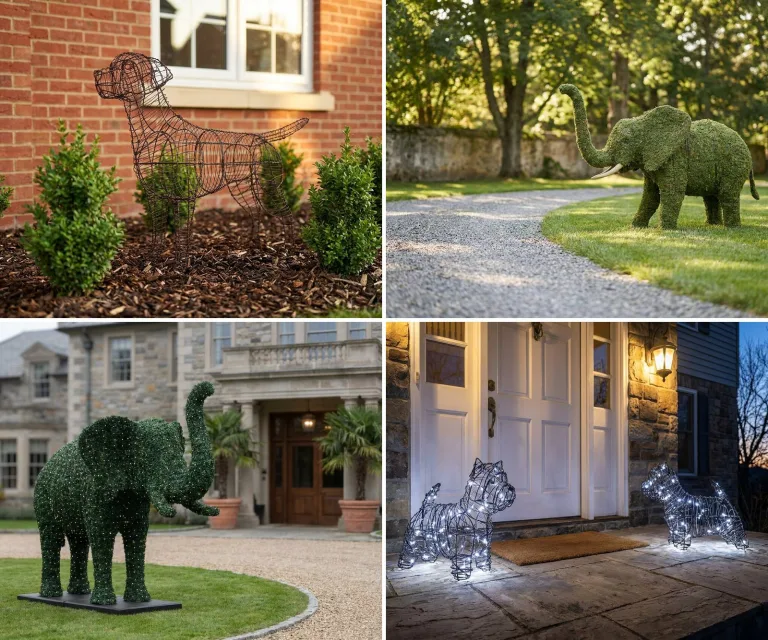
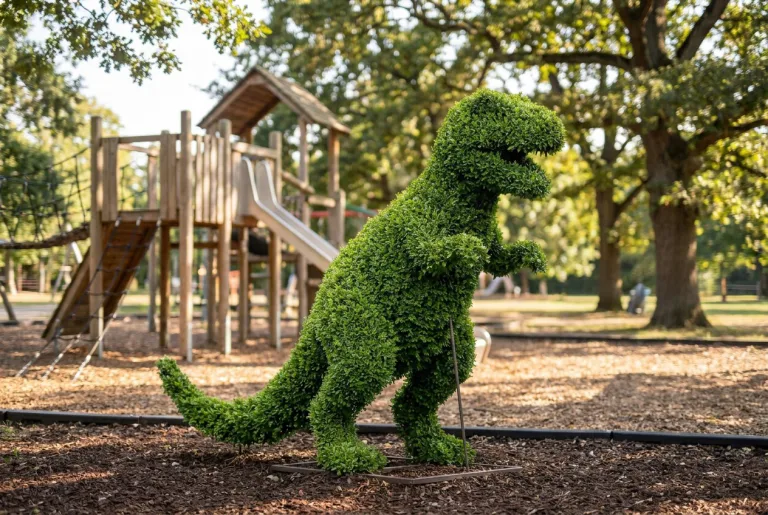
Any open wire frame works. Simple shapes are easiest for a first ivy topiary: a ball, a cone, a heart or a small sitting animal. Legs, ears and tails need more tying in and more patience.
Pick a frame made of heavy wire or welded steel that will not bend as the plant gets heavier. Our wire topiary frames run from about $57 for a small frame to about $1,650 for a large animal, with 44 designs. For help picking one, read what to look for in a wire frame.
Two ways to grow ivy on a frame
Planted around a hollow frame
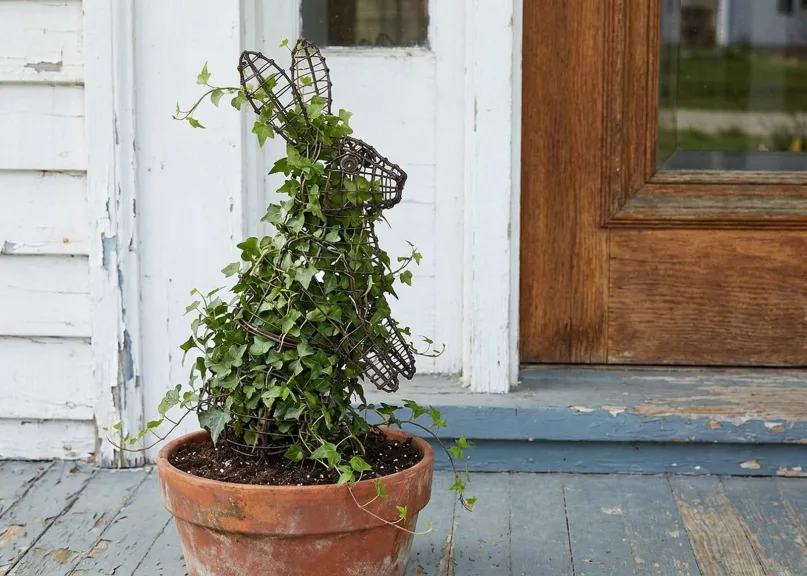
Push the legs of the frame into a pot of potting mix, or into the ground. Plant young ivy around the base and wind the shoots up the wires. This is the easiest method and the best one for a beginner. The roots live in ordinary soil, so watering is simple.
Planted into a moss-filled frame
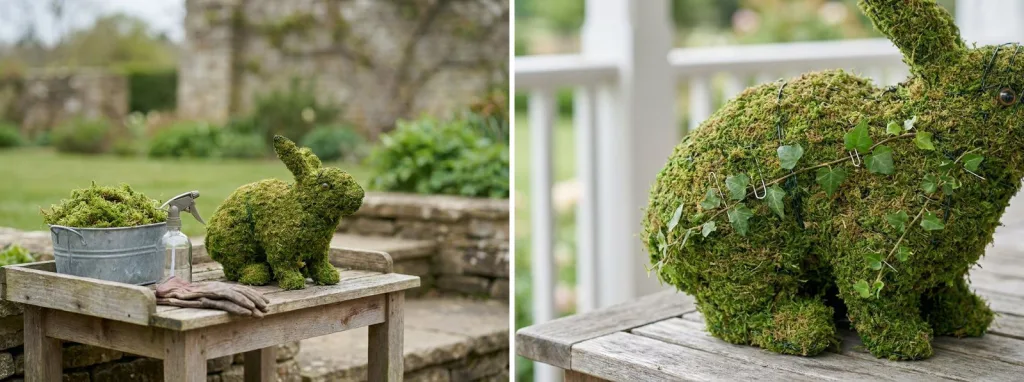
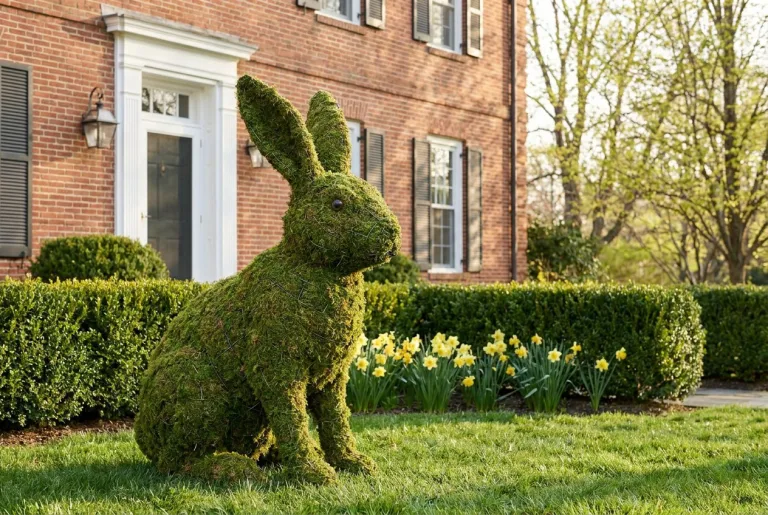
For a solid animal shape, pack the frame tightly with damp sphagnum moss first. Then push rooted ivy cuttings into the moss and pin the shoots flat with floral pins. The ivy roots into the moss and covers the surface.
A mossed frame dries out faster than a pot, so it needs more watering. Our guide to adding moss to a frame shows the packing step, and the sphagnum moss care guide covers keeping it damp. Moss comes in bags and bales in our topiary supplies.
How to train ivy on a frame, step by step
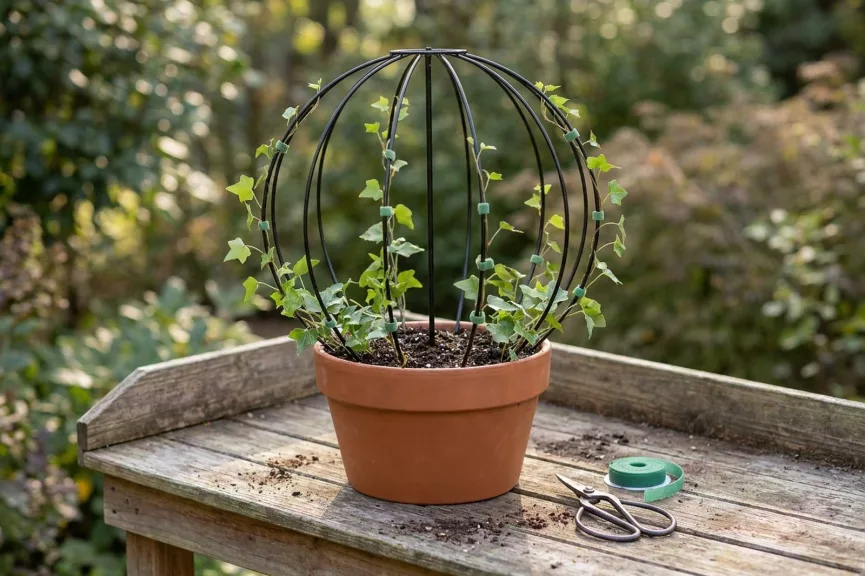
- Set the frame first. Push it firmly into the pot or the ground before planting, so you do not damage roots later.
- Plant several small ivies. Three to five plants around a 12 inch pot, spaced evenly, give even cover. One large plant leaves bare sides.
- Wind the longest shoots onto the wires. Spread them in different directions so every part of the frame gets a shoot.
- Tie in loosely. Use soft plant ties or twine every few inches. Tight ties cut into the stems as they thicken.
- Pinch the tips. Pinching the end of a shoot makes it branch, and branches fill gaps. Do this every few weeks in the growing season.
- Keep tying in new growth. Check once a week and guide new shoots onto bare wire. Cut off any that grow away from the frame.
A small frame is usually covered by the end of one growing season. A larger animal takes two or three.
Ivy topiary care indoors
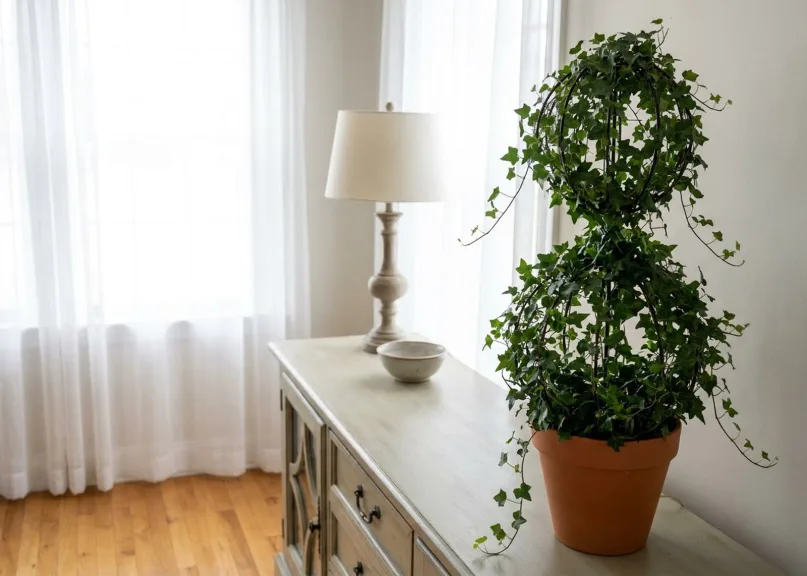
Indoors, ivy wants bright, indirect light and a cool room. A spot a few feet from an east or north window suits it. Direct afternoon sun through glass scorches the leaves, and a dim corner makes the growth thin and leggy.
- Temperature: ivy grows best in a cool room, roughly 55 to 70°F. Keep it away from heating vents and radiators.
- Water: water when the top inch of soil is dry, then let the pot drain. Never leave it standing in a saucer of water.
- Humidity: dry winter air is the main problem indoors. It brings spider mites.
- Feeding: a liquid houseplant feed at half strength once a month from spring to late summer. Nothing in winter.
Check under the leaves for spider mites every couple of weeks in winter. Fine webbing and pale, speckled leaves are the signs. Rinse the whole plant in the shower or with a hose, and repeat weekly until they are gone.
Ivy topiary care outdoors
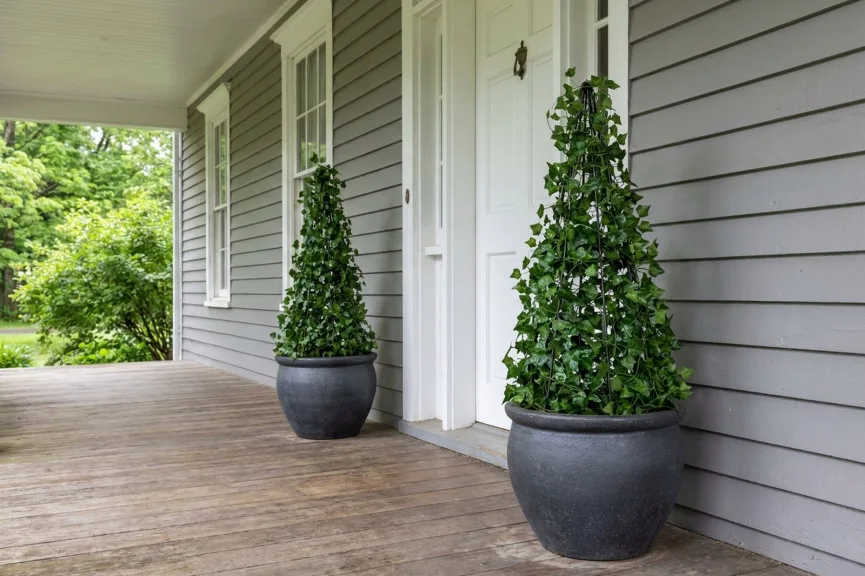
Outdoors, give ivy shade or part sun. Morning sun is fine. Hot afternoon sun burns the leaves, especially on a mossed frame that dries out quickly.
In the ground within its zone, English ivy is hardy and needs little help in winter. In a pot, the roots get about one zone colder than they would in the ground, so in zone 5 or 6 move a potted ivy topiary against the house or into an unheated garage for the coldest weeks. Keep watering it when the soil is not frozen.
English ivy is listed as invasive in several states, including Oregon and Washington, where it spreads into woodland and climbs trees. On a topiary it stays under control if you trim it. Cut any runners that reach the ground before they root, and check your state’s list before planting ivy outdoors.
Trimming an ivy topiary
Once the frame is covered, trim it every few weeks in spring and summer. Snip off shoots that stick out beyond the shape and tuck the rest back onto the wires. Frequent light trims keep the outline sharp and make the plant thicker. Wear gloves, because ivy sap irritates some people’s skin.
If you want the look without the growing
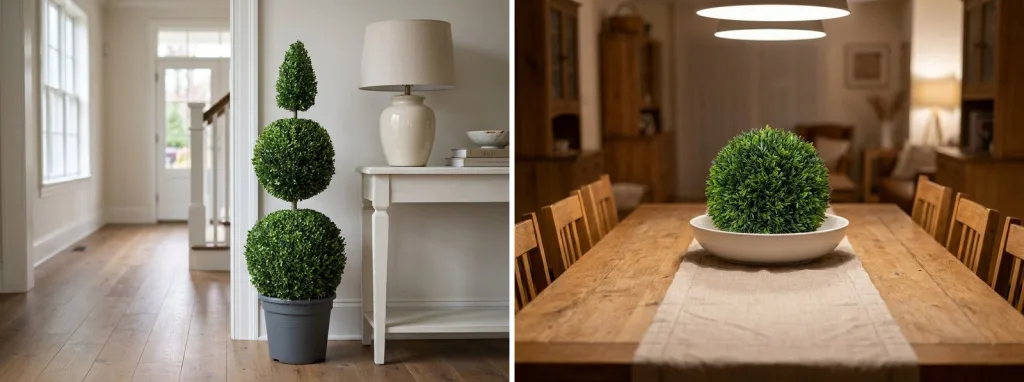
A live ivy topiary needs regular water, trimming and tying in. For a green shape that needs none of that, preserved topiary keeps real foliage indoors with no light or water. Artificial topiary balls, including a needlepoint ivy ball, stay the same indefinitely, and the outdoor-rated ones can stand outside.
Quick answers
Can I buy a live ivy topiary from you?
Not at the moment. We sell wire frames and moss so you can grow one, and our live range is boxwood topiary. Young ivy plants for the frame are sold at most garden centers.
How long does ivy take to cover a topiary frame?
One growing season for a small frame, if you start with three to five plants and pinch the tips. A large animal frame takes two or three seasons.
Does ivy topiary need sun?
It needs bright light but not direct hot sun. Indoors, a spot near an east or north window is ideal. Outdoors, open shade or morning sun works best.
Why is my ivy topiary turning brown?
Crisp brown edges usually mean the soil dried out or the plant got too much sun. Brown, soft leaves with wet soil mean too much water. Pale, speckled leaves indoors point to spider mites.
Is ivy topiary easy to grow?
It is one of the easiest topiary projects, because ivy grows fast and follows the frame for you. The main work is watering and tying in new shoots. For other plants that suit a frame, see the best plants for topiary.
Some photographs on this page are staged illustrations. We sell the frames and moss; live ivy is not in our range.