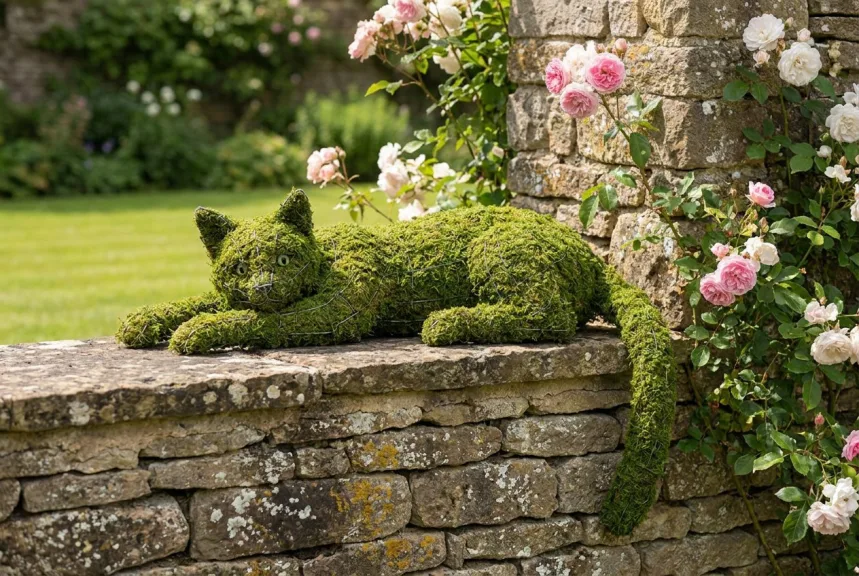
Cat topiary

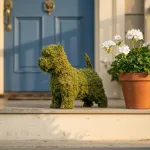
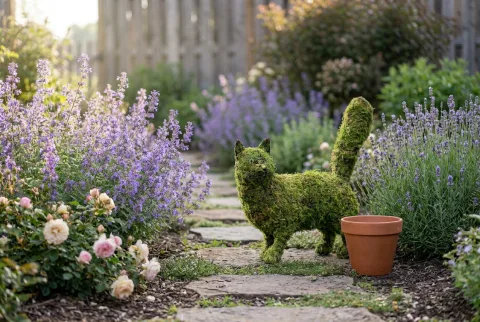
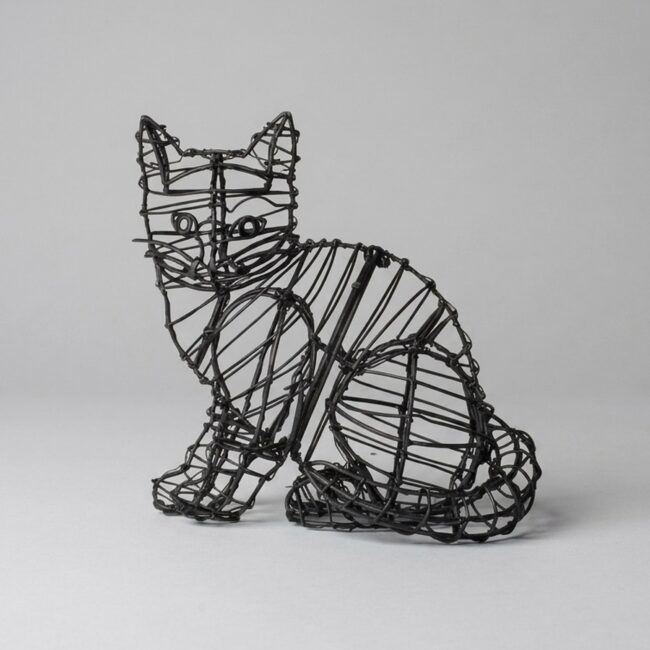
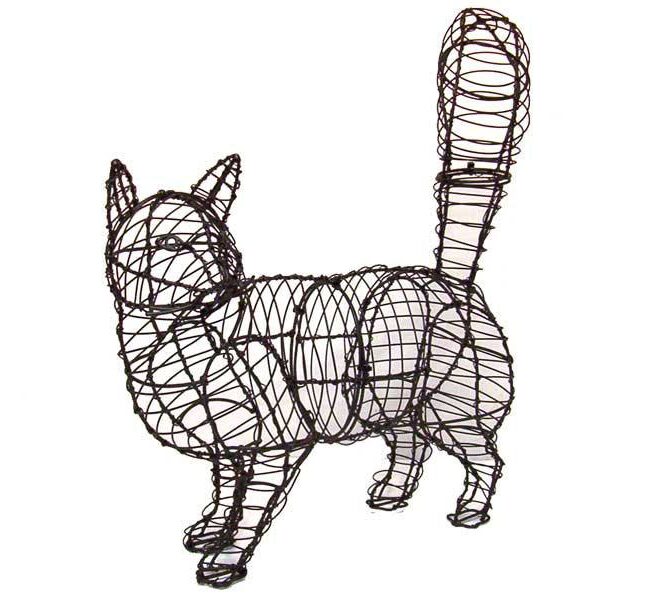
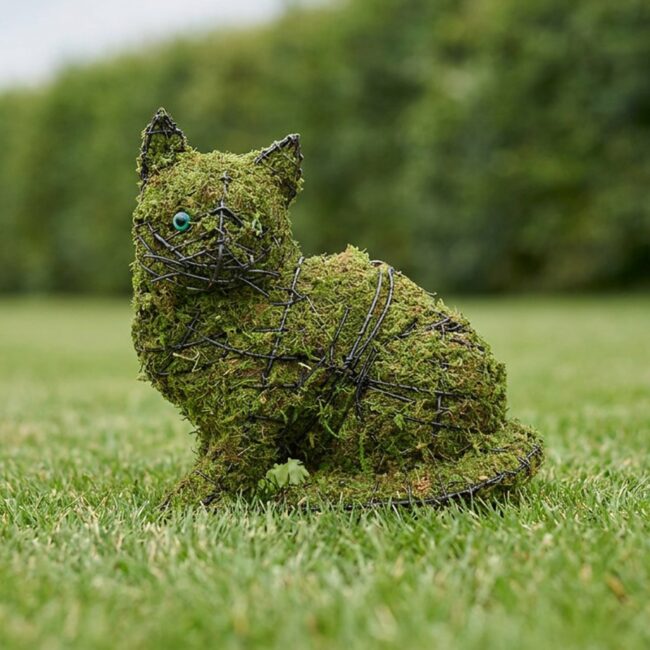
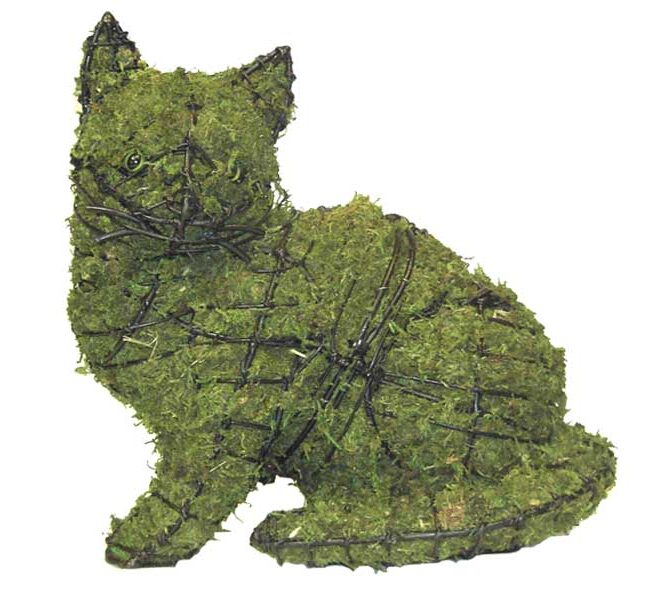
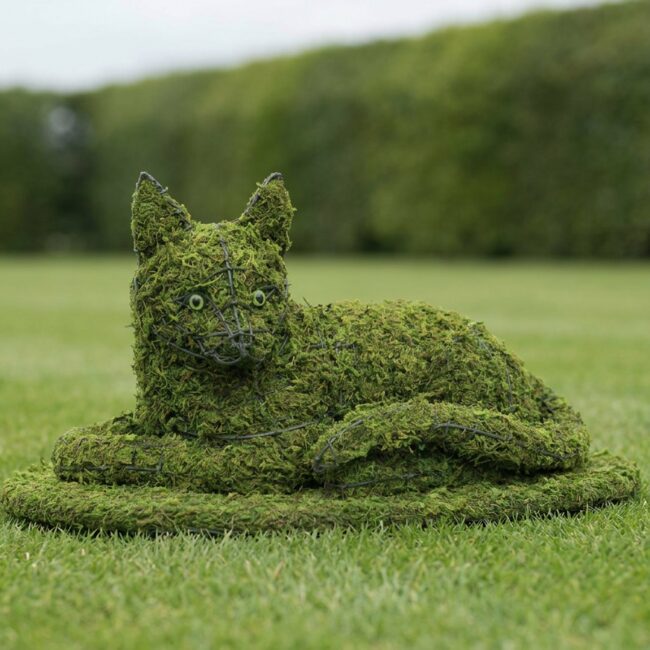
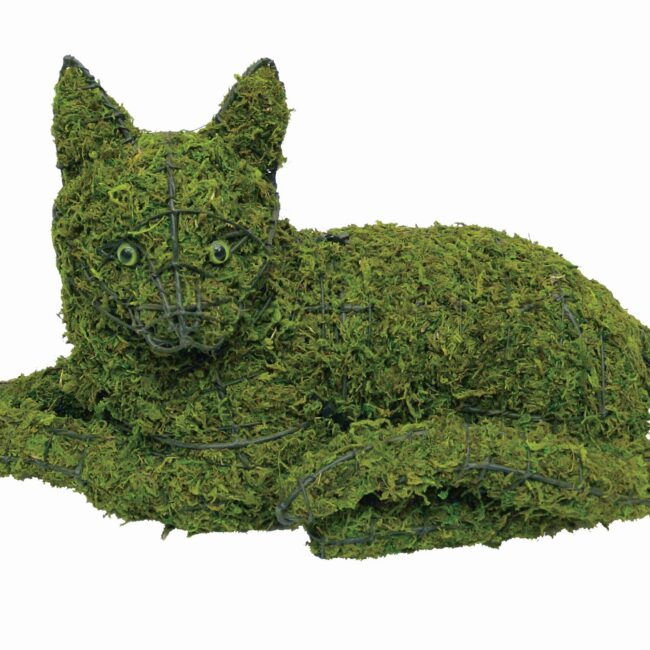
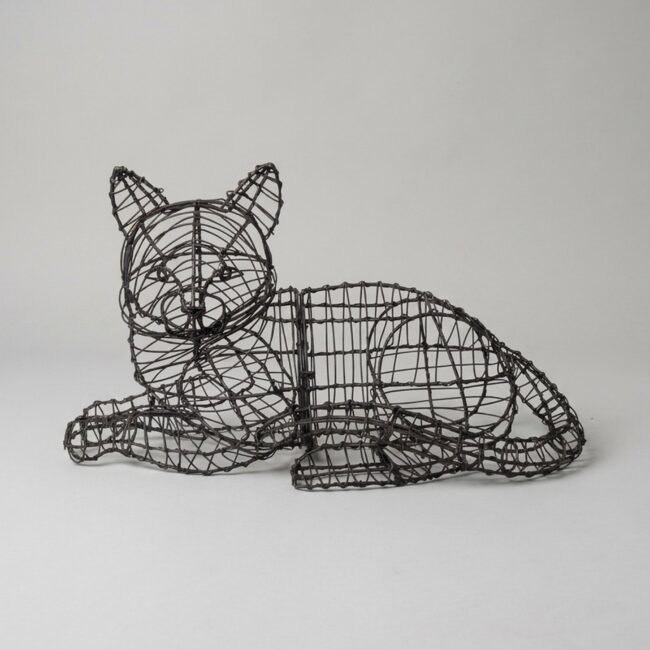
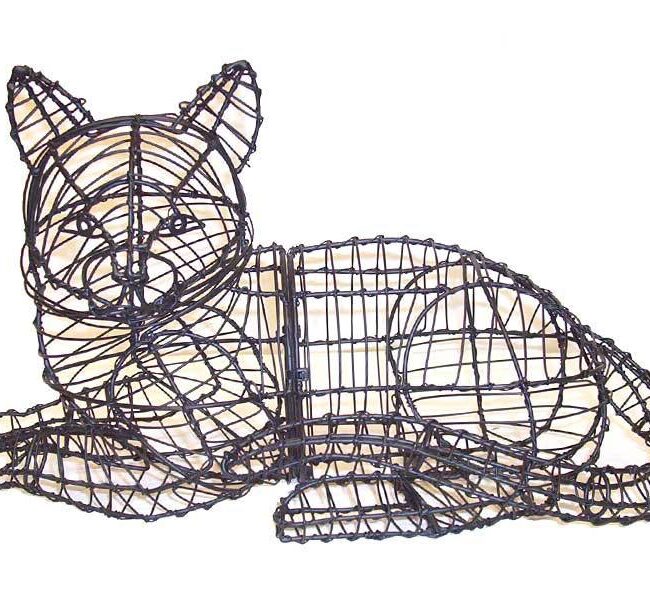
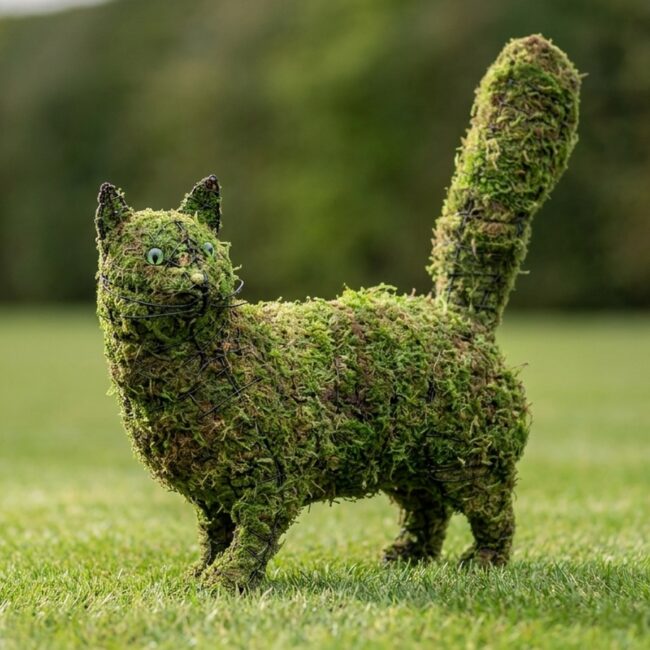
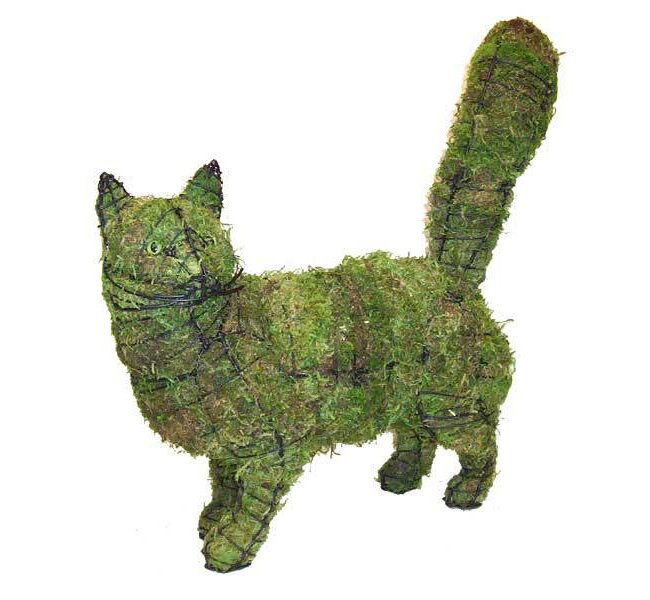
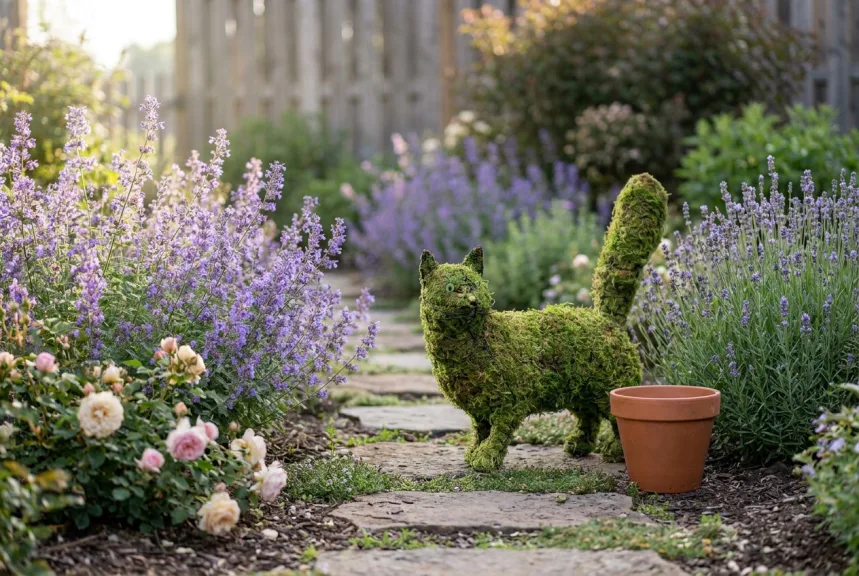
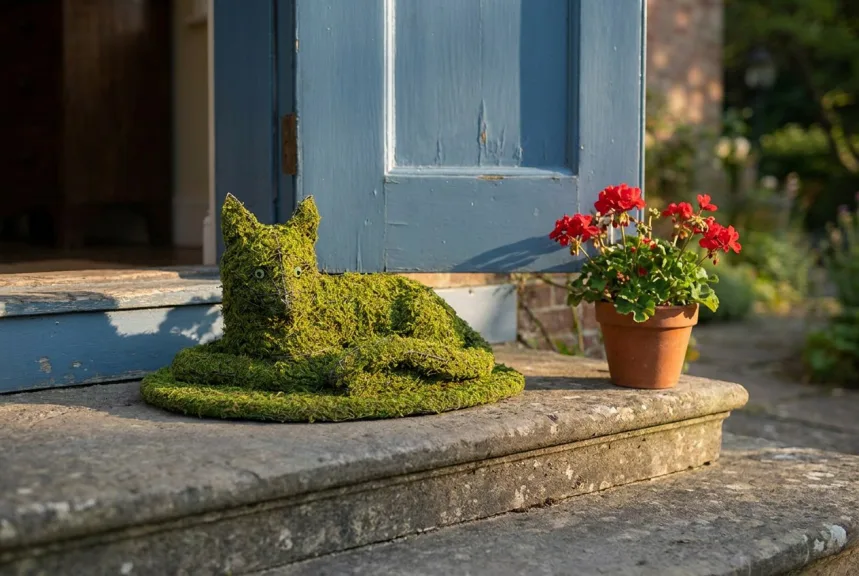
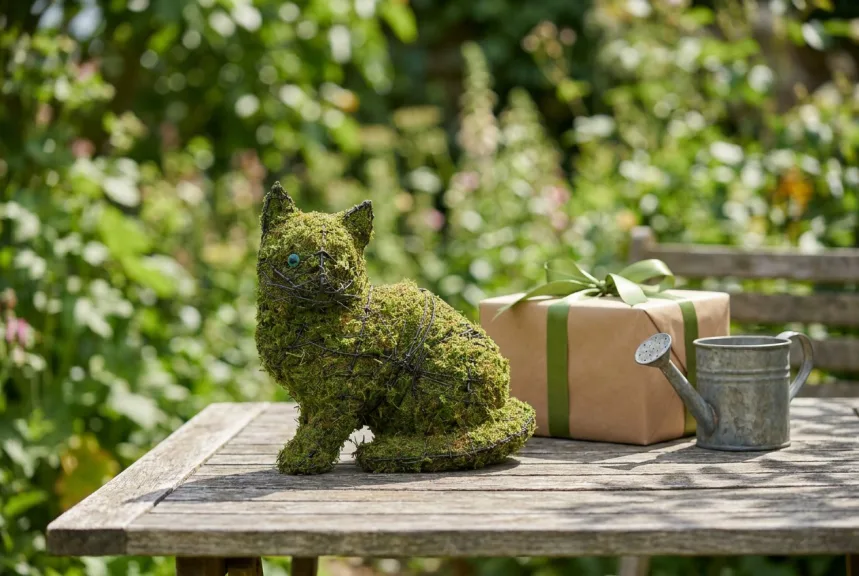
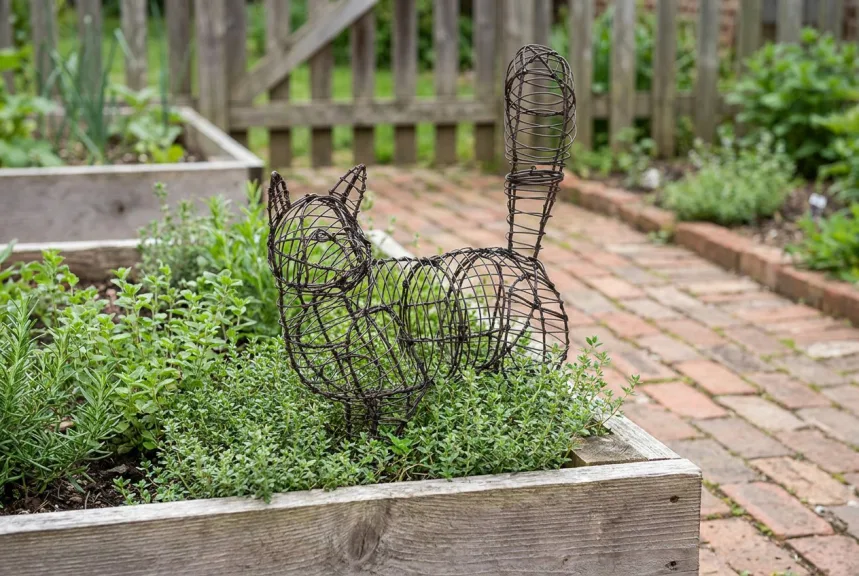
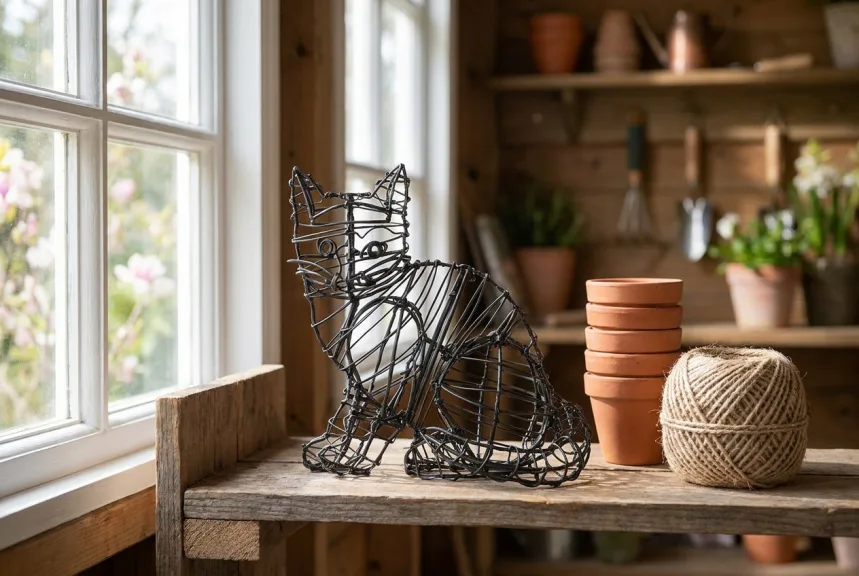
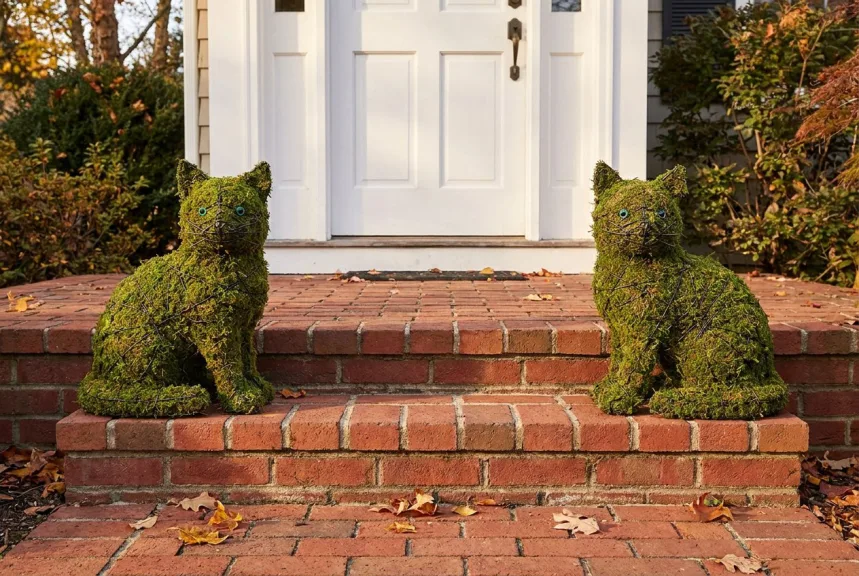
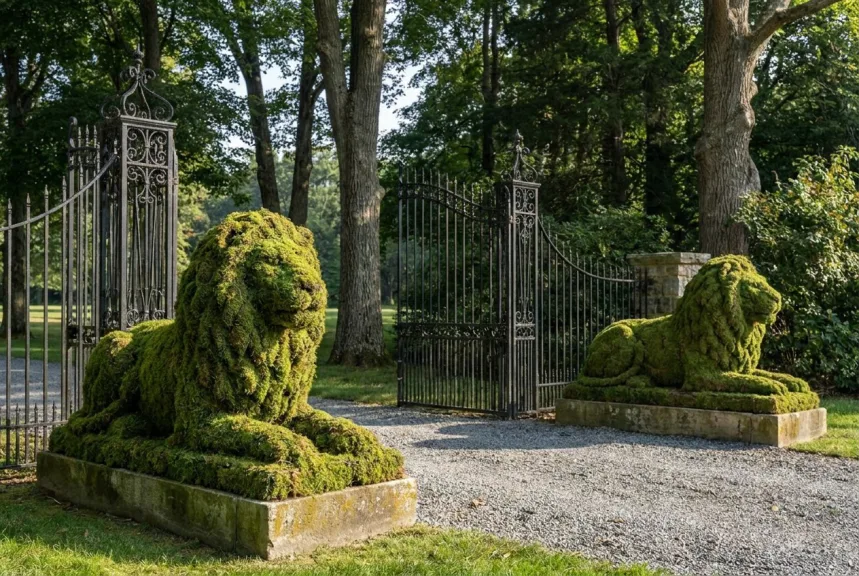
A cat topiary is a small sculptural piece, usually sitting or curled, built on welded galvanized wire and finished in hand-packed sphagnum moss or left bare to plant up yourself. At nine to fifteen inches they suit a hearth, a doorstep, a shelf or a table, and they are among the pieces people most often buy as gifts. Larger cats — and big cats such as lions — are built to commission at any scale you need.

See the cat pieces
Made in our own workshopWelded, galvanized and covered here — not drop-shipped.
Ships across US & CanadaSmall pieces by UPS, large ones by freight with delivery quoted.
Built to outlast the foliageGalvanized steel under everything, including the welds.
4–10 weeks for a commissionReady-made pieces leave sooner; we tell you which before you pay.

A cat is a curve, not a pose.

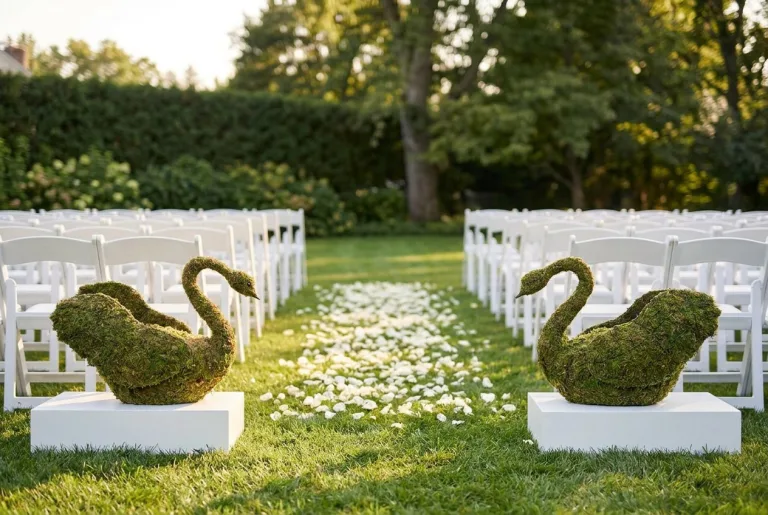
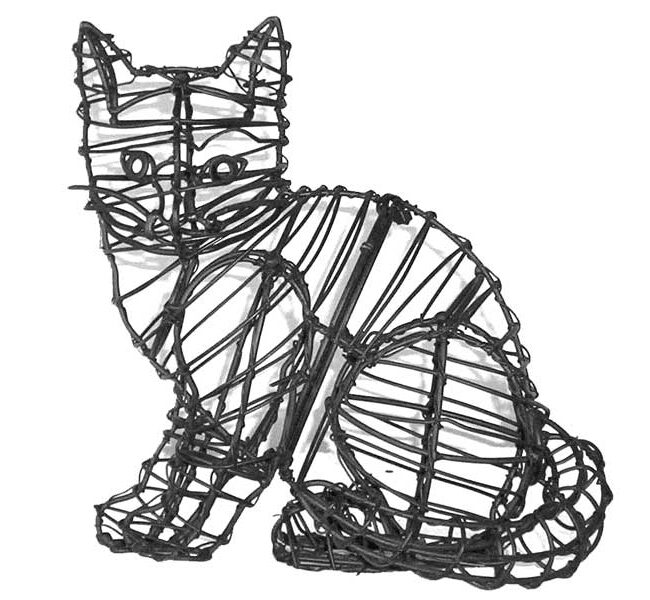
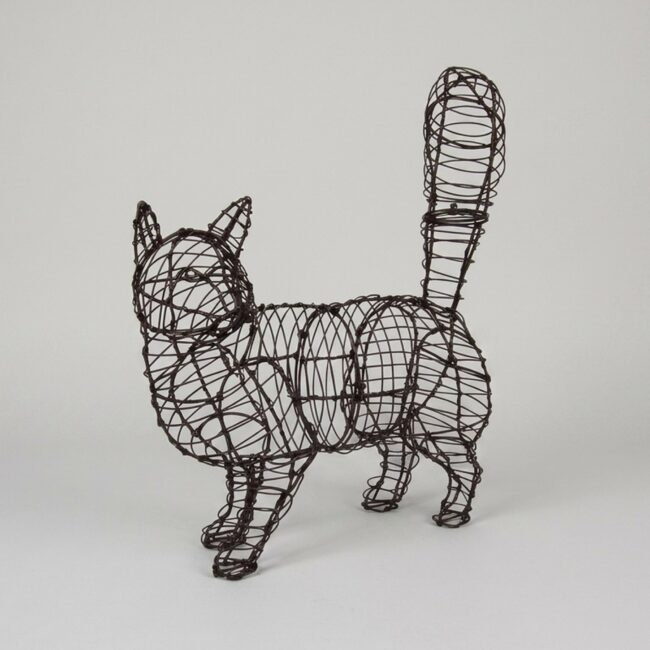
Cats are built around a single continuous line — the curl of a sleeping cat, the arch of a stretching one. Get that line right and almost no detail is needed; get it wrong and no amount of detail rescues it. It is the same problem as a swan’s neck at a smaller scale.

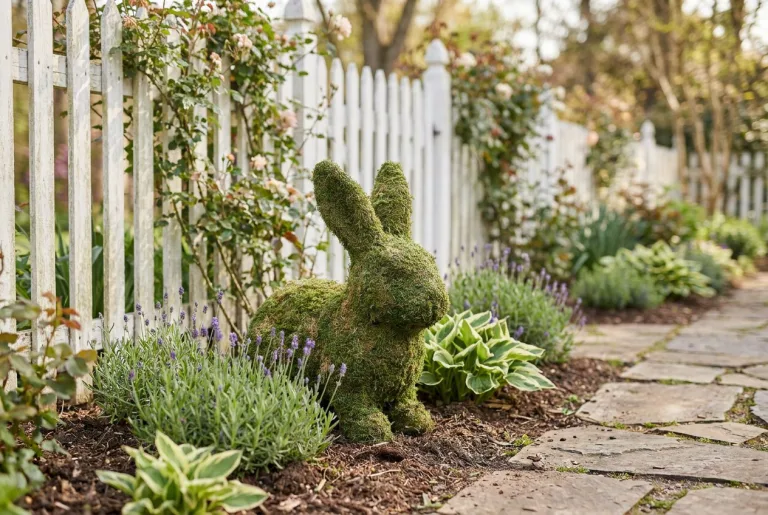
Because they are small and read best close up, cats are among the few pieces where the moss surface is doing as much work as the frame — at nine inches the eye is close enough to read the fibre, not just the shape.

Other small mossed pieces are in mossed animal topiary; the same curve problem at full size is in swan topiary.

What it needs once it is standing.

A mossed piece wants misting through dry spells and a refresh of the moss every year or so. A bare frame wants nothing at all until you decide to plant it. Turf and artificial pieces want an occasional rinse and no more — no watering, no trimming, no seasonal work.

The steel underneath is the part that decides how long the piece lasts, and galvanized steel outdoors is measured in decades rather than seasons.

Full instructions by material are on our care pages; if a piece has gone tired, this eight-year-old swan shows what a restoration looks like.

In the workshop

Steel first, then green.

Three of the six stages every piece goes through. The frame is the sculpture; everything after it is surface.
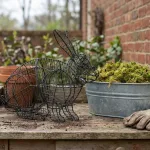
  1. The same rabbit as a bare welded steel wire armature, weld points marked02Steel rod, bent and weldedSteel rod bent by hand and welded into a cage that carries the pose. Anything over six feet also gets steel tubing run inside it.
  2. The rabbit frame lowered on a hook into a bath of molten zinc for hot-dip galvanizing03Galvanized, welds includedGalvanized over every surface including the welds — which is exactly where outdoor steel fails first.
  3. Hands packing long-fibre sphagnum moss into the rabbit frame, half filled04Sphagnum packed by handLong-fibre sphagnum packed into the cage by hand and bound down, so the piece is green the day it arrives.

The full sequence — drawing, welding, galvanizing, mossing, planting and installation — is set out step by step in how a topiary form is made.

Before you order

Cat topiary questions, answered.

How big are they?

Most sit between nine and fifteen inches. Every listing gives exact height, length and depth.

Indoor or outdoor?

Mossed cats are happiest indoors or under cover and want misting rather than watering. A bare frame can go outside and be planted up.

Can I plant one?

Yes. Creeping fig and small-leaved ivy are the usual choices for a piece at this scale.

Do you make a life-size or larger cat?

Big cats — lions and the like — are a separate commission and we build those too. A large domestic cat is unusual but perfectly possible.

What does a cat topiary cost?

The pieces on this page start around $72. A bare frame costs less than a mossed one, because the moss is the slow part.

Something bigger?

Tell us the animal and the size.

Send a photograph or a sketch with the height you need and where it will stand. We come back with a design, a price and a delivery date — then build it in our own workshop.

Start a commission

or call 866·306·1020